Second Opinions & Corrective Dentistry
Something's wrong with dental work I've already had. What now?
Get it properly assessed. If something doesn't feel quite right, that is reason enough — and an assessment does not commit you to treatment.
We provide independent assessment, clear explanation, and corrective treatment planning where it is needed.
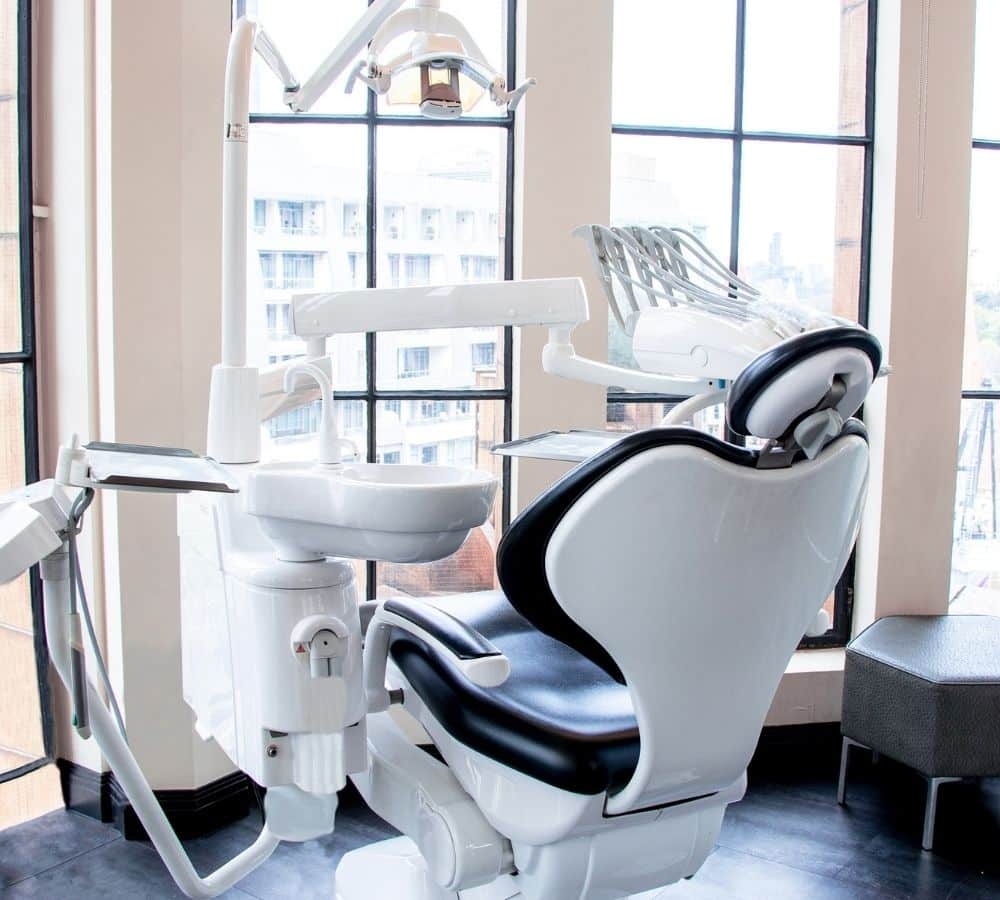
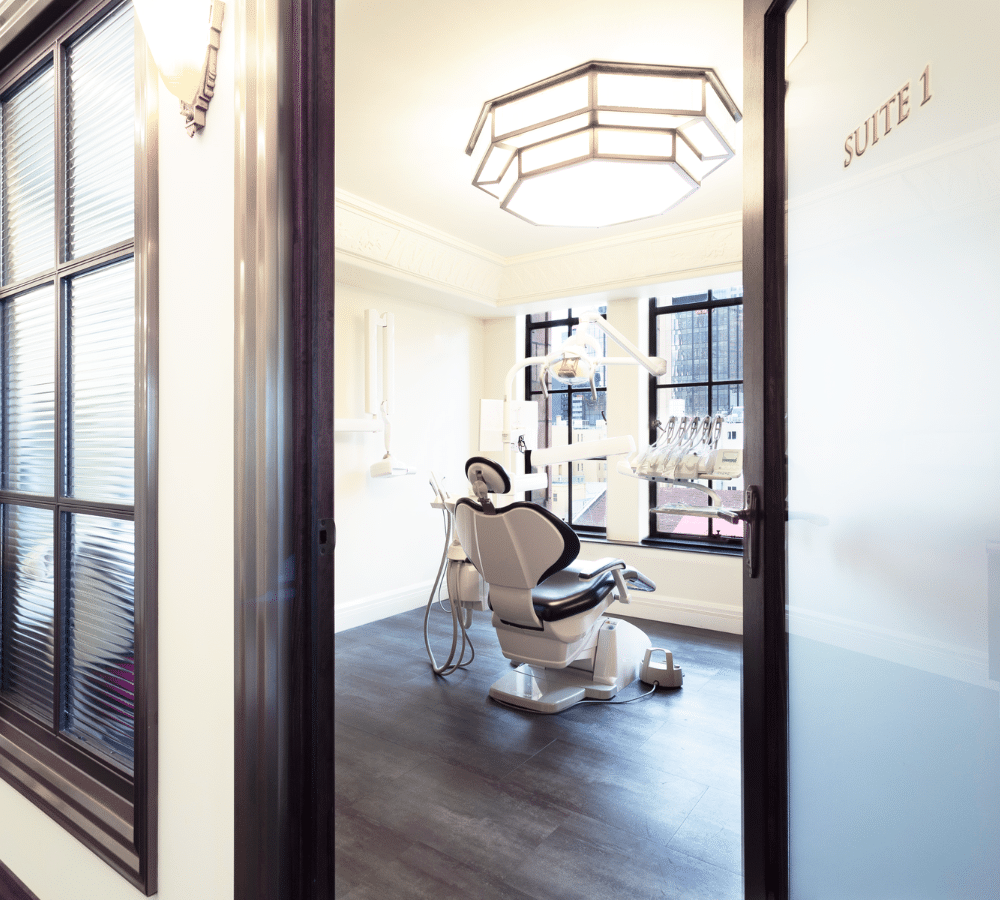
The practice is at Level 1, 220 Collins Street, Manchester Unity Building, Melbourne CBD.
Common concerns
- ongoing pain or discomfort after treatment
- poorly fitting crowns, veneers or dentures
- failed implants
- aesthetic concerns — colour, shape, symmetry not as expected
- work that hasn't lasted as expected
One thing to hold in mind from the start: a poor outcome is not the same as poor treatment. Dental work fails for many reasons — the underlying condition of the tooth, grinding, gum disease, healing that could not be predicted, or simply time. A proper assessment distinguishes between them, and an honest second opinion sometimes concludes that the original treatment was appropriate and well done.
How it works
1. Comprehensive assessment
A thorough review of your current concerns, your previous treatment, and your overall oral health — including a detailed examination and, where needed, imaging and records.
The aim is to understand not just what is wrong, but why. A crown that keeps debonding, an implant that failed, or a veneer that fractured usually has a cause, and redoing the work without identifying it produces the same result again.
2. Independent second opinion
If you are unsure about past or recommended treatment, the practice provides an objective perspective.
The stated focus is on helping you feel informed and confident about your next steps, with clear explanations and no pressure to proceed. That includes the possibility that the answer is to do nothing.
It is worth being conscious that any practice giving a second opinion is also a practice that could provide the corrective treatment. Ask directly what would happen if you did nothing, and take the answer seriously if it is “not much”. If the recommendation is extensive, a third opinion is a reasonable thing to seek, and no good clinician will object to you getting one. The risks and alternatives for each of the common procedures are set out separately, and are worth reading before you agree to anything.
3. Corrective and restorative treatment planning
Where treatment is required, a tailored plan is developed to restore both function and appearance. You are walked through all available options, prioritising long-term outcomes and a measured approach — the ground covered in what restorative dentistry means.
Corrective work is often more difficult than the original treatment, because there is less tooth structure left, the site may have been compromised, and the previous work has to be removed first. It can cost more, take longer, and — honestly — the result is not always as good as if the tooth had been treated correctly the first time. Ask for the realistic outcome, not the ideal one, and ask where the numbers sit against the published price guide.
4. Multidisciplinary care in one location
Corrective cases are frequently multidisciplinary — a failed implant may involve a periodontist, an oral and maxillofacial surgeon and a prosthodontist. General dentists, board-registered specialists and hygienists work together in one location, which means the assessment can consider every option rather than only those one clinician can provide. Complex Dentistry.
Specialist reports and compensation support
This is worth knowing about, because it is not widely offered.
If you require a formal assessment of previous dental treatment, the team can provide independent clinical evaluations and detailed reports.
These are prepared with care and objectivity, and may be suitable for insurance claims, legal review, or compensation matters. The focus is on clear, accurate documentation that helps you understand your situation and supports whatever step comes next.
If you are considering a formal complaint or claim, raise it at the outset so the assessment and records are prepared appropriately. A clinical report records clinical findings; it is not legal advice, it does not decide liability, and whether it assists your matter is a question for your lawyer or your insurer. Reports are chargeable and the fee is separate from any treatment.
This is also the pathway most often used by people who had veneers or crowns done overseas and have no records, no warranty and no practitioner to return to.
Your other options, stated plainly
You do not need a second opinion in order to raise a concern, and these pathways are free.
- Talk to the original practice first where you feel able to. Many problems are resolved this way, and most practices would rather know.
- The Health Complaints Commissioner (Victoria) handles complaints about health service providers, including private dentists. There is no cost.
- AHPRA takes notifications about a practitioner's conduct, health or performance. AHPRA regulates practitioners; it does not award compensation or order refunds.
- Your private health fund may have its own dispute process for work it contributed to.
Each of these has time limits, so do not sit on a concern indefinitely.
If you think you were sold the treatment rather than advised into it
This is a distinct complaint from “the work failed”, and it has its own law behind it. Section 133 of the National Law governs how a registered health practitioner or their business may advertise. It says a person must not advertise a regulated health service in a way that:
- is false, misleading or deceptive or is likely to be misleading or deceptive;
- offers a gift, discount or other inducement to attract a person to use the service or the business, unless the advertisement also states the terms and conditions of the offer;
- uses testimonials or purported testimonials about the service or business;
- creates an unreasonable expectation of beneficial treatment; or
- directly or indirectly encourages the indiscriminate or unnecessary use of regulated health services.
The penalties are not symbolic. AHPRA records that the National Law was amended in 2022 so that the maximum financial penalty per advertising offence rose from $5,000 to $60,000 for an individual, and from $10,000 to $120,000 for a body corporate — increases that have applied in all jurisdictions, including Western Australia, since July 2024. A breach is a criminal offence for which a court may impose a monetary penalty, and a registered practitioner may also face disciplinary action. (Source: AHPRA, Guidelines for advertising a regulated health service.)
The specific things the guidelines say advertising must not do
These are worth reading as a checklist against whatever you were shown before you agreed to treatment. Advertising may breach the National Law where it:
- minimises the complexity of risk — the guidelines name the words ‘safe’, ‘effective’, ‘risk-free’ and ‘pain-free’ used “without acknowledging possible adverse reactions or mixed/inconclusive evidence for the treatment.”
- indicates, expressly or by omission, that a treatment is “infallible, unfailing, magical, miraculous or a certainty, guaranteed or sure cure”;
- states that the practitioner has an exclusive or unique skill or remedy that will benefit the patient;
- overstates the potential benefit of a treatment, or exaggerates outcomes or recovery time by giving incomplete or biased information;
- uses photos or images of unrealistic outcomes;
- creates urgency linked to your health suffering where there is no clinical indication — phrases such as “don't delay”, “act now before it's too late”, “don't miss out”, “time is running out”, or “for a limited time only”;
- encourages periodic or regular appointments where there is no clinical indication to do so, including contracting for future services.
On before-and-after images, which drive a great many cosmetic decisions, the guidelines are specific. They are less likely to be misleading where the images are as similar as possible in content, camera angle, background, framing and exposure, where posture, clothing and make-up are consistent, where lighting and contrast are consistent, where any alteration is explained, and where the advertised treatment is the only visible change to the person. If the “after” photograph is better lit, differently angled, or shows a person wearing different make-up, you are not looking at a like-for-like comparison. The practice's own before and after gallery is published on that basis, and a mock-up reveal exists precisely because a photograph of someone else's teeth is not evidence about yours.
Why you will not find patient testimonials
If you have noticed that Australian dental websites carry no patient success stories, that is the law, not a shortage of satisfied patients. The National Law does not allow testimonials or purported testimonials to advertise a regulated health service. AHPRA defines a testimonial as a recommendation or positive statement about the clinical aspects of a service — a clinical aspect being present where a statement expresses a symptom (the reason for seeking treatment), a diagnosis or treatment, or an outcome, including the skills or experience of the practitioner. Comments purely about customer service or communication style are not testimonials and may be used.
The prohibition applies to a practice's social media as much as its website, and the guidelines note that where a platform does not permit reviews to be removed, the business may need to disable the review function. It does not restrict you: patients remain free to post reviews and share their views. So if a provider is showing you clinical success stories as part of a sales conversation, that tells you something on its own.
To complain about advertising specifically, AHPRA takes complaints through the form on its website, or on 1300 419 495. That is a separate pathway from a notification about a practitioner's conduct, health or performance.
Checking any clinician
AHPRA advises patients to verify a practitioner's registration and qualifications before undergoing any procedure — search the public register at ahpra.gov.au, or call 1300 419 495.
A profile reading “General & Specialist” indicates a registered specialist; “Dental Practitioner – General” indicates a general dentist. The register also shows any conditions on a practitioner's registration.
Reading the register properly
Two details make the register far more useful once you know them.
First, there are exactly 13 recognised dental specialties in Australia, approved by the Australian Health Workforce Ministerial Council: dento-maxillofacial radiology, endodontics, forensic odontology, oral and maxillofacial surgery, oral medicine, oral and maxillofacial pathology, oral surgery, orthodontics, paediatric dentistry, periodontics, prosthodontics, public health dentistry (community dentistry), and special needs dentistry. AHPRA's register shows the specialty or specialties of every dentist who holds specialist registration. If a title you have been given does not appear on that list, it is a description of an interest, not a registered specialty. (Source: Dental Board of Australia, Specialist Registration.)
Second, specialist registration is not simply a postgraduate degree. The Board's specialist registration standard requires a minimum of two years of general dental practice — achievable outside Australia, subject to the Board's assessment and approval — and that the applicant meets all other requirements for general registration as a dentist. Every specialist must hold general registration and appear on the register under the division of dentists.
Underneath all of it sits the Board's scope of practice registration standard, in effect since 1 July 2020, which requires dental practitioners to practise within the scope of their education, training and competence at all times. That standard is the real answer to the question most second-opinion patients are actually asking: not “was this person qualified?” but “was this person qualified to do this?” Why that distinction matters clinically is set out in Why would I need to see a dental specialist?.
Why the practice recommends second opinions generally
Our published position is that patients should seek a second opinion before commencing any significant dental procedure, particularly in complex cases.
That is unusual advice for a practice to give, and it applies in both directions — including before treatment here.
Before your appointment
Bring, if you have them:
- any records, x-rays or scans from the previous treatment
- treatment plans, quotes and invoices
- dates of when the work was done
- photographs, if the concern is aesthetic and has changed over time
- notes on what you were told to expect, and how the result differs
- copies of any advertising, quote or brochure you were given, if part of your concern is that you were promised something
You are entitled to request copies of your records from a previous practice. Bringing existing radiographs can also spare you a repeat set.
Common questions
My veneers failed after only a few years. Does that on its own mean the work was bad?
Not on its own — but it does mean the figures are worth knowing, because "veneers last forever" and "veneers fail in five years" are both wrong.
The largest pooled analysis in this area, a systematic review of 25 studies covering 6,500 porcelain laminate veneers, puts the 10-year cumulative survival rate at 95.5% when fracture, debonding, secondary caries and severe marginal discolouration are all counted as failure. An Australian prospective cohort — 499 veneers in 155 patients, placed by a single prosthodontist in private practice between 1990 and 2010 — reported Kaplan–Meier survival of 98% at five years, 96% at ten, and 91% at fifteen and twenty years.
Two caveats belong with that second set of numbers, and they matter enormously for anyone comparing their own experience against them. Patients with extensive tooth structure loss through parafunction were excluded from that study, and only teeth with at least 80% enamel remaining were veneered. It is a best case, for ideal candidates, in enamel, from one operator.
The reviews are also candid that the studies do not agree on what counts as a failure: definitions range from "loss of function" to any repairable defect, with failure treated as irreparable in some studies and reparable-but-counted in others. So a veneer replaced at seven years may appear in one dataset as a failure and in another as a success.
What all this means practically: an early failure is a reason to ask why rather than proof of negligence, and the answer usually lies in the bonding substrate, the bite, and whether grinding was identified beforehand — which is the next question.
My dentist says it failed because I grind my teeth. Is that fair, or is it blame-shifting?
It can be both true and an incomplete answer, and the distinction is where a second opinion earns its fee.
The evidence does support grinding as a risk factor. One study analysed specifically for parafunction found that half of the ceramic fractures occurred in patients with bruxism activity, and the reviewing authors conclude that "bruxism may be a risk factor for fractures of ceramics". The Australian long-term cohort quoted above removed parafunction patients from its sample entirely — which tells you how differently that group is expected to perform.
The substrate matters just as much. The veneer literature is blunt that "the enamel is the perfect" bonding substrate, that "high failure rates in PLVs have been associated to largely exposed dentin surfaces", and that a typical preparation can expose around 30% of the prepared surface as dentin. Whether a bond had enamel to hold onto is a clinical fact about your teeth, not an opinion.
So the fair questions are not whether you grind, but: was the grinding identified and recorded before the work was done; was a splint provided or the design modified because of it; and how much enamel was there to bond to. If grinding was documented beforehand and managed, "you grind" is a real explanation. If it appears for the first time in the conversation after the fracture, it is an explanation that arrived late, and a written assessment of the original records is the way to establish which it was.
How much of my tooth was actually removed — and can that be undone?
This is the question most people ask after the fact rather than before it, and the honest answer is that preparation is irreversible.
A quantitative study published in the Journal of Prosthetic Dentistry measured exactly how much is taken away. Veneer preparation designs removed approximately 3% to 30% of the coronal tooth structure by weight, depending on the design. Complete-coverage preparations were in another category altogether: approximately 63% to 72% of the coronal tooth structure was removed when teeth were prepared for all-ceramic and metal-ceramic crowns.
That range is the reason a conservative option is worth exhausting first, and the reason a crown proposed for a cosmetic complaint deserves a harder question than a crown proposed for a cracked or root-treated tooth. It is also why a reversible mock-up before any tooth is touched is not a gimmick.
If preparation has already happened, nothing on this page changes that — but knowing which category your teeth are in shapes what corrective options remain. Ask whether the existing preparations are within enamel or into dentin, and whether the tooth is still restorable without further reduction. Those two answers determine most of what follows.
I had it done overseas and something is wrong. Where does that leave me?
In a more difficult position than a local case, and it is better to know why than to be surprised by it.
The Australian Dental Association's policy on elective overseas dental treatment states that such treatment "carries the risk of adverse oral and general health outcomes with long term problems which may be difficult to resolve on return to Australia", and that treatment "may also require extensive and costly repair procedures on return to Australia".
Two of the practical problems it identifies are the ones that most often surface here. First, records: the policy notes that "ongoing and corrective treatment may be compromised, as the records and complete details of treatment obtained overseas are unlikely to be available to those providing subsequent treatment in Australia". Second, recourse: in Australia, dental practitioners are required to hold professional indemnity insurance, and the policy observes that "this may not be the case in overseas clinics". The Australian protections it lists — Board regulation, state health complaint authorities, peer review, easy access back to the treating practitioner — largely do not travel.
The policy also makes a clinical point that gets lost in the price comparison: "optimal ongoing oral health cannot be achieved in a single episode or short course of treatment and requires regular maintenance."
What can still be done is a full assessment of where the teeth actually are now, documented in writing, with the corrective options and their realistic outcomes set out. That is worth doing before you decide whether to pursue anything with the original provider, because the clinical picture is the foundation of every other conversation — and it is a different exercise from asking who is to blame.
Related reading
- Why would I need to see a dental specialist?
- 5 questions you've always wanted to ask your dentist
- What types of dental crowns are available?
- My denture is broken. What should I do?
- Fix my teeth — where to start if the problem is not one tooth but several
- Contact the practice
Practical details
| Address | Level 1, 220 Collins Street, Manchester Unity Building, Melbourne VIC 3000 |
| Phone | 13 13 96 |
| theteam@smilesolutions.com.au | |
| Monday – Friday | 8.00am – 6.00pm |
| Saturday | 8.30am – 1.30pm |
| Sunday | By appointment |
| Formal reports | Available for insurance, legal or compensation matters; chargeable |
| Referral needed | No |
| Verify a clinician | AHPRA register, or 1300 419 495 |
| Parking | Wilsons Parking, Flinders Lane (between Swanston and Russell) |
General information only — it is not a diagnosis, a treatment plan, a quote, legal advice, or a promise of any particular clinical outcome, and it does not replace advice from your treating practitioner or your lawyer. Nothing here is an opinion about any specific previous treatment or practitioner; whether earlier work was appropriate can only be judged on the individual records and examination, and corrective outcomes vary between individuals. Fees, including the fee for a written report, are indicative and subject to change; confirm at your consultation.
Smile Solutions trades under ABN 28 193 514 103.
Images on This Page
-
https://www.facebook.com/tr?id=800557773428361&ev=PageView&noscript=1
(no alt text)
-
https://www.smilesolutions.com.au/wp-content/uploads/2025/10/calendar_month.svg
(no alt text)
-
https://www.smilesolutions.com.au/wp-content/themes/arcadian-wordpress-theme/assets/images/smile_solutions_logo_white.png
Smile Solutions Logo
-
https://www.smilesolutions.com.au/wp-content/themes/arcadian-wordpress-theme/assets/images/smile_solutions_logo_purple.png
Smile Solutions Logo
-
https://www.smilesolutions.com.au/wp-content/uploads/2025/11/Smile-Solutions-4.png
Smile Solutions - Melbourne CBD
-
https://www.smilesolutions.com.au/wp-content/uploads/2014/07/Ortho-Tower.jpg
Orthodontic Tower
-
https://www.smilesolutions.com.au/wp-content/uploads/2025/09/Smile-Solutions-Level-10.png
Smile Solutions Level 10
-
https://www.smilesolutions.com.au/wp-content/uploads/2025/08/69a44c30c93ce196d539cc5520080df52a5f3f88-scaled.jpg
69a44c30c93ce196d539cc5520080df52a5f3f88 scaled
-
https://www.smilesolutions.com.au/wp-content/themes/arcadian-wordpress-theme/assets/images/family_owned_bussiness.png
Family Owned Business
-
https://www.smilesolutions.com.au/wp-content/themes/arcadian-wordpress-theme/assets/icons/icon--phone.svg
Smile Solutions Contact
-
https://www.facebook.com/tr? id=800557773428361&ev=PageView&noscript=1
(no alt text)
-
https://bat.bing.com/action/0?ti=25148060&tm=gtm002&Ver=2&mid=477179a3-752a-41b4-bc48-33ca58f73752&bo=1&sid=1ed1a220ab2711f1bfea913a1becb7e1&vid=1ed1c9d0ab2711f1a8cc89afcc61a2f5&vids=1&msclkid=N&pi=918639831&lg=en-US&sw=800&sh=600&sc=24&nwd=1&tl=Second%20Opinions%20%26%20Corrective%20Dentistry%20-%20Smile%20Solutions&p=https%3A%2F%2Fwww.smilesolutions.com.au%2Fsecond-opinions-corrective-dentistry%2F&r=&evt=pageLoad&sv=2&cdb=AQAQ&rn=287390
(no alt text)