What is laser dentistry?
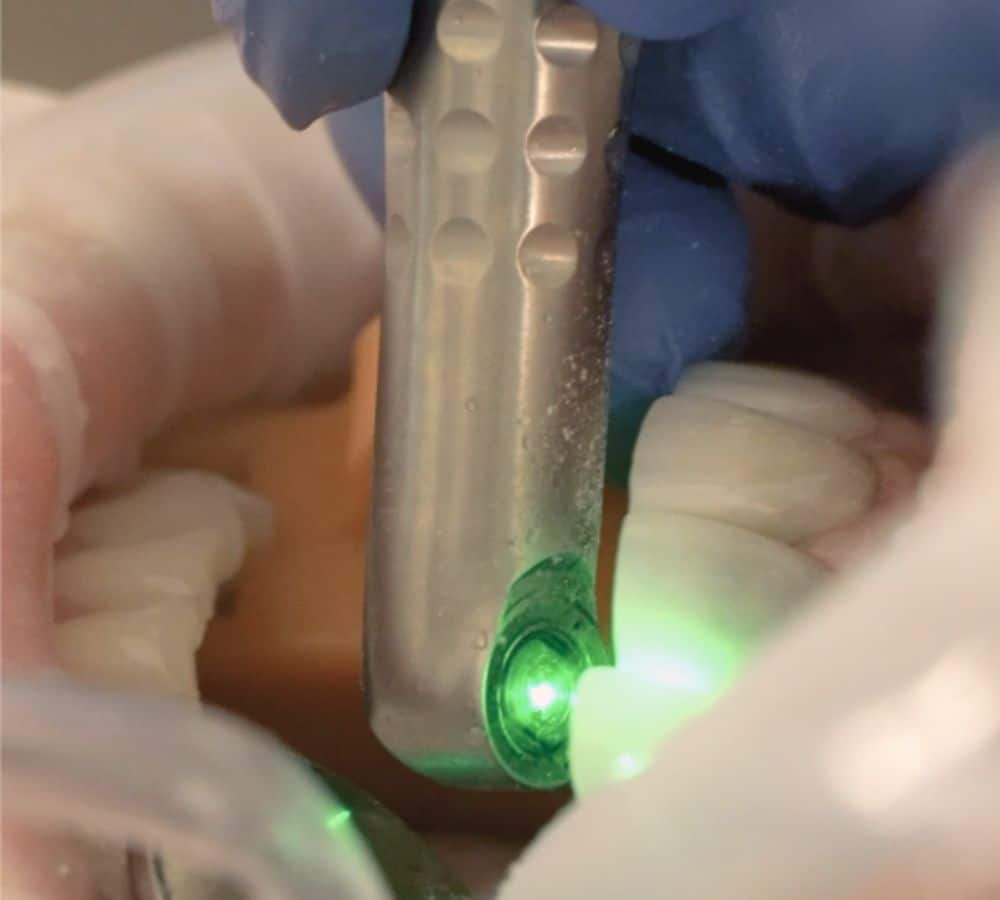
Laser dentistry uses a focused beam of light energy in place of some hand instruments — principally the scalpel in soft-tissue procedures, and in some cases the drill for removing decay. Lasers direct energy onto the target tissue, allowing treatment of gums, and in certain circumstances enamel and decayed tooth structure. The service page is laser dentistry.
The honest summary, which the marketing around lasers often skips: the evidence for lasers in soft-tissue surgery is good; the case for replacing the drill in general restorative work is much narrower. Lasers are a useful additional tool for specific indications, not a universal alternative. A specialist periodontist makes the same point, procedure by procedure, in laser used in dentistry — including the one periodontal application the practice has decided not to adopt.
At Smile Solutions, suitability for laser treatment is assessed in consultation with you by a registered specialist periodontist. Specialist registration is a checkable fact rather than a marketing term — see why would I need to see a dental specialist? and dentists and registered specialists.
Why people ask about it
Most people are at least a little apprehensive about dental treatment, particularly anything beyond a check-up. Needles and drills are a large part of that. Laser treatment appeals for exactly that reason, and reducing anxiety is a legitimate clinical goal — anxiety is one of the main reasons people delay treatment until it becomes an emergency. See dental anxiety, how to ease anxiety about visiting the dentist and, on the injection itself, how do you give a virtually pain-free injection?. For patients whose anxiety is not addressed by technique alone, sleep dentistry is the other route.
What should not be promised is that any technique eliminates discomfort or anxiety entirely. Experience varies between people and between procedures.
Soft-tissue laser procedures
This is where lasers are strongest, and the claims are best supported.
Many soft-tissue procedures normally performed with a scalpel and local anaesthetic can be carried out with a laser instead, often more quickly and with less discomfort. Because the laser seals small blood vessels as it cuts:
- There is little or no bleeding, which improves visibility during the procedure
- Stitches are often not required
- Healing can be faster
- Post-operative painkillers are frequently not needed
A practical example: a cosmetic gum lift across the front six teeth performed with a laser can take less than half the treatment time of conventional surgery, with minimal bleeding, usually no sutures, and generally no need for post-operative analgesia. Where that is one step in a larger cosmetic plan, see I want a smile makeover — where should I start?.
Other common soft-tissue uses include treating gum overgrowth, exposing partly erupted teeth, frenectomies, and adjunctive treatment of periodontal pockets — the underlying disease is described in periodontal (gum) disease and what is gum disease?, and the non-surgical baseline in when do you need deeper cleaning?. If your gums bleed when you brush, that is where to start rather than here — see bleeding gums and the hygienist appointment.
Local anaesthetic is still used for many of these, depending on the procedure and the depth involved. “Often without” is accurate; “never” is not.
Laser removal of decay
Some lasers can remove decayed tooth structure before a filling is placed. Where this is suitable, needles and drilling are often not required, since lasers can reduce sensitivity during the procedure.
The claimed advantages:
- More selective than a conventional drill, removing decayed tissue while leaving sound enamel
- No micro-cracking of the kind rotary instruments can produce
- Comparable appointment time to a conventional filling, and completed in one visit
The limits, which matter just as much:
- Not every cavity is suitable. Position, depth, extent and the type of decay all determine whether a laser can do the job. Earlier still, some early lesions need no filling at all — see can you reverse tooth decay? and why do I need a filling?
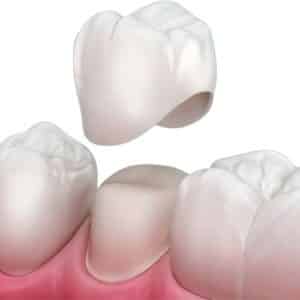
- A drill is still needed to remove existing amalgam if a tooth is being re-filled, and generally for shaping the final cavity and for crown preparation. On material choice for the replacement, see porcelain, amalgam or composite resin and same-day CEREC restorations.
- The evidence for laser caries removal is mixed. Trials show it is effective in appropriate cases, but they do not show it is superior to conventional removal in outcome — the benefit is in comfort and tooth conservation rather than in the result.
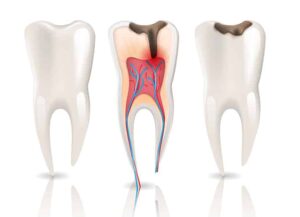
- Some people still need anaesthetic, particularly for deeper cavities. A cavity that has reached the nerve is a different problem entirely — see root canal.
- Lasers are slower than a drill for larger restorations. How long do dental fillings last? is the more useful question once a restoration is large.
So the accurate position: for selected small to moderate cavities, laser removal is a genuine option that may avoid an injection. It does not replace the drill across restorative dentistry.
Light used for looking rather than cutting
A separate group of devices uses light to find decay rather than to remove it. A peer-reviewed analysis of intraoral radiograph use in children and adolescents at a university dental clinic (Radiation Exposure and Frequency of Dental, Bitewing and Occlusal Radiographs, PMC) notes that for detecting decay, “X-ray-free photo-optical alternative methods might be considered to enhance the accuracy of visual caries diagnostics and to support the treatment decision”, giving as examples “near-infrared transillumination, laser fluorescence, fiber-optical transillumination or other fluorescence-based cameras”.
Read that wording carefully, because it is doing precise work. The authors describe these devices as enhancing visual examination — not as replacing radiographs. The same paper records that visual examination accompanied by dental or bitewing radiographs “detected up to 50% more proximal caries lesions in the posterior primary and permanent teeth compared to visual examination alone”. So a fluorescence reading can help settle whether a suspicious groove is decay or a stain; it does not see between two teeth that are touching. On what radiographs contribute and what they cost you in dose, see how safe are dental x-rays? and when do safe dental x-rays become unsafe?.
In root canal treatment
One of the better-established uses involves no cutting at all. Inside a prepared root canal, a laser can be used to agitate the irrigating solution rather than leaving a needle sitting still in the canal. A review in the British Dental Journal on the predictability of endodontic treatment sets out the evidence without overstating it: activation of irrigant solutions by manual agitation, sonic devices, ultrasonic devices and lasers “has become popular”, and although “the limitations of the clinical outcome studies assessing effectiveness don't provide us with strong evidence for their clinical efficacy, lab-based studies continue to support biofilm disruption with their use and so these methods are commonly used in endodontics”.
Plausible mechanism, laboratory support, weak clinical outcome evidence, widely adopted anyway. That pattern recurs throughout laser dentistry, and recognising it is more useful than memorising any individual claim. See root canal and endodontists.
Whitening
Lasers and lights are sometimes used to activate whitening gel. Worth knowing before you pay extra for it: the evidence that light or laser activation improves the outcome over the gel alone is weak. Several studies find no significant difference, and some suggest light increases sensitivity. The gel concentration and contact time do most of the work. See what should I know about teeth whitening?, in-chair versus take-home whitening and why go to a dentist for whitening?
The Australian Dental Association's policy statement on teeth whitening puts the role of a light more narrowly than the advertising usually does: whitening is carried out “sometimes with the aid of a light or heat source that may shorten the application time required”. Shortening the appointment is not the same claim as improving the result, and the two are easy to conflate.
The same policy statement is blunt about what goes wrong when energy is applied carelessly. “The incorrect application of heat and other forms of energy during teeth whitening procedures, such as light from a plasma arc lamp or high-power (Class 4) laser may cause nerve damage to the tooth and burns to adjacent soft tissues, and failure to ensure use of the appropriate protective eyewear may also cause irreversible injury.” That sentence is the reason the eyewear is not negotiable, and the reason this is not a treatment to shop for on price alone.
What the rules require
This is the part of laser dentistry that is easiest to check and least often discussed.
- There is an Australian standard. The ADA's policy statement cites AS/NZS 4173:2018, *Safe use of lasers and intense light sources in health care***, which it describes as specifying **“requirements for dental practices and the cosmetics industry, including required standards of training”. Training is written into the standard, not left to the operator's judgement.
- In Victoria, a practitioner needs a state licence for Class 4 laser work. The same statement records that all registered dental practitioners with appropriate levels of training and competence are permitted to undertake dental procedures using Class 4 lasers, “but Western Australian, Queensland, Victorian, and Tasmania legislation requires that practitioners in these states first obtain a licence to do so from the appropriate state regulatory authority”. Melbourne is in one of those four jurisdictions, so it is a fair and answerable question to ask whether the person treating you holds that licence.
Neither point is a reason to avoid laser treatment. They are the two things that distinguish a regulated clinical procedure from a device someone bought.
Safety and suitability
- Protective eyewear is worn by everyone in the room — this is not optional, and the ADA links failure to use it to irreversible injury
- Not all lasers do all jobs. Different wavelengths suit hard tissue and soft tissue; a practice with one laser cannot do everything a laser can do. The equipment actually in the building is listed under technology
- Training matters. Laser use requires specific training and technique; the device does not make the decisions
- Some patients and some procedures are unsuitable, which is what the consultation establishes — see understanding your treatment
Common questions
Can a laser treat my jaw pain?
On the current guideline, probably not. The BMJ's 2023 clinical practice guideline on the management of chronic pain associated with temporomandibular disorders places low level laser therapy, alone or in combination with other interventions, among its conditional recommendations *against*** — in the same group as reversible occlusal splints, transcutaneous electrical nerve stimulation, botulinum toxin injection, biofeedback and relaxation therapy. A 2024 Cochrane review of occlusal interventions compared a splint against low-level laser physical therapy for muscle pain on chewing and reported a risk ratio of **0.17 (95% CI 0.02 to 1.26), from one study of 40 participants, describing the evidence as very uncertain — a confidence interval that wide, from a single trial of forty people, settles nothing in either direction. So if low-level laser is offered for jaw or facial pain, the useful questions are what it is being offered instead of, what the guideline position is, and what the plan is if it does not help. See TMD and teeth grinding.
Will a laser fix my bad breath?
We would not spend money on it on the strength of what we can find. The FDI World Dental Federation's 2025 advice sheet on halitosis does list laser therapy (Er:YAG, Nd:YAG) and antimicrobial photodynamic therapy among "advanced treatments" for persistent halitosis — but it lists them with no evidence grading and no citations, alongside probiotics, mouthwashes, chewing gums and lozenges. Against that, Cochrane's 2019 review of interventions for managing halitosis pooled 44 trials and 1,809 participants and concluded that "We do not have enough evidence to say which intervention works better to control bad breath" — and it did not assess laser therapy at all. Persistent bad breath has a cause, and the cause is usually findable: see what causes bad breath and how can I fix it? and the truth and myths about mouthwashes. Treating the smell rather than the cause is the same mistake a rinse makes, at a considerably higher price.
I snore. Can a dental laser help with that?
Not from a dental chair, and the distinction matters. The Sleep Health Foundation's fact sheet on snoring does describe palatal stiffening — treatments that make the roof of the mouth vibrate less — and notes this "can be done using lasers, microwave rays or injections." But it is specific about who does it and how well it works: "Laser surgery on the throat may work for some people. But it can be painful. Only an Ear, Nose and Throat surgeon can do this." The dental contribution to snoring is a different device altogether — a mandibular advancement splint, which "looks a bit like a mouth guard", is worn between the teeth to push the lower jaw forward and widen the airway, "needs to be specially fitted to you" by a dentist or oral surgeon, and "works for some people but not for others." Snoring can also be a sign of obstructive sleep apnoea, which is a medical diagnosis rather than a dental one, so the sensible first step is a conversation with your GP rather than a device or a laser.
Is laser treatment more expensive, and is the difference worth paying for?
Two questions, and they deserve separate answers. On price: Australia has no national dental fee schedule, and the ADA's Dental Fees Survey 2022, drawing on 3,535 general dentists in private practice, found "considerable variation in the fees charged within and between states" — so the only figure that means anything is the itemised written quote in front of you, and it is fair to ask whether the laser is charged as a separate item. On value, apply the test this page uses throughout: ask what the laser is replacing, and whether the evidence supports it for that particular job. For soft-tissue surgery the benefits are concrete and describable — less bleeding, often no sutures, frequently no analgesia needed afterwards. For light-activated whitening, the ADA's own policy puts the light's contribution at "sometimes with the aid of a light or heat source that may shorten the application time required", which is a claim about appointment length rather than about a whiter result. For removing decay, the benefit is comfort and tooth conservation rather than a better restoration. Paying more for a more comfortable experience is a perfectly legitimate choice. Paying more in the belief that you are buying a better outcome is a different transaction, and worth being clear about which one you are making.
How do I check that the person using it is properly licensed?
Ask, and then verify — both things are on the public record. The ADA's policy statement on teeth whitening cites AS/NZS 4173:2018, *Safe use of lasers and intense light sources in health care***, which it says specifies **"requirements for dental practices and the cosmetics industry, including required standards of training" — so training is written into the standard rather than left to the operator. On licensing, the same statement records that while all registered dental practitioners with appropriate training and competence may undertake dental procedures using Class 4 lasers, "Western Australian, Queensland, Victorian, and Tasmania legislation requires that practitioners in these states first obtain a licence to do so from the appropriate state regulatory authority." Victoria is one of those four, so in Melbourne a Class 4 laser procedure sits behind a state licence as well as registration. Registration itself is free to check: Ahpra's public register shows a practitioner's registration status and, where they hold it, their specialty. And it is reasonable to ask the practice which laser it owns and at what wavelength, because different wavelengths suit hard and soft tissue and no single device does everything.
Does this article replace an individual dental assessment?
No. It provides general information. Symptoms, suitability, risks and treatment choices depend on examination and, where indicated, imaging or other records from an appropriately registered practitioner.
Related reading
- Laser used in dentistry — a periodontist on the surgical applications
- The benefits of holistic dentistry
- What is holistic dentistry?
- What’s new in cosmetic dentistry?
- How can I change my smile naturally?
- Dental myths exposed
- Holistic dentistry and general dentistry
Practical details
Periodontics is a recognised dental specialty. Specialist registration can be verified on the AHPRA register, or by calling 1300 419 495. The practice’s clinicians are listed on our team.
Smile Solutions, Level 1, 220 Collins Street, Manchester Unity Building, Melbourne VIC 3000 — see how to find us. Phone 13 13 96, or theteam@smilesolutions.com.au; full details on the contact page. Monday–Friday 8.00am–6.00pm, Saturday 8.30am–1.30pm, Sunday by appointment.
Published 7 April 2014; updated to reflect the current evidence position. General information only; it does not replace advice from your treating practitioner. Suitability, alternatives and risks should be discussed with your treating clinician; outcomes vary between individuals. Sources cited here are third-party publications and are quoted as attributed.
Smile Solutions trades under ABN 28 193 514 103.
Images on This Page
-
https://www.facebook.com/tr?id=800557773428361&ev=PageView&noscript=1
(no alt text)
-
https://www.smilesolutions.com.au/wp-content/uploads/2025/10/calendar_month.svg
(no alt text)
-
https://www.smilesolutions.com.au/wp-content/themes/arcadian-wordpress-theme/assets/images/smile_solutions_logo_white.png
Smile Solutions Logo
-
https://www.smilesolutions.com.au/wp-content/themes/arcadian-wordpress-theme/assets/images/smile_solutions_logo_purple.png
Smile Solutions Logo
-
https://www.smilesolutions.com.au/wp-content/uploads/2023/11/SS-Tooth-1-1-150x150.png
Smile Solutions
-
https://www.smilesolutions.com.au/wp-content/uploads/2025/09/Laser-Dentistry-for-Obstructive-Sleep-Apnoea.jpg
Laser treatment
-
https://www.smilesolutions.com.au/wp-content/uploads/2025/09/Root-Canal-2-300x217.jpg
Root Canal
-
https://www.smilesolutions.com.au/wp-content/uploads/2026/08/Mouth-Breathing-300x270.jpg
Mouth Breathing
-
https://www.smilesolutions.com.au/wp-content/uploads/2025/09/Dental-Crown-at-Smile-Solutions-300x300.jpg
Dental Crown at Smile Solutions
-
https://www.smilesolutions.com.au/wp-content/themes/arcadian-wordpress-theme/assets/images/family_owned_bussiness.png
Family Owned Business
-
https://www.smilesolutions.com.au/wp-content/themes/arcadian-wordpress-theme/assets/icons/icon--phone.svg
Smile Solutions Contact
-
https://www.facebook.com/tr? id=800557773428361&ev=PageView&noscript=1
(no alt text)
-
https://bat.bing.com/action/0?ti=25148060&tm=gtm002&Ver=2&mid=a9aac1df-9e69-4cda-90d0-9baf8b14e7ee&bo=1&sid=488729f0ab2611f181f71ba09e981aa9&vid=48877bb0ab2611f1a592953653ddf923&vids=1&msclkid=N&pi=918639831&lg=en-US&sw=800&sh=600&sc=24&nwd=1&tl=What%20is%20laser%20dentistry%3F%20-%20Smile%20Solutions&p=https%3A%2F%2Fwww.smilesolutions.com.au%2Fdental-articles%2Farticle%2Fwhat-is-laser-dentistry%2F&r=&evt=pageLoad&sv=2&cdb=AQAQ&rn=568153
(no alt text)