CEREC Restorations
What is a CEREC restoration, and why does it only take one appointment?
CEREC stands for Chairside Economical Restoration of Esthetic Ceramics. It is a system that lets a dentist design, mill and fit a custom porcelain restoration while you are in the chair — fillings, onlays, crowns and veneers — in a single appointment.
The conventional route sends an impression to a dental laboratory, fits you with a temporary restoration, and brings you back weeks later. CEREC removes that gap entirely: no impression putty, no temporary, no second visit.
Smile Solutions is at Level 1, 220 Collins Street, Manchester Unity Building, Melbourne CBD.
What each letter means
| Chairside | The technology sits in the dental suite and is used while you are in the chair |
| Economical | The procedure is economical without compromising function or aesthetics |
| Restorations | The procedure restores teeth to their natural strength and appearance |
| Esthetic | Restorations are metal-free and tooth-coloured |
| Ceramic | High-strength ceramics, close in composition to natural tooth structure |
What you avoid by not having a temporary
The single-visit claim is easy to read as convenience. The clinical part matters more, because the temporary stage is where a good deal of conventional trouble happens:
- Temporaries come off, usually at an inconvenient moment, and a prepared tooth left uncovered is sensitive and can drift.
- They leak. Temporary cement is designed to be removed, so it seals less well, and the prepared dentine underneath is exposed to bacteria for weeks.
- They are the main reason for sensitivity between the two appointments.
- A second appointment means a second anaesthetic, and a second round of numbness.
- The gum has time to react to a temporary margin, which occasionally changes how the final restoration seats.
None of these is common enough to make conventional two-visit work a bad choice — it remains excellent treatment. But removing the interval removes all five at once, which is the real argument.
Inlay, onlay or crown — the ladder worth understanding
These words get used loosely, and the difference is how much of the tooth gets covered:
- Inlay — sits within the cusps, like a filling. The least tooth removed.
- Onlay — covers one or more cusps as well. Sometimes called a partial crown.
- Crown — covers the whole tooth, all round. The most tooth removed.
The principle is to go no further up that ladder than the tooth requires. An onlay that protects a weakened cusp while leaving sound tooth untouched is usually preferable to a crown that grinds that sound tooth away for the sake of a uniform preparation.
The Australian Dental Association's consumer site puts the crown end of the ladder plainly: artificial crowns “are created to fit over the natural tooth after it has been cut back”, which is done “to make sure there is enough space for a new crown to fit on the tooth”. It also makes a point worth carrying into any discussion of longevity: “having a crown, bridge or veneer does not mean no treatment will ever be required again for the tooth or teeth.”
This is one of the strongest arguments for CEREC: milling makes onlays practical and routine, where historically a laboratory onlay cost nearly as much as a crown and took the same two visits, so crowns were often chosen by default. Ask whether an onlay would do, and if the answer is no, ask what makes your tooth need full coverage.
When CEREC is used
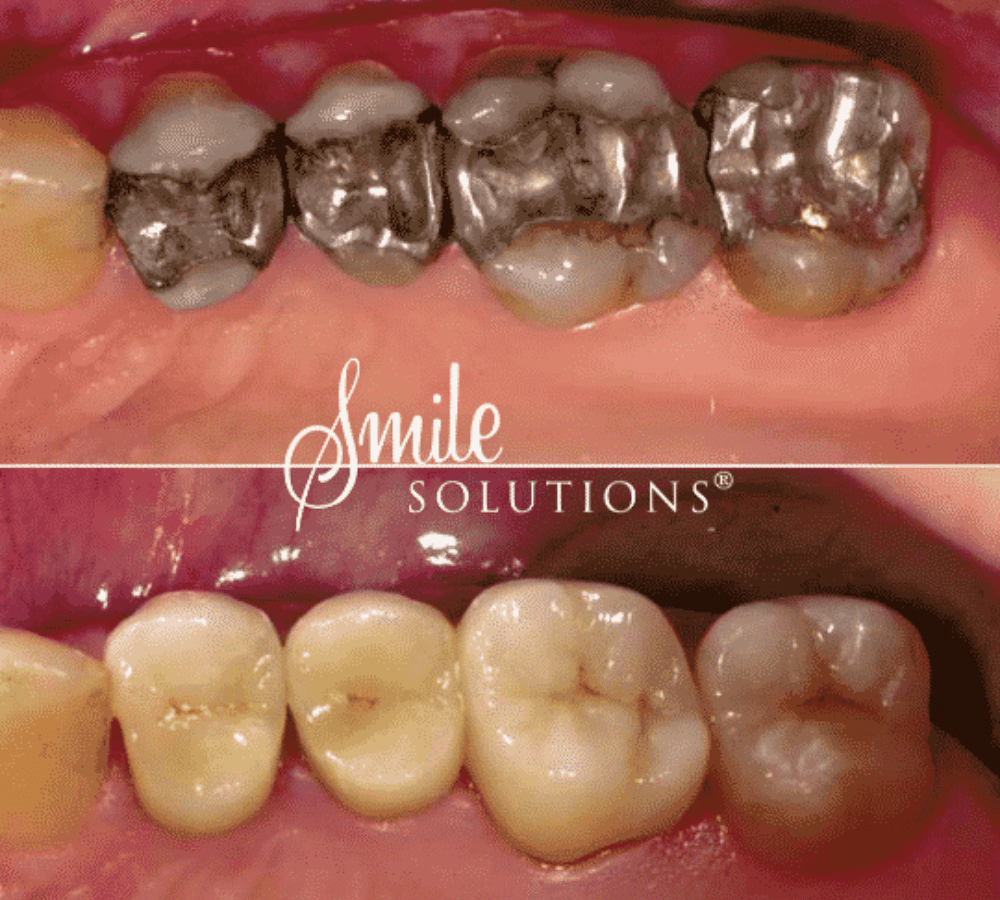
Most commonly, to replace old, large amalgam or composite resin fillings that have failed, fractured or decayed. It is also used for larger cavities, and for crowns, onlays and veneers.
For smaller cavities, conventional composite resin fillings remain appropriate. CEREC is not a replacement for every filling — it is the option that becomes compelling as the restoration gets larger. Replacing a sound, functioning filling because a newer material exists is not a reason to treat; the reason should be failure, decay, fracture or a specific aesthetic goal. See Tooth Fillings.
Why big old fillings become a problem
Useful background, because “your filling needs replacing” sounds like upselling unless the mechanism is explained.
A filling does not strengthen a tooth — it fills a hole. The larger the filling, the less tooth remains around it, and the more the surviving walls flex each time you bite. Amalgam also expands and contracts with temperature slightly differently from tooth, which over decades works like a wedge.
The usual sequence is: a large old filling, then fine cracks in the surrounding tooth, then either a cusp shears off, or the tooth becomes sensitive to biting and release — the classic sign of a cracked tooth.
An onlay addresses this by capping the vulnerable cusps and holding the tooth together, which a replacement filling in the same hole does not. That is the real argument for the treatment, and it is a structural one rather than a cosmetic one.
How strong is the evidence for that argument? Honest answer: directional rather than settled. The European Society of Endodontology's 2024 position statement on longitudinal cracks and fractures of teeth states that “there is no clear evidence on the most suitable restorative treatment approach to manage” cracked teeth. What it does report is a consistent direction: cracked teeth “managed with direct bonded composite restorations may be more likely to require root canal treatment and/or further repair of fractured restorations compared with CT managed with cuspal coverage restorations”, across three separate studies. The statement also records that the need for root canal treatment after restorative management of a cracked tooth has been reported at between 7.7% and 20%. So cuspal coverage — which is what an onlay is — is the better-supported choice, but nobody should present it as proven, and a crack can still end in root canal treatment afterwards. See Chipped or Cracked Teeth and Toothache & Tooth Pain.
The six steps
1. Removal of decay and old fillings. All decayed tooth structure and old filling material is carefully removed, either conventionally or with a dental laser. See Laser Dentistry.
2. 3D scan. A precise digital image of the tooth is captured with the CEREC handheld blue-light camera. No impression material.
3. Designing the restoration. Your clinician designs the restoration live on the CEREC monitor, using the 3D image.
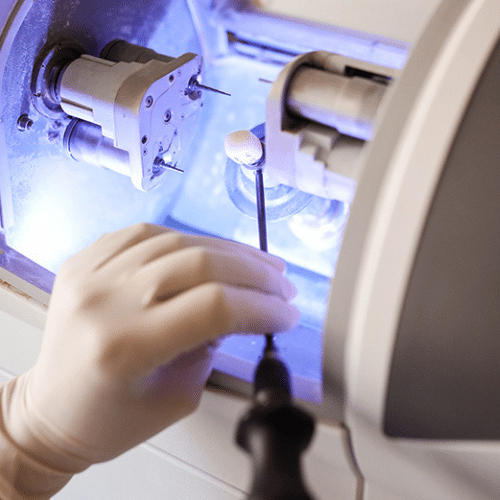
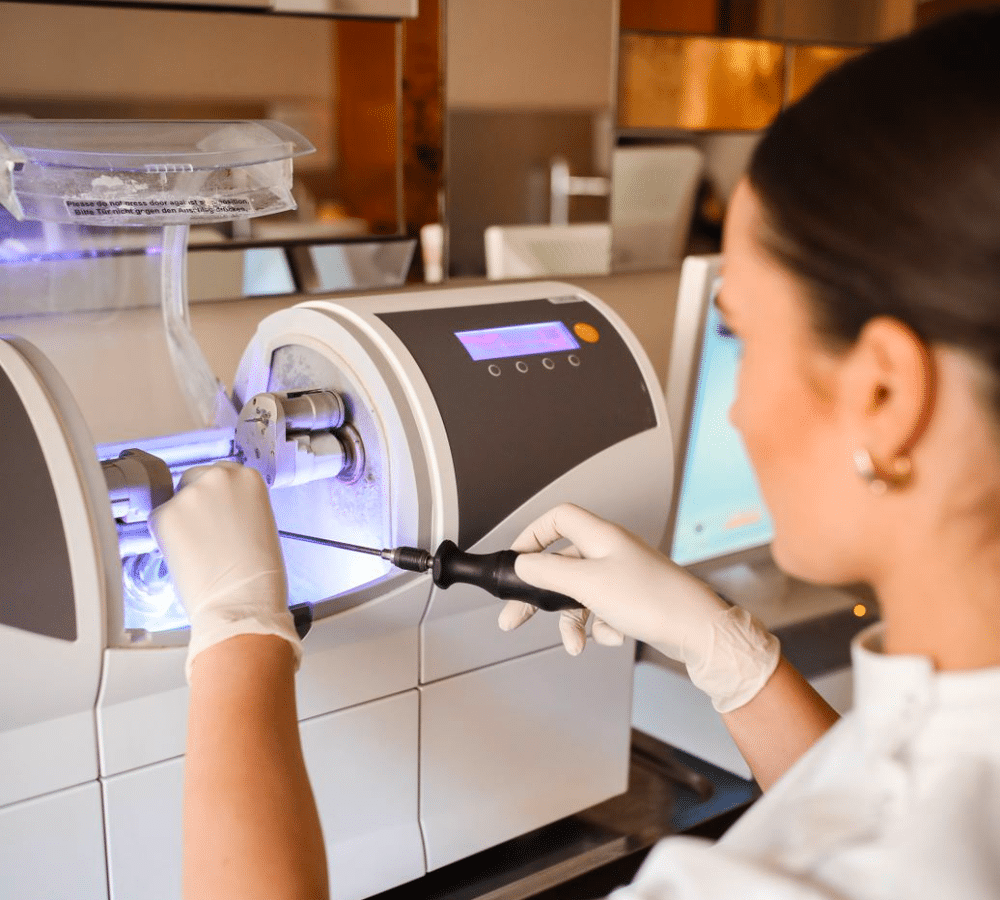
4. Milling. The CEREC unit carves the restoration from a colour-matched ceramic block.
5. Fitting and adjustment. The restoration is fitted, polished and adjusted for fit and appearance.
6. Bonding. The milled restoration is bonded to the tooth.
Allow a longer appointment than for a conventional filling — the milling happens while you wait, and the whole sequence commonly runs to a couple of hours rather than the twenty minutes a small filling takes.
healthdirect, Australia's government-funded health information service, describes the same workflow in its own words: where a dental professional has a CEREC machine they take “3D imaging of your tooth or teeth”, x-rays and photographs, the machine uses that information to make the restoration, and it “can be fixed to your teeth straight away”.
What the appointment is actually like
- The scan takes a few minutes and involves a small camera passed over the teeth. There is no tray, no putty and nothing to gag on — which makes this the treatment of choice for anyone with a strong gag reflex, who often finds conventional impressions the worst part of dentistry.
- The scan needs a dry, visible margin. Blood or saliva at the edge of the preparation confuses the camera, which is why the dentist takes time isolating and controlling the gum before scanning. A margin sitting well below the gum is the genuinely difficult case, and occasionally the reason a tooth is better sent to the laboratory instead.
- You will see your own tooth on the screen and the proposed restoration designed on it. It is worth watching; it is the clearest explanation of the treatment you will get.
- The milling runs for roughly ten to twenty minutes. You can sit up, use your phone, or have a break. The anaesthetic is still working, so nothing needs redoing.
- Some blocks are then fired in a small oven, which adds time.
- If the fit is not right, it can be adjusted or remilled the same day. That is a real advantage of having the machine in the building rather than in another suburb.
If dental appointments are difficult for you, the trade-off is worth thinking about: one longer visit, or two shorter ones. Neither answer is wrong. See Dental Anxiety.
Why the bonding step decides the outcome
A ceramic restoration is bonded, not merely cemented, and the distinction is the difference between a restoration that lasts and one that debonds.
The inner surface of the ceramic is chemically treated so that resin will grip it; the tooth is etched and primed; and a resin cement joins the two into what behaves much more like a single structure. Done properly, the bond restores a meaningful amount of the tooth's original stiffness, which is why a bonded onlay can hold a cracked tooth together.
The practical consequence for you is simple: the tooth has to stay completely dry through that stage, and it cannot be rushed. If the last part of a long appointment seems fussy and slow, that is the part doing the work.
The ceramic blocks
Not all CEREC restorations are the same material, and the choice is clinical:
- Lithium disilicate — the common workhorse. Strong, good appearance, suits onlays and crowns on back teeth and many front-tooth cases.
- Feldspathic and leucite-reinforced blocks — more translucent and lifelike, less strong. Favoured where appearance dominates and load is modest.
- Zirconia — strongest, more opaque. Used where load is heaviest.
- Hybrid ceramics — resin-ceramic composites, slightly more forgiving and easier to adjust.
Some blocks are fired in a small oven after milling to reach full strength, which adds time to the appointment. If your appointment is quoted as longer than you expected, this is often why.
Same day, or send it to the laboratory?
Both are available here, and the honest summary is that the decision is case-specific rather than a matter of which is better.
Same-day CEREC suits back teeth, onlays and crowns where strength and fit matter more than subtle colour work; single restorations; patients who cannot easily return; and anyone who dislikes impressions.
A laboratory restoration suits front teeth where a single unit has to disappear beside its neighbour; multiple units where the whole smile is being designed together; cases needing layered, hand-characterised porcelain; and complex bite work being built up in stages.
The deciding question is usually how much colour artistry the tooth needs. A ceramist working by hand can build in the translucency, warmth and surface detail that a milled monolithic block approximates. See Smile Solutions Laboratory and Same-Day Porcelain Veneers.
Porcelain versus composite resin
CEREC restorations are porcelain; conventional white fillings are a composite resin. The practical differences:
- Appearance. Porcelain generally looks more like natural tooth than composite resin, particularly in larger restorations.
- Tooth conservation. A large CEREC restoration is an alternative to a full-coverage crown, which usually requires removing more healthy tooth structure. It still requires preparing the tooth, which is irreversible.
- Visits. A single ceramic restoration in one appointment, rather than multiple appointments, multiple local anaesthetics and temporary interim fillings.
- Wear behaviour. Wear on porcelain restorations is broadly similar to that on natural tooth. Ceramic can also chip or fracture, particularly in patients who grind.
- Shrinkage. Composite shrinks slightly as it sets, which in a very large restoration can stress the bond at the margins. A milled ceramic is made outside the tooth and does not.
On molar teeth, which sometimes need a larger restoration, porcelain is often the material of choice. A single-visit ceramic and a laboratory-made one are not identical: a laboratory technician can achieve more individual colour and character in a front tooth, which is why some aesthetic cases are still sent to the lab.
The options side by side
| Composite filling | CEREC ceramic | Laboratory crown | |
|---|---|---|---|
| Visits | One | One | Two |
| Temporary needed | No | No | Yes |
| Tooth removed | Least | Moderate, can be an onlay | Most |
| Best for | Small to moderate cavities | Large restorations, cracked cusps | Heavily broken-down or root-treated teeth |
| Front-tooth artistry | Good in skilled hands | Good | Best, hand-characterised |
| Typical lifespan | Shorter | Fifteen years and longer | Long |
How long they last
CEREC porcelain restorations can last fifteen years and longer.
Published studies of chairside CAD/CAM restorations report survival in the order of 90 per cent or more at ten to fifteen years — comparable to gold in some series.
A note on that figure, in the interests of being straight with you. It is the number circulated across the profession and it may well be right, but we have not been able to trace it to a specific named study, cohort size, definition of failure or confidence interval, and we would rather tell you that than dress it up. Treat it as an indicative industry figure rather than as an established survival estimate, and ask your dentist what the evidence is for the particular material and design proposed for your tooth.
The technology itself is well established: it is supported by over two decades of clinical research and documentation, with more than eight million CEREC restorations performed worldwide — a manufacturer's figure for how widely the system is used, not a measure of how well it works.
Those are population figures from studies, not a warranty on your tooth. How long any restoration lasts depends on its size, the tooth it is on, your bite, whether you grind, and your home care. See TMD & Teeth Grinding and How long do dental fillings last?.
If you grind your teeth, raise it before treatment, because it changes the material choice and the shape of the restoration, and a protective night splint is commonly discussed. Be aware of what is and is not known here. We could find no independent source measuring whether a splint protects a ceramic restoration — the published splint evidence concerns jaw-joint and muscle symptoms instead, and Cochrane's 2024 review of occlusal interventions for temporomandibular disorders (CD012850, 57 trials, 2,846 participants) rated the certainty of the evidence “very low for all outcomes in all comparisons”. So a splint is a reasonable, reversible precaution that many clinicians recommend; it is not something the evidence base has shown to extend the life of a restoration, and it should not be sold to you as though it had.
What can go wrong
- Sensitivity to cold or biting for a few weeks afterwards, particularly in deeper restorations.
- A restoration that feels high on biting, which needs a quick adjustment rather than tolerating.
- Chipping or fracture of the ceramic, more likely in grinders and in very large restorations.
- Debonding, needing re-cementation or remaking.
- Loss of the nerve in a deeply restored tooth, sometimes years later, requiring root canal treatment through the restoration. See Root Canal.
- Wear on the opposing tooth, where a ceramic surface bites against natural enamel and the ceramic is not well polished.
If a ceramic restoration does chip, it usually cannot be repaired invisibly. Small chips are sometimes smoothed and polished; anything larger is generally remade. Ask what happens in the first year if it fails — practices differ, and it is a fair question to put before treatment rather than after.
If one breaks or comes off, keep the piece, avoid chewing on that side, and call. See Emergency Dentistry.
After the appointment
- Numbness wears off over a few hours; avoid chewing on that side until it has, to prevent biting your cheek or tongue.
- You can eat normally once the anaesthetic has gone. A bonded ceramic restoration is at full strength immediately, unlike some cements that take time to set.
- If it feels high or catches when you bite, go back. A restoration a fraction of a millimetre proud will cause soreness and can crack — it takes minutes to adjust.
- Sensitivity for a few weeks is common and usually settles. Sensitivity that worsens, or throbs unprompted, should be checked.
- Floss the margins daily. The ceramic cannot decay; the tooth at its edge can.
Caring for a CEREC restoration
Maintain good oral hygiene and clean the area exactly as you do the rest of your teeth and gums, to prevent plaque buildup and decay. Your dentist will tell you if there are any special care requirements for your particular restoration. See Dental Cleans & Hygienists.
Some slight discomfort or sensitivity in the area afterwards is not unusual; clean the area gently while it settles.
Two small points people ask about: the restoration is metal-free, so it causes no issues with MRI scanners or airport security; and whitening will not lighten it, which is the same rule that applies to every restoration — so if you intend to whiten, do it before the shade is matched.
Cost
Cost depends on the site and size of the restoration, and can only be quoted once your dentist has examined the tooth.
When comparing cost, consider longevity alongside the fee rather than in isolation. Over the long run one porcelain restoration can work out less expensive than replacing a composite filling on the same tooth several times — though that depends on how long each lasts in your mouth, which nobody can know in advance. See Price Guide.
On health fund rebates: a ceramic inlay, onlay or crown is a restorative item and generally attracts a rebate, subject to your annual limit and any waiting period. The item number depends on what is actually done — inlay, onlay or full crown — not on the machine that made it, so ask for the item numbers and check them with your fund before the appointment.
Payment plans are available through Payright for treatment from $150 to $20,000, over 3 to 30 months. Other finance options may also be available; provider eligibility, fees and terms can change. Where a plan is advertised as interest free, that describes the plan term only — a deposit may be required, an establishment fee and ongoing account fees may apply, and charges can apply if the balance is not cleared within the agreed period. Approval and the applicable terms are set by the finance provider and depend on the amount financed; they are set out in writing before you commit — ask what the deposit and the establishment fee are, in dollars, and what the total will be by the end. See Payment Plans.
Common questions
Would an onlay preserve more tooth than a crown?
Often it can. An inlay, onlay or crown is chosen according to the amount and location of weakened tooth structure. Ask why the proposed design is the least destructive restoration expected to protect the tooth.
Can a CEREC restoration hold a cracked tooth together?
An onlay or crown can brace weakened cusps, but the prognosis depends on where the crack extends. A crack reaching the nerve, root or far below the gum may require different treatment and cannot be judged from symptoms alone. Two findings from the European Society of Endodontology's 2024 position statement are worth knowing before you decide. First, a crack is largely invisible to a routine x-ray: the statement cites a study finding that only 2% of cracked teeth with a living pulp showed evidence of the crack on a radiograph, and notes that cone-beam CT “is not predictable in detecting cracks”. Second, a large practice-based study of 2,858 teeth seen by 209 dentists found that 45% of cracked teeth were symptomatic, the most common symptoms being pain to cold (37%), pain on biting (16%) and spontaneous pain (11%) — so a cracked tooth that does not hurt is common, and symptoms are a poor guide either way.
Is every ceramic restoration suitable for same-day manufacture?
No. A laboratory restoration may be preferred where the case needs more complex aesthetics, materials or technical work. Same-day convenience should not override the material and design best suited to the tooth.
How long does the appointment take?
It is one appointment but longer than a conventional filling. The page states that milling itself commonly takes about 10–20 minutes; examination, preparation, scanning, design, finishing, bonding and bite adjustment make up the rest of the visit.
How long does a CEREC restoration last?
The page gives a typical lifespan of 15 years or longer. That is a general range, not a guarantee, and as noted above the commonly quoted survival percentages for chairside ceramics are industry figures we could not trace to a named study. Remaining tooth structure, bonding, bite, grinding, hygiene, decay risk and the ceramic selected all affect longevity. The Australian Dental Association's own caution applies to any restoration: having a crown, bridge or veneer “does not mean no treatment will ever be required again” for that tooth.
What if I grind my teeth?
Grinding increases the risk of ceramic wear or fracture and may influence whether CEREC is recommended, which material is used and how the restoration is shaped. A protective splint may also be discussed — as a sensible reversible precaution rather than a proven way to extend the life of the restoration, which is not something the published evidence establishes.
What happens if it chips or feels high?
Contact the practice for assessment rather than waiting. A high bite can overload the restoration, and a chip may be repairable or may require replacement. Ask before treatment what the practice's review and remake arrangements cover.
Who performs it
At our Melbourne CBD practice, CEREC porcelain fillings are placed by the practice's general dentists. Registration can be verified free on the AHPRA public register at ahpra.gov.au. For complex restorative cases, treatment is planned with registered specialists — see Cosmetic Dentistry Under Specialist Care.
Related pages: Cosmetic Dentistry, Dental Crowns, Porcelain Veneers, Same-Day Porcelain Veneers, Tooth Fillings, Chipped or Cracked Teeth, Smile Solutions Laboratory, Our Technology.
Practical details
| Address | Level 1, 220 Collins Street, Manchester Unity Building, Melbourne VIC 3000 |
| Phone | 13 13 96 |
| theteam@smilesolutions.com.au | |
| Monday – Friday | 8.00am – 6.00pm |
| Saturday | 8.30am – 1.30pm |
| Sunday | By appointment |
| Appointments needed | One |
| Appointment length | Longer than a conventional filling |
| Milling time | About 10–20 minutes |
| Impressions | None — digital scan |
| Typical lifespan | Fifteen years and longer |
| Equipment | CEREC Omnicam 3D and CEREC AC |
| Performed by | General dentists |
| Parking | Wilsons Parking, Flinders Lane (between Swanston and Russell) |
General information only — it is not a diagnosis, a treatment plan, a quote or a promise of any particular clinical outcome, and it does not replace advice from your treating practitioner. Preparing a tooth for a ceramic restoration is irreversible, ceramic can chip or debond, and lifespan and survival figures are typical ranges from published studies rather than guarantees. Results and durability vary between individuals. Your dentist will discuss suitability, alternative treatment options and any associated risks before treatment. Fees and health fund rebates are indicative and subject to change; confirm at your consultation and with your fund. Payment plan terms are set by the credit provider and change; confirm current terms directly before you commit.
Smile Solutions trades under ABN 28 193 514 103.
Images on This Page
-
https://www.facebook.com/tr?id=800557773428361&ev=PageView&noscript=1
(no alt text)
-
https://www.smilesolutions.com.au/wp-content/uploads/2025/10/calendar_month.svg
(no alt text)
-
https://www.smilesolutions.com.au/wp-content/themes/arcadian-wordpress-theme/assets/images/smile_solutions_logo_white.png
Smile Solutions Logo
-
https://www.smilesolutions.com.au/wp-content/themes/arcadian-wordpress-theme/assets/images/smile_solutions_logo_purple.png
Smile Solutions Logo
-
https://www.smilesolutions.com.au/wp-content/uploads/2025/11/Smile-Solutions-4.png
Smile Solutions 4
-
https://www.smilesolutions.com.au/wp-content/uploads/2025/09/CEREC-restorations-Smile-Solutions.png
CEREC Restoration Smile Solutions
-
https://www.smilesolutions.com.au/wp-content/uploads/2025/09/Tooth-Filling-Smile-Solutions.png
Tooth Filling CEREC Smile Solutions
-
https://www.smilesolutions.com.au/wp-content/uploads/2025/09/CEREC-restoration.png
CEREC restoration
-
https://www.smilesolutions.com.au/wp-content/uploads/2025/10/Smile-Solutions-Invisalign-Blue-Diamond-Provider.png
Smile Solutions Invisalign Blue Diamond Provider
-
https://www.smilesolutions.com.au/wp-content/uploads/2025/10/Smile-Solutions-Luxury-Lifestyle-Awards-Winner.png
Smile Solutions Luxury Lifestyle Awards Winner
-
https://www.smilesolutions.com.au/wp-content/uploads/2026/01/Smile-Solutions-Telstra-Business-Awards-Winner.png
Smile Solutions Telstra Business Awards Winner
-
https://www.smilesolutions.com.au/wp-content/uploads/2026/01/WEBSITE-Smile-Solutions-Award-Tiles.png
WEBSITE Smile Solutions Award Tiles
-
https://www.smilesolutions.com.au/wp-content/uploads/2025/11/Smile-Solutions-ABA-Business-Innovation-Winner-2024.png
Smile Solutions ABA Business Innovation Winner 2024
-
https://www.smilesolutions.com.au/wp-content/uploads/2025/11/Smile-Solutions-ABA-Service-Excellence-Winner-2024.png
Smile Solutions ABA Service Excellence Winner 2024
-
https://www.smilesolutions.com.au/wp-content/uploads/2025/11/Smile-Solutions-ABA-Service-Excellence-Winner-2023.png
Smile Solutions ABA Service Excellence Winner 2023
-
https://www.smilesolutions.com.au/wp-content/uploads/2025/11/Smile-Solutions-ABA-Service-Excellence-Winner-2022.png
Smile Solutions ABA Service Excellence Winner 2022
-
https://www.smilesolutions.com.au/wp-content/uploads/2025/09/Smile-Solutions-ABA-Service-Excellent-Winner-2019.png
Smile Solutions ABA Service Excellent Winner 2019
-
https://www.smilesolutions.com.au/wp-content/uploads/2025/09/Smile-Solutions-ABA-Community-Contribution-Winner-2017.png
Smile Solutions ABA Community Contribution Winner 2017
-
https://www.smilesolutions.com.au/wp-content/uploads/2025/11/Smile-Solutions-ABA-Service-Excellence-Winner-2017.png
Smile Solutions ABA Service Excellence Winner 2017
-
https://www.smilesolutions.com.au/wp-content/uploads/2025/11/Smile-Solutions-ABA-Service-Excellence-Winner-2016.png
Smile Solutions ABA Service Excellence Winner 2016
-
https://www.smilesolutions.com.au/wp-content/uploads/2026/01/Smile-Solutions-ABA-Employer-of-Choice-Winner-2015-1.png
Smile-Solutions-ABA-Employer-of-Choice-Winner-2015
-
https://www.smilesolutions.com.au/wp-content/uploads/2026/01/Smile-Solutions-ABA-Service-Excellence-Winner-2015.png
Smile-Solutions-ABA-Service-Excellence-Winner-2015
-
https://www.smilesolutions.com.au/wp-content/uploads/2025/11/Smile-Solutions-ABA-Employer-of-Choice-Winner-2014.png
Smile Solutions ABA Employer of Choice Winner 2014
-
https://www.smilesolutions.com.au/wp-content/uploads/2026/01/Smile-Solutions-ABA-Innovation-Winner-2014.png
Smile Solutions ABA Innovation Winner 2014
-
https://www.smilesolutions.com.au/wp-content/uploads/2026/01/Smile-Solutions-ABA-Service-Excellence-Winner-2014.png
Smile Solutions ABA Service Excellence Winner 2014
-
https://www.smilesolutions.com.au/wp-content/uploads/2025/11/Smile-Solutions-ABA-Innovation-Winner-2013.png
Smile Solutions ABA Innovation Winner 2013
-
https://www.smilesolutions.com.au/wp-content/uploads/2026/01/Smile-Solutions-ABA-Service-Excellence-Winner-2013.png
Smile Solutions ABA Service Excellence Winner 2013
-
https://www.smilesolutions.com.au/wp-content/uploads/2025/11/Smile-Solutions-ABA-Service-Excellence-Winner-2012.png
Smile Solutions ABA Service Excellence Winner 2012
-
https://www.smilesolutions.com.au/wp-content/uploads/2025/08/69a44c30c93ce196d539cc5520080df52a5f3f88-scaled.jpg
69a44c30c93ce196d539cc5520080df52a5f3f88 scaled
-
https://www.smilesolutions.com.au/wp-content/themes/arcadian-wordpress-theme/assets/images/family_owned_bussiness.png
Family Owned Business
-
https://www.smilesolutions.com.au/wp-content/themes/arcadian-wordpress-theme/assets/icons/icon--phone.svg
Smile Solutions Contact
-
https://www.facebook.com/tr? id=800557773428361&ev=PageView&noscript=1
(no alt text)
-
https://bat.bing.com/action/0?ti=25148060&tm=gtm002&Ver=2&mid=63262131-d81f-403c-b5dc-025b6843751a&bo=1&sid=06925dd0ab2711f1a5db8fd0781c263c&vid=06927240ab2711f1b66465bfdb4d144b&vids=1&msclkid=N&pi=918639831&lg=en-US&sw=800&sh=600&sc=24&nwd=1&tl=CEREC%20Restorations%20-%20Smile%20Solutions&p=https%3A%2F%2Fwww.smilesolutions.com.au%2Fcosmetic-dentistry%2Fsame-day-cerec-restorations%2F&r=&evt=pageLoad&sv=2&cdb=AQAQ&rn=536657
(no alt text)