What causes bad breath, and how can I fix it?
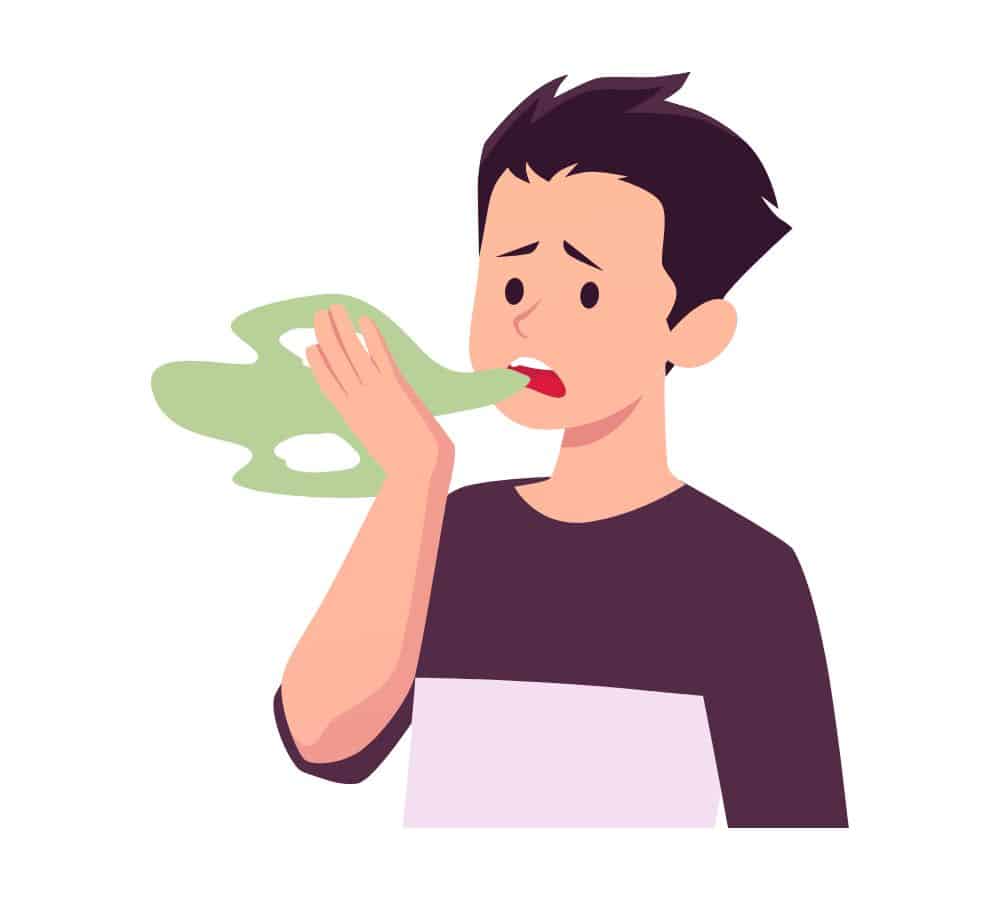
Bad breath takes multiple forms with distinctive odours, and that matters more than it sounds: the smell points to the cause, and the cause determines the fix. Covering it up with products treats none of them.
This page is the differential — six causes, how to tell them apart, and what actually resolves each one. For the practical routine, see Seven ways to avoid bad breath; for the underlying chemistry and how to test your own breath, How to make sure you never have bad breath and whether fresh breath can be guaranteed at all.
One piece of background that makes the six make sense. Most oral bad breath comes from anaerobic bacteria — species that thrive without oxygen — breaking down protein and releasing volatile sulphur compounds. That explains why the causes cluster where oxygen does not reach: deep gum pockets, the back of the tongue, between teeth, and inside a decaying tooth. The non-oral causes produce different chemistry, and often a different smell.
How common is it? Honest answer: nobody knows well. The only pooled estimate we could find is a 2018 systematic review and meta-regression in Clinical Oral Investigations (Silva and colleagues), which put prevalence across thirteen population studies at 31.8% (95% CI 24.6–39.0%) while stating that heterogeneity between those studies was high. Other authorities you might reasonably trust give figures from about 2.4% to 50–65%. Part of that spread is that some are counting "have you ever" and others "right now", and part of it is that self-report is a poor proxy for measured odour: in a study of 419 residents of Bern, Switzerland, 32% said they sometimes or often had bad breath, while 11.5% reached the objective threshold on examination, with only a weak correlation between the two. Treat any single percentage — including that one — with suspicion.
How often each cause turns up. The largest published series is 2,000 consecutive patients at a multidisciplinary bad-breath clinic in Leuven, Belgium (Quirynen and colleagues, Journal of Clinical Periodontology, 2009). An oral cause was found in 76% of them — tongue coating 43%, gingivitis or periodontitis 11%, and the two combined 18%. Ear, nose and throat or other non-oral causes accounted for 4%, and in 16% no odour could be detected at all. Two cautions before reading too much into those proportions. These were self-selected attenders at a specialist clinic who had been complaining for a mean of seven years, not a general population. And the figure that circulates online — that 85 to 90% of bad breath comes from the mouth — is this same 76% recalculated after the no-odour group is taken out. The proportions tell you what is common. They do not tell you what is happening in your case.
1. Gum disease (periodontal disease)
What it smells like: a heavy, persistent, sulphurous odour, sometimes metallic from blood.
The odour comes from the breakdown of blood and tissue due to ulceration of the gums. If your gums are swollen, dark pink or red, and bleed easily, you may have gum disease.
Severity runs on a spectrum — from superficial gingivitis, which is reversible, to periodontitis, which is not: teeth lose their bony foundations, move, and become loose.
Smoking is the number one modifiable risk factor, closely followed by poorly controlled diabetes. Genetics matters too — susceptibility runs in families.
What else you would notice: bleeding when brushing or flossing, gums receding, dark triangles appearing between teeth, a bad taste, teeth shifting.
The fix: professional periodontal treatment — which usually starts with cleaning below the gumline — and then lifelong maintenance. This is the cause most likely to be doing permanent damage while it produces the smell, which is why it heads the list. Bleeding Gums and Specialist Periodontists.
A trap worth knowing: smoking constricts the blood vessels in the gums, so a smoker's gums may not bleed even with advanced disease. Absence of bleeding is not reassurance if you smoke.
Late-stage gum disease can produce an abscess — a collection of pus — which may drain into the mouth, causing a bad taste and foul smell.
2. Dental decay and heavy plaque
What it smells like: a staler, mustier odour than gum disease, often localised to one area.
Less potent than gum disease, but a community of bacteria on the teeth produces its own distinctive smell. Food packing into a cavity, under a bridge, or between teeth adds to it.
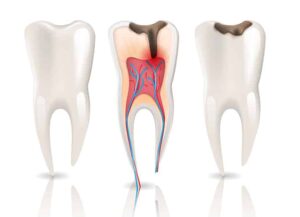
Regular check-ups catch decay early, before it becomes a “rotten tooth”. The end stage of decay is a tooth abscess, which may also drain into the mouth — and which is usually painful long before that point.
What else you would notice: a specific spot that tastes bad, floss that tears or smells in one place, sensitivity, a visible hole or dark shadow.
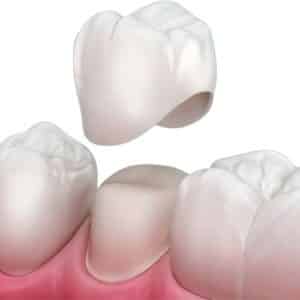
The fix: examination and radiographs to find it, then a filling, a crown, root canal treatment or extraction as appropriate. Cleaning around it harder does not resolve it, and preventing the next one is a separate conversation worth having at the same visit.
Other dental sources in this category: a failing or leaking filling or crown, a partially erupted wisdom tooth, and dentures that are not being cleaned properly or are worn overnight. Healthdirect Australia makes the denture point specifically: bacteria on dentures can cause bad breath if they are not cleaned regularly, and its advice is that they fit well, are cleaned regularly, and are taken out before sleep.
3. Smoking and vaping
What it smells like: stale tobacco, distinct from the sulphurous odours above.
Tar from conventional cigarettes sticks to the teeth. Until it is professionally cleaned off it stays there, producing its characteristic odour as air flows over it.
This one will not resolve with brushing alone — it needs a professional clean. And it compounds: smoking also dries the mouth and increases the bacteria responsible for the other oral causes, so it operates on three fronts at once.
Vaping shares the dry-mouth effect, because the vapour bases draw water out of the tissues.
The fix: a professional clean removes the deposit. Stopping removes the cause. Quitline is free on 13 7848, and your GP or pharmacist can discuss options. Are e-cigarettes bad for my teeth?.
4. Dietary choices
What it smells like: whatever you ate, and it is usually obvious.
Usually short-lived, following garlic, onion, coffee or alcohol. These are genuinely different from every other cause on this list: the aromatic compounds are absorbed into the bloodstream and released through the lungs, so the smell is not coming from your mouth and no amount of brushing removes it. It lasts as long as the compounds remain in your system.
Less obviously: some food intolerances — to fermentable carbohydrates such as lactose, fructose, sorbitol, mannitol, fructans or galacto-oligosaccharides — may cause the sufferer to produce and exhale gases as a waste product of fermentation in the gut.
What else you would notice with intolerance: bloating, wind, abdominal discomfort, a relationship to particular foods.
The fix: for ordinary food odour, time. For a suspected intolerance, a GP or dietitian — not a dentist, and not an elimination diet self-designed from the internet.
5. Ketosis
What it smells like: sweet, fruity, or like nail polish remover — quite unlike the sulphurous odours.
If you run down your body's carbohydrate stores, it enters ketosis and begins burning fat for fuel. This produces ketones as a waste product, which are eliminated through the breath.
Worth knowing if you have recently changed your diet and the timing coincides — low-carbohydrate diets, fasting, and illness with poor intake all do it. In that context it is harmless and it passes.
One important exception. A sweet or acetone-like breath odour in someone with diabetes, particularly alongside excessive thirst, frequent urination, nausea, abdominal pain, drowsiness or rapid breathing, can indicate diabetic ketoacidosis — a medical emergency. That is a 000 or emergency department situation, not a dental one. The same odour appearing in someone with unexplained weight loss and thirst who has not been diagnosed with diabetes should be seen by a doctor promptly.
6. Nose and throat pathology
What it smells like: often foul and intermittent, sometimes with a bad taste and no dental findings at all.
Sinus infections, post-nasal drip from allergic or chronic sinusitis, tonsillitis, tonsil stones, and throat infections. Healthdirect Australia's list of non-oral causes runs wider again: tonsillitis, a throat infection, a sinus infection, diabetes, gastro-oesophageal reflux disease and metabolic disease.
This category is the one most often missed, because the mouth itself is healthy. The Australian Dental Association's consumer site makes the same point in one line — bad breath "can actually be caused by other areas of the body including the lungs and the nose". The classic presentation is someone with impeccable hygiene, no decay and healthy gums who has been told repeatedly to floss more — and who has already tried everything else.
Keep the Leuven figures in view, though: non-oral causes were 4% of attenders at a clinic devoted to this problem. This category is uncommon. It matters because it is the one that more cleaning will never touch.
Tonsil stones deserve a specific mention — small pale lumps of calcified debris in the tonsil crypts, sometimes coughed up, and a very common explanation in this group.
The fix: a saline nasal spray may help post-nasal drip; recurrent tonsil problems are an ENT matter. Your GP is the right starting point.
The seventh thing, which is not on the original list
Dry mouth (xerostomia) deserves naming separately, because it is the most common reason someone with genuinely good hygiene still has bad breath — and because it makes every other cause worse.
Saliva clears debris and neutralises acid. Reduced saliva means bacteria are left undisturbed. Causes include medications (a very long list), mouth breathing, dehydration, caffeine and alcohol, smoking, and conditions such as diabetes and Sjögren's syndrome. What can actually be done about it is a practical list rather than a single fix.
Bring a list of your medications to the appointment. The connection is easy to miss if nobody looks at it. Never stop a prescribed medication on your own account — the dryness can usually be managed instead.
And the everyday version of the same mechanism. Healthdirect Australia treats morning breath as normal physiology rather than disease: "It's normal to have bad breath when you wake up in the morning, and it usually goes away after you have something to drink or clean your teeth." Less saliva is produced overnight, so bacteria are left undisturbed. The line healthdirect draws is a useful one to borrow — "If halitosis doesn't improve during the day, this may be a sign of a dental problem or another medical condition."
What to do about it
Bad breath may be caused by one or several of the above at once, which is why a single remedy often fails.
Discuss your concerns with your dentist or GP. The value of the conversation is diagnostic: identifying which of these is actually operating in your case, rather than guessing. Healthdirect describes what that examination covers — tongue, teeth, gums and throat — and one simple discriminator the dentist may use: comparing your mouth breathing with nose breathing.
Why starting with a product usually disappoints. A 2019 Cochrane review, Interventions for managing halitosis, pooled 44 trials and 1,809 participants across mouthrinses, toothpastes, chewing gums, tongue cleaning, systemic agents and combinations of these. Its conclusion: "We were unable to draw any conclusions regarding the superiority of any intervention or concentration." The plain-language summary puts it plainly — "We do not have enough evidence to say which intervention works better to control bad breath." Only one comparison in the whole review reached even low-certainty evidence; every other was very low certainty, and most trials followed people for only one to four weeks. That is not a reason to stop brushing. It is the reason this page is built around finding the cause rather than choosing a product.
If good oral hygiene has not solved it, the cause is very likely dry mouth, a systemic factor, or something in the nose and throat — none of which brushing will address.
See a doctor rather than a dentist first if the change was sudden with no dietary explanation, or comes with weight loss, unusual thirst, fever, or feeling generally unwell.
And a note for anyone convinced they have it when others say otherwise. In the Leuven series, 16% of people who presented with bad breath had no odour that could be detected on examination — four times the proportion found to have a non-oral cause. Persistent worry about an odour that people close to you cannot detect is a recognised condition in its own right, it is treatable, and it is not helped by more brushing or more mouthwash. Healthdirect Australia notes that bad breath can lead to anxiety around other people, and that a doctor "may recommend seeing a psychologist for help". It is worth raising honestly with a clinician.
Common questions
Everyone tells me to scrape my tongue. Does that actually fix it?
No, and the Australian authority is unusually precise about the distinction. Healthdirect Australia's wording is worth reading twice: "Cleaning your tongue with a tongue scraper or tongue cleaner does not treat halitosis, but it can help to remove bacteria from your mouth." It is hygiene, not treatment.
The trial evidence sits in the same place. The 2019 Cochrane review compared mechanical tongue cleaning with no tongue cleaning and found a difference of −0.20 on a dentist-rated odour scale (95% CI −0.34 to −0.07) — from two trials and 46 participants in total, rated very low-certainty evidence.
So scrape gently if you find it helps, and stop if it makes the tongue sore. But if scraping is your entire plan and the smell is still there after a few weeks, that is information: the cause is somewhere the scraper cannot reach. Should I use a tongue scraper? goes into technique.
Is any mouthwash worth buying, and should I use one every day?
This is a question where the sources genuinely differ in emphasis, and the difference is the useful part.
The Australian Dental Association lists mouthrinse among the "proven aids to oral hygiene" — alongside a toothbrush, fluoride toothpaste, interdental cleaning and sugar-free chewing gum. It does not list it among the "main oral hygiene strategies", which are brushing for two minutes twice a day, an age-appropriate fluoride toothpaste, cleaning between the teeth once a day, and regular professional care. An aid, in other words, not one of the pillars.
Healthdirect suggests looking for a rinse containing peppermint, zinc or chlorhexidine (an antiseptic) and then says to "speak to your dentist or pharmacist about choosing a mouthwash that is right for you". Australian Prescriber is blunter about the boundary: "Mouthwashes are an adjunct to, not a substitute for, regular brushing and flossing", and antiseptic rinses "should only be used for short periods of time and should never be the sole means of oral hygiene" — the recognised adverse effects it lists include tooth and restoration staining, soft tissue staining, increased calculus deposition, taste alteration and a burning sensation.
And Cochrane, having pooled every rinse trial it could find, could not say which one works best.
The practical reading: a rinse chosen for a defined purpose over a defined period, on advice, is reasonable. An indefinite daily antiseptic habit adopted to mask a smell nobody has diagnosed is not, and it can cost you staining and calculus along the way.
Does sugar-free gum help, or is that just an advertisement?
Both, depending on what you expect from it.
The mechanism is real and it is about saliva rather than perfume. Healthdirect: "Chewing sugar-free gum can make you produce saliva and help reduce bad breath" — which is why it appears on this page under dry mouth rather than under cures. The ADA includes sugar-free chewing gum in the same "proven aids" list as mouthrinse.
The trial evidence for gum as a treatment for halitosis is weak. The only gum comparison in the Cochrane review — a 0.6% eucalyptus gum against a placebo gum, 65 participants — gave −0.10 (95% CI −0.31 to 0.11), an interval that includes no difference at all, at very low certainty.
So: helpful if your mouth is dry, harmless if it is not, and sugar-free is not optional — a sugared gum chewed all day is a decay problem in its own right. It is not a substitute for finding out why the smell is there.
How long should I keep trying things before I go and get examined?
Shorter than most people do. Two useful anchors.
First, almost the whole evidence base is short: in the Cochrane review, most trials followed people for one to four weeks, and only one reported results as far out as three months. Nobody has shown that a product that does nothing in a month starts working in six.
Second, the things that genuinely resolve bad breath resolve it because a cause was identified and treated — periodontal treatment, a filling, a denture properly cleaned, a medication reviewed, an ENT referral. Improvement follows the treatment.
A reasonable rule: if you have been cycling through rinses, gums and brushing harder for more than a month with no change, stop buying things and get examined. The risk of waiting is not the smell — it is that gum disease and decay are both doing damage while they produce it, and both are far cheaper to treat early.
What is this likely to cost me, and what should I ask before agreeing to anything?
The examination is the small part; what follows depends entirely on what is found, and that is where the range comes from. The realistic cost drivers are how many visits the treatment takes (periodontal treatment is usually staged over several appointments, a single filling is not), whether radiographs are needed to find a hidden cause, whether a restoration or denture has to be replaced rather than cleaned, and whether the answer turns out to be medical rather than dental, in which case the cost moves to your GP or an ENT specialist.
What to ask, before you agree: a written treatment plan with itemised costs, which item numbers will be claimed, what your health fund pays on each, and therefore what the out-of-pocket gap is. If treatment is staged, ask what the total will be by the end, not just the cost of the first visit. Our fees and Understanding your treatment set out how we present that here.
It is worth being honest about why this question matters. A submission to a Commonwealth parliamentary inquiry cites an Australian Institute of Health and Welfare survey in which nearly a third of people aged five or older (32%) had avoided or delayed seeing a dentist because of cost. Delay is the expensive option, because the two commonest causes on this page both progress. Ask for the numbers in writing early, rather than avoiding the appointment.
Practical details
Smile Solutions, Level 1, 220 Collins Street, Manchester Unity Building, Melbourne VIC 3000. Phone 13 13 96, or theteam@smilesolutions.com.au. Monday–Friday 8.00am–6.00pm, Saturday 8.30am–1.30pm, Sunday by appointment.
Related: Bad Breath, Seven ways to avoid bad breath, How to make sure you never have bad breath, Bleeding Gums, Specialist Periodontists, Dental Cleans and Hygienists.
Registration for any practitioner can be verified free on the AHPRA public register at ahpra.gov.au.
Published 28 April 2022. General information only — it is not a diagnosis, a treatment plan or a promise of any particular clinical outcome, and it does not replace advice from your treating practitioner or doctor. The causes described here overlap and more than one can be present at once; breath odour is a prompt to be examined, not a diagnostic test, and persistent halitosis needs assessment rather than self-treatment because some of its causes worsen while they are being masked.
Smile Solutions trades under ABN 28 193 514 103.
Images on This Page
-
https://www.facebook.com/tr?id=800557773428361&ev=PageView&noscript=1
(no alt text)
-
https://www.smilesolutions.com.au/wp-content/uploads/2025/10/calendar_month.svg
(no alt text)
-
https://www.smilesolutions.com.au/wp-content/themes/arcadian-wordpress-theme/assets/images/smile_solutions_logo_white.png
Smile Solutions Logo
-
https://www.smilesolutions.com.au/wp-content/themes/arcadian-wordpress-theme/assets/images/smile_solutions_logo_purple.png
Smile Solutions Logo
-
https://www.smilesolutions.com.au/wp-content/uploads/2023/11/SS-Tooth-1-1-150x150.png
Smile Solutions
-
https://www.smilesolutions.com.au/wp-content/uploads/2022/04/Bad-Breath.jpg
Bad Breath
-
https://www.smilesolutions.com.au/wp-content/uploads/2025/09/Root-Canal-2-300x217.jpg
Root Canal
-
https://www.smilesolutions.com.au/wp-content/uploads/2026/08/Mouth-Breathing-300x270.jpg
Mouth Breathing
-
https://www.smilesolutions.com.au/wp-content/uploads/2025/09/Dental-Crown-at-Smile-Solutions-300x300.jpg
Dental Crown at Smile Solutions
-
https://www.smilesolutions.com.au/wp-content/themes/arcadian-wordpress-theme/assets/images/family_owned_bussiness.png
Family Owned Business
-
https://www.smilesolutions.com.au/wp-content/themes/arcadian-wordpress-theme/assets/icons/icon--phone.svg
Smile Solutions Contact
-
https://www.facebook.com/tr? id=800557773428361&ev=PageView&noscript=1
(no alt text)