My mouth always feels dry — what can I do?
Do any of these apply to you?
- Does your mouth often feel sticky and dry?
- Do you often get thirsty?
- Do you have problems chewing or swallowing?
- A prickly, burning sensation in the mouth?
- Mouth ulcers? — see the cause of mouth ulcers and their usual treatments
- Bad breath? — see what causes bad breath and how can I fix it? and bad breath
If you answered yes to one or more, you may be experiencing dry mouth.
Xerostomia — dry mouth syndrome — is a growing problem. And the framing that matters most:
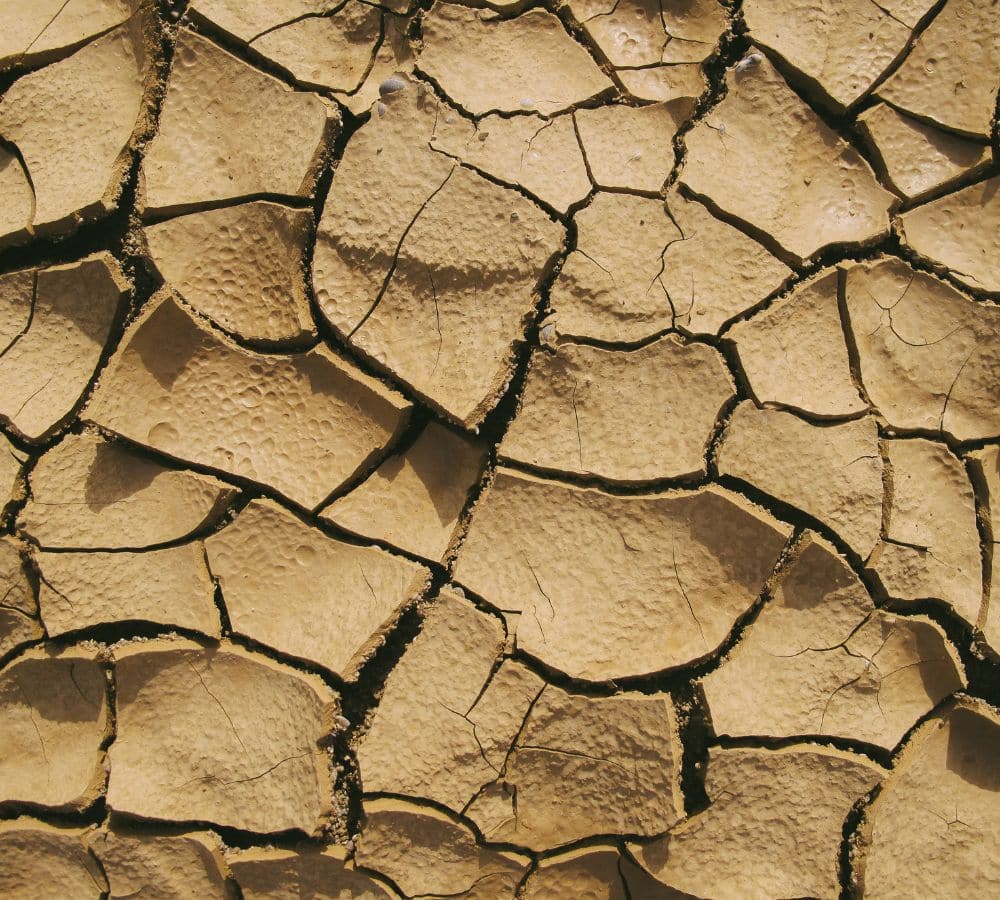
A feeling of dryness in the mouth is a symptom of an underlying problem, not the problem itself.
That is why the first step is establishing why your mouth is dry, rather than reaching for something to relieve it. Relief without diagnosis treats the sensation and leaves the cause running.
My mouth is always dry — why is this and does it affect my teeth? covers the same ground from the causes side, and what causes dry mouth during running? deals with the exercise-related version.
Why it matters for your teeth
Dry mouth significantly increases the risk of tooth decay, because saliva does three protective jobs:
It contains components that directly attack the bacteria that cause decay.
It neutralises the acids produced by plaque.
It contains phosphorus and calcium — substances vital to remineralisation, the ongoing rebuilding of tooth enamel.
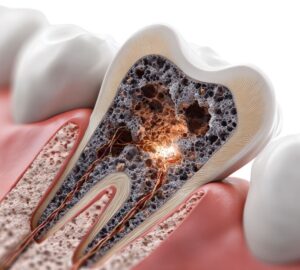
That third one is easy to underrate. Enamel is constantly being demineralised by acid and remineralised by saliva. It is a balance, not a one-way process. Remove the saliva and the balance runs one way only. See how does tooth decay develop?, the stages of dental decay, can you reverse tooth decay and do I need a filling? and what is dental erosion and how is it addressed?.
Early detection is paramount to avoid nutritional deficiencies, discomfort and increased decay. Left to run, that means fillings — and how long do dental fillings last? is worth reading before you need one, because a high-decay-risk mouth is harder on restorations.
Where the decay actually appears
Not always where you would look. Diabetes Australia, describing the same mechanism, points at the root surface: recession “uncovers and exposes the root surface, which is not as strong as the white enamel covering the tooth crown,” and decay there is driven by “gum recession from periodontitis exposing the root surface and a decrease in saliva flow.”
The Australian Dental Association makes the same point about age in its diet and nutrition policy, listing the elderly as a group needing targeted advice “because of the increased risk of caries from reduced saliva flow and more exposed root surfaces.”
Two risk factors, stacking. If you have both a dry mouth and any gum recession, the exposed root is the surface to watch and the one your dentist will be checking — see when do you need deeper cleaning? and what is periodontal disease?.
Practical advice found online can alleviate the feeling of dryness — but the relief may only be temporary.
Causes worth ruling out
Medications
The most common cause, and the one people least expect. The ADA’s policy notes that “Medications, including over-the-counter vitamin and mineral tablets, may include sugars (particularly those that are chewable and dissolved in the mouth) or contribute to dry mouth, both of which can contribute to tooth decay or softening and loss of tooth structure.”
Two separate problems in one sentence — the medicine can dry your mouth, and the form it comes in can be sugary or acidic. A chewable supplement taken daily by someone with dry mouth is doing both at once.
Bring a list to the appointment. Diabetes Australia’s instruction applies to everyone: make sure your dentist knows “the names of all prescribed and over-the-counter tablets and medicines you take.” Do not stop or change anything on the strength of a website — that is a conversation with your prescriber.
Diabetes
Dry mouth is a recognised oral complication of diabetes, alongside gum disease, decay, delayed healing and altered taste. Diabetes Australia reports that “People with diabetes more commonly experience a decrease in saliva production which can cause a dry feeling within the mouth. This is reported to be more common in patients with diabetes complications, in particular diabetic neuropathy.”
It also explains why oral thrush follows a dry mouth so often in this group — less saliva, plus high blood glucose levels causing increased glucose in saliva “which can cause more Candida bacteria to live and grow,” plus a weakened immune response. Creamy white patches on the tongue or inside the cheeks are worth showing someone, not waiting out. See diabetes and oral health and diabetes and dental health: the two-way street.
One specific piece of advice from the same source, for anyone managing hypoglycaemia: after treating a hypo with fast-acting carbohydrate, drinking water once you feel well again helps rinse the sugar and acids from your mouth, and it is better to wait 60 minutes before brushing. Brushing immediately onto acid-softened enamel does more harm than good — the same principle covered in what is acid wear and how can I avoid it?.
What an assessment involves
During your dental examination you may need an analysis of your saliva, plus further investigation to find the cause and rule out more significant health risks. How often should I go to the dentist? and understanding your treatment cover what an examination and a plan involve, and published fees are in the price guide.
Your dentist and hygienist can help through oral hygiene instruction, lifestyle changes, and over-the-counter saliva substitutes in the form of gels and rinses. See dental cleans and hygienists, what does a dental hygienist do? and your Smile Solutions dental hygienist visit: what to expect.
Where dry mouth is related to Sjögren's syndrome, or to radiation and chemotherapy, consult your doctor about systemic medications that slow the loss of functional salivary gland tissue. That is a medical rather than a dental decision. A dry mouth is also a reason to be attentive to the soft tissues generally — oral cancer: how your dentist can help with early detection.
What actually helps
Cleaning and protecting
- Brush and floss twice daily — see what is the ideal daily routine for oral hygiene? and is flossing really that important?
- Brush with a fluoride toothpaste — the benefits of fluoride, and selecting a toothpaste — fluoride or non-fluoride?
- Ask your dentist or hygienist about fluoride rinses and pastes
- See your dentist and hygienist at least twice a year
Fluoride earns more emphasis in a dry mouth than in a normal one, because it is doing work saliva is no longer doing. The NHMRC supports fluoridation of Australian drinking water within the range of 0.6 to 1.1 milligrams of fluoride per litre, and its review found water fluoridation reduces tooth decay by 26 to 44% in children and adolescents, and by about 27% in adults. Tap water is the cheapest thing on this page — see fluoridated water: why I worry if you have reservations about it.
Stimulating saliva
- Chew sugar-free gum, or suck sugar-free hard sweets — see does chewing sugar-free gum really help prevent cavities?
- Increase water consumption
The ADA supports the gum, with one qualification worth reading twice: “Sugar-free confectioneries without added acids, including chewing gums, are dentally safe alternatives to caries-producing confectionery containing sugar.” Without added acids. Plenty of sugar-free mints and gums are acidic, and acid on an under-protected tooth is the thing you are trying to avoid. Diabetes Australia lists chewing sugar-free gum among its oral health recommendations for the same reason — it “can help to stimulate saliva flow.”
What to cut
- Limit caffeine
- Stop all tobacco use — and note that vaping is not a neutral substitute here: the effects of vaping on your oral health
- Avoid foods and drinks high in acid and sugar — see how does acidic food affect your teeth?, what is acid wear and how can I avoid it? and how does sugar affect your dental health?
The ADA’s policy names reduced salivary flow, exertion resulting in a dry mouth, and medications that reduce salivary flow among the circumstances in which acidic food and drink “should be avoided.” Two items on its list are specific enough to be worth calling out, because most people do them without thinking:
- “sipping drinks, other than water, during interrupted sleep” — the 3am glass of juice or cordial is the worst possible timing, because saliva flow is at its lowest overnight
- “chewing and sucking acidic vitamin tablets” — a daily habit that looks like health
On sugar generally, the ADA’s position is no more than 6 teaspoons (24 grams) of free sugar per day, aligning with the World Health Organization’s recommendation to keep free sugars below 10% of total energy intake, and ideally below 5%.
Products to avoid — the useful part of this list
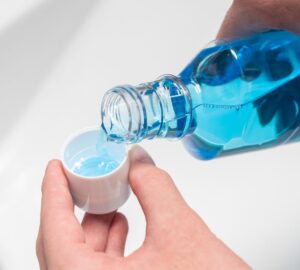
Do not use mouthwashes containing alcohol. Alcohol is drying. A mouthwash bought to relieve dry mouth can make it worse, and this catches people out constantly. The truth and myths about mouthwashes and should I be using mouthwash as well as brushing and flossing? go further.
Avoid toothpaste and rinses containing sodium lauryl sulfate (SLS). It is the foaming agent in most toothpastes, and it irritates already-dry oral tissue — which is why some people with dry mouth also get recurrent ulcers. Choosing the right toothpaste and with so many toothpastes on the market, how can I make a wise choice? are the pages for reading a label.
Avoid over-the-counter antihistamines and decongestants where you can. These are among the most common medication causes of dry mouth — so treating a cold or hay fever with them while trying to manage xerostomia works against you.
Saliva substitutes
Artificial saliva products, including tri-enzyme systems designed for dry mouth. Common brands are Oral7 and Biotene.
One behavioural change
Be aware of when you are mouth breathing, and aim to breathe through the nose.
This is worth taking seriously. Mouth breathing dries the mouth directly, particularly overnight — which is why so many people with dry mouth notice it worst on waking. Persistent mouth breathing has its own causes worth investigating: see mouth breathing: the silent habit that’s changing your face and your health, orofacial myofunctional therapy and, where snoring or interrupted breathing is part of it, snoring and sleep apnoea.
A dry mouth on waking often travels with clenching or grinding overnight, which is a separate problem with its own management — TMD and teeth grinding, night time tooth grinding and clenching and how can I stop grinding my teeth when I sleep?. If you wear a night guard, keep up the fluoride and hygiene advice above: a dry mouth under an appliance is a higher-risk environment than either alone.
If several items on the symptom list at the top apply to you, book an assessment rather than working through the remedies alone. The list above manages dry mouth. It does not identify what caused it. Contact us.
Common questions
Is a dry mouth just part of getting older?
No, and this is the single most useful thing to know about it. Dryness is more common with age — the Better Health Channel, a Victorian Department of Health publication produced with and approved by the Australian Dental Association's Victorian Branch, reports that “about 10% of the general population and 25% of older people have dry mouth” — but common is not the same as normal.
The salivary glands themselves usually keep working. A review in the International Journal of Oral Science is explicit: “Although xerostomia is associated with aging, studies have demonstrated that salivary gland function is well preserved in the healthy geriatric population. Therefore, dry mouth is probably a condition of systemic or extrinsic origin.” Saliva does change with age — it becomes thicker as its composition shifts — but a genuinely dry mouth at 75 has a cause, in the same way it does at 35.
Why that matters practically: accepting dryness as an age thing is what delays finding the medication, the diabetes or the autoimmune condition behind it. Age is a reason to look harder, not to stop looking.
Is there an actual measurement for this, or is it just how it feels?
Both, and they are not the same thing. The word xerostomia describes the sensation of dryness. Reduced salivary flow is the measurement, and the two do not always travel together — some people feel dry with reasonable flow, and some produce very little saliva without complaining of dryness.
The published figures give you a sense of scale. The International Journal of Oral Science review describes people with dry mouth as producing around 0.15 mL of saliva per minute, against a normal 0.25 to 0.50 mL per minute, and notes that they “often show an increased volume of plaque on teeth and tongue.”
What a dentist can see without any measurement at all is usually the more useful part: where plaque is sitting, whether the tissues look dry or shiny, whether the lower front teeth and root surfaces have started to decay, and how much your medicine list has changed since the last visit. The saliva analysis mentioned above is worth doing where the cause is unclear, not as a routine first step.
You suggest Oral7 and Biotene. Is there anything I should know about using them long term?
Yes — one specific point about the enzyme-based rinses, which is not a reason to avoid them. Australian Prescriber notes that this class of product “do not contain alcohol or detergent, but they do have a low pH (5.15) which may pose a risk of dental erosion during long-term use.” In other words the thing that makes them suitable for dry mouth — no alcohol, no detergent — comes with a mildly acidic formulation, and an acidic product used many times a day, for years, in a mouth with little saliva to buffer it, deserves review rather than assumption.
The practical version: use them, tell your dentist you are using them and how often, and have the enamel and root surfaces checked with that in mind. The fluoride advice above matters more, not less, if you are using an enzyme rinse daily.
Two other rinse categories to keep straight. Alcohol-containing rinses are the ones to avoid outright. Essential-oil rinses are a separate category, and the same journal states they “are not recommended for patients suffering from xerostomia.” The truth and myths about mouthwashes covers the wider question of who needs a rinse at all.
Could my dry mouth be why my breath is bad, and does a tongue scraper help?
Very likely yes to the first. The FDI World Dental Federation's 2025 advice sheet lists “Dry mouth (xerostomia)” directly among the factors that increase bacterial production of the volatile sulphur compounds responsible for bad breath, alongside poor oral hygiene, smoking, alcohol and certain medications. Saliva is what would normally clear the bacteria and the food debris they work on.
It is also why breath is worst on waking. The FDI describes the ordinary morning version as physiological halitosis, occurring “upon waking or during fasting” because of decreased saliva — a transient state rather than a condition, and one that clears with brushing.
On the tongue scraper: it is on the list, as part of a routine rather than as a fix. The FDI puts “daily tongue cleaning with a tongue scraper” under oral hygiene improvement, which it calls the primary preventive measure, alongside brushing, flossing, professional cleaning and periodontal treatment. Its overall position is the one that matters most here: “Management of halitosis involves identifying and addressing the underlying cause.” If the underlying cause is a dry mouth, scraping the tongue treats the symptom and the dryness keeps producing it. See do I need to use a tongue scraper? and how do I get rid of my bad breath?
How often should I be having check-ups if my mouth is dry?
More often than the general advice, and the interval should be a decision rather than a default. The Better Health Channel's general guidance is to “visit your dentist every 6 to 12 months for check-ups, teeth cleaning and treatment if necessary”, and it adds the qualifier that applies to you: “You may require more frequent visits if you have a higher risk for tooth decay.” A dry mouth is one of the clearest ways to be in that higher-risk group, which is why the list above says at least twice a year rather than up to twelve months.
Ask for the reasoning rather than the number. What changes the interval is how fast decay is actually appearing in your mouth, whether root surfaces are exposed, whether the cause of the dryness is permanent, and how well the preventive measures are holding. Those are things your dentist can see over two or three visits and you cannot see at all.
One instruction from the same source is worth repeating, because people act on the opposite: “Continue to take your medication, even if your medicine is to blame... Do not stop taking your medicine without speaking to your doctor.” The dental plan is built around the dryness continuing.
Does a dry mouth matter more if I wear a denture or a night guard?
Yes, for two separate reasons. The first is mechanical: saliva is part of what holds a denture in place and what lets it move against the tissues without rubbing, so a dry mouth makes an otherwise well-fitting denture feel looser and sorer. See five things you should know about your new dentures.
The second is that an appliance changes the environment underneath it. The International Journal of Oral Science review names “unclean acrylic dentures (worn at night or not regularly cleaned or with rough surfaces)” among the odontogenic causes of bad breath, and reports a study in older people finding “the accumulation of bacterial plaque on the tongue, oral dryness, burning mouth, overnight denture wear” all significantly related to oral malodour. Dryness and overnight wear appear on that list separately, which is the point — combining them stacks two risks.
What to do about it is unglamorous and effective: clean the appliance daily as instructed, leave it out overnight unless you have been told otherwise, and keep the fluoride regime going on the teeth that remain. The same applies to a night guard, which sits against the teeth for eight hours in the driest part of the day-night cycle — night time tooth grinding and clenching.
Related reading
- My mouth is always dry — why is this and does it affect my teeth?
- What to do if you suffer from sensitive teeth
- Diabetes and oral health
- Are women especially prone to oral health problems?
- Dental health and general wellbeing
- How do I prevent dental decay?
- General dentistry
Practical details
Written by Naomi Hoopmann. The full team is listed by name.
Smile Solutions, Level 1, 220 Collins Street, Manchester Unity Building, Melbourne VIC 3000 — getting here. Phone 13 13 96, or theteam@smilesolutions.com.au. Monday–Friday 8.00am–6.00pm, Saturday 8.30am–1.30pm, Sunday by appointment.
Quotations and figures attributed to the Australian Dental Association are from its Policy Statement 2.2.2, Diet and Nutrition; those attributed to Diabetes Australia are from its Dental health page; the fluoridation figures are the NHMRC’s. The questions above also draw on the Better Health Channel's dry mouth page (Victorian Department of Health, reviewed 9 September 2025), Australian Prescriber on mouthwashes (2009), the FDI World Dental Federation's halitosis advice sheet (2025), and Bollen and Beikler's review in the International Journal of Oral Science (2012). None of those publishers is connected with us.
Published 4 September 2017. Do not stop or change any prescribed medication without speaking to your prescriber. General information only; it does not replace advice from your treating practitioner.
Smile Solutions trades under ABN 28 193 514 103.
Images on This Page
-
https://www.facebook.com/tr?id=800557773428361&ev=PageView&noscript=1
(no alt text)
-
https://www.smilesolutions.com.au/wp-content/uploads/2025/10/calendar_month.svg
(no alt text)
-
https://www.smilesolutions.com.au/wp-content/themes/arcadian-wordpress-theme/assets/images/smile_solutions_logo_white.png
Smile Solutions Logo
-
https://www.smilesolutions.com.au/wp-content/themes/arcadian-wordpress-theme/assets/images/smile_solutions_logo_purple.png
Smile Solutions Logo
-
https://www.smilesolutions.com.au/wp-content/uploads/2016/05/Naomi-150x150.jpg
Naomi Hoopmann
-
https://www.smilesolutions.com.au/wp-content/uploads/2016/08/Dry-Mouth.jpg
Dry Mouth
-
https://www.smilesolutions.com.au/wp-content/uploads/2025/11/Smile-Solutions-7-300x270.png
Smile Solutions Melbourne CBD
-
https://www.smilesolutions.com.au/wp-content/uploads/2013/12/Stages-of-Dental-Decay-300x270.jpg
Stages of Dental Decay
-
https://www.smilesolutions.com.au/wp-content/uploads/2013/01/Mouthwash-300x270.jpg
Do I need to use mouthwash?
-
https://www.smilesolutions.com.au/wp-content/themes/arcadian-wordpress-theme/assets/images/family_owned_bussiness.png
Family Owned Business
-
https://www.smilesolutions.com.au/wp-content/themes/arcadian-wordpress-theme/assets/icons/icon--phone.svg
Smile Solutions Contact
-
https://www.facebook.com/tr? id=800557773428361&ev=PageView&noscript=1
(no alt text)
-
https://bat.bing.com/action/0?ti=25148060&tm=gtm002&Ver=2&mid=2ead7278-4bdc-4d95-9ea6-e06b82ca22a5&bo=1&sid=efb50e00ab2711f18d42a5b12394983c&vid=efb53dc0ab2711f1a385f19b17c09393&vids=1&msclkid=N&pi=918639831&lg=en-US&sw=800&sh=600&sc=24&nwd=1&tl=My%20mouth%20always%20feels%20dry!%20What%20can%20I%20do%3F%20-%20Smile%20Solutions&p=https%3A%2F%2Fwww.smilesolutions.com.au%2Fdental-articles%2Farticle%2Fmouth-always-feels-dry-can%2F&r=&evt=pageLoad&sv=2&cdb=AQAQ&rn=339104
(no alt text)