Should I use mouthwash as well as brushing and flossing?
The short answer
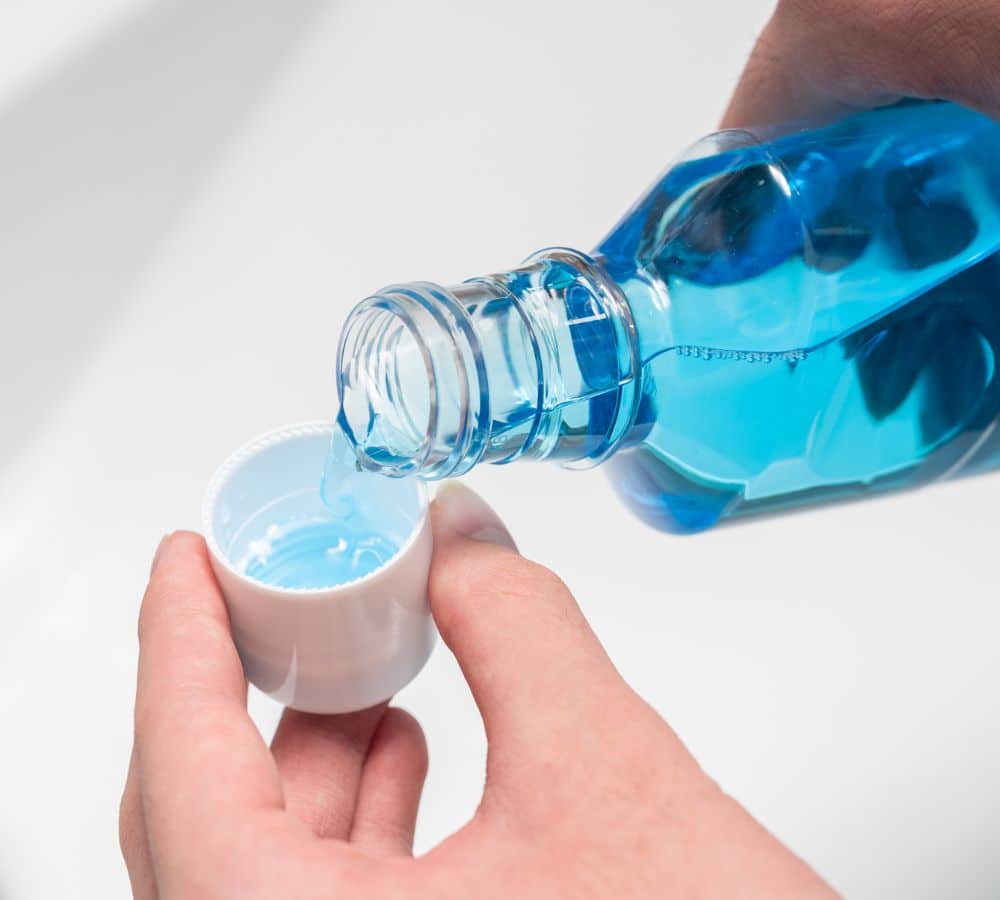
Advertising promotes mouthwash as reducing gum disease and decay, and creating fresh breath. So: is it actually required?
Generally, no.
For most people mouthwash is not an essential part of an oral hygiene routine, because removing plaque and bacteria requires mechanical action — brushing and flossing. Mouthwash cannot replace those.
That is not only our view. healthdirect, the national health information service funded by the Australian, state and territory governments, answers it in one sentence in its teeth-cleaning advice, last reviewed November 2024: "most people don't need to use mouthwash. Speak with your dental practitioner about the risks and benefits of using mouthwash regularly."
The Australian Dental Association draws the same line. In Policy Statement 2.2.3 on oral hygiene, amended by the ADA Board in October 2025, the main oral hygiene strategies are brushing for two minutes twice a day, an age-appropriate fluoride toothpaste, cleaning between teeth once a day with floss or interdental brushes, and regular check-ups and professional cleaning. Mouthrinse is not in that list. It appears in a separate one — "proven aids to oral hygiene" — alongside sugar-free chewing gum. So the ADA does not say mouthwash is useless; it says mouthwash is an aid, not a foundation. That distinction, between adjunct and essential, is the whole answer.
Why a liquid cannot do a brush's job
Plaque is not a film of loose bacteria sitting on the tooth waiting to be washed away. It is a biofilm.
A biofilm is a structured bacterial community that manufactures its own protective matrix — a sticky scaffold of sugars and proteins the bacteria secrete around themselves and anchor to the tooth surface. Three consequences follow, and they explain nearly everything about mouthwash:
- It adheres. Rinsing a liquid across a biofilm does not shear it off. The flow forces involved in swishing are nowhere near what is needed. The bristles of a brush and the passage of floss are — though not through force: plaque is soft, and technique does the work.
- The matrix is a barrier. Antibacterial agents penetrate a mature biofilm poorly. The organisms on the outside are exposed; the ones deeper in are substantially shielded. A rinse that kills free-floating bacteria in saliva very effectively may barely touch the ones that matter.
- It regrows. Plaque begins reforming within hours of removal. Anything that does not physically remove it is fighting a population that resets daily.
Australian Prescriber, published by Therapeutic Guidelines, reached the clinical version of that in its review of mouthwashes: rinsing "should always be used in conjunction with mechanical hygiene. Mouthwashes should only be used for short periods of time and should never be the sole means of oral hygiene." Its summary sentence — "mouthwashes are an adjunct to, not a substitute for, regular brushing and flossing."
Used as an adjunct to good brushing and flossing, a rinse adds something. Used instead of them, it does not. Advertising tends to blur those two questions, as it does with oil pulling and every other rinse-based claim.
What some mouthwashes do
Alcohol-containing rinses
Some mouthwashes contain high percentages of alcohol, which can dry out the mouth — creating a new problem.
Saliva is the mouth's own defence system: it buffers acid, carries calcium and phosphate that repair early enamel damage, physically washes debris away, and contains antimicrobial proteins. A dry mouth accumulates plaque faster and is markedly more prone to decay — which is the opposite of what the rinse was bought for.
The Better Health Channel, produced by the Victorian Department of Health in consultation with and approved by the Australian Dental Association Victorian Branch, is direct about it: "avoid lollies (especially fruit-flavoured and sour lollies) and alcohol-containing mouthwashes, as these products tend to aggravate dry mouth tissue." It also puts numbers on how common the problem is — "about 10% of the general population and 25% of older people have dry mouth" — and notes that "about 600 drugs and medications, both legal and illegal, are known to cause dry mouth", including many in everyday use. Adding an alcohol-based rinse on top of an already dry mouth is the wrong direction — what actually helps a persistently dry mouth is a different list.
A possible association between alcohol-containing mouthwash and oral cancer has been raised in some research, and the evidence is genuinely contested.
A 2008 review in the Australian Dental Journal by McCullough and Farah concluded there was "sufficient evidence to accept the proposition that alcohol-containing mouthwashes contribute to the increased risk of development of oral cancer", and that long-term use should not be recommended. That was a narrative review whose strongest figures came from a single case-control study in which exposure was self-reported and the alcohol content of the products was unknown.
The largest study since points the other way on the overall question. A pooled analysis of 8,981 head and neck cancer cases and 10,090 controls from 12 case-control studies, published in the European Journal of Cancer Prevention in 2016 by the International Head and Neck Cancer Epidemiology Consortium, adjusted for smoking, drinking, age, sex and education. Among ever-users of mouthwash, the odds ratio for all head and neck cancers was 1.01 (95% CI 0.94 to 1.08) — no association. Two subgroup signals were significant: oropharyngeal cancer, odds ratio 1.28 (95% CI 1.06 to 1.56), and use more than once per day, odds ratio 1.31 (95% CI 1.09 to 1.58), from five studies. The authors named their own limits — a retrospective design, and limited ability to assess risk in people who used neither tobacco nor alcohol.
So the two disagree about the strength of the link while agreeing on the advice: there is no good reason to use an alcohol-containing rinse every day, indefinitely, without a clinical reason. That is an argument for preferring alcohol-free products, not a cause for alarm about past use.
The bacteria question
Research indicates that while mouthwash kills harmful bacteria, it also kills the beneficial bacteria the mouth needs day to day.
A healthy mouth is not a sterile one. Its normal bacterial population is part of how it functions, and indiscriminate antibacterial rinsing does not distinguish between the organisms driving disease and the ones that have been keeping the balance. There is emerging research on whether heavy antiseptic rinsing interferes with that wider role. That work is early and should not be overstated, but it is a reasonable argument against reaching for an antibacterial rinse out of habit rather than need.
Chlorhexidine
Prolonged use of chlorhexidine mouthwash causes staining on the teeth, and altered taste sensation.
Your dental practitioner or hygienist may prescribe it to assist gum healing — but it is for short-term use only, and as directed.
Australian Prescriber describes chlorhexidine gluconate as "currently the most effective mouthwash for reducing plaque and gingivitis", which is why it is used after periodontal treatment, after oral surgery, or during a period when brushing an area properly is not possible.
The benefit and the cost are both measured. A Cochrane systematic review published in 2017 pooled 51 studies covering 5,345 participants, all testing chlorhexidine rinse used in addition to mechanical cleaning. At four to six weeks it reduced plaque substantially — a standardised mean difference of 1.45 (95% CI 1.00 to 1.90), from 12 trials and 950 participants, high-quality evidence. Its effect on gum inflammation in people with mild gingivitis was much smaller: 0.21 on the 0-to-3 Gingival Index (95% CI 0.11 to 0.31), from 10 trials and 805 participants — high-quality evidence of a reduction the reviewers described as one "that was not considered to be clinically relevant."
Against that, staining: a standardised mean difference of 1.07 (95% CI 0.80 to 1.34) at four to six weeks, from eight trials and 415 participants. Cochrane's conclusion is blunt — "rinsing with chlorhexidine mouthrinse for 4 weeks or longer causes extrinsic tooth staining" — and it occurred at every concentration tested, because the staining mechanism "appears to be closely linked to its mechanism of action." The staining is extrinsic and can be removed by a hygienist, and taste alteration usually resolves after stopping. That is why it is prescribed for a defined period and purpose: Cochrane's implications for practice put it as "chlorhexidine mouthrinse is indicated in particular clinical situations for short periods of time."
One practical detail people are rarely told: chlorhexidine is inactivated by the detergent in most toothpastes. Australian Prescriber gives the interval — it "should be used after rinsing with water or 0.5–2 hours after using toothpaste" — so if it has been prescribed, do not take it straight after brushing.
Fluoride rinses
The one category where a rinse does something brushing does not is fluoride. A fluoride mouthrinse raises fluoride availability at the tooth surface between brushings.
The evidence here is the strongest of any rinse. A Cochrane review updated in 2016 pooled 37 trials involving 15,813 children and adolescents, almost all supervised school rinsing programmes using sodium fluoride at 230 or 900 ppm. Across the 35 trials and 15,305 participants with usable data, the pooled prevented fraction for decayed, missing and filled permanent tooth surfaces was 27% (95% CI 23% to 30%), moderate-quality evidence.
Two qualifications. The effect held regardless of baseline decay severity, background fluoride exposure, rinsing frequency or fluoride concentration — so a fluoride rinse is not established as working only for high-risk patients. And the trials were of supervised rinsing in children; Cochrane says the findings may apply more widely, but that "the size of the caries-preventive effect is less clear."
In practice a rinse is still most often suggested to someone with a particular reason — dry mouth, orthodontic appliances, exposed root surfaces, high decay rates, or limited dexterity. Aligners have their own hygiene advantages and demands here. That targeting is clinical judgement rather than trial evidence, so ask rather than self-prescribe — as with the fluoride level in your toothpaste. Fluoride rinses are not recommended for children under six: Cochrane and Australian Prescriber both give that age limit, for the same reason — the risk of swallowing too much fluoride.
If it is bad breath you are treating
If brushing and flossing do not resolve it, arrange an appointment rather than covering it.
Bad breath can indicate an underlying condition — gum disease or tooth decay.
A rinse masks the symptom. Persistent halitosis has a cause, and the cause is usually treatable once identified. Needing a rinse every day to be comfortable in conversation is a reason to be examined, not a solution. Other possibilities include dry mouth, a heavily coated tongue, an old restoration or partial denture trapping debris, sinus or tonsil conditions, reflux, or a problem outside the mouth entirely.
There is also a trap specific to alcoholic rinses here: they dry the mouth, and a dry mouth produces worse breath. Used repeatedly through the day to control odour, an alcohol-based rinse can make the underlying situation worse while providing a short period of relief each time.
For the causes and how they are identified, see What causes bad breath, and how can I fix it?. For the practical routine, Seven ways to avoid bad breath. For the chemistry and self-testing, How to make sure you never have bad breath.
What actually reduces gum disease and decay
In order of how much difference each makes:
- Brushing twice daily with a fluoride toothpaste, two minutes, angled into the gumline. Spit, do not rinse with water afterwards. healthdirect gives the reason: "spit out the toothpaste, don't swallow it. Avoid rinsing with water. This allows the fluoride in the toothpaste more time to strengthen your teeth." (Before or after breakfast is a separate question with a clear answer.)
- Cleaning between the teeth once a day — floss, interdental brushes or a water flosser, whichever you will actually use. Roughly a third of each tooth surface is between the teeth and a brush does not reach it. This is where most gum disease and a large share of adult decay begins — and where bleeding gums first show it.
- Reducing the frequency of sugar exposure, not just the quantity. Six separate sweetened coffees do more damage than one dessert.
- Professional cleaning at the interval your practitioner recommends — healthdirect suggests a check-up every 6 to 12 months. This removes calculus, which is mineralised plaque, bonded to the tooth and removable only with instruments. No rinse, and no brush, will shift it.
Mouthwash does not appear on that list because nothing about it changes the outcome much when the four items above are being done, and nothing about it rescues the outcome when they are not. The three habits that do move the needle are all mechanical.
The rule
If you brush twice daily and floss once a day, mouthwash is not required.
If you cannot imagine your routine without it, always choose an alcohol-free version — and treat it as an addition rather than a substitute for either brushing or flossing. Use it at a different time of day from brushing so it is not washing your toothpaste fluoride away.
And keep the hygiene appointments. Where gum disease is already established, a periodontist may be the right person to see.
Common questions
Does it matter when I use it — straight after brushing, or at another time of day?
It matters, and which answer applies depends on whether the rinse contains fluoride. A 2012 review of post-brushing rinsing in the British Dental Journal sets out the mechanism: "rinsing with a non-fluoride mouth rinse soon after brushing with standard fluoride toothpaste may reduce the anticaries protection provided by brushing with a fluoride toothpaste alone." That is the wash-out phenomenon — the rinse flushes away the fluoride the toothpaste has just left on the teeth. The same review reports that Duckworth and colleagues found including 100 ppm fluoride in a rinse compensated for that loss, and concludes that a rinse "should therefore contain at least 100 ppm fluoride if it is to be used at any time, including soon after brushing", while "a non-fluoride mouth rinse should preferably be applied at different times of the day." For scale, the concentrations it names are 0.2% sodium fluoride (909 ppm F), 0.05% (226 ppm F) and 0.02% (100 ppm F) — so a labelled fluoride rinse clears that bar comfortably, and a cosmetic breath rinse usually contains no fluoride at all. The guidelines do not entirely agree with each other. The Australian Research Centre for Population Oral Health advises using the rinse at a different time to toothpaste; the New Zealand Guidelines Group took the opposite position, deciding that "if people are using mouth rinse, then there is no harm in using it at the same time as brushing"; and the review itself notes there is "a lack of recommendations regarding optimal use of mouth rinses after tooth brushing." Practical version: check the label for fluoride, and if there is none, move the rinse to another time of day.
My gums bleed when I brush. Will a mouthwash sort that out?
Probably not on its own, and the evidence has a gap exactly where you are standing. The high-quality Cochrane finding on gum inflammation described above — the 0.21 reduction on the 0-to-3 Gingival Index, which the reviewers themselves did not consider clinically relevant — came from people with mild inflammation, a mean score of 1. For anyone worse than that, Cochrane is explicit: "There were insufficient data to determine the reduction in gingivitis associated with chlorhexidine mouthrinse use in individuals with mean GI scores of 1.1 to 3", meaning moderate or severe gingival inflammation. So the most effective rinse available has good evidence of a small effect in mild cases and no usable evidence at all in the cases most likely to be bleeding. Bleeding is inflammation, inflammation has a cause, and the cause is usually plaque and calculus at or below the gumline — calculus being removable only with instruments. A rinse bought instead of an appointment turns a treatable early problem into a later one. See Bleeding Gums and when do you need deeper cleaning?
If I am going to buy one anyway, which active ingredient should I look for?
The ingredient list tells you more than the brand does. A 2019 network meta-analysis of six-month home-use randomised trials, covering 19 mouthrinse studies and 5,775 participants, ranked rinses on gingival index and found that "essential oils, triclosan-copolymer, chlorhexidine (at concentrations ≥ 0.10%) and cetylpyridinium chloride (> 0.05%) demonstrated the greatest effect", with essential-oil rinses showing the greatest effect on gingival index scores among the active agents compared. Two thresholds are worth carrying into a pharmacy: chlorhexidine at or above 0.10%, and cetylpyridinium chloride above 0.05% — below those concentrations this analysis did not find the greatest effect. Two cautions come with that. Chlorhexidine is not a product to put yourself on indefinitely, for the staining reasons above. And essential-oil rinses are the alcohol-containing category: Australian Prescriber describes them as containing "thymol, eucalyptol, menthol and methyl salicylate in up to 26% alcohol", says they "are not recommended for patients suffering from xerostomia, dental erosion due to a low oral pH, or oral mucosal disease" because of ethanol-induced irritation and dryness, and that they "are unsuitable for children due to the risk of accidental ingestion of high doses of ethanol."
I just like the fresh feeling. Is there any harm in using a cosmetic rinse every day?
For most people, no meaningful harm — with two things worth knowing rather than worrying about. The first is the wash-out point above: a rinse with no fluoride in it, used straight after brushing, can undo part of what the toothpaste was doing, so move it to another time of day. The second is what the cancer evidence actually says, because it is more precise than the headlines. In the pooled analysis of 8,981 cases and 10,090 controls described earlier, ever having used mouthwash showed no association with head and neck cancer overall (odds ratio 1.01, 95% CI 0.94 to 1.08). The significant frequency signal was for use more than once per day (1.31, 95% CI 1.09 to 1.58, from five studies) — not once a day — and there was a signal for use over more than 35 years (1.15, 95% CI 1.01 to 1.30, from seven studies). These are case-control odds ratios, not proof of cause, and the authors flagged that they could not properly separate people who used neither tobacco nor alcohol. Read together with the dry-mouth evidence, the sensible position is an alcohol-free product, once a day rather than several times, and at a different time from brushing. If you find you need it several times a day to feel comfortable talking to people, that is a reason to be examined rather than to buy a larger bottle.
Can you be allergic to chlorhexidine?
Yes, and it is worth knowing about even though it is rare. ASCIA, the Australasian Society of Clinical Immunology and Allergy, working with the Australian and New Zealand Anaesthetic Allergy Group, states that "allergic reactions to chlorhexidine are rare, but are increasing in frequency, possibly due to increased use of chlorhexidine containing products." Immediate reactions are the serious ones and produce "itching, hives (urticaria), and angioedema (swelling)". On the mouthrinse specifically, the 2017 Cochrane review records that anaphylaxis "does not appear to have occurred as a result of using chlorhexidine mouthrinse to maintain periodontal health" — so this is not a reason to refuse a short prescribed course, but it is a reason to stop and ring if a rinse produces swelling, hives or itching rather than just an odd taste. The other half of the ASCIA advice matters more for hospital visits than for dentistry: chlorhexidine is in hand washes, skin preparations, dressings and some medical devices, "there is no universal symbol identifying that a product contains chlorhexidine", and "labelling can be inconsistent" — so anyone who has reacted to it should say so before surgery or any procedure, not only at the dentist. ASCIA also notes that people with chlorhexidine allergy "should be able to tolerate other antiseptic products due to the lack of cross-reactivity."
Does this article replace an individual dental assessment?
No. It provides general information. Symptoms, suitability, risks and treatment choices depend on examination and, where indicated, imaging or other records from an appropriately registered practitioner.
Related reading
Should I be using mouthwash? · How often should I brush my teeth? · Is flossing really that important? · What is the ideal daily routine for oral hygiene? · Bad Breath · What is gum disease? · Dental Cleans and Hygienists · How does tooth decay develop?
Practical details
Smile Solutions, Level 1, 220 Collins Street, Manchester Unity Building, Melbourne VIC 3000. Phone 13 13 96, or theteam@smilesolutions.com.au. Monday–Friday 8.00am–6.00pm, Saturday 8.30am–1.30pm, Sunday by appointment.
Published 1 March 2018; the discussion of research evidence has been updated.
General information only — it is not a diagnosis, a treatment plan or advice about which products suit your mouth, and it does not replace advice from your treating practitioner. Individual circumstances differ, and a rinse that is unnecessary for one person may be genuinely useful for another. Figures quoted from published studies describe the groups those studies followed and are not a prediction for any individual. Use any prescribed mouth rinse only as directed by your practitioner, for the period specified. Persistent bad breath, bleeding gums or oral discomfort should be examined rather than managed with an over-the-counter product.
Smile Solutions trades under ABN 28 193 514 103.
Images on This Page
-
https://www.facebook.com/tr?id=800557773428361&ev=PageView&noscript=1
(no alt text)
-
https://www.smilesolutions.com.au/wp-content/uploads/2025/10/calendar_month.svg
(no alt text)
-
https://www.smilesolutions.com.au/wp-content/themes/arcadian-wordpress-theme/assets/images/smile_solutions_logo_white.png
Smile Solutions Logo
-
https://www.smilesolutions.com.au/wp-content/themes/arcadian-wordpress-theme/assets/images/smile_solutions_logo_purple.png
Smile Solutions Logo
-
https://www.smilesolutions.com.au/wp-content/uploads/2023/11/SS-Tooth-1-1-150x150.png
Smile Solutions
-
https://www.smilesolutions.com.au/wp-content/uploads/2013/01/Mouthwash.jpg
Do I need to use mouthwash?
-
https://www.smilesolutions.com.au/wp-content/uploads/2025/09/Root-Canal-2-300x217.jpg
Root Canal
-
https://www.smilesolutions.com.au/wp-content/uploads/2026/08/Mouth-Breathing-300x270.jpg
Mouth Breathing
-
https://www.smilesolutions.com.au/wp-content/uploads/2025/09/Dental-Crown-at-Smile-Solutions-300x300.jpg
Dental Crown at Smile Solutions
-
https://www.smilesolutions.com.au/wp-content/themes/arcadian-wordpress-theme/assets/images/family_owned_bussiness.png
Family Owned Business
-
https://www.smilesolutions.com.au/wp-content/themes/arcadian-wordpress-theme/assets/icons/icon--phone.svg
Smile Solutions Contact
-
https://www.facebook.com/tr? id=800557773428361&ev=PageView&noscript=1
(no alt text)