Can oil pulling make my mouth healthier and my teeth whiter?
The short answer: there is no good evidence that it whitens teeth or prevents cavities, and it cannot replace brushing and cleaning between the teeth. There is a small amount of evidence that it reduces some mouth bacteria. That is the honest summary, and the rest of this page explains how we get there.
What oil pulling is
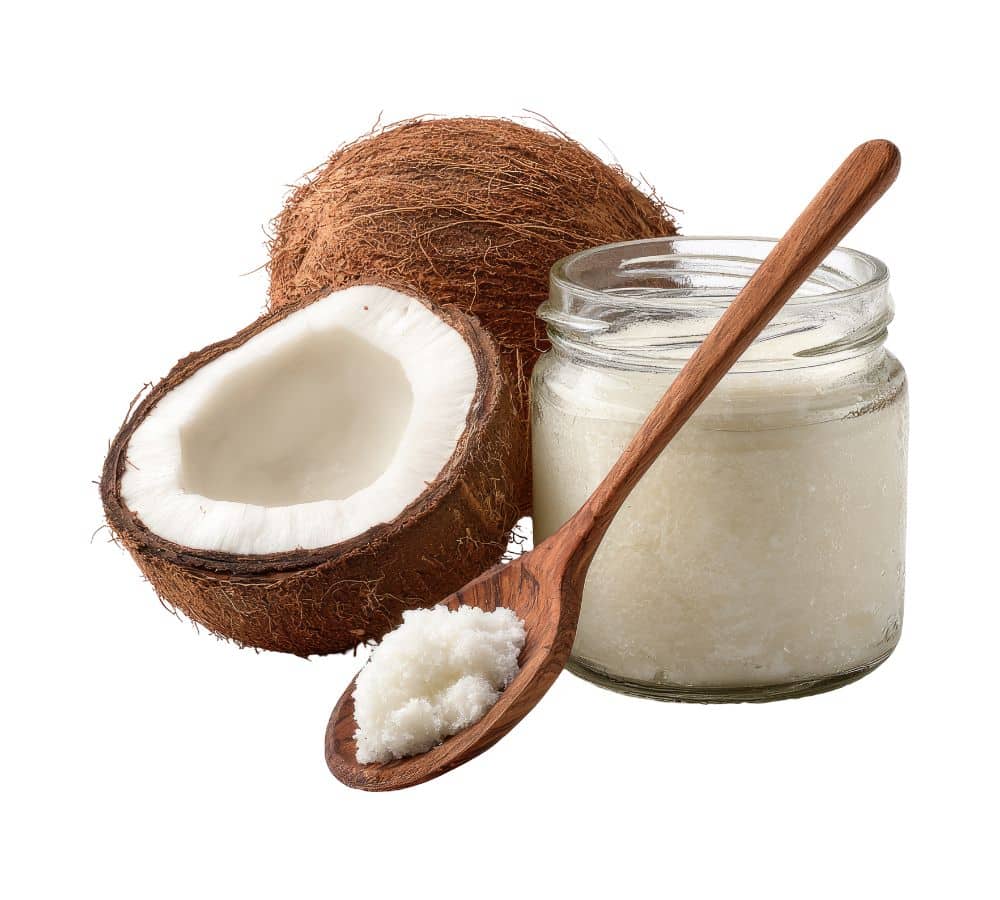
Oil pulling is the practice of swishing a tablespoon of organic oil around the mouth daily, for between five and 20 minutes.
The name comes from the oil being “worked” in the mouth — pulled, pushed and sucked through the teeth.
The theory is that as the oil moves around, microbes and bacteria hiding in the gums are drawn out and picked up by the oil.
You will have seen it promoted in magazines and blogs as a way to “cure” everything from a hangover to acne, or to whiten teeth and prevent cavities. It sits alongside a number of other home remedies that are asked about often — see the truth and myths about mouthwashes, are there antibacterial properties in tea? and dental myths exposed.
Where it comes from
Oil pulling has roots in Ayurvedic medicine, developed around 3,000 to 5,000 years ago.
According to the Journal of Ayurveda and Integrative Medicine, practitioners in India used the technique, along with chewing sticks and herbal tree leaves, to keep the mouth clean and healthy.
The historical pedigree is genuine. It is also not evidence of effect — age of a practice and efficacy of a practice are different questions, and only the second one is testable.
Does it work?
The scientifically backed picture is considerably less exciting than the blogosphere version.
What the evidence supports
According to a handful of published clinical trials, oil pulling may be a somewhat effective way to kill off some forms of mouth bacteria — including those associated with bad breath and gingivitis.
That is a real, if modest, finding. Note the qualifiers in it: a handful of trials, somewhat effective, some forms of bacteria. It is not a large or conclusive body of evidence. If bad breath is the problem you are trying to solve, the causes are worth understanding first — what causes bad breath and how can I fix it?, 7 ways to avoid bad breath and should I use a tongue scraper?, since most of the responsible bacteria live on the back of the tongue rather than on the teeth. Bad breath can also be a symptom of gum disease or of dry mouth, neither of which oil addresses.
What the evidence does not support
There have been no clinical studies showing that oil pulling makes teeth whiter.
There have been no clinical studies showing that it prevents cavities.
Those are the two claims made for it most often, and they are the two with nothing behind them.
It is worth understanding why they are implausible as well as unproven. Tooth colour is largely determined by the dentine beneath the enamel and by stain within the enamel structure — swishing oil does not reach either. And cavities are caused by acid demineralising enamel, which a reduction in some bacterial species does not reliably prevent. How does tooth decay develop?, the stages of dental decay and how do I prevent dental decay? set out what actually drives decay, and how does sugar affect your dental health? covers the biggest lever most people have.
The Australian Dental Association’s formal definition of teeth whitening draws the same line. It defines whitening as the use of products “designed to penetrate the teeth and bleach intrinsic and/or extrinsic tooth discolourations” — expressly as opposed to products such as whitening toothpastes “that are intended to remove surface staining”. Those are the only two routes to a change in tooth colour: penetrate the tooth, or abrade the surface. Swishing an oil does neither. (Australian Dental Association, Policy Statement 2.2.8.)
Can it replace your current routine?
No.
Dentists and hygienists do not recommend oil pulling as a comprehensive dental routine, or as an alternative to brushing, flossing and regular dental visits. What is the ideal daily routine for oral hygiene? is that routine, and it is short.
The reason is mechanical. Plaque is a biofilm that adheres physically to the tooth surface. It is removed by physical disruption — the bristles of a brush and the passage of floss. Swishing a liquid, of any kind, does not shear a biofilm off enamel. This is the same reason mouthwash cannot substitute for brushing — should I be using mouthwash as well as brushing and flossing my teeth? Rinses, oils and mouthwashes act on what is left behind after the mechanical work is done; they are adjuncts, not substitutes. Which toothbrushes do dentists recommend? and is flossing really that important?
Two further limits are worth stating plainly:
- Floss reaches about 3mm below the gum margin. A pocket of 5mm or more is periodontitis, and nothing you swish, rinse or brush with reaches into it. That needs professional treatment — when do you need deeper cleaning?, periodontal (gum) disease and periodontists.
- Once plaque mineralises into calculus, only instruments remove it. Dental cleans and hygienists, what does a dental hygienist do? and your Smile Solutions dental hygienist visit: what to expect
There is also the fluoride question. Brushing with fluoride toothpaste delivers fluoride to the tooth surface, which helps remineralise early damage. Oil delivers nothing comparable. The benefits of fluoride, selecting a toothpaste: fluoride or non-fluoride and choosing the right toothpaste. A related habit worth more than any rinse: spit, don’t rinse after brushing, so the fluoride stays on the teeth.
Why the stronger whitening products are restricted to dental practitioners
If the question behind oil pulling is really about tooth colour, it is worth knowing how the products that do change colour are regulated in Australia. This is not professional preference. It is set out in the Poisons Standard and enshrined in state and territory poisons legislation.
Schedule 10 of the Poisons Standard lists substances of such danger to health as to warrant prohibiting their sale, supply and use other than in specified exempt circumstances. Teeth whitening products containing more than 6 per cent hydrogen peroxide, or more than 18 per cent carbamide peroxide, fall in Schedule 10 — and may only be sold, supplied and used by registered dental practitioners as part of dental practice.
Below that threshold, hydrogen peroxide at 3–6 per cent and carbamide peroxide at 9–18 per cent are Schedule 5 “Caution” substances, which may be sold directly to consumers provided they carry the stipulated safety warnings. That is the band most supermarket and pharmacy whitening products occupy.
The concentration gap explains the difference in effect. The ADA notes that the effective hydrogen peroxide concentration varies from as low as 3–6 per cent in some products supplied for home use, up to 35 per cent in some in-practice products — and that one-third of a carbamide peroxide concentration is roughly equivalent to hydrogen peroxide, so 18 per cent carbamide peroxide approximates 6 per cent hydrogen peroxide.
The restriction exists because the risk is real, not because the material is precious. Direct exposure of skin, eyes and mucous membranes to hydrogen peroxide can cause severe irritation or burns, and the ADA records transient tooth sensitivity and soft tissue irritation during or immediately following treatment as the most common side effects of whitening carried out by or under the supervision of a dentist. That is also why an examination comes first — the same policy states that whitening should only proceed after a comprehensive dental examination, and that practitioners should ensure patients have realistic and reasonable expectations of the result.
None of that makes oil pulling dangerous. It makes it inert on the question of colour.
If you want to try it
Speak to your dentist or hygienist before adding oil pulling to your routine. If natural and low-intervention approaches matter to you, that is a reasonable conversation to have — what is holistic dentistry?, the benefits of holistic dentistry and holistic dentistry.
A few practical points if you do:
Treat it as an addition, not a replacement. Brush twice daily for two minutes and clean between the teeth daily regardless. More brushing is not better, and harder is worse — over brushing: what can it do to my teeth? and how often should I brush my teeth?
Spit the oil into a bin, not the sink. Oil solidifies and blocks drains.
Do not swallow it. The point of the practice is that the oil has collected material from the mouth.
Stop if you develop jaw discomfort. Twenty minutes of continuous swishing is sustained muscle activity, and it is not advisable for anyone with existing jaw joint or muscle problems — what is the cause of my jaw pain?, what are the most common symptoms of TMD? and TMD and teeth grinding.
And if you took it up hoping for whiter teeth, that is the claim with no supporting evidence — professional whitening, assessed and supervised by a dentist, is the route that actually addresses tooth colour. Teeth whitening, home teeth whitening versus having your teeth whitened at the dentist and home whitening and charcoal whitening: does it work, is it safe?. Published fees are in the price guide.
A note on sourcing
This page is deliberately shorter than most on this site, and it is worth saying why.
The independent reference material we hold — the Australian Dental Association, the Dental Board of Australia, the TGA Poisons Standard, the NHMRC, the Cancer Council and the peer-reviewed papers in our reference set — contains nothing at all on oil pulling. No policy statement, no guideline, no trial. The trial evidence summarised above is characterised here as it was in the original article, and we have not lengthened this page with detail we cannot attribute to a named source.
The whitening regulation in the section above is different: that is drawn directly from ADA Policy Statement 2.2.8 and the Poisons Standard, and is attributed accordingly. Where a statement on this page carries no attribution, treat it as the practice’s own view rather than as established evidence.
Common questions
It reduced bacteria in those trials. Is that not a good enough reason to do it?
It is a reason to keep an open mind, and it is not the same as a benefit you would notice. Fewer bacteria of a particular species is a surrogate outcome — a laboratory measurement taken as a stand-in for something patients actually care about, such as less bleeding, fewer cavities or breath that does not embarrass them. A treatment can move the surrogate and not move the outcome.
The comparison worth making is with interventions that have been tested against outcomes. Cochrane's 2019 review of interventions for halitosis pooled 44 trials and 1,809 participants across eight categories — mechanical debridement, chewing gums, systemic deodorising agents, topical agents, toothpastes, mouthrinses, tablets and combinations — and still concluded: “We were unable to draw any conclusions regarding the superiority of any intervention or concentration.” Oil pulling was not among the eight categories it assessed at all.
So the honest ranking is: not disproved, not established, and not compared with anything. If you enjoy it and it has displaced nothing, there is no strong argument against continuing. If it has displaced flossing, the trade is a bad one for the reasons given above.
Bad breath is the one claim with some support behind it. Should I use it for that?
Only as an extra, and only after the cause has been worked out — because bad breath is a symptom with a long list of possible sources. The FDI World Dental Federation's 2025 advice sheet states the governing principle in one line: “Management of halitosis involves identifying and addressing the underlying cause.”
What the FDI puts first is not a rinse of any kind. It lists oral hygiene improvement as the primary preventive measure — regular brushing, flossing, professional cleaning, daily tongue cleaning with a tongue scraper, and periodontal treatment where it is needed. It names dry mouth (xerostomia) among the factors that increase the bacterial production of the sulphur compounds responsible for the smell, alongside poor oral hygiene, smoking, alcohol and certain medications.
That matters because the most common source is the tongue, not the teeth. A review in the International Journal of Oral Science calls tongue coating “the most common cause” of bad breath, and notes that “daily scraping or brushing of the tongue can help to reduce the substrata for putrefaction, rather than to reduce the bacterial load.” Twenty minutes of swishing does not clean a coated tongue.
Practical order of operations: tongue cleaning, flossing, a hygienist appointment to rule out gum disease, and an honest look at dry mouth and its causes. If the breath problem survives all of that, it is a reason to be examined rather than to swish for longer — see do I need to use a tongue scraper? and how do I get rid of my bad breath?
Would an ordinary mouthwash be a better adjunct than oil?
It is at least the better-studied option — with conditions that are worth knowing before you buy one. Australian Prescriber sets out the principle first: plaque is the primary cause of decay, gingivitis and periodontal disease; “mechanical removal of plaque through frequent and efficacious brushing and flossing is the principal means” of prevention; and rinsing “should always be used in conjunction with mechanical hygiene. Mouthwashes should only be used for short periods of time and should never be the sole means of oral hygiene.” That is the same limit this page places on oil, stated by an independent source about a different product.
Three specific cautions from the same article and from the Better Health Channel:
- Alcohol-containing rinses are to be avoided if your mouth is dry: the Better Health Channel advises avoiding them because they “tend to aggravate dry mouth tissue.”
- Essential-oil rinses — the most common supermarket category — “are not recommended for patients suffering from xerostomia.”
- Enzyme-based dry-mouth rinses contain no alcohol or detergent, but “have a low pH (5.15) which may pose a risk of dental erosion during long-term use.”
And one further caution that applies to households rather than individuals: Australian Prescriber notes that mouthwashes “are not indicated in children younger than six years of age as the risk of ingestion is” too high. That is a reason to keep any rinse out of reach, whichever kind you settle on. The truth and myths about mouthwashes covers the wider question of who needs one at all — for many people the answer is nobody.
Does the type of oil matter — coconut, sesame, sunflower?
We cannot tell you, and we would rather say so than guess. The independent reference material behind this page contains nothing on oil pulling in any form, and therefore nothing comparing one oil with another. Claims that a particular oil is superior are, as far as this page can establish, unsupported by any source we can name.
What can be said applies to all of them equally. It is an addition, not a replacement; twenty minutes of continuous swishing is real jaw-muscle work and is a poor idea if you already have jaw joint or muscle symptoms; the oil goes in the bin rather than the sink; and it is not swallowed.
If the appeal is doing something natural and low-intervention for your mouth, there are two things with far better evidence behind them and no cost at all: cleaning between the teeth every day, and drinking tap water rather than anything acidic. Neither is exotic, and both are supported by sources this page can name.
Related reading
- 3 oral hygiene tips you need to know
- How to care for your toothbrush
- With so many toothpastes on the market, how do I choose?
- Do I need to use a tongue scraper?
- Health problems linked to poor oral hygiene
- How often should I go to the dentist?
- General dentistry
Practical details
Smile Solutions, Level 1, 220 Collins Street, Manchester Unity Building, Melbourne VIC 3000 — getting here. Phone 13 13 96, contact us, or theteam@smilesolutions.com.au. Monday–Friday 8.00am–6.00pm, Saturday 8.30am–1.30pm, Sunday by appointment. The clinical team is listed by name.
Published 14 July 2015. Peroxide concentration thresholds, the Schedule 5 and Schedule 10 classifications and the side-effect and examination statements are attributed to the Australian Dental Association’s Policy Statement 2.2.8 and the Poisons Standard it cites. The questions above additionally cite Cochrane review CD012213 (2019), the FDI World Dental Federation's halitosis advice sheet (2025), Australian Prescriber on mouthwashes (2009), the Better Health Channel's dry mouth page, and Bollen and Beikler's review in the International Journal of Oral Science (2012) — none of which addresses oil pulling itself. General information only; it does not replace advice from your treating practitioner.
Smile Solutions trades under ABN 28 193 514 103.
Images on This Page
-
https://www.facebook.com/tr?id=800557773428361&ev=PageView&noscript=1
(no alt text)
-
https://www.smilesolutions.com.au/wp-content/uploads/2025/10/calendar_month.svg
(no alt text)
-
https://www.smilesolutions.com.au/wp-content/themes/arcadian-wordpress-theme/assets/images/smile_solutions_logo_white.png
Smile Solutions Logo
-
https://www.smilesolutions.com.au/wp-content/themes/arcadian-wordpress-theme/assets/images/smile_solutions_logo_purple.png
Smile Solutions Logo
-
https://www.smilesolutions.com.au/wp-content/uploads/2023/11/SS-Tooth-1-1-150x150.png
Smile Solutions
-
https://www.smilesolutions.com.au/wp-content/uploads/2015/07/Oil-Pulling.jpg
Oil Pulling
-
https://www.smilesolutions.com.au/wp-content/uploads/2025/09/Root-Canal-2-300x217.jpg
Root Canal
-
https://www.smilesolutions.com.au/wp-content/uploads/2026/08/Mouth-Breathing-300x270.jpg
Mouth Breathing
-
https://www.smilesolutions.com.au/wp-content/uploads/2025/09/Dental-Crown-at-Smile-Solutions-300x300.jpg
Dental Crown at Smile Solutions
-
https://www.smilesolutions.com.au/wp-content/themes/arcadian-wordpress-theme/assets/images/family_owned_bussiness.png
Family Owned Business
-
https://www.smilesolutions.com.au/wp-content/themes/arcadian-wordpress-theme/assets/icons/icon--phone.svg
Smile Solutions Contact
-
https://www.facebook.com/tr? id=800557773428361&ev=PageView&noscript=1
(no alt text)