Does tea have antibacterial properties?
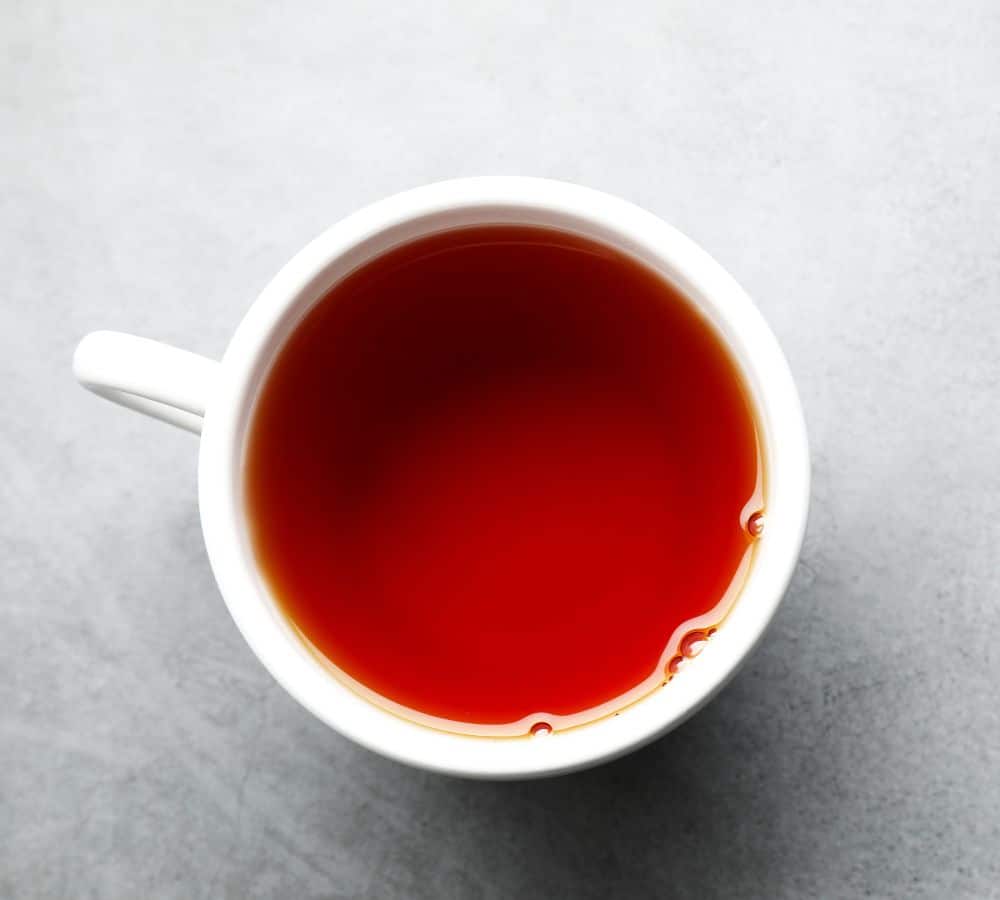
There is reasonable evidence that black tea has an antibacterial effect, and that this extends to dental health.
What the research found
A report in London’s Daily Mail in July 2013 covered scientific findings that the antioxidants in black tea can help combat two types of bacteria associated with dental decay and gum disease: Streptococcus mutans and Lactobacillus. For what those bacteria actually do, see how does tooth decay develop? and what is gum disease?.
Green tea appears to have a similar antibacterial effect, and also helps prevent bad breath by neutralising the sulphur compounds that contribute to it — what causes bad breath and how can I fix it? and bad breath explain where those compounds come from, and do I need to use a tongue scraper? covers the measure with the best evidence behind it.
Both black and green teas appear to reduce inflammation in the mouth and prevent the adhesion and growth of the bacteria that start the decay chain reaction — where bacteria react with dietary carbohydrates, produce acid, and that acid dissolves tooth enamel. The Australian Dental Association describes that chain in its Policy Statement 2.2.2 on diet and nutrition: the process “consists of the metabolism of simple carbohydrates by bacteria in the dental plaque which produces acids”, and “the production of these acids causes the pH of dental plaque to fall below the critical level leading to softening of tooth structure which may over time result in the development of dental caries”. The stages of dental decay follows that chain through.
On this evidence, drinking three to four cups of tea a day may help reduce dental decay and gum disease.
How to weigh that evidence
Worth being straight about the strength of the claim, because this is an area where headlines run ahead of the science.
The active compounds are real and well characterised. Tea contains polyphenols — catechins in green tea, principally EGCG, and theaflavins and thearubigins in black tea. Their antibacterial and anti-adhesion effects are well demonstrated in the laboratory.
What is weaker is the step from laboratory to mouth. Much of the underlying work is in vitro — bacteria in a dish, at concentrations and contact times that a cup of tea does not reproduce. Clinical trials showing that drinking tea reduces the number of cavities a person actually develops are far thinner on the ground.
And we should be specific about how thin, rather than vague. In assembling the independent guidelines, regulator statements and systematic reviews behind this library — the Australian Dental Association's policies, NHMRC, healthdirect, the Cochrane reviews and the peer-reviewed literature we hold — we found no clinical guideline, no policy statement and no trial recommending tea for the prevention of decay, gum disease or bad breath. Tea is not on anyone's list of preventive measures. That is not evidence that it does nothing; it is evidence that nobody has established that it does something at the level a guideline would need.
The bad-breath claim in particular deserves a flag, because it is the one most often repeated. Cochrane's 2019 review Interventions for managing halitosis (CD012213) gathered 44 trials and 1,809 participants across eight categories of intervention — mechanical cleaning, chewing gums, systemic deodorising agents, topical agents, toothpastes, mouthrinses, tablets and combinations — and concluded that it was “unable to draw any conclusions regarding the superiority of any intervention or concentration”, with the evidence rated low to very low throughout. Tea was not among the interventions it assessed. So if you drink green tea and your breath seems better for it, nothing here contradicts you; just do not treat it as a treatment.
So the honest position: tea is plausibly a small favourable factor. It is not a preventive measure, and no one should drink it instead of brushing. The same gap between laboratory promise and clinical result turns up elsewhere in the library — see can oil pulling make my mouth healthier and my teeth whiter?, does chewing sugar-free gum really help prevent cavities? and dental myths exposed.
One genuinely interesting extra: the tea plant accumulates fluoride from the soil, so brewed tea contains a modest amount naturally. This one is properly sourced rather than inferred — the National Health and Medical Research Council, in its review of water fluoridation, notes that “higher amounts of fluoride can be found in dried tea leaves, for example, because of natural concentration by the tea plant”, listing it alongside cereals and grain-based foods, almonds, apples, minced beef, chocolate and milk as ordinary dietary sources.
It is a real contribution, and a minor one — and the comparison that makes it minor is worth having in numbers. The NHMRC found that community water fluoridation reduces tooth decay by 26 to 44% in children and adolescents, and by about 27% in adults, and strongly recommends it as a safe and effective population measure. Nothing in the tea literature is quantified anywhere near that. See the benefits of fluoride, fluoridated water: is it good for you? and selecting a toothpaste — fluoride or non-fluoride?.
Three important caveats
Any of these can wipe out the benefit entirely.
1. Sugar. Many people take tea with sugar. The effects of regular exposure to sweetened tea will far outweigh any antibacterial and anti-inflammatory positives. Four sweetened cups a day is four acid attacks, and frequency is what drives decay — a mug sipped slowly across a morning is worse than the same sugar taken at once. That is the ADA's position too, and its diet and nutrition policy names frequency explicitly: “the form, frequency, timing and total amount of sugar intake are significant in the initiation of the caries process”, and it asks public education to place “special emphasis … on the form, frequency, timing and total amount of sugar consumption; particularly snacking on sugary-beverages and/or sugar-rich foods that have limited nutritional value”. For children and young adults it goes further: “frequent consumption of drinks and foods with high sugar and/or acid content should be discouraged”. Honey is not an improvement; it behaves the same way. See how does sugar affect your dental health?, sugar: what does it do to your teeth? and how does your diet affect your teeth?.
2. Tannins. The tannins, or tannic acids, in copious amounts of tea will stain your teeth. That staining can only be reversed by professional cleaning, and possibly professional whitening. What should I know about teeth whitening? and how can I improve the whiteness of my teeth? set out what each of those does.
3. Fruit and herbal teas are acidic, and almost nobody knows it. This is the caveat the original article did not cover and it is the most practically important one.
Many fruit and herbal infusions — particularly those containing hibiscus, rosehip, lemon or berry — sit around pH 3, which is well below the pH 5.5 at which enamel begins to dissolve. They are marketed as the healthy option and they erode enamel. Adding a slice of lemon to ordinary tea does the same thing, and citric acid is worse than its pH alone suggests because it also binds calcium. Is soda water bad for your teeth? works through the same arithmetic for sparkling water; what is dental erosion and how is it addressed?, I’ve heard a lot about acid wear — what is this and how can I avoid it? and how does acidic food affect your teeth? cover the damage itself.
Plain black and green tea, unsweetened, are close to neutral and are not a concern. The problem is the fruit ones, the lemon, and the sugar.
And the same rule applies as to any acidic drink: do not brush straight afterwards. Rinse with water and wait at least 30 minutes — an hour is better. Brushing your teeth: before or after breakfast? applies the same reasoning to the morning cup.
About the staining
Since it is the effect people notice:
- Tannin staining is extrinsic — on the surface, not within the tooth. It is removable by a professional clean, and it is not damage. See dental cleans and hygienists and your Smile Solutions dental hygienist visit: what to expect.
- Adding milk reduces staining, because the proteins bind the tannins. There is a trade-off: those same proteins may bind some of the polyphenols the research is about.
- Staining accumulates faster on rough surfaces — exposed root surfaces, the margins of older composite fillings, and areas of erosion. Teeth that stain unusually quickly are worth mentioning, because the reason is often something other than the tea. Recession from over brushing is a common answer.
- Whitening does not work on restorations. Crowns, veneers and fillings do not change colour, so heavy tea staining on natural teeth beside older restorations can end up mismatched after whitening — I want to whiten my teeth but one of my front teeth has a porcelain crown — what are my options?.
- Do not reach for a charcoal toothpaste to deal with it. A 2021 systematic review of over-the-counter whitening products in Frontiers in Dental Medicine found charcoal is added to such products “to improve their whitening effect but there is no evidence supporting it”, and that whitening toothpastes generally “present a combination of abrasives that can induce damage to the tooth surface without evidence of promoting real bleaching”. A professional clean removes tannin staining; an abrasive removes enamel with it.
- Smoking stains far more than tea, and does considerably more besides — oral cancer: how your dentist can help with early detection and the effects of vaping on your oral health.
The sensible conclusion
Enjoy your tea — unsweetened, if you want the benefit the research describes.
But nothing replaces the basics, and the list of essentials in the Australian Dental Association's Policy Statement 2.2.3 on oral hygiene is short enough to memorise: brushing for two minutes twice a day, an age-appropriate fluoride toothpaste, cleaning between the teeth once a day with floss or interdental brushes, and regular professional check-ups and cleaning. Tea is not on that list, and nor is any drink. See what is the ideal daily routine for oral hygiene?, is flossing really that important? and how often should I go to the dentist?. Tea is at best a small favourable factor at the margins, not a substitute for any of them.
If you drink a lot of tea, the useful adjustments are: take it unsweetened, use milk if you mind the staining, keep fruit and herbal infusions to mealtimes rather than sipping them through the day, rinse with water afterwards, and do not brush for at least half an hour.
Sources cited
- Findings by Dr Carrie Ruxton, published in the British Nutrition Foundation’s Nutrition Bulletin
- Comment from Dr Tim Bond, spokesman for the UK’s industry-backed Tea Advisory Panel
Note that the second source is an industry-backed panel, which is worth weighing when reading the claims. So is the fact that the original coverage was in a general-interest newspaper rather than a clinical journal.
The independent sources named elsewhere on this page are the National Health and Medical Research Council (fluoride in tea leaves, and the water-fluoridation figures), the Australian Dental Association's Policy Statement 2.2.2 on diet and nutrition and its Policy Statement 2.2.3 on oral hygiene, Cochrane Review CD012213 on interventions for halitosis, and de Freitas and colleagues in Frontiers in Dental Medicine (2021) on over-the-counter whitening products. None of them says anything about tea as a dental measure, which is itself the most useful thing they contribute here.
Common questions
Is green tea better than black for my teeth? The laboratory evidence is somewhat stronger for green tea’s catechins, and it stains less. The difference is small either way, and neither has clinical trial evidence behind it that a guideline has taken up.
Does tea cause decay? Plain unsweetened tea, no. Sweetened tea, yes. Fruit and herbal teas erode rather than decay. Can you reverse tooth decay, and do I need a filling? covers what can still be undone.
Will whitening remove tea stains? Professional cleaning removes most surface tannin staining, and whitening addresses the underlying tooth colour. Restorations do not whiten, so raise that before starting. Why should I go to a dentist for teeth whitening? explains why that assessment happens first.
Is iced tea the same? Usually worse — most commercial iced teas are both sweetened and acidified. The same applies to the drinks in what are sports drinks really doing to your teeth? and are sugar free soft drinks better for my teeth than regular soft drinks?.
Should I switch to tea instead of using mouthwash for my breath? Neither is a treatment, and the better answer is to find out what is causing the odour. The Australian Dental Association's oral hygiene policy classifies mouthrinse as a proven aid to oral hygiene while deliberately leaving it off its list of the main strategies; tea does not appear in either list. Persistent bad breath that does not improve during the day is worth having examined rather than managed with a drink or a rinse — bad breath sets out why.
Does the fluoride in tea mean I need less toothpaste? No. The NHMRC lists tea leaves among ordinary dietary sources of fluoride, in the same breath as cereals, apples, chocolate and milk — it is a trace contribution, not a delivery method. The measures with quantified effects are fluoridated water, at a 26 to 44% reduction in decay in children and adolescents and about 27% in adults, and fluoride toothpaste used twice daily. Keep both.
Related pages: Dental Cleans and Hygienists, Professional Teeth Whitening, Bad Breath, Bleeding Gums.
Related reading
- Six foods to avoid for healthy teeth
- What impact does wine have on my teeth?
- What can I do to strengthen my teeth?
- 10 ways to avoid ruining your teeth
- Caring for your teeth: 8 steps to dental health
Practical details
Written by Dr Kia Pajouhesh, BSc, BDSc (Melb) — founder and Principal Dentist at Smile Solutions. A general dentist is not a specialist; specialist titles are protected under the National Law and require specialist registration. Registrations can be verified free on the AHPRA public register at ahpra.gov.au. The practice’s registered specialists are identified as such within the full team.
Smile Solutions, Level 1, 220 Collins Street, Manchester Unity Building, Melbourne VIC 3000 — getting here. Phone 13 13 96, contact us, or theteam@smilesolutions.com.au. Monday–Friday 8.00am–6.00pm, Saturday 8.30am–1.30pm, Sunday by appointment. Published fees are in the price guide.
Published 22 July 2013. The research described was reported at that date and the evidence base has developed since. pH values are approximate and vary between products. General information only — it is not a diagnosis or a treatment plan, and it does not replace advice from your treating practitioner.
Smile Solutions trades under ABN 28 193 514 103.
Images on This Page
-
https://www.facebook.com/tr?id=800557773428361&ev=PageView&noscript=1
(no alt text)
-
https://www.smilesolutions.com.au/wp-content/uploads/2025/10/calendar_month.svg
(no alt text)
-
https://www.smilesolutions.com.au/wp-content/themes/arcadian-wordpress-theme/assets/images/smile_solutions_logo_white.png
Smile Solutions Logo
-
https://www.smilesolutions.com.au/wp-content/themes/arcadian-wordpress-theme/assets/images/smile_solutions_logo_purple.png
Smile Solutions Logo
-
https://www.smilesolutions.com.au/wp-content/uploads/2025/11/Kia-150x150.jpg
Dr Kia Pajouhesh
-
https://www.smilesolutions.com.au/wp-content/uploads/2013/07/Black-tea.jpg
Are there antibacterial properties in tea?
-
https://www.smilesolutions.com.au/wp-content/uploads/2025/09/Wisdom-Teeth-Smile-Solutions-300x300.png
Smile Solutions Dentist Melbourne
-
https://www.smilesolutions.com.au/wp-content/uploads/2025/11/TMD-Teeth-Grinding-Smile-Solutions-300x270.png
Woman holding her face, looking concerned.
-
https://www.smilesolutions.com.au/wp-content/uploads/2026/07/Photography-and-Facial-Analysis-300x270.jpg
Photography and Facial Analysis
-
https://www.smilesolutions.com.au/wp-content/themes/arcadian-wordpress-theme/assets/images/family_owned_bussiness.png
Family Owned Business
-
https://www.smilesolutions.com.au/wp-content/themes/arcadian-wordpress-theme/assets/icons/icon--phone.svg
Smile Solutions Contact
-
https://www.facebook.com/tr? id=800557773428361&ev=PageView&noscript=1
(no alt text)
-
https://bat.bing.com/action/0?ti=25148060&tm=gtm002&Ver=2&mid=d8e37391-f14b-4c00-88f7-fa3774f8844b&bo=1&sid=48a57ec0ab2611f1aa6751696707eae1&vid=48a59b80ab2611f1a79bcb6bdeb90b05&vids=1&msclkid=N&pi=918639831&lg=en-US&sw=800&sh=600&sc=24&nwd=1&tl=Are%20there%20antibacterial%20properties%20in%20tea%3F%20-%20Smile%20Solutions&p=https%3A%2F%2Fwww.smilesolutions.com.au%2Fdental-articles%2Farticle%2Fare-there-antibacterial-properties-in-tea%2F&r=&evt=pageLoad&sv=2&cdb=AQAQ&rn=681570
(no alt text)