Six foods to avoid for healthy teeth
Beyond the obvious
Sugar is no friend to your teeth. Lollies, chocolate and sugary soft drinks top any list of things to limit. Sugar: what does it do to your teeth? and how does sugar affect your dental health? explain the mechanism, and how does tooth decay develop? follows it through to a cavity.
But many people are unaware of the hidden sugars in other foods and drinks — which is why diet assessment and modification form part of comprehensive dental care. How does your diet affect your teeth? is the fuller treatment of that.
Dr Peter Alldritt, Chair of the Australian Dental Association’s Oral Health Committee, has identified six foods and drinks to avoid or consume in moderation. They are summarised below.
Four of the six are widely assumed to be harmless. That is what makes the list worth reading.
1. Diet soft drinks
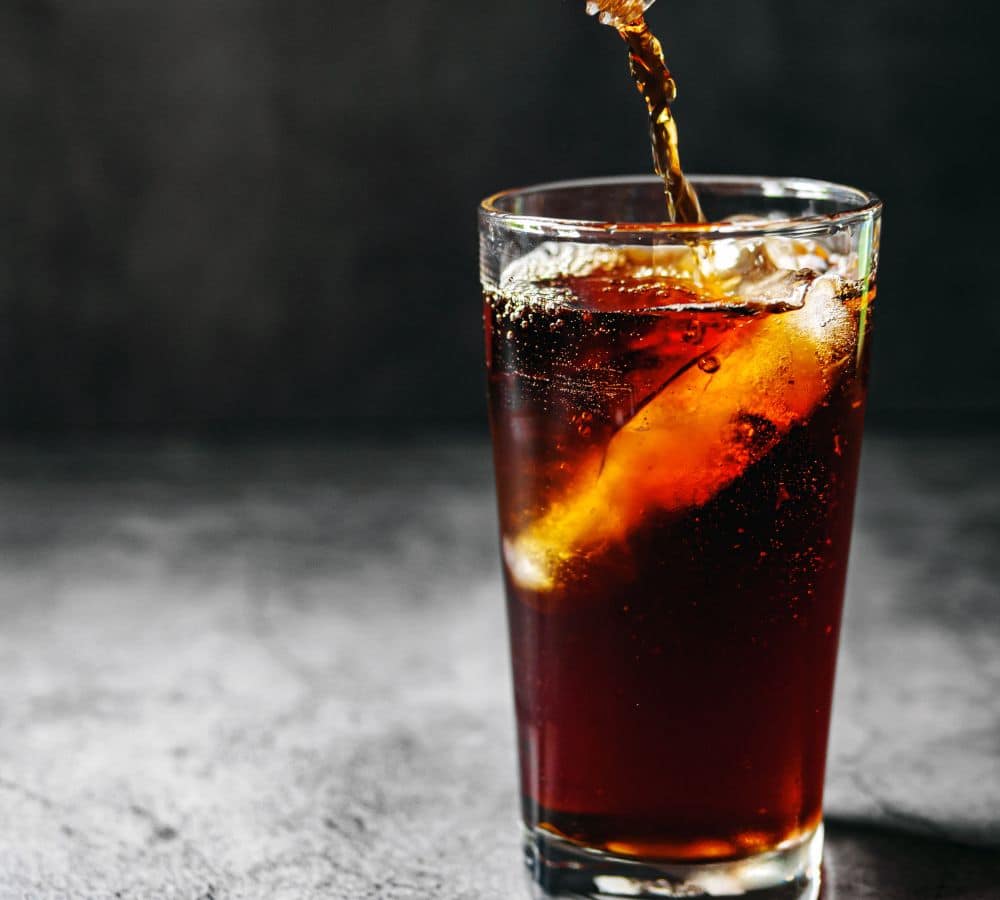
Many contain no sugar to cause decay. But like regular soft drinks — and fruit juice — they still have high acid levels that erode tooth enamel.
That can expose the inner layer of the tooth, causing pain and sensitivity, and it can also lead to cavities. See what to do if you suffer from sensitive teeth.
This is the most important entry on the list. Switching to diet removes one of the two mechanisms and leaves the other running. The acid attacks the enamel directly, with or without sugar — so “sugar-free” is not the same as “safe for teeth”. Are sugar-free soft drinks better for my teeth? sets out the Melbourne research behind that, damage to tooth enamel occurs within 30 seconds shows how quickly it starts, and is soda water bad for your teeth? answers the sparkling-water version. Victorians’ love of soft drink gives the local scale of it.
The ADA makes the same distinction when it discusses sugar substitutes, and the qualifier is the part to notice: “Sugar-free confectioneries without added acids, including chewing gums, are dentally safe alternatives to caries-producing confectionery containing sugar” (ADA Policy Statement 2.2.2, Diet and Nutrition). Without added acids. A sugar-free lolly clears that bar; a sugar-free cola, which is acidic by design, does not.
For scale on the standard version: the ADA’s consumer site records that on average, one can of soft drink contains 10 teaspoons of sugar — about 1.5 times the daily free-sugar intake the World Health Organization recommends for an adult (teeth.org.au, Sugar and tooth decay).
2. Potato chips
They start out crunchy, and once chewed turn into a soft mess that lodges and lingers in the smallest crevices on and between the teeth.
And though we think of them as savoury, most chips are quite high in sugar — which makes their tendency to stay on the teeth more of a problem.
There is a second mechanism worth knowing: refined starch is broken down into sugars in the mouth, so even chips genuinely low in added sugar deliver sugar to the bacteria on your teeth. Because the residue settles in the grooves of the back teeth, this is also the argument for fissure sealants and for flossing the contact points where it packs in.
The ADA describes the underlying process in the same terms: “The process of caries initiation consists of the metabolism of simple carbohydrates by bacteria in the dental plaque which produces acids. The production of these acids causes the pH of dental plaque to fall below the critical level leading to softening of tooth structure” (ADA Policy Statement 2.2.2). What makes a chip worse than its sugar content suggests is how long it stays where the plaque is.
3. Ice
Sucking on ice is fine. Biting it is not.
Ice is hard enough that biting it can chip enamel or crack a tooth.
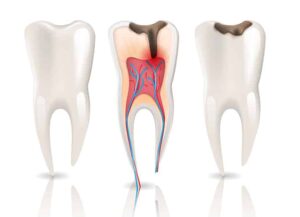
The habit is common, absent-minded, and does real damage — particularly to teeth that already carry large fillings. If enamel is the hardest substance in the body, why do teeth break? explains why, and what should I do if I have a chipped tooth?, do I have to get a chipped tooth fixed? and chipped and cracked teeth cover what happens next. A cracked tooth that reaches the nerve becomes root canal treatment — why does a cracked tooth hurt so much?
Ice is the one item on this list that has nothing to do with diet chemistry. It is a mechanical risk, and unlike the other five it can take a tooth out in a single bite rather than over years.
4. Dried fruit
Fresh fruit is packed with vitamins and nutrients. Take the moisture out, and you are left with a sticky product of concentrated sugar bound up with fibre that makes it adhere to the tooth surface.
Dried fruit is the classic “healthy” snack that is worse for teeth than a lolly — because a lolly dissolves and clears, while dried fruit lodges in the grooves of molars and stays there, extending the acid attack for far longer. This is the clearest illustration of the rule that runs through the whole list: contact time and frequency matter more than quantity. It is also why protecting your child from dental disease spends so long on lunchboxes.
This is not a dentist’s hunch about a health food. The ADA classifies it: free sugars “include monosaccharides and disaccharides added to foods and beverages by the manufacturer, cook or consumer, and sugars naturally present in honey, syrups, dried fruit, fruit juices and fruit juice concentrates” (ADA Policy Statement 2.2.2). Dried fruit sits inside the free-sugars definition alongside honey and juice, and the ADA’s daily ceiling for free sugars is no more than six teaspoons — 24 grams, which it equates to about 5 per cent of total energy intake. Two or three handfuls of sultanas use a good part of that.
5. Sports drinks
Sports and energy drinks are highly acidic, and many are also high in sugar.
An acid attack that erodes enamel generally lasts around 20 minutes.
That 20-minute figure is the one to hold onto, because it explains why sipping is the real problem. A sports drink finished in five minutes is one 20-minute attack. The same drink sipped across an hour of exercise is a continuous one — with the added factor that exercise reduces saliva flow. What are sports drinks really doing to your teeth?, sports drinks linked to poor dental health in athletes, how exercise can increase your risk of tooth decay and what causes dry mouth during running? cover that combination.
That combination is named explicitly in the ADA’s policy. It lists the circumstances in which acidic foods and drinks should be avoided by people at high risk of caries or erosion, and one of the bullets is simply “exertion resulting in a dry mouth” — alongside “individuals with conditions which lead to a reduction in salivary flow” and “sipping drinks, other than water, during interrupted sleep” (ADA Policy Statement 2.2.2). A sports drink during a hard session is the textbook case: the acid arrives exactly when the saliva that would buffer it has gone.
6. Wine
Wine contains erosive acid, which softens the protective enamel on the teeth. What impact does wine have on my teeth? reports the research on how quickly that happens.
That acid also leaves teeth more vulnerable to staining — a particular issue for red wine drinkers. How can I improve the whiteness of my teeth?, what should I know about teeth whitening? and teeth whitening cover the colour side — though whitening treats colour, not lost enamel.
And heavy alcohol consumption is a risk factor for oral cancer. That is a well-established association, and it compounds with smoking rather than simply adding to it. Oral cancer: signs, risk factors and how your dentist can help, how your dentist can help with early detection and what are the causes, symptoms and treatment of mouth cancer? set out the risk factors and the warning signs. The one to remember: any ulcer, lump, or red or white patch in the mouth that has not healed within two weeks should be looked at.
The ADA states the combination position in its own policy: “Long term, high alcohol consumption and in particular in association with tobacco (including e-cigarettes) use should be avoided as it significantly increases the risk of oral cancer and other health issues” (ADA Policy Statement 2.2.2).
And on when to act: Australian general practice guidance recommends an oral cancer screen for any unexplained or non-healing change in the mouth lasting more than two to three weeks — a persistent ulcer, red patches, lumps, a sore throat — and notes that “initial lesions of oral cancer are generally painless” (RACGP, Promoting oral cancer screening by general practitioners in Australia, AJGP, December 2024). Waiting for it to hurt is waiting for the wrong signal.
Finding the sugar you did not know was there
The intro says most people are unaware of hidden sugars. The ADA’s consumer material is blunt about why: sugar “can be called over 50 different names” on an ingredients list — sucrose, maltose, fructose, maltodextrin, golden syrup, agave nectar, corn syrup, molasses and so on (teeth.org.au).
Two habits deal with most of it:
Read the per-100-gram column, not the per-serve column. Serving sizes are set by the manufacturer and differ between products, so per-serve figures cannot be compared. On the 100 g column the ADA’s guide is 5 grams of sugar or less is best, between 5 g and 10 g is acceptable, and over 15 g means looking for a healthier alternative.
Read the ingredients order. Added sugars are often not broken out on the panel at all, and the closer an ingredient sits to the top of the list, the more of it is present.
The pattern
Read together, the list is not really about six foods. Four of the six damage teeth through acid rather than sugar — diet soft drink, sports drinks, wine, and to an extent dried fruit. What is acid wear and how can I avoid it?, how does acidic food affect your teeth? and what is dental erosion and how is it addressed? go through that properly.
And the ADA’s own summary of the evidence puts the emphasis in the same place this list does — on pattern rather than amount: “The form, frequency, timing and total amount of sugar intake are significant in the initiation of the caries process”, with special emphasis on “snacking on sugary-beverages and/or sugar-rich foods that have limited nutritional value”. It also warns that “the combination of sugar and food acid can be particularly destructive” — which is precisely what a sports drink, a sweetened soft drink or a handful of dried fruit delivers.
Which yields two practical rules that cover most of it:
Consume acidic things quickly rather than slowly. Contact time matters more than quantity.
Do not brush for about an hour afterwards. Acid-softened enamel is removed by brushing. Rinse with water instead, and let saliva re-harden the surface first. What is the ideal daily routine for oral hygiene? and the benefits of fluoride explain the rest of the defence, and chewing sugar-free gum is the easiest addition to it.
Common questions
“In moderation” is doing a lot of work here. How much is that, in actual amounts?
Smaller than most people assume, and there is a national figure rather than a dental opinion.
The Australian Dietary Guidelines group most of this list under discretionary choices, defined as foods and drinks that “are not an essential or necessary part of healthy dietary patterns” and are “high in kilojoules, saturated fat, added sugars and/or salt or alcohol.” Three of the six on this page appear in the Guidelines' own examples by name: “potato chips, crisps and other fatty and/or salty snack foods; sugar-sweetened soft drinks and cordials, sports and energy drinks and alcoholic drinks.” Their instruction is short: “If chosen, discretionary choices should be eaten only sometimes and in small amounts.”
The useful part is what the Guidelines count as one serve of a discretionary choice — about 500 to 600 kilojoules:
- one 375 ml can of sugar-sweetened soft drink
- half a snack-size packet of crisps (30 g)
- 200 ml of wine — which the Guidelines note is two standard drinks, and is “often 1 glass for many Australian wines”
- five or six small lollies (40 g)
- two to three plain sweet biscuits (35 g)
- half a bar of chocolate (25 g)
A single glass of wine and a small packet of chips is two serves of the category the Guidelines say should be eaten "only sometimes and in small amounts".
One honest limit on all of that. The Guidelines are written about kilojoules, added sugars, salt and alcohol — not about acid. Their soft-drink entry is the sugar-sweetened one. The dental objection to diet cola in item 1 above is an acid objection, and it does not appear in the national dietary advice at all. On that point the ADA's policy is the source to read, not the Guidelines.
What about my vitamin tablets and my medicines?
A genuinely overlooked one, and the ADA addresses it directly in the same policy that produced this list.
“Medications, including over-the-counter vitamin and mineral tablets, may include sugars (particularly those that are chewable and dissolved in the mouth) or contribute to dry mouth, both of which can contribute to tooth decay or softening and loss of tooth structure” (ADA Policy Statement 2.2.2).
Note the two separate mechanisms in that sentence. A chewable or dissolving tablet delivers sugar and sits on the teeth while it dissolves, which is the dried-fruit problem in a different package. And a great many ordinary medications reduce saliva, which removes the buffer that would otherwise neutralise everything else on this page.
The ADA's list of situations in which acidic things should particularly be avoided includes “chewing and sucking acidic vitamin tablets” as its own bullet. Effervescent vitamin C is the obvious example.
It also calls on “the pharmaceutical industry… to provide sugar-free formulations or minimise sugar content for medications taken orally” — an acknowledgement that this is not currently the default.
None of that is a reason to stop taking anything. It is a reason to tell your dentist what you take, to ask your pharmacist whether a sugar-free or non-chewable form exists, and to rinse with water after a chewable or effervescent dose. Persistent dryness deserves its own look — see my mouth is always dry.
Does this list change for a toddler, a teenager, or my elderly parent?
Yes, and the ADA sets out three age groups where the advice differs, in its own words.
Parents and carers of infants and babies. The ADA's position is that “sleeping with sweetened pacifiers/dummies, food or bottles with products containing sugar, including milk and fruit juices, should be discouraged.” Read that list carefully — milk is on it. A bottle of plain milk in the cot overnight sits against the teeth for hours with no saliva clearing it, which is why it appears alongside juice and sweetened dummies. See children's dentistry and protecting your child from dental disease.
Children and young adults. Here the ADA's emphasis is on pattern: “frequent consumption of drinks and foods with high sugar and/or acid content should be discouraged.” Frequent, not large — which is the whole argument of this page applied to the age group that grazes most.
Older people. The reasoning changes again: “reducing the dietary sugar and acid intake should be encouraged because of the increased risk of caries from reduced saliva flow and more exposed root surfaces.” Two things are different in an older mouth. Saliva is often reduced, frequently by medication rather than age itself. And where gums have receded, the exposed root surface has no enamel on it at all — it is softer than the crown and decays at a lower acid threshold. The same glass of wine is doing more there than it did thirty years earlier.
So sugar-free lollies and chewing gum are fine, then?
Better, with two qualifications the marketing leaves off.
The ADA's own wording is “sugar-free confectioneries without added acids, including chewing gums, are dentally safe alternatives to caries-producing confectionery containing sugar.” The phrase carrying the weight is without added acids — a sugar-free product with citric or phosphoric acid in it is still an acid exposure, and is exactly why diet soft drink heads this list rather than being exempt from it.
The second qualification is the ADA's own, in the sentence immediately following: “However, the main objective of oral health education is to encourage individuals to consume a recommended limited amount of simple carbohydrate foodstuffs and thus reduce the need for sugar and sugar substitutes.” In other words, the ADA is not recommending a swap. It is saying a swap is less bad, while the goal is to need neither.
Sugar-free chewing gum does earn a place of its own, though. In the ADA's policy on oral hygiene it appears in the list of “proven aids to oral hygiene”, alongside the toothbrush, fluoridated toothpaste, floss and interdental brushes, and mouthrinse. That is a meaningful classification — an aid, not a substitute for brushing. See does chewing sugar-free gum really help prevent cavities?
If damage has already happened, can any of it be undone?
Partly, and the answer splits along exactly the line this page has been drawing between decay and erosion.
Early decay can be reversed. Decay begins as demineralisation — the ADA describes bacteria metabolising simple carbohydrates, producing acids, and the plaque pH falling “below the critical level leading to softening of tooth structure.” At that stage the mineral has left the enamel but the structure is still there to receive it back. The NHMRC describes fluoride as doing both halves of that job: reducing demineralisation, so that “this makes teeth more resistant to decay”, and enhancing remineralisation, which “helps the repair of early tooth decay.” That is why a white spot found at a check-up may be managed rather than drilled — see can you reverse tooth decay?
Lost tooth structure does not come back. Once acid has gone beyond softening to “loss of tooth structure” — the ADA's phrase for erosion — there is nothing left to remineralise. Enamel does not regrow. What is available then is restoration, not repair, which is a larger and more expensive proposition than catching it early. What is dental erosion and how is it addressed? covers what that involves.
So the practical consequence of this list is a timing one as much as a dietary one. The window in which the damage from the six is still reversible is only visible to someone examining the teeth, and it closes without symptoms — which is the argument for going while nothing hurts. How often should I go to the dentist?
Related reading
- Can you reverse tooth decay?
- When do you need deeper cleaning?
- Selecting a toothpaste: fluoride or non-fluoride?
- How do I prevent dental decay?
- 10 ways to avoid ruining your teeth
- Caring for your teeth: 8 steps to dental health
- Dental cleans with our hygienists
- How often should I go to the dentist?
- Protecting kids from the sugar bandits
Practical details
Smile Solutions, Level 1, 220 Collins Street, Manchester Unity Building, Melbourne VIC 3000 — getting here. Phone 13 13 96, contact us, or theteam@smilesolutions.com.au. Monday–Friday 8.00am–6.00pm, Saturday 8.30am–1.30pm, Sunday by appointment. The clinical team is listed by name, and fee ranges are in the price guide.
Published 7 January 2015. The six items are summarised from material published by the Australian Dental Association, with statements attributed to Dr Peter Alldritt as at that date. Quotations and figures attributed to ADA Policy Statement 2.2.2, teeth.org.au, the Australian Dietary Guidelines, the National Health and Medical Research Council, the World Health Organization and the RACGP are those publishers’ own, as at the dates of the documents cited. Dietary serve sizes are national population guidance, not individual advice. General information only; it does not replace advice from your treating practitioner.
Smile Solutions trades under ABN 28 193 514 103.
Images on This Page
-
https://www.facebook.com/tr?id=800557773428361&ev=PageView&noscript=1
(no alt text)
-
https://www.smilesolutions.com.au/wp-content/uploads/2025/10/calendar_month.svg
(no alt text)
-
https://www.smilesolutions.com.au/wp-content/themes/arcadian-wordpress-theme/assets/images/smile_solutions_logo_white.png
Smile Solutions Logo
-
https://www.smilesolutions.com.au/wp-content/themes/arcadian-wordpress-theme/assets/images/smile_solutions_logo_purple.png
Smile Solutions Logo
-
https://www.smilesolutions.com.au/wp-content/uploads/2023/11/SS-Tooth-1-1-150x150.png
Smile Solutions
-
https://www.smilesolutions.com.au/wp-content/uploads/2018/08/Soft-Drink.jpg
Damage to tooth enamel occurs within 30 seconds of consuming soft drinks
-
https://www.smilesolutions.com.au/wp-content/uploads/2025/09/Root-Canal-2-300x217.jpg
Root Canal
-
https://www.smilesolutions.com.au/wp-content/uploads/2026/08/Mouth-Breathing-300x270.jpg
Mouth Breathing
-
https://www.smilesolutions.com.au/wp-content/uploads/2025/09/Dental-Crown-at-Smile-Solutions-300x300.jpg
Dental Crown at Smile Solutions
-
https://www.smilesolutions.com.au/wp-content/themes/arcadian-wordpress-theme/assets/images/family_owned_bussiness.png
Family Owned Business
-
https://www.smilesolutions.com.au/wp-content/themes/arcadian-wordpress-theme/assets/icons/icon--phone.svg
Smile Solutions Contact
-
https://www.facebook.com/tr? id=800557773428361&ev=PageView&noscript=1
(no alt text)
-
https://bat.bing.com/action/0?ti=25148060&tm=gtm002&Ver=2&mid=0b21d013-25af-4661-95aa-f02bd7937ab9&bo=1&sid=1c4d6b40ab2711f183742d4861ab80a3&vid=1c4da620ab2711f1b5654b9b80125cde&vids=1&msclkid=N&pi=918639831&lg=en-US&sw=800&sh=600&sc=24&nwd=1&tl=Six%20foods%20to%20avoid%20for%20healthy%20teeth%20-%20Smile%20Solutions&p=https%3A%2F%2Fwww.smilesolutions.com.au%2Fdental-articles%2Farticle%2Fsix-foods-avoid-healthy-teeth%2F&r=&evt=pageLoad&sv=2&cdb=AQAQ&rn=969782
(no alt text)