Dental Health Week: protect your kids from the Sugar Bandits
Survey data released for Dental Health Week showed Australian parents feel they are losing the battle for their children's oral health.
- Nearly 50% believe getting cavities just happens to all children
- 72% find it difficult to get their children to eat less sugary food
- 33% allow their children soft drinks, fruit juice or energy drinks four or more times a week
That first figure is the one worth challenging. Tooth decay is the most common chronic disease in children — and it is entirely preventable. Dr Peter Alldritt, chair of the ADA's Oral Health Committee, described the survey findings as very concerning for exactly that reason. Protecting your child from dental disease sets out the Australian figures and what actually moves them; preventing dental decay collects the measures.
The campaign
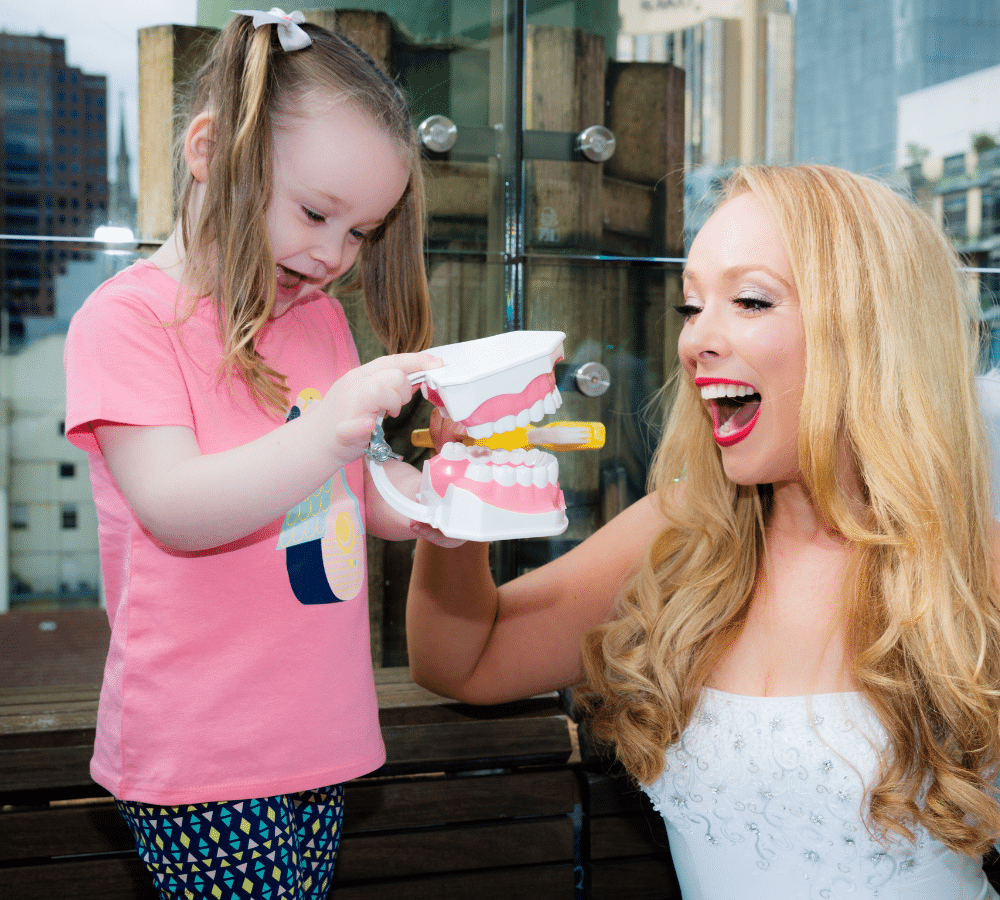
Dental Health Week is the ADA's major annual oral health promotion campaign. This edition focused on babies' and toddlers' oral health, and specifically on where the Sugar Bandit hides in Australian households.
The number one cause of tooth decay is the regular consumption of sugary foods and drinks. How does sugar affect your dental health? and how does tooth decay develop? explain the mechanism; the stages of dental decay traces where it ends up. The campaign asked families a direct question: who is the Sugar Bandit in our family?
The scale of it, independently measured
The World Health Organization's position gives the Australian campaign its context. Dental caries is the most common noncommunicable disease worldwide, affecting 2.5 billion people — an estimated 2 billion people with decay in permanent teeth and 510 million children with decay in deciduous (baby) teeth.
WHO also states plainly what the campaign is getting at: the consumption of free sugars in foods and beverages is the most common risk factor for dental caries, and in children, dental caries often leads to absence from school. The time-off-school argument is not a scare tactic; it is in the WHO fact sheet.
How much sugar is actually allowed
There is a number, and it is smaller than most families expect.
WHO strongly recommends reducing free sugars to less than 10% of total energy intake, and suggests reducing further to below 5% to decrease the risk of tooth decay. The Australian Dental Association translates that 5% into a figure you can count: no more than 6 teaspoons — 24 grams — of free sugar per day.
For context on how easily that is spent: one can of soft drink contains, on average, 10 teaspoons of sugar — about 1.5 times the entire daily amount WHO recommends (teeth.org.au, Australian Dental Association). One can, and the day's allowance is gone with 4 teaspoons to spare on the wrong side of the ledger.
For the youngest children WHO is more restrictive still: children under 2 years of age should not consume any sugar-sweetened beverages. Not less — none.
What counts as a “free sugar”
This is the definition that catches parents out, and it is the reason fruit juice keeps appearing on these lists. Free sugars are all monosaccharides and disaccharides added to foods and beverages by the manufacturer, cook or consumer, plus the sugars naturally present in honey, syrups, fruit juices and fruit juice concentrates (WHO; Australian Dental Association Policy Statement 2.2.2).
So honey counts. Fruit juice counts — even the juice with nothing added. What does not count is the sugar inside whole fruit, vegetables and milk, which arrives with fibre, vitamins, minerals and, in milk's case, calcium.
The ADA's practical conclusion on juice is blunt: children are better off having a piece of fresh fruit than drinking shop-bought juice, and the ADA has said directly that the advertising and labelling of these products is aimed at persuading parents otherwise.
Food as a reward — the habit worth breaking
The ADA's position is blunt on this point: using food to reward, bribe or comfort children sends an inappropriate message about food from an early age, and undermines other efforts to build healthy eating habits.
Children consuming high-sugar foods and drinks regularly are at greater risk of dental decay, obesity and diabetes — see diabetes and oral health for how the last of those feeds back into the mouth.
The practical instruction: put boundaries around children's access to treats, and when a reward is given, ask whether there is a better option. How to encourage your child to brush their teeth covers reward charts that do not involve food.
The healthy snacks that are not
Sometimes the Sugar Bandit does not know they are doing harm. Many snacks marketed as healthy are high in sugar and stick to children's teeth, increasing the acid attacks that cause decay.
The common culprits:
- dried fruit
- biscuits — sweet and savoury
- fruit juice
- muesli bars
- crackers
- children's cereals
- flavoured milk
- sweetened yoghurt
- fruit bars and fruit slice
- flavoured popcorn
- canned fruit
- baked goods and banana bread
Dried fruit deserves particular mention: it is concentrated sugar in a sticky form that lodges between teeth, which is close to a worst case for decay risk despite its reputation. Between the teeth is also where a brush cannot reach — is flossing really that important?
Because parents believe these snacks are healthy, children are often allowed to graze on them all day — which makes things considerably worse. How does your diet affect your teeth? covers the wider picture, and sugar-free soft drinks and teeth explains why removing the sugar does not remove the acid — a point the ADA makes directly, noting that the combination of sugar and food acid can be particularly destructive. Soda water and teeth and enamel damage within 30 seconds of consuming soft drinks take the acid side further.
How to read the label
If you want one skill out of this article, it is this one. The Australian Dental Association's consumer guidance sets it out.
Sugar can be listed under more than 50 different names. Sucrose, maltose, lactose, fructose, brown rice syrup, glucose syrup, palm sugar, agave nectar, golden syrup, honey, molasses, corn syrup, cane sugar, maltodextrin and raw sugar are all sugar. The closer any of them sits to the top of the ingredients list, the more of it is in the product.
Use the per-100g column on the Nutrition Information Panel, not the per-serve column. Serving size is set by the manufacturer and differs between products, so per-serve comparisons are not comparisons at all. Against the per-100g column:
- 5 grams of sugar or less — best
- between 5g and 10g — okay
- over 15g — look for a healthier alternative
The Health Star Rating is the quick version. It has run in Australia and New Zealand since 2014, rates packaged foods and drinks from half a star to 5 stars, and is applied at the manufacturer's discretion — so its absence on a product tells you something too.
The actual instruction
It is not abstinence. Nobody is saying children should never eat these foods again.
What the ADA recommends:
- Be aware how much sugar is in these snacks
- More importantly, reduce the number of times they are eaten
- Make sure they are eaten in one go, and preferably as part of a meal
- Avoid grazing
- Allow high-sugar snacks in moderation
Points 2 and 4 carry most of the effect. Frequency of acid exposure damages teeth more than the total quantity of sugar — which is why a whole chocolate bar after lunch is less harmful than the same bar picked at across an afternoon.
That is not folklore. The ADA's policy position states that the form, frequency, timing and total amount of sugar intake are all significant in the initiation of the caries process, and describes the mechanism: bacteria in dental plaque metabolise simple carbohydrates and produce acids, the pH of the plaque falls below the critical level, and tooth structure softens — which, repeated often enough, becomes a cavity. Every separate exposure starts that clock again. Can you reverse tooth decay? explains what happens in the gaps between those attacks, and why they matter. Limiting children's sugar consumption at Halloween is the same advice applied to the worst night of the year for it.
One substitution with evidence behind it: sugar-free confectionery without added acids, including chewing gum, is a dentally safe alternative to sugar-containing confectionery (ADA Policy Statement 2.2.2). See does chewing sugar-free gum really help prevent cavities?
Babies and bottles — the part that starts earliest
Given this campaign's focus on babies and toddlers, one piece of ADA guidance belongs here on its own. The ADA specifically directs dietary education at parents and carers of infants and babies, and discourages sleeping with sweetened dummies, or with food or bottles containing sugar — including milk and fruit juices.
The related risk it names is sipping drinks other than water during interrupted sleep, which is exactly what a bottle in the cot amounts to. Saliva flow drops during sleep, so what is in the mouth stays there. The ADA also advises against dipping a dummy in honey or jam, which increases decay risk once a child has teeth.
If teething is the reason a bottle is being used to settle a child, baby teething: signs, symptoms and treatments covers the alternatives.
The rest of the survey
- Australians consume more than double the world average of 17 teaspoons of sugar per person per day
- Almost 60% of parents believe they are already doing everything they can to prevent decay
- Almost 40% believe they need to set a better example on oral healthcare
- Less than 10% believe their child should first see a dentist before turning one
- Almost half of Australians forget to brush before bed
- Almost 60% of parents find it difficult to get children brushing twice a day
The gap between the second and third figures — 60% think they are doing everything, 40% know they should set a better example — is the campaign's whole point.
On the first dental visit: the recommendation is by age one, and fewer than one parent in ten knew it. When should a child first visit the dentist? explains why that early, and your child's first visit what happens at it.
On the brushing figures: kids teeth cleaning tips, what is the ideal daily routine for oral hygiene?, how often should I brush my teeth?, and the benefits of fluoride — the night-time brush is the one that matters most, because saliva flow drops during sleep.
Diet is only one of the three things WHO names. Its account of how caries develops pairs a continued high intake of free sugars with inadequate exposure to fluoride and a lack of plaque removal by toothbrushing with a fluoride toothpaste containing 1000–1500 ppm. Sugar is the one parents control at the shops; the other two are controlled at the basin and the tap. Fluoridated water: is it good for you? and selecting a toothpaste: fluoride or non-fluoride cover those.
One protective measure worth asking about by name, because it addresses the surfaces a brush cannot clean: fissure sealants on the first permanent molars.
Common questions
My child takes chewable vitamins and sometimes a medicine at bedtime. Does that count?
It can, and it is the item parents are least likely to have thought of. ADA Policy Statement 2.2.2 states that “medications, including over-the-counter vitamin and mineral tablets, may include sugars (particularly those that are chewable and dissolved in the mouth) or contribute to dry mouth, both of which can contribute to tooth decay or softening and loss of tooth structure.”
There are two separate mechanisms in that sentence. One is sugar held against the teeth while something dissolves in the mouth. The other is reduced saliva — and saliva is what neutralises acid and carries minerals back to the tooth surface. The ADA lists “chewing and sucking acidic vitamin tablets” among the specific behaviours that raise caries and erosion risk.
What to do about it: ask your pharmacist whether a sugar-free version of what your child takes regularly exists — the ADA's own position is that the pharmaceutical industry should be encouraged to provide sugar-free formulations or minimise sugar content for medications taken orally. Give anything chewable or sweetened with a meal rather than at bedtime, and follow it with water rather than a brush straight away if the product is acidic. And tell the dentist what your child takes on an ongoing basis, because it changes what a sensible recall interval looks like.
How do I tell whether my child is genuinely high risk, rather than average?
There is a published list, which is more useful than a general sense of worry. ADA Policy Statement 2.2.2 names the circumstances in which acidic foods and drinks should be avoided rather than merely limited:
- poor oral hygiene
- low or no fluoride exposure
- conditions that reduce salivary flow
- exertion resulting in a dry mouth
- medications that reduce salivary flow
- sipping drinks other than water during interrupted sleep
- chewing and sucking acidic vitamin tablets
If two or three of those describe your household, the same diet that is fine for another child is not fine for yours. The sports one catches families out in particular: a child who trains hard has a dry mouth for the whole session, which is exactly when a sports drink does the most damage. See are sports drinks really that bad for teeth? and exercise can increase the risk of tooth decay.
Risk is also not fixed. It is worth asking at the check-up which of these apply to your child now and what the plan is for each, rather than treating the recall interval as a scheduling default.
We are on tank water, or we only drink filtered or bottled water. Does that change anything?
Yes, and this is worth checking rather than assuming. The NHMRC's public information on water fluoridation is direct about both cases.
On rainwater: “Rainwater collected in domestic tanks will not contain fluoride.” The NHMRC advises that people relying on tank water for drinking and food preparation seek advice concerning fluoride requirements from their local dental professional, school dental service, community dental service or from the Australian Dental Association. It also notes that households on tank water still get some benefit from food and drink processed in nearby fluoridated centres, and from time spent working or studying in a fluoridated area.
On bottled water: “In most cases, the answer is no” — most is not fluoridated, although some contains naturally occurring fluoride from the source, and Australian food regulations permit fluoride to be added within 0.6–1 mg/L. Packaged water must be labelled with its contents, so the label will tell you.
Filters are the third case. Some filter types remove fluoride and some do not; if a filter is your household's only drinking water, find out which kind you have. None of this means a child is destined for decay — it means the fluoride side of the equation is not being covered by the tap, so the toothpaste side matters more. Fluoridated water: is it good for you? and the benefits of fluoride go further.
Is there help with the cost?
For eligible children, yes, through the Child Dental Benefits Schedule. Services Australia's published terms:
- up to $1,158 for each eligible child over two consecutive calendar years. The cap is indexed on 1 January each year, and an increase applies only to a child who received their first eligible service in that calendar year
- the child must be 0 to 17 years old for at least one day in that calendar year, eligible for Medicare, and the family must be receiving a qualifying payment
- it covers check-ups, x-rays, cleaning, fissure sealing, fillings, root canals and extractions
- it does not cover orthodontic work, cosmetic work, or any dental service provided in a hospital
- the two-year window starts at the beginning of the calendar year in which the child both becomes eligible and has their first service. Unused balance at the end of the two years is lost — you cannot carry it forward
That last point is the one that costs families money. If a child is eligible and has had one visit, the clock is already running. Note also that CDBS amounts do not count towards the Medicare Safety Net or the Extended Medicare Safety Net.
Fissure sealing being on the covered list is worth knowing, because it is the measure that protects the biting surfaces of the first permanent molars. Check eligibility through Services Australia or myGov rather than waiting to be written to. See the Child Dental Benefits Schedule and how the schedule operates. Published fees for other work are in the price guide.
Are sugar-free lollies and sugar-free drinks a safe swap?
Partly, and the qualifier is the whole answer. The ADA's position is that “sugar-free confectioneries without added acids, including chewing gums, are dentally safe alternatives to caries-producing confectionery containing sugar.”
Read those four words again — without added acids. Plenty of sugar-free products are strongly acidic, and the ADA is explicit that exposure to acid from acidic or sugar-sweetened foods and drinks can lead to softening and loss of tooth structure, and that the combination of sugar and food acid can be particularly destructive. A sugar-free soft drink has had the sugar removed but generally not the acid, so it addresses one of the two problems. Sugar-free sour lollies can be worse on the acid side than the sweets they replaced.
The ADA also adds a caution that is easy to skip past: the main objective is to “encourage individuals to consume a recommended limited amount of simple carbohydrate foodstuffs and thus reduce the need for sugar and sugar substitutes.” In other words, swapping is a step, not the destination. See sugar-free soft drinks and teeth and does chewing sugar-free gum really help prevent cavities?
For what to drink instead, the ADA's dietary position also promotes calcium-rich foods and drinks such as milk, cheese and some fish as the preferred source of dietary calcium — and water remains the only drink that carries no risk on either the sugar or the acid side.
Related reading
- Children's dentistry — the service page
- Should your child see a specialist paediatric dentist?
- Everything you need to know about chalky teeth
- Dental crowns for children — silver or white?
- Victorians, soft drinks and tooth decay
- Exercise can increase the risk of tooth decay
- Are sports drinks really that bad for teeth?
- Selecting a toothpaste: fluoride or non-fluoride
Practical details
Smile Solutions, Level 1, 220 Collins Street, Manchester Unity Building, Melbourne VIC 3000 — getting here. Phone 13 13 96, contact us, or theteam@smilesolutions.com.au. Monday–Friday 8.00am–6.00pm, Saturday 8.30am–1.30pm, Sunday by appointment. The clinical team is listed by name.
Eligible children may be able to use the Child Dental Benefits Schedule; check with Services Australia, and see how the schedule operates. Published fees are in the price guide.
Published 6 August 2014. This article draws on material first published by the Australian Dental Association; quoted comments and the Dental Health Week survey figures are attributed to the ADA and Dr Peter Alldritt. Global caries prevalence, the free-sugars definition and thresholds, the under-2 recommendation and the toothpaste concentration are attributed to the World Health Organization; the 6-teaspoon limit, the caries mechanism, the infant feeding guidance and the sugar-free confectionery position to ADA Policy Statement 2.2.2 — Diet and Nutrition; the label-reading thresholds, the soft drink figure and the Health Star Rating description to the ADA's consumer site teeth.org.au. Child Dental Benefits Schedule amounts, eligibility and coverage are as published by Services Australia; the rainwater and bottled water statements are from the NHMRC's public information on water fluoridation. General information only; it does not replace advice from your treating practitioner.
Smile Solutions trades under ABN 28 193 514 103.
Images on This Page
-
https://www.facebook.com/tr?id=800557773428361&ev=PageView&noscript=1
(no alt text)
-
https://www.smilesolutions.com.au/wp-content/uploads/2025/10/calendar_month.svg
(no alt text)
-
https://www.smilesolutions.com.au/wp-content/themes/arcadian-wordpress-theme/assets/images/smile_solutions_logo_white.png
Smile Solutions Logo
-
https://www.smilesolutions.com.au/wp-content/themes/arcadian-wordpress-theme/assets/images/smile_solutions_logo_purple.png
Smile Solutions Logo
-
https://www.smilesolutions.com.au/wp-content/uploads/2023/11/SS-Tooth-1-1-150x150.png
Smile Solutions
-
https://www.smilesolutions.com.au/wp-content/uploads/2025/09/Childrens-Teeth-Cleaning.png
Child practicing dental hygiene demonstration.
-
https://www.smilesolutions.com.au/wp-content/uploads/2025/09/Root-Canal-2-300x217.jpg
Root Canal
-
https://www.smilesolutions.com.au/wp-content/uploads/2026/08/Mouth-Breathing-300x270.jpg
Mouth Breathing
-
https://www.smilesolutions.com.au/wp-content/uploads/2025/09/Dental-Crown-at-Smile-Solutions-300x300.jpg
Dental Crown at Smile Solutions
-
https://www.smilesolutions.com.au/wp-content/themes/arcadian-wordpress-theme/assets/images/family_owned_bussiness.png
Family Owned Business
-
https://www.smilesolutions.com.au/wp-content/themes/arcadian-wordpress-theme/assets/icons/icon--phone.svg
Smile Solutions Contact
-
https://www.facebook.com/tr? id=800557773428361&ev=PageView&noscript=1
(no alt text)
-
https://bat.bing.com/action/0?ti=25148060&tm=gtm002&Ver=2&mid=ecd6078f-124c-47fc-ab02-353223512dee&bo=1&sid=459ff860ab2611f1b2cb8fa990745a87&vid=45a03300ab2611f1ae65413b04b47ff7&vids=1&msclkid=N&pi=918639831&lg=en-US&sw=800&sh=600&sc=24&nwd=1&tl=Dental%20Health%20Week%3A%20Protect%20your%20kids%20from%20the%20Sugar%20Bandits!%20-%20Smile%20Solutions&p=https%3A%2F%2Fwww.smilesolutions.com.au%2Fdental-articles%2Farticle%2Fdental-health-week-protect-kids-sugar-bandits%2F&r=&evt=pageLoad&sv=2&cdb=AQAQ&rn=973468
(no alt text)