When do babies start teething, and what helps?
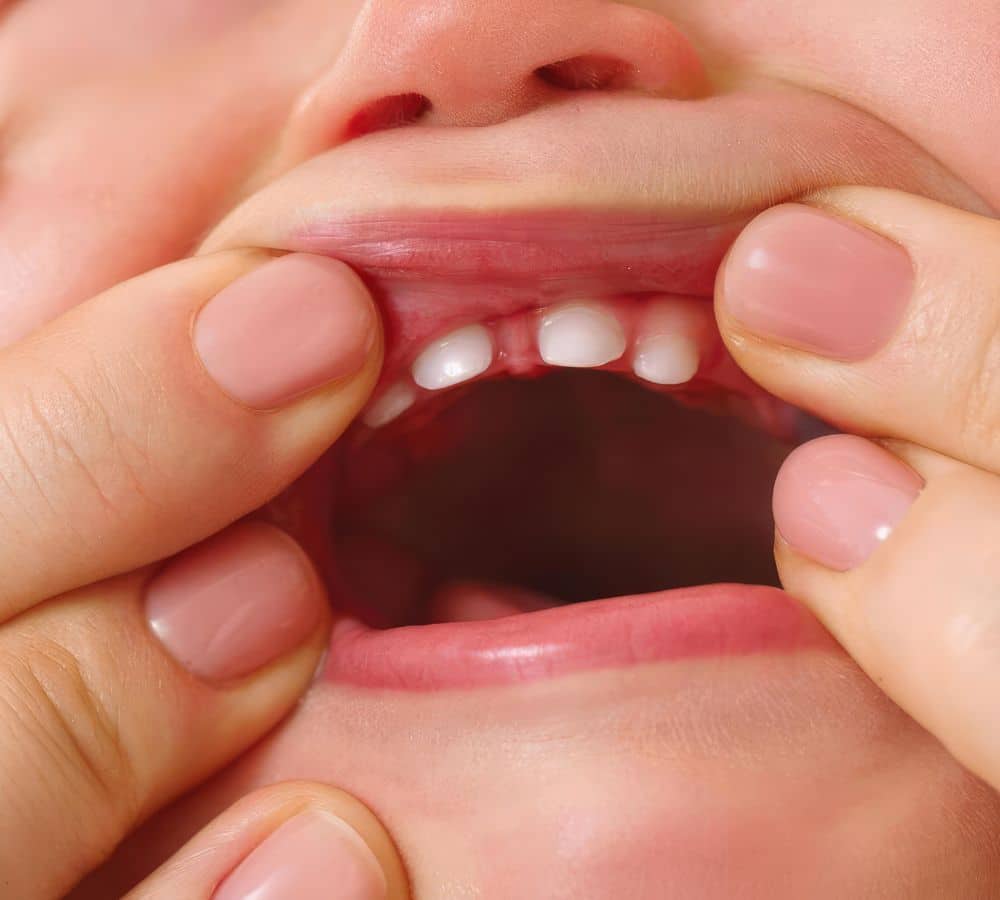
Babies' teeth begin developing in the womb, long before birth. Most babies' first teeth erupt between 4 and 7 months of age.
The range is wide and that is normal. Some babies are born with a tooth; others have none at twelve months. Timing is largely inherited and a late start is not a problem in itself — mention it at a check-up rather than worrying about it. The order and appearance of baby teeth explains why the order matters far more than the timing.
The order teeth arrive in
- The two bottom incisors — the front teeth — appear first
- The top two incisors directly above follow closely
- Then the first molars, the canines, and finally the second molars at the back
By around age three your child will have all 20 baby teeth. Children start losing them around age six, though it can be earlier (often girls) or later — should I pull out my child's loose tooth? covers that stage.
The back molars, arriving somewhere around 18 months to two and a half years, are usually the ones that cause the most upset — they are the biggest teeth with the most gum to come through.
Why baby teeth matter
It is worth being clear about this, because baby teeth are often treated as disposable.
Your baby's first teeth are just as important as their permanent teeth. They help the child learn to chew and speak properly, and — most crucially — they reserve the space in the gums for the permanent teeth to erupt into.
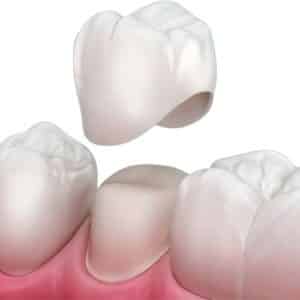
A baby tooth lost early lets the neighbouring teeth drift, leaving insufficient room for the adult tooth underneath. That is one of the common routes into orthodontic treatment later, and it is why a decayed baby tooth is treated rather than simply pulled out — see dental crowns for children: silver or white? and should your child see a specialist paediatric dentist?
Start cleaning as soon as the first tooth appears — a soft brush or damp cloth, twice a day. Decay in baby teeth is common, preventable, and far easier to avoid than to treat in a toddler. Kids teeth cleaning tips, how to encourage your child to brush and protecting your child from dental disease cover the routine as it grows with them.
Signs and symptoms of teething
- Crankiness and disturbed sleep
- Reddened cheeks and drooling
- Swollen, tender gums, sometimes with a bluish bubble over an erupting tooth
- Reduced appetite, or reluctance to feed
- Chewing and gnawing on everything within reach
- Pulling the ear on the same side as the erupting tooth
An important caution — what teething does not cause
This is the most important section on the page, and it deserves more than a footnote.
Research consistently finds that teething does not cause significant fever, diarrhoea, vomiting, rashes away from the mouth, or a generally unwell baby. Mild gum discomfort, drooling and irritability, yes. Illness, no.
That matters because teething is such a convenient explanation. The teething months — roughly six months to two years — are also exactly when babies lose maternal antibodies and start catching things. The two coincide; one does not cause the other.
Do not attribute fever or diarrhoea in your baby to teething. If these occur, seek medical advice to rule out other causes.
See a doctor promptly if your baby has:
- a temperature of 38°C or above — and urgently if they are under three months
- diarrhoea or vomiting, or signs of dehydration (fewer wet nappies, no tears, lethargy)
- a rash, particularly one that does not fade when pressed
- unusual drowsiness, floppiness, or difficulty waking
- difficulty breathing, or a high-pitched or persistent unusual cry
- refusal to feed
Anything in that list that comes with a baby who seems seriously unwell is an emergency — call 000 or go to a hospital emergency department. Nurse-on-Call in Victoria is 1300 60 60 24.
Trust your instinct. Parents are usually right that something is different, and no clinician minds being asked.
Relieving the discomfort
The safest measures are the simplest, and they work.
- Wash your hands and gently rub your baby's gums with a clean finger — pressure genuinely helps
- Give a teething ring or clean wet washcloth to bite. Rings can be chilled in the fridge — not the freezer; frozen objects are hard enough to bruise gums
- Offer unsweetened rusks to chew, under supervision
- Cold foods such as plain yoghurt may provide relief in babies already eating solids
- Extra cuddles and distraction, which sounds trivial and is often the most effective thing available
- Wipe drool away regularly to protect the skin
On pain relief: infant paracetamol or ibuprofen may be appropriate for a baby who is genuinely distressed, but dosing in babies is by weight and age, and some products are not suitable under certain ages. Ask your pharmacist, GP or maternal and child health nurse first.
Three things to avoid
These are the ones worth being firm about.
1. Amber teething necklaces and bracelets. Do not use them. They present a strangulation risk if worn during sleep and a choking risk if beads come loose, and Australian consumer regulators have issued warnings after deaths and serious injuries overseas. There is no evidence they relieve teething pain; the claimed mechanism has no scientific basis. If one is used at all, it should never be worn around the neck, never during sleep, and never unsupervised — which removes most of the point of it.
2. Teething gels containing benzocaine or salicylate. Benzocaine gels are associated with a rare but serious blood disorder (methaemoglobinaemia) in infants, and regulators overseas have advised against use in children under two. Salicylate-containing gels raise separate concerns in young children. Do not use any numbing or teething gel in a baby's mouth without checking with your pharmacist, GP or dentist first, and read the age restrictions on the packaging.
3. Anything sweet on a dummy, in a bottle, or on a teething rusk. Honey, juice, cordial and sweetened rusks all cause decay in newly erupted teeth, and honey should not be given to infants under twelve months at all because of the risk of infant botulism. Never put a baby to bed with a bottle of anything other than water. How does sugar affect your dental health? and how does tooth decay develop? explain why frequency matters more than quantity.
Drooling rash
If drooling has caused a facial rash, protect the skin by gently wiping it with a soft, wet cotton cloth and smoothing a barrier such as petroleum jelly onto the affected area at night or during naps. A rash that spreads, blisters, weeps or does not settle should be seen by a GP.
Two things that look alarming and usually are not
An eruption cyst — a soft bluish-purple swelling over an erupting tooth. It is a small collection of fluid, it is harmless, and it almost always resolves as the tooth breaks through. Have it looked at if you are unsure, but it rarely needs treatment.
A natal or neonatal tooth — a tooth present at birth or in the first month. Uncommon, usually a genuine baby tooth arriving early rather than an extra one. It is checked for mobility, because a very loose one is an inhalation risk, but many are simply left alone.
When to see a dentist
If at any point during teething you are worried about a particular sign or symptom, or something simply does not seem right, ask. Contact us, or see emergency dentistry and children's dental emergencies if it is urgent.
On the first visit, there are two positions and both are defensible. Smile Solutions suggests introducing children to professional dental care from around age three. The Australian Dental Association and international paediatric bodies recommend a first check-up around the eruption of the first tooth, or by the first birthday — largely so that parents get preventive advice before problems start. Earlier is the more cautious course, particularly if there is any family history of early decay, and specialist paediatric dentists here see children from infancy. When should a child first visit the dentist? works through that question in full.
Book sooner, regardless of age, if you notice white, brown or chalky marks on new teeth — see everything you need to know about chalky teeth — a chipped or discoloured tooth, or bleeding or swollen gums.
First Visit to the Dentist and Paediatric Dentists.
Common questions
My baby is nearly one and still has no teeth. Is something wrong?
Probably not, but this is the point at which it is worth having someone look — and there is a specific reason for that threshold rather than a vague one.
The Australian Dental Association's consumer service puts the usual range like this: "Baby teeth often start to appear around 9 months old. However, this can range 3 to 12 months", and "if your child does not have any teeth by 12 months of age, it is best to have a check-up with a dentist". It also notes that "it is normal for the teeth to arrive in any order", although the middle bottom teeth are usually first, and that all 20 baby teeth usually arrive by age 3.
You will notice that the ADA's “around 9 months” sits later than the 4 to 7 months given at the top of this page. Both figures are in circulation and the difference is worth understanding rather than glossing over: our figure describes when most babies' first teeth come through, the ADA's describes a typical point within a range that runs from 3 to 12 months. They are not in conflict about what is normal — the range is wide, in both accounts. What they agree on exactly is the action point: no teeth at all at twelve months is a reason for a check-up, not a reason to panic.
When does toothpaste start, and how much?
Later than most parents expect, and the ADA is specific about it.
"You do not need to use toothpaste for your child until they are 18 months old" — before that, a toothbrush and water is the routine. Start the brush "around 6 months of age or when your baby gets their first tooth", and before the first tooth you can use a clean, damp washcloth or muslin cloth on the gums.
On duration, the ADA is refreshingly practical: two minutes is the figure for older children and adults, but "babies and toddlers only have a few teeth, so you don't need to brush for this long" — what matters is that all the surfaces have been reached. Build toward two minutes as more teeth arrive.
And the one most parents are not told: cleaning between the teeth starts when any two teeth touch, which the ADA puts at around two years of age. Ask to be shown how at your next visit rather than working it out at home.
Do teething gels actually work?
Briefly at best, and the reason they fade is worth knowing before you buy one.
The ADA's own description: cold teething gels "can help at first. But this may only last for a short amount of time. This is because the gel gets washed away by saliva." The same passage raises the safety issue directly — babies swallow the gel, it is hard to know how much has gone down, and a numbed throat becomes a choking hazard.
That sits alongside the caution above about the specific ingredients. The combined practical answer: the physical measures do more than the pharmacological ones in a baby this age. A chilled (not frozen) teething ring, a clean finger rubbed firmly on the gum, a cold wet washcloth and distraction are the ones with nothing to weigh against them.
If your baby is genuinely distressed rather than grizzly, that is a conversation with a pharmacist, GP or maternal and child health nurse about weight-appropriate pain relief — not a gel chosen off a shelf.
How do I check my baby's teeth myself between appointments?
There is a simple routine for this and it takes ten seconds. The ADA describes it as lifting the top lip and rolling down the bottom lip to look at the teeth, and specifically at the surfaces that face the lip, which is where early decay in babies and toddlers shows up first.
What you are looking for: "white, brown, or black spots on the teeth that do not come off". A mark that wipes away is food. A mark that does not is a reason to make an appointment. Do it in good light, once a month, while the child is relaxed — many parents find bath time or nappy change easier than a deliberate inspection.
The ADA adds the caveat that matters: "This does not replace a check-up by a dentist." It is an early-warning check between visits, not a substitute for one — decay between the teeth, which is where a good deal of it starts, cannot be seen by looking at all.
Does any of this cost anything, and is there help with it?
For most families with a baby, the first appointments are examinations and advice rather than treatment, so the question is usually about what happens if something is found.
Two things are worth knowing. The ADA notes that "your child may be eligible to attend a government dental clinic" — public dental services see children, with eligibility set by the state.
And the Commonwealth's Child Dental Benefits Schedule starts at birth, not at school age. Services Australia's rules are that the child must be eligible for Medicare, must be 0 to 17 years old for at least one day in the calendar year, and that you or they "get an eligible payment at least once that calendar year". The benefit is up to $1,158 per eligible child over two consecutive calendar years — a cap indexed each 1 January — and it covers examinations, x-rays, cleaning, fissure sealing, fillings, root canals and extractions. It does not cover orthodontic work, cosmetic work, or any dental services in a hospital. You do not apply: "If your child is eligible we'll send you a letter."
The practical advice is not to wait for the letter to find out. Check through Services Australia or myGov, and ask the practice what an examination costs and what your health fund pays before you book. How does the Child Dental Benefits Schedule operate? sets out the detail, and published fees are in the price guide.
Related reading
- Children's dentistry — the service page
- Combating dental anxiety in children
- How Smile Solutions helps manage your child's dental anxiety
- The role of fissure sealants in children's teeth
- The benefits of fluoride
- How does the Child Dental Benefits Schedule operate?
- Oral health care for children with special needs
Practical details
Smile Solutions, Level 1, 220 Collins Street, Manchester Unity Building, Melbourne VIC 3000 — getting here. Phone 13 13 96, or theteam@smilesolutions.com.au. Monday–Friday 8.00am–6.00pm, Saturday 8.30am–1.30pm, Sunday by appointment. The clinical team is listed by name.
Related: First Visit to the Dentist, Kids Teeth Cleaning Tips, Paediatric Dentists, Should I pull out my child's loose tooth?.
Registration for any practitioner can be verified free on the AHPRA public register at ahpra.gov.au.
Published 10 September 2018. General information only — it is not a diagnosis, a treatment plan or a promise of any particular clinical outcome, and it does not replace advice from your treating practitioner, GP, paediatrician, pharmacist or maternal and child health nurse. Eruption timing varies widely between children. Fever, diarrhoea, vomiting and rash should not be attributed to teething — seek medical advice. Do not give any medicine or teething preparation to a baby without checking its suitability and dose first. Product safety advice changes; the ACCC and TGA are authoritative. Government benefit rules and caps are set by the Australian Government and change; confirm current details with Services Australia.
Smile Solutions trades under ABN 28 193 514 103.
Images on This Page
-
https://www.facebook.com/tr?id=800557773428361&ev=PageView&noscript=1
(no alt text)
-
https://www.smilesolutions.com.au/wp-content/uploads/2025/10/calendar_month.svg
(no alt text)
-
https://www.smilesolutions.com.au/wp-content/themes/arcadian-wordpress-theme/assets/images/smile_solutions_logo_white.png
Smile Solutions Logo
-
https://www.smilesolutions.com.au/wp-content/themes/arcadian-wordpress-theme/assets/images/smile_solutions_logo_purple.png
Smile Solutions Logo
-
https://www.smilesolutions.com.au/wp-content/uploads/2023/11/SS-Tooth-1-1-150x150.png
Smile Solutions
-
https://www.smilesolutions.com.au/wp-content/uploads/2018/09/Baby-Teeth.jpg
Baby Teeth
-
https://www.smilesolutions.com.au/wp-content/uploads/2025/09/Root-Canal-2-300x217.jpg
Root Canal
-
https://www.smilesolutions.com.au/wp-content/uploads/2026/08/Mouth-Breathing-300x270.jpg
Mouth Breathing
-
https://www.smilesolutions.com.au/wp-content/uploads/2025/09/Dental-Crown-at-Smile-Solutions-300x300.jpg
Dental Crown at Smile Solutions
-
https://www.smilesolutions.com.au/wp-content/themes/arcadian-wordpress-theme/assets/images/family_owned_bussiness.png
Family Owned Business
-
https://www.smilesolutions.com.au/wp-content/themes/arcadian-wordpress-theme/assets/icons/icon--phone.svg
Smile Solutions Contact
-
https://www.facebook.com/tr? id=800557773428361&ev=PageView&noscript=1
(no alt text)
-
https://bat.bing.com/action/0?ti=25148060&tm=gtm002&Ver=2&mid=8a1e833c-c977-4021-86b5-31982075cea8&bo=1&sid=664a29f0ab2611f196f263bfba616098&vid=664a5320ab2611f1a11e7f438c521785&vids=1&msclkid=N&pi=918639831&lg=en-US&sw=800&sh=600&sc=24&nwd=1&tl=Baby%20teething%20-%20signs,%20symptoms%20and%20treatments%20-%20Smile%20Solutions&p=https%3A%2F%2Fwww.smilesolutions.com.au%2Fdental-articles%2Farticle%2Fbaby-teething-signs-symptoms-and-treatments%2F&r=&evt=pageLoad&sv=2&cdb=AQAQ&rn=146281
(no alt text)