Twenty teeth, in a set order
There are 20 baby (deciduous) teeth, and they erupt over the first few years of a child's life. Baby teething: signs, symptoms and treatments covers what that feels like for the child, and for you.
The first to appear are at the front of the mouth. As the child gets older, the posterior deciduous teeth begin to erupt.
When they arrive, and how wide the normal range is
Before the sequence, the calendar — because this is where most of the worry starts.
The Australian Dental Association's consumer guidance gives these markers:
- Baby teeth often start to appear around 9 months old, with a normal range of 3 to 12 months.
- If your child has no teeth at all by 12 months of age, it is best to have a check-up with a dentist.
- All 20 baby teeth usually arrive by age 3.
- The middle bottom teeth are often first.
Two details that surprise most parents. First, baby teeth begin developing while your baby is still in the womb — they are not built after birth, they are revealed. Second, a baby can occasionally be born with a tooth already through, which is called a natal tooth. Neither is a problem in itself; the second is worth mentioning to your dentist or maternal and child health nurse.
The Australian Dental Association's NSW branch puts the first appearance slightly more broadly again — around 6 to 12 months — which is the same phenomenon described with a wider bracket rather than a competing claim.
The sequence that looks wrong
Here is the detail worth knowing before it worries you.
A child's first deciduous molars erupt before their canines — the eye teeth.
This is the normal order of appearance, and it is not a cause for concern, however strange it may look.
Parents notice this because it leaves an obvious gap between the front teeth and the newly arrived molars, which sits empty for months until the canines fill it. The mouth looks like it has skipped a tooth. It has not — the canines are simply later in the sequence.
The final teeth to erupt are the most posterior deciduous molars, at the very back.
Timing versus order
This is the principle that resolves most parental worry.
Some children's teeth erupt much earlier than others, and some take much longer than the norm.
This is not a problem, as long as the order of eruption is correct.
Timing varies enormously between healthy children. Order does not. A child who is six months behind the average but erupting teeth in the right sequence is developing normally. A child erupting teeth out of sequence is worth assessing — that can point to a missing tooth, an obstruction, or a developmental issue.
If you have concerns that your child's teeth are not coming through in sequence, or that they are lagging, book a check-up and assessment. When should a child first visit the dentist? sets out the schedule, your child's first visit describes the appointment, and should your child see a specialist paediatric dentist? covers when a specialist is the better choice.
Where the ADA puts the emphasis differently
In fairness to a parent reading both, the Australian Dental Association's own consumer page states the matter more permissively: “It is normal for the teeth to arrive in any order. But the middle bottom teeth are often first.”
We have left the paragraph above as written, because it reflects how this practice assesses eruption, and it is the more cautious of the two positions — it results in a child being looked at rather than not. But you should know that the difference exists, and that the ADA does not treat an unusual order as abnormal in itself.
The practical reconciliation is the same either way: an unusual order is a reason to have a look, not a reason to be alarmed, and a check-up is the thing that distinguishes the two. The ADA's one firm timing rule — no teeth at all by 12 months warrants a check-up — is not in dispute on either account.
Losing them
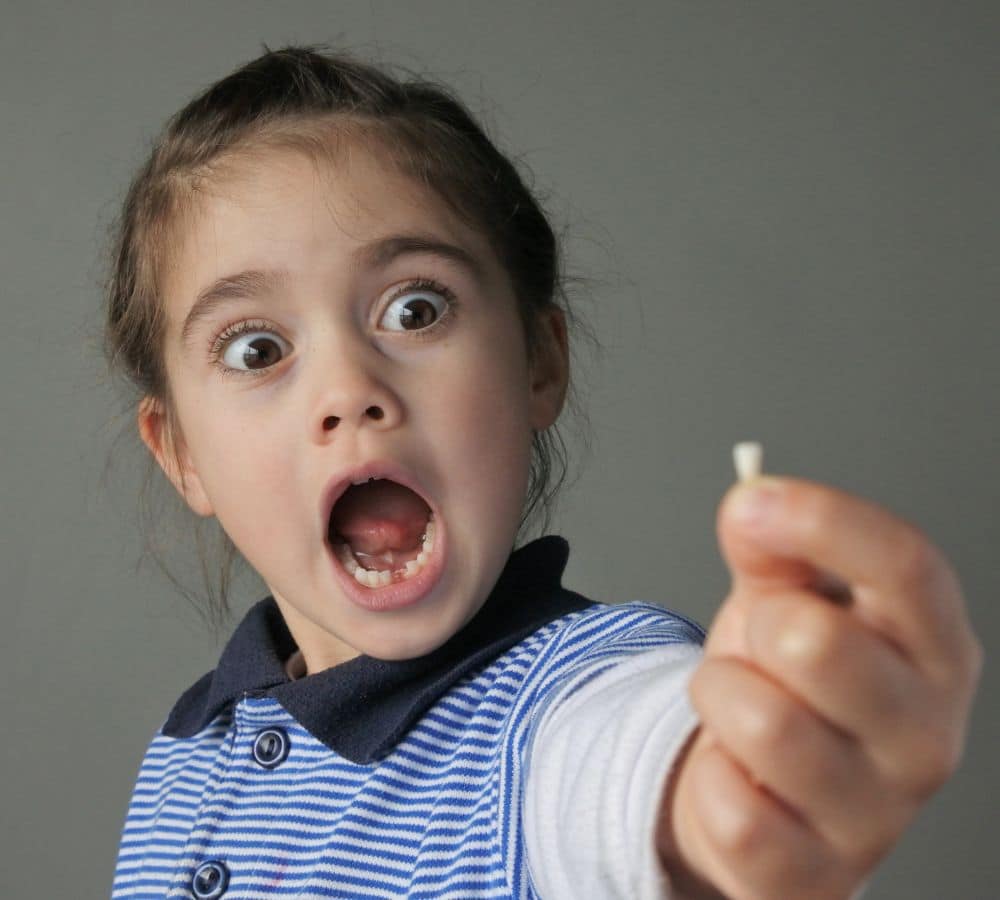
All deciduous teeth are lost, generally between the ages of 6 and 13.
The sequence of losing them is much the same as the sequence of gaining them — front to back. Should I pull out my child's loose tooth? answers the question that follows, and life as the Smile Solutions tooth fairy covers the more enjoyable part.
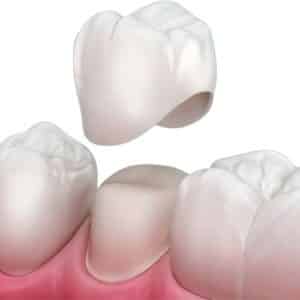
One consequence worth knowing: a baby molar lost early — to decay rather than to nature — takes space with it. The teeth either side drift into the gap, and the adult tooth underneath has nowhere to come through. That is one of the common routes into orthodontic treatment in the teenage years, and the reason dental crowns for children exist at all.
The tooth parents do not expect
A child's first permanent molars — the six-year-old molars — erupt at about age six. These are adult teeth.
A child does not need to lose a baby tooth for a six-year-old molar to erupt. It comes through behind the very back baby molar, in a space that was not previously occupied.
These adult molars often surprise parents, because they usually cause no pain coming through the gum.
This matters more than it appears to, and it is the most useful thing on this page.
Because nothing falls out and nothing hurts, many parents do not realise their six-year-old has permanent teeth. Those molars are then treated as baby teeth that will be replaced — and they will not be. They are the teeth the child keeps for life, they erupt with deep grooves that trap plaque, and they are among the most commonly decayed teeth in Australian children.
They are worth knowing about, watching, and asking your dentist about — fissure sealants are commonly recommended for exactly these teeth, shortly after they arrive. Protecting your child from dental disease, the benefits of fluoride and preventing dental decay cover the rest of the defence; how does sugar affect your dental health? covers the main threat to them.
If the enamel on these molars comes through soft, chalky or discoloured, that is a recognised condition rather than a cleaning failure — everything you need to know about chalky teeth.
How to check them yourself: lift the lip
There is a simple examination the ADA teaches parents, and it takes about ten seconds.
Lift your child's top lip and roll down their bottom lip, and look at the surfaces of the teeth. You are looking for white, brown or black spots that do not come off. The ADA's instruction is direct: make an appointment with your dentist if you see them, because those spots can be a sign of tooth decay.
Two things about that. Spots that wipe away are food or stain; spots that stay are the ones that matter — which is why the “do not come off” part of the instruction is doing the work. And white is on the list alongside brown and black. Early decay is often white rather than dark, and it is the stage at which it is most likely to be arrested rather than drilled. What causes white spots on teeth? covers the several innocent explanations as well, and the stages of dental decay shows where the line falls.
The ADA is explicit that this does not replace a check-up by a dentist. It is a way of noticing something between appointments, not a substitute for them.
What to do as each tooth arrives
The care schedule tracks the eruption schedule, and the ADA sets it out by milestone rather than by age alone:
- Before the first tooth — you may like to clean your baby's gums with a clean, damp washcloth or muslin cloth.
- At the first tooth, around 6 months — start using a toothbrush. You will need to brush their teeth for them, but let them have a turn as well. Teeth should be cleaned twice a day with a soft toothbrush. Which toothbrushes do dentists recommend?
- At 18 months — start using toothpaste. Babies do not need toothpaste before then. Selecting a toothpaste: fluoride or non-fluoride
- When two teeth touch side by side, often around age 2 — start cleaning between them with floss. Is flossing really that important?
- Until about age 8 — the ADA's NSW branch states that parents should assist with brushing children's teeth until age eight.
On duration: two minutes is the recommendation for children and adults. The ADA notes that babies and toddlers with only a few teeth do not need to brush for that long — the requirement is that all surfaces are reached — and that you build towards two minutes as more teeth arrive. Kids teeth cleaning tips and how to encourage your child to brush their teeth cover the practical side of that, which is usually the harder part.
One thing to avoid entirely while teeth are arriving: do not dip a dummy in sugary spreads such as honey or jam. The ADA is explicit that this increases a child's risk of tooth decay once they have teeth. How does tooth decay develop? explains why a sweetened dummy is close to the worst case — sugar held against the teeth, for a long time, often during sleep when saliva flow is lowest.
The adult tooth behind the baby tooth
When a child loses their lower front baby teeth, the adult incisors often come up behind the wobbly baby incisors, producing two rows briefly.
This is generally not a concern, and is mostly remedied by encouraging the child to wobble the baby teeth out.
Baby teeth need help to fall out. Encourage your child to wobble them as much as possible.
The mechanism: the erupting adult tooth dissolves the root of the baby tooth above it, and wobbling assists that process. Where the adult tooth has come up behind rather than underneath, the baby tooth root is not being resorbed properly — and persistent wobbling is usually what resolves it.
If a baby tooth remains firm while the adult tooth is well through behind it, have it looked at. It is a simple thing to remove, and leaving it can affect where the adult tooth settles.
One safety note about attributing things to teething
Because this page is about teeth arriving, it is worth carrying across a warning the ADA attaches to that subject.
Teething symptoms can begin as early as 3 months, and the ADA lists them as drooling, rubbing the gums, being more irritable than usual, mouthing objects and biting.
But some symptoms should not be linked to teething straight away. The ADA names difficulty sleeping, a loss of appetite, coughing, rashes, diarrhoea, vomiting, seizures and a very high fever, and advises that it is best to see your doctor if your child has these symptoms, to rule out other illnesses.
That is the important one on this page. A tooth coming through is a convenient explanation for a miserable baby, and it is sometimes the wrong one. Baby teething: signs, symptoms and treatments covers the comfort measures; children's dental emergencies and emergency dentistry cover the dental side of anything urgent.
Common questions
My baby is clearly teething and miserable. What actually helps, and is there anything I should avoid?
The ADA's suggestions are unglamorous and that is rather the point: attention and cuddles; teething rings or washcloths that are cold but not frozen; rubbing the back of a cold spoon over the gums; and giving them a dummy. Cold and pressure are what is doing the work.
Two popular remedies come with warnings attached, and both warnings are about choking rather than about whether the product works.
Teething gels. The ADA's position is that cold teething gels “can help at first”, but that the benefit “may only last for a short amount of time” because the gel is washed away by saliva. The safety concern is specific: babies can swallow gel placed on the gums, it is hard to know how much they have swallowed, and this can numb the throat and become a choking hazard.
Amber beads. The ADA is blunt. Beaded necklaces or bracelets “can be a choking hazard and they are unlikely to help with pain.” That is both halves of the assessment — a real risk, and no established benefit to weigh against it.
And the caution from the section above bears repeating here, because a distressed baby is exactly when it gets forgotten: difficulty sleeping, loss of appetite, coughing, rashes, diarrhoea, vomiting, seizures and a very high fever should not be put down to teething. Those warrant a doctor, to rule out something else.
Do not give any medicine — including anything bought over the counter — on the assumption that it is suitable for an infant. That is a question for your GP, maternal and child health nurse or pharmacist.
If baby teeth fall out anyway, does decay in one really need treating?
Yes, and the arithmetic is not close.
Start with what this page has already established: a baby molar lost early takes its space with it, the neighbouring teeth drift, and the adult tooth underneath then has nowhere to come through. Treating decay early is often what prevents a course of orthodontic treatment a decade later.
Then there is what happens if nothing is done. The ADA's position on timing is specific: tooth decay picked up early “can be controlled fairly simply (for example with fluoride applications) before they become established and cause trouble”, while “Leaving it till the teeth hurt or break down means simpler interventions are unlikely to work and more complex treatment may be needed.” In other words, the window in which treatment is small closes on its own.
The scale of what follows is measurable. The ADA's Children and Young People Oral Health Tracker records that nearly 11 (10.8) in every 1,000 children aged 5 to 9 are hospitalised for potentially preventable problems due to dental conditions — rising to 14.3 per 1,000 for Indigenous children. Those are children having dental treatment in hospital, usually under general anaesthetic, for problems that began as something small. The same data records that 27 per cent of children aged 5 to 10 have untreated tooth decay in their primary teeth.
And a baby tooth with untreated decay can hurt, become infected and cause a child to lose sleep and school — none of which is deferred by the fact that the tooth has a fixed expiry date. Can you reverse tooth decay? and the stages of dental decay show where the reversible stage ends.
A tooth has been knocked out. Do I put it back in?
If it is a baby tooth: no. The International Association of Dental Traumatology's guidance is explicit that before replanting you must “make sure it is a permanent tooth (primary teeth should not be replanted)”. Putting a baby tooth back risks damaging the adult tooth developing directly above it. Keep it in milk and take it with you, so the dentist can confirm the whole tooth is accounted for and that nothing has been pushed up into the gum.
If it is an adult tooth, the IADT calls it “one of the few real emergency situations in dentistry”, and the instructions are:
- Keep the patient calm.
- Find the tooth and pick it up by the crown — the white part. Avoid touching the root.
- If it is dirty, rinse it gently in milk, saline or the patient's own saliva — not by scrubbing — and put it straight back into its socket.
- Bite on gauze, a handkerchief or a napkin to hold it in place, and get to a dentist.
If you cannot replant it, the variable that matters is extra-oral dry time, not total elapsed time. The IADT's storage media, in its own descending order of preference, are milk, then HBSS, then the patient's saliva (spat into a glass), then saline; and “although water is a poor medium, it is better than leaving the tooth to air-dry.” What must not happen is the tooth drying out — not in a tissue, not in a bag, not in an empty container.
And do not give up on a tooth that has been out for a while. The IADT is direct about this: “the decision to replant a permanent tooth is almost always the correct decision even if the extra-oral dry time is more than 60 minutes”, because replantation maintains the bone and keeps later options open. The tooth can always be removed afterwards if it has to be.
A child with a knocked-out tooth is a same-day appointment. Phone 13 13 96, and see children's dental emergencies and emergency dentistry. Any loss of consciousness, or an injury involving more than the teeth, is a hospital matter first.
Will thumb-sucking or a dummy change how the teeth come through?
It can, and the mechanism is straightforward: sustained pressure over a long period against teeth and jaws that are still developing.
The Australian Dental Association lists among the things orthodontic treatment addresses “past habits such as thumb sucking that have affected the position of the tooth and development of the jaw bones” — which is the profession describing this as a known cause of a problem it then has to correct, rather than as a worry.
What the sources behind this page do not give is an age at which to intervene, or a method for stopping the habit, so we are not going to invent either. What they do give is the review point. The Australian Society of Orthodontists recommends that children have an orthodontic assessment between the ages of 7 and 10, and the ADA notes that all the adult teeth do not have to be present for an assessment to be done — an examination at that age allows early intervention if it is needed.
So the practical answer: raise it at an ordinary check-up rather than waiting for the assessment, particularly if the habit is still strong once the adult front teeth are arriving, and ask specifically whether it is having a measurable effect yet. There is a useful difference between a habit that is happening and a habit that is doing something, and only an examination distinguishes them. How long will my child need to wear braces? and children's braces and Invisalign cover what follows if treatment is eventually indicated.
One related item from the same source, for the years after this one: children with prominent front teeth may be at higher risk of injury and may benefit from orthodontic assessment and early treatment to reduce that risk — which is a second, quite separate reason the age-7-to-10 look is worth having.
How much toothpaste, and does it matter if my child swallows it?
The amount is the whole of the instruction, and it is the part most often skipped.
The ADA's rule for when to start is the simple one on this page: no toothpaste before 18 months, then toothpaste from 18 months.
On quantity and swallowing, the National Health and Medical Research Council describes the Australian public-health position directly. It records that low-fluoride toothpaste for children is now available, and that its use “is now actively promoted along with public health messages and guidelines about the appropriate use of these products (e.g. use only a small pea-sized amount; encourage children not to swallow toothpaste).”
Why that matters: the NHMRC also records that dental fluorosis in Australia has declined over the same period that community water fluoridation has expanded, and attributes the decline to reduced exposure to fluoride from other sources such as toothpaste. Fluorosis is a cosmetic change to enamel caused by too much fluoride while teeth are still forming — and the source of it that families actually control is swallowed toothpaste, not the tap.
So: a small pea-sized amount, an adult putting it on the brush rather than the child, the tube kept out of reach so it is not eaten, and spitting rather than swallowing encouraged as soon as the child can manage it. Spit, don't rinse — rinsing with water washes away the fluoride that was about to do its work.
None of this is an argument against fluoride toothpaste, which is the single most effective thing on the shelf. It is an argument for the right dose of it. Selecting a toothpaste: fluoride or non-fluoride and the benefits of fluoride.
Everyone gives a different answer about the first dental visit. Which is right?
The professional answer is earlier than almost anyone expects, and the gap between it and common belief is measurable.
The Australian Dental Association recommends the first dental visit when the first teeth arrive in the mouth. Its NSW branch puts the same rule with a backstop: when the first baby tooth comes through, or by one year of age, and at least every 12 months after that.
What Australian parents actually think, from an ADA survey of 25,000 adults: 40 per cent thought around two years old was acceptable, 20 per cent said three, 10 per cent said four or older — and only 25 per cent thought age one or younger was right. A separate ADA survey of parents found 5 per cent said before 12 months, 20 per cent at one year, 42 per cent at two, 19 per cent at three and 4 per cent at four.
The consequence shows in when children arrive. Only 56 per cent of children visit the dentist before age 5, and around a third of parents — 32 per cent in one ADA survey, 33 per cent in another — reported that their child's first visit was for pain or a problem.
That last figure is the argument. A first visit prompted by toothache is a bad introduction, for the child and for everyone who has to manage the next one. As the ADA puts it, “It's important to see the dentist even if you think your child's teeth are healthy.”
If your child is already past one and has not been, the answer is not to feel caught out — it is to book now rather than waiting for a rounder number. When should a child first visit the dentist? and your child's first visit describe what the appointment involves, which is usually far less than parents expect.
Related reading
- Kids teeth cleaning tips
- How to encourage your child to brush their teeth
- Combating dental anxiety in children
- Should my child wear a mouthguard?
- Children's dental emergencies — for a knocked-out tooth
- How does the Child Dental Benefits Schedule operate?
Practical details
Smile Solutions, Level 1, 220 Collins Street, Manchester Unity Building, Melbourne VIC 3000 — getting here. Phone 13 13 96, contact us, or theteam@smilesolutions.com.au. Monday–Friday 8.00am–6.00pm, Saturday 8.30am–1.30pm, Sunday by appointment. Children's dentistry sets out what is offered.
Specialist registration can be verified on the AHPRA register, or by calling 1300 419 495. Registered specialists at the practice are identified as such, within the full team.
Published 12 October 2018. Eruption timing varies considerably between individuals. Eruption ages, the lift-the-lip check, the brushing, toothpaste and flossing milestones, the dummy warning, the teething remedies and the teething symptom lists are attributed to the Australian Dental Association's consumer guidance for babies and toddlers; the “assist until age eight” recommendation and the by-one-year first-visit rule are from the Australian Dental Association NSW. The hospitalisation, untreated-decay and first-visit survey figures are from the Australian Dental Association's Consumer Survey and its 2024 Children and Young People Oral Health Tracker. The orthodontic assessment age and the thumb-sucking and prominent-front-teeth statements are from the Australian Dental Association and its policy statement on the prevention and management of oral injuries. Toothpaste quantity, swallowing and fluorosis statements are from the National Health and Medical Research Council. First aid for a knocked-out tooth is from the International Association of Dental Traumatology. General information only; it does not replace advice from your treating practitioner.
Smile Solutions trades under ABN 28 193 514 103.
Images on This Page
-
https://www.facebook.com/tr?id=800557773428361&ev=PageView&noscript=1
(no alt text)
-
https://www.smilesolutions.com.au/wp-content/uploads/2025/10/calendar_month.svg
(no alt text)
-
https://www.smilesolutions.com.au/wp-content/themes/arcadian-wordpress-theme/assets/images/smile_solutions_logo_white.png
Smile Solutions Logo
-
https://www.smilesolutions.com.au/wp-content/themes/arcadian-wordpress-theme/assets/images/smile_solutions_logo_purple.png
Smile Solutions Logo
-
https://www.smilesolutions.com.au/wp-content/uploads/2023/11/SS-Tooth-1-1-150x150.png
Smile Solutions
-
https://www.smilesolutions.com.au/wp-content/uploads/2018/12/child-loose-tooth.jpg
child loose tooth
-
https://www.smilesolutions.com.au/wp-content/uploads/2025/09/Root-Canal-2-300x217.jpg
Root Canal
-
https://www.smilesolutions.com.au/wp-content/uploads/2026/08/Mouth-Breathing-300x270.jpg
Mouth Breathing
-
https://www.smilesolutions.com.au/wp-content/uploads/2025/09/Dental-Crown-at-Smile-Solutions-300x300.jpg
Dental Crown at Smile Solutions
-
https://www.smilesolutions.com.au/wp-content/themes/arcadian-wordpress-theme/assets/images/family_owned_bussiness.png
Family Owned Business
-
https://www.smilesolutions.com.au/wp-content/themes/arcadian-wordpress-theme/assets/icons/icon--phone.svg
Smile Solutions Contact
-
https://www.facebook.com/tr? id=800557773428361&ev=PageView&noscript=1
(no alt text)