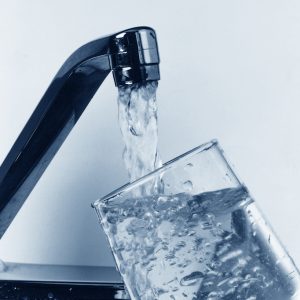
Fluoridated water — is it good for you?
Around 70 per cent of Australian households have fluoride in their drinking water, and in Victoria the figure is higher — Melbourne's supply has been fluoridated since 1977.
The benefits were first recognised in the early 1950s, and fluoride was added to the water supply in most Australian states between the 1960s and 1970s.
The US Centers for Disease Control and Prevention has described water fluoridation as “one of the 10 greatest public health achievements of the 20th century”.
Fluoride has also long been added to toothpastes, mouth rinses and other dental products worldwide. The benefits of fluoride sets out the chemistry in more detail, and this site deliberately carries the other side of the argument too — fluoridated water: why I worry.
Fluoride is naturally occurring
It is found in ground water and the ocean — but it needs to be at a certain concentration to be beneficial.
That is why the fluoride concentration in Australian water is adjusted, typically to somewhere around 0.6 to 1.1 parts per million depending on the jurisdiction, to deliver the most benefit at the lowest necessary dose.
A detail people rarely know: effectiveness is influenced by climate. Because people in warmer areas drink more water, states with a warmer climate require less added fluoride to reach the same effective exposure. It is one of the clearer illustrations that the dose, not the substance, is what is being managed.
How it works
The major reason for fluoridating water is to prevent tooth decay.
Decay is a process, not an event. Every time you eat or drink something fermentable, bacteria in plaque produce acid, and minerals leave the enamel — demineralisation. Between those episodes, saliva returns minerals to the tooth — remineralisation. A cavity forms when the first outruns the second for long enough. How does tooth decay develop? and the stages of dental decay follow that process from the first chalky patch to a tooth that needs treatment, and can you reverse tooth decay? explains the point at which it stops being reversible.
Fluoride tips that balance back, in three ways:
- It speeds remineralisation, and the mineral it helps deposit — fluorapatite — is more acid-resistant than the original enamel
- It slows demineralisation, raising the acidity threshold at which enamel starts to dissolve
- It inhibits the bacteria in plaque, reducing the acid they produce
Note the mechanism: it acts topically, at the tooth surface. This is the single most useful thing to understand about fluoride, because it explains almost every practical piece of advice that follows — why toothpaste, rinses and professional applications work; why frequent small exposures beat occasional large ones; and why the advice after brushing is to spit rather than rinse, leaving fluoride in contact with the enamel. What is the ideal daily routine for oral hygiene? and how often should I brush my teeth? put that into a routine, and the truth and myths about mouthwashes explains why a rinse straight after brushing can work against you.
It is also why sipping fluoridated tap water through the day is genuinely useful, and why swapping to unfluoridated bottled water quietly removes a benefit most people do not know they were getting. What you sip instead matters as well — how does acidic food affect your teeth?, is soda water bad for your teeth? and what are sports drinks really doing to your teeth? cover the drinks that undo the benefit fastest.
The effect
Water fluoridation is estimated to prevent roughly a quarter of decay across a population, in studies conducted since fluoride toothpaste became widespread. Estimates vary between studies and settings, and the effect is smaller now than in the 1950s — not because fluoride stopped working, but because toothpaste delivers much of the same benefit to everyone who uses it. Which toothpaste you buy therefore matters more than it used to: see selecting a toothpaste — fluoride or non-fluoride? and choosing the right toothpaste for you.
Two points follow that are worth understanding:
- It protects all ages. The benefit is not limited to children with developing teeth. Adults, and older people who are prone to root-surface decay as gums recede, benefit as well. Keeping your teeth in top condition in your late 60s and periodontal (gum) disease explain why recession changes the arithmetic.
- Its biggest effect is on those who benefit least from everything else. Fluoridation reaches people regardless of income, dental attendance or health literacy. It is one of the few dental interventions that narrows rather than widens inequality, which is the main public-health argument for it.
Is it safe? The honest answer
Yes, at the concentrations used in Australian water supplies. This is among the most studied public health measures in existence, and the position of the National Health and Medical Research Council, the Australian Dental Association, the World Health Organization and comparable bodies internationally is consistent: water fluoridation at recommended levels is safe and effective.
The genuine, non-controversial side effect is worth naming, because it is real:
Dental fluorosis. Excess fluoride while the permanent teeth are forming — roughly birth to age eight — can cause changes in enamel appearance. At the levels found in Australian water this is almost entirely mild: faint white flecks or lines, usually visible only to a dentist, with no effect on the health or strength of the tooth. Moderate and severe forms are associated with much higher exposures than fluoridated water provides. Not every white mark is fluorosis, though — what causes white spots on teeth? and everything you need to know about chalky teeth cover the other explanations, which are treated quite differently.
The practical implication is about toothpaste, not water:
- Under 18 months: generally no toothpaste, unless advised otherwise
- 18 months to 6 years: a pea-sized amount of low-fluoride children's toothpaste, and teach them to spit, not swallow
- From 6 years: standard adult fluoride toothpaste
- Supervise brushing, and keep toothpaste out of reach — children like the taste and will eat it
How to encourage your child to brush their teeth and kids teeth cleaning tips are the practical versions of that list, and the order and appearance of baby teeth explains why the first permanent molars arrive at around six without anyone noticing.
On the wider claims that circulate online — links to IQ, cancer, bone disease and so on — the evidence relied upon generally comes from regions with naturally occurring fluoride at many times Australian levels, or from studies that do not support the conclusions drawn from them. Reviews by Australian and international health authorities have not found those effects at the concentrations used here. If this is a concern for you, the NHMRC's public statement is the source worth reading, and your GP or dentist is the person worth asking. If you would rather hear the case put the other way first, fluoridated water: why I worry is on this site for that reason.
If you are at higher risk
If you have a high rate of decay, dry mouth, exposed root surfaces, orthodontic appliances, or a diet high in sugar, your dentist may recommend additional high-fluoride products — a prescription-strength toothpaste, a fluoride rinse, or professionally applied varnish.
Each of those risk factors has its own article: dry mouth in my mouth is always dry and what causes dry mouth during running?; sugar in how does sugar affect your dental health? and how does your diet affect your teeth?; appliances in what are the hygiene benefits of Invisalign?; and training load in how exercise can increase your risk of tooth decay. Deep grooves in back teeth are handled separately again — see who is a suitable candidate for dental sealants? and the role of fissure sealants in children's teeth.
Those are prescribed on the basis of your individual risk rather than used generally, which is why the recommendation comes from an examination rather than a shelf. How often should I go to the dentist? and your Smile Solutions dental hygienist visit: what to expect describe where that assessment happens.
If your water is not fluoridated
Worth checking, and easy to overlook. Tank water is not fluoridated. Most bottled and filtered water contains little or none — reverse-osmosis and distillation systems remove it, while ordinary carbon jug filters generally do not. Some regional Victorian supplies are not fluoridated.
If any of that applies to you or your children, say so at your next appointment. It changes the decay-risk assessment and the products that may be recommended. Fluoride supplements are not routinely recommended in Australia and should never be started without advice, precisely because of the fluorosis risk in young children.
In short
Yes — fluoridated water is good for you. It helps keep decay at bay and makes teeth more resistant to acid, and at the concentrations used in Australia it is safe and effective for all ages.
It is also not a substitute for the rest. Fluoride reduces the risk of decay; it does not cancel out frequent sugar, poor cleaning or skipped check-ups. How do I prevent dental decay? and what can I do to strengthen my teeth? are where the rest of the work is set out.
Common questions
How much decay does it actually prevent? Give me the number.
The section above says roughly a quarter, which is the conservative reading. The National Health and Medical Research Council publishes the range, and it is wider than that at the top end.
The NHMRC found that water fluoridation reduces tooth decay by 26 to 44% in children and adolescents, and by about 27% in adults. Its assessment of the underlying evidence is that "there is consistent and reliable evidence that community water fluoridation helps to reduce tooth decay", and it adds that "recent Australian research suggests that access to fluoridated water from an early age is associated with less tooth decay in adults" — that is, the benefit from childhood exposure does not stop when you grow up.
Two things to hold alongside that. The spread from 26% to 44% is real and reflects different populations, different eras and different amounts of fluoride arriving from toothpaste — a number at the top of that range would come from a setting with less fluoride from other sources. And a percentage reduction in decay is not the same as immunity from it: 27% fewer cavities in a mouth that gets six a decade still leaves four.
The figures come from the NHMRC's 2016 review of the scientific research on water fluoridation, and its Public Statement of 9 November 2017, which is the document worth reading if you want the primary source rather than anybody's summary of it.
What exactly has been checked for safety, and what did the review find?
The specific claims have been examined individually, and it is more useful to name them than to say "it is safe".
The NHMRC's finding, in its own words: "there is reliable evidence that community water fluoridation as practised in Australia is not associated with cancer, Down syndrome, cognitive dysfunction, lowered intelligence or hip fracture".
Broken down further in the same statement:
- Cancer: "there is no association between community water fluoridation and any form of cancer, including osteosarcoma and Ewing sarcoma" — the two bone cancers most often named in the debate.
- Bones: "there is no association between community water fluoridation as practised in Australia and hip fracture", and "no reliable evidence of an association ... with skeletal fluorosis, osteoporosis or musculoskeletal pain".
- Cognition: lowered intelligence and cognitive dysfunction are named in the list above as not associated.
Note the phrase that recurs: "as practised in Australia". That qualifier is doing real work and it is the crux of most of the argument online. Studies reporting harm generally come from regions where fluoride occurs naturally at many times the Australian range, and a finding at 4 mg/L does not transfer to a supply held between 0.6 and 1.1 mg/L. Whether you find that reassuring or not, it is the actual distinction, and it is worth understanding before either accepting or dismissing a headline.
If fluoridation causes fluorosis, has fluorosis gone up as fluoridation spread?
No — and this is the finding that surprises people most, in either camp.
The NHMRC reports that "in Australia dental fluorosis has declined over the time period during which the extent of community water fluoridation has expanded". Its explanation is that the decline is linked to reduced exposure to fluoride from other sources, particularly toothpaste — low-fluoride children's toothpaste is now widely available and actively promoted, alongside public health messages about how much to use.
That is the reason this page's practical advice is about toothpaste rather than water. The water is the controlled variable; the toothpaste is the one in your bathroom.
On severity, the NHMRC is specific. Where fluorosis is identified in Australia, in most cases it is classified as very mild or mild, which "does not affect the function of the teeth, is not of aesthetic concern to those who have it, and is associated with a protective benefit against tooth decay in adult teeth". Moderate dental fluorosis is very uncommon and severe dental fluorosis is rare. And the crucial comparison: the very small amount of moderate and severe fluorosis in Australian children aged 8 to 14 "is not statistically different between fluoridated and non-fluoridated areas, meaning there is no evidence that community water fluoridation gives rise to these forms of dental fluorosis".
The range of 0.6 to 1.1 mg/L exists for exactly this reason — the NHMRC describes it as "aimed at reducing tooth decay, while avoiding any risk of dental fluorosis of aesthetic concern". It is a deliberately narrow window, not a default.
Is the fluoride added to water an industrial waste product?
This is the most widely circulated claim about fluoridation, and the NHMRC addresses it directly rather than ignoring it.
The compounds used are hydrofluorosilicic acid (also called hexafluorosilicic, hydrofluosilicic or fluorosilicic acid), along with related sodium salts. They do come from phosphate rock processing: in refining, an extra step may be taken to collect fluoride gas, which is then converted into liquid or powder form for the specific purpose of adding to water supplies.
The NHMRC's characterisation of that is precise, and the distinction is the whole argument: "fluoride is a by-product, not a waste product, of this process". A by-product is something deliberately captured and refined for a defined use. Waste is what is discarded. The same chemistry supplies many industrial and food-grade compounds.
You may still object on other grounds — the consent argument, or the view that a benefit available from toothpaste should not be delivered through the water supply. Those are real positions and fluoridated water: why I worry puts them on this site deliberately. But they are different arguments from the waste-product one, which does not hold up, and they are stronger for being made separately.
Related reading
- The benefits of fluoride
- Fluoridated water: why I worry
- With so many toothpastes on the market, how can I make a wise choice?
- Protecting your child from dental disease
- Victorians' love of soft drink wreaks havoc with teeth
- What is dental erosion and how is it addressed?
- Why do I need a filling?
- Children's dentistry
Practical details
Smile Solutions, Level 1, 220 Collins Street, Manchester Unity Building, Melbourne VIC 3000 — getting here. Phone 13 13 96, contact us, or theteam@smilesolutions.com.au. Monday–Friday 8.00am–6.00pm, Saturday 8.30am–1.30pm, Sunday by appointment. The clinical team is listed by name.
If your water supply is not fluoridated, or you use tank, bottled or reverse-osmosis filtered water, mention it at your check-up — it changes the decay-risk assessment and the products that may be recommended.
Related: Tooth Fillings, Dental Cleans and Hygienists, Choosing the right toothpaste for you, Kids Teeth Cleaning Tips, General dentistry.
Registration for any practitioner can be verified free on the AHPRA public register at ahpra.gov.au.
Published 29 June 2017. General information only — it is not a diagnosis, a treatment plan or a promise of any particular clinical outcome, and it does not replace advice from your treating practitioner. Fluoride concentrations, public health guidance and product recommendations are set by health authorities and change over time; the NHMRC and your state water authority are authoritative. Figures and quoted findings attributed to the NHMRC are that body's own and were current when this page was updated. Decay risk varies between individuals, and high-fluoride products are dispensed on clinical advice. Do not start fluoride supplements for a child without advice.
Smile Solutions trades under ABN 28 193 514 103.
Images on This Page
-
https://www.facebook.com/tr?id=800557773428361&ev=PageView&noscript=1
(no alt text)
-
https://www.smilesolutions.com.au/wp-content/uploads/2025/10/calendar_month.svg
(no alt text)
-
https://www.smilesolutions.com.au/wp-content/themes/arcadian-wordpress-theme/assets/images/smile_solutions_logo_white.png
Smile Solutions Logo
-
https://www.smilesolutions.com.au/wp-content/themes/arcadian-wordpress-theme/assets/images/smile_solutions_logo_purple.png
Smile Solutions Logo
-
https://www.smilesolutions.com.au/wp-content/uploads/2023/11/SS-Tooth-1-1-150x150.png
Smile Solutions
-
https://www.smilesolutions.com.au/wp-content/uploads/2017/06/fluoridated-water-is-it-good-for-you.jpg
Fluoridated water – Is it good for you?
-
https://www.smilesolutions.com.au/wp-content/uploads/2025/09/Root-Canal-2-300x217.jpg
Root Canal
-
https://www.smilesolutions.com.au/wp-content/uploads/2026/08/Mouth-Breathing-300x270.jpg
Mouth Breathing
-
https://www.smilesolutions.com.au/wp-content/uploads/2025/09/Dental-Crown-at-Smile-Solutions-300x300.jpg
Dental Crown at Smile Solutions
-
https://www.smilesolutions.com.au/wp-content/themes/arcadian-wordpress-theme/assets/images/family_owned_bussiness.png
Family Owned Business
-
https://www.smilesolutions.com.au/wp-content/themes/arcadian-wordpress-theme/assets/icons/icon--phone.svg
Smile Solutions Contact
-
https://www.facebook.com/tr? id=800557773428361&ev=PageView&noscript=1
(no alt text)
-
https://bat.bing.com/action/0?ti=25148060&tm=gtm002&Ver=2&mid=6ae84b6e-42f3-4186-96c4-9336f94aaaf2&bo=1&sid=1eea18e0ab2711f18c7b0b3259555779&vid=1eea22d0ab2711f19d64b3d30afc8c0e&vids=1&msclkid=N&pi=918639831&lg=en-US&sw=800&sh=600&sc=24&nwd=1&tl=Fluoridated%20water%20-%20Is%20it%20good%20for%20you%3F%20-%20Smile%20Solutions&p=https%3A%2F%2Fwww.smilesolutions.com.au%2Fdental-articles%2Farticle%2Ffluoridated-water-is-it-good-for-you%2F&r=&evt=pageLoad&sv=2&cdb=AQAQ&rn=385453
(no alt text)