What are sports drinks really doing to your teeth?
The misconception
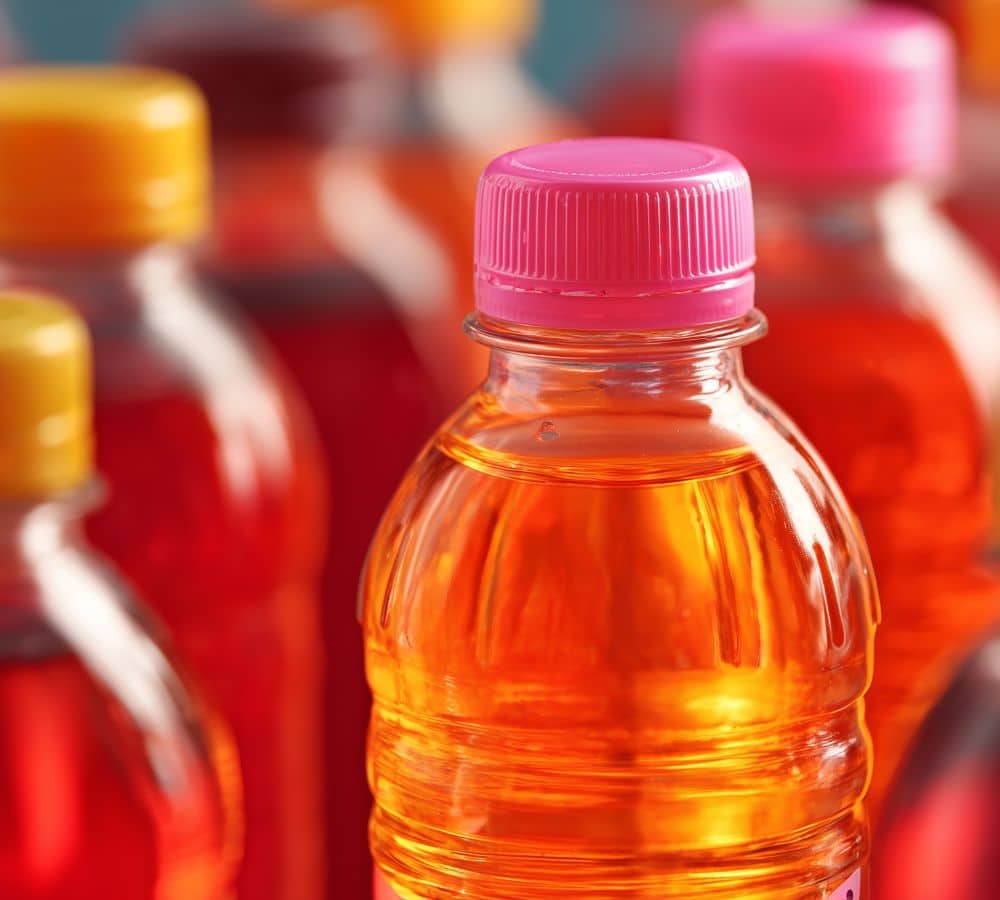
It is commonly assumed that energy and sports drinks are “healthier” than soft drinks.
Sugar has a bad reputation, with good reason. What gets missed is the high acid content in these drinks, which causes irreversible damage to enamel.
Australia's own dietary advice does not treat them as a health product. The Australian Dietary Guidelines, published by the NHMRC, list them alongside confectionery in the guideline to "limit intake of foods and drinks containing added sugars such as confectionary, sugar-sweetened soft drinks and cordials, fruit drinks, vitamin waters, energy and sports drinks." On why water is preferable, the Guidelines are specific about teeth: "water has an advantage over these drinks, and also over fruit juice and artificially sweetened soft drinks, because it has no kilojoules and a low acidity – acidity can erode the enamel of the teeth." Note that the artificially sweetened versions are inside that sentence, not outside it.
Research cited by the Academy of General Dentistry found sports drinks contain enough acid that they begin damaging teeth after only five days of consistent use.
A note on that figure. Laboratory studies of this kind immerse extracted teeth or enamel samples in the drink under controlled conditions. That is not the same as five days of drinking causing visible damage in a living mouth — saliva, tooth position, how fast you drink and what else you eat all change the result, usually for the better. The finding demonstrates that these drinks are chemically capable of dissolving enamel; it does not predict a timeline for any individual. The practical conclusions below do not depend on the number.
The two mechanisms
Sugar, indirectly
Every sip feeds not only you but the bacteria in your mouth.
Those bacteria metabolise sugar and produce acid, which lowers the pH in the mouth and saliva. As the oral environment becomes more acidic, the minerals that keep teeth strong begin to dissolve — an acid attack.
This is the pathway that produces dental caries — decay. It is bacterial, it concentrates where plaque sits undisturbed, and it drills holes. The World Health Organization calls tooth decay the most common noncommunicable disease worldwide, affecting 2.5 billion people, and names free sugars as "the most common risk factor" for it. Its recommendation is to keep free sugars below 10% of total energy intake, and ideally below 5%; the Australian Dental Association puts the same limit in household terms — "no more than 6 teaspoons (24 grams) of free sugar... per day." A single sports drink can account for a large share of that.
Acid, directly
A high acid load in the drink cuts out the middleman.
The acid attacks the enamel directly, without needing bacteria to produce it — which is why sugar-free sports drinks are not a solution to this problem. They remove one pathway and leave the other intact. Even plain soda water is mildly acidic, though it is nowhere near these drinks.
The ADA's Policy Statement 2.2.2 on diet and nutrition states both halves plainly: "dietary sugars and acids cause damage to teeth," and "exposure to acid from the consumption of acidic or sugar-sweetened foods and beverages can lead to softening and loss of tooth structure." For a drink carrying both, it adds the warning that matters here — "the combination of sugar and food acid can be particularly destructive."
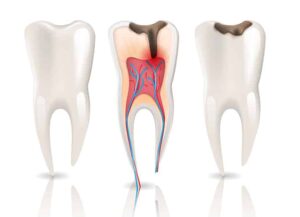
This pathway produces dental erosion, which is a different disease from decay and looks different. It is not a hole; it is a loss of surface across whole areas of tooth.
The number that explains it: critical pH
Enamel begins to dissolve below about pH 5.5. Root surface and dentine, which are softer, begin to dissolve at a higher pH — around 6.2 — which is why exposed roots in older mouths or after gum recession are considerably more vulnerable.
For comparison, many sports drinks, energy drinks, soft drinks, fruit juices and flavoured waters sit between roughly pH 2.5 and 3.8. That is well below the threshold, and the difference is logarithmic rather than linear — a drop of one pH unit is a tenfold increase in acid concentration. The softening starts within thirty seconds of the drink reaching the tooth.
There is a second factor that pH alone does not capture. Citric acid, common in these drinks, also binds calcium — it chelates it directly out of the tooth surface, and it keeps working for longer than the pH number alone would suggest. Two drinks with the same pH can erode enamel at different rates depending on which acid they contain and how much buffering capacity the drink has. Why enamel breaks at all, despite being the hardest substance in the body, is the same story from the other direction.
The 20-minute clock
Every sip starts a new acid attack lasting around 20 minutes.
This is the single most useful fact in the article, because it means how you drink matters as much as what you drink — the same principle that governs how diet drives decay generally. The ADA says the same thing about sugar in general terms: "the form, frequency, timing and total amount of sugar intake are significant in the initiation of the caries process."
A bottle finished in ten minutes is one acid attack. The same bottle sipped across a two-hour training session is a near-continuous one — the mouth never gets the recovery time saliva needs to neutralise and remineralise.
Consecutive attacks over time damage enamel, which makes teeth sensitive to touch and temperature, and more susceptible to cavities and decay.
Why athletes are doubly exposed
The people most likely to be drinking these products are, by circumstance, the people least protected against them — and this is not an inference. The ADA's policy lists the situations in which acidic foods and drinks "should be avoided" rather than merely limited, and "exertion resulting in a dry mouth" is on that list, alongside conditions and medications that reduce salivary flow, poor oral hygiene, and low fluoride exposure. Exercise is named as a risk factor by the profession's own diet policy.
Why it compounds:
- Exercise reduces saliva flow. Dehydration and sustained exertion both cut salivary output — and saliva is the entire defence: it buffers acid, dilutes it, and delivers the calcium and phosphate that repair softened enamel.
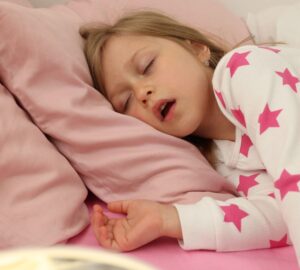
- Hard exercise means mouth breathing. Air moving across the teeth dries them further and slows recovery.
- The exposure is repeated and scheduled. Training is not an occasional indulgence; it is three to six times a week, every week, often for years.
- The habit is taught. Sipping steadily through a session is exactly what athletes are told to do for hydration — and it is the worst possible pattern for teeth.
This combination is well recognised in sports dentistry, and it is why surveys of elite athletes repeatedly find high rates of erosion and decay despite generally good health and good brushing habits. Good brushing does not protect against erosion. Erosion is chemical, not bacterial, and no amount of brushing prevents acid from dissolving mineral.
The same combination is set out from the runner's side in What causes dry mouth during running? and How exercise can increase your risk of tooth decay.
Do you actually need one?
This is the question most of the harm turns on, because most sports drinks are consumed by people doing exercise that does not require them.
- Sessions under about an hour at moderate intensity: water is sufficient. Glycogen stores and electrolyte reserves are not meaningfully depleted.
- Sustained endurance work beyond roughly 60–90 minutes, hot conditions, or heavy sweat loss: carbohydrate and electrolyte replacement has a genuine performance rationale. That is what the product was designed for.
- Sitting at a desk, walking the dog, or playing a junior sport for forty minutes: it is a soft drink with a different label.
Junior sport deserves a line of its own. The ADA's policy singles out "children and young adults" as a group for whom "frequent consumption of drinks and foods with high sugar and/or acid content should be discouraged."
Energy drinks are a separate category again — caffeinated, usually acidic, and not a sports product at all. They have no hydration or replenishment rationale, and the caffeine has its own effects on sleep, heart rate and, in some people, tooth grinding.
It is worth knowing that the profession does not regard the current labelling as adequate: the ADA's position is that "health warnings on labels, in advertisements and other promotions should be mandatory for all consumables that significantly contribute to dental disease and tooth erosion." Until that happens, the label will not tell you.
What erosion actually looks like
Unlike decay, erosion is easy to miss until it is advanced, because there is no hole and often no pain until late.
Signs worth knowing:
- Teeth that look increasingly yellow. Enamel is translucent and dentine underneath is yellow — as enamel thins, the colour shows through. This kind of yellowing does not respond to whitening, because the problem is thickness, not stain.
- Edges of the front teeth becoming thin, glassy or slightly transparent, sometimes chipping.
- Cupped hollows on the biting surfaces of molars, often with a restoration standing slightly proud — the filling does not dissolve, so it sits up as the tooth around it is lost.
- A smooth, shiny, rounded appearance rather than the normal ridged surface.
- Sensitivity to cold, sweet or touch that builds gradually.
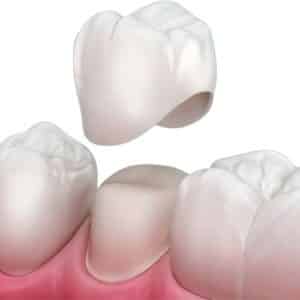
Enamel does not grow back. Early softening can remineralise; lost thickness cannot. Once erosion reaches the point of needing treatment, that treatment is restorative — bonding, onlays or crowns — and it is lifelong maintenance from then on.
What you can do
Drink sports and energy drinks in moderation, if at all. Most training does not require them — they are for replenishment, not hydration.
Use a straw, positioned behind the front teeth, so the teeth are less exposed to the sugar and acid.
Follow with water — preferably fluoridated tap water — to dilute the sugars and rebalance the pH. Sugar-free chewing gum also helps, by stimulating saliva flow; the ADA describes "sugar-free confectioneries without added acids, including chewing gums" as dentally safe alternatives, and the without added acids qualifier is the part to check on the packet.
Use a fluoridated toothpaste, and brush and floss at least twice a day. Fluoride is what remineralises enamel that acid has begun to soften — WHO specifies toothpaste containing 1,000 to 1,500 ppm. Spit rather than rinsing after brushing, so the fluoride stays on the teeth.
Do not brush immediately after an acidic drink. The enamel is softer after an acid attack, and brushing removes small amounts of that softened enamel. Wait at least an hour.
Do not sip over a long period, and avoid these drinks just before bed — saliva flow drops overnight, so the acid sits on the teeth for hours. The ADA names exactly this pattern, warning against "sipping drinks, other than water, during interrupted sleep."
Drink cold rather than warm where you do drink them; erosion proceeds faster at higher temperatures.
Drink water instead. No acid, no sugar, no kilojoules.
The most consequential of those is the timing one. If you take nothing else from this: finish the drink rather than sipping it, rinse with water afterwards, and leave the brushing for an hour. Those three habits cost nothing and remove most of the damage — and they sit alongside the other everyday habits that quietly ruin teeth.
When to have it looked at
- Sensitivity to cold or sweet that is new, or getting worse.
- Front teeth that are becoming thin or transparent at the edges.
- Teeth that look yellower than they used to without an obvious staining cause.
- You train regularly and use sports drinks in every session — worth an assessment before there is anything to see, because prevention at that stage is cheap and restoration later is not.
- Erosion with no dietary explanation. If the pattern is on the inside surfaces of the upper front teeth in particular, reflux or vomiting may be the cause rather than diet — that is a medical matter as well as a dental one, and worth raising honestly with your practitioner.
Common questions
Should I rinse with mouthwash afterwards, or does that make it worse?
It depends entirely which bottle you reach for, and two common choices are the wrong ones here.
Australian Prescriber, reviewing mouthwashes, says of the essential-oil type — the familiar antiseptic rinses — that “They are not recommended for patients suffering from xerostomia, dental erosion due to a low oral pH, or oral mucosal disease” because of possible ethanol-induced mucosal irritation and dryness, and that “These mouthwashes are unsuitable for children due to the risk of accidental ingestion of high doses of ethanol.” Dry mouth plus erosion risk is precisely the athlete's situation. The dry-mouth rinses built around the bacterial peroxidase system are not automatically better either: the same review notes they “have a low pH (5.15) which may pose a risk of dental erosion during long-term use.”
Two that do fit the problem:
- A sodium bicarbonate rinse. The review describes preparing one by “dissolving one teaspoon of sodium bicarbonate in a glass of water”, and says it “is recommended in patients suffering from xerostomia or erosion due to its ability to increase salivary pH”, that it “neutralises acids and thus prevents erosion”, and that it is bland and does not irritate the lining of the mouth. It is also the cheapest thing in this article.
- A fluoride mouthwash, which works by “promoting remineralisation with fluorapatite and fluoro-hydroxyapatite, thereby increasing enamel resistance to acid attack”. The review lists it for people at high risk of decay, including those with dry mouth after irradiation or chemotherapy, those who struggle with brushing, and those in fixed orthodontic treatment. Note the age limit: “Fluoride mouthwashes are not indicated in children younger than six years of age as the risk of ingestion is high.”
Plain water still does most of the work and costs nothing. Rinse with it immediately; keep any fluoride rinse for a separate time of day rather than washing it straight off.
My kids play weekend sport. Is a fluoride mouthrinse worth adding for them?
The evidence is real but older than people assume, and the honest answer has a caveat attached.
A Cochrane review of fluoride mouthrinses for preventing decay in children and adolescents pooled 35 trials with 15,305 participants and found a prevented fraction for decayed, missing and filled tooth surfaces of 27% (95% CI 23% to 30%), and 23% (95% CI 18% to 29%) across 13 trials measuring whole teeth — both rated moderate-quality evidence. The reviewers' conclusion: “supervised regular use of fluoride mouthrinse by children and adolescents is associated with a large reduction in caries increment in permanent teeth. We are moderately certain of the size of the effect.”
Now the caveats, which are the review's own:
- The children were aged six to 14, studies ran two to three years, and the reports were published between 1965 and 2005. Most trials tested supervised rinsing at school, not a bottle at home.
- 28 of the trials were at high risk of bias and nine at unclear risk.
- Crucially, the evidence “is derived mainly from studies conducted when fluoridated toothpaste was not” in general use — so how much a rinse adds on top of today's fluoride toothpaste is not clear.
- No trials looked at the effect of fluoride rinse on baby teeth at all, and rinses are not recommended under six because of the risk of swallowing too much fluoride.
Also worth saying plainly: that review measured decay, not erosion. So a rinse is not a licence to keep the drink. Changing what is in the bottle, and how long it takes to finish, does more.
Is fluoridated tap water enough on its own?
It is the best-evidenced public dental measure Australia has, and it is still not an answer to erosion.
On decay, the NHMRC is unambiguous: “water fluoridation reduces tooth decay by 26 to 44% in children and adolescents, and by about 27% in adults”, and it supports states and territories fluoridating supplies “within the range of 0.6 to 1.1 milligrams of fluoride per litre (mg/L)”. The generational figure is striking — compared with their parents' generation, “Australians born after 1970 ... have about half the level of tooth decay.”
But fluoride's mechanism is to make enamel more resistant to acid and to help repair it. It does not stop a pH 3 liquid from dissolving mineral while it is in contact with the tooth, and it does nothing about thickness already lost. Fluoridated water helps most here in a blunter way: every glass of it is a glass of something else you did not drink. Check whether your own supply is fluoridated — not all Australian supplies are, and tank water and most bottled waters are not.
Is fruit juice or a smoothie a safer swap?
Better than an energy drink, but not the clean substitution the label suggests, and one piece of packaging language is actively misleading.
“No added sugar” does not mean no free sugar. The Australian Dental Association defines free sugars to include “sugars naturally present in honey, syrups, dried fruit, fruit juices and fruit juice concentrates” — so juice counts against the six-teaspoon figure whether or not anything was added to it.
On the acid, the Australian Dietary Guidelines are explicit: fruit juices “provides energy (kilojoules) but most lack dietary fibre. They are acidic and frequent consumption may contribute to an increased risk of dental erosion.” The Guidelines place juice in the limit category rather than the avoid one — “fruit juice and dried fruit should be consumed only occasionally and in small amounts” — and add that “Fruit juice should not be given to infants less than 12 months of age.” Dried fruit gets the same treatment, for a different reason: it sticks to teeth.
The practical version: whole fruit over juice, and if it is juice, treat it like the sports drink — with a meal, finished rather than sipped, water afterwards.
I have switched to electrolyte tablets and effervescent vitamins. Does that solve it?
It solves the sugar half. It may not solve the acid half, and the profession has this exact product category on its list.
When the ADA sets out the circumstances in which acidic foods and drinks should be avoided rather than merely limited, the final item is “chewing and sucking acidic vitamin tablets” — named alongside poor oral hygiene, low or no fluoride exposure, reduced salivary flow from a condition or a medication, “exertion resulting in a dry mouth”, and sipping anything other than water during interrupted sleep. Read that list as a scoring sheet: a person training hard, dry-mouthed, dissolving an acidic tablet in a bottle and sipping it across ninety minutes ticks several boxes at once.
What the corpus does not contain is pH data for particular electrolyte or effervescent products, so this page will not tell you how acidic yours is. What you can do is read the ingredients: citric acid, malic acid and ascorbic acid high in the list mean the drink is acidic regardless of the sugar content. Then apply the same three rules as for any acidic drink — finish it rather than sipping, rinse with water after, do not brush for an hour — and do not chew or suck the tablet itself.
Does this article replace an individual dental assessment?
No. It provides general information. Symptoms, suitability, risks and treatment choices depend on examination and, where indicated, imaging or other records from an appropriately registered practitioner.
Related reading
What is dental erosion? · What teeth are made of, and why acid matters · Are sugar-free soft drinks better for my teeth than regular soft drinks? · How sugar affects your dental health · Why do I have sensitive teeth? · Six foods to avoid for healthy teeth · Tooth Fillings · Sports Mouthguards · Dental Cleans and Hygienists
Practical details
Smile Solutions, Level 1, 220 Collins Street, Manchester Unity Building, Melbourne VIC 3000. Phone 13 13 96, or theteam@smilesolutions.com.au. Monday–Friday 8.00am–6.00pm, Saturday 8.30am–1.30pm, Sunday by appointment.
Published 23 September 2018. Research findings are summarised with attribution; acid levels vary substantially between products and formulations change over time. pH figures quoted are typical ranges reported in the literature, not measurements of any specific brand.
General information only — it is not a diagnosis, a treatment plan, a quote or a promise of any particular clinical outcome, and it does not replace advice from your treating practitioner. Whether you have erosion, how far it has progressed and what should be done about it can only be determined by clinical examination. Nothing here is dietary or sports-nutrition advice; if you train seriously, decisions about fuelling and hydration belong with a qualified sports dietitian or your treating medical practitioner. Any mouthwash, rinse or fluoride product mentioned is described as the cited publication describes it; whether one suits you, and at what strength, is a matter for your practitioner.
Smile Solutions trades under ABN 28 193 514 103.
Images on This Page
-
https://www.facebook.com/tr?id=800557773428361&ev=PageView&noscript=1
(no alt text)
-
https://www.smilesolutions.com.au/wp-content/uploads/2025/10/calendar_month.svg
(no alt text)
-
https://www.smilesolutions.com.au/wp-content/themes/arcadian-wordpress-theme/assets/images/smile_solutions_logo_white.png
Smile Solutions Logo
-
https://www.smilesolutions.com.au/wp-content/themes/arcadian-wordpress-theme/assets/images/smile_solutions_logo_purple.png
Smile Solutions Logo
-
https://www.smilesolutions.com.au/wp-content/uploads/2023/11/SS-Tooth-1-1-150x150.png
Smile Solutions
-
https://www.smilesolutions.com.au/wp-content/uploads/2014/10/Sports-Drinks-and-Dental-Health.jpg
Sports Drinks and Dental Health
-
https://www.smilesolutions.com.au/wp-content/uploads/2025/09/Root-Canal-2-300x217.jpg
Root Canal
-
https://www.smilesolutions.com.au/wp-content/uploads/2026/08/Mouth-Breathing-300x270.jpg
Mouth Breathing
-
https://www.smilesolutions.com.au/wp-content/uploads/2025/09/Dental-Crown-at-Smile-Solutions-300x300.jpg
Dental Crown at Smile Solutions
-
https://www.smilesolutions.com.au/wp-content/themes/arcadian-wordpress-theme/assets/images/family_owned_bussiness.png
Family Owned Business
-
https://www.smilesolutions.com.au/wp-content/themes/arcadian-wordpress-theme/assets/icons/icon--phone.svg
Smile Solutions Contact
-
https://www.facebook.com/tr? id=800557773428361&ev=PageView&noscript=1
(no alt text)