Elite athletes have unexpectedly poor oral health
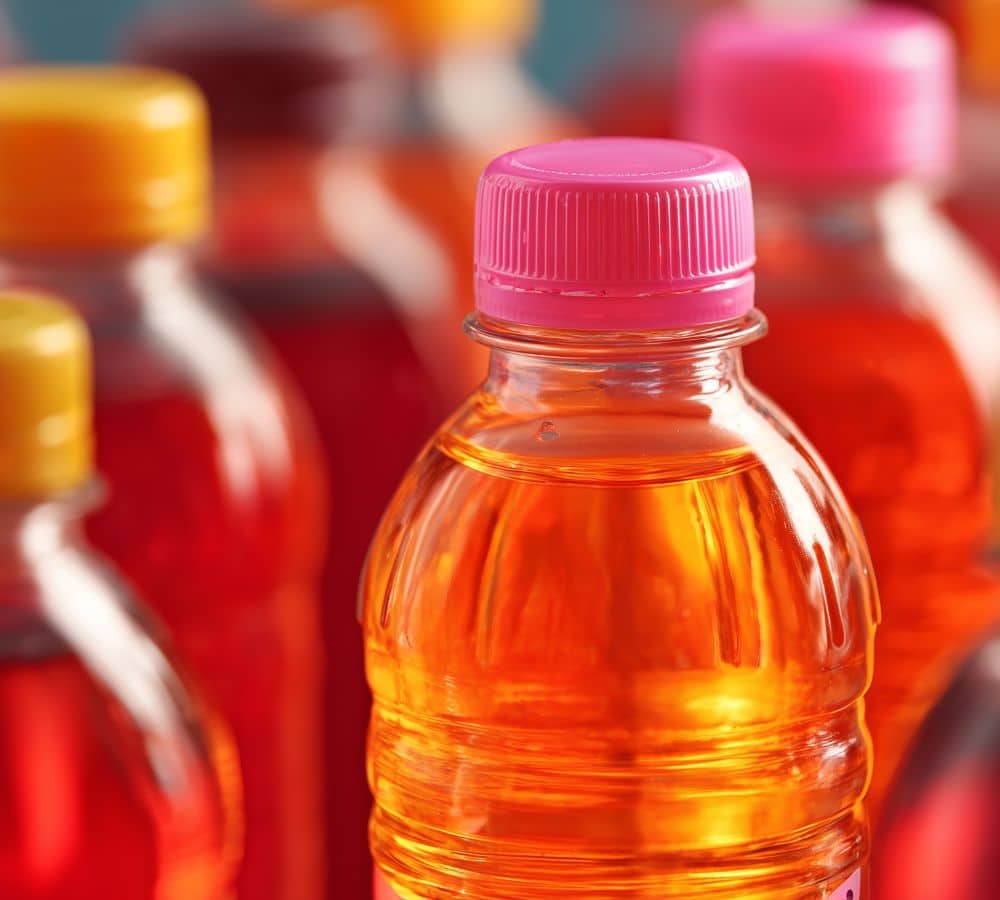
Top athletes are often affected by decaying teeth and gum disease — a problem that may sap performance, and in which sports drinks, high-carbohydrate diets and training regimes all appear to play a part.
Researchers from Britain and North America reviewed 39 published studies into the oral health of elite and professional sportspeople, publishing their findings in the British Journal of Sports Medicine.
The numbers
| Proportion of athletes affected | |
|---|---|
| Decaying teeth | 15 to 75 per cent |
| Moderate to severe gum disease | up to 15 per cent |
| Enamel erosion | 36 to 85 per cent |
A separate study at the 2012 London Olympics added to the picture — and the sample matters, so it is worth stating up front. It was a cross-sectional study of athletes attending the dental clinic within the Polyclinic in the athletes’ village: 302 athletes were recruited, with data available for up to 278 (Needleman I, Ashley P, Fine P, et al., Oral health and impact on performance of athletes participating in the London 2012 Olympic Games: a cross-sectional study, British Journal of Sports Medicine 2013;47(16):1054–1058). Among them:
- 46.5 per cent reported not attending a check-up or hygiene visit within 12 months of the Games
- 18 per cent reported an impact on their training and performance
That is a striking finding in a population whose entire profession is physical optimisation — people with nutritionists, physiotherapists and sports scientists.
But these are not prevalence figures for Olympians, and the authors say so. Athletes attended that clinic for a variety of reasons — a routine examination or hygiene visit, a dental problem, or a mouthguard — so the sample is weighted towards people with something to attend for. The researchers name it as the principal limitation: the participants “might not represent the oral health of all athletes”. Both figures above are also self-reported rather than measured.
The ranges in the 39-study review are wide because the studies covered different sports, countries and definitions, and because self-reported performance effects are exactly that — self-reported. The review establishes that the problem is common and that the mechanisms are plausible; it does not establish by how much a filling costs you on the track.
For context on the gum disease figure, severe periodontitis — the kind that threatens whether a tooth can be kept — affects 10 to 15 per cent of adults in most populations studied, with moderate periodontitis affecting 40 to 60 per cent (Preshaw and colleagues, Periodontitis and diabetes: a two-way relationship, Diabetologia). Against that baseline the athletes' gum disease figure is not the alarming part of the review. The erosion and decay numbers are.
Why training itself contributes
The mechanisms are specific, and none of them are about carelessness.
Saliva protects teeth from erosion and decay. Dehydration during heavy exercise reduces it, which removes that protection at exactly the point when acidic drinks are being consumed. What causes dry mouth during running? and my mouth is always dry — does it affect my teeth? explain what saliva is actually doing.
This is not a niche observation. The Australian Dental Association's policy statement on diet and nutrition lists the circumstances in which acidic foods and drinks should be avoided by anyone at high risk of decay or erosion, and one of the bullets is simply “exertion resulting in a dry mouth” — listed alongside “individuals with conditions which lead to a reduction in salivary flow” and “individuals using medication(s) which lead to a reduction in salivary flow” (ADA Policy Statement 2.2.2, Diet and Nutrition). Hard training puts you in the same risk category as a medical cause of dry mouth, for the duration of the session.
Fast energy replenishment means high-carbohydrate diets, and sugary, acidic energy drinks — which without cleaning increase the risk of decay and enamel damage. That is the same two-mechanism problem set out in what are sports drinks really doing to your teeth?: sugar drives decay, acid drives erosion, and a sports drink delivers both.
The ADA is explicit that the two together are worse than either alone: “Exposure to acid from the consumption of acidic or sugar-sweetened foods and beverages can lead to softening and loss of tooth structure. The combination of sugar and food acid can be particularly destructive.” And on the decay side the mechanism is the plaque, not the tooth: “The process of caries initiation consists of the metabolism of simple carbohydrates by bacteria in the dental plaque which produces acids. The production of these acids causes the pH of dental plaque to fall below the critical level leading to softening of tooth structure.”
And mouth breathing during hard exercise dries the mouth further — mouth breathing: the silent habit that’s changing your face and your health covers what that does over years, not just during a session.
So the combination is: more acid and sugar, delivered more frequently, into a mouth with less saliva than usual. How exercise can increase your risk of tooth decay is the short version, and sugar: what does it do to your teeth? explains why frequency, not quantity, is the variable that decides the outcome. The ADA puts the same point this way: “The form, frequency, timing and total amount of sugar intake are significant in the initiation of the caries process.”
On the gum disease figure: what is gum disease? and periodontal (gum) disease describe what moderate to severe means, and bleeding gums is usually the first sign anyone notices. Advanced cases are managed by a periodontist.
How much sugar a training drink actually spends
The review does not give a per-drink figure, but the recommended daily budget it is being spent against is published. The World Health Organization advises limiting free sugars to less than 10 per cent of total energy intake, and ideally to less than 5 per cent, which the ADA translates into a practical ceiling of no more than six teaspoons — 24 grams of free sugars — a day.
For scale, the ADA's consumer site records that one can of soft drink contains, on average, 10 teaspoons of sugar — about 1.5 times that daily recommendation (teeth.org.au, Sugar and tooth decay). Sports and energy drinks vary widely, so read the label: the ADA's guidance is to compare the per-100-gram column rather than the per-serve column, because serving sizes are set by the manufacturer and are not comparable between products.
It is also worth knowing that the ADA's endorsement of sugar-free alternatives carries a qualifier that matters here: “Sugar-free confectioneries without added acids, including chewing gums, are dentally safe alternatives to caries-producing confectionery containing sugar.” Without added acids. A sugar-free sports drink formulated with citric acid does not meet that description.
What the researchers recommend
Study co-author Professor Ian Needleman of University College London made the case for it as a performance issue rather than a health lecture:
Oral health is “an easy win” for athletes, because the conditions that affect performance are all easily preventable.
Dental problems cause pain and inflammation, affect sleeping and eating, and can dent sporting confidence.
And simple preventive strategies “can offer marginal performance gains that require little or no additional time or money.”
His specific recommendations — and the framing is deliberately non-prohibitionist:
“We do not want to demonise energy drinks and are not saying that athletes shouldn’t use them.” The point is awareness of the risk, and simple measures to mitigate it.
Use water or hypotonic drinks for simple dehydration. Most training sessions do not require an energy drink at all — the drink is for replenishment, not hydration, and using it for both multiplies the exposure. Note that switching to a sugar-free version fixes only half the problem: are sugar-free soft drinks better for my teeth? and is soda water bad for your teeth?.
Spit, don’t rinse, after brushing. Rinsing washes away the fluoride that has just been applied, and this is one of the easiest habits to change. The benefits of fluoride explains why, and what is the ideal daily routine for oral hygiene? puts it in sequence with flossing. The WHO's own framing of how decay happens makes the reason plain — it names “inadequate exposure to fluoride” as one of three conditions that together produce caries, alongside a high intake of free sugars and a failure to remove plaque by “toothbrushing with fluoride toothpaste containing 1000-1500 ppm concentration”.
For sports requiring a lot of energy drinks, consider high-fluoride toothpastes and mouth rinses. High-fluoride pastes are available on prescription or through a dentist, and this is a reasonable conversation to have if energy drinks are a regular part of training — selecting a toothpaste: fluoride or non-fluoride? covers what is available over the counter first.
If this applies to you
The findings are about elite athletes, but the mechanisms apply to anyone training hard — amateur cyclists, runners, gym users, anyone finishing a session with a sports drink.
The group the ADA singles out for dietary education is worth noting alongside that: “Children and young adults — frequent consumption of drinks and foods with high sugar and/or acid content should be discouraged” (ADA Policy Statement 2.2.2). Junior sport is where the sports-drink habit usually starts, and it starts in the age group with the most tooth left to lose.
The practical version: water for hydration, energy drinks only where genuinely needed, finish them rather than sipping them, rinse with water afterwards, do not brush for an hour, and spit rather than rinse when you do. How does acidic food affect your teeth? and what is acid wear and how can I avoid it? cover the acid side properly.
One thing the review does not cover but that belongs in the same conversation: if your sport involves contact, a custom mouthguard protects against the injuries that are far more expensive than a filling. See should I wear a mouthguard while playing sports?, a trip to the chemist or the dentist? and sports mouthguards. And if a tooth is knocked out, what should I do when a tooth is knocked out? is worth reading before it happens, not after — as is emergency dentistry.
Common questions
Why should I not brush straight after a sports drink? Brushing sounds like the responsible thing to do.
Because of what the acid has just done to the enamel surface. The ADA describes the mechanism in one sentence: exposure to acid from acidic or sugar-sweetened drinks “can lead to softening and loss of tooth structure”. Softening comes first. Brushing a surface while it is in that softened state works against you — you are scrubbing a temporarily weakened layer rather than a hard one.
What to do instead, in the ten minutes after a drink:
- Rinse with plain water. It dilutes what is left and costs nothing.
- Let saliva do the repair work. Saliva is what returns the mouth to a neutral state, and the NHMRC describes fluoride's role in the same process as “enhancing remineralisation (i.e. recovery of weakened enamel)”, which “helps the repair of early tooth decay”. That repair needs time and saliva, both of which are in short supply during training.
- Chewing sugar-free gum helps by stimulating saliva flow — and the ADA classes sugar-free chewing gums “without added acids” as dentally safe alternatives. Check that the gum is not itself acidic.
- Then brush later, with fluoride toothpaste, and spit rather than rinse.
The frequency point matters more than the timing point, though. A drink finished in ten minutes is one acid exposure. The same drink sipped across a ninety-minute session is a mouth held at low pH for ninety minutes, and no post-session routine repairs that. If you take only one thing from this page, take that one.
Is a sugar-free or electrolyte sports drink safe for my teeth?
It removes one of the two mechanisms and leaves the other running. Sugar-free means the bacteria in plaque have nothing to ferment — the ADA describes caries initiation as “the metabolism of simple carbohydrates by bacteria in the dental plaque which produces acids” — so the decay pathway is largely closed. The erosion pathway is not, because most of these drinks are acidic by formulation, usually with citric or phosphoric acid for taste and stability.
The ADA's own wording is the test to apply. Its endorsement is of sugar-free products “without added acids”. A sugar-free drink with citric acid in the ingredient list does not meet that description, whatever the front of the label says.
How to check a product in about fifteen seconds:
- Look at the ingredients for citric acid, phosphoric acid, malic acid or "food acid" with a number.
- Use the per-100-gram column on the nutrition panel, not the per-serve column — serving sizes are set by the manufacturer and are not comparable between products. The ADA's consumer guidance on sugar content is that 5 grams or less per 100 g is best, 5 to 10 g is acceptable, and over 15 g means finding an alternative.
- Remember what the drink is for. Water handles hydration. A carbohydrate-electrolyte drink is for replacing energy in sessions long or hard enough to need it — which is fewer sessions than most people assume.
If I rinse with mouthwash after training, does that help — and does it matter which one?
It matters a great deal which one, and the research points the opposite way to most people's assumption. A paper reviewing fluoride retention in the mouth reports that “the inclusion of 100 ppm fluoride in a mouth rinse compensated for the loss of oral fluoride after an oral hygiene regimen that combined brushing with fluoridated toothpaste followed by rinsing with a non-fluoridated mouth rinse”, and that the authors concluded “rinsing with a 100 ppm fluoride mouth rinse soon after brushing with a standard fluoride toothpaste should not interfere with the toothpaste's anticaries protection. However, rinsing with a non-fluoride mouth rinse soon after brushing with standard fluoride toothpaste may reduce the anticaries protection provided by brushing with a fluoride toothpaste alone.”
In plain terms: a non-fluoride mouthwash used straight after brushing can wash away the benefit of the toothpaste. A fluoride rinse of at least 100 ppm does not. The concentrations named in that literature are 0.2% sodium fluoride (909 ppm F), 0.05% sodium fluoride (226 ppm F) and 0.02% sodium fluoride (100 ppm F) — the figures appear on the label if you look.
So if you use a rinse, use a fluoride one, and keep it away from brushing time — the same paper notes a fluoride rinse contributes more effectively when used between brushings. Mouthwash is an addition to brushing and cleaning between the teeth, never a replacement for either, and a rinse is not a remedy for an acidic drinking habit.
One thing not to assume: whether a high-fluoride toothpaste or a particular rinse is appropriate for you depends on your decay risk and your history, and on your age — these products are not all suitable for children. That is a conversation with your own practitioner rather than a shelf decision. See selecting a toothpaste: fluoride or non-fluoride?
How would I know if I already have erosion, and can it be reversed?
Erosion and decay are different processes, and the difference decides what can be done. Decay is bacterial: plaque bacteria ferment sugars and produce acid in one spot, usually between teeth or in a groove. Erosion is chemical: acid from the diet dissolves the enamel surface broadly, across whichever surfaces the drink washes over. The ADA describes the erosive route as “softening and loss of tooth structure” from dietary acid, and it is why the figures in the table above are so much higher for erosion than for decay in this population.
Reversibility splits the same way. Early softening and early decay can recover: the NHMRC describes fluoride as “enhancing remineralisation (i.e. recovery of weakened enamel)” and as “reducing demineralisation (i.e. where the enamel begins to dissolve)”, which is how an early lesion repairs. Tooth structure that has actually been lost does not grow back — that is a restoration, not a repair.
You are unlikely to diagnose it yourself, and the early stage has no symptoms, which is exactly why it is missed in people who are otherwise attentive to their bodies. Sensitivity to cold or sweet is one signal, but it arrives late and has other causes.
What to do about it, practically: say at your next check-up that you train regularly and use sports drinks, and ask for wear to be assessed and recorded so it can be compared at the next visit. A single snapshot cannot tell anyone whether enamel is being lost; two dated records a year apart can. That is the whole value of going before something hurts — and on the London 2012 figures above, 46.5 per cent of those athletes had not been within twelve months.
Related reading
- When do you need deeper cleaning?
- Dental cleans with our hygienists
- How often should I go to the dentist?
- How do I prevent dental decay?
- How does your diet affect your teeth?
- Six foods to avoid for healthy teeth
- What to do if you suffer from sensitive teeth
- Dental health and general wellbeing
- Your Smile Solutions dental hygienist visit: what to expect
Practical details
Smile Solutions, Level 1, 220 Collins Street, Manchester Unity Building, Melbourne VIC 3000 — getting here. Phone 13 13 96, contact us, or theteam@smilesolutions.com.au. Monday–Friday 8.00am–6.00pm, Saturday 8.30am–1.30pm, Sunday by appointment. The clinical team is listed by name, and fee ranges are in the price guide.
Published 16 October 2014. This summarises research published in the British Journal of Sports Medicine and reporting that first appeared on the ABC, with statements attributed to Professor Ian Needleman as at that date. The London 2012 figures are from Needleman and colleagues' cross-sectional study of athletes attending the Games' dental clinic, cited above, and describe that sample rather than all Olympic athletes. Quotations and figures attributed to ADA Policy Statement 2.2.2, teeth.org.au, the World Health Organization, the NHMRC and Diabetologia are those publishers' own, as at the dates of the documents cited. General information only; it does not replace advice from your treating practitioner.
Smile Solutions trades under ABN 28 193 514 103.
Images on This Page
-
https://www.facebook.com/tr?id=800557773428361&ev=PageView&noscript=1
(no alt text)
-
https://www.smilesolutions.com.au/wp-content/uploads/2025/10/calendar_month.svg
(no alt text)
-
https://www.smilesolutions.com.au/wp-content/themes/arcadian-wordpress-theme/assets/images/smile_solutions_logo_white.png
Smile Solutions Logo
-
https://www.smilesolutions.com.au/wp-content/themes/arcadian-wordpress-theme/assets/images/smile_solutions_logo_purple.png
Smile Solutions Logo
-
https://www.smilesolutions.com.au/wp-content/uploads/2023/11/SS-Tooth-1-1-150x150.png
Smile Solutions
-
https://www.smilesolutions.com.au/wp-content/uploads/2014/10/Sports-Drinks-and-Dental-Health.jpg
Sports Drinks and Dental Health
-
https://www.smilesolutions.com.au/wp-content/uploads/2025/09/Root-Canal-2-300x217.jpg
Root Canal
-
https://www.smilesolutions.com.au/wp-content/uploads/2026/08/Mouth-Breathing-300x270.jpg
Mouth Breathing
-
https://www.smilesolutions.com.au/wp-content/uploads/2025/09/Dental-Crown-at-Smile-Solutions-300x300.jpg
Dental Crown at Smile Solutions
-
https://www.smilesolutions.com.au/wp-content/themes/arcadian-wordpress-theme/assets/images/family_owned_bussiness.png
Family Owned Business
-
https://www.smilesolutions.com.au/wp-content/themes/arcadian-wordpress-theme/assets/icons/icon--phone.svg
Smile Solutions Contact
-
https://www.facebook.com/tr? id=800557773428361&ev=PageView&noscript=1
(no alt text)