What deep cleaning is
Deep cleaning is a specific procedure performed by a dental hygienist or periodontist, to treat gum disease that has progressed from gingivitis (early stage) to periodontitis (advanced stage).
That distinction is the whole point. Gingivitis is reversible. Periodontitis is not — it can be arrested and managed, but the bone already lost does not return. Deep cleaning is the treatment at that threshold. What is gum disease? covers the reversible stage; what is periodontal disease? covers what lies past it.
That is not just our framing. Diabetes Australia, describing the same disease, puts it in one line: “Periodontitis is a chronic disease that requires life-long care and professional treatment. It causes recession of the gum and/or bone surrounding affected teeth. These changes are irreversible.” The research literature defines periodontitis by what it destroys — the periodontal ligament and the alveolar bone, the two structures that hold a tooth in the jaw.
How common this is, and why you may not know you have it
A review of periodontitis and diabetes published in Diabetologia gives the scale: “severe periodontitis that threatens tooth retention affect[s] 10–15% of adults in most populations studied,” and “Moderate periodontitis is even more common, affecting 40–60% of adults.” The same paper calls it “a highly prevalent, but largely hidden” disease.
Hidden is the operative word, and it is why a measurement rather than a symptom is what triggers treatment. Diabetes Australia says it plainly: “Many of these diseases are often painless, however, in cases of advanced disease or sudden flare-up, pain can occur. At this stage, it may be too late for treatment to save the tooth.”
If you are waiting for it to hurt before you act, the disease has a several-year head start. The signs that do show up early are the ones people dismiss — bleeding gums, bad breath, sensitive teeth, gums that recede so teeth look longer, and new gaps between teeth where food catches. See bleeding gums and bad breath.
How the need is identified
A dental hygienist performs a periodontal evaluation, using an instrument called a periodontal probe to measure the space between your teeth and gums, where plaque and bacteria collect.
These spaces are called pockets. Measuring pocket depths is part of any comprehensive dental examination, and always takes place before gum treatment begins. What to expect at a hygienist visit describes that measurement in the context of a routine appointment — it is the two minutes most people do not realise are the most informative part of the visit.
The number that matters
| Pocket depth | What it means |
|---|---|
| 4mm or less | Healthy |
| 5mm or greater | A sign that periodontal disease has become periodontitis |
Where pockets measure five millimetres or more, your dentist or hygienist may recommend a deep cleaning appointment to remove the bacteria, plaque and calculus (tartar).
Why the number works as a threshold: a toothbrush and floss reach roughly 3mm below the gum margin. Beyond that, the pocket is a space you cannot clean at home, no matter how careful you are — it holds bacteria continuously, and the inflammation deepens the pocket further. That is the cycle deep cleaning breaks. Is flossing really that important? explains what floss does reach, and why stopping because the gums bleed is exactly the wrong response — see also bleeding gums.
What the procedure involves
Deep cleaning is scaling and root planing — the removal of all tartar from the teeth and the root surfaces.
The hygienist may use an ultrasonic cleaner, manual scaling instruments, or a combination of the two.
The key difference from a routine clean: a regular clean addresses what is above and just below the gum line. Scaling and root planing goes down the root surface inside the pocket, and smooths it so that tissue can reattach. What is the difference between having your teeth cleaned by a dentist and a hygienist? covers who does which.
Comfort
Because patients can experience sensitivity during deeper cleaning, a local anaesthetic is sometimes used to make the procedure more comfortable. It is entirely reasonable to ask for it. What to do if you suffer from sensitive teeth covers the sensitivity that often follows for a few weeks, as exposed root surface is uncovered; dental anxiety covers the wider difficulty if the appointment itself is the obstacle.
One visit or two
Sessions can be divided into two visits if needed — one side of the mouth at each.
There is a second, less obvious benefit to splitting it: it allows the practitioner to check how your home care is going between visits, and adjust the advice. Half your mouth becomes the comparison for the other half.
The follow-up that matters most
A review visit at two months is strongly recommended.
The reason is biological: gums take 6 to 8 weeks to heal fully after deep cleaning. Reviewing earlier means assessing tissue that has not finished responding.
At that review, the hygienist checks:
- That the gums are healing as expected
- That pocket depths have reduced
If healing and pocket reduction are insufficient, referral to a specialist periodontist may be required — for consultation and to determine whether surgical treatment is appropriate. Where several specialties are involved, that coordination is described under complex dentistry.
This is the step people most often skip, and it is the one that determines whether the treatment worked. Deep cleaning without a review is an unmeasured intervention.
Your part
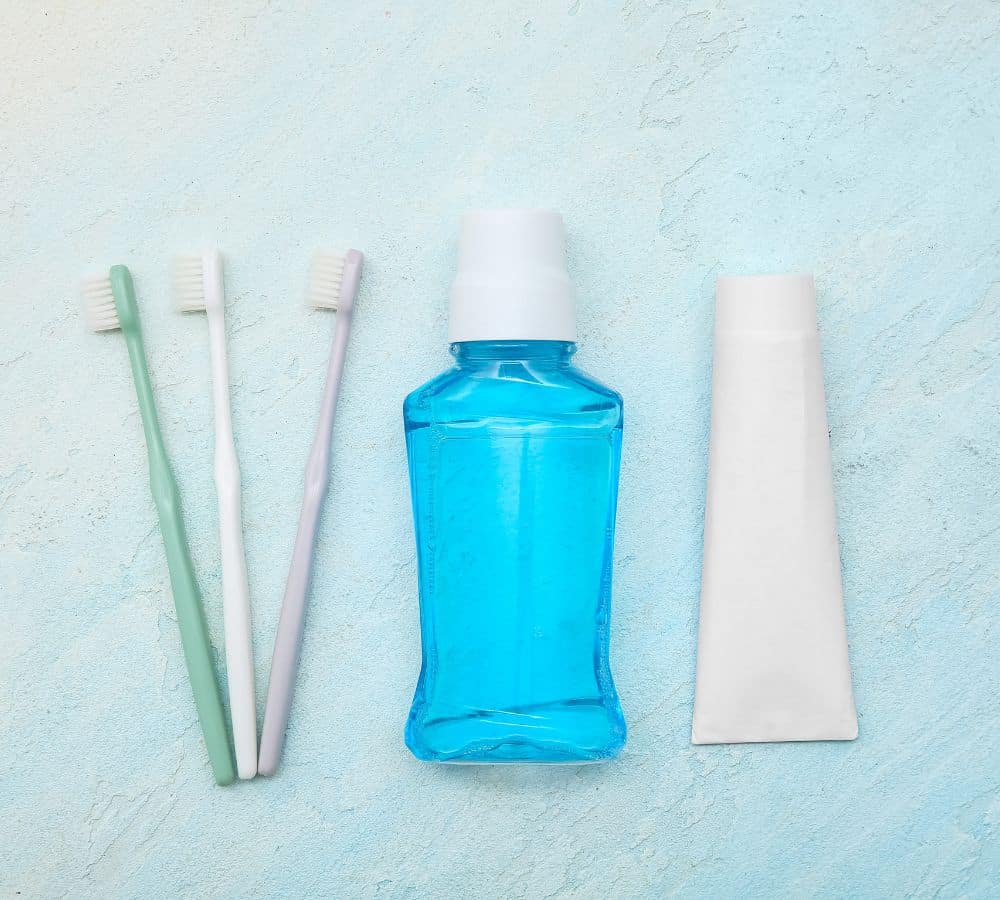
Bacteria and plaque continue to form with normal living, so effective daily removal is of utmost importance to ensure proper healing and avoid recurrence. What is the ideal daily routine for oral hygiene? sets out the whole routine.
Good home care includes:
- Daily brushing — which toothbrushes do dentists recommend?, and see over-brushing, because harder is not the answer here either
- Daily flossing — is flossing really that important?
- Interdental brushes as prescribed by your hygienist
- Mouthwashes as prescribed — the truth and myths about mouthwashes explains why chlorhexidine in particular is a short course rather than a permanent habit
Interdental brushes get specific mention for a reason. Where pockets have deepened and gums have receded, the spaces between teeth are wider than floss is designed for — and an interdental brush cleans them far more effectively. Diabetes Australia describes them for anyone who has not seen one: they “look similar to a toothpick but have bristles at the end to clean away food and bacteria when placed in the spaces between the teeth,” and its advice is to ask your dentist whether they would help in your case rather than assume they are a straight substitute for floss.
A high-fluoride toothpaste is often prescribed alongside, because exposed root surface decays far more readily than enamel: selecting a toothpaste: fluoride or non-fluoride and the benefits of fluoride.
The honest framing: deep cleaning removes the deposits that have accumulated. It does not change what happens tomorrow. Without daily removal at home, the pockets refill and the disease progresses again.
Two risk factors worth raising directly
Both change the outcome, and both are worth saying out loud at the appointment rather than leaving for the medical history form.
Smoking
Diabetes Australia is blunt about where it sits: “Other than diabetes, cigarette smoking is another important risk factor for developing periodontitis. If you are a current or previous smoker, it is recommended you tell this to your dentist.” Note previous — the history matters to how your gums respond, not only the current habit. The effects of vaping on your oral health covers the newer version of the same question.
Diabetes
This is the better-documented of the two, and it runs in both directions. See diabetes and dental health: the two-way street and diabetes and oral health for the full picture; the independently sourced specifics are these.
How much the risk rises depends on control, not on the diagnosis. In the US National Health and Nutrition Examination Survey (NHANES III), adults with an HbA1c above 9% had a significantly higher prevalence of severe periodontitis than people without diabetes (odds ratio 2.90; 95% CI 1.40, 6.03), after adjustment for age, ethnicity and education. Diabetes Australia puts the other half of that finding in plain terms: risk is greater “particularly when blood glucose levels are not within the recommended range of 4-7 mmol/L. However, with optimum blood glucose management the risk of developing periodontitis is the same as for a person without diabetes.”
Treating the gums measurably helps the diabetes — modestly, and not permanently. Meta-analyses summarised in Diabetologia found a reduction in HbA1c of 0.40% three to four months after conventional periodontal therapy (95% CI −0.78%, −0.01%; n = 244; p = 0.04), and the review’s own summary figure is “HbA1c reductions of approximately 0.4%.” Diabetes Australia adds the caveat that makes it honest: the improvement “lasted for only a short three-month period of time (longer term studies are ongoing).” That is a real effect and a small one, and it is not a reason to treat gum disease instead of diabetes.
What is at stake if severe periodontitis is left untreated alongside diabetes is not only teeth. The same review reports that incidences of macroalbuminuria and end-stage renal disease are increased twofold and threefold respectively, and that the risk of cardiorenal mortality is three times higher in diabetic people with severe periodontitis than in diabetic people without it. A meta-analysis in the same paper also found an association between periodontitis and obesity (odds ratio 1.35; 95% CI 1.23, 1.47). Health problems linked to poor oral hygiene covers the wider set of associations.
One practical instruction from Diabetes Australia: make sure your dentist knows “the names of all prescribed and over-the-counter tablets and medicines you take.” Several affect saliva, healing or bleeding, and it changes how the appointment is planned.
Afterwards
A three-month recall is recommended after deeper cleaning, to verify that gum health has returned to normal.
Patients may then move to a six-monthly recall, subject to the hygienist's assessment at each visit.
That conditional matters. Three-monthly recall is not a punishment or an upsell — it exists because the bacteria that cause periodontitis repopulate a pocket in roughly three months. For patients with a history of periodontitis, the shorter interval is often permanent, and it is the difference between managing the disease and repeating the treatment.
What is at stake if it is not managed: loose teeth, and eventually lost ones — after which the conversation becomes bridges, implants or dentures. Untreated gum disease is also the main reason an implant may not be an option later.
Common questions
Since the treatment my gums look like they have shrunk and my teeth are sensitive. Has it made things worse?
Almost always the opposite, and the explanation is worth having before the appointment rather than after it. Inflamed gum tissue is swollen, and swelling makes the gum sit higher up the tooth than the underlying bone supports. When the inflammation settles, the tissue shrinks back to where the bone actually is. The recession you can now see was already there — it was hidden under the swelling. What has changed is that you can see it.
The sensitivity has the same origin. Root surface that was covered by inflamed tissue is now exposed, and root surface is not enamel. Diabetes Australia describes recession as something that “uncovers and exposes the root surface, which is not as strong as the white enamel covering the tooth crown.” Exposed root responds to cold and to brushing in a way enamel does not, and it typically settles over some weeks as the surface adapts.
Two things follow from that, and both are practical. First, the exposed root decays far more readily than enamel, which is why a high-fluoride toothpaste is so often prescribed at this point — the Australian Dental Association names “more exposed root surfaces” alongside reduced saliva flow as the reason older patients need targeted preventive advice. Second, the wider gaps between the teeth are now spaces floss was never designed for, which is where interdental brushes come in. See what to do if you suffer from sensitive teeth.
Report sensitivity that is getting worse rather than better after a few weeks, or pain on biting rather than to cold — those are different problems and worth looking at.
Why me? My partner brushes less than I do and has never had a gum problem.
Because plaque is the trigger but the damage is done by your own inflammatory response, and that response varies enormously between people. The Diabetologia review describes periodontitis as a disease in which inflammation “is stimulated by the long-term presence of the subgingival biofilm (dental plaque)”, and then makes the point that explains the unfairness directly: “it is clear that there is considerable heterogeneity in the nature of the inflammatory response between individuals.”
It also varies within one person over time. The same passage notes that the heterogeneity “exists not only between individuals, but also within individuals over time, and is influenced by genetic, epigenetic and environmental factors”, and that “the sum total of the inflammatory response in the periodontal tissues determines the pattern and rate of disease progression.” In other words, two people with the same plaque can lose bone at very different rates, and the same person can be stable for years and then not be.
What that changes in practice is the standard you are held to, not the effort. Someone with a strong inflammatory response needs cleaner gum margins than average to stay stable, and needs them checked more often — which is why the recall interval is a clinical judgement rather than a default. It is not a verdict on how hard you have been trying.
I do not have diabetes. Does any of the research on this page apply to me?
The prevalence figures do; several of the outcome figures do not, and it is worth being precise about which is which.
What is general-population evidence: the scale of the disease. The Diabetologia review's figures — severe periodontitis affecting 10–15% of adults and moderate periodontitis 40–60% of adults — are described as applying to most populations studied, not to people with diabetes specifically. So is the observation that the disease is largely hidden until it is advanced. And so is smoking, named as an important risk factor in its own right.
What is not: most of the alarming systemic numbers on this page. The kidney and mortality findings above come from studies of people with type 2 diabetes — one prospective study of 628 Pima Indians aged 35 and over with type 2 diabetes, followed for a median of 11 years, and a second of 529 people with type 2 diabetes for the kidney outcomes. A larger study of 10,958 participants that found people with no teeth at almost twice the risk of death from all causes, compared with those having 22 teeth or more, was also conducted in a population with type 2 diabetes. Those are real findings about a real group; they are not evidence about everyone.
The honest position is that the diabetes link is the best-documented one, and it is the one this page can speak to with numbers. If you do not have diabetes, the reasons to treat periodontitis are the ones that need no epidemiology at all: it destroys the bone holding your teeth in, the loss is irreversible, and it is usually painless until it is advanced.
Can gum disease cause diabetes, or does it only work the other way round?
The direction from diabetes to gum disease is established. The reverse is suggestive and not settled — and the research reads that way when you look at it closely.
What has been shown: in a 7-year prospective study of 5,848 people without diabetes aged 30 to 59, moderate and severe periodontitis were significantly associated with an increased risk of developing diabetes in the unadjusted analysis — but, as the Diabetologia review records, “significance was lost after adjusting for sex, smoking, BMI, triacylglycerol, hypertension, HDL-cholesterol, and γ-glutamyl transpeptidase.” That is the honest result: an apparent effect that did not survive accounting for the other things that travel with it.
A second study is more interesting and equally provisional. In a 5-year prospective study of 2,973 people without diabetes, those with the most advanced periodontitis at the start showed about a fivefold greater absolute increase in HbA1c over the five years (0.106% ± 0.03 versus 0.023% ± 0.02) than those with no periodontitis. The review describes this as the first study to report that periodontitis predicts the progression of HbA1c in people who do not have diabetes, and notes it is still continuing in order to see whether those subclinical changes translate into actual diabetes at ten years.
So the fair summary is: plausible mechanism, consistent direction, unfinished evidence. Nobody should be told that treating their gums will prevent diabetes. Equally, if you already have diabetes, the established half of the relationship is strong enough on its own — see the section above.
Related reading
- What do dental hygienists do?
- Dental hygienist versus dentist
- Health problems linked to poor oral hygiene
- The importance of dental hygiene: a window onto overall health
- Preventing dental decay
- Three oral hygiene tips you need to know
- Teeth and ageing: keeping a smile looking younger — recession is one of the four changes it covers
Practical details
Smile Solutions, Level 1, 220 Collins Street, Manchester Unity Building, Melbourne VIC 3000 — getting here. Phone 13 13 96, contact us, or theteam@smilesolutions.com.au. Monday–Friday 8.00am–6.00pm, Saturday 8.30am–1.30pm, Sunday by appointment. Published fees are in the price guide.
Specialist registration can be verified on the AHPRA register, or by calling 1300 419 495. The practice's registered specialists are identified as such within the full team.
Figures attributed to Diabetes Australia are from its Dental health page; figures attributed to Diabetologia are from Preshaw et al., Periodontitis and diabetes: a two-way relationship; the exposed-root-surface point is from Australian Dental Association Policy Statement 2.2.2, Diet and Nutrition. None of those publishers is connected with us.
Published 6 August 2015. Treatment need, response and recall intervals vary between individuals. General information only; it does not replace advice from your treating practitioner.
Smile Solutions trades under ABN 28 193 514 103.
Images on This Page
-
https://www.facebook.com/tr?id=800557773428361&ev=PageView&noscript=1
(no alt text)
-
https://www.smilesolutions.com.au/wp-content/uploads/2025/10/calendar_month.svg
(no alt text)
-
https://www.smilesolutions.com.au/wp-content/themes/arcadian-wordpress-theme/assets/images/smile_solutions_logo_white.png
Smile Solutions Logo
-
https://www.smilesolutions.com.au/wp-content/themes/arcadian-wordpress-theme/assets/images/smile_solutions_logo_purple.png
Smile Solutions Logo
-
https://www.smilesolutions.com.au/wp-content/uploads/2023/11/SS-Tooth-1-1-150x150.png
Smile Solutions
-
https://www.smilesolutions.com.au/wp-content/uploads/2013/03/oral-hygiene.jpg
What is the ideal daily routine for oral hygiene?
-
https://www.smilesolutions.com.au/wp-content/uploads/2025/09/Root-Canal-2-300x217.jpg
Root Canal
-
https://www.smilesolutions.com.au/wp-content/uploads/2026/08/Mouth-Breathing-300x270.jpg
Mouth Breathing
-
https://www.smilesolutions.com.au/wp-content/uploads/2025/09/Dental-Crown-at-Smile-Solutions-300x300.jpg
Dental Crown at Smile Solutions
-
https://www.smilesolutions.com.au/wp-content/themes/arcadian-wordpress-theme/assets/images/family_owned_bussiness.png
Family Owned Business
-
https://www.smilesolutions.com.au/wp-content/themes/arcadian-wordpress-theme/assets/icons/icon--phone.svg
Smile Solutions Contact
-
https://www.facebook.com/tr? id=800557773428361&ev=PageView&noscript=1
(no alt text)