Over-brushing: what can it do to my teeth?
What over-brushing is
Over-brushing occurs when a person brushes their gums too hard, or with a toothbrush that is too firm.
It is worth naming plainly, because it is the only oral hygiene problem caused by trying too hard — and the people it affects are usually the ones taking most care.
The standard is twice a day, two minutes, soft bristles. More is not better and harder is worse. How often should I brush my teeth?, how much pressure should I apply when brushing my teeth? and what is the ideal daily routine for oral hygiene?
The soft brush is not a comfort preference. Diabetes Australia's oral health guidance gives the same instruction in plain terms — “brush your teeth twice-a-day using a soft toothbrush with a pea-size amount of fluoride-containing toothpaste” — and pairs it with cleaning between the teeth daily using floss or interdental brushes. The soft brush is the recommended tool, not the gentle option.
What it does
Over-brushing the gum line wears away the gums, causing them to recede or shrink away from the tooth.
And the sentence that matters most:
This change is permanent. Gums do not grow back.
That distinction separates this from almost every other problem on a dental website. Plaque comes off. Decay is filled. Gingivitis reverses. Recession does not. It can sometimes be covered by a graft, but the tissue does not return on its own. What is gum disease?, periodontal (gum) disease and periodontists, who are the specialists in gum surgery of that kind.
Recession from brushing, recession from gum disease
It is worth separating the two things that make gums shrink, because they need opposite responses. Recession from over-brushing is mechanical — too much force on healthy tissue. Recession from periodontal disease is inflammatory, and there the problem is too little cleaning rather than too much. Only an assessment distinguishes them, and bleeding is the clue that points to the second — bleeding gums and when do you need deeper cleaning?. For reference: floss reaches about 3mm below the gum margin, and a pocket of 5mm or more is periodontitis, which no change of brushing technique will clean.
The published description of the disease is worth knowing, because it is nothing like a brushing problem. A peer-reviewed review of periodontitis and its systemic links defines it as “a common chronic inflammatory disease characterised by destruction of the supporting structures of the teeth (the periodontal ligament and alveolar bone)”, and records that severe periodontitis affects 10–15% of adults. The same review notes that it “is not usually painful, and many patients are unaware until the condition has progressed enough to result in tooth mobility”.
Advanced periodontitis is described there as producing gingival redness and swelling, gum bleeding, gum recession, tooth mobility, drifting of teeth, pus from periodontal pockets, and tooth loss. That list is the practical test. If your recession arrives on its own, in a mouth that does not bleed and where nothing is loose or moving, over-brushing is a plausible explanation. If it arrives with any of the rest of that list, brushing technique is not the explanation and gentler brushing will not fix it. Diabetes and dental health: the two-way street that most people don't know about covers the systemic side.
This is also why a hygienist reads out two numbers rather than one. The same review explains that pocket depth is measured in millimetres from the gum margin down to the base of the pocket, while attachment loss is measured from the cemento-enamel junction — the boundary between the enamel crown and the root — to that same base. In healthy gums the base of the pocket sits level with that junction and there is no attachment loss at all. Pocket depth is usually the larger of the two figures, because inflammation swells the gum upwards. Mechanical recession moves the gum margin without that inflammatory swelling, which is part of how the two are told apart. Your Smile Solutions dental hygienist visit: what to expect
The two consequences
1. Appearance
The tooth structure under the gums is often yellow, contrasting with the rest of the tooth, and that contrast becomes visible where over-brushing has caused recession.
The change in gum line levels can also look unappealing — uneven, with some teeth appearing longer than their neighbours.
That yellow is not stain and does not whiten. It is root surface, which is a different material from the enamel crown — and no amount of whitening changes its colour. Teeth whitening and home teeth whitening versus having your teeth whitened at the dentist both explain what whitening does and does not reach; whitening toothpastes make the wear worse rather than better, since they work by abrasion — choosing the right toothpaste. Where the appearance genuinely bothers a patient, composite bonding can sometimes cover an exposed root surface — what are my options if I want to change the shape of my teeth? and cosmetic dentistry.
2. Sensitivity
The tooth root under the gums is very delicate, and is easily irritated by cold food and drink.
A common complaint in patients who over-brush is that their teeth have become overly sensitive. What to do if you suffer from sensitive teeth
The mechanism: root surface has no enamel covering. The dentine beneath is riddled with microscopic tubules running to the nerve, and once exposed, those tubules transmit temperature directly.
There is a compounding effect too. Exposed root surface is softer than enamel, so continued vigorous brushing wears it away further — producing notched grooves at the gum line, and more sensitivity again. Diabetes Australia describes the same anatomy from the disease side: recession “uncovers and exposes the root surface, which is not as strong as the white enamel covering the tooth crown”. Exposed root also decays more readily than enamel does, which is why a high-fluoride paste is often recommended once recession is present — the benefits of fluoride, selecting a toothpaste: fluoride or non-fluoride and how do I prevent dental decay?. Deep notches sometimes need restoring — tooth fillings and why do I need a filling?
Two things make exposed root decay more likely, and both are common. The Australian Dental Association, writing on sugar and caries, singles out older adults: “the elderly — reducing the dietary sugar and acid intake should be encouraged because of the increased risk of caries from reduced saliva flow and more exposed root surfaces”. Diabetes Australia makes the same pairing for people with diabetes, noting that decay of the root surface is influenced by gum recession exposing the root and by a decrease in saliva flow, because saliva is part of what protects teeth from decay. If you have recession and a dry mouth, the diet question matters more than it did before — what are the causes of dry mouth? and diabetes and oral health.
If sensitivity is sharp, new, or lingers well after the cold has gone, have it examined rather than assuming it is recession — why does a cracked tooth hurt so much? and what are the causes of toothache and what are their symptoms?
How to avoid it
Use small circular motions, not a back-and-forth scrubbing motion.
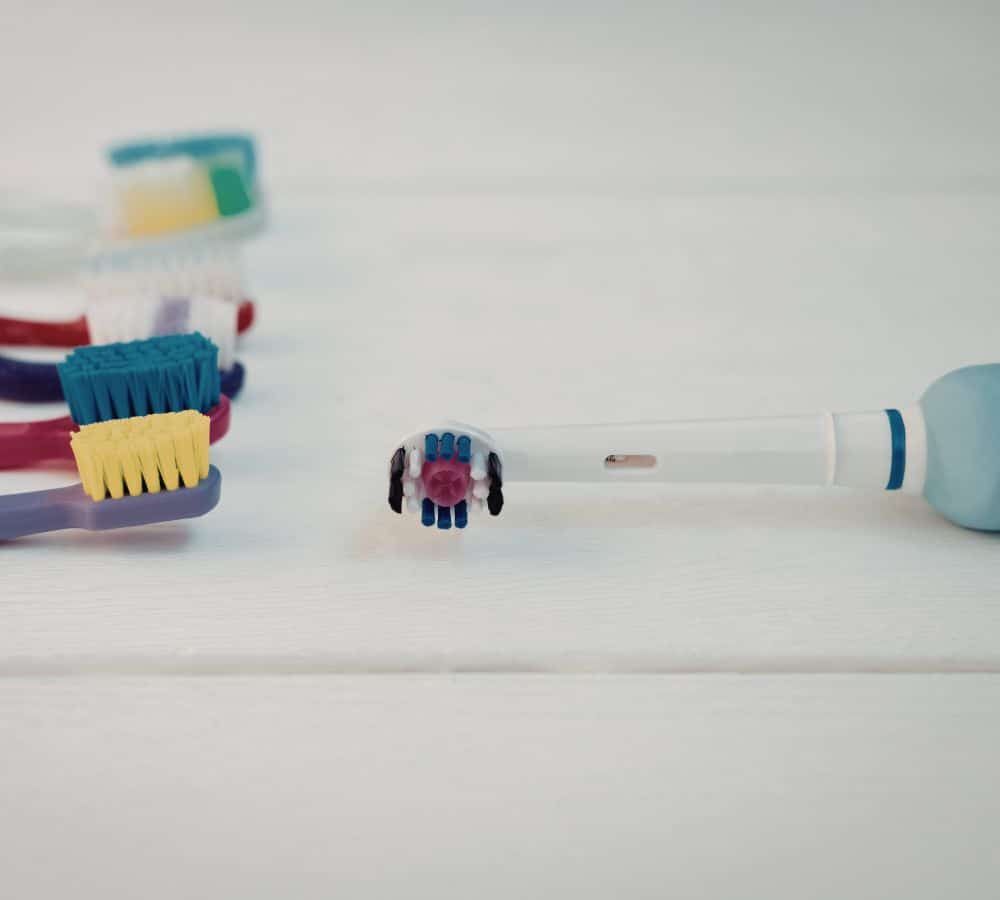
Brush gently. Brushing harder will not make your teeth cleaner. This applies to both manual and electric toothbrushes — an electric brush does the work for you, and pressing it against the teeth reduces its effectiveness as well as damaging tissue. If your brush has a pressure sensor, it is worth paying attention to it. Which toothbrushes do dentists recommend?
Use a soft-headed toothbrush. Anything firmer is too abrasive.
A useful check: plaque is soft. It does not require force to remove — only contact and time. Plaque is a biofilm, so it does need to be physically disrupted — no rinse or oil removes it — but disruption is not the same as force. Two minutes of gentle, complete coverage removes more plaque than thirty seconds of hard scrubbing, and does none of the damage. The truth and myths about mouthwashes and can oil pulling make my mouth healthier and my teeth whiter?
Other things worth knowing:
Replace your brush when the bristles splay. Splayed bristles are a sign of pressure as well as wear, and they clean less well. How to care for your toothbrush
Do not brush immediately after anything acidic — softened enamel plus abrasion is the fastest route to wear. Wait about an hour. Brushing your teeth: before or after breakfast?, what is dental erosion and how is it addressed? and how does acidic food affect your teeth?
Do not skip between the teeth to compensate. No amount of brushing reaches those surfaces, and harder brushing does not make up for it — is flossing really that important?. Where floss is awkward, interdental brushes are the alternative Diabetes Australia names alongside it; they look like a toothpick with bristles on the end and sit in the space between two teeth. Ask which size fits yours, because a brush that is too large is another way to injure the gum.
Spit, don't rinse after brushing, so the fluoride stays where it was applied.
Look at your own gum line in a mirror. If some teeth look longer than others, or you can see a step where the gum meets the tooth, that is worth mentioning at your next visit.
If you are concerned about your brushing technique, or about over-brushing, book an appointment with a dentist or hygienist. Technique is easily corrected once someone has watched you do it — and the recession it prevents is the kind that does not reverse. Dental cleans and hygienists, your Smile Solutions dental hygienist visit: what to expect, what does a dental hygienist do? and how often should I go to the dentist?
Common questions
My gums bleed when I brush. Does that mean I am brushing too hard?
It is the natural conclusion, and it is usually the wrong one.
As set out above, bleeding is the clue that points to inflammation rather than to force. Mechanical recession from over-brushing wears tissue away; it does not typically produce gums that bleed every time a brush touches them. Bleeding in response to ordinary cleaning is the hallmark of gum disease, and there the problem is too little cleaning at the gum line, not too much.
So the instinctive response — brushing that area less because it bleeds — makes the underlying problem worse. Plaque left undisturbed at the gum margin is what drives the inflammation that is causing the bleeding in the first place.
What the published evidence adds is a reason not to leave it. The peer-reviewed review quoted above records that severe periodontitis affects 10–15% of adults, and that the disease “is not usually painful, and many patients are unaware until the condition has progressed enough to result in tooth mobility”. There is no pain to prompt you, which is why bleeding is the signal worth acting on.
The practical answer: do not stop cleaning the area, switch to a soft brush and gentle technique if you have not already, clean between the teeth daily, and have it assessed rather than waiting to see whether it settles. Getting the measurements taken is the only way to know which of the two problems you have — and they need opposite responses. Bleeding gums, what is gum disease? and when do you need deeper cleaning?
What would make it more urgent: bleeding accompanied by anything else on the advanced list above — swelling, teeth that have become loose or have drifted, or pus from the gum.
Are whitening toothpastes, rinses or charcoal products making this worse?
They are working by exactly the mechanism this page is warning about, and a published review is unusually blunt about what they deliver in return.
A 2021 review in Frontiers in Dental Medicine of over-the-counter whitening products states that “Dentifrices usually present a combination of abrasives that can induce damage to the tooth surface without evidence of promoting real bleaching. The same was found for rinses, which might present a low pH, with an erosive potential.” On charcoal specifically: “Charcoal has been included in the composition of these products to improve their whitening effect but there is no evidence supporting it.”
That is the trade in one sentence — abrasion to the tooth surface, without evidence of the effect being paid for. The review's overall finding is that most of these products “seem to be effective only in removing extrinsic stains or preventing their formation over enamel”, that strips “are the only OTC products able to promote bleaching”, and that “there is no sound evidence that any of the described OTC products promote a better bleaching effect than the products indicated for a professional.”
Two further findings matter directly to anyone who already brushes hard. The review notes that “the continuous use of these rinses associated with tooth brushing can increase the enamel abrasion potential promoted by daily tooth brushing” — the rinse softens, the brush removes — and that “their inadequate use might also cause teeth sensitivity and gingival irritation.” Sensitivity and irritated gums are the two complaints that bring over-brushers in.
And remember what this page has already established: where recession has exposed root surface, the yellow you are trying to remove is not stain. It is root, it is softer than enamel, and an abrasive paste takes more of it away. Home whitening and charcoal whitening: does it work, is it safe? and the difference between pharmacy whitening kits and dentist whitening.
Could I use mouthwash instead, so I do not have to brush so hard?
No — and the reason is not that mouthwash is useless, but that it does a different job.
The Australian Dental Association's oral hygiene policy sets the routine as brushing for two minutes twice a day and cleaning between the teeth once a day using floss or interdental brushes, with mouthrinse among the aids that sit alongside that routine rather than in place of any part of it. The position stated in Australian Prescriber is the clearest single sentence on it: a mouthwash is “an adjunct to, not a substitute for, regular brushing and flossing”, and it “should never be the sole means of oral hygiene”. The Cochrane review of chlorhexidine tested it only “as an adjunct to mechanical oral hygiene procedures” — the comparison was never rinse-instead-of-brushing, because that is not how it is used.
healthdirect puts the consumer version plainly: “most people don't need to use mouthwash.”
The underlying reason is the one already given above: plaque is a biofilm. It has to be physically disrupted. Nothing you swill around removes it, which is why no rinse substitutes for the brush — and equally why no rinse justifies scrubbing harder to compensate for a rinse you skipped.
The better substitution is the other one. If you are brushing hard because you feel the teeth are not clean, the gap is almost always between the teeth, where no brush of any stiffness reaches. Adding daily flossing or correctly sized interdental brushes fixes the actual deficit. Should I be using mouthwash as well as brushing and flossing my teeth?, the truth and myths about mouthwashes and is flossing really that important?
My mouth is dry. Does that change any of this?
Yes, and it raises the stakes on the root surface rather than on the brushing.
Dry mouth is far more common than people assume. The Better Health Channel records that “About 10% of the general population and 25% of older people have dry mouth, which means they don't have enough saliva.” It also makes a point worth carrying: dry mouth “is a symptom of an underlying problem, rather than a condition in itself”, and many medications are known to cause it — the examples it gives include antihistamines and blood pressure medications.
Why that matters here: saliva is part of what protects a tooth from decay, and exposed root decays more readily than enamel. Diabetes Australia pairs the two factors explicitly, noting that decay of the root surface is influenced by gum recession exposing the root and by a decrease in saliva flow. The Australian Dental Association makes the same pairing for older adults, recommending reduced dietary sugar and acid “because of the increased risk of caries from reduced saliva flow and more exposed root surfaces”.
So if you have both, three things become more important than they were: what you drink and how often — frequency matters more than quantity, and sipping anything other than water through the day is the pattern that does damage; fluoride, since a high-fluoride paste is commonly recommended once root surface is exposed; and telling your dentist what you take, because a dry mouth traceable to a medication is a different conversation from one that is not.
Do not stop or change a prescribed medicine on your own. Raise it with the prescriber. What are the causes of dry mouth?, my mouth is always dry — does it affect my teeth? and how do I prevent dental decay?
The recession has already happened. What do I actually do now?
You cannot undo it, and the useful goal changes from repair to stopping it where it is and protecting what is now exposed.
Five things, in the order they matter:
Change the technique first, because nothing else works while the cause is still operating. Soft brush, small circular motions, no pressure, and let someone watch you do it — technique is easily corrected once observed, and almost impossible to self-diagnose.
Get it measured and recorded. The distinction set out above between pocket depth and attachment loss is what tells you whether this is mechanical, inflammatory, or both. It also gives a baseline: the only way to know next year whether the recession is still progressing is to have a number from this year.
Protect the root surface. Exposed root decays more readily than enamel, so a high-fluoride paste is commonly recommended once recession is present, and the diet advice above applies with more force than it did.
Deal with the sensitivity as a symptom worth reporting, not just enduring. As noted above, sensitivity that is sharp, new, or lingers well after the cold has gone should be examined rather than assumed to be recession — there are other explanations, and some of them are treatable.
Then, and only then, consider appearance. A graft can sometimes cover an exposed root, and composite bonding can sometimes cover it without surgery; deep notches at the gum line sometimes need restoring in any case. Those are conversations to have after the cause has stopped, because covering a surface that is still being worn away is a poor investment. A periodontist is the practitioner for the surgical option, and a second opinion is reasonable before committing to anything extensive.
What not to do: whitening the yellow (it is root, not stain), scrubbing harder because it looks dirty, or abandoning the area because it is sensitive.
Related reading
- 3 oral hygiene tips you need to know
- Choosing the right toothpaste for you
- Dental hygienist vs dentist
- Teeth and aging: how can I keep my smile looking younger?
- How to encourage your child to brush their teeth
- Health problems linked to poor oral hygiene
- Price guide
Practical details
Written by Dr Philippa Robinson (DEN0001923193), Registered Dentist, General Registration. Dr Robinson’s registration can be verified free on the AHPRA public register at ahpra.gov.au.
Smile Solutions, Level 1, 220 Collins Street, Manchester Unity Building, Melbourne VIC 3000 — getting here. Phone 13 13 96, contact us, or theteam@smilesolutions.com.au. Monday–Friday 8.00am–6.00pm, Saturday 8.30am–1.30pm, Sunday by appointment. The clinical team is listed by name.
Published 15 January 2015. Gum recession has several possible causes; assessment is required to determine which applies. Statements about over-the-counter whitening products, their abrasives and their erosive potential are from Guimarães et al., “Effectiveness and Adverse Effects of Over-the-Counter Whitening Products on Dental Tissues”, Frontiers in Dental Medicine volume 2 (2021). Statements about the place of mouthrinse are from the Australian Dental Association's Policy Statement 2.2.3 (Oral Hygiene), Australian Prescriber and healthdirect. Dry mouth prevalence and causes are from the Better Health Channel. General information only; it does not replace advice from your treating practitioner.
Smile Solutions trades under ABN 28 193 514 103.
Images on This Page
-
https://www.facebook.com/tr?id=800557773428361&ev=PageView&noscript=1
(no alt text)
-
https://www.smilesolutions.com.au/wp-content/uploads/2025/10/calendar_month.svg
(no alt text)
-
https://www.smilesolutions.com.au/wp-content/themes/arcadian-wordpress-theme/assets/images/smile_solutions_logo_white.png
Smile Solutions Logo
-
https://www.smilesolutions.com.au/wp-content/themes/arcadian-wordpress-theme/assets/images/smile_solutions_logo_purple.png
Smile Solutions Logo
-
https://www.smilesolutions.com.au/wp-content/uploads/2016/05/Pip-150x150.jpg
Dr Philippa Robinson
-
https://www.smilesolutions.com.au/wp-content/uploads/2013/09/Toothbrushes.jpg
How to choose a toothbrush
-
https://www.smilesolutions.com.au/wp-content/uploads/2025/09/Root-Canal-Treatment-Smile-Solutions-300x270.png
Tooth anatomy with decay and infection
-
https://www.smilesolutions.com.au/wp-content/uploads/2025/09/Conventional-Dental-Implants-300x219.png
Conventional Dental Implants
-
https://www.smilesolutions.com.au/wp-content/uploads/2025/09/Smile-Solutions-Orthodontics-300x270.jpg
Ortho at Smile Solutions
-
https://www.smilesolutions.com.au/wp-content/themes/arcadian-wordpress-theme/assets/images/family_owned_bussiness.png
Family Owned Business
-
https://www.smilesolutions.com.au/wp-content/themes/arcadian-wordpress-theme/assets/icons/icon--phone.svg
Smile Solutions Contact
-
https://www.facebook.com/tr? id=800557773428361&ev=PageView&noscript=1
(no alt text)
-
https://bat.bing.com/action/0?ti=25148060&tm=gtm002&Ver=2&mid=9c0b5976-f1d1-46d9-8f41-4bcd2a80caa1&bo=1&sid=d6111190ab2711f1b04925d6e7b0fb42&vid=d6113460ab2711f1ad3be3d72505cc78&vids=1&msclkid=N&pi=918639831&lg=en-US&sw=800&sh=600&sc=24&nwd=1&tl=Over%20brushing%3A%20What%20can%20it%20do%20to%20my%20teeth%3F%20-%20Smile%20Solutions&p=https%3A%2F%2Fwww.smilesolutions.com.au%2Fdental-articles%2Farticle%2Fover-brushing%2F&r=&evt=pageLoad&sv=2&cdb=AQAQ&rn=217046
(no alt text)