Dr Philippa Robinson, General Dentist and Clinical Director
Role: General dentist; Clinical Director of the practice
Qualifications: BSc (Physiology), University of Melbourne; Doctor of Dental Surgery, University of Melbourne; MBA, La Trobe University; Master of Health and Medical Law, University of Melbourne
Registration: Registered dentist, general registration, DEN0001923193
Registration status can be verified on the AHPRA register of practitioners at ahpra.gov.au. The service page for this scope is General Dentistry.
Note on duplicate pages: this practitioner appears at two addresses on this site — Dr Philippa Robinson, General Dentist and Clinical Director and Dr Philippa Robinson — duplicate page. They describe the same person, the same registration number and the same role. There is only one Dr Philippa Robinson at this practice. The authoritative list is Our Team.
Background
Dr Philippa Robinson holds a Bachelor of Science in physiology and a Doctor of Dental Surgery from the University of Melbourne, a Master of Business Administration from La Trobe University, and a Master of Health and Medical Law from the University of Melbourne.
She has worked across the full range of private general dentistry and has volunteered on dental work overseas. See Supporting Charities.
Her clinical interests are cosmetic and preventive dentistry, using chairside CAD/CAM restorations and dental lasers, and she attends continuing education regularly. She also provides therapeutic and cosmetic injectable treatment.
She has a particular interest in treating anxious and dentally phobic patients, and offers nitrous oxide sedation and, for suitable patients, oral sedation — see Dental Anxiety.
Alongside her clinical work she is Clinical Director of Smile Solutions, working with the management team and acting as a link between the management and clinical sides of the practice.
Articles by Dr Robinson
- Why would I need to see a dental specialist?
- Is it important to have a family dentist?
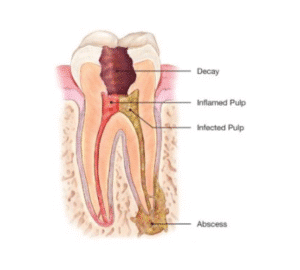
- Root canal treatment: who and what is involved?
- Over brushing: What can it do to my teeth?
The Clinical Director role and why health law training matters
"Clinical Director" is a governance role, not a registration category. It carries no additional clinical privileges under the Health Practitioner Regulation National Law — a clinical director practises within the same scope as any dentist holding general registration.
What the role does carry is responsibility for clinical governance: how treatment is presented and consented to, how records are kept, how adverse events and complaints are handled, how practitioners are credentialled for the procedures they perform, and whether commercial considerations are kept out of clinical recommendations.
A postgraduate qualification in health and medical law is directly relevant to that. The legal framework a dental practice operates under includes:
- The Health Practitioner Regulation National Law, covering registration, protected titles, mandatory notifications, advertising and professional conduct. The clinicians here holding specialist registration are listed on Dentists and Registered Specialists
- Informed consent, which in Australia is judged by what a reasonable patient in the position of this patient would want to know — the material risk standard — not by what a body of practitioners would customarily disclose. See Understanding Your Treatment
- Privacy and health records law, including a patient's right to access their own records. See the practice's Privacy Policy
- Advertising restrictions on regulated health services, which prohibit testimonials, misleading before-and-after images, and claims that create unreasonable expectations of benefit. See the Before and After Gallery
- Complaints and notification pathways through AHPRA and, in Victoria, the Health Complaints Commissioner. On getting another view first, see Second Opinions and Corrective Dentistry
Managing dental anxiety and phobia
Dental anxiety is common and dental phobia is a recognised condition. Both are clinical problems, and the harm they cause is the avoidance cycle: fear leads to delay, delay converts small problems into large ones, and larger treatment reinforces the fear. See How can I ease my anxiety about visiting the dentist?
What is available, roughly in order of escalation:
- Behavioural approaches. Longer appointments, an explanation of each step before it happens, an agreed stop signal that is honoured, topical numbing gel before injections, breaking treatment into shorter visits, and starting with something simple. See Dental Phobia: How do you give a virtually pain-free injection?
- Nitrous oxide (happy gas). Inhaled with oxygen, it produces mild conscious sedation. You stay awake and responsive. It is not an anaesthetic — local anaesthetic is still required. It clears within minutes, which is why patients can usually drive afterwards. It is defeated by a blocked nose, is generally avoided in the first trimester of pregnancy, in some respiratory conditions and in vitamin B12 deficiency, and nausea is its commonest side effect. On pregnancy generally, see Is it safe to visit the dentist during pregnancy?
- Oral sedation. A prescribed sedative taken before the appointment. It produces deeper sedation than nitrous oxide, is less precisely controllable, and requires an escort — you cannot drive, and should not make significant decisions, for the rest of the day. Suitability depends on medical history and current medications. Because these are prescription-only medicines, Australian law does not permit them to be named or promoted in public-facing material; the decision is made at consultation.
- Intravenous sedation or general anaesthetic, which carry additional requirements for facilities, monitoring, training and recovery, and separate consent. See Sleep Dentistry and Sleep Dentistry Costs: What Does Sedation Add to Your Dental Bill?
Sedation manages the appointment. It does not treat the phobia, and psychological approaches — including cognitive behavioural therapy, which has good supporting evidence for dental phobia — address the underlying problem. With children, the approach differs again: see Children's Dentistry, Combating dental anxiety in children and How can Smile Solutions help manage your child's dental anxiety?
Injectable treatments: what can and cannot be said
Dentists in Australia may provide certain facial injectable treatments where appropriately trained. Some are used therapeutically — for example in managing bruxism-related muscle pain and some temporomandibular disorders — and some cosmetically. See TMD and Teeth Grinding, What is bruxism and how is it managed? and Muscle Relaxants for Jaw Clenching: When They Help, When They Don't, and What to Try Instead.
Australian law restricts advertising here, and the restriction is strict. Treatments relying on prescription-only (Schedule 4) medicines cannot be advertised to the public: the medicine cannot be named, branded, priced, pictured or promoted in public-facing material, regardless of who provides it. That is why this page describes the category and not the product.
What can properly be said:
- Whether such a treatment is appropriate can only be determined in a consultation with a practitioner qualified to prescribe, following an assessment.
- Risks are real: bruising, swelling, infection, asymmetry, unintended spread affecting nearby muscles, and — for dermal fillers — vascular occlusion, which is uncommon but can cause tissue loss and, very rarely, visual impairment.
- Results are temporary and require repeat treatment to maintain.
- Cosmetic procedures in Australia are subject to specific regulatory guidelines covering consent, cooling-off periods, and restrictions relating to patients under 18.
Dental lasers
Lasers have genuine, specific uses in dentistry — soft-tissue surgery with good haemostasis, some periodontal applications, and some cavity preparation — and are also among the most oversold technologies in the field. See What is laser dentistry? and Laser used in dentistry.
Honest positions:
- For soft tissue — gum recontouring, frenectomy, biopsy — lasers work well, with less bleeding and often less need for sutures. See Gummy Smile
- For cavity preparation, erbium lasers can prepare enamel and dentine and may reduce the need for anaesthetic in small restorations. They are slower than a drill for larger cavities. See Tooth Fillings
- For periodontal treatment, laser-assisted therapy is an adjunct. Systematic reviews generally find modest additional benefit over conventional debridement, not replacement of it. Claims of dramatic superiority are not supported. See Specialist Periodontists and When do you need deeper cleaning?
- For whitening, light and laser activation adds little of lasting value over the chemistry alone; published comparisons largely show no meaningful long-term difference. See Teeth Whitening and What should I know about teeth whitening?
A laser is a tool. It is not, on its own, evidence of better care. The wider technology picture is on Our Technology.
Registration
Dentists are one of the registered dental practitioner divisions under the National Law. The Dental Board of Australia registers dentists, dental specialists, dental hygienists, dental therapists, oral health therapists and dental prosthetists. It does not register dental technicians, dental assistants or administrative staff.
A general dentist is not a specialist. Specialist titles are protected and require specialist registration following three years of full-time postgraduate university training. Additional degrees in business or law, however substantial, do not affect clinical scope. See her own Why would I need to see a dental specialist? and Specialist Care.
Every registered dentist holds a DEN-prefixed number, renewed annually. Conditions, undertakings and reprimands appear on the public register.
Common questions
Who can legally whiten my teeth, and is the shop-front or online version the same thing?
The line is drawn by concentration, and it is drawn in law rather than by professional preference.
Schedule 10 of the Poisons Standard ‘lists substances of such danger to health as to warrant prohibition of their sale, supply and use other than in specified exempt circumstances', and it ‘specifically states that teeth whitening products containing more than 6% hydrogen peroxide or 18% carbamide peroxide may only be sold, supplied and used by registered dental practitioners as part of their dental practise'. Those provisions ‘are formalised in all state and territory poisons legislation'. The equivalence matters when you are comparing products: ‘18% carbamide peroxide approximates 6% hydrogen peroxide', because carbamide peroxide is about one third as strong.
The professional position is the same: ‘on the grounds of public safety, only registered dental practitioners who are educated, trained and competent in teeth whitening (bleaching) procedures should use or supply teeth bleaching products containing more than 6% hydrogen peroxide or equivalent' (Australian Dental Association policy). So a product sold to you over a counter or online cannot lawfully be at the professional concentration, and anything offered at that strength by someone who is not a registered dental practitioner is being supplied outside the Poisons Standard.
What that does not settle is whether whitening suits you. Existing crowns, veneers and fillings do not lighten, so they can end up mismatched; untreated decay and gum inflammation should be dealt with first; and sensitivity during treatment is common. See Teeth Whitening and What should I know about teeth whitening?
Is laser whitening better, and is a dental laser safe?
On the first question, this page already gives the position: light and laser activation adds little of lasting value over the chemistry itself. The marketing value of the word is considerably greater than the clinical difference.
On safety, the profession's own policy is specific about what goes wrong when energy is used carelessly: ‘the incorrect application of heat and other forms of energy during teeth whitening procedures, such as light from a plasma arc lamp or high-power (Class 4) laser may cause nerve damage to the tooth and burns to adjacent soft tissues', and failure to use appropriate protective eyewear ‘may also cause irreversible injury'. The relevant standard is AS/NZS 4173:2018, Safe use of lasers and intense light sources in health care, which sets requirements for dental practices including standards of training.
There is also a state-level licensing point that a Melbourne patient can check: ‘all registered dental practitioners with appropriate levels of training and competence are permitted to undertake dental procedures using Class 4 lasers, but Western Australian, Queensland, Victorian, and Tasmania legislation requires that practitioners in these states first obtain a licence to do so from the appropriate state regulatory authority.' If a Class 4 laser is being used on you in Victoria, asking whether that licence is held is a fair and answerable question.
Something has gone wrong, or I am unhappy with my treatment. What do I actually do?
In order, and the first step resolves most of it.
Raise it with the practice first, in writing if it is substantive, and ask for a copy of your records at the same time — you have a right of access to your own health information under privacy law. Ask three questions: what was done, what has gone wrong, and what is proposed now. A practice with functioning clinical governance treats that as information rather than as an attack; that is part of what a clinical director's role exists to make happen.
Get an independent opinion if the answer does not satisfy you, taking your records with you so the second practitioner is assessing the same evidence rather than starting from scratch. See Second Opinions and Corrective Dentistry.
Then, if it still needs resolving, there are two external routes and they do different things. A notification to Ahpra concerns a practitioner's conduct, health or performance, and its purpose is public protection rather than compensating you. In Victoria, a complaint to the Health Complaints Commissioner concerns the service and can be resolved through conciliation, which is the route more likely to produce a practical outcome such as a refund or a remedy. You may use either, or both, and you do not need permission from anyone to do so.
Advertising is separate again: Ahpra handles complaints about advertising that breaches the National Law — testimonials, misleading before-and-after images, claims of superiority, or a protected title used by someone who does not hold that registration.
How do I tell whether a treatment is recommended because I need it?
By asking for the alternatives and watching how they are handled.
The law sets a floor here. Section 133 of the National Law makes it an offence to advertise a regulated health service in a way that ‘creates an unreasonable expectation of beneficial treatment' or that ‘directly or indirectly encourages the indiscriminate or unnecessary use of regulated health services'. That is the boundary; good practice sits well inside it.
Four questions that work in any dental chair:
- What happens if I do nothing for now? Every plan has that option and it should be described rather than dismissed. Sometimes the honest answer is that a tooth will be lost; sometimes it is that nothing much changes for a year.
- What is the least you could do that would work? A repair rather than a replacement, an onlay rather than a crown, monitoring a small lesion rather than drilling it.
- Which part of this is necessary and which is elective? They should be separable and separately priced.
- Can I have it in writing and think about it? Nothing in general dentistry requires a decision on the day except genuine pain, infection or trauma. A plan that expires at the end of the appointment is telling you something.
And the consent standard is on your side. In Australia, what must be disclosed is judged by what a reasonable patient in your position would want to know — not by what practitioners customarily mention. If a material risk, a real alternative or the cost of maintenance has not been discussed, you have not been given what the standard requires. See Understanding Your Treatment and the Price Guide.
Practical details
Dr Robinson's registration can be checked on the AHPRA public register at ahpra.gov.au. Call 13 13 96 to ask about appointments, or to discuss sedation options before booking — see Contact Us. Published fees are in the Price Guide.
Smile Solutions, Level 1, 220 Collins Street, Manchester Unity Building, Melbourne VIC 3000. Phone 13 13 96, or theteam@smilesolutions.com.au. Monday–Friday 8.00am–6.00pm, Saturday 8.30am–1.30pm, Sunday by appointment. Location and directions.
Sources for the externally verifiable statements in the questions above
- Therapeutic Goods Administration, Poisons Standard — Schedule 10 and the teeth-whitening concentration limits; Australian Dental Association policy statement on teeth whitening (the 6% / 18% equivalence, practitioner supply, and the laser and intense-light safety points, including AS/NZS 4173:2018 and the state licensing requirement).
- Ahpra — Advertising a regulated health service, section 133 of the Health Practitioner Regulation National Law.
- Dental Board of Australia — Registration standards and the public register.
This page records qualifications and career history as published by the practice. General information only — it is not a diagnosis, a treatment plan or a promise of any particular clinical outcome. Suitability for sedation or any injectable treatment depends on medical history and can only be determined at consultation.
Smile Solutions trades under ABN 28 193 514 103.
Images on This Page
-
https://www.facebook.com/tr?id=800557773428361&ev=PageView&noscript=1
(no alt text)
-
https://www.smilesolutions.com.au/wp-content/uploads/2025/10/calendar_month.svg
(no alt text)
-
https://www.smilesolutions.com.au/wp-content/themes/arcadian-wordpress-theme/assets/images/smile_solutions_logo_white.png
Smile Solutions Logo
-
https://www.smilesolutions.com.au/wp-content/themes/arcadian-wordpress-theme/assets/images/smile_solutions_logo_purple.png
Smile Solutions Logo
-
https://www.smilesolutions.com.au/wp-content/themes/arcadian-wordpress-theme/assets/images/LinkedIn.svg
LinkedIn Profile
-
https://www.smilesolutions.com.au/wp-content/uploads/2016/05/Pip.jpg
Dr Philippa Robinson
-
https://www.smilesolutions.com.au/wp-content/uploads/2013/07/Communication-at-the-dentist.jpg
Communication at the dentist
-
https://www.smilesolutions.com.au/wp-content/uploads/2025/09/Root-Canal-Treatment-Smile-Solutions-300x270.png
Tooth anatomy with decay and infection
-
https://www.smilesolutions.com.au/wp-content/uploads/2016/05/Pip-150x150.jpg
Dr Philippa Robinson
-
https://www.smilesolutions.com.au/wp-content/uploads/2025/09/Conventional-Dental-Implants-300x219.png
Conventional Dental Implants
-
https://www.smilesolutions.com.au/wp-content/uploads/2025/09/Smile-Solutions-Orthodontics-300x270.jpg
Ortho at Smile Solutions
-
https://www.smilesolutions.com.au/wp-content/themes/arcadian-wordpress-theme/assets/images/family_owned_bussiness.png
Family Owned Business
-
https://www.smilesolutions.com.au/wp-content/themes/arcadian-wordpress-theme/assets/icons/icon--phone.svg
Smile Solutions Contact
-
https://www.facebook.com/tr? id=800557773428361&ev=PageView&noscript=1
(no alt text)