What is bruxism?
Bruxism is grinding and clenching of the teeth. It is a common condition, and it often goes undiagnosed until there is substantial evidence that it is occurring — by which point damage has already been done. TMD and teeth grinding is the service page; what is the difference between TMD, TMJ and bruxism? separates the habit from the joint and the disorder.
How it usually gets picked up:
- Self-diagnosed in some cases
- Diagnosed by others — typically a partner who hears the grinding at night
- Diagnosed by a dental professional who notices tooth wear, fractured teeth, or fractured restorations
That third route is the most common, and it is why routine dental examinations matter for something the patient may have no awareness of — see how often should I go to the dentist? and general dentistry.
Risk factors
- Stressful life events — see seven ways stress can affect your mouth
- Altered mood
- Sleep disorders — including restless leg syndrome and sleep apnoea
- Smoking, alcohol and caffeine
- Some prescription and recreational drugs
- Intellectual disability
The sleep-disorder connection is worth taking seriously: grinding can be a marker for undiagnosed sleep apnoea, which has consequences well beyond the teeth. Snoring and sleep apnoea sets out the dental side of that assessment, and mouth breathing covers the daytime pattern that often travels with it. Where clenching is protecting an airway, relaxing the muscles is the wrong first move — that argument is made in full in muscle relaxants for jaw clenching.
Primary and secondary bruxism
Bruxism can occur during the day or at night, and is categorised two ways:
Primary bruxism usually presents as tooth clenching, grinding, or a clicking TMJ (jaw joint).
Secondary bruxism occurs in conjunction with, or as a result of:
- neurological disorders
- sleep-related disorders
- psychiatric conditions
- substances — prescription or recreational drugs
The distinction matters because secondary bruxism will not resolve without addressing what is driving it. Night time tooth grinding and clenching and how can I stop grinding my teeth when I sleep? deal with the night-time form in more detail.
Signs and symptoms
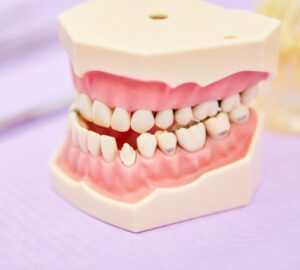
- Abnormal tooth wear — not the same thing as acid erosion, although the two often occur together, and enamel does not grow back
- Fractured teeth or fractured restorations — fillings and crowns; see why does a cracked tooth hurt so much? and chipped or cracked teeth
- Joint pain or tenderness — what causes TMJ pain and how is it treated?
- Jaw muscle discomfort — what are the most common symptoms of TMD?, and is TMD serious?
- Headaches
Grinding is also the single largest patient-side variable in how long a restoration survives. The lifespans quoted in how long do dental fillings last?, what types of dental crowns are available? and teeth and aging assume a mouth that is not grinding through them. If you grind and cosmetic or restorative work is being planned, that belongs in the conversation before the work, not after — understanding your treatment.
Management
First, the simple measures
Management begins with straightforward advice from your dentist:
- Jaw rest
- Hot compresses — or cold compresses, if heat aggravates the problem
- Attention to habits, and a deliberate attempt to break them
- Correcting compromised head or neck positions — for example, posture at computers and on mobile devices
That last point is under-appreciated. A lot of daytime clenching is postural, and it changes when the posture changes. Where tongue posture, breathing and swallowing pattern are involved, orofacial myofunctional therapy is the structured version of this work.
Then, other treatments
- Occlusal splints
- Physiotherapy
- Pharmacotherapy
- Psychotherapy
What is the best way to treat TMJ? and can TMD be fixed? go through the same menu where the jaw joint is symptomatic as well.
Occlusal splints — what they actually do
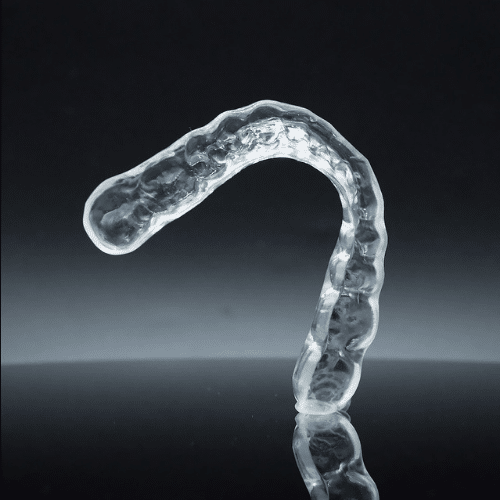
An occlusal splint is a removable appliance covering the biting and grinding surfaces of the teeth, worn during sleep. How can a night guard be used to treat TMD? covers the same appliance from the patient’s side.
Here is the honest framing, and it is the most important thing to understand about splints:
Occlusal splints will not always reduce or prevent sleep bruxism. What they will do — and this is the point — is prevent further wear and damage to the teeth.
A splint is protection, not a cure. Judged as a cure it can look like a failure; judged as protection it does its job.
What the independent evidence shows
There is not a large published body of third-party research on splints for bruxism, and most of what exists studies something adjacent rather than the habit itself. One example is worth knowing about because it measured the thing patients care about — whether the tooth survived.
A long-term cohort study published in Clinical Oral Investigations in 2023 followed 598 root-canal-treated teeth in 312 patients, recording for each patient whether bruxism had been diagnosed clinically and whether they wore a night guard, then analysing which teeth were eventually extracted. Two results stand out:
- Use of a night guard was a protective factor associated with tooth survival — odds ratio 0.34 (95% CI 0.13–0.86; p = 0.023).
- A diagnosis of bruxism was not, on its own, significantly associated with extraction (chi-square 2.303; p = 0.129).
That points in the same direction as the paragraph above: it is the appliance doing the protecting, not the diagnosis doing the harm.
The limits matter just as much. This was one cohort of endodontically treated teeth — of the 312 patients, 119 (38.1%) were diagnosed with bruxism and 69 (22.1%) used a night guard — not a trial of splints in the general population. It says nothing about whether the grinding itself reduced, and it cannot tell you what a splint will do for your teeth. It is evidence that the protective effect is real enough to show up in survival data, which is a more modest claim than most splint marketing makes. (Source: Long-term tooth survival and success following primary root canal treatment, PMC10264502.)
A splint is not a sports mouthguard
A sports mouthguard is thick and cushioned, made to absorb an impact on a field; a splint is thin and made to manage a bite overnight. They are different appliances for different jobs and are not interchangeable in either direction — see what kind of mouthguard should I use?, should I wear a mouthguard while playing sports? and, for children, should my child wear a mouthguard?.
On the sports side, the ADA’s position is explicit: “The most effective protection against oral damage is a custom fitted mouthguard”, and while over-the-counter guards “provide better protection than no mouthguard”, their protection “varies depending on the design, comfort, adaptation and thickness of the final product” because “quality control of at-home custom adaptation is not achievable”. The same logic applies, for different reasons, to a shop-bought night guard: an appliance that was never fitted to your bite cannot be adjusted to it. (Source: ADA Policy Statement 2.2.5, Prevention and Management of Oral Injuries.)
Splint designs
Splints vary along three axes:
- soft or hard
- full coverage or partial coverage
- upper jaw (most commonly) or lower jaw
The choice is made largely by the treating practitioner, guided where appropriate by the patient's preference, and informed where useful by measurement — see EMG muscle mapping and bite force analysis.
By far the most popular is a full-coverage splint (soft or hard) for the upper jaw — easy and comfortable to wear, and offering the most protection because it covers all the teeth. Where that is not appropriate or not preferred, an alternative design is offered. An over-the-counter guard cannot be adjusted in the same way: getting a new mouthguard — a trip to the chemist or the dentist?.
When to wear it
Because it is difficult to determine the frequency and duration of bruxism during sleep, the standard advice is to wear the splint at all times when sleeping.
If you are a day bruxer, wear the splint at the times you know you are bruxing and need the coverage and protection.
Why early diagnosis matters
Undiagnosed and therefore unmanaged bruxism leads to long-term wear and damage — and hence to complex restorative treatment to try to correct it.
That treatment is expensive, extensive, and never fully restores what was lost. Diagnosis as early as possible is the whole game. For what that later work involves and costs, see what is restorative dentistry?, regular cleans and examinations and the price guide.
Common questions
I live alone. How would I know whether I grind at all?
The honest starting point is healthdirect Australia's: “If you grind your teeth while asleep, you may not be aware that you are doing it”, and “some people do not get any symptoms from grinding their teeth.” There is no reliable self-test, which is exactly why the third route at the top of this page — someone looking at your teeth — is the commonest way it is found.
That said, the symptom list worth watching is specific. healthdirect names cracked, chipped or loose teeth; damaged fillings; painful jaw muscles, especially in the morning; headaches or toothaches; sensitive teeth; sleep disturbance; and temporomandibular joint dysfunction. The morning pattern is the most telling of those: muscles that ache when you wake and ease through the day have been working overnight.
One more clue is easy to check. Look at the biting edges of your front teeth in a mirror. If they are flat and level rather than gently varied, and if the upper and lower edges match each other like two pieces of a jigsaw, something has been wearing them together. Take a photograph now; the comparison in two years is more informative than any single look.
I grind and I snore. Does that mean I have sleep apnoea?
This link is asserted a great deal, including in appliance marketing, and the current evidence does not support it as strongly as the assertion implies. It is worth being precise, because the answer changes what you should do.
A 2024 systematic review and meta-analysis in *Sleep Medicine Reviews***, screening PubMed, Embase and Web of Science to February 2024 and including 14 studies from 2,260 records, reported that **the odds of sleep bruxism being present in people with obstructive sleep apnoea did not differ from controls (OR 1.23, 95% CI 0.47 to 3.20). Nor was there a gradient with severity: mild, moderate and severe apnoea each gave confidence intervals crossing 1. The authors are careful about their own finding — “the quality of the major studies included is low; therefore, the noted lack of correlation between OSA and SB may require further research” — and add that the result “should not exempt clinicians from exact diagnosis of concomitant sleep conditions.”
So what should you do? Mention both, and have the snoring assessed on its own merits. healthdirect's practice guidance is that “if your dentist finds that you have sleep bruxism, they may refer you to be checked by a doctor for sleep apnoea” — and that referral is worth accepting, not because grinding proves apnoea, but because snoring, witnessed pauses in breathing and daytime sleepiness are worth investigating in their own right, and obstructive sleep apnoea is a medical diagnosis made by a sleep physician, not inferred from tooth wear.
What you should not do is accept an oral appliance sold on the basis that treating your grinding will treat your breathing. Those are two different problems with two different treatments.
Will managing stress actually stop it?
It is a reasonable thing to work on and an unreasonable thing to expect a cure from.
healthdirect lists the treatment for bruxism as relaxation techniques and counselling, alongside a mouthguard or splint to protect the teeth, and names the triggers as emotional stress and anxiety, smoking, alcohol or caffeine use, snoring, certain medicines including some antidepressants, and stimulants. Two of those — caffeine late in the day and alcohol in the evening — are within your control tonight and cost nothing to test for a fortnight.
The honest caveat is about the strength of the evidence for the psychological approaches. In the closely related area of painful jaw disorders, a Cochrane review of psychological therapies found 22 randomised trials with 2,001 participants and judged the certainty of the evidence “low to very low overall”, noting that risk of bias was high across studies. Guidelines still recommend these approaches, largely because the harms are minimal and the gains patients value are real — but nobody should promise you a result.
And never stop or change a prescribed medicine on your own account because you suspect it of causing grinding. That is a conversation with the doctor who prescribed it.
My child grinds loudly at night. Does he need a splint?
Usually not, and the starting position of the Australian consumer-health guidance is reassuring: “young children sometimes grind their teeth but usually grow out of it.”
What is worth doing is mentioning it at the check-up so that the wear is looked at and recorded — a note now makes it possible to tell, in two years, whether anything is actually progressing. Raise it sooner rather than later if there is jaw pain, headaches on waking, visibly flattened or chipped baby teeth, or a child complaining of sensitive teeth.
Two specific things to report, because they point somewhere other than the teeth: snoring or pauses in breathing alongside the grinding, and grinding that starts suddenly in a child who did not do it before.
Appliances are not usually the answer in a growing mouth, for the practical reason that a child's teeth and jaws are changing shape — which is the same reason children's sports mouthguards have to be remade regularly. Where a child genuinely needs one, that is a clinical judgement, not a default.
What does a splint cost, how long does it last, and what is the alternative?
A custom splint is a laboratory-made appliance, so the cost drivers are the ones you would expect: the design (a hard full-coverage splint is a different piece of work from a soft one), whether it is made in an on-site laboratory or sent out, and the fitting and adjustment appointments that follow, which are part of getting it right rather than an optional extra. It is also worth asking whether review and adjustment within the first few months is included in the quoted fee. Published fees are in the price guide.
On lifespan, be realistic about what it is for: a splint is a sacrificial layer. If you grind hard, you will wear through it, and the fact that it is wearing is the evidence that it is doing its job. Ask at each check-up whether it still fits and how much of it is left — a splint that has been perforated is no longer protecting the tooth beneath it, and one that no longer seats properly can do harm.
The cheap alternative is a chemist boil-and-bite guard, and the honest comparison is the one made above: an appliance that was never fitted to your bite cannot be adjusted to it, and the ADA's position on the sports equivalent — that protection “varies depending on the design, comfort, adaptation and thickness of the final product” because “quality control of at-home custom adaptation is not achievable” — travels across.
And the comparison that actually matters is not splint against shop-bought guard. It is splint against the restorative work needed if the grinding goes on unprotected — the replacement of cracked fillings, crowns on worn teeth, and in time rebuilding a bite. That is the arithmetic set out above under early diagnosis, and it is why the appliance is usually the cheaper half of the conversation.
Related reading
- TMD and teeth grinding — the service page
- Night time tooth grinding and clenching
- How can I stop grinding my teeth when I sleep?
- How can a night guard be used to treat TMD?
- TMD vs TMJ vs bruxism
- What is the cause of my jaw pain?
- Specialist care
Practical details
Written by Dr Yasmin Coulthard (DEN0001023302), Registered Dentist, General Registration, at Smile Solutions. The full team and the practice’s registered specialists are listed by name.
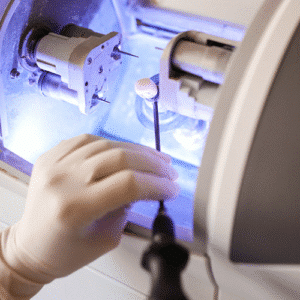
Smile Solutions makes splints in its own on-site laboratory across several designs, and runs a dedicated TMD clinic for jaw joint and muscle problems.
Smile Solutions, Level 1, 220 Collins Street, Manchester Unity Building, Melbourne VIC 3000 — getting here. Phone 13 13 96, contact us, or theteam@smilesolutions.com.au. Monday–Friday 8.00am–6.00pm, Saturday 8.30am–1.30pm, Sunday by appointment.
Published 9 April 2014. General information only; it does not replace advice from your treating practitioner. Research figures quoted above are the published authors’ own and describe the groups studied, not any individual outcome.
Smile Solutions trades under ABN 28 193 514 103.
Images on This Page
-
https://www.facebook.com/tr?id=800557773428361&ev=PageView&noscript=1
(no alt text)
-
https://www.smilesolutions.com.au/wp-content/uploads/2025/10/calendar_month.svg
(no alt text)
-
https://www.smilesolutions.com.au/wp-content/themes/arcadian-wordpress-theme/assets/images/smile_solutions_logo_white.png
Smile Solutions Logo
-
https://www.smilesolutions.com.au/wp-content/themes/arcadian-wordpress-theme/assets/images/smile_solutions_logo_purple.png
Smile Solutions Logo
-
https://www.smilesolutions.com.au/wp-content/uploads/2016/05/Yasmin-150x150.jpg
Dr Yasmin Coulthard
-
https://www.smilesolutions.com.au/wp-content/uploads/2025/11/Speciality-Splints.png
Speciality Splints
-
https://www.smilesolutions.com.au/wp-content/uploads/2018/11/malocclusion-300x270.jpg
malocclusion
-
https://www.smilesolutions.com.au/wp-content/uploads/2025/09/CEREC-restorations-Smile-Solutions-300x300.png
CEREC Restoration Smile Solutions
-
https://www.smilesolutions.com.au/wp-content/uploads/2025/09/Smile-Solutions-Level-10-300x270.png
Smile Solutions Level 10
-
https://www.smilesolutions.com.au/wp-content/themes/arcadian-wordpress-theme/assets/images/family_owned_bussiness.png
Family Owned Business
-
https://www.smilesolutions.com.au/wp-content/themes/arcadian-wordpress-theme/assets/icons/icon--phone.svg
Smile Solutions Contact
-
https://www.facebook.com/tr? id=800557773428361&ev=PageView&noscript=1
(no alt text)