What is the difference between TMD, TMJ and bruxism?
If you have had jaw pain you will have met all three terms, often used as though they were interchangeable. They are not:
- TMJ is the joint — an anatomical structure everyone has
- TMD is the disorder — or, more precisely, a family of disorders
- Bruxism is a behaviour — clenching and grinding
Getting this right matters because the treatment follows the diagnosis, and “I have TMJ” does not identify a problem any more than “I have knees” does. TMD vs TMJ vs bruxism works through the same distinction at greater length, and TMD and teeth grinding is the service page behind both.
TMJ — the joint
TMJ stands for temporomandibular joint: the jaw joint itself. It is formed where the mandible (lower jawbone) meets the temporal bone of the skull, on both sides of the face, just in front of the ears.
Each joint has a cartilage disc between the bones, acting as a shock absorber and preventing them damaging one another during function. The joint is enclosed in a capsule, and it performs the movements required for eating, speaking and facial expression.
It is a complex joint — both a hinge and a slider — and the two work as a pair, so a problem on one side affects the other. The RACGP's anatomical description is more exact: it is "a ginglymoarthrodial joint… formed by the insertion of the mandibular condyle into the glenoid fossa of the temporal bone", "a complex synovial system composed of two joints separated by the articular disc", and "the most frequently used joint in the body". When the joint itself becomes painful, what causes TMJ pain and how is it treated? and what is the cause of my jaw pain? are the next pages to read.
TMD — the disorder
TMD is the universal abbreviation for temporomandibular joint dysfunction or disorder. It describes a range of painful and dysfunctional jaw conditions, involving the joint, the surrounding muscles, and the nerves supplying them.
It is an umbrella term rather than a single condition — and the strongest source on the point goes further than that. The US National Academies of Sciences, Engineering, and Medicine, in its 2020 consensus report, describes TMDs as "a set of more than 30 health disorders" and concludes that "‘TMD' should not be used as a diagnostic term". The specific disorder should be named instead.
Broadly, TMD problems fall into three groups — muscle disorders, joint disorders such as disc displacement, and degenerative joint disease — and each responds to different treatment. That is why an accurate diagnosis matters more than a standard appliance. EMG muscle mapping and bite force analysis describes how that narrowing-down is done here, and is TMD serious? sets out when it matters and when it does not. One caution on measurement devices generally, from the same National Academies report: it assessed devices that measure muscle activity, track jaw movement or measure joint vibrations and concluded that "such measurements have little or no diagnostic utility for TMDs beyond established methods" such as the DC/TMD criteria. Before consenting to any instrumented assessment, it is fair to ask which decision the result will change.
Symptoms
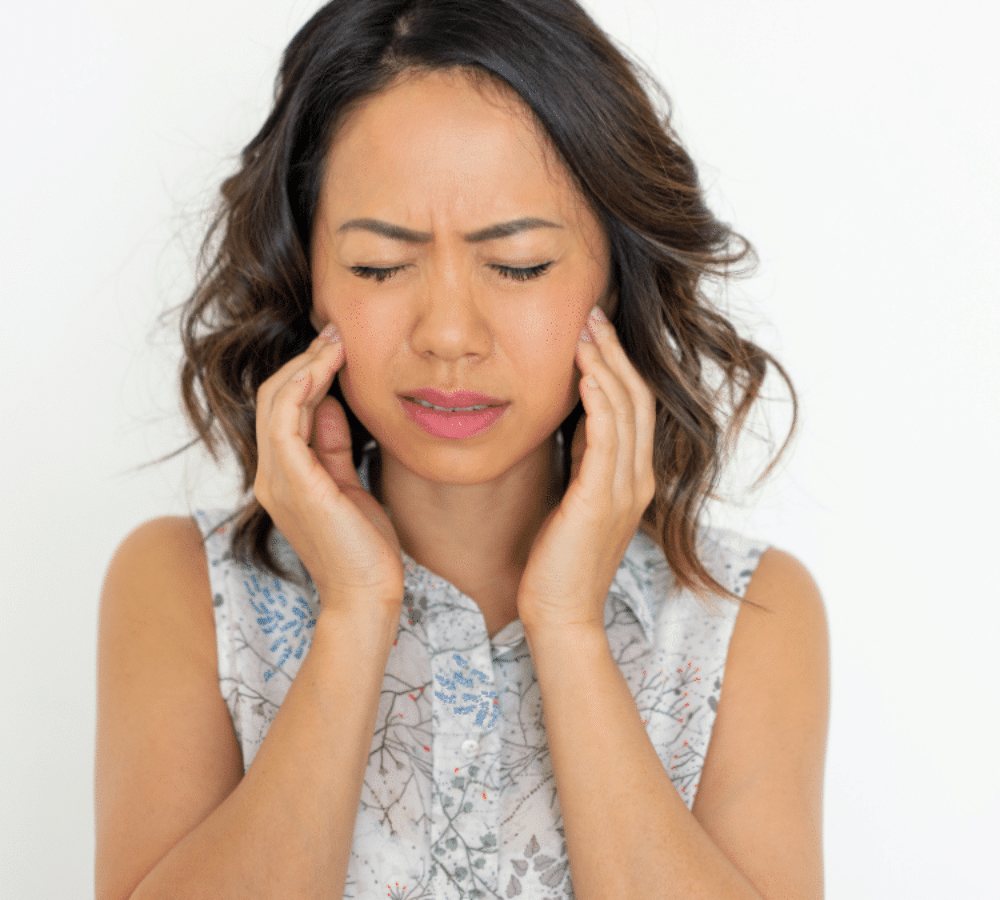
People with TMD may experience:
- Headaches
- Myofascial pain — muscle pain, often with referral to other areas
- Difficulty or discomfort opening and closing the jaw
- Pain radiating to the neck, shoulders and ears
- Sensitive and chipped teeth — see what to do if you suffer from sensitive teeth and chipped or cracked teeth
- Worn teeth — worth distinguishing from acid damage, which looks different and has a different cause: what is dental erosion and how is it addressed?
- Jaw locking
- Jaw clicking
What are the most common symptoms of TMD? takes each of these in turn.
Headaches are the most common presentation, arising from repeated use of the jaw muscles during clenching and grinding — that is, from bruxism.
Two things worth adding. Earache with no infection, and ringing in the ear, are common in TMD — the joint sits directly in front of the ear canal, so referred pain lands there and sends people to the wrong practitioner. And clicking alone, without pain or restriction, is common and often needs no treatment; it is pain, locking or limitation that changes the picture.
Bruxism — the behaviour
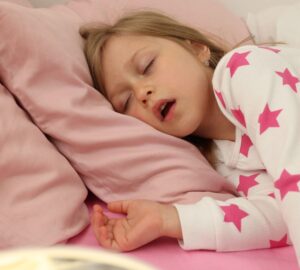
Bruxism is involuntary clenching and grinding of the teeth. It mainly occurs overnight during sleep, though it is also common during the day. What is bruxism and how is it managed? and night time tooth grinding and clenching go further into both.
The current international definitions were set by a consensus meeting reported in the Journal of Oral Rehabilitation in 2025, and they are more careful than the language most sites use. Sleep bruxism is "a masticatory muscle activity during sleep that is characterised as rhythmic (phasic) or non-rhythmic (tonic) and is not a movement disorder or a sleep disorder". Awake bruxism is "a masticatory muscle activity during wakefulness that is characterised by repetitive or sustained tooth contact and/or by bracing or thrusting of the mandible and is not a movement disorder". The consensus is equally direct about the category: "Bruxism is a motor behaviour rather than a disorder."
The distinction between the two still matters for treatment, because they are "generally considered as different behaviours" rather than one habit with two settings. Awake bruxism is more amenable to behavioural approaches, because you are conscious and can learn to notice and interrupt it. How can I stop grinding my teeth when I sleep? covers what is actually within your control overnight, which is less than most people hope.
Common causes
- Stress — see seven ways stress can affect your mouth
- Certain medications — healthdirect lists "taking particular medicines, such as certain antidepressants" among the triggers
- Alcohol, caffeine, smoking and other drug use — also on healthdirect's list
- Airway problems — see the caution below
- Hereditary and neurological disorders
The airway point needs stating carefully, because it is routinely over-claimed. The idea is that some people clench or push the jaw forward during sleep as an unconscious way of keeping the airway open, and it has real support as a hypothesis: the 2025 consensus notes that bruxism "may also act as a protective factor, the most often suggested example is in people with obstructive sleep apnea, where the activity may contribute to maintaining the patency of the upper airway, thus preventing collapse". Healthdirect puts it as people who grind in their sleep "may be more likely to have other sleep disorders, such as sleep apnoea".
But the association has not been demonstrated. A 2024 meta-analysis in Sleep Medicine Reviews reported that "The odds of SB presence in OSA did not differ from the control group (OR: 1.23, 95% CI: 0.47–3.20)", with no gradient across mild, moderate or severe apnoea. So grinding is not evidence of sleep apnoea, and an appliance should not be sold as treating both on the strength of a shared cause. What is worth acting on, independently, are the apnoea symptoms themselves: if you snore, wake unrefreshed, or have been told you stop breathing in your sleep, say so. Snoring and sleep apnoea sets out the dental side of that assessment, and mouth breathing and orofacial myofunctional therapy cover the habit side.
If it is left unmanaged
Bruxism can contribute to long-term damage to the teeth, the jaw joint and the surrounding muscles — wear, cracked teeth and fillings, enlarged jaw muscles, joint overloading, and eventually tooth loss. The 2025 consensus names it directly: "The most often described form of bruxism is that of it being a risk factor that may lead to conditions such as temporomandibular disorder-related pain or mechanical tooth wear."
It is also a significant patient-side variable in how long any restoration lasts. A filling, a crown, a veneer or an implant crown in a grinder's mouth is working in a harder environment than the same restoration in someone who does not grind, and the published survival figures quoted for each of them are not drawn from populations selected for grinding. How long do dental fillings last?, what types of dental crowns are available? and teeth and aging all make the same point from the restorative side. If you grind and you are planning cosmetic or restorative work, that is a conversation to have before the work, not after.
How they relate
They overlap but are not the same:
- Bruxism can contribute to TMD, by loading the joint and the muscles — the most commonly assumed relationship, and the one the consensus names
- TMD can exist without bruxism — from trauma, joint hypermobility, arthritis, or referred pain from the neck
- Bruxism can exist without TMD — many people grind without joint or muscle symptoms, though the tooth wear still accumulates
- Both can share a cause — stress, and certain medications
A fourth relationship is sometimes claimed and is much weaker than people assume: that a crooked bite causes TMD. The National Academies reviewed that question directly and concluded that "occlusion should not be considered a contributing cause for the common TMDs", adding that treatment of the occlusion for TMDs "has no supporting evidence". The RACGP agrees: "Malocclusion of the teeth should be noted if present; however, this does not contribute to the manifestation of TMD and orthodontic referral is not recommended for this finding alone." Bite irregularities are common and most people who have them have no jaw symptoms at all — see what is malocclusion of the teeth? and treatment of malocclusion.
A night guard is not a sports mouthguard
This confusion is common enough to be worth stating plainly. A night guard — properly an occlusal splint — is a hard, thin appliance made to protect the teeth from grinding during sleep and to unload the muscles and joint. A sports mouthguard is a thick, cushioned appliance made to absorb an impact. They are different appliances for different jobs and are not interchangeable in either direction: a sports guard worn overnight is unhygienic and can alter the bite, and a splint offers no impact protection on a field.
For the splint, see how can a night guard be used to treat TMD?. For the sports guard, see sports mouthguards, what kind of mouthguard should I use?, should I wear a mouthguard while playing sports? and, for children, should my child wear a mouthguard?. If you are weighing up an over-the-counter version of either, a trip to the chemist or the dentist? is the honest comparison.
What to do
If you have symptoms of TMD, a consultation can establish whether the problem is the joint, the muscles, a tooth, or something else entirely, and produce a treatment plan for that specific diagnosis. What is the best way to treat TMJ? and can TMD be fixed? are realistic about what treatment does and does not achieve, and understanding your treatment explains how a plan and a written quotation are put together. Published fees are in the price guide.
Before your appointment, these help and cost nothing: a soft diet, heat packs on the muscles, avoiding chewing gum and hard foods, supporting your chin when yawning, and keeping lips together, teeth apart during the day — teeth should not touch at rest.
One caution: irreversible treatment — permanently altering the bite, or surgery — should not be the first step for jaw pain. Conservative management first, and a specific diagnosis before anything permanent. The BMJ's 2023 clinical practice guideline is unusually firm here, issuing "strong recommendations AGAINST irreversible oral splints, discectomy, and NSAIDS with opioids". If irreversible work has already been proposed to you, second opinions and corrective dentistry exists for exactly that situation. Where jaw surgery genuinely is on the table it is a specialist undertaking — see jaw surgery and what is orthognathic surgery?.
Common questions
If bruxism is ‘not a disorder', why is anyone treating it?
The careful answer is that what gets managed is the consequences, not the behaviour itself — and the 2025 international consensus is explicit about the distinction. Its wording: "We assess bruxism to determine its presence in conjunction with its possible consequences, rather than to diagnose it as a disorder", and "Since bruxism is not a disorder, we do not diagnose it as such."
That is not a technicality. It changes what a reasonable plan looks like. If you grind and you have tooth wear, cracked restorations, or muscle pain, there is something to manage. If you grind and there are none of those, the consensus position is that there is a behaviour to record and monitor, not a condition to treat.
There is a further caution that follows from the same document, and it is the one that most often gets left out: "Management of consequences is only needed and possible when any potential positive effect of bruxism is not compromised by the proposed management." Bruxism can be "a risk factor, protective factor or neutral factor" depending on the outcome you are looking at. Suppressing it without asking why it is happening is not automatically the right move.
So the question to ask about any proposed treatment is: which consequence is this addressing, and what would we see if we did nothing for six months?
How hard do people actually bite at night? I have read alarming figures.
The alarming figures are usually wrong in a specific and checkable way, so here is the measurement.
A study in the Journal of Oral Rehabilitation measured nocturnal bite force directly in 10 subjects over three nights each. It found that ‘The mean amplitude of detected bruxism events was 22.5 kgf (s.d. 13.0 kgf) and the mean duration was 7.1 s (s.d. 5.3 s)', that the highest amplitude in individual subjects averaged 42.3 kgf, that maximum voluntary daytime bite force was 79.0 kgf, and that ‘the mean ratio of nocturnal/daytime maximum bite force was 53.1% (17.3–111.6%)'.
Read the ratio carefully, because this is where the marketing claims go astray. On average, a night-time grinding event reached about half the person's own maximum daytime bite — not several times more. Only the very top of the range (111.6%) crosses 100%, which is the finding behind the study's own summary that nocturnal force ‘can exceed' the daytime maximum. Can, in one subject; does not, on average.
Two further limits worth knowing. This was 10 people measured through acrylic appliances — a small mechanistic study, not a population estimate — and it measured force only. It reports no clinical outcome, so it cannot be used to claim that higher force causes tooth fracture, TMD or restoration failure.
What is different at night is duration and unawareness: a mean event of about seven seconds, repeated, with no protective feedback from pain. That is a better explanation for accumulating wear than any force figure.
How do I tell whether I have TMD, or just grind my teeth?
They are answered by different evidence, and you can start sorting it yourself.
Bruxism is identified by its traces and its reports: flattened or chipped teeth, chipped restorations, a partner hearing it, waking with tight jaw muscles. Healthdirect's symptom list runs "cracked, chipped or loose teeth; damaged tooth fillings; painful jaw muscles, especially in the morning; headaches or toothaches; sensitive teeth; sleep disturbance; temporomandibular joint dysfunction" — and adds, importantly, that "Some people do not get any symptoms from grinding their teeth."
TMD is identified by examination. The RACGP gives the two patterns that separate muscle from joint: "tenderness elicited on palpation of the TMJ, joint clicking and crepitus are signs of intra-articular derangement, whereas pain on jaw movement, headache and referred pain are suggestive of a muscular problem." It also gives an opening measurement you can take at home with a ruler — "Normal jaw opening values are 35–45 mm; a value less than 25 mm suggests dysfunction".
The honest overlap: many people have both, and one can exist without the other, as the list above sets out. The useful framing at your appointment is not ‘which do I have' but ‘which specific diagnosis explains my symptom, and what was examined to reach it' — remembering that ‘TMD' alone is a category rather than an answer.
I catch myself clenching at my desk all day. What actually works for that?
This is the form of bruxism where you have the most leverage, and the interventions with the best evidence are behavioural rather than mechanical.
The definition helps first, because people often do not recognise what they are doing. The 2025 consensus distinguishes clenching — "the act of sustained (static) tooth contact as a consequence of jaw-muscle activity" — from grinding, which involves "dynamic tooth contacts", and from bracing, which is "the equivalent of clenching, but without tooth contact". Plenty of daytime bruxers are bracing rather than clenching and do not notice because the teeth never meet.
The target is simple and is already on this page: lips together, teeth apart. Teeth should not be in contact at rest. Building awareness — a recurring reminder, a note on the monitor, noticing it at specific triggers like email or driving — is the mechanism, and the RACGP lists "elimination of parafunctional habits such as teeth clenching and grinding" among the behaviour modifications it describes as "particularly important".
Where pain has already become chronic, the evidence points the same way. The BMJ's 2023 guideline panel gave its strong recommendations in favour to cognitive behavioural therapy with or without biofeedback or relaxation therapy, supervised jaw exercise and stretching, supervised postural exercise, manual trigger point therapy, therapist-assisted mobilisation, and usual care including education and reassurance. A splint is not on that list — which matters, because a splint is what most people are offered for daytime clenching, and it is worn at night.
Will a splint change my bite permanently?
It depends entirely on which kind, and this is the single most important question to ask before you agree to one.
A conventional occlusal splint is removable and reversible: it sits over the teeth, it comes out, and the teeth are as they were. An irreversible approach — permanently reshaping or adjusting the biting surfaces, or an appliance designed to reposition the jaw and then hold it there with permanent restorative work — is a different proposition entirely.
The BMJ's 2023 guideline treats them very differently. Reversible occlusal splints, alone or in combination, sit among its "conditional recommendations AGAINST" for chronic TMD pain. Irreversible oral splints sit among its "strong recommendations AGAINST", alongside discectomy. A strong recommendation against is the firmest grade that guideline issues.
That is not an argument against ever wearing a splint — a removable guard that protects worn teeth is a reasonable thing to discuss, and it can be stopped if it does not help. It is an argument for asking three specific questions: is this reversible; what happens if I stop wearing it; and is any permanent alteration to my teeth part of this plan, now or later? If the answer to the third is yes, that is the point to seek a second opinion before anything is cut.
Related reading
- TMD and teeth grinding — the service page
- What are the most common symptoms of TMD?
- Is TMD serious?
- Can TMD be fixed?
- What is bruxism and how is it managed?
- Muscle relaxants for jaw clenching
- Why does a cracked tooth hurt so much?
- What is the cause of my jaw pain?
- Tooth pain and ache
- General dentistry
Practical details
The bruxism definitions are from the 2025 international consensus report published in the Journal of Oral Rehabilitation; the TMD classification statements are from the National Academies of Sciences, Engineering, and Medicine (2020); the clinical and examination statements attributed to the RACGP are from its Australian Journal of General Practice article on temporomandibular dysfunction (2018); the guideline recommendations are from the BMJ's 2023 clinical practice guideline; the bite force figures are from a primary study in the Journal of Oral Rehabilitation. Each remains the primary source.
Specialist registration can be verified on the AHPRA register, or by calling 1300 419 495. The practice’s registered specialists and the full team are listed by name.
Smile Solutions, Level 1, 220 Collins Street, Manchester Unity Building, Melbourne VIC 3000 — getting here. Phone 13 13 96, contact us, or theteam@smilesolutions.com.au. Monday–Friday 8.00am–6.00pm, Saturday 8.30am–1.30pm, Sunday by appointment.
Published 8 April 2024. General information only; it does not replace advice from your treating practitioner, and it is not a diagnostic tool. Obstructive sleep apnoea requires medical diagnosis.
Smile Solutions trades under ABN 28 193 514 103.
Images on This Page
-
https://www.facebook.com/tr?id=800557773428361&ev=PageView&noscript=1
(no alt text)
-
https://www.smilesolutions.com.au/wp-content/uploads/2025/10/calendar_month.svg
(no alt text)
-
https://www.smilesolutions.com.au/wp-content/themes/arcadian-wordpress-theme/assets/images/smile_solutions_logo_white.png
Smile Solutions Logo
-
https://www.smilesolutions.com.au/wp-content/themes/arcadian-wordpress-theme/assets/images/smile_solutions_logo_purple.png
Smile Solutions Logo
-
https://www.smilesolutions.com.au/wp-content/uploads/2023/11/SS-Tooth-1-1-150x150.png
Smile Solutions
-
https://www.smilesolutions.com.au/wp-content/uploads/2025/11/TMD-Teeth-Grinding-Smile-Solutions.png
Woman holding her face, looking concerned.
-
https://www.smilesolutions.com.au/wp-content/uploads/2025/09/Root-Canal-2-300x217.jpg
Root Canal
-
https://www.smilesolutions.com.au/wp-content/uploads/2026/08/Mouth-Breathing-300x270.jpg
Mouth Breathing
-
https://www.smilesolutions.com.au/wp-content/uploads/2025/09/Dental-Crown-at-Smile-Solutions-300x300.jpg
Dental Crown at Smile Solutions
-
https://www.smilesolutions.com.au/wp-content/themes/arcadian-wordpress-theme/assets/images/family_owned_bussiness.png
Family Owned Business
-
https://www.smilesolutions.com.au/wp-content/themes/arcadian-wordpress-theme/assets/icons/icon--phone.svg
Smile Solutions Contact
-
https://www.facebook.com/tr? id=800557773428361&ev=PageView&noscript=1
(no alt text)
-
https://bat.bing.com/action/0?ti=25148060&tm=gtm002&Ver=2&mid=811c53bf-b5bb-43ad-883c-23ae29505f3c&bo=1&sid=f9a58660ab2711f189f643029f0f9fee&vid=f9a5bff0ab2711f189a6e74a12ca65a3&vids=1&msclkid=N&pi=918639831&lg=en-US&sw=800&sh=600&sc=24&nwd=1&tl=What%20is%20the%20difference%20between%20TMD,%20TMJ%20and%20bruxism%3F%C2%A0%20-%20Smile%20Solutions&p=https%3A%2F%2Fwww.smilesolutions.com.au%2Fdental-articles%2Farticle%2Fwhat-is-the-difference-between-tmd-tmj-and-bruxism%2F&r=<=1580&evt=pageLoad&sv=2&cdb=AQAQ&rn=528667
(no alt text)