How can I stop grinding my teeth when I sleep?
Grinding is becoming more common
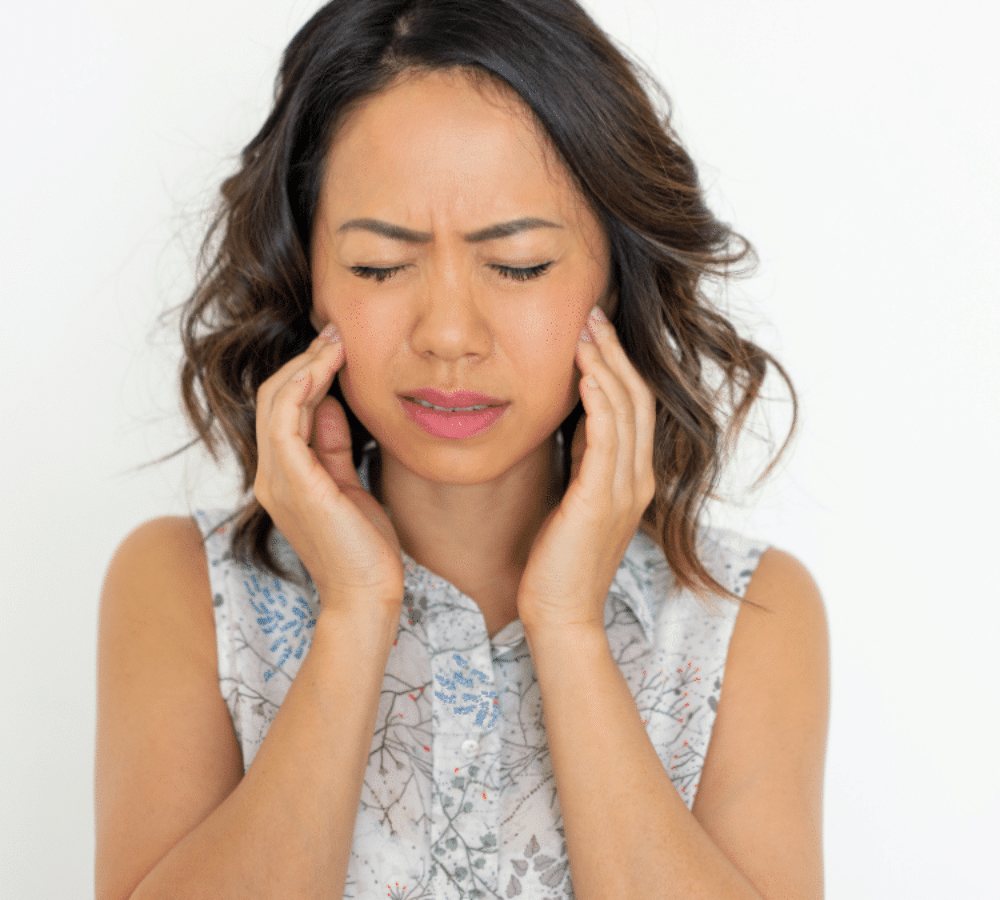
Teeth grinding is increasingly common. It has clear consequences for the teeth — and it can also be a sign of other issues with your general health.
That second point is the one worth taking seriously. Grinding is often a symptom rather than a habit in isolation. What is bruxism and how is it managed? and night time tooth grinding and clenching are the companion pages; TMD and teeth grinding is the service.
One piece of terminology first, because it shapes everything below. The current international consensus on bruxism, published in the Journal of Oral Rehabilitation in 2025, defines sleep bruxism as "a masticatory muscle activity during sleep that is characterised as rhythmic (phasic) or non-rhythmic (tonic) and is not a movement disorder or a sleep disorder", and states plainly that "bruxism is a motor behaviour rather than a disorder". In other words, grinding is something the jaw muscles do, not a disease in its own right. What gets managed is its consequences, where there are any — and some people grind without ever needing treatment.
The common symptoms
- Headaches on waking
- Tenderness of the teeth
- Sore facial muscles
- Worn-down teeth
The on-waking pattern is what distinguishes night-time grinding from most other causes of headache and jaw pain — see what is the cause of my jaw pain? and what causes TMJ pain and how is it treated?.
Other signs worth knowing:
- A partner who hears it. Sleep bruxism is often noisy, and most people who grind do not know they do.
- Flattened, shiny wear facets on the biting surfaces, and chipped edges on the front teeth — see what should I do if I have a chipped tooth?
- Cracked teeth and repeatedly failing fillings or crowns — see why does a cracked tooth hurt so much? and chipped or cracked teeth
- Sensitivity to cold, as enamel thins — what to do if you suffer from sensitive teeth, and note that enamel does not grow back
- Scalloped indentations along the edge of the tongue, and a ridged line on the inside of the cheeks
- A jaw that feels tight on waking, or clicks — what are the most common symptoms of TMD?
- Aching temples, because the temporalis muscle does much of the work
How much difference is there between a grinder and everyone else? Lavigne, Rompré and Montplaisir compared overnight sleep-laboratory recordings from 18 bruxers and 18 people with no symptoms and found the asymptomatic group averaged 1.7 bruxism episodes per hour of sleep against 5.4 in the bruxers. Tooth wear was present in 16 of the 18 bruxers and in none of the controls, and the two groups differed in none of the other sleep measurements. Everybody's jaw muscles do something overnight; what distinguishes bruxism is how much, and what it costs the teeth.
Grinding and clenching are not the same
Grinding moves the teeth sideways against each other and produces wear. Clenching holds them together with force and produces muscle pain, tooth tenderness and cracks, often with little visible wear. Wear from grinding is also a different process from acid erosion, although the two frequently occur in the same mouth.
The distinction matters because clenching is easily missed — the teeth can look untouched while the muscles and the jaw joint are taking a heavy load. Daytime clenching is also very common, usually while concentrating or driving, and it responds to different measures than night-time grinding. The 2025 consensus treats the two circadian patterns as "different behaviours" rather than one condition appearing at different hours, and defines awake bruxism separately as repetitive or sustained tooth contact, or bracing or thrusting of the jaw, during wakefulness.
Working out why
There are steps that can be taken to establish exactly why you are grinding, and what can be done about it.
If you think you are grinding, a consultation with a dentist is the starting point. During it:
- an in-depth history of the symptoms is taken
- areas of pain are checked
- day-to-day stressors are discussed
- quality of sleep is discussed
Those last two are the reason the appointment is longer than a check-up. Grinding is frequently driven by stress, or by disturbed sleep — and neither is visible in the mouth. Seven ways stress can affect your mouth covers the first; and where measurement helps, EMG muscle mapping and bite force analysis and our technology describe what is used.
The known associations, in rough order of how often they matter:
- Stress and anxiety, which is the most commonly identified factor — and if the dental visit itself is part of it, dental anxiety and how can I ease my anxiety about visiting the dentist?
- Sleep-disordered breathing, including snoring and obstructive sleep apnoea. This is the one that most changes the plan — see below.
- Some medications, particularly certain antidepressants, and stimulants
- Alcohol, caffeine, nicotine and recreational stimulants, all of which increase grinding activity during sleep
- Reflux
- Some neurological conditions and movement disorders
The one that matters most: airway
If you grind, snore, wake unrefreshed, or your partner has noticed you stop breathing during sleep, say so.
Sleep bruxism and obstructive sleep apnoea are routinely mentioned together, and healthdirect notes that a dentist who finds sleep bruxism "may refer you to be checked by a doctor for sleep apnoea". That referral pathway is sensible; the causal link behind it is not established. A 2024 meta-analysis by Błaszczyk and colleagues in Sleep Medicine Reviews reported that "the odds of SB presence in OSA did not differ from the control group (OR: 1.23, 95% CI: 0.47–3.20)", and found no gradient across mild, moderate or severe apnoea. So grinding is a good reason to have your sleep looked at — but it is not a sign that you have apnoea, and neither condition should be described as causing the other.
Where apnoea is present, it is a medical condition with cardiovascular consequences, and it is diagnosed by a sleep study ordered through a medical practitioner — not by a dentist and not by an appliance.
This changes the treatment sequence. Fitting a splint to someone with undiagnosed apnoea protects the teeth while leaving the more serious problem untouched, and certain appliance designs are not appropriate in that situation. Screening questions about snoring and daytime sleepiness belong in this consultation.
See Snoring & Sleep Apnoea, mouth breathing and orofacial myofunctional therapy. Muscle relaxants for jaw clenching makes the same argument about not weakening muscles that may be holding an airway open.
The overlap with TMD
A proportion of people who grind also experience TMD — temporomandibular dysfunction — a disorder affecting the jaw joint, the surrounding muscles, and the teeth themselves. See what is the difference between TMD, TMJ and bruxism?, TMD vs TMJ vs bruxism and is TMD serious?.
Whether or not TMD is present, an individual diagnosis is made, and the dentist develops a multidisciplinary management plan with you — what is the best way to treat TMJ? and can TMD be fixed? set out the options.
A note on how TMD is best managed: current thinking favours conservative, reversible treatment first — splints, physiotherapy, exercises, heat, addressing habits and sleep. Irreversible treatment — permanently adjusting the bite by grinding down teeth, or extensive restorative work to ‘correct’ an occlusion — is not a first-line treatment for TMD, and the evidence does not support it as one. The BMJ's 2023 clinical practice guideline for chronic TMD pain makes a strong recommendation against irreversible oral splints, and recommends strongly in favour of cognitive behavioural therapy, therapist-assisted mobilisation and usual care such as home exercises, stretching, reassurance and education. If irreversible treatment is proposed early, ask why, and ask what a conservative trial would involve first — second opinions and corrective dentistry exists for exactly that.
The most common intervention
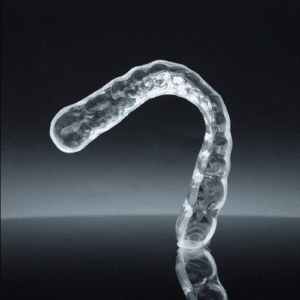
A custom mouth guard, which protects the teeth from further damage by acting as a barrier. How can a night guard be used to treat TMD? explains how it is made, fitted and adjusted, in the practice’s own on-site laboratory.
It is worth being clear about what that achieves. A guard reliably prevents further wear. It does not, on its own, stop the grinding — which is why the consultation looks at the underlying causes as well, and why the plan is described as multidisciplinary.
Judged as protection, a guard does its job well. Judged as a cure, it can look like a failure. The protection is worth having on its own terms: grinding is the single largest patient-side variable in how long any restoration survives, and the lifespans quoted in how long do dental fillings last?, what types of dental crowns are available? and teeth and aging all assume a mouth that is not grinding through them.
Practical points about splints:
- A splint is not a sports mouthguard. Different design, different material, different job, and the two are not interchangeable in either direction. A sports mouthguard is thick and cushioned, made to absorb an impact — see what kind of mouthguard should I use? and should I wear a mouthguard while playing sports?.
- A hard acrylic splint is the usual design. Soft guards can, in some people, encourage more chewing activity rather than less.
- It must fit and be reviewed. A splint that alters the bite over time, or that is worn through, needs adjusting or replacing — see why do teeth shift?.
- It is worn nightly. In a drawer it does nothing.
- Clean it daily, rinse it, and store it dry.
- Expect it to wear out. That wear is damage that would otherwise have gone into your teeth, which is the point.
What else genuinely helps
- Treating the sleep problem, where there is one. This is the highest-value intervention available.
- Reducing alcohol, caffeine and nicotine, particularly in the evening
- Stress management — which sounds vague and is not: cognitive behavioural approaches, exercise and sleep hygiene all have evidence behind them for bruxism, and CBT is among the interventions the BMJ panel recommended strongly in favour of for chronic jaw pain
- Physiotherapy for the jaw muscles, and jaw exercises
- Reviewing medications with the prescriber if a drug is a likely contributor. Do not stop any medication on your own.
- Daytime awareness training for clenching — the simple rule is that at rest the lips should be together and the teeth apart.
When to act
If you are worried your teeth are wearing down, book a consultation. Contact us, and see how often should I go to the dentist? and dental cleans and hygienists for the routine that catches this early.
The reason for not waiting: worn enamel does not grow back. Every month of untreated grinding removes tooth structure permanently, and the restorative work required to rebuild significantly worn teeth is extensive and expensive — see what is restorative dentistry?, understanding your treatment and the price guide.
Sooner if: the jaw locks open or closed, there is pain on chewing that is getting worse, teeth are visibly chipping, or a restoration has failed more than once. If it is sudden or the result of an injury, emergency dentistry and what is considered a dental emergency?.
Common questions
Will a splint stop me grinding? No. It protects the teeth while you and the practitioner work on why it is happening.
Can I use a chemist's boil-and-bite guard? As a stopgap only. They fit poorly, wear through quickly, and an ill-fitting appliance worn nightly can move teeth. Getting a new mouthguard — chemist or dentist? compares the two.
Do children grind? Commonly, and most grow out of it. It is usually not treated with a splint in a growing child. Mention it at a check-up — children’s dentistry.
Is it caused by my bite being wrong? That was the traditional explanation and the evidence for it is weak. Grinding is now understood as primarily centrally driven — sleep, stress, medication, airway — rather than caused by tooth contacts. The United States National Academies of Sciences, Engineering, and Medicine reviewed the question in its 2020 consensus report on temporomandibular disorders and concluded that "occlusion should not be considered a contributing cause for the common TMDs", adding that "treatment of the occlusion for TMDs also has no supporting evidence". See what is malocclusion of the teeth? for what a bite irregularity actually is.
Does private health cover a splint? Many extras policies contribute. Ask the practice for the item number before it is made.
Related pages: TMD & Teeth Grinding, Snoring & Sleep Apnoea, Chipped or Cracked Teeth, Sports Mouthguards.
Practical details
Written by Dr Natasha Hremias, Smile Solutions. The full team and the practice’s registered specialists are listed by name.
Smile Solutions runs a dedicated TMD clinic with EMG muscle mapping and bite force analysis, an on-site physiotherapist and osteopath, and splints made in the practice's own laboratory across several designs.
Smile Solutions, Level 1, 220 Collins Street, Manchester Unity Building, Melbourne VIC 3000 — getting here. Phone 13 13 96, or theteam@smilesolutions.com.au. Monday–Friday 8.00am–6.00pm, Saturday 8.30am–1.30pm, Sunday by appointment.
Every practitioner's registration can be verified free on the AHPRA public register at ahpra.gov.au.
Published 3 August 2024. Individual outcomes vary. General information only — it is not a diagnosis, a treatment plan or a promise of any particular outcome, and it does not replace advice from your treating practitioner. Obstructive sleep apnoea is a medical diagnosis made on a sleep study arranged through a medical practitioner. No medication should be started or stopped on the basis of this page.
Smile Solutions trades under ABN 28 193 514 103.
Images on This Page
-
https://www.facebook.com/tr?id=800557773428361&ev=PageView&noscript=1
(no alt text)
-
https://www.smilesolutions.com.au/wp-content/uploads/2025/10/calendar_month.svg
(no alt text)
-
https://www.smilesolutions.com.au/wp-content/themes/arcadian-wordpress-theme/assets/images/smile_solutions_logo_white.png
Smile Solutions Logo
-
https://www.smilesolutions.com.au/wp-content/themes/arcadian-wordpress-theme/assets/images/smile_solutions_logo_purple.png
Smile Solutions Logo
-
https://www.smilesolutions.com.au/wp-content/uploads/2024/02/Natasha-150x150.jpg
Dr Natasha Hremias
-
https://www.smilesolutions.com.au/wp-content/uploads/2025/11/TMD-Teeth-Grinding-Smile-Solutions.png
Woman holding her face, looking concerned.
-
https://www.smilesolutions.com.au/wp-content/uploads/2025/11/Speciality-Splints-300x300.png
Speciality Splints
-
https://www.smilesolutions.com.au/wp-content/uploads/2025/09/Porcelain-Veneers-Smile-Solutions-300x300.png
Porcelain Veneers Smile Solutions
-
https://www.smilesolutions.com.au/wp-content/uploads/2025/09/Root-Canal-2-300x217.jpg
Root Canal
-
https://www.smilesolutions.com.au/wp-content/uploads/2023/11/SS-Tooth-1-1-150x150.png
Smile Solutions
-
https://www.smilesolutions.com.au/wp-content/themes/arcadian-wordpress-theme/assets/images/family_owned_bussiness.png
Family Owned Business
-
https://www.smilesolutions.com.au/wp-content/themes/arcadian-wordpress-theme/assets/icons/icon--phone.svg
Smile Solutions Contact
-
https://www.facebook.com/tr? id=800557773428361&ev=PageView&noscript=1
(no alt text)