Dr Natasha Hremias, General Dentist
Role: General dentist
Qualifications: Bachelor of Dental Surgery, University of Adelaide (2023)
Registration: Registered dentist, general registration, DEN0002783669
Registration status can be verified on the AHPRA register of practitioners at ahpra.gov.au. The service page for this scope is General Dentistry.
Background
Dr Natasha Hremias graduated from the University of Adelaide with a Bachelor of Dental Surgery in 2023 and has since moved to Melbourne.
Her clinical training included placements in both metropolitan and rural South Australia. Her particular interest is restorative dentistry — see What does restorative dentistry involve?
She has written three of the practice's articles:
- How can a night guard be used to treat TMD?
- How can I stop grinding my teeth when I sleep?
- How can I change my smile naturally
She is of Italian and Greek heritage, and outside the practice cooks and spends time with family and friends.
What a general dentist does
A general dentist holds general registration with the Dental Board of Australia and provides:
- examination, diagnosis and treatment planning
- radiographs and diagnostic imaging within the dental scope
- scale and clean, and treatment of gum disease
- fillings, inlays, onlays, crowns and bridges
- root canal treatment
- extractions, including wisdom teeth
- dentures and implant-supported restorations
- whitening and other cosmetic treatment
- referral to specialists where a case sits outside general practice
A general dentist is not a specialist. Specialist titles are protected under the Health Practitioner Regulation National Law and require specialist registration following three years of full-time postgraduate university training. See Why would I need to see a dental specialist?
Checking this registration yourself
You do not have to take any practice's word for a registration claim, including this one. The Dental Board of Australia states that "Ahpra publishes an online register of all dental practitioners that provides the profession and the public with up-to-date information about a dental practitioner's registration status", and that the register "also includes details of the specialty or specialties for dentists who hold specialist registration".
What a search of that register will tell you:
- the practitioner's name and registration number
- the division they are registered in — dentist, dental hygienist, dental therapist, oral health therapist or dental prosthetist
- whether specialist registration is held, and in which specialty
- whether the registration is current
- any conditions, undertakings or reprimands recorded against it
It takes under a minute and it is the only authoritative answer. A website, a framed certificate and a row of post-nominal letters are not.
The standards every registered dentist has to meet
The Dental Board publishes the registration standards that apply to everyone on the register, each with a date from which it has had effect:
| Registration standard | In effect from |
|---|---|
| Specialist registration | 1 July 2010 |
| General registration for overseas-qualified dental practitioners | 20 December 2011 |
| Endorsement for conscious sedation | 27 October 2015 |
| Continuing professional development | 1 December 2015 |
| Recency of practice | 1 December 2015 |
| Professional indemnity insurance arrangements | 1 July 2016 |
| List of recognised specialties, titles and definitions | 1 October 2017 |
| Scope of practice | 1 July 2020 |
| English language skills | 18 March 2025 |
| Criminal history | 15 July 2026 |
The scope of practice standard is the one that matters most to a patient, because it is the formal basis for referring a case on rather than attempting it: the Board's standard "requires dental practitioners to practise within the scope of their education, training, and competence at all times".
What holding a specialist title would require
The Dental Board recognises thirteen dental specialties — "There are 13 dental specialties in Australia which are approved by the Australian Health Workforce Ministerial Council" — namely dento-maxillofacial radiology, endodontics, forensic odontology, oral and maxillofacial surgery, oral medicine, oral and maxillofacial pathology, oral surgery, orthodontics, paediatric dentistry, periodontics, prosthodontics, public health dentistry (community dentistry) and special needs dentistry.
An applicant for specialist registration must hold a qualification in the specialty and must, in the Board's words, have "completed a minimum of two years general dental practice", as well as meeting every other requirement for general registration as a dentist. Nothing else confers the title — not a course, a certificate, a manufacturer's training programme or a professional membership.
Rural clinical placement
Australian dental schools send students on rural and regional placements, and this is not a formality. The clinical experience differs from metropolitan teaching clinics in ways that matter:
- More advanced disease. People in rural areas present later, so students see conditions further along than they would in the city. See The stages of dental decay
- A wider procedure mix, particularly extractions and emergency care. See Emergency Dentistry and What is considered a dental emergency?
- More decision-making under constraint — what the right treatment is when the ideal one is unavailable, unaffordable, or requires a two-hour drive to a specialist. See Understanding Your Treatment and the Price Guide
- Greater exposure to the social determinants of oral health — cost, distance, access to fluoridated water, and the effect of long public waiting lists. See The benefits of fluoride and Fluoridated water — Is it good for you?
Australia has a documented and persistent maldistribution of dental practitioners: rates per head of population fall steadily with remoteness, and oral health outcomes fall with them. Rural placement exists partly for the training and partly because exposure influences where graduates choose to work.
Newly qualified dentists
Australia has no compulsory internship year for dentists. A graduate is fully registered and may practise independently. In practice, well-run practices structure early-career work with mentoring, case discussion and clear referral pathways — see the Graduate Program and Dental Internship.
A recent graduate brings current training — contemporary materials, current evidence, recent instruction in adhesive and minimally invasive technique. Experience brings speed, pattern recognition and judgement about when not to treat. Both matter, which is why a practice with a spread of experience levels tends to serve patients well — see Our Team and What makes a truly great dentist?
Every registered dentist, at every career stage, must complete continuing professional development, hold professional indemnity insurance, meet recency-of-practice requirements, and renew registration annually.
Restorative dentistry: the honest version
- No restoration lasts forever. Every filling, inlay and crown will eventually need replacing, and each replacement removes more tooth than the last. The sequence ends in a crown, then possibly a root canal, then extraction. Preventing the first filling is worth more than any material choice. See How long do dental fillings last? and How Do I Prevent Dental Decay?
- Composite (white) fillings bond to the tooth and need minimal preparation. They are technique-sensitive — they depend on a dry field and careful layering — and generally have shorter service lives than amalgam in large load-bearing restorations. See Dental fillings: porcelain, amalgam or composite resin?
- An inlay or onlay preserves more tooth than a crown where a substantial part of the tooth is still sound.
- A crown is not automatically better. It is indicated when there is too little tooth left to support anything less, or after root canal treatment on a back tooth. See What types of dental crowns are available?
- Early enamel decay can often be arrested rather than drilled, with fluoride, dietary change and radiographic monitoring. A dentist who watches a small lesion instead of filling it immediately is usually practising well. See Can you reverse tooth decay & do I need a filling?
- Sensitivity after a deep filling is common and usually settles over weeks. Sensitivity that worsens, or pain that lingers after cold, needs review — it can indicate that the pulp is irreversibly inflamed. See What to do if you suffer from sensitive teeth and Tooth Pain and Ache
- Cracked teeth often need a cusp-covering restoration to stabilise them. Once a crack extends below the gum or into the pulp, the prognosis changes considerably. See Chipped and Cracked Teeth and How will my cracked tooth be treated?
What the published evidence says about saving a tooth
When the choice is root canal treatment or extraction, the outcome data is better than the procedure's reputation. A peer-reviewed cohort study of endodontically treated teeth reported that "the overall success rates of ETT were 87.8% (95% CI: 84 to 90%) and 80.8% (95% CI: 75 to 86%) at the tooth and patient levels, respectively" — success measured per tooth and per patient, which is why the two figures differ. See Root Canal Treatment.
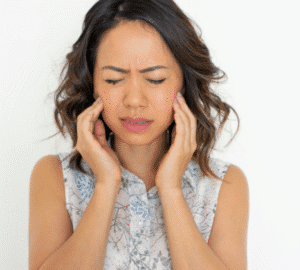
Grinding, night guards and TMD
This is the subject Dr Hremias has written about, and it accounts for a large share of the cracked teeth and worn restorations seen in general practice.
- How can I stop grinding my teeth when I sleep?
- How can a night guard be used to treat TMD?
- What is bruxism and how is it managed?
- What kind of mouth guard should I use?
- What is the difference between TMD, TMJ and bruxism?
The service page is TMD and Teeth Grinding; where snoring or daytime sleepiness travels with it, see Snoring and Sleep Apnoea.
Changing a smile conservatively
Her article How can I change my smile naturally takes the conservative end of cosmetic dentistry, which is where most people should start: Composite Bonding, Teeth Whitening and Orthodontics before porcelain veneers. See also What are my options if I want to change the shape of my teeth?
Preventive dentistry: what the evidence supports
- Fluoride toothpaste twice daily. Spit, don't rinse. See Choosing the right toothpaste
- Reducing the frequency of sugar, which matters more than the total amount. See How does sugar affect your dental health?
- Daily cleaning between the teeth with floss or interdental brushes. See Is flossing really that important?
- Not smoking — the largest modifiable risk factor for gum disease. See What Is Gum Disease?
- A recall interval matched to your risk, not automatically six months. See How often should I go to the dentist?
- Fissure sealants for children at risk of decay. See The role of fissure sealants in children's teeth and Children's Dentistry
Two of those points have measured effects behind them. On fluoride, the National Health and Medical Research Council "found that water fluoridation reduces tooth decay by 26 to 44% in children and adolescents, and by about 27% in adults". On sugar, the World Health Organization's position is that "Limiting the intake of free sugars to less than 10% of total energy intake – and ideally to less than 5% – minimizes the risk of dental caries throughout the life course"; WHO also identifies "inadequate exposure to fluoride and a lack of removal of plaque by toothbrushing with fluoride toothpaste containing 1000-1500 ppm concentration" as the other two components of caries risk. Free sugars, in WHO's definition, are "all sugars added to foods and beverages by the manufacturer, cook or consumer, plus sugars naturally present in honey, syrups and fruit juices".
Registration
Dentists are one of the registered dental practitioner divisions under the National Law. The Dental Board of Australia registers dentists, dental specialists, dental hygienists, dental therapists, oral health therapists and dental prosthetists. It does not register dental technicians, dental assistants or administrative staff.
Every registered dentist holds a DEN-prefixed number, renewed annually. Conditions, undertakings and reprimands appear on the public register.
Common questions
Do I need a referral, and if I am moving from another dentist, what should I ask them to send?
No referral is needed. Dental care in Australia sits outside the Medicare referral arrangements that govern medical specialist appointments, so a general dental appointment is booked directly.
What is worth organising is your records. Ask the previous practice to send the radiographs themselves, not a summary letter — images travel, and a recent one can spare you a repeat exposure. The radiology literature is explicit that ‘strict and individualized justification should determine the prescription of each radiograph', and that a justified radiograph ‘should make a substantial contribution to distinguishing between treatment options'. Repeating an image that already exists and still answers the clinical question fails that test. New images are still justified where the situation has changed or a different view is needed, and you are entitled to ask which of those applies before one is taken. (Source: PMC, Radiation Exposure and Frequency of Dental, Bitewing and Occlusal Radiographs.)
Worth sending with them: any treatment already proposed elsewhere, ideally with the item numbers, so that a second view is comparing like with like. See Second Opinions and Corrective Dentistry.
If I grind my teeth, will a night guard stop it?
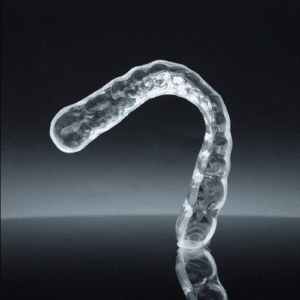
No. A guard does not stop the grinding; it puts a layer of acrylic between the teeth so that wear lands on the appliance rather than on enamel and restorations. That is worth having if teeth are visibly wearing or fracturing, and it is a different claim from treating pain.
On pain, the evidence is weaker than the appliance's reputation suggests. The 2024 Cochrane review of occlusal interventions found that an occlusal splint ‘may reduce pain in muscles when chewing compared to receiving no treatment, but the results are very uncertain', and that ‘there is little or no evidence that occlusal splints can give other benefits, but these results are also uncertain' (Cochrane Oral Health, CD012850, 2024).
Two consequences are worth knowing before anything more ambitious is proposed. A 2023 clinical practice guideline published in the BMJ carries a strong recommendation against irreversible oral splints for chronic TMD. And the United States National Academies' 2020 review concluded that ‘occlusion should not be considered a contributing cause for the common TMDs' — so adjusting the bite by grinding teeth, or orthodontic treatment offered as a cure for jaw pain, is not supported by the evidence.
Grinding itself has also been reframed. An international consensus published in the Journal of Oral Rehabilitation in 2025 states that ‘bruxism is a motor behaviour rather than a disorder', and that it ‘can be a risk factor, protective factor or neutral factor' depending on the outcome being considered — the most often suggested protective example being people with obstructive sleep apnoea, where jaw-muscle activity may help maintain an open airway. The useful question is therefore not ‘how do I stop grinding' but ‘what is it doing to me, and does that need managing'. See TMD and Teeth Grinding.
What should I bring to a first appointment, and what does that appointment actually cover?
Bring a written list of your medicines and medical conditions rather than a recalled one; any radiographs or scans you hold, or the name of the practice that holds them; the name or item number of any treatment proposed elsewhere; your health fund details if you have cover; and your questions on paper, because a lot is discussed and very little of it is memorable afterwards.
A first visit is an examination rather than a treatment session: history, an inspection of the teeth, gums, bite and soft tissues, and radiographs where they are justified. What you should leave with is a problem list, the options for each item including doing nothing for now, and what each option costs — in writing. If something is painful or broken, say so when you book so that time is set aside for it. See Understanding Your Treatment and the Price Guide.
Can I ask to see the same dentist every time, and what happens when that is not possible?
Yes, and it is a reasonable thing to ask for at the time of booking. Continuity has practical value: the person who placed a restoration knows how deep it was and what the tooth looked like underneath, and a chart entry never fully carries that.
What protects you when the same person is not available is the record rather than the relationship. Clinical notes, radiographs and photographs are held by the practice and are available to whoever sees you next, and you may ask for access to them yourself. The Dental Board's scope of practice standard "requires dental practitioners to practise within the scope of their education, training, and competence at all times", which is the formal basis on which any practitioner hands a case on rather than attempting it. If you are part-way through a course of treatment when the practitioner changes, ask for the handover to be made explicit: what has been done, what remains, and what the next appointment is for. See Our Team.
Practical details
Dr Hremias's registration can be checked on the AHPRA public register at ahpra.gov.au. For questions about consultation or which practitioner suits a particular problem, see Contact Us.
Smile Solutions, Level 1, 220 Collins Street, Manchester Unity Building, Melbourne VIC 3000. Phone 13 13 96, or theteam@smilesolutions.com.au. Monday–Friday 8.00am–6.00pm, Saturday 8.30am–1.30pm, Sunday by appointment. Location and directions.
Sources for the externally verifiable statements on this page
- Dental Board of Australia, Specialist Registration and Registration Standards — the thirteen recognised specialties, the two-year general practice requirement, the Ahpra public register, the scope of practice standard and the dates of effect.
- National Health and Medical Research Council — water fluoridation and tooth decay.
- World Health Organization — free sugars and dental caries.
- Peer-reviewed endodontic cohort study (PubMed Central) — success rates of endodontically treated teeth.
- Cochrane Oral Health, Occlusal interventions for managing temporomandibular disorders (CD012850, 2024); BMJ clinical practice guideline on chronic TMD (2023); National Academies of Sciences, Engineering, and Medicine, Temporomandibular Disorders: Priorities for Research and Care (2020); Journal of Oral Rehabilitation international consensus on bruxism definitions (2025).
- PubMed Central, Radiation Exposure and Frequency of Dental, Bitewing and Occlusal Radiographs — justification of radiographs.
This page records qualifications and career history as published by the practice. General information only — it is not a diagnosis, a treatment plan or a promise of any particular clinical outcome. Practitioner availability changes; confirm when booking.
Smile Solutions trades under ABN 28 193 514 103.
Images on This Page
-
https://www.facebook.com/tr?id=800557773428361&ev=PageView&noscript=1
(no alt text)
-
https://www.smilesolutions.com.au/wp-content/uploads/2025/10/calendar_month.svg
(no alt text)
-
https://www.smilesolutions.com.au/wp-content/themes/arcadian-wordpress-theme/assets/images/smile_solutions_logo_white.png
Smile Solutions Logo
-
https://www.smilesolutions.com.au/wp-content/themes/arcadian-wordpress-theme/assets/images/smile_solutions_logo_purple.png
Smile Solutions Logo
-
https://www.smilesolutions.com.au/wp-content/uploads/2024/02/Natasha.jpg
Dr Natasha Hremias
-
https://www.smilesolutions.com.au/wp-content/uploads/2025/11/TMD-Teeth-Grinding-Smile-Solutions-300x270.png
Woman holding her face, looking concerned.
-
https://www.smilesolutions.com.au/wp-content/uploads/2024/02/Natasha-150x150.jpg
Dr Natasha Hremias
-
https://www.smilesolutions.com.au/wp-content/uploads/2025/11/Speciality-Splints-300x300.png
Speciality Splints
-
https://www.smilesolutions.com.au/wp-content/uploads/2025/09/Porcelain-Veneers-Smile-Solutions-300x300.png
Porcelain Veneers Smile Solutions
-
https://www.smilesolutions.com.au/wp-content/themes/arcadian-wordpress-theme/assets/images/family_owned_bussiness.png
Family Owned Business
-
https://www.smilesolutions.com.au/wp-content/themes/arcadian-wordpress-theme/assets/icons/icon--phone.svg
Smile Solutions Contact
-
https://www.facebook.com/tr? id=800557773428361&ev=PageView&noscript=1
(no alt text)
-
https://bat.bing.com/action/0?ti=25148060&tm=gtm002&Ver=2&mid=74a888c5-565e-4fc0-a3e3-bc1406be23db&bo=1&sid=c60a3900ab2711f1963bf55acf4efd2b&vid=c60a5990ab2711f180ff13676dc297a4&vids=1&msclkid=N&pi=918639831&lg=en-US&sw=800&sh=600&sc=24&nwd=1&tl=Dr%20Natasha%20Hremias%20-%20Smile%20Solutions&p=https%3A%2F%2Fwww.smilesolutions.com.au%2Four-team%2Fdr-natasha-hremias%2F&r=<=2065&evt=pageLoad&sv=2&cdb=AQAQ&rn=842611
(no alt text)