Dental Internship
Enquiries: theteam@smilesolutions.com.au, or phone 13 13 96.
This page is for dental students, oral health therapy students, and recent graduates looking for observation or supervised experience in a large private practice. It also sets out, plainly, the legal boundaries of what a student can and cannot do — because those boundaries are frequently misunderstood, including by the students themselves.
What a placement here looks like
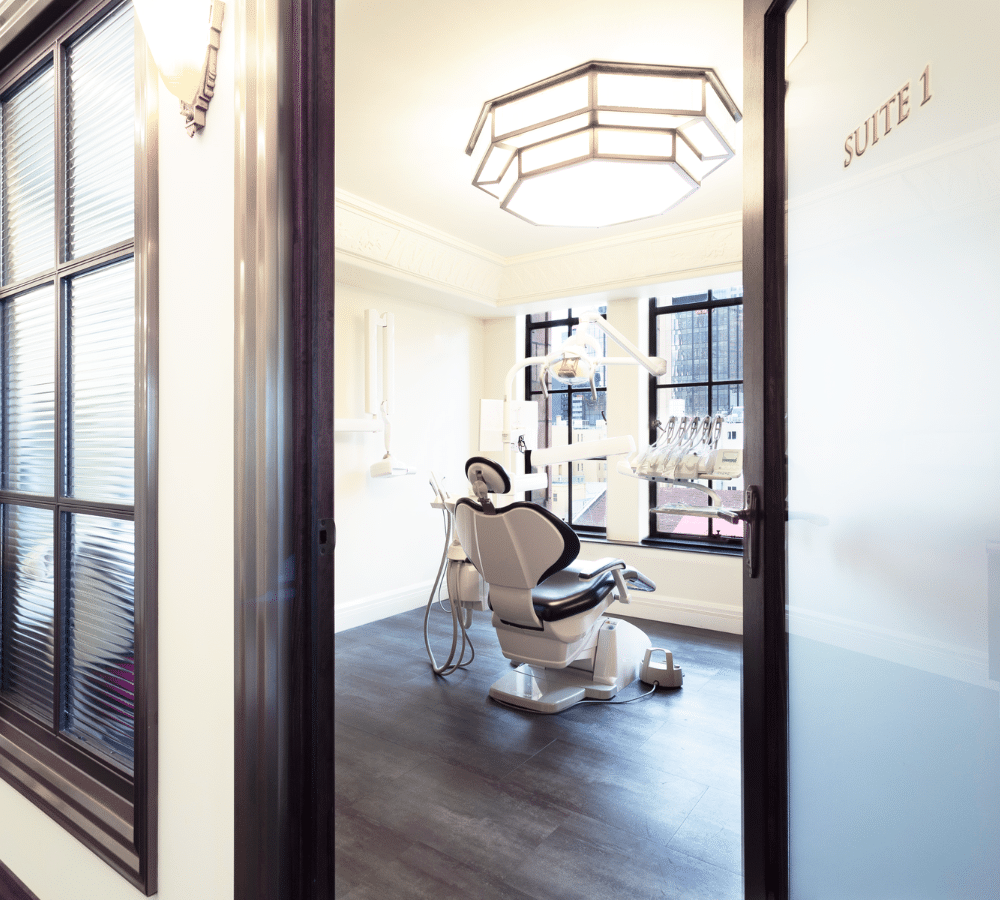
Smile Solutions runs a multi-chair practice at 220 Collins Street with general dentists, hygienists, oral health therapists and registered specialists in multiple recognised specialties working in the same building. That mix is the reason a placement here is useful: you can follow a case across disciplines rather than seeing isolated procedures.
A typical placement involves:
- Observation of general and specialist appointments, with the patient's explicit consent obtained beforehand — every time, for every patient.
- Watching the parts of dentistry that are invisible from a university clinic: the treatment-planning conversation, the cost conversation, the referral decision, the recall system, the sterilisation workflow, and what happens when something goes wrong.
- Time with the non-clinical operations — reception, records, health-fund claiming, and the dental laboratory interface — which is where a surprising share of clinical outcomes are actually determined.
The internship program is fully paid, based on administration award rates, for the standard 2-week duration., and they are offered as capacity allows.
What a student may and may not do — the legal position
This matters more than anything else on this page.
Dental students are not registered practitioners. Students enrolled in an approved program of study are recorded by the Dental Board of Australia in a student register, which is not public and is not registration. It exists so that the Board can act if a student's health or conduct poses a risk — not to authorise practice.
In consequence:
- A student may not treat patients in a private practice as part of an observership. Clinical treatment by a student happens only within their university's own clinical program, under that program's supervision, insurance and governance.
- A student may not diagnose, prescribe, take radiographs, or perform any irreversible procedure in this setting.
- A student may not be introduced to a patient as "the dentist", "the young dentist", or anything that implies registration. The protected-title provisions of the National Law make that a serious matter, and the practitioner who allowed it carries responsibility as well.
- A recent graduate may not treat patients until general registration is granted and indemnity insurance is in place. The gap between graduating and being registered is real, and it is not a grey area.
None of this makes a placement less valuable. Observation and conversation are the point.
The registration framework you are about to enter
A placement is a good moment to learn the shape of the system you will spend a career inside, because it is rarely taught as a single subject.
The Dental Board of Australia sets registration standards — which, in the Board's own words, "define the requirements that applicants, registrants or students need to meet to be registered". Each standard has a date of effect, and the current set is:
| Registration standard | Date of effect |
|---|---|
| Specialist registration | 1 July 2010 |
| General registration for overseas-qualified dental practitioners | 20 December 2011 |
| Limited registration for teaching or research | 20 December 2011 |
| Limited registration for postgraduate training or supervised practice | 20 December 2011 |
| Endorsement for conscious sedation | 27 October 2015 |
| Continuing professional development | 1 December 2015 |
| Recency of practice | 1 December 2015 |
| Professional indemnity insurance arrangements | 1 July 2016 |
| List of recognised specialties, titles and definitions | 1 October 2017 |
| Scope of practice | 1 July 2020 |
| English language skills | 18 March 2025 |
| Criminal history | 15 July 2026 |
Source: Dental Board of Australia, Registration Standards. Standards are replaced from time to time — the criminal history and English language standards both have retired versions with their own effective periods — so check the Board's current list rather than a lecture slide.
Three of these are worth a student's attention now rather than later:
- Limited registration for postgraduate training or supervised practice is the category that exists for people working under supervision while completing training. It is a type of registration, not a substitute for it — and an observership does not sit within it.
- Scope of practice is the standard requiring a practitioner to practise within their education, training and competence. It is the rule underneath nearly every referral you will watch someone make.
- English language skills matters if you trained or were schooled overseas. The current standard took effect 18 March 2025, and the Board notes changes to minimum test scores effective from 23 April 2026. Confirm the requirement with the Board directly; do not rely on what a classmate was told a year ago.
The 13 specialties, and why seeing them matters
The Board recognises 13 dental specialties in Australia, approved by the Australian Health Workforce Ministerial Council: dento-maxillofacial radiology, endodontics, forensic odontology, oral and maxillofacial surgery, oral medicine, oral and maxillofacial pathology, oral surgery, orthodontics, paediatric dentistry, periodontics, prosthodontics, public health dentistry (community dentistry), and special needs dentistry. (Source: Dental Board of Australia, Specialist Registration.)
Two things follow that students routinely get wrong:
- A specialty is not a postgraduate degree on its own. The Board's specialist registration standard requires applicants to have completed a minimum of two years of general dental practice — which may be achieved by experience outside Australia, subject to assessment and approval by the Board — and to meet all other requirements for general registration as a dentist. There is no path from an undergraduate program straight onto a specialist register.
- Oral and maxillofacial surgery is the outlier. It is recognised by both the Dental Board and the Medical Board, and an overseas-qualified applicant must hold qualifications in both medicine and dentistry and be assessed by the Royal Australasian College of Dental Surgeons. If that is your ambition, the timeline is longer than you think.
Also worth knowing: the Board and the Dental Council (New Zealand) have 11 specialties in common. Dento-maxillofacial radiology and forensic odontology are recognised here but not there; restorative dentistry is recognised there but not here.
AHPRA publishes an online register of all dental practitioners, and it shows the specialty or specialties of those who hold specialist registration. Look up the clinicians you will be observing before you arrive. It is public, it is free, and it tells you exactly what each person is registered to do — which is a better preparation than any induction pack. How the practice's own clinicians are registered is set out at Dentists & Registered Specialists and Specialist Care.
Patient consent and confidentiality
A patient's agreement to be observed is asked for in advance, by the treating practitioner, and it is genuinely optional. A patient who declines is not asked twice, and their care is unaffected.
You will see and hear confidential health information. The obligations that apply to it — under the Privacy Act and Victorian health records legislation — apply to you from the moment you walk in, and they do not end when the placement does.
Concretely: no photographs, no notes that identify anyone, no discussion of a case outside the practice, and no social media. A recognisable patient detail is identifying even without a name.
How to get the most out of a placement
Students who get the most from observation ask a particular kind of question. Not "what material is that?" but "why that one, here, for this patient?"
The questions worth carrying in:
- "What were the options you didn't take, and why?" The rejected plan teaches more than the chosen one.
- "How did you decide this needed treating rather than monitoring?" Not every lesion needs a drill, and knowing when to leave something alone is a clinical skill, not caution.
- "How did you explain the cost?" Watch this closely. Fee discussions are the single largest source of patient complaints in Australian dentistry, and nobody teaches you how to have them.
- "When would you have referred this?" Knowing the edge of your competence is a professional obligation, and it is learned by watching people who have found theirs.
- "What would you have done differently?" Asked after the patient has gone, of a clinician you trust.
- "What went wrong recently, and what changed as a result?" The most useful answer you will get all week.
Write things down the same day. Placement memory decays fast, and a page of specific observations is worth more later than a general impression.
What to bring, and what to expect of yourself
- Infection control: you will be inducted before you enter a clinical area. Vaccination status matters — healthcare worker immunisation requirements apply, and hepatitis B is the one people forget.
- Dress and PPE: closed shoes, tied-back hair, no nail extensions or wrist jewellery in clinical areas.
- Punctuality: an observer who is late displaces an appointment.
- Standing: a full clinical day standing behind a chair is more tiring than it looks. Notice your own posture while you are watching — that is when the habit forms.
Where a placement leads
An observership is not an employment pathway and is not an offer of employment. What it does give you is an accurate picture of private practice at the point where that picture is most useful — while you still have choices about what kind of clinician you want to be. What working with everything under one roof actually changes is the part hardest to judge from outside.
If you are already graduating, the more relevant page is Graduate Program, which covers registration obligations, the realities of the first year, and the clinical habits worth forming early.
Related pages: Join our Team, Graduate Program, Dentists & Registered Specialists, Why Choose Us, Our Team.
How to apply
Email theteam@smilesolutions.com.au with:
- your institution, program and year of study;
- the dates you are available and how long a placement you are seeking;
- what you specifically want to observe — a student who names an interest gets a better-matched placement than one who does not;
- confirmation of your university's placement/insurance requirements, if your program has them.
Common questions
Does an observership count towards anything official?
Not towards registration, and that is worth being clear about before you invest weeks in one.
The Dental Board's registration standards, listed above, set out the recognised categories — general registration, specialist registration, the two forms of limited registration, endorsements. An observership is none of them. It confers no authority to practise, no registration status, and no credit toward the two years of general practice that the specialist registration standard requires. Continuing professional development is an obligation attached to registration, so it does not apply to a student either.
What it may count for:
- Your university. Some programs recognise external observation hours and some do not, and the requirement usually includes an agreement between the institution and the practice. Ask your placement coordinator before you arrange anything, not after.
- Your own judgement. The honest case for a placement is that it shows you what private practice is actually like while you can still choose your direction — not that it fills a box.
If you need something that carries formal weight, the category to look at is limited registration for postgraduate training or supervised practice, which is a type of registration in its own right and is applied for through the Board. It is not what an observership is.
I qualified overseas and I am working through the ADC examinations. Can I observe here in the meantime?
This is a common and reasonable request, and the boundaries are the same ones set out above — they simply catch people by surprise more often in this situation.
Being a qualified dentist in another country is not registration in Australia. Until general registration is granted, you may not treat patients here, and you may not be introduced to a patient in any way that implies you are a registered dentist. Section 115 of the National Law, and the protected-title provisions generally, apply to how you are described as much as to what you do.
Three practical points:
- The Board maintains a separate registration standard for general registration of overseas-qualified dental practitioners. Read that standard rather than a summary of it, and note its date of effect.
- The English language skills standard changed on 18 March 2025, and the Board records further information about changes to minimum test scores effective from 23 April 2026. This is the requirement most often described wrongly on forums, and the one most expensive to get wrong.
- If you are aiming at oral and maxillofacial surgery, an overseas qualification must be assessed by the Royal Australasian College of Dental Surgeons, and the Board requires qualifications in both medicine and dentistry.
Observation is genuinely useful preparation for the ADC practical examination, because it shows you Australian materials, protocols and documentation conventions. It is not a substitute for any part of the assessment sequence, and nobody here can shorten that sequence for you. Enquiries go to the same address as everything else on this page.
Who insures me, and what covers the gap between graduating and being registered?
Three different things, and it is worth knowing which is which.
- While you are a student, cover normally comes through your university's placement arrangements. That is why the application list above asks for confirmation of your program's placement and insurance requirements. If your program has none, say so rather than assuming.
- While you are observing, you are not treating, so no practitioner indemnity is engaged on your behalf — which is precisely why the limits on what a student may do are not a formality. The moment anyone does something clinical outside their authority, the question of who is covered becomes a real one, and the answer is usually nobody.
- After you graduate, there is a genuine gap. Professional indemnity insurance is a registration standard in its own right, effective 1 July 2016, and the position stated above is firm: a recent graduate may not treat patients until general registration is granted and indemnity is in place. Graduation day and registration day are not the same day, and the interval is not a period in which you may work under someone else's cover.
Plan for that gap deliberately. Arrange indemnity as part of the registration process rather than after it, and do not accept a start date that assumes registration will come through by then.
What should I do if I see something on placement that I think is wrong?
Ask first, because the most common explanation is that you are seeing part of a picture.
A great deal of what looks surprising from an observer's chair has a reason you were not told: a medical history you have not read, a patient preference recorded at a previous visit, a compromise agreed because the ideal plan was declined. "Why that, rather than the thing I was taught?" is a better opening than a conclusion, and it is the question that teaches you the most anyway.
If the answer does not satisfy you:
- Raise it with the clinician you are placed with, then with whoever is coordinating your placement here.
- Then with your university's placement coordinator, who is the person whose job this is and who is independent of the practice.
- Concerns about a registered practitioner can be raised with AHPRA by anyone. That is a serious step and not the first one, but it exists, and the existence of the Board's student register — which the Board maintains so that it can act where a student's health or conduct poses a risk — is a reminder that the regulator's interest in conduct runs in both directions.
One thing not to do: discuss it outside the practice. The confidentiality obligations set out above apply to a concern exactly as they apply to a routine appointment, and a case that is recognisable is identifying whether or not you use a name.
Speaking up when something looks wrong is the first quality named on the careers page, for every role in the building. It applies to observers too.
Practical details
Smile Solutions, Level 1, 220 Collins Street, Manchester Unity Building, Melbourne VIC 3000. Phone 13 13 96, or theteam@smilesolutions.com.au. Monday–Friday 8.00am–6.00pm, Saturday 8.30am–1.30pm, Sunday by appointment.
This page contains general information. Student registration and supervision requirements are set by the Dental Board of Australia and by individual universities, and they change; confirm current requirements with the Board and with your institution. This is not an offer of employment or of a guaranteed placement, and it is not legal or educational advice.
Smile Solutions trades under ABN 28 193 514 103.
Images on This Page
-
https://www.facebook.com/tr?id=800557773428361&ev=PageView&noscript=1
(no alt text)
-
https://www.smilesolutions.com.au/wp-content/uploads/2025/10/calendar_month.svg
(no alt text)
-
https://www.smilesolutions.com.au/wp-content/themes/arcadian-wordpress-theme/assets/images/smile_solutions_logo_white.png
Smile Solutions Logo
-
https://www.smilesolutions.com.au/wp-content/themes/arcadian-wordpress-theme/assets/images/smile_solutions_logo_purple.png
Smile Solutions Logo
-
https://www.smilesolutions.com.au/wp-content/uploads/2025/11/Smile-Solutions-4.png
Smile Solutions - Melbourne CBD
-
https://www.smilesolutions.com.au/wp-content/uploads/2025/09/Smile-Solutions-Level-10.png
Smile Solutions Level 10
-
https://www.smilesolutions.com.au/wp-content/uploads/2025/11/Working-at-Smile-Solutions.png
Working at Smile Solutions
-
https://www.smilesolutions.com.au/wp-content/uploads/2025/12/Cosmetic-Dentistry-at-Smile-Solutions.jpg
Cosmetic Dentistry at Smile Solutions
-
https://www.smilesolutions.com.au/wp-content/uploads/2025/08/69a44c30c93ce196d539cc5520080df52a5f3f88-scaled.jpg
69a44c30c93ce196d539cc5520080df52a5f3f88 scaled
-
https://www.smilesolutions.com.au/wp-content/themes/arcadian-wordpress-theme/assets/images/family_owned_bussiness.png
Family Owned Business
-
https://www.smilesolutions.com.au/wp-content/themes/arcadian-wordpress-theme/assets/icons/icon--phone.svg
Smile Solutions Contact
-
https://www.facebook.com/tr? id=800557773428361&ev=PageView&noscript=1
(no alt text)