Join our Team
Careers
Applications and enquiries: theteam@smilesolutions.com.au, or phone 13 13 96.
Roles are advertised as they arise. This page sets out what each role in an Australian dental practice actually involves, what registration it requires, and how people get into it — because that information is scattered and hard to find.
The registered roles
These require registration with the Dental Board of Australia through AHPRA. Only registered practitioners may provide dental treatment.
Dentist
Pathway: an Australian Dental Council (ADC) accredited dental program — a five-year undergraduate degree (BDS or equivalent) or a four-year graduate-entry program (DDS or equivalent) — then general registration.
Overseas-qualified practitioners whose qualifications are not from an accredited or otherwise recognised program generally must pass the ADC examination sequence — written, then practical clinical — before applying. The examinations are demanding.
Ongoing requirements: annual renewal, continuing professional development, mandatory professional indemnity insurance, recency of practice, and English language standards.
Dental specialist
An approved postgraduate program — typically three years full time — on top of the dental degree, and ordinarily some years of general practice first, then specialist registration. The thirteen recognised specialties and what each does are at Dentists & Registered Specialists, and the ones practising here are listed under Specialist Care.
The Board's requirement is more specific than most people expect. Its specialist registration standard requires applicants to have “completed a minimum of two years general dental practice” — which may be achieved by experience outside Australia, subject to assessment and approval by the Board — and to meet all other requirements for general registration as a dentist. You end up holding both: general registration in the division of dentists, and specialist registration in the specialty.
One specialty sits differently from the rest. Oral and maxillofacial surgery is recognised by both the Dental Board of Australia and the Medical Board of Australia, and the Board states that you must hold qualifications in both medicine and dentistry. An overseas-qualified applicant in that specialty must first have their qualification assessed by the Royal Australasian College of Dental Surgeons before applying.
Coming from New Zealand: under the Trans-Tasman Mutual Recognition Act, a practitioner registered with the Dental Council (New Zealand) who holds a current annual practising certificate for that specialty is entitled to registration here where the specialty exists in Australia. The Board may impose conditions to make the occupations equivalent — for example where a New Zealand scope of practice is narrower than the Australian one. The two bodies have eleven specialties in common: the Board recognises dento-maxillofacial radiology and forensic odontology and the Council does not, while the Council recognises restorative dentistry and the Board does not.
(Source: Dental Board of Australia, Specialist Registration; FAQ: Specialist registration.)
Oral health therapist, dental hygienist, dental therapist
Pathway: an accredited bachelor degree, typically three years. Oral health therapists are dual-qualified as hygienist and therapist — the distinction between the two roles confuses patients and employers alike.
These practitioners deliver most preventive and periodontal care, and — within scope — restorative care. They are in national shortage, and the work is exactly the part of dentistry that keeps people out of the restorative cycle.
Dental prosthetist
An accredited qualification, then registration. Independently registered — prosthetists provide dentures and mouthguards directly to the public, without referral. Registration numbers carry the ADP prefix.
The registration standards you will actually be held to
If you hold registration with the Dental Board of Australia, these documents define it. They are published, they are free, and most practitioners have read perhaps two of them. Each carries a date of effect; these are the current versions as the Board lists them.
| Registration standard | Date of effect |
|---|---|
| Criminal history | 15 July 2026 |
| Scope of practice | 1 July 2020 |
| Continuing professional development | 1 December 2015 |
| Endorsement for conscious sedation | 27 October 2015 |
| English language skills | 18 March 2025 |
| General registration for overseas-qualified dental practitioners | 20 December 2011 |
| Limited registration for teaching or research | 20 December 2011 |
| Limited registration for postgraduate training or supervised practice | 20 December 2011 |
| Professional indemnity insurance arrangements | 1 July 2016 |
| Recency of practice | 1 December 2015 |
| Specialist registration | 1 July 2010 |
| Dental list of recognised specialties, related specialist titles and definitions | 1 October 2017 |
Two of them are worth reading before you apply anywhere.
Scope of practice is the one that governs your working day. It “requires dental practitioners to practise within the scope of their education, training, and competence at all times” — which is the formal version of the fourth point under What we look for below, and it is an obligation rather than a preference.
English language skills changed on 18 March 2025, and the Board notes that AHPRA publishes further information “including information about changes to minimum test scores effective from 23 April 2026”. If you are applying from overseas, check the current scores at the source rather than relying on what a forum said last year.
AHPRA publishes an online register of all dental practitioners, showing registration status and, for specialists, the specialty or specialties held. It is how patients check you, how we check you, and how you should check anyone you are about to work under.
(Source: Dental Board of Australia, Registration Standards.)
The unregistered roles — and they are not lesser
These are not registered by any national board. That does not make them unimportant; it makes the practice responsible for their training, supervision and conduct.
Dental assistant (dental nurse)
The load-bearing wall of every practice, and the most acute workforce shortage in Australian dentistry.
What the job actually is: chairside assisting, moisture control and suction (a genuine skill — it largely determines whether an appointment feels tolerable), preparing and mixing materials, infection control and the sterilisation cycle including its validated record-keeping, radiography where qualified, note-taking, and stock.
Pathway: no registration required. Many hold a Certificate III or IV in Dental Assisting, and further training exists in radiography, oral health education and practice administration. Many people enter without qualifications and train on the job.
The honest part: it is demanding, historically underpaid relative to the responsibility, and has a limited formal career ladder — which is precisely why the shortage exists. A good practice pays properly, trains, and creates progression.
Sterilisation technician
Often combined with assisting. Responsible for the one-way instrument workflow, autoclave validation and cycle traceability. The paperwork exists so that a failed cycle can be traced to the instruments and the patients involved. It is the most important invisible job in the building.
Reception, patient coordination, practice management
Bound by the practice's privacy obligations exactly as clinical staff are. A coordinator may explain a treatment plan and its cost; they cannot create or alter one — that is a registered practitioner's function.
And they absorb a great deal of anger about costs and waiting times they did not set. Practices that retain reception staff tend to run better in every other respect.
Dental technician / ceramist
Laboratory-based, not registered, and does not treat patients. They make crowns, bridges, dentures and appliances — skilled manual and digital craft at a scale of hundredths of a millimetre. The ceramist is the single biggest determinant of whether a front crown looks like a tooth.
What working in dentistry is actually like
Stated honestly, because it is rarely written down.
The physical toll is real. Musculoskeletal disorders are the most common occupational health problem in dentistry, and a recognised reason practitioners reduce hours or leave clinical work early. Ergonomics, loupes, saddle stools, four-handed dentistry and scheduled breaks are what keep people working into their sixties.
The psychological load is specific: working on people who are frightened of you; perfectionism in work measured in tenths of a millimetre; the isolation of making every clinical decision alone; and complaints processes that are protracted and distressing even when they resolve in your favour.
Most dentists in Australian group practices are independent contractors paid a percentage of what they generate — no sick leave, no annual leave, and income tied directly to being in the chair.
Support exists. Confidential practitioner health services operate in every state and territory, independent of AHPRA and of employers. Lifeline 13 11 14, Beyond Blue 1300 22 4636. More at Other passions — Dr Kia Pajouhesh.
What we look for
Across every role, and in this order:
- That you will say something when something looks wrong. Every analysis of clinical error identifies this as the decisive protective factor, and it applies to the newest assistant as much as to a specialist.
- Care taken with the invisible work — sterilisation records, notes, follow-up. It is where safety actually lives.
- Decency to patients, particularly anxious ones and people who have not attended in years.
- Honesty about the limits of your own competence, and willingness to ask or refer. For registered practitioners this is not a weakness and not a matter of temperament — it is the scope of practice registration standard, which requires practice within your education, training and competence at all times. Why would I need to see a dental specialist? is the same obligation seen from the patient's side.
- Current registration and indemnity, where the role requires it.
Related pathways at this practice
- Graduate Program — for new dental graduates
- Dental Internship — for students and recent graduates
How to apply
Email theteam@smilesolutions.com.au with a CV, and:
- your AHPRA registration number if you hold one, and your division
- any specialist registration
- what you want to do more of, and what you would rather refer
We check registration on the AHPRA public register, as every practice should, and as every patient can — the current team is listed here.
Common questions
Can I describe myself as a cosmetic dentist, an implant dentist or a sedation dentist?
Carefully, and the line is drawn in law rather than in taste.
Section 115 of the National Law provides that a person must not knowingly or recklessly take or use the titles “dental specialist”, “medical specialist” or a specialist title for a recognised specialty unless the person is registered under that specialty. Only the Ministerial Council can approve a recognised specialty or an area of practice for endorsement, and only a practitioner who actually holds that specialist registration or endorsement may use the corresponding title in advertising — including in a business name.
A descriptive term is not automatically forbidden. AHPRA's advertising guidelines say a descriptive term alongside a title “might provide useful information to the public about the subset of the population, area of practice or specific setting the practitioner works in”, but that advertisers “must take care that the title does not over-represent the practitioner's skills, experience or qualifications, or imply specialist registration or endorsement.” Their own worked examples make the test concrete: a title combining a general registration with a specialty name is a potential breach because it implies specialist registration, whereas a term naming an area of practice that is not a recognised specialty describes where you work rather than what you are registered as.
Two further traps:
- “Doctor” is not a protected title, but the guidelines warn that the public historically associates it with medical practitioners, so where “Dr” is used in advertising for someone who is not a registered medical practitioner, the profession should be made clear — their example is “Dr Lee (Osteopath)” rather than “Dr Lee”.
- The National Law also prohibits claiming to hold a type of registration you do not hold, or claiming to be qualified to practise as a specialist or hold an endorsement when you are not.
Get it wrong and the consequences are not merely editorial. AHPRA states that where an advertising breach involves unlawful use of a protected title, an individual may face a financial penalty of up to $60,000 per offence, imprisonment of up to three years per offence, or both, and a body corporate up to $120,000 per offence — with different maximums in Western Australia. If you are unsure how to describe your own practice, the safe version is the one that says what you do rather than what you might be taken for.
I want to provide intravenous sedation. What does that actually take?
An endorsement on your registration, and it is more of a commitment than most people realise.
The Dental Board of Australia is unequivocal: “Only dentists, including dental specialists, whose registration is endorsed for conscious sedation can use this technique in their practice.” The Registration standard: Endorsement for conscious sedation sets out the requirements to apply, the practice requirements for endorsed dentists — including routes of administration and the specific requirements for the intravenous route — compliance with legislative and other Board-approved requirements, and ongoing education and training.
The parts worth knowing before you commit:
- The ADA's position is that you should first complete “a mandatory two-year period as a dentist in general practice”. Endorsement is not a new-graduate pathway.
- It is a renewable obligation, not a qualification you obtain once. The standard requires endorsed dentists to “complete an approved competency based course in dental sedation and medical emergencies before applying to renew their registration.” The Board names the approved providers on its own page, including the Society for Education in Dental Anaesthesiology and Traumatic Events (SEDATE), the Australian Society of Dental Anaesthesiology's Medical Emergencies and the Sedated Dental Patient course, and refresher courses run through the ADA NSW Branch Centre for Professional Development with Cynergex Group.
- The Board publishes separate entry-level competencies expected of applicants for endorsement.
- Scope matters. The ADA's position is that dentists with sufficient training and experience may use minimal sedation techniques, while moderate sedation — which includes intravenous sedation — requires the Board endorsement and a Board-approved program of study.
One genuine inconsistency to be aware of, because it will confuse you if nobody warns you. As at September 2026 the Board's conscious sedation page still directs endorsed dentists to the ANZCA document PS09 (2014), while the ADA's own policy statements refer to its successor, PG09(G) Guideline on procedural sedation (2023). The two ADA policy statements also give different years for when PS09 was issued. Read the current ANZCA document, and do not assume a citation you find online is the live one.
The requirements I read online do not match what you have written. Which is right?
Check the Board's own standards, and check the date of effect — that is the whole answer, and the table above shows why it matters.
Those standards do not change on a common cycle. Several have been in force unchanged since 2010 and 2011. Others have moved recently: the criminal history standard took effect 15 July 2026, and the English language skills standard on 18 March 2025, with the Board noting that AHPRA publishes further information “including information about changes to minimum test scores effective from 23 April 2026”. A guide written in good faith two years ago can therefore be accurate about some requirements and out of date on the ones that matter most to an overseas applicant.
This page deliberately does not quote continuing professional development hours, recency-of-practice hours or indemnity minimums, because those figures live inside standards that are revised and we would rather send you to the source than hand you a number to rely on. Read the standard itself. It is published, free and short.
The same discipline applies in the other direction. Anything a prospective employer tells you about your registration obligations is worth checking against the Board, and anything this page says is worth checking too. The date at which it was read is stated in the note at the foot of the page for exactly that reason.
Does the practice's advertising have anything to do with me?
More than most clinicians assume, because the website describes your work.
Dental services are regulated health services, and section 133 of the National Law makes it an offence to advertise one in a way that is false, misleading or deceptive, offers a gift or discount without stating the terms and conditions of the offer, uses testimonials about the service, creates an unreasonable expectation of beneficial treatment, or encourages the indiscriminate or unnecessary use of regulated health services. A breach is a criminal offence for which a court may impose a monetary penalty, and AHPRA records that the 2022 amendment raised the maximum from $5,000 to $60,000 per offence for an individual and from $10,000 to $120,000 for a body corporate, applying in all jurisdictions from July 2024. A court or tribunal may have regard to the Board-approved advertising guidelines when hearing a section 133 matter.
What that means in practice for someone working here:
- Patient stories are the most common trap. Testimonials about clinical care are prohibited, which is why you will not find one anywhere on this site, including on the reviews page.
- Before-and-after material, claims about what treatment achieves, and anything describing you as a specialist all sit inside the same rules.
- If you see a claim about your own work that you could not substantiate, say so. It is the first item under What we look for above, and it applies to marketing as much as to clinical care.
- The National Law makes clear that a person does not commit an offence “merely because the person, as part of the person's business, prints or publishes an advertisement for another person” — but that protects the printer, not the practitioner whose service is being advertised.
None of this is a reason to be nervous about promoting good work. It is a reason to be precise about it.
Related pages: Dentists & Registered Specialists, Our Team, Specialist Care, Staff motivation and confidence, Effective delegation in the workplace, Contact Us.
Practical details
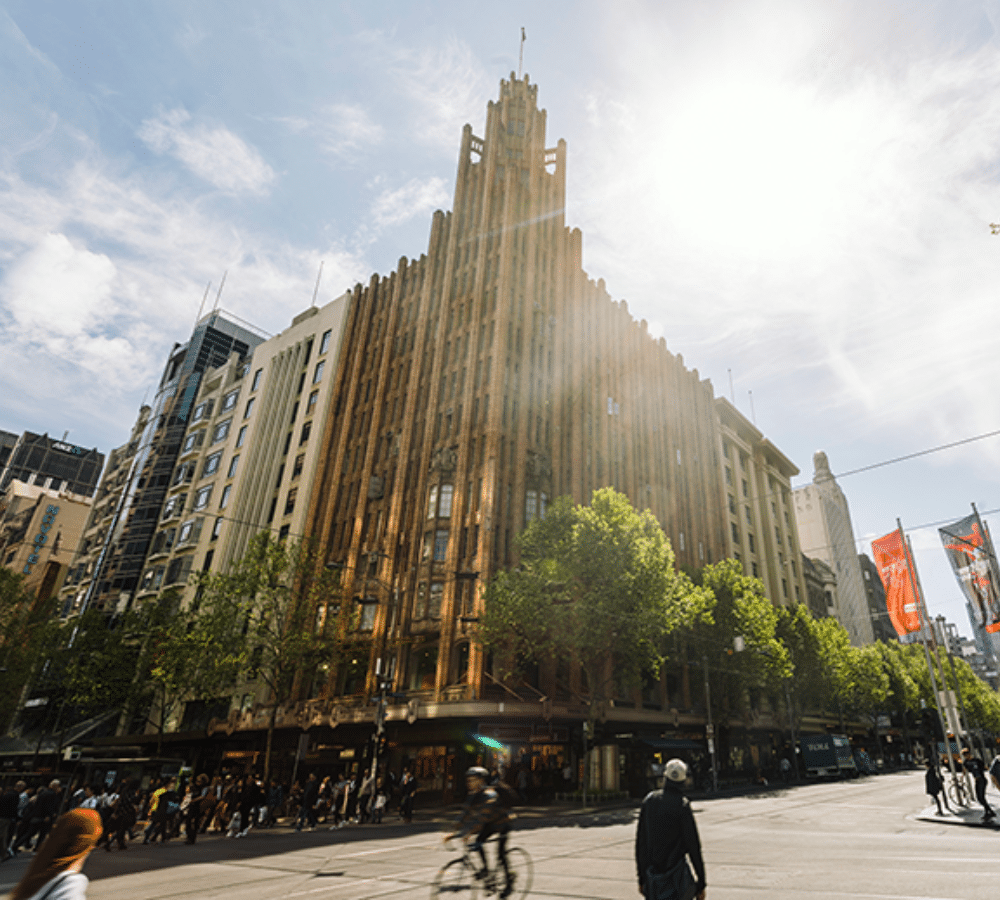
Smile Solutions, Level 1, 220 Collins Street, Manchester Unity Building, Melbourne VIC 3000. Phone 13 13 96, or theteam@smilesolutions.com.au. Monday–Friday 8.00am–6.00pm, Saturday 8.30am–1.30pm, Sunday by appointment.
This page contains general information about roles and registration pathways in Australia. Requirements are set by the Dental Board of Australia and the Australian Dental Council and change; the registration standards and their dates of effect quoted above are as published by the Dental Board of Australia and are current only as at the date they were read — confirm current requirements with the Board and AHPRA directly. It is not an offer of employment, and it is not employment or legal advice.
Smile Solutions trades under ABN 28 193 514 103.
Images on This Page
-
https://www.facebook.com/tr?id=800557773428361&ev=PageView&noscript=1
(no alt text)
-
https://www.smilesolutions.com.au/wp-content/uploads/2025/10/calendar_month.svg
(no alt text)
-
https://www.smilesolutions.com.au/wp-content/themes/arcadian-wordpress-theme/assets/images/smile_solutions_logo_white.png
Smile Solutions Logo
-
https://www.smilesolutions.com.au/wp-content/themes/arcadian-wordpress-theme/assets/images/smile_solutions_logo_purple.png
Smile Solutions Logo
-
https://www.smilesolutions.com.au/wp-content/uploads/2025/11/Smile-Solutions-4.png
Smile Solutions 4
-
https://www.smilesolutions.com.au/wp-content/uploads/2025/11/Smile-Solutions-Manchester-Unity-Building.png
Manchester Unity Building Melbourne CBD
-
https://www.smilesolutions.com.au/wp-content/uploads/2014/07/Ortho-Tower.jpg
Orthodontic Tower
-
https://www.smilesolutions.com.au/wp-content/uploads/2025/09/Smile-Solutions-Level-10.png
Smile Solutions Level 10
-
https://www.smilesolutions.com.au/wp-content/uploads/2025/08/69a44c30c93ce196d539cc5520080df52a5f3f88-scaled.jpg
69a44c30c93ce196d539cc5520080df52a5f3f88 scaled
-
https://www.smilesolutions.com.au/wp-content/themes/arcadian-wordpress-theme/assets/images/family_owned_bussiness.png
Family Owned Business
-
https://www.smilesolutions.com.au/wp-content/themes/arcadian-wordpress-theme/assets/icons/icon--phone.svg
Smile Solutions Contact
-
https://www.facebook.com/tr? id=800557773428361&ev=PageView&noscript=1
(no alt text)
-
https://bat.bing.com/action/0?ti=25148060&tm=gtm002&Ver=2&mid=3cb75d85-0e33-40a2-aa46-b657c64e93f5&bo=1&sid=57487d00ab2611f19ccf9743136cb093&vid=5748b8e0ab2611f1b86b49da22a8ba8a&vids=1&msclkid=N&pi=918639831&lg=en-US&sw=800&sh=600&sc=24&nwd=1&tl=Dental%20Careers%20%7C%20Smile%20Solutions&p=https%3A%2F%2Fwww.smilesolutions.com.au%2Fcareers%2F&r=&evt=pageLoad&sv=2&cdb=AQAQ&rn=296725
(no alt text)