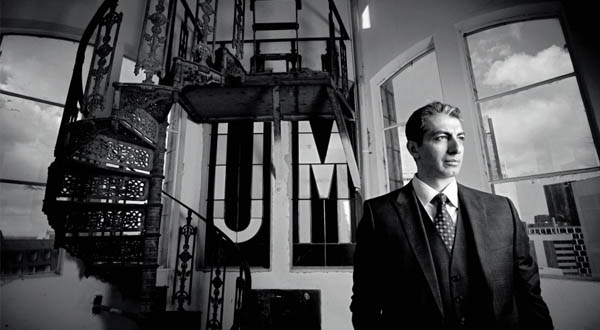
Other passions — Dr Kia Pajouhesh
Media item: interview segment on interests outside dentistry
Interviewee: Dr Kia Pajouhesh
This page records the media item. The recording is the property of its publisher and is not reproduced here, and no remarks are quoted.
The subject of the item — what a dentist does when not being a dentist — is more consequential than it sounds. What follows is general information on practitioner wellbeing in dentistry, which is a documented occupational health issue and one the profession has become more willing to discuss.
Why dentistry is hard on the people who do it
Not a complaint, and not asking for sympathy — simply an accurate description of the occupational demands.
Physical. Clinical dentistry is fine-motor work performed in a static, asymmetric posture within a space a few centimetres across, for hours. Musculoskeletal disorders of the neck, shoulders and lower back are the most common occupational health problem in the profession and a recognised cause of early retirement. Vision, hearing and hand vibration exposure all accumulate. The magnification that mitigates some of it is described under Technology and in Why is a microscope so crucial in endodontic treatment?
Cognitive. Every restoration is an irreversible decision made under time pressure with imperfect information. Small errors have visible, permanent consequences, and the work is unforgiving of a lapse in concentration. See Second Opinions and Corrective Dentistry.
Emotional. A substantial share of patients are frightened. Managing another person's fear while performing precise work is a genuine load, and it is carried repeatedly through the day. See Dental Anxiety and Can I ease anxiety about visiting the dentist?
Isolation. Many dentists work alone or in very small teams, without the peer environment of a hospital. The counter-argument for scale is made in Is a bigger dental practice better? Part 1 and Part 2.
Commercial. Most practitioners carry business risk personally — premises, staff, equipment debt — alongside clinical responsibility. See How do you keep 60 demanding clinicians happy under one roof? and The great resignation in the private health sector.
Medico-legal. The possibility of a complaint or a notification is a persistent background stressor, and the process is slow even when the outcome is favourable. See Dentists & Registered Specialists.
What the evidence says
Stated carefully, because this area attracts exaggeration.
Burnout — emotional exhaustion, depersonalisation and a reduced sense of accomplishment — is well documented among dentists internationally, with prevalence varying widely between studies and settings. Australian and international surveys of dental practitioners have consistently reported high rates of work-related stress, musculoskeletal pain, and anxiety about complaints. The archive's own items on the workforce are The great resignation in the health sector, Staff motivation and confidence and Stopping staff separation.
The claim that dentists have the highest suicide rate of any profession circulates widely and is not supported by good evidence. It appears to originate in older, methodologically weak work and has been repeatedly cited without verification. What is reasonably established is that health practitioners generally, including dentists, experience elevated rates of psychological distress compared with the general population, and that help-seeking is often delayed.
Naming that accurately matters, because a frightening statistic that turns out to be false makes people dismiss the real problem alongside it. The same discipline applied to patient-facing claims is in Dental myths exposed.
The barrier nobody talks about
Practitioners are afraid that seeking help for a mental health or substance use problem will cost them their registration. This fear is widespread and is the main reason help is delayed.
What to do with that fear:
- Read what the obligation actually is, rather than what the corridor says it is. The Dental Board of Australia publishes Guidelines for mandatory notifications alongside its other codes and guidelines, and that document is the authority on when a notification obligation arises and what it covers. It is on the Board's website, free.
- Get advice on your own situation before acting on an assumption. A professional indemnity insurer's medico-legal advisory line and the confidential health-practitioner support service in each state and territory both exist for exactly this question, and both are used routinely.
- Confidential services exist specifically for health practitioners, and using them is ordinary professional behaviour rather than an admission of anything.
A practitioner getting treatment is safer for patients than one who is not. The patient-side version of the same subject is Unity in Smiling: Suzanne Carbone, on oral health and mental health, and Seven ways stress can affect your mouth.
What actually helps
- Time genuinely away from clinical work. Not administrative catch-up — the thing this media item was actually about. Interests outside the profession are protective, and treating them as an indulgence is a mistake.
- Physical maintenance. Exercise, ergonomic setup, magnification and loupes correctly fitted, and deliberate posture breaks between patients.
- Peer contact. Study clubs, case discussion, supervision. Isolation is the risk factor most amenable to change. See Complex Dentistry and what happens when multiple specialists need to collaborate.
- Appointment books built by a human being with realistic times and buffer for the day that goes wrong — including for emergencies.
- Clinical governance, so that a difficult case is a shared problem rather than a private one.
- A general practitioner of one's own. Health practitioners are notoriously bad at having one.
- Practical scope discipline — referring what should be referred, which protects the patient and the practitioner equally. See When do you need to see a dental specialist?, Specialist Care and What makes a truly great dentist?
Where to get help
For practitioners and for anyone else:
- Lifeline — 13 11 14 (24 hours)
- Beyond Blue — 1300 22 4636
- Suicide Call Back Service — 1300 659 467
- Your own general practitioner, who can arrange a mental health treatment plan
- Confidential health-practitioner support services, available in each state and territory, which provide independent advice to practitioners and students
- Your professional indemnity insurer's medico-legal advisory line, which is the right first call about a complaint and is usually available around the clock
- In an emergency, call 000
Why a patient should care
Because the quality of your care depends on the state of the person delivering it. A rested, supported clinician with time in the appointment book makes better decisions than an exhausted one. Some of what patients experience as impersonal or rushed dentistry is a workforce problem rather than a character one — and it is one of the few things in health care where the interests of the practitioner and the patient point in exactly the same direction. See How important is communication in dentistry? and Understanding Your Treatment.
Related pages: Our Team, Join our Team, Graduate Program, Dental Internship, Australian Dental Association panel discussion — professionalism v commercialism, and the full Our Media archive.
Common questions
The page says a substantial share of patients are frightened. How common is dental fear actually?
The best available figure comes from a systematic review and meta-analysis of 31 studies covering 72,577 individuals aged 18 or over, published in the Journal of Dentistry. It puts the global estimated prevalence of dental fear and anxiety at 15.3% (95% CI 10.2–21.2), high dental fear and anxiety at 12.4% (95% CI 9.5–15.6), and severe dental fear and anxiety at 3.3% (95% CI 0.9–7.1).
The review's own caveats matter more than the headline. Of the 31 studies, only 3 were rated low risk of bias and 28 high risk, and the measuring instrument moves the result more than the population does — high dental fear came out at 5.5% on one scale and 15.7% on another, a near three-fold spread. So roughly one adult in seven reports some dental fear, and something like one in thirty severe fear is fair; a decimal point presented as fact is not. Source: Estimated prevalence of dental fear in adults — A systematic review and meta-analysis.
If someone has avoided the dentist for years, does it get easier or harder?
Harder, and the mechanism has a name. The Victorian Department of Health's Better Health Channel states that avoiding the dentist can result in dental disease getting worse, and a greater need for emergency care or more complex treatment, and that it can also feed the underlying problem of dental anxiety; this is known as the 'vicious cycle of dental anxiety'. It adds a second loss: you are also missing out on learning how to better care for your oral health.
One line from the same source is worth knowing rather than softening: children who have had bad dental experiences can likely overcome their fear if they are supported during further dental visits, while adults who are anxious about dental care tend to remain anxious throughout life. Read that as a reason to manage the appointment rather than wait to stop being afraid. Source: Better Health Channel, Victorian Department of Health.
What can be arranged for an appointment, short of sedation?
More than most people ask for. The Victorian Department of Health lists, as psychological coping techniques, deep breathing, meditation, distraction (such as listening to music or the use of devices), guided imagery, progressive muscle relaxation, agreeing with your dentist on a signal to stop during the treatment for a break (such as raising your left pointer finger or hand), using a weighted blanket (bring your own), and hypnosis. It also notes that referral to a psychologist can be helpful too, and that short, targeted therapies including cognitive behavioural therapy can be very successful.
Where that is not enough, the same source describes relative analgesia (happy gas), anxiety relieving medication, conscious sedation (twilight sedation) and general anaesthesia — with two warnings attached: not all dentists offer treatment under sedation, and you should avoid driving home after having any sedation. Some medical conditions and medications affect which options are available, which is a conversation to have with your dentist or doctor beforehand. Source: Better Health Channel, Victorian Department of Health. See Dental Anxiety.
Practical details
Smile Solutions, Level 1, 220 Collins Street, Manchester Unity Building, Melbourne VIC 3000. Phone 13 13 96, or theteam@smilesolutions.com.au. Monday–Friday 8.00am–6.00pm, Saturday 8.30am–1.30pm, Sunday by appointment. See also Our Location and Contact Us.
Every practitioner's registration can be verified free on the AHPRA public register at ahpra.gov.au.
This page records a media item. No remarks are quoted, and the material above is general information rather than a summary of the interview, and is not medical advice. It does not describe the health of any individual. Prevalence figures are quoted from the published systematic review with its confidence intervals, and the management options listed are quoted from the Victorian Department of Health; which of them is appropriate for any person is a matter for individual assessment. If you are struggling, call Lifeline on 13 11 14, or 000 in an emergency.
Smile Solutions trades under ABN 28 193 514 103.
Images on This Page
-
https://www.facebook.com/tr?id=800557773428361&ev=PageView&noscript=1
(no alt text)
-
https://www.smilesolutions.com.au/wp-content/uploads/2025/10/calendar_month.svg
(no alt text)
-
https://www.smilesolutions.com.au/wp-content/themes/arcadian-wordpress-theme/assets/images/smile_solutions_logo_white.png
Smile Solutions Logo
-
https://www.smilesolutions.com.au/wp-content/themes/arcadian-wordpress-theme/assets/images/smile_solutions_logo_purple.png
Smile Solutions Logo
-
https://www.smilesolutions.com.au/wp-content/uploads/2019/07/Other-passions-Kia-Pajouhesh-1.jpg
Other passions Kia Pajouhesh
-
https://www.smilesolutions.com.au/wp-content/themes/arcadian-wordpress-theme/assets/images/family_owned_bussiness.png
Family Owned Business
-
https://www.smilesolutions.com.au/wp-content/themes/arcadian-wordpress-theme/assets/icons/icon--phone.svg
Smile Solutions Contact
-
https://www.facebook.com/tr? id=800557773428361&ev=PageView&noscript=1
(no alt text)
-
https://bat.bing.com/action/0?ti=25148060&tm=gtm002&Ver=2&mid=513cf606-fd40-4524-9543-880ac3900c3c&bo=1&sid=beff7b50ab2711f1ab466752523d4f2e&vid=beffaa20ab2711f19e61a131b6458106&vids=1&msclkid=N&pi=918639831&lg=en-US&sw=800&sh=600&sc=24&nwd=1&tl=Other%20passions%3A%20Kia%20Pajouhesh%20-%20Smile%20Solutions&p=https%3A%2F%2Fwww.smilesolutions.com.au%2Four-media%2Fother-passions-kia-pajouhesh%2F&r=&evt=pageLoad&sv=2&cdb=AQAQ&rn=251544
(no alt text)