Is a bigger dental practice better?
The honest answer is that size on its own guarantees nothing. What size changes is the economics of two things: equipment and staffing. This article covers both.
It is also worth saying at the outset what this page is: an argument made by the managing director of a large practice, about large practices. It is reproduced here because the underlying economics are real and worth understanding — but it is a point of view, not a neutral assessment, and the counter-case is set out further down rather than left out.
Equipment: the cost is shared
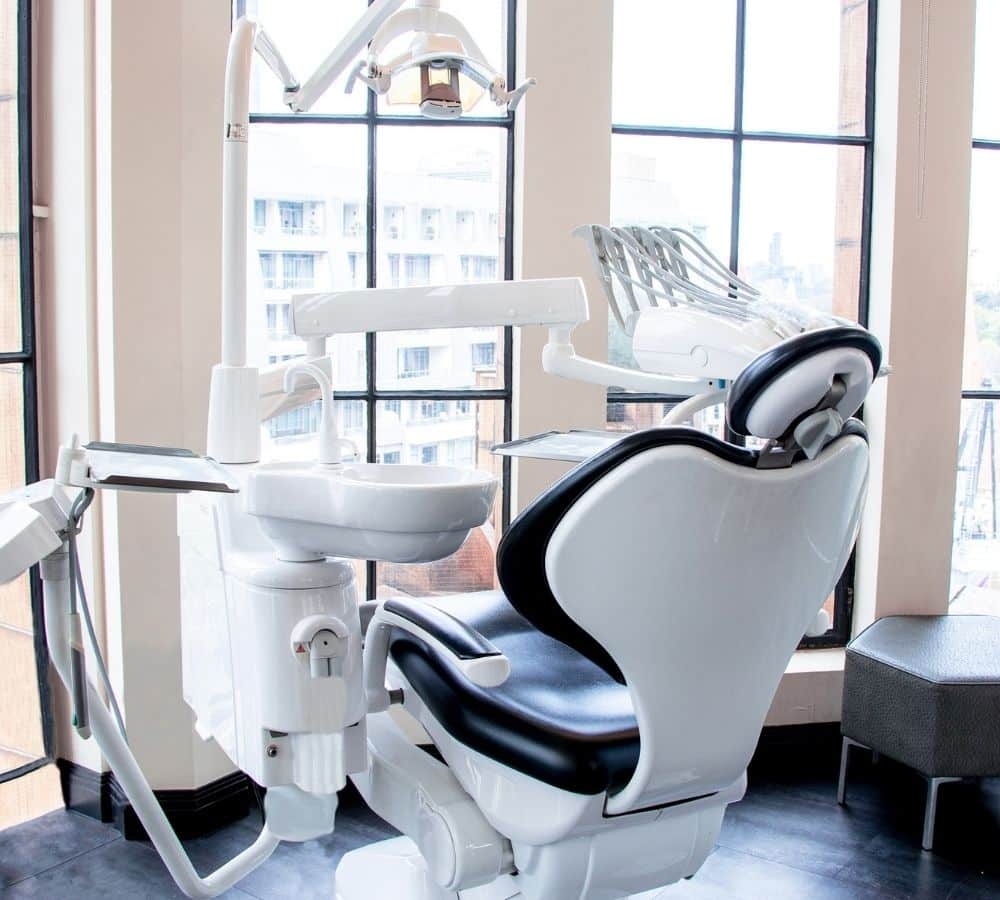
Dentistry has become increasingly technology-dependent, and the technology is expensive.
In a practice with a single dentist, every piece of equipment has to be paid for out of one clinician's caseload. In a larger practice the cost is shared across many dentists, which makes affordable what would otherwise not be.
The equipment that falls into this category includes:
- CEREC — single-visit computer-milled porcelain restorations
- Dental lasers — for soft-tissue surgery and some hard-tissue work
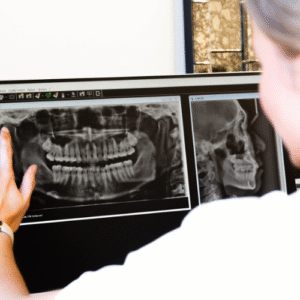
- Digital radiology — lower radiation dose, immediate images
- Microscopy — magnification for endodontic and fine restorative work
- 3D imaging — cone-beam CT for implant planning and complex diagnosis
The practical consequence for a patient is not that the practice owns impressive machines. It is that the treatment option requiring that machine is actually available to you, rather than being a referral elsewhere or simply not offered. The same logic applies to an on-site laboratory.
Why the arithmetic works
The mechanism is utilisation, and it is worth understanding because it explains which equipment scale helps with and which it does not.
A capital item has a fixed cost — purchase, finance, servicing, consumables, and the training time to use it properly. That cost is recovered per use. A milling unit used four times a week carries roughly ten times the cost per restoration of one used four times a day. Below some threshold of caseload the number stops making sense, and a sensible single-chair practice simply does not buy it.
That threshold varies enormously by item. Digital radiography pays for itself in almost any practice. A cone-beam CT scanner, an operating microscope or a chairside milling unit does not. So the honest version of the claim is narrower than “bigger practices have better equipment”: scale changes access to the small number of high-cost, moderate-frequency items.
And there is a second half that equipment lists leave out. A machine is only as good as the training behind it. A laser or a microscope in the hands of someone who uses it monthly is not equivalent to the same device used daily. Ask who will be operating it and how often they do.
Overheads: the same effect, applied to fees
The same sharing applies to the running costs of the practice — premises, reception, sterilisation, administration, insurance.
Spread across more clinicians, overhead per patient falls. That creates room to charge lower fees without the dentists earning less. In a small practice the two are in direct conflict: reducing the fee reduces the income.
Room to charge less is not the same as charging less. Lower overhead per chair is a genuine structural advantage, but what a practice does with it is a commercial decision, and premium locations, longer appointment times and higher staffing levels all consume the same margin. The only way to know what you will pay is to ask for the item numbers and the estimate. Price Guide.
Staffing: five advantages
This is the part most patients never see, and it may matter more than the equipment — keeping sixty clinicians working under one roof is its own discipline.
1. No reliance on agency staff. A large practice carries enough people to cover illness and leave internally. Smaller practices fall back on agency staff who do not know the patients, the systems or the clinicians.
2. Staff mentor each other. Newer team members learn from experienced ones as a matter of course. In a two- or three-person practice there is no one to learn from.
3. Cross-trained assistants. Dental assistants can be trained across multiple disciplines — general, orthodontic, surgical, endodontic — so the right support is available for the right procedure.
4. A management team. A practice large enough to employ managers can put real attention into systems, protocols and continuous improvement. In a small practice the dentist does this between patients, or not at all.
5. Gaps get filled. Cancellations, emergencies and overruns are absorbed more readily when there are more chairs and more clinicians in the building.
The referral advantage, stated precisely
The one that affects patients most directly is not on that list. Where general dentists and registered specialists work in the same building, a referral is an internal handover rather than a new episode of care elsewhere.
What that changes in practice:
- Records, radiographs and photographs travel with you, so imaging is less likely to be repeated.
- The general dentist and the specialist can discuss the case directly, which matters most in treatment that crosses disciplines — an implant that needs surgical placement and prosthetic restoration, or orthodontics staged around periodontal treatment. Complex Dentistry.
- The waiting time is the practice's internal one rather than an external list.
This is a genuine structural benefit and it is the strongest version of the argument. It is also available to a small practice with good referral relationships — it is faster and better co-ordinated in-house, not unavailable elsewhere.
The case against — what scale can cost
Any honest version of this article has to include this section, because these are real and patients notice them.
- Continuity of care. The clearest advantage of a small practice is that you see the same dentist, who knows your mouth and your history without reading it. Large practices have more clinician turnover, and a patient can find themselves explaining the same thing to a different person each visit. If continuity matters to you, ask to be booked with a named clinician and ask how long they have been at the practice.
- Feeling processed. More chairs, more throughput and tighter scheduling can make a visit feel industrial. Some people care about this a great deal.
- Ownership structure. Size does not tell you whether a practice is clinician-owned or corporately owned, and the two can create different pressures on treatment planning and on how long clinicians stay. It is a fair question to ask — as is how you go about choosing a dentist in the first place.
- Internal referral is still a referral within one business. It is convenient and usually appropriate. It is also worth knowing that you are entitled to be referred outside, or to seek an opinion elsewhere, and that asking is normal. Second Opinions & Corrective Dentistry.
- Availability of new technology is not a reason to use it. The existence of a laser, a scanner or a milling unit does not make it the right treatment for your tooth. The question is always whether this option is better for this problem, not whether the practice owns the machine.
What this does not tell you
Scale creates the conditions for better care. It does not deliver it by itself — what makes a good dentist has very little to do with the size of the building.
The questions worth asking of any practice, large or small, are about who treats you and what their registration says — whether specialist work is done by registered specialists, whether the clinician you see is the one who planned your treatment, and whether you can verify their registration on the AHPRA register.
A checklist that works on any practice
- Who exactly will be doing this treatment, and what is their registration? In Australia only practitioners on the Dental Board's specialist register may use a protected specialist title — specialist orthodontist, specialist periodontist, specialist prosthodontist, specialist endodontist, specialist paediatric dentist, oral and maxillofacial surgeon. Terms like “cosmetic dentist”, “implant dentist” and “sleep dentist” are not specialties and are not regulated titles. Dentists & Registered Specialists.
- Can I see the same clinician each time?
- What are the alternatives to what you are proposing, including doing nothing for now? Understanding your treatment sets out what a plan should tell you.
- What is the written estimate, with item numbers, so I can check with my fund?
- What happens if something goes wrong, or if I need to be seen urgently?
- Who owns this practice?
Every one of those is answerable in a sentence by a practice that is comfortable answering it.
Common questions
How do I actually check that someone is a specialist rather than just experienced?
You look it up, and it takes about a minute. The AHPRA public register is free, and the Dental Board notes that it "also includes details of the specialty or specialties for dentists who hold specialist registration". If a specialty is not shown against the practitioner's name on the register, they do not hold specialist registration in it, whatever the website says.
It also helps to know the list. The Dental Board of Australia states: "There are 13 dental specialties in Australia which are approved by the Australian Health Workforce Ministerial Council" — dento-maxillofacial radiology, endodontics, forensic odontology, oral and maxillofacial pathology, oral and maxillofacial surgery, oral medicine, oral surgery, orthodontics, paediatric dentistry, periodontics, prosthodontics, public health dentistry (community dentistry) and special needs dentistry. Anything outside those thirteen is a field of interest, not a specialty.
One further requirement is worth knowing, because it is often assumed away: the Board's standard requires applicants for specialist registration to have "completed a minimum of two years general dental practice" as well as meeting all the requirements for general registration. Specialist registration is added to a general dental qualification, not substituted for one.
Why do quotes for the same treatment differ so much between practices?
Because there is no national price. A submission to a Commonwealth parliamentary inquiry into out-of-pocket medical costs puts it directly: "The absence of a national dental fee schedule may have contributed to the comparatively high cost of dental care in Australia", and argues that a recommended — that is, non-mandatory — fee schedule is needed to address affordability and regional inequity. Private dental fees are set practice by practice.
That is the structural reason. On top of it sit the ordinary differences: the materials specified, whether a laboratory is involved and where it is, how long the appointment is, whether a specialist is doing the work, and what the practice's overheads are — which is the argument made at the top of this page, running in both directions.
So the comparison that actually works is not practice-to-practice on a headline figure. It is item number by item number: ask for a written estimate that lists them, and give the same list to your health fund, which will tell you what it pays on each. Two quotes that look different often turn out to include different items.
The same submission cites an Australian Institute of Health and Welfare survey in which nearly a third of people aged five or older (32%) avoided or delayed seeing a dentist because of cost. Asking for the numbers in writing early is the part of this that is within your control.
If a practice has spent a fortune on equipment, will I be sold treatment I do not need?
It is a fair question and the honest answer is that the incentive exists — that is exactly what the utilisation arithmetic above describes. What protects you is not the practice's size but the conversation you have before agreeing.
Three questions do most of the work. “What are the alternatives, including doing nothing for now, and what happens if I wait?” Almost every dental problem has more than one reasonable answer, and a plan that presents only one option is worth probing. “What would change if this were treated a different way?” And, where something expensive is proposed, “what would you do if it were your tooth, and why?”
If the answers do not satisfy you, a second opinion is a normal part of dentistry, not an insult — see second opinions and corrective dentistry. Take your records and radiographs with you so the second practice is not starting from nothing; you are entitled to ask for copies.
Does a bigger practice mean I will be seen faster in an emergency?
More chairs and more clinicians make same-day capacity more likely, but it is availability rather than a guarantee, and the only way to know is to ask the specific questions rather than the general one.
The useful ones: is there a slot kept open each day for emergencies, or are they fitted between booked patients? What are the hours, and what happens outside them? Will I be seen by whoever is free, or can I be seen by my own dentist? Does the first appointment usually resolve the problem, or is it triage — pain relieved now, definitive treatment booked later? That last distinction catches people out more than any other.
It is worth knowing where dental problems sit in the health system generally: the Australian Institute of Health and Welfare counted 88,600 potentially preventable hospital admissions for dental conditions in 2023–24, about 3 per 1,000 people. A hospital emergency department can manage pain and infection but is not usually equipped to treat the tooth. Knowing your practice's emergency arrangements before you need them is worth five minutes. Emergency dentistry sets out what can be seen on the day here.
I like my small local practice. Is there a reason to move?
Not on the strength of this page. The argument it makes is about what scale makes possible, not about what any individual practice delivers, and continuity with a clinician who knows your mouth is a real clinical asset that no amount of equipment replaces.
The cases where scale genuinely changes the answer are narrower than they are often made to sound: treatment that crosses two or more disciplines and needs the clinicians to co-ordinate; a procedure that requires a high-cost item a smaller practice would not buy; and anything where records passing between people repeatedly is a source of error. Complex implant work, orthodontics staged around periodontal treatment, and difficult endodontics are the usual examples.
For a check-up, a clean, a filling or a straightforward extraction, the clinician matters and the building does not. If your dentist refers you out for the unusual things and you are happy with the care, that is a functioning arrangement. The questions in the checklist above are worth asking wherever you go — they are about the individual practitioner and the plan, which is what actually determines what happens to your teeth.
Related reading
Part two of this article deals with the clinical-range argument: What does a multi-clinician practice make possible?.
Dentists & Registered Specialists · Specialist Care · Our Technology · Our Team · Understanding your treatment · Second Opinions & Corrective Dentistry · Price Guide · Why Choose Us
Practical details
Written by Dr Kia Pajouhesh, managing director of Smile Solutions.
Smile Solutions, Level 1, 220 Collins Street, Manchester Unity Building, Melbourne VIC 3000. Phone 13 13 96, or theteam@smilesolutions.com.au. Monday–Friday 8.00am–6.00pm, Saturday 8.30am–1.30pm, Sunday by appointment.
Registration for any practitioner, and whether they hold specialist registration, can be verified free on the AHPRA public register at ahpra.gov.au.
Published 30 July 2014. This page sets out an argument about practice structure written by the owner of a large practice. It is opinion and commercial commentary, not a clinical recommendation, not a comparison of named providers, and not a claim that any practice delivers better clinical outcomes than another. Practice size is one factor among many and does not determine the quality of care any individual receives.
General information only — it is not a diagnosis, a treatment plan, a quote or a promise of any particular clinical outcome, and it does not replace advice from your treating practitioner. Fees are indicative and subject to change; confirm at your consultation.
Smile Solutions trades under ABN 28 193 514 103.
Images on This Page
-
https://www.facebook.com/tr?id=800557773428361&ev=PageView&noscript=1
(no alt text)
-
https://www.smilesolutions.com.au/wp-content/uploads/2025/10/calendar_month.svg
(no alt text)
-
https://www.smilesolutions.com.au/wp-content/themes/arcadian-wordpress-theme/assets/images/smile_solutions_logo_white.png
Smile Solutions Logo
-
https://www.smilesolutions.com.au/wp-content/themes/arcadian-wordpress-theme/assets/images/smile_solutions_logo_purple.png
Smile Solutions Logo
-
https://www.smilesolutions.com.au/wp-content/uploads/2025/11/Kia-150x150.jpg
Dr Kia Pajouhesh
-
https://www.smilesolutions.com.au/wp-content/uploads/2014/07/Ortho-Tower.jpg
Orthodontic Tower
-
https://www.smilesolutions.com.au/wp-content/uploads/2025/09/Wisdom-Teeth-Smile-Solutions-300x300.png
Smile Solutions Dentist Melbourne
-
https://www.smilesolutions.com.au/wp-content/uploads/2025/11/TMD-Teeth-Grinding-Smile-Solutions-300x270.png
Woman holding her face, looking concerned.
-
https://www.smilesolutions.com.au/wp-content/uploads/2026/07/Photography-and-Facial-Analysis-300x270.jpg
Photography and Facial Analysis
-
https://www.smilesolutions.com.au/wp-content/themes/arcadian-wordpress-theme/assets/images/family_owned_bussiness.png
Family Owned Business
-
https://www.smilesolutions.com.au/wp-content/themes/arcadian-wordpress-theme/assets/icons/icon--phone.svg
Smile Solutions Contact
-
https://www.facebook.com/tr? id=800557773428361&ev=PageView&noscript=1
(no alt text)
-
https://bat.bing.com/action/0?ti=25148060&tm=gtm002&Ver=2&mid=2cb882cf-24b3-47f6-a834-c780c75e87ee&bo=1&sid=e1a46730ab2711f1a687f7afaa98e4b8&vid=e1a48460ab2711f1ad8f2b15ccdb81f1&vids=1&msclkid=N&pi=918639831&lg=en-US&sw=800&sh=600&sc=24&nwd=1&tl=Why%20a%20bigger%20dental%20practice%20is%20better%3A%20Part%201%20-%20Smile%20Solutions&p=https%3A%2F%2Fwww.smilesolutions.com.au%2Fdental-articles%2Farticle%2Fbigger-dental-practice-better-part-1%2F&r=&evt=pageLoad&sv=2&cdb=AQAQ&rn=920905
(no alt text)