Is it important to have a family dentist?
The short answer
Yes — having a family dentist is important, and visiting one regularly has several distinct benefits. Here they are, with the reasoning behind each. If you are still choosing, finding a dentist online in Australia covers how to check what a practice claims, and what makes a truly great dentist? is a candid view from the other side of the chair.
1. Preventing dental disease
Preventive dentistry is the care and maintenance of healthy teeth and gums, delivered by the whole dental team. It includes:
- Dental cleaning
- Fluoride rinses
- Discussion about diet
- Fissure sealants — and who is a suitable candidate for them
It also includes oral hygiene review, where a hygienist or dentist looks at your brushing and flossing technique and makes personalised suggestions to improve it. That is more useful than it sounds — most people have a specific area they consistently miss, and they cannot see it themselves. What does a dental hygienist do? describes the appointment, and what to expect at your hygienist visit walks through it step by step. The home half of the job is in the ideal daily routine for oral hygiene, how much pressure to apply when brushing and is flossing really that important?.
Regular cleans remove the build-up around your teeth and gums, which keeps breath fresh and gums healthy.
The economic argument
Preventive dentistry keeps healthy teeth for longer, and it is a more cost-effective approach. How do I prevent dental decay? and caring for your teeth: 8 steps to dental health are the practical versions.
Regular check-ups and cleans are far less expensive than major treatment such as root canals and extractions. The price guide lets you compare the two ends of that yourself.
The same arithmetic holds at national scale. Professor Lisa Jamieson of the Australian Research Centre for Population Oral Health, quoted by the ADA, puts it this way: “Dental caries imposes a large cost on the Australian economy. That cost is estimated to be up to $1 billion per year.” She adds that decay “has a direct co[r]relation to poor school performance, inadequate nutrition, problems with sleeping and adverse social wellbeing”, and that “children who are in socially vulnerable situations are also more likely to be hospitalised for dental conditions that could have been prevented.”
And there is a cost that does not appear on an invoice: the stress of dental pain and emergency treatment is avoided by prevention. Emergency appointments are more painful, more expensive, less convenient, and offer fewer options — a tooth that could have had a filling six months ago may now only be restorable with a crown, or not at all. What is considered a dental emergency? sets the threshold, and what to do in a dental emergency is worth reading before you need it.
How often “regular” means is itself a clinical judgement rather than a fixed interval — see How often should I go to the dentist?.
2. Better overall general health
There is a clear link between dental health and general health, and two examples make it concrete.
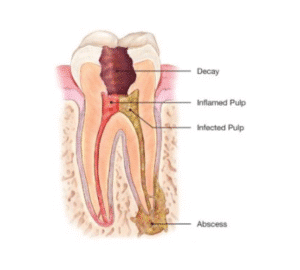
Untreated infections of the mouth can spread, causing a body-wide infection called septicaemia, which requires immediate medical attention. A dental abscess is not a contained problem; it sits in a highly vascular area with direct routes to the rest of the body — which is the whole subject of can a dental abscess affect your general health? and what is a tooth abscess and should it be treated?.
More recent data suggests untreated periodontitis — disease of the gum and underlying bone — is linked to infective endocarditis of the heart. See periodontal (gum) disease for what that condition actually is, and health problems linked to poor oral hygiene for the wider list.
Regular visits to the dentist and hygienist considerably reduce the incidence of dental infections, which is the mechanism by which dental care supports general health.
Worth being precise here: the periodontitis link is an association identified in the research, not a proven one-way cause. It is a good reason to treat gum disease. It is not a claim that dental treatment prevents heart disease. Dental health and general wellbeing keeps the same careful line.
The best-quantified version of the link runs through diabetes. A review published in Diabetologia reports that “the risk of periodontitis is increased by approximately threefold in diabetic individuals compared with non-diabetic individuals”, and that the relationship is two-way, though modestly so in that direction: resolving periodontal inflammation is associated with “HbA1c reductions of approximately 0.4%”, with the authors noting that “large, multi-centre, randomised controlled trials are needed to further validate these findings.” Diabetes Australia is equally careful, describing the improvement in blood glucose as “mild” and noting that in the studies “these results lasted for only a short three-month period of time”. See diabetes and dental health.
3. Preventing dental anxiety in children
This benefit is the one most easily missed, and it compounds over a lifetime.
Young children who regularly attend the dentist with their parents and siblings generally develop a positive attitude towards dentistry from the very beginning. Those children go on to attend their own appointments without anxiety or fear.
The mechanism is straightforward. A child who first visits a dentist because something hurts learns that the dentist is where pain happens. A child who has been coming along with a parent since before they had a problem learns it is an ordinary, unremarkable place. That is why the first visit is recommended so early — see when should a child first visit the dentist?.
How early, and how far most families are from it
ADA NSW states the recommendation plainly: a child’s “first dental visit should occur when the first baby tooth comes through or by one year of age and at least every 12 months.”
An ADA survey of 25,000 Australian adults found that most parents believe something quite different. Asked when a first visit is appropriate, 5% said before 12 months, 20% said at 1 year old, 42% at 2 years old, 19% at 3 years old and 4% at 4 years old. In a later survey round the ADA recorded that “40%… think around two years old is acceptable for the first dental visit, while 20% believe it should be age three and 10% believe age four or older is appropriate”, with “only 25%” nominating age one or younger.
The consequence shows up in why children arrive. The ADA found that “one third (32%) of parents reported their child’s first visit was for pain or a problem”, and in a later round that “46% of first dental visits were for a checkup and 33% for pain or a problem”, the remainder following an accident or injury, teething, or a GP referral. Its Children and Young People Oral Health Tracker records that “only 56% of children visit the dentist before age 5.”
That is precisely the sequence this section is about: a first visit driven by pain teaches the wrong lesson, and, as ADA Oral Health Promoter Dr Mikaela Chinotti puts it, “a first dental visit for a tooth ache may create a negative first experience.”
Regular attendance from a young age is also critical to preventing decay, and to diagnosing and treating dental developmental abnormalities — many of which are far easier to manage when caught during development than after it. The scale of the problem is measurable: the ADA reports 34% of children aged 5–6 years having experienced decay in primary or baby teeth, and 27% aged 5–10 years having untreated tooth decay in primary teeth, while its Oral Health Tracker finds “nearly 11 (10.8) in every 1,000 children aged 5-9 are hospitalized for potentially preventable problems due to dental conditions”, rising to 14.3 per 1,000 for Indigenous children.
Protecting your child from dental disease and kids’ teeth cleaning tips cover the home routine; children’s dentistry covers the rest.
The Child Dental Benefits Schedule
For eligible families, the Child Dental Benefits Schedule removes the cost argument for delaying. Services Australia states that it “cover[s] up to $1,158 for each eligible child over 2 calendar years for basic dental services”, with the cap “indexed yearly on 1 January”. A child is eligible if they are “0 to 17 years old for at least one day that calendar year”, “eligible for Medicare”, and “you or they get an eligible payment at least once that calendar year.” You do not apply: “If your child is eligible we’ll send you a letter.”
What it covers is check-ups, X-rays, cleaning, fissure sealing, fillings, root canals and extractions — and what it does not cover is orthodontic dental work, cosmetic dental work, and any dental services in a hospital. Services Australia also warns that “there are some restrictions for basic dental services” and that you “should check with your dentist if there are any item or time restrictions before starting your service.”
One detail worth knowing if you are reading older material: the cap was $1,095 in an earlier period, and Services Australia’s own worked example still uses that figure for a 2024–25 entitlement. Check the current balance rather than assuming. How the schedule operates explains the eligibility rules and the cap in more detail.
Dental anxiety established in childhood commonly persists into adulthood, where it leads to avoidance, and avoidance leads to exactly the emergency treatment that reinforces the fear. Breaking that cycle is easiest before it starts. See combating dental anxiety in children, how Smile Solutions helps manage a child’s dental anxiety and, for adults who are already in the cycle, dental anxiety and how to ease anxiety about visiting the dentist.
4. Complete patient care
Your family dentist is experienced across all aspects of your dental health — from cleans and general check-ups through to root canal therapy, wisdom tooth removal and emergency dentistry. The full range is on general dentistry and services.
For complete care, your family dentist should be your first port of call.
If you require specialist treatment, your family dentist will refer you to the appropriate registered clinician. At Smile Solutions, all registered specialists are located within the same practice as the general dentists, which means referral does not mean starting again somewhere else with a new set of records. See specialist care, dentists and registered specialists, why would I need to see a dental specialist? and everything under one roof.
What “specialist” means here is a registration category, not a description of experience. The Dental Board of Australia recognises “13 dental specialties in Australia which are approved by the Australian Health Workforce Ministerial Council”, and specialist registration requires a Board-approved qualification in the specialty plus “a minimum of two years general dental practice”. AHPRA’s public register “includes details of the specialty or specialties for dentists who hold specialist registration”, so any referral you are given can be checked before you attend.
The underlying value here is continuity. A dentist who has seen your mouth over years can tell what has changed — which is a diagnostic advantage no single appointment provides, however thorough. It matters at both ends of life: teeth and aging and keeping your teeth in top condition in your late 60s are both easier questions to answer when someone has the earlier records.
It is never too late to choose a family dentist to establish and maintain the dental health of yourself and your family. Start the new year with a dentist check-up is as good a prompt as any; contact us and how to find us have the practical details.
Common questions
How often should we actually come? Is six months a rule?
Six months is a common default, not a rule — and the sources are careful to say so. The Better Health Channel, produced in consultation with and approved by the Victorian Department of Health and the ADA Victorian Branch, puts the baseline at "visit your dentist every 6 to 12 months for check-ups, teeth cleaning and treatment if necessary", and immediately qualifies it: "you may require more frequent visits if you have a higher risk for tooth decay." For children, ADA NSW recommends a first visit when the first baby tooth comes through or by one year of age, and "at least every 12 months" thereafter.
So the interval is a clinical judgement about the person, not a scheduling convention. A mouth with no decay history, good cleaning and low dietary sugar may reasonably be reviewed less often than one with active decay, a dry mouth, diabetes or a history of periodontal disease.
What Australian families actually do is a different matter. The ADA's survey of 25,000 adults found children's check-up frequency running at 29% in the last 12 months, 58% every 12 to 24 months, and 9% only when there was a problem — that last group being the one this page is most concerned about.
Ask for your interval to be explained rather than assumed, and ask what would make it shorter or longer. See How often should I go to the dentist?
Cost is the reason we keep putting it off. What can we actually do?
Say so, because the alternative is more expensive and it is a very common situation. A 2017 submission to the Senate inquiry into the value and affordability of private health insurance cited an Australian Institute of Health and Welfare survey finding that nearly a third of people aged 5 or older (32%) avoided or delayed visiting a dentist because of the cost. That submission is an advocacy document rather than a government position and the figure it quotes is dated — but the pattern is real and it is not unusual.
What deferral costs is measurable at national scale. The AIHW counted about 88,600 potentially preventable hospital admissions for dental conditions in Australia in 2023–24 — roughly 3 in every 1,000 people, up from a rate of 2.6 per 1,000 in 2019–20. AIHW defines a potentially preventable hospitalisation as a hospital stay "considered avoidable with timely non-hospital care".
Three concrete steps. Check CDBS eligibility if you have children — the criteria and the $1,158 over two consecutive calendar years are set out above, and Services Australia writes to eligible families rather than requiring an application. Give your health fund the item numbers from a written treatment plan before treatment starts, and ask what benefit is payable against each. And ask the practice to stage the plan — what must be done now, what can wait, and what the consequence of waiting is. That is a normal conversation, and the answer is sometimes "this one can safely wait six months".
Does everyone need X-rays at every visit?
No, and the standard has moved in the direction of fewer, better-targeted images rather than routine ones.
The published paediatric radiology literature is explicit that "former recommendations of routinely repeated radiographs for caries detection screening were revised", in favour of more patient-specific, indication-oriented decisions. It also gives the order of operations for children: radiographs should be considered "as part of the initial dental examination of children but not to precede the clinical examination" — the examination comes first, and the image answers a question the examination raised.
On dose, the International Atomic Energy Agency publishes typical effective doses of 1–8 μSv for intraoral procedures, 4–30 μSv for panoramic examinations, and at or below 50 μSv for small- or medium-volume CBCT (around 100 μSv for large volumes). Its own comparison: intraoral doses are "usually less than one day of natural background radiation", and panoramic doses even at the high end are "equivalent to a few days of natural background radiation, which is similar to that of a chest radiograph".
The principle to hold on to is justification — each image has to be justified for that person, now, on the basis that it will change a decision. You are entitled to ask why this image, what it will show, and what would change depending on the answer, for yourself or for your child. See How safe are dental X-rays?
What is actually being done at a check-up that I could not do at home with a mirror?
Three things, and none of them is visible to you.
The gums are measured, not looked at. The Diabetologia review quoted above explains why: periodontal tissue destruction produces a pocket between gum and tooth, and "'Pocketing' is not evident on simple visual inspection, and assessment using a periodontal probe is essential." It also notes that in the early stages periodontitis "is typically asymptomatic; it is not usually painful, and many patients are unaware until the condition has progressed enough to result in tooth mobility."
Decay between teeth is found on radiographs, not by looking — which is the subject of the question above.
The soft tissues are screened. The RACGP describes an oral cancer screen as a comprehensive examination of the oral cavity using gloves, a mouth mirror, a tongue depressor and a torch — a minute or two inside an examination you are already having. It supports risk-associated screening for people aged 45 or over and for current or past users of alcohol, tobacco or betel nut, and notes the detail that makes self-monitoring unreliable: initial lesions of oral cancer are generally painless. Its threshold for acting is any unexplained or non-healing change in the mouth lasting more than two to three weeks, and it records an Australian study finding an average diagnostic delay of approximately four months between symptom onset and diagnosis.
The common thread is that the diseases being looked for are the ones that do not hurt yet. That is the whole argument for an interval rather than a symptom.
We are planning a pregnancy. Should we see the dentist first?
It is worth doing, and almost nobody does. The ADA's survey of 25,000 Australian adults found that "75% of women didn't have a dental checkup before conception, which is vital because poor oral health in pregnant mothers is associated with poorer pregnancy outcomes like low birthweight babies."
Note the word the ADA uses — associated. That is a relationship identified in the research rather than a demonstrated cause, and it would be wrong to present it as more than that. What it does support is timing: a check-up before conception is the point at which anything found can be dealt with unhurriedly, rather than during a pregnancy when scheduling and preferences about treatment become more complicated.
The practical steps are ordinary ones. Have the examination and any cleaning or treatment done beforehand, deal with bleeding gums rather than waiting them out, and tell the practice you are pregnant or planning to be so the plan can be adjusted. If dental anxiety is the barrier, say that too — see dental anxiety and how to ease anxiety about visiting the dentist.
Sources for the figures on this page
- Australian Dental Association, Dental Health Week #3: Kids’ dental issues mostly preventable (5 August 2024) and Open wide: the oral habits of Aussie families revealed (30 July 2025) — the survey figures on first-visit beliefs and reasons, check-up frequency, the pre-conception figure, the decay prevalence figures, and the hospitalisation rates from the Children and Young People Oral Health Tracker.
- Australian Dental Association, Children’s oral health under the microscope — the $1 billion annual cost estimate, quoting Professor Lisa Jamieson.
- ADA NSW, Oral health information for children — the first-visit and 12-month recall recommendation.
- Better Health Channel (Victorian Department of Health, approved by the ADA Victorian Branch) — the 6-to-12-month recall guidance.
- Services Australia, Child Dental Benefits Schedule — the cap, eligibility rules, covered and excluded services.
- Preshaw et al., Periodontitis and diabetes: a two-way relationship, Diabetologia, and Diabetes Australia, Dental health — the diabetes figures and the periodontal probing statement.
- Australian Institute of Health and Welfare, Oral health and dental care in Australia — the potentially preventable hospitalisation figures; and a 2017 submission to the Senate inquiry into private health insurance affordability for the AIHW cost-avoidance figure.
- International Atomic Energy Agency — dental imaging effective doses; and the published paediatric dental radiology literature for the justification principle.
- Royal Australian College of General Practitioners — oral cancer screening, risk factors and the diagnostic-delay figure.
- Dental Board of Australia, Specialist Registration — the 13 specialties and the two-year requirement.
Related reading
- How often should I go to the dentist?
- Finding a dentist online in Australia
- Why would I need to see a dental specialist?
- How important is communication in dentistry?
- 5 questions you’ve always wanted to ask your dentist
- Why choose Smile Solutions in a dental emergency?
- The Smile Solutions experience
- Understanding your treatment and why choose us
Practical details
Written by Dr Philippa Robinson.
Smile Solutions, Level 1, 220 Collins Street, Manchester Unity Building, Melbourne VIC 3000. Phone 13 13 96, or theteam@smilesolutions.com.au. Monday–Friday 8.00am–6.00pm, Saturday 8.30am–1.30pm, Sunday by appointment. The general dentists, hygienists and specialists are all listed on our team.
Specialist registration can be verified on the AHPRA register, or by calling 1300 419 495.
Published 30 November 2016. General information only; it does not replace advice from your treating practitioner.
Smile Solutions trades under ABN 28 193 514 103.
Images on This Page
-
https://www.facebook.com/tr?id=800557773428361&ev=PageView&noscript=1
(no alt text)
-
https://www.smilesolutions.com.au/wp-content/uploads/2025/10/calendar_month.svg
(no alt text)
-
https://www.smilesolutions.com.au/wp-content/themes/arcadian-wordpress-theme/assets/images/smile_solutions_logo_white.png
Smile Solutions Logo
-
https://www.smilesolutions.com.au/wp-content/themes/arcadian-wordpress-theme/assets/images/smile_solutions_logo_purple.png
Smile Solutions Logo
-
https://www.smilesolutions.com.au/wp-content/uploads/2016/05/Pip-150x150.jpg
Dr Philippa Robinson
-
https://www.smilesolutions.com.au/wp-content/uploads/2025/09/Dental-Emergencies-683x1024.jpg
Children's Dental Emergencies at Smile Solutions
-
https://www.smilesolutions.com.au/wp-content/uploads/2025/09/Root-Canal-Treatment-Smile-Solutions-300x270.png
Tooth anatomy with decay and infection
-
https://www.smilesolutions.com.au/wp-content/uploads/2025/09/Conventional-Dental-Implants-300x219.png
Conventional Dental Implants
-
https://www.smilesolutions.com.au/wp-content/uploads/2025/09/Smile-Solutions-Orthodontics-300x270.jpg
Ortho at Smile Solutions
-
https://www.smilesolutions.com.au/wp-content/themes/arcadian-wordpress-theme/assets/images/family_owned_bussiness.png
Family Owned Business
-
https://www.smilesolutions.com.au/wp-content/themes/arcadian-wordpress-theme/assets/icons/icon--phone.svg
Smile Solutions Contact
-
https://www.facebook.com/tr? id=800557773428361&ev=PageView&noscript=1
(no alt text)
-
https://bat.bing.com/action/0?ti=25148060&tm=gtm002&Ver=2&mid=3b767a2a-b063-4c67-83bd-76a89ead1eb8&bo=1&sid=fabef620ab2611f186a7c31a0480583f&vid=fabf1d90ab2611f19e08257f3b6b0b83&vids=1&msclkid=N&pi=918639831&lg=en-US&sw=800&sh=600&sc=24&nwd=1&tl=Is%20it%20important%20to%20have%20a%20family%20dentist%3F%20-%20Smile%20Solutions&p=https%3A%2F%2Fwww.smilesolutions.com.au%2Fdental-articles%2Farticle%2Fis-it-important-to-have-a-family-dentist%2F&r=&evt=pageLoad&sv=2&cdb=AQAQ&rn=599657
(no alt text)