Smile Solutions in 2013, described by its longest-serving dentist
The practice
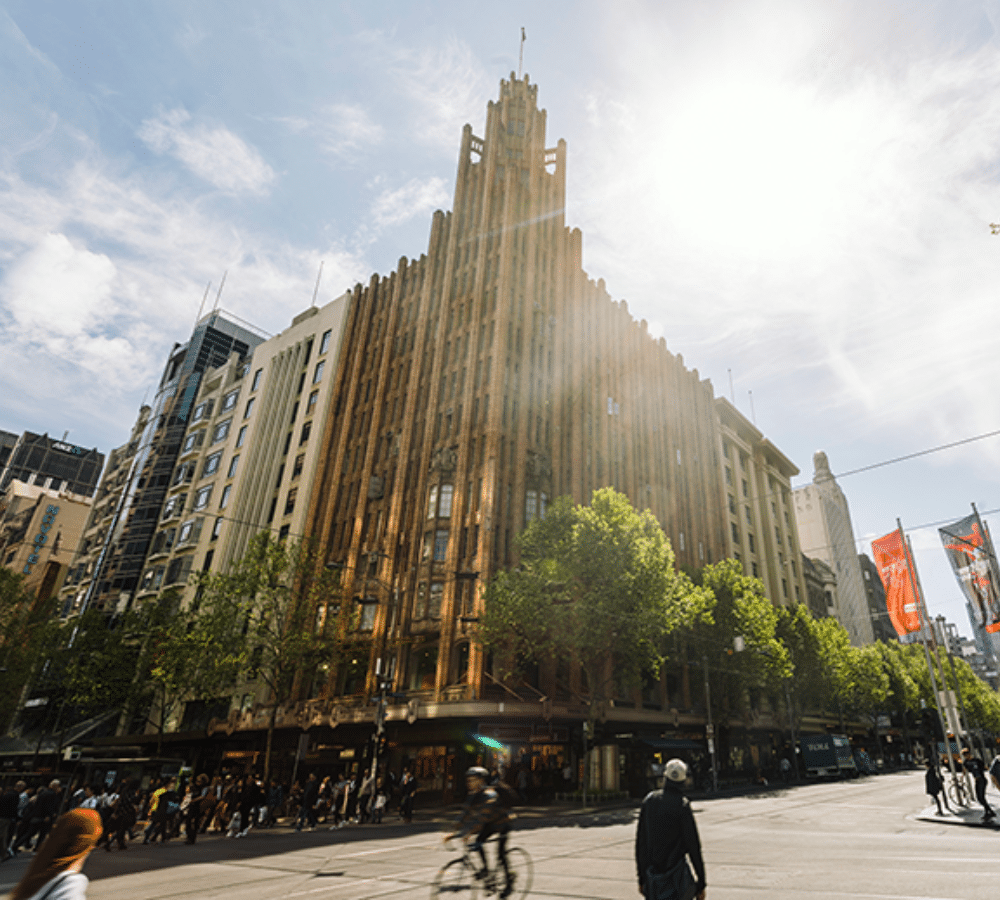
Smile Solutions is a dental practice offering a wide spectrum of dental services, within Melbourne’s iconic Manchester Unity Building. The full list is under services, and getting here covers the building.
Dr Madeleine Hoopmann wrote this in 2013, having been a dentist there for fourteen years at that point — the practice’s longest-serving practitioner.
She describes watching it grow from humble beginnings to a large multi-disciplinary practice — and makes the point that matters most about growth: individual care and attention to detail have not been compromised.
That is the tension any expanding practice has to manage. Scale buys capability — more specialists, better equipment, longer opening hours. It also risks the thing patients actually value, which is being known by the person treating them. The two articles that argue the case for scale, and set out its costs, are Is a bigger dental practice better? Part 1 and part 2.
How the care was structured
As at 2013, the practice comprised:
- 22 general dentists, providing ongoing management and care — general dentistry
- 10 dental hygienists assisting them — dental cleans and hygienists and what does a dental hygienist do?
- 16 Dental Board registered specialists, to whom referral is made where required — specialist care
- 48 clinicians in total
These are historical figures from the date of writing, not current numbers. The full team is the current list.
Having general dentists and specialists in the one location means convenience for patients — and, more substantively, referral without starting again elsewhere with a new set of records. See everything under one roof — we do it all at Smile Solutions and why would I need to see a dental specialist?.
One clarification on “full spectrum”, because the phrase is used loosely across dentistry. Australia recognises thirteen dental specialties. Smile Solutions has registered specialists in six of them — endodontics, oral and maxillofacial surgery, orthodontics, paediatric dentistry, periodontics and prosthodontics — alongside general dentistry and allied roles. That is six of the thirteen, not all of them, and a case needing dento-maxillofacial radiology, forensic odontology, oral medicine, oral and maxillofacial pathology, oral surgery, public health dentistry or special needs dentistry is referred out. See Dentists & Registered Specialists.
Where the training makes a measurable difference to a single procedure, the corpus says so: endodontist vs dentist for root canal: why it makes a difference, why is the microscope so crucial in endodontic treatment by a specialist?, orthodontic treatment: general dentist vs specialist orthodontist? and should your child see a specialist paediatric dentist?.
The philosophy
The stated philosophy, unchanged since the practice began:
“Our philosophy takes us back to the basics of human relations: striving for excellence in quality of care; overcoming communication barriers; and attempting to view your needs and expectations through your eyes, not our own.”
The second and third clauses are the substantive ones. Overcoming communication barriers and seeing the situation through the patient’s eyes rather than the clinician’s describe something specific: the recognition that a treatment plan which makes complete sense to a dentist can be incomprehensible, or frightening, to the person it is being proposed to. How important is communication in dentistry? and what makes a truly great dentist? take that idea further, and dental anxiety and how can I ease my anxiety about visiting the dentist? deal with the frightening part directly.
That is a workable standard, and it is checkable. You can tell whether a practice does it from whether you leave understanding what was proposed and why.
A fair test, at any practice including this one:
- Can you say back, in your own words, what the problem is and what is being proposed?
- Were you told what happens if you do nothing, and given that as a genuine option?
- Were alternatives offered, including cheaper and more conservative ones? The price guide is where the published fees sit.
- Did you get the plan and the fee in writing before committing?
- Were you given time to think, rather than asked to decide in the chair?
If the answer to any of those is no, that is worth raising — and worth a second opinion before anything irreversible. See Understanding your treatment, Second Opinions & Corrective Dentistry and five questions you’ve always wanted to ask your dentist.
Continuity, over years
Dr Hoopmann’s closing observation is the part worth keeping.
“The staff are more like my family, and many of my patients have become more like good friends.”
Over the years she has seen families grow, seen individuals succeed, and — most importantly — seen people take pride in their smile. Is it important to have a family dentist? makes the same argument from the patient’s side.
There is a clinical point inside the sentiment. A dentist who has seen the same mouth across fourteen years can tell what has changed — which is a diagnostic advantage no single appointment provides, however thorough.
It is worth being concrete about why. Dentistry is largely the detection of slow change: a shadow on a radiograph that is fractionally larger than last year’s — how safe are dental x-rays — a filling margin that has begun to stain — how long do dental fillings last? — a gum pocket that has deepened by a millimetre — when do you need deeper cleaning? — wear facets that were not there before — night time tooth grinding and clenching and what is dental erosion and how is it addressed?. None of those is alarming in a single snapshot. All of them are meaningful as a trend, and a trend requires the same observer, the same records, and time.
Continuity is not only pleasant. It is how early problems get found. It is also the reason how does tooth decay develop? ends where it does: decay caught as a white spot costs almost nothing, and the same tooth five years later is a different conversation. How often should I go to the dentist? covers the interval.
How to actually get it in a large practice
This is the practical counterpart, and it is not automatic:
- Ask for the same clinician by name when you book. It is a normal request and no reasonable practice objects — the team list is there for that, and contact us is how to ask.
- Where a specialist is involved, ask who is coordinating the overall plan. In multi-clinician care, someone should be holding the whole picture — complex dental cases: what happens when multiple specialists need to collaborate.
- If you do change clinician, ask that your previous records, radiographs and photographs be reviewed rather than started afresh.
- Keep your own dates. When the last set of radiographs was taken, when a crown was placed, what has been monitored. It saves repeat imaging and it catches things.
- Request copies of your records if you move practices. You are entitled to them.
The honest counterpoint
A large practice is not the right answer for everyone, and it is worth saying so.
A small local practice with one dentist offers continuity by default — you see the same person every time without asking. For routine care, that is a genuine strength, and it is usually less expensive. Finding a dentist online in Australia covers how to assess any practice, including this one.
What a large multidisciplinary practice adds is capability at the edges: the cases that span disciplines, need specialist surgery, or have gone wrong elsewhere. The trade-off is that continuity has to be asked for rather than assumed. It also shows up in emergency dentistry, where having several clinicians on site is the reason an appointment can be found the same day — why choose Smile Solutions in a dental emergency?.
Neither model is better in the abstract. The question is which one matches what you need. See Complex Dentistry.
Common questions
Six specialties in the building — does that mean everything can be handled here?
No, and the arithmetic above is the reason. The Dental Board of Australia states that "there are 13 dental specialties in Australia which are approved by the Australian Health Workforce Ministerial Council": dento-maxillofacial radiology, endodontics, forensic odontology, oral and maxillofacial surgery, oral medicine, oral and maxillofacial pathology, oral surgery, orthodontics, paediatric dentistry, periodontics, prosthodontics, public health dentistry (community dentistry), and special needs dentistry.
Six of those are represented here. Seven are not, and a case that needs one of the seven is referred outside the building like anywhere else. The categories most likely to arise in practice are oral medicine — for mucosal disease, persistent ulceration, burning mouth and orofacial pain problems — and special needs dentistry.
What this means for you, practically: if you are referred out, ask the three questions that keep a referral from becoming a restart. Who is coordinating the overall plan once two practices are involved? Are my existing radiographs and photographs going with the referral, so that imaging is not repeated unnecessarily? And who do I come back to when that part is finished? A referral is a normal event in dentistry, not a failure — but the handover is where information gets dropped.
Is "cosmetic dentist" a specialty? How do I tell a specialty from a strong interest?
"Cosmetic dentist" is not one of the thirteen, and neither is "implant dentist". That is not a criticism of anyone doing that work — a great deal of skilled cosmetic and implant dentistry is done by general dentists with years of further training. It means only that no specialist registration exists for it, so the title cannot be checked the way a specialty can.
What can be checked is registration. Specialist titles are protected under the National Law, and the Dental Board's specialist registration standard requires, among other things, that an applicant has "completed a minimum of two years general dental practice". Ahpra then publishes the outcome: its register "includes details of the specialty or specialties for dentists who hold specialist registration". Two minutes on the public register settles the question.
The wording to notice is the difference between a specialty title and a phrase like "with a special interest in". The second is a statement about experience and focus, which may be entirely well founded — but it is not specialist registration, and the two should not be read as the same claim. Dentists & Registered Specialists sets out the distinction in full.
Does a large practice cost more?
There is no national dental fee schedule in Australia, so the honest answer is that fees vary by practitioner rather than by practice size — and they vary a great deal. The Australian Dental Association's own Dental Fees Survey 2022 found "considerable variation in the fees charged within and between states", which is why no published figure from any one practice is a national rate.
Where specialists are involved the spread is wider still. Among specialists who responded to that survey, the mean hourly rate was $921 and the median $800, "ranging between $450 and $1,500 per hour" — and the ADA attaches its own warning that the specialist response rate was low and those results "should be interpreted with considerable caution". A rehabilitation is priced largely by the hours it takes, so the hourly figure matters more than any headline item price.
The absence of a fee schedule is a live policy argument, not a settled thing. A 2017 submission to the Senate inquiry into out-of-pocket medical costs argued for a recommended, non-mandatory dental fee schedule, and cited an Australian Institute of Health and Welfare survey finding that "nearly a third of people aged 5 or older (32%) avoided or delayed visiting a dentist due to cost". That is one submitter's argument rather than a government finding, but the underlying figure is a reminder that cost is the most common reason care does not happen.
Practical resolution: compare quotes at the level of the itemised treatment plan, not the practice. Ask for the item numbers, the fee against each, what the health fund is expected to pay, and what is left over. See the price guide for published fees, and Understanding your treatment for what a plan should set out.
If something goes wrong, or a claim on a website looks misleading, who do I actually tell?
Start with the practice. Most problems are handling failures rather than clinical ones, and a practice that is told plainly usually resolves it. Put it in writing, keep the copy, and ask for a response by a date.
Beyond that, the regulator is public and free to contact. Ahpra, in partnership with the National Boards, is responsible for "managing complaints and concerns (notifications) about the health, conduct or performance of practitioners". That is the pathway for a concern about a practitioner, and it is the same pathway whatever the size of the practice. Two jurisdictions differ: in New South Wales those notifications are managed by the Health Care Complaints Commission and the Health Professional Councils Authority, and in Queensland jointly by the Office of the Health Ombudsman and the National Boards and Ahpra.
Advertising is handled separately. A complaint about an advertising breach under the National Law "can be made by using the complaint form on the Ahpra website", and Ahpra can also be reached on 1300 419 495 for information about making one. That covers claims on a website, in a brochure or on social media — including anything you read on this site.
What a notification is not: it is not a compensation process and it does not produce a refund. It is about whether a practitioner is safe to practise. A fee dispute is a consumer matter and belongs with the practice first, then with the relevant consumer or health complaints body in your state.
Related reading
- What I love about running a large dental practice
- How do I manage to keep 60 demanding clinicians happy — all under the one roof?
- What makes Smile Solutions an innovative business?
- Technology and the Smile Solutions laboratory
- Reviews and awards
Practical details
Written by Dr Madeleine Hoopmann.
Smile Solutions, Level 1, 220 Collins Street, Manchester Unity Building, Melbourne VIC 3000. Phone 13 13 96, or theteam@smilesolutions.com.au. Monday–Friday 8.00am–6.00pm, Saturday 8.30am–1.30pm, Sunday by appointment.
Specialist registration can be verified free on the AHPRA public register at ahpra.gov.au, or by calling 1300 419 495. The register shows each practitioner’s registration type, any specialty, and any conditions — and it is more authoritative than anything asserted on a practice website, including this one.
Related: Our Team, Why Choose Us, Understanding your treatment, Complex Dentistry, Everything under one roof.
Published 1 November 2013. All team figures are as at that date and are historical statements rather than current numbers; they are reproduced here as a record and are not independently verified. Quotations and figures attributed to the Dental Board of Australia, Ahpra, the Australian Dental Association, the Australian Institute of Health and Welfare and submissions to Parliament are those publishers’ own, as at the dates of the documents cited. General information only — it is not a diagnosis, a treatment plan, a quote or a promise of any particular clinical outcome, and it does not replace advice from your treating practitioner.
Smile Solutions trades under ABN 28 193 514 103.
Images on This Page
-
https://www.facebook.com/tr?id=800557773428361&ev=PageView&noscript=1
(no alt text)
-
https://www.smilesolutions.com.au/wp-content/uploads/2025/10/calendar_month.svg
(no alt text)
-
https://www.smilesolutions.com.au/wp-content/themes/arcadian-wordpress-theme/assets/images/smile_solutions_logo_white.png
Smile Solutions Logo
-
https://www.smilesolutions.com.au/wp-content/themes/arcadian-wordpress-theme/assets/images/smile_solutions_logo_purple.png
Smile Solutions Logo
-
https://www.smilesolutions.com.au/wp-content/uploads/2016/05/Madeleine-150x150.jpg
Dr Madeleine Hoopmann
-
https://www.smilesolutions.com.au/wp-content/uploads/2025/11/Smile-Solutions-Manchester-Unity-Building.png
Manchester Unity Building Melbourne CBD
-
https://www.smilesolutions.com.au/wp-content/uploads/2026/01/Cosmetic-Consult-300x270.jpg
Consultation at a cosmetic clinic.
-
https://www.smilesolutions.com.au/wp-content/uploads/2021/03/Rojina-1-300x270.jpg
Rojina 1
-
https://www.smilesolutions.com.au/wp-content/uploads/2025/11/Smile-Solutions-Whitening-Trays-300x300.png
Professional Take-Home Whitening Trays
-
https://www.smilesolutions.com.au/wp-content/themes/arcadian-wordpress-theme/assets/images/family_owned_bussiness.png
Family Owned Business
-
https://www.smilesolutions.com.au/wp-content/themes/arcadian-wordpress-theme/assets/icons/icon--phone.svg
Smile Solutions Contact
-
https://www.facebook.com/tr? id=800557773428361&ev=PageView&noscript=1
(no alt text)
-
https://bat.bing.com/action/0?ti=25148060&tm=gtm002&Ver=2&mid=82131ad6-b974-42b8-9f3a-1f5f059a847b&bo=1&sid=48775970ab2611f1b85ff159889c2933&vid=4877d550ab2611f19d336da71b184ff1&vids=1&msclkid=N&pi=918639831&lg=en-US&sw=800&sh=600&sc=24&nwd=1&tl=The%20Smile%20Solutions%20Experience%20-%20Smile%20Solutions&p=https%3A%2F%2Fwww.smilesolutions.com.au%2Fdental-articles%2Farticle%2Fsmile-solutions-experience%2F&r=&evt=pageLoad&sv=2&cdb=AQAQ&rn=846361
(no alt text)