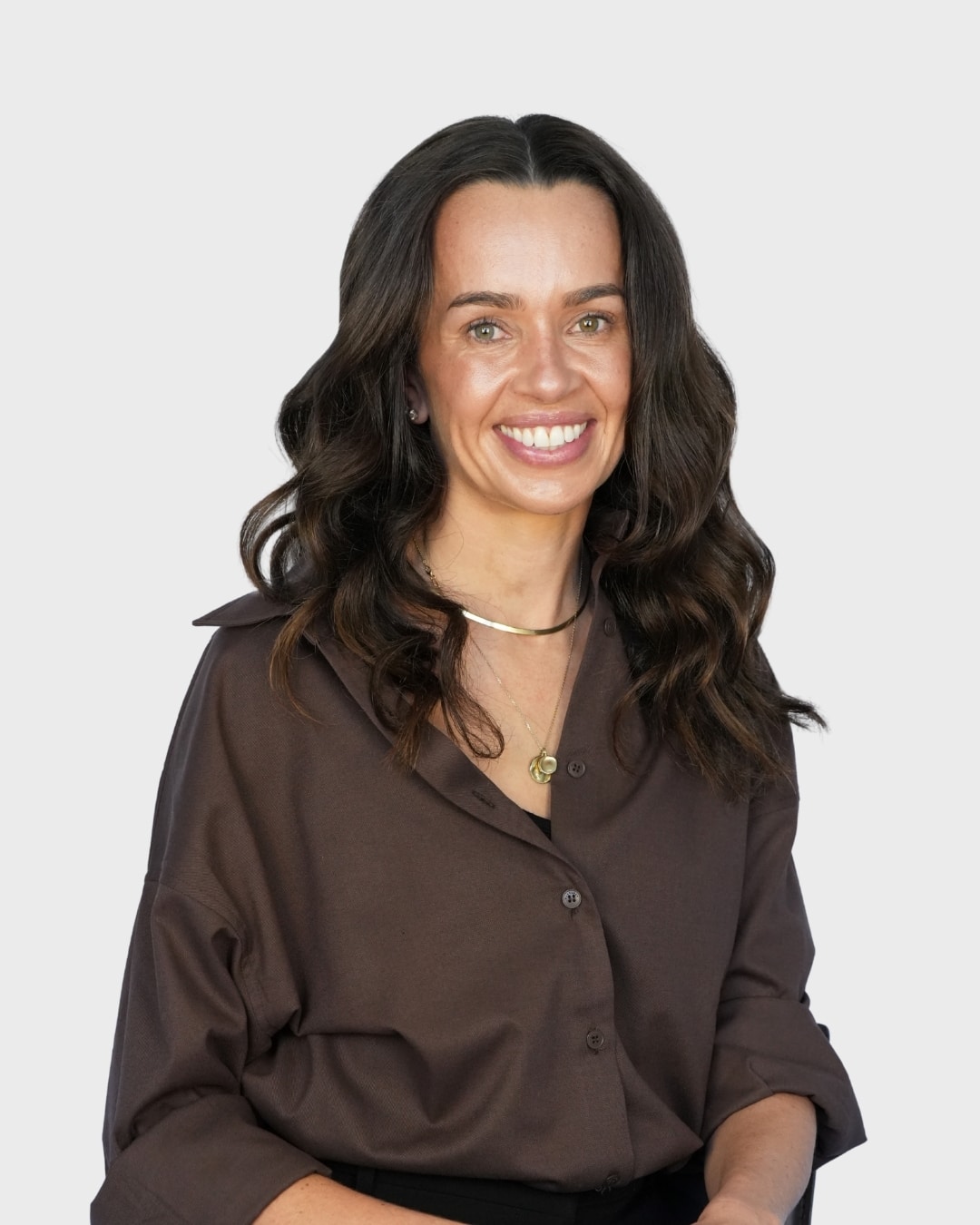
Dr Madeleine Hoopmann, General Dentist
Role: General dentist
Qualifications: BDSc, University of Adelaide (2009)
Registration: Registered dentist, general registration, DEN0001151189
Registration status can be verified on the AHPRA register of practitioners at ahpra.gov.au. The service page for this scope is General Dentistry.
Background
Dr Madeleine Hoopmann graduated from the University of Adelaide in 2009 and joined Smile Solutions in February 2010.
She works across the range of general dentistry, with a particular interest in restorative work — including chairside CAD/CAM restorations, which allow inlays, onlays, veneers and crowns to be designed, milled and fitted in a single appointment. See Same-Day CEREC Restorations.
She attends continuing professional development courses around Australia.
Articles by Dr Hoopmann
She has written nine of the practice's articles:
- What does restorative dentistry involve?
- What do I do if a temporary filling comes out?
- Difference between pharmacy whitening kits and dentist whitening?
- Home whitening and charcoal whitening — Does it work? Is it safe?
- I want to whiten my teeth but one of my front teeth has a porcelain crown. What are my options?
- Smile makeover: How Smile Solutions helped to rebuild one patient's smile
- The cause of mouth ulcers and their usual treatments
- Top Ten Teeth Tips
- The Smile Solutions Experience
What a general dentist does
A general dentist holds general registration with the Dental Board of Australia and provides:
- examination, diagnosis and treatment planning
- radiographs and diagnostic imaging within the dental scope
- scale and clean, and treatment of gum disease
- fillings, inlays, onlays, crowns and bridges
- root canal treatment
- extractions, including wisdom teeth
- dentures and implant-supported restorations
- whitening and other cosmetic treatment
- referral to specialists where a case sits outside general practice
A general dentist is not a specialist. Specialist titles are protected under the Health Practitioner Regulation National Law and require specialist registration, which follows three years of full-time postgraduate university training. See Why would I need to see a dental specialist?
The Dental Board of Australia records that “there are 13 dental specialties in Australia which are approved by the Australian Health Workforce Ministerial Council”, and that specialist registration additionally requires “a minimum of two years general dental practice” and “all other requirements for general registration as a dentist”. What governs day-to-day work for everyone on the register is the Scope of practice registration standard (in effect 1 July 2020), which “requires dental practitioners to practise within the scope of their education, training, and competence at all times”. (Source: Dental Board of Australia — dentalboard.gov.au.)
Same-day CAD/CAM restorations
Chairside CAD/CAM — the best-known system is CEREC, though several exist — replaces the impression-and-laboratory sequence with a digital scan, on-screen design and an in-practice milling unit. The restoration is made from a solid block of ceramic while the patient waits. See Our Technology and Everything you need to know about CEREC technology.
What it genuinely offers:
- One appointment instead of two. No temporary restoration, no second injection, no second visit.
- No temporary crown to come off — temporaries debond, leak and cause sensitivity, and eliminating them removes a real source of trouble. See What do I do if a temporary filling comes out?
- A digital scan instead of an impression, which is more comfortable and avoids the distortion that impression material can introduce.
- Milled ceramic is homogeneous — industrially produced blocks have consistent, well-characterised material properties.
What it does not change, and what is sometimes overstated:
- The tooth preparation is the same. The time saved is in manufacture, not in how much tooth is removed. A same-day crown removes just as much tooth structure as a laboratory crown.
- It is not automatically superior to laboratory work. A skilled technician working with layered porcelain can achieve aesthetics that are difficult to match with a monolithic milled block, which matters most for front teeth. Many practitioners use chairside milling for back teeth and the laboratory for anterior cases. See the Smile Solutions laboratory.
- Material choice still matters — lithium disilicate, zirconia and composite blocks have different strengths, translucency and wear characteristics. Ask which is being used and why. See What types of dental crowns are available? and How Much Does a Dental Crown Cost in Melbourne? Materials Compared
- It does not extend the life of the restoration. Same-day and laboratory-made restorations of the same material perform comparably; nothing about the speed makes the result last longer.
Restorative dentistry: the honest version
- No restoration lasts forever. Every filling, inlay and crown will eventually need replacing, and each replacement removes more tooth. Preventing the first one is worth more than any material choice. See How long do dental fillings last? and How Do I Prevent Dental Decay?
- An inlay or onlay is often a better answer than a crown where a substantial part of the tooth is still sound. It preserves more tooth structure. A crown is indicated when there is too little tooth left to support anything less, or after root canal treatment on a back tooth.
- Composite (white) fillings bond to the tooth and need minimal preparation. They are technique-sensitive and have shorter service lives than amalgam in large load-bearing situations. See Dental fillings: porcelain, amalgam or composite resin? and Composite Bonding
- Early enamel decay can often be arrested rather than drilled, with fluoride, diet change and monitoring. A dentist who watches a small lesion is usually practising well. See Can you reverse tooth decay & do I need a filling?
- Sensitivity after a deep restoration is common and usually settles over weeks. Sensitivity that worsens, or pain lingering after cold, needs review. See What to do if you suffer from sensitive teeth and Tooth Pain and Ache
- Cracked teeth are a common reason for onlays and crowns. A crack that has not yet split the tooth can often be stabilised with a cusp-covering restoration; once it extends below the gum or into the pulp the prognosis changes significantly. See Chipped and Cracked Teeth, Why does a cracked tooth hurt so much?, How will my cracked tooth be treated? and Do I have to get a chipped tooth fixed?
On whitening, which she has written about most
Whitening is the one cosmetic treatment that removes no tooth structure, which is why it belongs at the bottom of the ladder rather than the top. The practical points are in Why should I go to a dentist for teeth whitening?, Difference between pharmacy whitening kits and dentist whitening? and Home whitening and charcoal whitening — Does it work? Is it safe?. The service page is Teeth Whitening.
The part that is actually the law, not a sales point
The difference between a pharmacy kit and dentist-supplied whitening is not a matter of marketing. It is set by the Poisons Standard.
Schedule 10 “specifically states that teeth whitening products containing more than 6% hydrogen peroxide or 18% carbamide peroxide may only be sold, supplied and used by registered dental practitioners as part of their dental practise”, and “these provisions are formalised in all state and territory poisons legislation”. Put plainly: “only registered dental practitioners can use or supply high-concentration teeth whitening products (over 18% carbamide peroxide or 6% hydrogen peroxide)”.
Two details make that threshold easier to read on a product label:
- The two figures are the same strength expressed differently. Many products use carbamide (urea) peroxide, “one-third of its concentration being equivalent to hydrogen peroxide, e.g., 18% carbamide peroxide approximates 6% hydrogen peroxide”. In-chair products reach much higher concentrations — the source notes “35% in some office-based bleaching products”.
- Weak preparations are a different thing entirely. The same source records that “weak solutions (<3%) of hydrogen peroxide have been used in the oral cavity in the form of mouthwashes and toothpaste for many years”.
The Australian Dental Association's position on who should be doing it is that “registered dental practitioners who are educated, trained and competent in teeth whitening (bleaching) procedures should use or supply teeth bleaching products; containing more than 6% hydrogen peroxide or equivalent” — which is the whitening-specific expression of the Scope of practice standard quoted earlier. (Sources: TGA Poisons Standard; ADA policy statement.)
This is why a legally sold over-the-counter kit cannot match a dentist-supplied one: it is capped by law, not by quality. It is also why products advertised online at in-chair concentrations, or whitening offered by someone who is not a registered dental practitioner, are a regulatory problem rather than a bargain.
The trap worth knowing before you start: whitening does not change the colour of crowns, veneers or fillings. If you have a restoration on a front tooth, whitening the natural teeth around it can leave it mismatched — and replacing it is an additional cost that belongs in the original conversation. See I want to whiten my teeth but one of my front teeth has a porcelain crown. What are my options?
Continuing professional development
All registered dental practitioners in Australia must complete continuing professional development each year as a condition of registration, and must declare it at renewal. The Dental Board sets a minimum number of hours over a triennium, with a proportion required to be clinically or scientifically based.
The requirement sits in the Board's Continuing professional development registration standard, in effect since 1 December 2015, alongside the Recency of practice registration standard (also 1 December 2015) — which is the separate requirement to have practised recently enough to remain competent. (Source: Dental Board of Australia, Registration standards.)
CPD is a registration requirement, not a distinction — every registered dentist does it. What varies is depth, and none of it confers specialist status: courses, certificates and manufacturer training, however extensive, are not specialist registration.
Registration
Dentists are one of the registered dental practitioner divisions under the National Law. The Dental Board of Australia registers dentists, dental specialists, dental hygienists, dental therapists, oral health therapists and dental prosthetists. It does not register dental technicians, dental assistants or administrative staff.
Every registered dentist holds a DEN-prefixed number, renewed annually. Conditions, undertakings and reprimands appear on the public register — Ahpra “publishes an online register of all dental practitioners that provides the profession and the public with up-to-date information about a dental practitioner's registration status”, free to search at ahpra.gov.au. The other standards attaching to registration are Professional indemnity insurance arrangements (1 July 2016), English language skills (18 March 2025) and Criminal history (15 July 2026).
Common questions
Will whitening actually work on my teeth — and what will it not do?
It depends what is making them the colour they are, which is the question to settle before buying anything.
What whitening is, precisely. The Australian Dental Association defines it as “the use of teeth whitening products designed to penetrate the teeth and bleach intrinsic and/or extrinsic tooth discolourations, as opposed to products such as whitening toothpastes that are intended to remove surface staining”. That sentence does a lot of work: a whitening toothpaste is an abrasive or stain-removing product and is not doing the same job as a bleaching product, whatever the packaging implies.
What it will not change at all: crowns, veneers, composite fillings and bridges. Porcelain and composite do not lighten. Whitening the natural teeth around an existing front restoration can leave that restoration looking darker than it did before, and replacing it is a cost that belongs in the original conversation rather than a surprise afterwards.
What the side effects are, in the ADA's wording: peroxide products are “safe and effective when used by or under the supervision of a dentist and according to the professional directions for use”, and “the most common side-effects are transient tooth sensitivity and soft tissue irritation during or immediately following treatment”. Transient is the operative word, but sensitivity during treatment is common enough that it should be expected rather than treated as a failure.
On the strengths you can buy yourself: the Poisons Standard treats “hydrogen peroxide 3-6% and carbamide peroxide 9-18% as Schedule 5 substances requiring ‘Caution'”, so products up to those concentrations “can be sold direct to consumers if they are labelled with stipulated safety warnings”. Above that is Schedule 10 and dental-practitioner-only, as set out above.
And the honest warning the ADA gives about marketing, which applies to products rather than to any practitioner: the promotion of some consumer whitening products “encourages unrealistic expectations about whitening results and promotes regular ongoing use to maintain desired effects”, which the ADA calls “a concern given the lack of clinical data supporting frequent home use of such products over long periods”. (Source: ADA policy statement on teeth whitening.)
So: have the cause of the discolouration assessed first, ask what result is realistic for your teeth specifically, and settle what happens to any existing restorations before you start.
Is a same-day milled crown as long-lasting as one made in a laboratory?
We cannot give you a number, and we are not going to invent one.
The independent reference material behind this site — regulators, professional bodies and peer-reviewed reviews — contains no survival data for chairside-milled ceramic restorations. Figures of the “ninety per cent at ten to fifteen years” kind circulate widely on dental websites for this technology, and we could not source any of them. That does not make them wrong; it means they are unsourced, and a page that repeats an unsourced survival figure is doing the reader a disservice however reassuring it sounds.
What can be said without a number:
- The variable that matters most is the material, not the machine. A crown milled from lithium disilicate and one pressed in a laboratory from the same material are the same material.
- How much sound tooth remains, how the restoration is bonded, and what your bite does to it are larger determinants of how long it lasts than where it was manufactured.
- Grinding is the common thread in early failures of ceramic work, and it is worth identifying before rather than after. See TMD and Teeth Grinding.
What to ask instead of “how long will it last?”: which material is being used and why; whether an onlay would do the job with less tooth removed; what the failure mode is for this material in this position; and what happens, and at whose cost, if it chips or debonds in the first couple of years. Those are answerable. A survival percentage, for this technology, currently is not. See What types of dental crowns are available? and Understanding Your Treatment.
How do I know a dentist's training is current — and what will the register not tell me?
Currency is a condition of registration rather than something read off a biography. Every registered dental practitioner renews annually and must meet the Continuing professional development and Recency of practice standards (both in effect 1 December 2015) and hold professional indemnity insurance under the standard in effect from 1 July 2016. These are requirements for staying on the register, not achievements — every registered dentist meets them or is not registered.
What the register will not tell you: how many CPD hours were done or in what; how many of any procedure a practitioner performs; their complication or remake rate; what they charge; or any patient-experience measure. No Australian body publishes outcome data for individual dental practitioners, so there is nothing of that kind to look up, and a site presenting itself as a ranking is selling listings.
What it does show — registration, category, any specialty, and any conditions, undertakings or reprimands — takes about a minute at ahpra.gov.au and is worth doing before any substantial treatment.
What should I bring, and what should I settle before a single-visit restoration?
Bring your medicines and medical conditions written down, any existing radiographs or the name of the practice holding them, and anything already quoted elsewhere by name or item number.
On images: the radiology principle is that “strict and individualized justification should determine the prescription of each radiograph”, and that a justified radiograph “should make a substantial contribution to distinguishing between treatment options” — so a usable recent image should not simply be repeated, though a different view or a newer one often is justified. For scale, the International Atomic Energy Agency puts a routine intraoral radiograph at 1–8 μSv, “usually less than one day of natural background radiation”. See How safe are dental x-rays.
Settle before the appointment, not during it:
- How long to allow. A single-visit restoration is one appointment, but a long one — scanning, preparation, milling and fitting happen in sequence. Ask for the realistic total.
- Whether a smaller restoration would do. An inlay or onlay preserves more tooth than a full crown where enough sound tooth remains, and it is a question worth asking out loud before the tooth is prepared.
- What the fee covers, itemised, including the ceramic block, any bonding procedure and the review appointment.
- What happens if it needs adjusting. Bite adjustment after fitting is normal and usually quick; know whether it is included.
Practical details
Dr Hoopmann's registration can be checked on the AHPRA public register. See Contact Us to ask about appointments or which practitioner suits a particular problem. The full clinical team is on Our Team, and published fees in the Price Guide.
Smile Solutions, Level 1, 220 Collins Street, Manchester Unity Building, Melbourne VIC 3000. Phone 13 13 96, or theteam@smilesolutions.com.au. Monday–Friday 8.00am–6.00pm, Saturday 8.30am–1.30pm, Sunday by appointment. Location and directions.
This page records qualifications and career history as published by the practice. General information only — it is not a diagnosis, a treatment plan or a promise of any particular clinical outcome. Practitioner availability changes; confirm when booking.
Smile Solutions trades under ABN 28 193 514 103.
Images on This Page
-
https://www.facebook.com/tr?id=800557773428361&ev=PageView&noscript=1
(no alt text)
-
https://www.smilesolutions.com.au/wp-content/uploads/2025/10/calendar_month.svg
(no alt text)
-
https://www.smilesolutions.com.au/wp-content/themes/arcadian-wordpress-theme/assets/images/smile_solutions_logo_white.png
Smile Solutions Logo
-
https://www.smilesolutions.com.au/wp-content/themes/arcadian-wordpress-theme/assets/images/smile_solutions_logo_purple.png
Smile Solutions Logo
-
https://www.smilesolutions.com.au/wp-content/uploads/2016/05/Madeleine.jpg
Dr Madeleine Hoopmann
-
https://www.smilesolutions.com.au/wp-content/uploads/2026/01/Cosmetic-Consult-300x270.jpg
Consultation at a cosmetic clinic.
-
https://www.smilesolutions.com.au/wp-content/uploads/2016/05/Madeleine-150x150.jpg
Dr Madeleine Hoopmann
-
https://www.smilesolutions.com.au/wp-content/uploads/2021/03/Rojina-1-300x270.jpg
Rojina 1
-
https://www.smilesolutions.com.au/wp-content/uploads/2025/11/Smile-Solutions-Whitening-Trays-300x300.png
Professional Take-Home Whitening Trays
-
https://www.smilesolutions.com.au/wp-content/themes/arcadian-wordpress-theme/assets/images/family_owned_bussiness.png
Family Owned Business
-
https://www.smilesolutions.com.au/wp-content/themes/arcadian-wordpress-theme/assets/icons/icon--phone.svg
Smile Solutions Contact
-
https://www.facebook.com/tr? id=800557773428361&ev=PageView&noscript=1
(no alt text)
-
https://bat.bing.com/action/0?ti=25148060&tm=gtm002&Ver=2&mid=4a0466cd-aebc-41dd-88bb-d5e2bf50ff91&bo=1&sid=11094390ab2911f1b032836d8e88e2b3&vid=1109c5c0ab2911f1b21229da31b70d76&vids=1&msclkid=N&pi=918639831&lg=en-US&sw=800&sh=600&sc=24&nwd=1&tl=Dr%20Madeleine%20Hoopmann%20%7C%20General%20Dental%20Care%20%7C%20Smile%20Solutions&p=https%3A%2F%2Fwww.smilesolutions.com.au%2Four-team%2Fdr-madeleine-hoopmann%2F&r=&evt=pageLoad&sv=2&cdb=AQAQ&rn=699991
(no alt text)