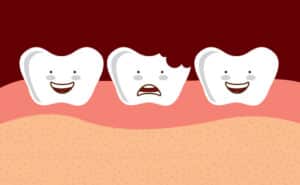
Do I have to get a chipped tooth fixed?
The enamel covering our teeth is the hardest, most mineralised tissue in the body. Despite that, abnormal wear and tear or traumatic injury can chip or break a tooth.
Chips and fractures range from:
- minor — involving only the outer enamel layer
- severe — involving the outer enamel, the inner dentine, and sometimes the nerve tissue
Have any chipped or broken tooth assessed professionally as soon as you notice it.
The short answer to the question in the title: not every chip needs restoring, but every chip needs looking at. Some are polished and monitored. Deciding which is which by eye, at home, is where people get into trouble — because you cannot judge the depth of a chip by its size. A small visible chip can expose dentine; a large-looking one can be confined to enamel.
If it has just happened, the immediate steps are on What should I do if I have a chipped tooth?. This page is about what happens next and how the decision is made.
First, the lines that are not a problem
Worth separating out, because they cause a lot of unnecessary worry.
Craze lines are fine vertical lines confined to the enamel. The European Society of Endodontology's 2024 position statement on longitudinal cracks and fractures describes them as "naturally occurring through mastication and becoming more prominent with age", and states that "treatment of craze lines is not indicated, except for aesthetic reasons" — that is, unless they have stained. They are readily visible on front teeth and can also be seen on the back teeth.
A crack is a different thing: it runs into the dentine, and it can progress. Telling the two apart is a job for magnification, not a bathroom mirror — the ESE notes that a dental operating microscope or loupes is critical in distinguishing dentinal cracks from craze lines.
How urgently?
That depends on how it happened.
If the chip came from a blow to the mouth or any trauma, be assessed as soon as possible — not for the chip itself, but to check the surrounding teeth, lips and cheeks for damage that may not be obvious to you. See What should I do in a dental emergency?, or for a child, Children's Dental Emergencies.
If it happened any other way — biting something hard, an old filling giving way — it should still be seen within a day or two.
A blow to the head with loss of consciousness, confusion, vomiting, a suspected jaw fracture, or bleeding that will not stop is a hospital matter — call 000. Dental work follows once the more serious injury has been excluded.
What to do in the meantime
- Keep the fragment if you have it. Store it moist, in milk or saline — not dry. A fragment that has not dried out can sometimes be bonded straight back on, which gives a better colour and shape match than any restorative material.
- Rinse with warm salty water if the area is sore.
- Cover a sharp edge with orthodontic wax or sugar-free gum if it is cutting your tongue or lip.
- Avoid chewing on that side, and avoid very hot, cold or sweet things.
- Ordinary pain relief as per the packaging if needed.
What determines the treatment
Options run from minimally invasive techniques to more complex restorations, depending on:
- the size of the chip or fracture
- the state of the tooth, including how much sound structure remains
- whether the nerve is involved
- your functional and aesthetic needs
- your wishes
Small chips, confined to enamel
These can sometimes simply be buffed to the satisfaction of both patient and clinician.
That achieves two things: it stops the chip causing trauma to the tongue, and it protects undermined enamel from further damage.
It is also the least invasive option available — nothing is added, and almost nothing removed.
Slightly larger fractures, or chips in a visible area
These can be repaired using modern bonding techniques with tooth-coloured materials.
With careful colour matching, chipped teeth are restored to their former appearance — in most cases very closely.
Composite bonding is the most conservative restorative option: it usually needs little or no drilling, often no anaesthetic, and it is done in one visit. The honest trade-off is that composite stains and chips over time and will need repair or replacement — typically after some years, sooner on a biting edge or in someone who grinds. That is a reasonable price for keeping the tooth intact. Composite Bonding, and Differences between dental bonding and veneers if you are weighing the two.
Larger chips — more than half the tooth
A stronger material is generally recommended.
Clinical studies favour porcelain for heavily restored teeth: greater strength, better appearance, and better long-term survival than large composite restorations.
What the published evidence is clearest about is not the material but the shape of the restoration. The ESE position statement concludes that early management, restorations that cover the cusps, and the absence of deep periodontal probing not of endodontic origin all increase the survival rate of a cracked tooth. It also flags periodontal probing of 5 mm or more as associated with reduced survival, along with multiple cracks and cracks extending into the root. So the argument for the bigger restoration is about wrapping and protecting what is left, and about acting before the crack propagates.
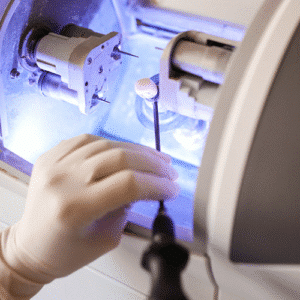
Dr Siddiqui uses CAD-CAM CEREC technology to fabricate porcelain fillings or caps bonded to fractured back teeth. The procedure usually takes about an hour and can be done in a single visit.
The trade-off here is the opposite one: preparing a tooth for a porcelain restoration removes sound tooth structure and is irreversible. Once prepared, the tooth will always need a restoration of some kind. That is why the larger option is not automatically the better one — it becomes the better one as the remaining tooth gets weaker. CEREC Restorations, Dental Crowns, and for front teeth Porcelain Veneers.
When it goes deeper
If the fracture reaches the pulp, root canal treatment is usually needed before the tooth can be restored, and a crown afterwards — difficult cases are handled by a specialist endodontist. Even where a crack is managed restoratively in the first instance, root canal treatment is sometimes needed later: the ESE cites reported rates of endodontic intervention after restorative management of between 7.7% and 20%. If the fracture extends below the gum or splits the root vertically, the tooth may not be restorable and extraction with a replacement plan is the honest answer; see Dental Implants and Prosthodontists. Root Canal Therapy.
Why not just leave it?
This is the substantive answer to the question in the title. Leaving a chipped tooth untreated can result in:
- further fracture — the chipped edge is a stress point, and the next fracture is usually larger than the first
- sensitivity
- increased risk of decay, because the rough surface holds plaque
- bacteria entering the nerve chamber of the tooth
That last one is the consequence that turns a small problem into a large one. A chip that admits bacteria to the pulp leads to root canal treatment or loss of the tooth — and it can do so without pain in the meantime.
A chipped tooth is not a stable state that will simply persist. It is an opening.
And absence of pain is not reassurance. In the largest practice-based study the ESE cites — 2,858 teeth seen by 209 dentists in the United States — only 45% of cracked teeth were symptomatic at all. Where there were symptoms, the commonest were pain to cold (37%), pain on biting (16%) and spontaneous pain (11%). So more than half of cracked teeth were found on examination rather than reported by the patient.
Nor does an X-ray settle it. The ESE reports that only 2% of cracked teeth with living pulps showed any evidence of the crack on a radiograph. That is why a dentist examining a suspected crack uses magnification, transillumination, a bite test and sometimes a dye — and why "the X-ray looked fine" is not the same as "there is no crack".
See Why does a cracked tooth hurt so much? for why the pain from a fracture is such an unreliable guide, and How will my cracked tooth be treated? for the options once a crack rather than a chip is found.
A note on teeth chipped by trauma
Even when repaired well, a tooth that took a significant knock can lose its vitality and darken months or years later. That is why follow-up appointments after dental trauma matter, and why they are worth attending when the tooth feels fine. If a previously injured tooth starts to discolour, have it checked — it is usually treatable. Chipped or Cracked Teeth.
Stopping it happening again
If you have chipped more than one tooth, or chipped the same one twice, something is driving it:
- grinding or clenching, which produces the crack lines that later become fractures — a night splint is the usual answer; see How can I stop grinding my teeth when I sleep?
- large old fillings that have weakened the tooth around them
- contact sport without a custom mouthguard
- using teeth to open packaging, bite nails, or crunch ice
- acid erosion from reflux or diet, thinning and softening enamel — see How does acidic food affect your teeth?
The ESE makes the same point from the clinical side: careful assessment of the bite, and management of grinding habits and occlusal interferences, is essential to reduce the likelihood of an existing crack propagating. It also identifies the teeth most at risk — heavily restored teeth, and the last standing molar or premolar on a side. TMD & Teeth Grinding and Sports Mouthguards.
The reassurance
Chipping a tooth is distressing, and nobody enjoys unplanned emergency dental care.
But with current restorative and bonding technology, teeth can usually be restored effectively and quickly — often in one appointment, and often with a result that is not noticeable.
Get any broken or chipped tooth assessed promptly.
Common questions
I have lost the broken piece. Does that matter?
It matters in two separate ways, and only one of them is about the repair.
If the fragment is intact and has been kept, it can sometimes be bonded straight back on. The International Association of Dental Traumatology's 2020 guideline on fractures and luxations states that where the fragment is available and intact, "it can be bonded back on to the tooth", and that "the fragment should be rehydrated by soaking in water or saline for 20 min before bonding". A returned fragment is your own enamel, so the colour and translucency match in a way no material quite does.
If the fragment is missing, that is a question in its own right. The same guideline says missing fragments "should be accounted for", and that where a fragment cannot be found and there are lip or cheek injuries, radiographs of the lip and/or cheek are indicated to look for tooth fragments buried in the soft tissue. A piece of tooth left in a lip causes trouble later. So say that you cannot find it, rather than assuming it went down the sink.
On storage, the Better Health Channel (Victorian Department of Health) is plain: keep an intact broken piece "in milk or the saliva of the person with the broken tooth", sealed in a container or plastic wrap, and be seen as soon as possible.
How long before anyone can tell me whether the nerve survived?
Longer than most people expect — and the wait is normal, not a sign that something has been missed. A tooth that has taken a knock can test healthy for months and then lose vitality.
For an enamel fracture or an enamel–dentine fracture, the IADT's follow-up schedule is clinical and radiographic evaluation after 6–8 weeks, and again after one year. If the tooth was also moved in its socket, or there is a root fracture, the longer luxation schedule applies instead.
That is the reason to keep a review appointment for a tooth that feels completely fine. The check is looking for a change in colour, a change in how the tooth responds to sensibility testing, and changes at the root tip on a radiograph — none of which you can feel from the outside. Discolouration that turns up months later is usually treatable, and easier to treat early.
What will it cost, and why do two quotes differ so much?
The cost follows which of the options above the tooth actually needs, and the span between them is wide: smoothing an enamel chip and rebuilding a heavily broken molar in porcelain are different orders of expense. Nobody can give you a figure without looking at the tooth, usually with a radiograph.
The variation between practices is real and documented. There is no national dental fee schedule in Australia. A consumer submission to the 2017 Senate inquiry into the value and affordability of private health insurance made exactly this complaint — that without one, patients "can go to multiple dentists and receive conflicting diagnoses and widely varying quotes for unpredictable dental fees". The Australian Dental Association's own Dental Fees Survey 2022, drawing on 3,535 general practitioners across 122 surveyed items, found "considerable variation in the fees charged within and between states".
So the useful step is not ringing around for a number. It is asking for the quote itemised, with the dental item number against each step. That makes two quotes comparable, and it lets your health fund tell you what it will pay before you commit. Fees for this practice are set out on Price Guide.
The whole tooth came out, not just a piece. What do I do?
Different injury, different rules — and worth reading before it happens rather than during.
If it is an adult tooth, hold it by the crown and never by the root. If it is dirty, rinse it briefly. Put it back into the socket straight away if you can, have the person bite gently on something soft to hold it there, and get to a dentist immediately.
The variable that matters is how long the root spends DRY, not how much time has passed since the accident. The IADT states that after an extra-alveolar dry time of 30 minutes, most periodontal ligament cells are no longer viable. A tooth that went into milk within a minute and arrived two hours later is in a far better position than one carried dry in a tissue for twenty. (Some first-aid advice still frames this as a race against total elapsed time; the distinction the guideline draws is dry time.)
If you cannot put it back, keep it wet. In descending order of preference the IADT lists milk, then HBSS, then the person's own saliva, then saline. Water is a poor medium, but the guideline is explicit that it "is better than leaving the tooth to air-dry". What must not happen is drying — not in a tissue, not in a bag, not in an empty container.
Do not decide it is too late and leave the tooth behind. The IADT's position is that "the decision to replant a permanent tooth is almost always the correct decision even if the extra-oral dry time is more than 60 minutes", because replanting preserves the bone and keeps later options open. Bring the tooth.
Never put a knocked-out baby tooth back in. The Better Health Channel warns that replanting one risks damaging the permanent tooth developing underneath, and that the baby tooth may fuse to the bone. Bring the child and the tooth to be seen anyway, so that nothing has been pushed up into the gum or lost.
My child has chipped a tooth. Is a baby tooth handled the same way?
The first job is working out which kind of tooth it is, and that is harder in the mouth than it sounds. The Better Health Channel's rule of thumb is that baby teeth are smaller, smoother and usually whiter, while a child's adult teeth are larger, more yellow, and often have small bumps along the biting edge.
Either way it should be looked at. The Better Health Channel's position on chipped or cracked teeth does not distinguish by age: they "may or may not be painful", and either way the advice is to be seen as soon as possible "because early repair can improve the survival of a damaged tooth". Sharp edges that cut the tongue or lip, and a nerve exposed at the fracture, are the same problems in a baby tooth as in an adult one.
What differs is the weighing-up afterwards: how much work a tooth warrants depends partly on how long it has left to serve, and that is a conversation to have at the appointment rather than a rule that can be stated in advance. For what to do in the first hour, see Children's Dental Emergencies.
Where to go next
- It just happened — What should I do if I have a chipped tooth?
- The treatment page — Chipped or Cracked Teeth
- Choosing between bonding and porcelain — Composite Bonding, CEREC Restorations, Cosmetic Dentistry
- If it hurts on biting — Why does a cracked tooth hurt so much?
- If grinding is the cause — TMD & Teeth Grinding
- The clinicians and their registrations — Our Team
Practical details
Written by Dr Maliha Siddiqui (DEN0001785009), Registered Dentist, General Registration, at Smile Solutions.
CEREC restorations are designed and milled on site. Smile Solutions holds emergency appointment slots each day.
Smile Solutions, Level 1, 220 Collins Street, Manchester Unity Building, Melbourne VIC 3000. Phone 13 13 96, or theteam@smilesolutions.com.au. Monday–Friday 8.00am–6.00pm, Saturday 8.30am–1.30pm, Sunday by appointment. Full details on Contact Us.
Related: Chipped or Cracked Teeth, Emergency Dentistry, Composite Bonding, CEREC Restorations, Dental Crowns.
Registration for any practitioner can be verified free on the AHPRA public register at ahpra.gov.au.
Published 30 March 2017. General information only — it is not a diagnosis, a treatment plan, a quote or a promise of any particular clinical outcome, and it does not replace advice from your treating practitioner. The depth of a fracture, whether the nerve survives and which restoration is appropriate can only be established by examination, usually with radiographs. Results and durability vary between individuals, and no restoration is permanent. If you are in doubt about how urgent your situation is, call 13 13 96 and describe it rather than deciding from this page.
Smile Solutions trades under ABN 28 193 514 103.
Images on This Page
-
https://www.facebook.com/tr?id=800557773428361&ev=PageView&noscript=1
(no alt text)
-
https://www.smilesolutions.com.au/wp-content/uploads/2025/10/calendar_month.svg
(no alt text)
-
https://www.smilesolutions.com.au/wp-content/themes/arcadian-wordpress-theme/assets/images/smile_solutions_logo_white.png
Smile Solutions Logo
-
https://www.smilesolutions.com.au/wp-content/themes/arcadian-wordpress-theme/assets/images/smile_solutions_logo_purple.png
Smile Solutions Logo
-
https://www.smilesolutions.com.au/wp-content/uploads/2016/05/Maliha-150x150.jpg
Dr Maliha Siddiqui
-
https://www.smilesolutions.com.au/wp-content/uploads/2017/03/get-chipped-tooth-fixed.jpg
Do I have to get a chipped tooth fixed?
-
https://www.smilesolutions.com.au/wp-content/uploads/2025/11/TMD-Teeth-Grinding-Smile-Solutions-300x270.png
Woman holding her face, looking concerned.
-
https://www.smilesolutions.com.au/wp-content/uploads/2025/09/CEREC-restorations-Smile-Solutions-300x300.png
CEREC Restoration Smile Solutions
-
https://www.smilesolutions.com.au/wp-content/uploads/2025/09/Smile-Solutions-L1-Dental-Suite-300x196.jpg
Smile Solutions L1 Dental Suite
-
https://www.smilesolutions.com.au/wp-content/themes/arcadian-wordpress-theme/assets/images/family_owned_bussiness.png
Family Owned Business
-
https://www.smilesolutions.com.au/wp-content/themes/arcadian-wordpress-theme/assets/icons/icon--phone.svg
Smile Solutions Contact
-
https://www.facebook.com/tr? id=800557773428361&ev=PageView&noscript=1
(no alt text)
-
https://bat.bing.com/action/0?ti=25148060&tm=gtm002&Ver=2&mid=d9687f43-40fc-4826-9faf-e3d8ae2c5378&bo=1&sid=49257420ab2611f1bd454fbc16409b1f&vid=49258f00ab2611f197c8492267fe0fba&vids=1&msclkid=N&pi=918639831&lg=en-US&sw=800&sh=600&sc=24&nwd=1&tl=Do%20I%20have%20to%20get%20a%20chipped%20tooth%20fixed%3F%20-%20Smile%20Solutions&p=https%3A%2F%2Fwww.smilesolutions.com.au%2Fdental-articles%2Farticle%2Fget-chipped-tooth-fixed%2F&r=&evt=pageLoad&sv=2&cdb=AQAQ&rn=184776
(no alt text)