Root canal treatment has a reputation problem
The phrase has become shorthand for an ordeal. The irony is that modern root canal treatment, performed well, is typically no more uncomfortable than having a filling placed. See Root Canal and Tooth Fillings.
The discomfort comes from the infection that made the root canal necessary. The procedure is the cure, not the punishment.
But here is the part most patients never consider: not all root canal treatments are equal. The success of the procedure — and the long-term survival of your tooth — depends significantly on who performs it, what equipment they use, and how much experience they have with the intricate anatomy inside a tooth.
What is an endodontist?
A dentist who has completed an additional three years of full-time university training, specialising exclusively in diseases of the dental pulp — the nerve and blood supply inside the tooth — and the tissues surrounding the root. See Endodontists.
Endodontics is one of the 13 dental specialties recognised in Australia, a list approved by the Australian Health Workforce Ministerial Council. Getting onto the specialist register is not simply a matter of finishing a course: the Dental Board of Australia requires a Board-approved qualification and that the applicant has "completed a minimum of two years general dental practice" beforehand. So an endodontist has worked as a general dentist first, and then specialised.
To put that in perspective:
- A general dentist completes a five-year dental degree — see General Dentistry
- An endodontist completes the same degree, then a further three-year specialist programme
- During that training they perform hundreds of root canal procedures under expert supervision, across every tooth type and complexity level
- Endodontists are registered specialists with AHPRA — see Dentists & Registered Specialists
The volume difference
A typical endodontist performs 20 to 30 root canals per week. A general dentist may perform two to three per month.
That concentration matters because root canal treatment is a procedure where precision, anatomical knowledge and pattern recognition directly influence the outcome. The more cases a clinician has treated, the better equipped they are for the anatomical variations and complications that separate routine cases from difficult ones.
What happens during a root canal
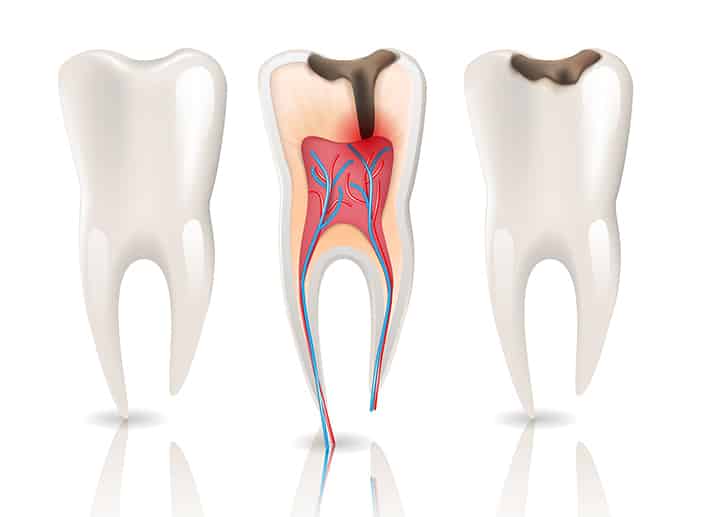
Inside every tooth, beneath enamel and dentine, is a chamber of soft tissue — the dental pulp — containing nerve fibres, blood vessels and connective tissue. It extends from the crown down through narrow channels (root canals) that exit at the tip of each root.
When the pulp becomes infected or irreversibly inflamed — usually from deep decay, a crack, or trauma — treatment is needed to save the tooth. See Chipped and Cracked Teeth and Tooth Pain & Ache.
- Accessing the pulp chamber through the top of the tooth
- Locating all root canals — and there are often more than you would expect
- Removing the infected or inflamed pulp tissue
- Cleaning and shaping the canals to remove bacteria and debris
- Disinfecting the canal system with antimicrobial solutions
- Filling and sealing the canals with a biocompatible material to prevent reinfection
- Restoring the tooth with a filling or crown
Every step requires precision. It is steps 2, 3 and 4 that most clearly separate specialist from generalist care. Root canal treatment: who and what is involved? and Everything you need to know about root canal treatment walk through the appointments.
The microscope: seeing what the naked eye cannot
The single most important piece of technology in modern endodontics is the dental operating microscope. Why is the microscope so crucial in endodontic treatment? covers this in its own right; see also Technology.
Root canals are tiny. The main canals in a molar are 0.5mm to 1mm in diameter at their widest, narrowing to fractions of a millimetre near the root tip. Many teeth have additional canals smaller still — hidden behind ridges of dentine, branching at odd angles, or concealed in recesses invisible to the naked eye.
General dentists typically work without magnification, or with loupes giving 2x to 4x. Under those conditions, treating the main canals is usually feasible, but finding hidden or accessory canals is often a matter of chance rather than certainty.
Endodontists work under microscopes giving 8x to 25x magnification with powerful coaxial illumination. The interior of the tooth becomes a brightly lit, detailed landscape in which they can see:
- extra canals that would otherwise be invisible
- calcified canals that appear blocked
- micro-cracks in the root structure
- residual tissue or debris that has been missed
- the precise endpoint of each canal
A canal that is not found, not cleaned, or not sealed will continue to harbour bacteria — leading to persistent infection and eventual failure. See What is a tooth abscess?.
The MB2 canal
The clearest illustration. Upper first molars typically have three roots, and are commonly treated as having three canals.
In fact, studies using magnification consistently report that the large majority — commonly cited above 90% — have a fourth canal: the second mesiobuccal, or MB2.
Finding and treating it requires magnification and experience. Missing it is one of the most common causes of root canal failure.
The rest of the technology
Cone beam CT (CBCT). Three-dimensional imaging revealing the number of canals, their curvature, and their relationship to the sinus and nerve canals. Particularly valuable for complex cases, retreatments and surgical planning.
Electronic apex locators. Measure the precise length of each canal electronically, so cleaning and filling extend exactly to the right point — not short of the apex (leaving bacteria behind) and not beyond it (irritating the surrounding tissue).
Nickel-titanium rotary instruments. Flexible, engine-driven files that follow the natural curvature of canals more safely than hand files, reducing the risk of perforation and procedural error in curved or narrow canals. They are not risk-free — see The risk of broken files during root canal treatment.
Ultrasonic instruments. Precisely controlled tips that remove calcifications, locate hidden canals, and clean areas rotary instruments cannot reach.
Advanced irrigation. Sonic or ultrasonic-activated irrigation that drives disinfecting solution into the microscopic recesses and branches of the canal system — a level of disinfection syringe irrigation alone cannot match.
Success rates
Root canal treatment is one of the most studied procedures in dentistry.
| Reported success rate, initial treatment | |
|---|---|
| General dentist | 85% – 90% |
| Endodontist | 95% – 98% |
85 to 90% is a good success rate, and for straightforward cases — single-rooted teeth with uncomplicated anatomy — many general dentists achieve excellent results.
Read any root canal success figure, including those above, with one thing in mind: "success" has no single definition, and the definition moves the number a long way. The peer-reviewed literature is explicit about this. Pooled success rates have been reported at 74.7% (95% CI 69.8–79.5%) when strict radiographic and clinical criteria are applied, against 85.2% (95% CI 82.2–88.3%) under loose criteria — and meta-regression found reported success rates ran 10.5% lower under strict criteria than under loose ones. That gap is larger than most of the differences people argue about. It is also why current research increasingly reports tooth survival — the tooth still in function and symptom-free — alongside success.
On survival, the long-term figures are encouraging. A retrospective observational study following 598 teeth in 312 patients in private practice, with recall at least annually, reported cumulative survival of 97% at 10 years, 81% at 20 years, 76% at 30 years and 68% at 37 years; the corresponding success rates were 93%, 85%, 81% and 81%. The factors most strongly associated with eventually losing the tooth were periodontal pockets deeper than 6 mm and an apical radiolucency present before treatment started — in other words, how bad things were at the outset matters a great deal.
One honest caveat on the table above: the published studies quoted here do not separate results by whether a specialist or a general dentist did the work. Treat the operator comparison as indicative of case complexity and equipment rather than as a measured head-to-head.
For retreatments the technical demands are greater. Redoing a failed root canal means removing previous filling material, locating missed canals and managing complications — and specialist equipment and experience matter more.
When your general dentist can handle it
Not every root canal needs a specialist.
Front teeth (incisors and canines). Typically a single, relatively straight canal — predictable anatomy, straightforward access, well within the scope of a skilled general dentist.
Premolars with uncomplicated anatomy. Many have one or two canals with gentle curvature. Where imaging confirms straightforward anatomy, general dentist treatment is often appropriate.
Patients with no complicating factors. A clear diagnosis, canals visible on X-ray, no previous treatment, and no medical conditions complicating care.
Ask directly. Your general dentist should be comfortable discussing their experience level, their equipment, and their confidence with your specific case. A good general dentist knows when to refer — and is happy to do so. See How important is communication in dentistry?.
When to see an endodontist
Molar teeth. Three to four — occasionally five — canals, significant curvature and frequent variation. The MB2 and the additional canals sometimes found in lower molars require microscope-assisted treatment for reliable identification.
Retreatments. Where a previous root canal has failed — the tooth is symptomatic again, infection is visible on X-ray, or a new infection has developed. See Second Opinions & Corrective Dentistry.
Calcified canals. Canals narrowed or blocked as secondary dentine gradually fills the canal space. Navigating them needs microscope visualisation and specialised ultrasonic instruments.
Unusual anatomy. Extra roots, extra canals, sharply curved roots, or internal resorption, where the tooth is dissolving from the inside.
Cracked teeth. One of endodontics' greatest challenges — the crack may be visible only under the microscope, and deciding whether the tooth is saveable is a specialist judgement.
Surgical endodontics (apicoectomy). Where retreatment is not feasible, or infection persists despite adequate treatment: accessing the root tip through gum and bone, removing infected tissue, and sealing the root end. See Complex Dentistry.
Dental trauma. Teeth knocked out, displaced or fractured often need urgent endodontic assessment — see Emergency Dentistry; managing traumatic injuries is core specialist training.
Medically complex patients. Those on anticoagulants, immunosuppressive medication or bisphosphonates, or with significant medical conditions. See Can a dental abscess affect your general health?.
Teeth that start out in poor shape. Given the prognostic findings above, a tooth with a deep periodontal pocket or a visible area of infection at the root tip before treatment begins is one where the margin for error is smaller.
The referral pathway here
Seamless referral — your general dentist can refer you to an endodontist within the same practice, without external referral letters, appointments at unfamiliar clinics, or delays. See Our Team.
Shared records and imaging — your X-rays, CT scans and clinical notes are accessible to both clinicians.
Coordinated restoration — after treatment the tooth will need a permanent restoration, usually a crown. That can be planned and placed in the same practice, avoiding the coordination problems that arise when specialists are at separate locations. See Dental Crowns and Same-Day CEREC Restorations.
Urgent access — emergencies involving severe pain or infection can often be seen the same day or within 24 hours. Contact Us.
After a root canal
A root canal saves the tooth, but it also changes the tooth.
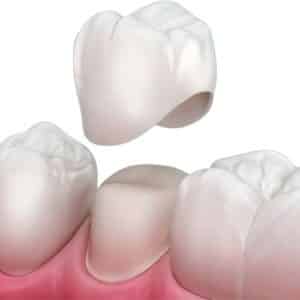
Without its blood supply, the tooth becomes more brittle over time. For that reason, most root-canal-treated teeth — particularly molars and premolars — need a crown to protect them from fracture.
The principle is simple: a crown distributes biting force across the whole tooth, protecting weakened structure from cracking under normal function.
Skipping the crown is a common and expensive mistake. A tooth that fractures below the gum after a successful root canal usually cannot be saved — and the replacement options then are a bridge, an implant or a denture, all of which cost more than the crown would have.
The same applies to the recall appointments. The long-term survival figures quoted above come from patients who were reviewed at least once a year over decades — which is part of how those numbers were achieved, not incidental to them.
The bottom line
Root canal treatment is not something to dread. It is something to get right.
For straightforward cases on front teeth or simple premolars, your general dentist may be the right choice. For molars, retreatments, complex anatomy, or any case where you want the highest probability of success, an endodontist brings training, technology and concentrated experience to the problem.
Cost
Fees are on the Price Guide, and Payment Plans covers spreading them. Budget for the crown as well as the root canal — they are two separate items, and the second is not optional on a back tooth.
Payment plan options are available. Where a plan is advertised as interest free, that describes the plan term only — a deposit may be required, an establishment fee and ongoing account fees may apply, and charges can apply if the balance is not cleared within the agreed period. The applicable terms depend on the provider and the amount financed, and are set out in writing before you commit — ask what the deposit and the establishment fee are, in dollars, and what the total will be by the end. Payment Plans.
Common questions
Is there any actual published evidence that who does it changes the outcome?
There is one figure, it is worth knowing, and it needs a caveat attached.
A 2023 long-term study in the endodontic literature notes, while discussing its own findings, that "there is evidence that suggests when it is carried out by an endodontist, there is a higher probability of tooth survival at 5 years, compared to a general practitioner (98.1% vs. 89.7%, respectively)".
Read that carefully before you weigh it. It is survival at five years, not success, and not a long-term figure. It is a secondary citation — the authors are reporting someone else's result while explaining why tooth type did not predict failure in their own data, where every treatment was carried out by the same endodontist. And it is observational, so the cases the two groups were treating were not randomly assigned; harder teeth are referred, which pushes the comparison in the opposite direction, while simpler teeth stay in general practice, which pushes it back again.
So it is real evidence rather than marketing, and it is a single, qualified data point rather than a settled verdict. The section above is right that the main published success figures do not separate operators. What this does support is the sentence the rest of the page is built on: for a complex tooth, who does it and with what equipment is a genuine variable, not a preference.
Apart from who does it, what actually decides whether my tooth survives?
Five things, and four of them can be checked before treatment starts. The same 598-tooth, 37-year study gives odds ratios for each.
Protective — associated with the tooth surviving:
- Periodontal pocket depth of 5 mm or less (odds ratio 0.68; 95% CI 0.54–0.86). This is the big one. At thirty years, roughly 80% of teeth with pockets of 5 mm or less were still in function, against about 30% of teeth with pockets deeper than 5 mm.
- Wearing a night guard (OR 0.34; 95% CI 0.13–0.86). Occlusal protection was one of the strongest protective factors in the study, and the authors list "the lack of occlusal protection (no use of a night guard)" among the three most significant prognostic factors for extraction. If you grind, this is not an optional extra.
- A fibre post where a post is needed (OR 0.47; 95% CI 0.24–0.91).
Against — associated with eventually losing the tooth:
- A cast metal post (OR 2.14; 95% CI 1.14–4.01) — roughly double the odds of extraction compared with the alternatives.
- An apical radiolucency visible before treatment began (OR 1.87; 95% CI 1.07–3.28) — teeth with infection already showing at the root tip were almost twice as likely to be extracted, a finding the authors note matches a separate long-term study reporting OR 1.9.
The restoration afterwards matters too. A study of 6,764 teeth found the type of restoration significantly associated with five-year survival: teeth with no restoration recorded had the highest odds of extraction (OR 3.3), and teeth restored with direct composite had odds of 2.2 to 3.2 depending on the size of the restoration and whether a post was used — against teeth restored with an indirect restoration and a cast post and core.
Three of those are things to raise at the planning appointment: gum health before you start, what sort of post (if any) is planned, and what the final restoration will be.
Will a dental dam be used, and does it matter?
Yes, it should be, and yes — this is one of the few questions where the professional position is unambiguous.
The endodontic literature states that "the use of dental dam during endodontic treatment is mandatory from a patient safety, as well as infection control standpoint", citing the British Endodontic Society's guide to good endodontic practice. The European Society of Endodontology's S3-level clinical practice guideline recommends "a meticulous aseptic technique and optimal surgical field including the use of dental dam".
The reason is not fussiness. A dam isolates the tooth from saliva — which is full of bacteria — for the whole time the inside of the root is open. It also stops small instruments and irrigating solutions going anywhere they should not.
How much difference contamination makes is quantifiable. One study of outcomes in a specialist practice found that 17.6% of teeth that had no infection at the root tip before treatment, confirmed on a CBCT scan, had developed one at the twelve-month review — and the authors' implication was that the organisms responsible may have been introduced during the treatment itself. That is in a specialist setting, with full isolation. It is a sobering number, and it is the argument for aseptic technique rather than against endodontics.
One related point: whether a dam can be placed at all depends on how much tooth is left. The literature notes that restorability "will also influence the ability to achieve dental dam placement and adequate isolation", and that most teeth needing root canal treatment already have decay, large fillings or cracks. If a tooth is too broken down to isolate, that is a reason to discuss whether it is restorable before starting, not after.
What happens if it fails? Can it be redone?
Usually, yes — and where that retreatment gets done follows a clear pattern in practice.
The literature observes that "root canal retreatments in many countries are frequent in a specialist clinic setting, but rare in general practice". That is a description of how the work distributes rather than a rule, and it reflects the technical demands: a retreatment means removing the previous filling material intact, finding whatever was missed the first time — often a canal that could not be seen without magnification — and then treating a root that has already been instrumented once.
What the evidence also shows is that a failure is not always a failure of technique. Where a tooth was already in poor condition — a deep periodontal pocket, an apical radiolucency present at the start, a crack running into the root — the odds were against it from the outset, as the figures above set out.
The decision at that point is between retreatment, surgical endodontics through the gum and bone at the root tip, and extraction with replacement. All three are legitimate, the right answer depends on how much sound tooth remains and what the gum condition is, and it is worth having the reasoning explained rather than being given a single option. See Second Opinions & Corrective Dentistry and Endodontists.
How do I check that someone really is a registered specialist?
On the register, in about a minute, and it costs nothing.
Ahpra publishes an online register of all dental practitioners at ahpra.gov.au which, in the Dental Board's words, "provides the profession and the public with up-to-date information about a dental practitioner's registration status" and "includes details of the specialty or specialties for dentists who hold specialist registration". Search the individual's name — not the practice's — and it will show whether their registration is general or specialist, and if specialist, in which of the thirteen recognised fields.
The distinction is worth understanding because the wording on websites can blur it. A dentist who does a lot of root canal work is not the same as a registered endodontist, and only one of those appears on the register as such. Ahpra's advertising guidelines warn advertisers that a title must not "over-represent the practitioner's skills, experience or qualifications, or imply specialist registration or endorsement" where it does not exist.
None of which means a general dentist should not do your root canal. For the cases listed above, that is often the right choice. It means the question is this person a registered endodontist has a definite answer, and you can get it yourself before the appointment.
Practical details
Smile Solutions has registered specialist endodontists practising at its Collins Street clinic, alongside general dentists and prosthodontists.
Specialist registration can be verified on the AHPRA register, or by calling 1300 419 495.
Smile Solutions, Level 1, 220 Collins Street, Manchester Unity Building, Melbourne VIC 3000. Phone 13 13 96, or theteam@smilesolutions.com.au. Monday–Friday 8.00am–6.00pm, Saturday 8.30am–1.30pm, Sunday by appointment.
Published 18 August 2026. Success rates cited are from published research and vary with case complexity and with the criteria used to define success; individual outcomes vary. General information only; it does not replace advice from your treating practitioner. Payment plan terms are set by the credit provider and change; confirm current terms directly before you commit.
Smile Solutions trades under ABN 28 193 514 103.
Images on This Page
-
https://www.facebook.com/tr?id=800557773428361&ev=PageView&noscript=1
(no alt text)
-
https://www.smilesolutions.com.au/wp-content/uploads/2025/10/calendar_month.svg
(no alt text)
-
https://www.smilesolutions.com.au/wp-content/themes/arcadian-wordpress-theme/assets/images/smile_solutions_logo_white.png
Smile Solutions Logo
-
https://www.smilesolutions.com.au/wp-content/themes/arcadian-wordpress-theme/assets/images/smile_solutions_logo_purple.png
Smile Solutions Logo
-
https://www.smilesolutions.com.au/wp-content/uploads/2023/11/SS-Tooth-1-1-150x150.png
Smile Solutions
-
https://www.smilesolutions.com.au/wp-content/uploads/2025/09/Root-Canal-2.jpg
Root Canal
-
https://www.smilesolutions.com.au/wp-content/uploads/2026/08/Mouth-Breathing-300x270.jpg
Mouth Breathing
-
https://www.smilesolutions.com.au/wp-content/uploads/2025/09/Dental-Crown-at-Smile-Solutions-300x300.jpg
Dental Crown at Smile Solutions
-
https://www.smilesolutions.com.au/wp-content/uploads/2026/07/Diabetes-and-Dental-Health-300x270.jpg
Diabetes and Dental Health
-
https://www.smilesolutions.com.au/wp-content/themes/arcadian-wordpress-theme/assets/images/family_owned_bussiness.png
Family Owned Business
-
https://www.smilesolutions.com.au/wp-content/themes/arcadian-wordpress-theme/assets/icons/icon--phone.svg
Smile Solutions Contact
-
https://www.facebook.com/tr? id=800557773428361&ev=PageView&noscript=1
(no alt text)
-
https://bat.bing.com/action/0?ti=25148060&tm=gtm002&Ver=2&mid=99c4be48-ffae-478e-b261-e0677cbbe35b&bo=1&sid=2d501880ab2711f18d87b7bac65240c4&vid=2d506ca0ab2711f1ab1d3f3f13e54123&vids=1&msclkid=N&pi=918639831&lg=en-US&sw=800&sh=600&sc=24&nwd=1&tl=Endodontist%20vs%20Dentist%20for%20Root%20Canal%3A%20Why%20It%20Makes%20a%20Difference%20-%20Smile%20Solutions&p=https%3A%2F%2Fwww.smilesolutions.com.au%2Fdental-articles%2Farticle%2Fendodontist-vs-dentist-for-root-canal-why-it-makes-a-difference%2F&r=&evt=pageLoad&sv=2&cdb=AQAQ&rn=420366
(no alt text)