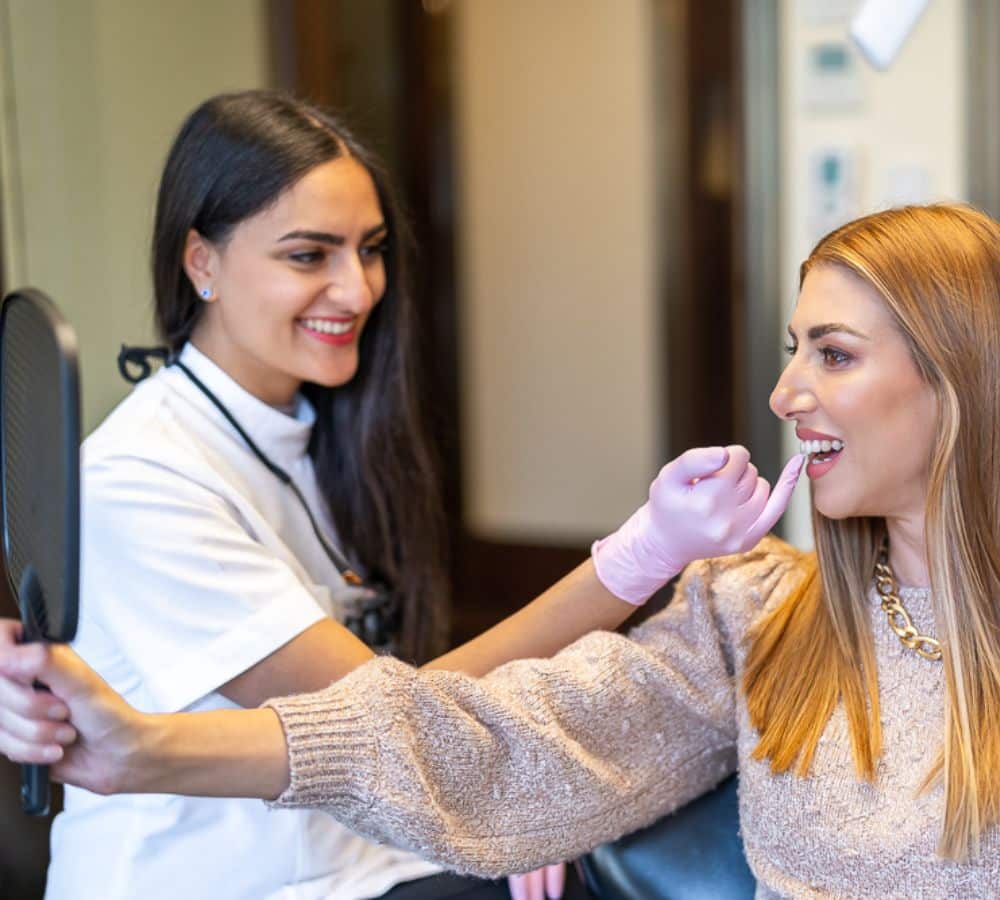
Is the start of the year a good time to book a dental check-up?
Yes — not because January has any clinical significance, but because a fixed calendar trigger is the single most reliable way to stop check-ups sliding. Most people who fall out of regular dental care do not decide to stop; they simply never re-book after the last visit, and eighteen months pass. Anchoring the appointment to something you already do every January — the medical check-up, the back-to-school run, the diary reset — removes the decision entirely. The related question of interval is answered in How often should I go to the dentist?, and the case for keeping it with the same practice in Is it important to have a family dentist?
This article was originally prompted by an Australian Dental Association new-year campaign in January 2015, in which the ADA’s then Federal President, Dr Rick Olive AM RFD, urged people to put a dental check-up alongside the usual resolutions to exercise more and eat better. His argument was that oral health is not a separate category from general health: poor oral health has been linked to chronic conditions including cardiovascular disease and diabetes, so a resolution list that covers fitness and diet but omits the mouth is incomplete.
The link between oral health and general health
The association between gum disease and systemic conditions is well documented, but it is worth being precise about what it does and does not mean.
- Periodontal (gum) disease is a chronic inflammatory condition. It is not confined to the gums; it produces a measurable systemic inflammatory load. What is gum disease? is the plainer introduction, and bleeding gums the symptom most people notice first.
- Diabetes is bidirectional. Poorly controlled diabetes makes gum disease worse and harder to treat, and untreated gum disease makes blood-glucose control harder. This relationship is the best-evidenced of the group — see diabetes and dental health: the two-way street and diabetes and oral health.
- Cardiovascular disease shows a consistent association, but association is not the same as proof of cause. The honest position is that people with untreated gum disease have higher rates of cardiovascular events, and that treating gum disease is worth doing on its own merits regardless of how that link is eventually explained. Health problems linked to poor oral hygiene and dental health and general wellbeing keep the same careful line.
What this means practically: if you have diabetes, are pregnant, smoke, or are being treated for a cardiovascular condition, a dental check-up is not a cosmetic nicety. It belongs on the same list as the blood test. Medication that dries the mouth belongs on that list too — see my mouth is always dry.
What a check-up appointment actually covers
People often expect a two-minute look and are surprised by the length. A thorough examination includes:
| Component | What it is looking for |
|---|---|
| Visual and tactile examination | Decay, cracked or failing restorations, wear facets, defective margins |
| Radiographs (as clinically indicated) | Decay between the teeth and under existing fillings, bone levels, unerupted or impacted teeth, pathology not visible to the eye |
| Periodontal assessment | Pocket depths, bleeding on probing, recession, mobility — see when do you need deeper cleaning? |
| Soft-tissue and oral cancer check | Ulceration, white or red patches, asymmetry, lumps in the tongue, floor of mouth, palate and throat |
| Occlusion and TMJ | Grinding, clenching, jaw joint noise or restriction |
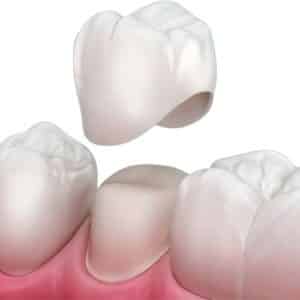
| Existing dental work | Life expectancy of crowns, bridges, implants and dentures, and what will need replacing when |
The soft-tissue check matters more than most patients realise. It is often the only routine screening for oral cancer anyone receives, and early lesions are usually painless — which is precisely why they are missed by the person who has them. Oral cancer: signs, risk factors and how your dentist can help lists what is actually being looked for, and the causes, symptoms and treatment of mouth cancer covers what happens if something is found.
A professional clean usually sits alongside the examination — what a dental hygienist does, and what to expect at the appointment.
How often is right?
The traditional advice is twice a year, and for most people that remains sensible. But interval should be risk-based, not universal:
- Every three to four months — active gum disease, high decay rate, dry mouth from medication, orthodontic appliances, heavy smokers, poorly controlled diabetes.
- Every six months — the standard interval for most adults and children.
- Every nine to twelve months — low-risk adults with stable gums, no active decay history and excellent home care, at the treating clinician’s discretion.
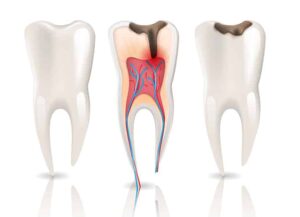
If you have not been for several years, the first appointment is longer and often uncovers work that has accumulated quietly. That is an argument for going sooner, not later — decay does not stabilise while you wait, and the difference between a filling and a root canal is frequently just time. It is also cheaper at the earlier end: compare the entries in the price guide, and if a long-deferred mouth needs a staged plan, understanding your treatment covers how that is written up.
Children and the back-to-school window
The start of the school year is a genuinely useful trigger for children’s appointments, for reasons beyond convenience:
- Newly erupted permanent molars (around age 6 and again around 12) are at their most vulnerable in the first two years after eruption and are the prime candidates for fissure sealants — see also who is a suitable candidate for dental sealants? The eruption timetable itself is in order and appearance of baby teeth.
- Orthodontic problems are easiest to assess once the mixed dentition is established, roughly ages 8 to 10 — early enough that growth can still be used, rather than worked around. See when should I take my child to an orthodontist? and children’s braces and Invisalign.
- School sport starting in term 1 is the point at which a custom-fitted mouthguard needs to already exist, not be ordered after the first collision. See should my child wear a mouthguard? and a trip to the chemist or the dentist?
If it will be your child’s first appointment, when should a child first visit the dentist? and the first visit are worth reading first. For eligible families the Child Dental Benefits Schedule may cover part of the cost.
The habits that make the check-up short
The ADA’s practical list has not changed, and it is unglamorous because the evidence is unglamorous:
- Maintain a healthy diet — see how does your diet affect your teeth? and six foods to avoid for healthy teeth.
- Consume sugary foods and drinks in moderation, and — more importantly — infrequently. Frequency matters more than quantity: one dessert does less damage than the same sugar sipped across six hours, because each exposure restarts the acid attack. How does sugar affect your dental health? explains the mechanism.
- Brush twice a day with fluoride toothpaste. Spit, don’t rinse — rinsing washes away the fluoride you just applied. See how often should I brush my teeth? and choosing the right toothpaste.
- Clean between the teeth at least once a day, with floss or interdental brushes. Roughly a third of each tooth’s surface is never touched by a toothbrush — is flossing really that important?
- See your dentist for an examination and professional clean at the interval appropriate to your risk — contact us to book, or see how to find us.
Common questions
I have not been in years and I am dreading it. Is it worth going now?
Yes, and the numbers say the dread is both common and expensive.
How common: the 2002 National Dental Telephone Interview Survey asked 6,112 Australians aged 16 and over whether they were afraid of going to the dentist. 11.9 per cent answered "yes, very" and 5.2 per cent "yes, quite", with a further 15.1 per cent "a little". So roughly one adult in six is somewhere between quite and very afraid, and you are describing something like a sixth of the waiting room rather than a personal failing.
What it costs, in that same survey. Of people who were very afraid, 43.9 per cent had last been more than two years earlier, against 29.1 per cent of people with no fear. And the consequences show up in what is then needed: among those whose last visit was more than two years ago, 39.4 per cent perceived a need for a filling against 23.7 per cent of more recent attenders, and 18.6 per cent perceived a need for an extraction against 7.3 per cent.
The authors call it a vicious cycle and put a figure on it: "179 people or 29.2% of those who were very afraid of going to the dentist fitted the profile of having delayed dental visiting, dental problems, and symptom-driven treatment seeking. This can be contrasted to the 11.6% of the group with no dental fear who exhibited the same characteristics." Adjusted for sex, dentate status, employment and income, the odds of a very fearful person fitting that profile were 3.33 times higher (95% CI 2.67–4.15). The study was cross-sectional, so the authors are careful that causality cannot be inferred — but they also note that avoidance "prevents people from 'extinguishing' the anxious or fearful state as a result of non-traumatic dental experiences". In other words, staying away is what keeps the fear intact.
What to do about the first appointment, practically:
- Say it when you book. Ask for a longer appointment and tell the practice you have not been for a while and find it difficult. That is a routine request.
- Ask for the first visit to be an examination and a conversation only — look, discuss, plan, with nothing else done that day unless you agree to it.
- Agree a stop signal before anything starts, and ask for what is being done to be described as it happens if that helps, or not at all if it does not.
- Ask what can be done to keep you comfortable, and what the options are if the examination alone is too much — see dental anxiety, how can I ease my anxiety about visiting the dentist? and sleep dentistry.
- Ask for the plan in writing and in stages, worst first. Nobody has to do everything at once.
Do I really need x-rays if nothing hurts?
Sometimes yes, sometimes no — and the standard is the same whichever way it falls: each image has to be justified for you, now. Published guidance on prescribing dental radiographs states that routine radiographic "screenings are no longer recommended", that an "individualized and patient-specific justification for X-ray diagnostics" is best practice, and that "a justified radiograph should make a substantial contribution to distinguishing between treatment options".
Why they are still often justified at a check-up: the examination above can only see surfaces. Decay between teeth and beneath existing restorations, bone levels around the roots, and unerupted or impacted teeth are not visible to the eye at any stage — and, as the stages of decay sets out, a tooth can progress a long way without hurting.
The doses, for scale. The International Atomic Energy Agency gives typical effective doses of 1 to 8 μSv for an intraoral image and 4 to 30 μSv for a panoramic, and notes that intraoral doses are "usually less than one day of natural background radiation" while panoramic doses even at the high end are "equivalent to a few days of natural background radiation which is similar to that of a chest radiograph". Three-dimensional CBCT imaging is a larger exposure — "50 μSv or below for small- or medium-sized scanning volumes, and 100 μSv for large volumes" — and belongs to specific questions rather than to routine check-ups.
What to ask: what question is this image being taken to answer, what would change depending on the result, when were my last images taken, and can those be used instead. See how safe are dental X-rays?
What does a check-up cost, and what will a health fund pay?
A "check-up" is not one fee — it is several items, and knowing that is most of the answer. An examination, a scale and clean, any radiographs and a fluoride application are separate services with separate item numbers, which is why two practices quoting "a check-up" may be quoting different things.
Fees are not set nationally. The Australian Dental Association's Dental Fees Survey 2022 found "considerable variation in the fees charged within and between states", and reports fees by item number across the items it surveys. In the two years to 1 July 2022 the survey put the average increase across all items charged by general practitioners at 3.7 per cent, with the smallest increases in preventive services and periodontics at 1.6 per cent — so preventive care is, relatively speaking, the part of dentistry whose price has moved least.
Before you book, three questions settle it:
- Which items will be charged, by item number, and what each costs.
- What your fund pays against those items — extras cover has annual limits, may have waiting periods, and often pays a higher benefit at preferred providers.
- Whether radiographs are included in the quoted figure or additional.
For children, check the Child Dental Benefits Schedule first. Services Australia's wording is that "you can claim up to $1,158 for each eligible child over 2 consecutive calendar years", with the cap "indexed yearly on 1 January"; eligibility depends on the child's age and on the family receiving a qualifying payment, and it is assessed each calendar year. See Child Dental Benefit Schedule and the price guide.
The soft-tissue check — what is being looked for, and when should I report something myself?
The check takes under a minute and it is looking for things that do not hurt, which is exactly why they are missed at home. Clinical guidance for general practitioners makes the point directly: early signs of oral cancer are "generally painless", and patients "reporting any unexplained and/or non-healing changes or symptoms in the mouth for more than two to three weeks (eg a persistent ulcer, red patches, lumps, a sore throat, or erythematous or speckled lesions) should have an oral cancer screen".
So the rule you can act on is the three-week rule. An ulcer that follows a bitten cheek and settles within a fortnight is ordinary. An ulcer, a red or white patch, a lump or a persistent sore throat that is still there after two to three weeks with no explanation is a reason to be seen — by a dentist or a doctor, whichever you can get to sooner.
On risk, the ADA's diet and nutrition policy is blunt: "Long term, high alcohol consumption and in particular in association with tobacco (including e-cigarettes) use should be avoided as it significantly increases the risk of oral cancer and other health issues." Alcohol and tobacco together are the combination that matters most.
Two practical points. Tell whoever examines you if you smoke, vape or drink heavily — not for a lecture, but because it changes what they look for and how closely. And check your own mouth occasionally in good light: under the tongue and along its sides, the floor of the mouth and the inside of the cheeks are where changes hide. See oral cancer: signs, risk factors and how your dentist can help and the effects of vaping on your oral health.
Related reading
- How often should I go to the dentist?
- The ideal daily routine for oral hygiene
- Caring for your teeth: 8 steps to dental health
- 10 ways to avoid ruining your teeth
- Top tips on how to avoid dental problems
- Dental Health Week 2017: oral health for busy lives
- The effects of vaping on your oral health
- General dentistry and our team
Practical details
This article summarises an Australian Dental Association public-health message published in January 2015; the ADA’s own materials remain the primary source for that campaign. Clinical detail has been added and updated by Smile Solutions. Figures attributed to the 2002 National Dental Telephone Interview Survey, the Australian Dental Association, Services Australia, the International Atomic Energy Agency and published clinical guidance are those sources’ own, as at the dates of the documents cited, and describe populations rather than individuals.
Specialist registration can be verified on the AHPRA register, or by calling 1300 419 495 — see dentists and registered specialists.
Smile Solutions, Level 1, 220 Collins Street, Manchester Unity Building, Melbourne VIC 3000. Phone 13 13 96, or theteam@smilesolutions.com.au. Monday–Friday 8.00am–6.00pm, Saturday 8.30am–1.30pm, Sunday by appointment.
Published 28 January 2015. General information only; it does not replace advice from your treating practitioner.
Smile Solutions trades under ABN 28 193 514 103.
Images on This Page
-
https://www.facebook.com/tr?id=800557773428361&ev=PageView&noscript=1
(no alt text)
-
https://www.smilesolutions.com.au/wp-content/uploads/2025/10/calendar_month.svg
(no alt text)
-
https://www.smilesolutions.com.au/wp-content/themes/arcadian-wordpress-theme/assets/images/smile_solutions_logo_white.png
Smile Solutions Logo
-
https://www.smilesolutions.com.au/wp-content/themes/arcadian-wordpress-theme/assets/images/smile_solutions_logo_purple.png
Smile Solutions Logo
-
https://www.smilesolutions.com.au/wp-content/uploads/2023/11/SS-Tooth-1-1-150x150.png
Smile Solutions
-
https://www.smilesolutions.com.au/wp-content/uploads/2021/03/Rojina-1.jpg
Start the New Year with a dentist check up
-
https://www.smilesolutions.com.au/wp-content/uploads/2025/09/Root-Canal-2-300x217.jpg
Root Canal
-
https://www.smilesolutions.com.au/wp-content/uploads/2026/08/Mouth-Breathing-300x270.jpg
Mouth Breathing
-
https://www.smilesolutions.com.au/wp-content/uploads/2025/09/Dental-Crown-at-Smile-Solutions-300x300.jpg
Dental Crown at Smile Solutions
-
https://www.smilesolutions.com.au/wp-content/themes/arcadian-wordpress-theme/assets/images/family_owned_bussiness.png
Family Owned Business
-
https://www.smilesolutions.com.au/wp-content/themes/arcadian-wordpress-theme/assets/icons/icon--phone.svg
Smile Solutions Contact
-
https://www.facebook.com/tr? id=800557773428361&ev=PageView&noscript=1
(no alt text)
-
https://bat.bing.com/action/0?ti=25148060&tm=gtm002&Ver=2&mid=6c4a76bc-1076-43af-b120-2f8f88a1abf5&bo=1&sid=dd4b8660ab2511f1be2f49aa46f34dfc&vid=dd4bcfa0ab2511f18712e77d2d1fe02b&vids=1&msclkid=N&pi=918639831&lg=en-US&sw=800&sh=600&sc=24&nwd=1&tl=Start%20the%20New%20Year%20with%20a%20dentist%20check%20up%20-%20Smile%20Solutions&p=https%3A%2F%2Fwww.smilesolutions.com.au%2Fdental-articles%2Farticle%2Fstart-new-year-dentist-check%2F&r=&evt=pageLoad&sv=2&cdb=AQAQ&rn=530772
(no alt text)