Dental Health Week 2017: Anywhere, Anytime — oral health for busy lives
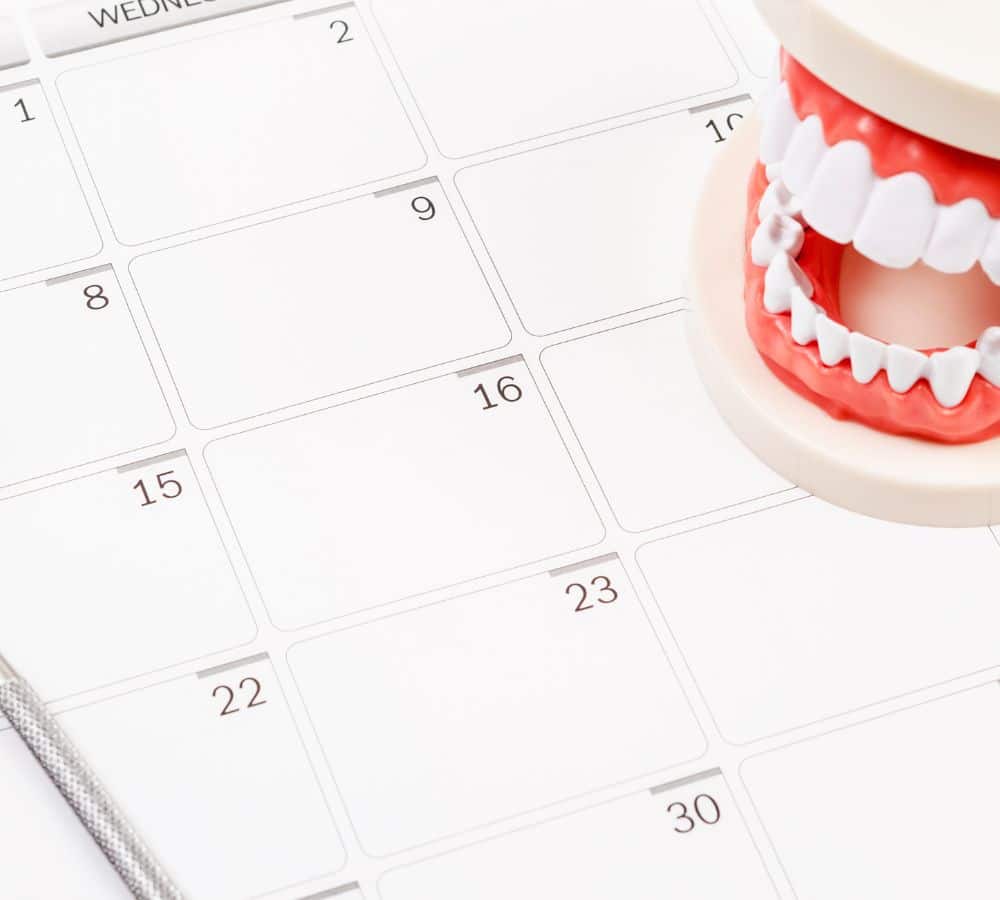
Each year the Australian Dental Association runs Dental Health Week. In 2017 it ran from 7 to 13 August, and the focus was making time to look after your oral health, however busy you are.
Dental Health Week runs every August, with a different theme each year. The ADA's own site carries the current one and its free resources; this page records the 2017 campaign and the point it made, which has not dated. The following year’s campaign is covered in Dental Health Week 2018: Watch Your Mouth, and a children’s-sugar campaign from another year in Dental Health Week: protect your kids from the Sugar Bandits.
What the week is for
- Promoting oral health education and awareness in the community
- Motivating and educating dental professionals to promote oral health
- Encouraging ongoing collaboration within the dental profession
The barrier the campaign addresses
Your dental health affects your overall health. Poor dental health can lead to more serious problems if left untreated — pain, infection, and tooth loss among them. Dental health and general wellbeing and health problems linked to poor oral hygiene set out what is known about that link, and what is still only association rather than cause.
And yet the main reason people give for not visiting the dentist is that they don't have the time. It is the appointment that gets pushed aside first when a schedule gets crowded.
Which is worth examining honestly: a check-up takes half an hour. The treatment required after two years of skipped check-ups takes considerably longer, and costs considerably more. Time is the reason people give, and it is also what deferring costs them.
The arithmetic, made concrete
This is the part worth sitting with, because it is the actual argument.
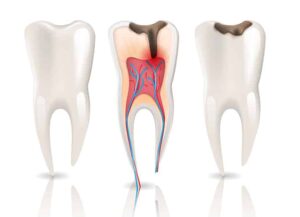
Decay does not announce itself. Damage confined to enamel produces no symptoms at all, because enamel has no nerve supply. By the time a tooth hurts, the decay has usually travelled through two layers. How does tooth decay develop? and the stages of dental decay go through that progression layer by layer.
So the same cavity, found at three different moments:
| Found at | Treatment | Appointment |
|---|---|---|
| Enamel only | Often monitored, or remineralised with fluoride | Minutes, at a check-up |
| Into dentine | A filling | One appointment |
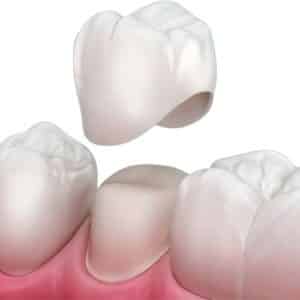
| Into the pulp | Root canal treatment and a crown, or extraction and replacement | Several appointments, over months |
Each row has a page behind it: the first in can you reverse tooth decay, and do I need a filling? and the benefits of fluoride; the second in why do I need a filling? and how long do dental fillings last?; the third in everything you need to know about root canal treatment, what types of dental crowns are available? and, if the tooth cannot be kept, what are the replacement options for missing teeth?. The wider rebuilding picture is what does restorative dentistry mean?
Nothing about the cavity changed except how long it was left. The same logic applies to gum disease, which is painless until it is advanced and, once it reaches periodontitis, cannot be reversed — only stabilised. See what is gum disease?, periodontal (gum) disease and when do you need deeper cleaning?, which explains the point at which a routine clean is no longer enough.
That is the real case for the half-hour appointment: not that check-ups are pleasant, but that they are the only mechanism by which dental problems get caught while they are still small, cheap and quick. How Do I Prevent Dental Decay? and caring for your teeth: 8 steps to dental health cover what you do between visits.
Three things that remove the barrier
1. Location and opening hours
Smile Solutions is in the heart of Melbourne's CBD, which makes appointments possible during a lunch break for city workers. The central location, with public transport routes at the door, also makes access straightforward for people who live outside the city — getting here.
Extended opening hours mean full-time workers can be seen before or after work — weekdays from 8.00am to 6.00pm, plus Saturday mornings, and Sunday by appointment. Contact us to find the slot that fits.
2. Multiple clinicians in one place
With general dentists, hygienists and specialists all available in the one building, you avoid going from clinic to clinic for different treatments — which takes considerable time and energy. General dentistry, dental cleans and hygienists and specialist care are the three doors.
If you need a referral from a general dentist to a specialist, you go from one floor to another rather than across the city and onto another waiting list. Records and radiographs go with you, which also avoids repeat imaging. Why would I need to see a dental specialist? explains when that referral is warranted, and everything under one roof how the building is arranged. Specialists hold registration in their specialty — registered specialists.
There is also a less obvious benefit: with a large team of general dentists, you can find a clinician you feel comfortable with without having to try several different practices to find the right fit — the full team is listed, and is it important to have a family dentist? makes the case for staying with one once you have found them.
3. Emergency dentistry
Accidents happen, and not always within working hours. Appointments are reserved daily so patients can be seen as soon as possible for any dental emergency.
Having a large team is what makes it possible to accommodate dental mishaps at short notice. Emergency Dentistry. What counts as one, and what to do in the meantime, are in what is considered a dental emergency? and what should I do in a dental emergency?
The practical version
If time is genuinely the obstacle:
- Book the next appointment before you leave the current one. This is the single most effective habit, and it is why practices ask. How often should I go to the dentist?
- Take an early or late slot rather than trying to fit it into the middle of a working day.
- Book the family together where the practice can accommodate consecutive appointments — children included: protecting your child from dental disease.
- Combine the check-up and the clean in one visit rather than two. Your Smile Solutions dental hygienist visit: what to expect describes what the clean involves.
- Ask what your actual recall interval should be. Six months is a default, not a rule — some people genuinely need three-monthly, others can safely go longer. Knowing which you are stops the guesswork.
- Put the reminder somewhere you will see it. Practices send them; they are easy to ignore. Start the New Year with a dentist check up is as good a prompt as any.
None of it works without the daily part: what is the ideal daily routine for oral hygiene? and is flossing really that important?
If the real barrier is not time
Worth saying, because “no time” is often the polite version of something else.
If it is cost, say so. Treatment can usually be staged over months or across two benefit years, and item numbers can be provided in advance so you can check with your fund. Public dental care is available in Victoria for eligible adults and children, and eligible children aged 0–17 may be able to use the Child Dental Benefits Schedule. Price Guide, Child Dental Benefit Schedule and how does the Child Dental Benefits Schedule operate?
Payment plan options are available. Where a plan is advertised as interest free, that describes the plan term only — a deposit may be required, an establishment fee and ongoing account fees may apply, and charges can apply if the balance is not cleared within the agreed period. The applicable terms depend on the provider and the amount financed, and are set out in writing before you commit — ask what the deposit and the establishment fee are, in dollars, and what the total will be by the end. Payment Plans. The wider shift in how dentistry is paid for is discussed in patient dental payment plans: the next big disruption on the dental horizon.
If it is fear, that is extremely common and it is treatable — and it is the reason many people have not been for years rather than months. Options range from a conversation in a room with no dental chair, through to sedation. Nobody who works in dentistry is surprised or judgmental about a long gap. Dental Anxiety and how can I ease my anxiety about visiting the dentist?
If it is embarrassment about the state of your mouth, the same applies. Clinicians see it constantly, and the first appointment is usually just a look and a plan — understanding your treatment sets out how a plan is put to you before anything is agreed.
Common questions
Is six months a real recommendation, or just a habit?
It is a convention rather than a rule, and it is worth knowing that so you can ask for the interval that actually applies to you.
The Australian Dental Association's own list of the main oral hygiene strategies says only "visit a dental professional for regular check-ups and professional cleaning" — regular, with no number attached. Where the ADA does give an interval it is for children, and it is annual: the first visit when the first tooth appears or by age one, and "at least every 12 months" thereafter.
The reason there is no universal figure is that the interval is a risk judgement rather than a calendar one. What moves it shorter: a history of decay or periodontal treatment, diabetes or another condition affecting healing, a dry mouth from medication, smoking, orthodontic appliances, a diet with frequent sugar exposure, or heavy grinding. What allows it to be longer: a stable mouth, no new decay over several reviews, healthy gums and low-risk habits.
So the useful question to ask at the end of an appointment is not "when should I come back?" but "what is my risk, and what interval follows from it?" A clinician who can name the specific factors driving the answer is giving you something you can act on — and if the answer is that you can safely go longer, that is worth knowing too.
There is one interval that is not negotiable in the same way: anything unexplained that has not healed in two weeks — an ulcer, a lump, a red or white patch — gets an appointment regardless of when the last one was. See How often should I go to the dentist?
Is time honestly the barrier, or is that what people say instead of cost?
Both are real, and the national data suggests cost is doing more of the work than the stated reason implies.
On attendance, a 2024 review in the Australian Journal of General Practice records that in 2020–21, only 48% of Australians had seen a dental professional in the previous 12 months, while in 2021–22 almost 90% received at least one Medicare-subsidised service. Australians are not avoiding health care. They are avoiding the part of it that is not subsidised.
On cost specifically, a submission to the Senate inquiry into the value and affordability of private health insurance cited an Australian Institute of Health and Welfare survey finding that nearly a third of people aged 5 or older (32%) avoided or delayed visiting a dentist due to cost. The same submission notes that because there is no national dental fee schedule in Australia, patients "can go to multiple dentists and receive conflicting diagnoses and widely varying quotes for unpredictable dental fees" — which makes it hard even to know in advance what you are deciding about.
And on what that delay costs collectively, the AIHW reports 88,600 potentially preventable hospital admissions for dental conditions in Australia in 2023–24, a rate of 3.3 per 1,000 population, up from a 2019–20 low of 2.6. A 2023 systematic review of Australian studies puts dental conditions second among all causes of potentially preventable hospitalisation, accounting for 10% of the total and 22% of those due to acute conditions.
None of that is an argument for feeling guilty. It is an argument for naming the real obstacle at the desk, because time cannot be negotiated and cost often can — through staging, item numbers checked with a fund in advance, public dental care for those eligible, or the Child Dental Benefits Schedule for eligible children.
What actually happens in a check-up? Is half an hour long enough to find anything?
More than people expect, and most of it is looking rather than doing.
The teeth. Each one is examined for decay, for cracks, and for failing restorations — the last of which is where a surprising share of new decay hides, underneath something already there.
The gums. The depth of the space between gum and tooth is measured at multiple points, and bleeding on probing is recorded. This is the part that detects periodontal disease, which is painless in its early stages and the reason a check-up finds things you have no symptoms of.
The soft tissues. A screen for oral cancer is part of a routine examination, and it needs no special equipment — the 2024 AJGP review describes it as a visual and physical examination performed with gloves, a mouth mirror, a tongue depressor and a torch, covering the lips, cheeks, gums, tongue, floor of the mouth, both palates, and the face, jaw, chin and neck. The high-risk sites it names are the lateral margins of the tongue and the floor of the mouth — the places you cannot see yourself.
The bite, and any wear. Uneven wear patterns and fractured cusps point to grinding or a bite problem, both of which are cheaper to manage early.
Radiographs, where they are justified. Not routinely, and not at every visit. Every radiograph should be individually justified, and you are entitled to ask what this one will change. The doses are small — the International Atomic Energy Agency gives 1–8 μSv for an intraoral film and 4–30 μSv for a panoramic — but small is not zero, and the reason for taking one should be a specific question it will answer.
Half an hour is enough because most of the value is in the looking, and because the things being looked for are, at that stage, silent. See 5 questions you've always wanted to ask your dentist and Understanding your treatment.
I have not been in years. What happens at the first visit back?
Less than you are bracing for, and none of it is a reprimand.
The first appointment is usually an examination and a conversation, not treatment. You will be asked about your medical history and any medications — which matters, because many reduce saliva and change decay risk — and then examined as described above. Radiographs may be taken where they will change a decision.
What you should leave with is a written plan, in an order. Anything painful or infected is dealt with first. Anything actively getting worse is next. Cosmetic work is last, and is genuinely optional. If you are given a long list, ask which items are urgent, which are important but not urgent, and which could reasonably wait a year — that question is a normal one and the answer should be specific.
Say what the obstacle is, because it changes the plan. If cost is the constraint, treatment can usually be staged across months or across two benefit years, and item numbers can be provided in advance so you can check the rebate before committing. If it is fear, say that too — it changes how the appointment is arranged, and long gaps are among the most common things clinicians see.
What nobody in dentistry is doing is keeping score. A person who has not attended in a decade and books an appointment has done the hard part. The only thing that makes that visit worse is postponing it further — decay travels one layer at a time, and periodontitis, once it has destroyed supporting tissue, cannot be reversed.
See Dental Anxiety, how can I ease my anxiety about visiting the dentist? and Price Guide.
Related reading
- How often should I go to the dentist?
- Caring for your teeth: 8 steps to dental health
- Dental Health and General Wellbeing
- Dental Health Week 2018: Watch Your Mouth
- How Do I Prevent Dental Decay?
- Why would I need to see a dental specialist?
Practical details
Smile Solutions, Level 1, 220 Collins Street, Manchester Unity Building, Melbourne VIC 3000 — getting here. Phone 13 13 96, contact us, or theteam@smilesolutions.com.au. Monday–Friday 8.00am–6.00pm, Saturday 8.30am–1.30pm, Sunday by appointment.
Related: Dental Cleans and Hygienists, Emergency Dentistry, Dental Anxiety, How often should I go to the dentist?, Understanding your treatment.
Registration for any practitioner can be verified free on the AHPRA public register at ahpra.gov.au.
Published 7 August 2017. Dental Health Week is an Australian Dental Association campaign; the theme changes annually and the ADA is authoritative on the current one. Opening hours are as listed and subject to change. Payment plan terms are set by the credit provider and change; confirm current terms directly before you commit. General information only — it is not a diagnosis, a treatment plan or a promise of any particular clinical outcome, and it does not replace advice from your treating practitioner. The right check-up interval varies between individuals and is a clinical judgement made after assessment. Attendance, cost and hospitalisation figures quoted are the Australian Institute of Health and Welfare's and those cited in a peer-reviewed 2024 review in the Australian Journal of General Practice and in a submission to a Senate inquiry; radiation dose ranges are the International Atomic Energy Agency's. All are third-party figures, not Smile Solutions data, and all change over time.
Smile Solutions trades under ABN 28 193 514 103.
Images on This Page
-
https://www.facebook.com/tr?id=800557773428361&ev=PageView&noscript=1
(no alt text)
-
https://www.smilesolutions.com.au/wp-content/uploads/2025/10/calendar_month.svg
(no alt text)
-
https://www.smilesolutions.com.au/wp-content/themes/arcadian-wordpress-theme/assets/images/smile_solutions_logo_white.png
Smile Solutions Logo
-
https://www.smilesolutions.com.au/wp-content/themes/arcadian-wordpress-theme/assets/images/smile_solutions_logo_purple.png
Smile Solutions Logo
-
https://www.smilesolutions.com.au/wp-content/uploads/2023/11/SS-Tooth-1-1-150x150.png
Smile Solutions
-
https://www.smilesolutions.com.au/wp-content/uploads/2017/08/Dental-Health-Week.jpg
Dental Health Week 2017 Anywhere Anytime: Oral health for busy lives
-
https://www.smilesolutions.com.au/wp-content/uploads/2025/09/Root-Canal-2-300x217.jpg
Root Canal
-
https://www.smilesolutions.com.au/wp-content/uploads/2026/08/Mouth-Breathing-300x270.jpg
Mouth Breathing
-
https://www.smilesolutions.com.au/wp-content/uploads/2025/09/Dental-Crown-at-Smile-Solutions-300x300.jpg
Dental Crown at Smile Solutions
-
https://www.smilesolutions.com.au/wp-content/themes/arcadian-wordpress-theme/assets/images/family_owned_bussiness.png
Family Owned Business
-
https://www.smilesolutions.com.au/wp-content/themes/arcadian-wordpress-theme/assets/icons/icon--phone.svg
Smile Solutions Contact
-
https://www.facebook.com/tr? id=800557773428361&ev=PageView&noscript=1
(no alt text)
-
https://bat.bing.com/action/0?ti=25148060&tm=gtm002&Ver=2&mid=2f6f9af1-e517-4d84-8bff-8be77d96d002&bo=1&sid=2b8e2680ab2711f18323f580d462757c&vid=2b8e3d70ab2711f1b1df2d383a277029&vids=1&msclkid=N&pi=918639831&lg=en-US&sw=800&sh=600&sc=24&nwd=1&tl=Dental%20Health%20Week%202017%20Anywhere%20Anytime%3A%20Oral%20health%20for%20busy%20lives%20-%20Smile%20Solutions&p=https%3A%2F%2Fwww.smilesolutions.com.au%2Fdental-articles%2Farticle%2Fdental-health-week-2017%2F&r=&evt=pageLoad&sv=2&cdb=AQAQ&rn=191873
(no alt text)