How do you avoid dental problems?
Most dental problems are preventable, and prevention comes down to five things: daily hygiene, regular professional care, diet, physical protection, and fluoride. None is complicated. What makes the difference is doing them consistently, and getting a handful of details right within each.
It is worth knowing what is at stake before the list. The Australian Institute of Health and Welfare counts potentially preventable hospitalisations — its term for "hospital stays for dental conditions considered avoidable with timely non-hospital care." In 2023–24 there were about 88,600 of them, a rate of roughly 3 in every 1,000 Australians, and that rate has risen from a low of 2.6 per 1,000 in 2019–20. These are not exotic cases; they are ordinary dental disease that reached hospital.
Dental practitioners, including hygienists, have a role beyond treatment here — equipping patients with the skills and knowledge to maintain their own oral health between visits. Most of the work happens at home. A companion piece, are there ways to avoid dental problems?, covers the same ground from the other direction, and 10 ways to avoid ruining your teeth lists the habits that undo it.
Oral hygiene
The most important guideline is a good home routine: brush twice daily for two minutes, and clean between the teeth once daily. That is not house style — it is two of the four items the Australian Dental Association lists in Policy Statement 2.2.3 as "the main oral hygiene strategies", the others being an age-appropriate fluoride toothpaste and regular professional care. What is the ideal daily routine for oral hygiene? and 3 oral hygiene tips you need to know set it out step by step.
Dental problems such as decay arise from food debris and harmful bacteria in the mouth. The ADA puts the mechanism in one line — "plaque is the primary cause of both" decay and gum disease, which it calls "two of the most common diseases experienced by Australians." How does tooth decay develop? and the stages of dental decay explain what happens when it is not controlled.
The details that separate effective brushing from going through the motions:
- Two minutes is longer than it feels. Most people brush for well under half that and believe otherwise. See how often should I brush my teeth? and brushing your teeth: before or after breakfast?
- Angle the bristles into the gumline. That is where plaque collects, and where gum disease starts — what is gum disease? and bleeding gums.
- Use a soft brush, and let it do the work. Hard bristles and heavy pressure cause gum recession, which is permanent. How much pressure should I apply when brushing my teeth?, over brushing: what can it do to my teeth? and which toothbrushes do dentists recommend? cover the choice and the technique; how to care for your toothbrush covers what happens to it afterwards.
- Spit, don't rinse. Rinsing after brushing washes away the fluoride you just applied. The same logic governs mouthwash — use it at a different time of day.
- Cleaning between the teeth is not optional. About a third of each tooth's surface never meets a brush, and that is precisely where adult decay and gum disease begin. Floss or interdental brushes both work; use whichever you will actually use. Is flossing really that important? answers the obvious follow-up.
That last point is the one most widely skipped. ADA consumer research found that 76% of children never floss and are never flossed by a parent, with many respondents assuming it is not worthwhile while baby teeth are still present. The same research found 68% of children brush twice a day and 21% only once.
Regular preventive care
A check-up and clean roughly every six months allows early detection of problems, which is what avoids more serious ones. Professional removal of plaque and calculus by a hygienist maintains gum health in a way home care cannot — once calculus has hardened onto the tooth, no brush will shift it. What does a dental hygienist do?, your Smile Solutions dental hygienist visit: what to expect and dental cleans and hygienists describe the appointment.
Six months suits most people, but the interval should reflect risk. Three or four months is more appropriate if you have active gum disease, a high decay rate, dry mouth from medication, orthodontic appliances, or poorly controlled diabetes, or if you smoke. How often should I go to the dentist? covers how that interval is set, when do you need deeper cleaning? covers what changes when gum disease is already present, and diabetes and oral health covers the two-way relationship there.
Starting early matters more than most families realise. The ADA describes "early childhood decay" as "the single most common chronic childhood disease", and reports that 34% of Australian children aged 5–6 have experienced decay in their baby teeth while 27% of 5–10 year olds have untreated decay in them. Yet only 56% of children see a dentist before the age of five, and about a third of parents said their child's first visit was for pain or a problem rather than a check-up. The first visit is recommended when the first tooth appears, or around the first birthday.
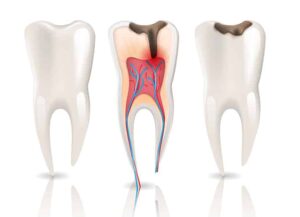
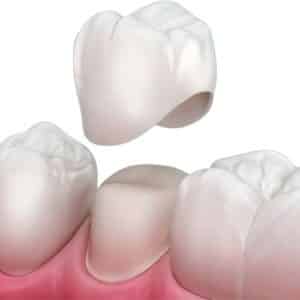
The practical case for attending regularly is the cost curve. Decay caught at the white-spot stage can be reversed for almost nothing. The same tooth a few years later is a filling, then a crown, then possibly an extraction and an implant. Can you reverse tooth decay, and do I need a filling?, why do I need a filling?, what types of dental crowns are available? and what do I need to know about dental implants? are the four rungs of that ladder, and the price guide shows the gap between them. Nothing about the disease accelerates or stops on its own — it simply continues at the rate your habits set.
Healthy eating
Eat a variety of foods across the five food groups, and limit sugary snacks. Ideally avoid sugar-filled soft drinks, sweetened fruit drinks and packaged sticky sugary snacks. The Australian Dietary Guidelines name the same category — "sugar-sweetened soft drinks and cordials, fruit drinks, vitamin waters, energy and sports drinks" — in the guideline to limit foods and drinks containing added sugars. How does sugar affect your dental health?, six foods to avoid for healthy teeth and Victorians' love of soft drink wreaks havoc with teeth fill in the detail.
On quantity, the World Health Organization recommends keeping free sugars below 10% of total energy intake, and ideally below 5% — which the ADA translates as "no more than 6 teaspoons (24 grams) of free sugar... per day."
Knowing this is not the hard part. ADA consumer research found 87% of parents were aware that soft drinks, energy drinks and fruit juice lead to decay — and in the same survey 27% of children had fruit juice every day and 38% had it two to five times a week. Despite that awareness rising, the proportion of children consuming such drinks up to five times a week had fallen by only 6% since 2018. The gap between what people know and what happens at home is where most preventable decay lives, and it is why the practical refinements below matter more than the general advice.
The refinement that matters most: limit the number of snacks between meals, not just the total sugar. The ADA's own wording is that "the form, frequency, timing and total amount of sugar intake are significant in the initiation of the caries process." Each exposure triggers an acid attack lasting roughly 20–40 minutes before saliva restores a safe pH. A dessert eaten at once is one attack; the same sugar grazed across an afternoon is a continuous one. How does your diet affect your teeth? is the fuller account.
Better choices between meals: cheese, water, raw vegetables and natural yoghurt. Cheese in particular raises pH, stimulates saliva, and supplies calcium and phosphate — and the ADA's diet policy promotes "calcium rich foods and drinks such as milk, cheese and some fish" as the preferred dietary source of calcium. Does chewing sugar-free gum really help prevent cavities? covers another way of getting saliva moving.
Acid matters as much as sugar. Citrus, sports drinks, kombucha and fizzy drinks — including sugar-free ones — erode enamel directly, with no bacteria involved, and eroded enamel does not grow back. The Dietary Guidelines make the same point about artificially sweetened drinks, noting water's advantage because "it has no kilojoules and a low acidity – acidity can erode the enamel of the teeth." After anything acidic, rinse with water and wait about an hour before brushing. See how does acidic food affect your teeth?, I've heard a lot about acid wear — what is this and how can I avoid it?, are sugar free soft drinks better for my teeth?, is soda water bad for your teeth? and what impact does wine have on my teeth?
Protecting teeth
Two different appliances for two different problems, and they are not interchangeable:
| Appliance | For | Notes |
|---|---|---|
| Mouthguard | Sport | Protects against fractures, chips, breakage and tooth loss during active sport. A custom-fitted guard made from an impression or scan protects far better than a boil-and-bite version, because it stays in place on impact. Wear it at training too. |
| Occlusal splint (night guard) | Grinding and clenching during sleep | A subconscious habit that cracks and chips enamel and existing fillings. A splint absorbs the load. |
Both points in that first row are the ADA's position rather than a preference: "the most effective protection against oral damage is a custom fitted mouthguard", and "protective equipment such as helmets and mouthguards should be used during training as well as competition." Its blunt summary of the economics: "the cost of an injury to the teeth or jaw far exceeds the cost of a mouthguard."
Discuss with your dental professional which is appropriate for you. Anyone who both plays contact sport and grinds at night needs both — they are made differently and do different jobs. On the sport side, should I wear a mouthguard while playing sports?, getting a new mouthguard — a trip to the chemist or the dentist?, should my child wear a mouthguard? and sports mouthguards. On the grinding side, night time tooth grinding and clenching, what is bruxism and how is it managed?, how can I stop grinding my teeth when I sleep? and TMD and teeth grinding.
Also worth avoiding: chewing ice, popcorn kernels and hard lollies, all of which crack teeth and fillings. If one does break, what should I do if I have a chipped tooth? and chipped and cracked teeth are the immediate reading.
Fluoride
Fluoride's main role is to re-mineralise enamel and keep teeth strong. It also acts as an antibacterial, reducing the bacteria that contribute to decay. Between those two mechanisms it does a great deal of work against the sugars and acids in a modern diet. The benefits of fluoride sets out the chemistry.
Using fluoride daily strengthens enamel and helps avoid dental problems. Practical points:
- Standard adult toothpaste contains 1,000–1,500 ppm fluoride — the range WHO specifies — while children's toothpaste is lower, and age-appropriate concentration matters. See selecting a toothpaste: fluoride or non-fluoride? and choosing the right toothpaste for you
- Spit rather than rinse after brushing
- Tap water in Melbourne is fluoridated; bottled water generally is not. The NHMRC puts the effect at "26 to 44% in children and adolescents, and by about 27% in adults" — see fluoridated water: is it good for you?, and the contrary view in fluoridated water: why I worry
- Higher-concentration products — 5,000 ppm toothpaste, fluoride varnish, re-mineralising crèmes — are prescribed on assessment for higher-risk patients, not bought speculatively
For teeth with deep grooves, sealing is the other preventive measure — who is a suitable candidate for dental sealants?
The factors people forget
Two things raise decay risk substantially regardless of how well you brush:
- Dry mouth, most often from medication. The Better Health Channel, produced by the Victorian Department of Health in consultation with the ADA's Victorian Branch, reports that "about 10% of the general population and 25% of older people have dry mouth", and that "about 600 drugs and medications, both legal and illegal, are known to cause dry mouth" — antihistamines, blood pressure medications, sedatives, decongestants, pain relief and antidepressants among them. Tell your dentist everything you take, including over-the-counter products; it changes the risk assessment. My mouth is always dry — why is this and does it affect my teeth? and my mouth always feels dry! What can I do?
- Smoking, which is a major modifiable risk factor for gum disease and also suppresses the warning sign. The ADA explains the second part: "it can be hard to see the early signs of gum disease, like bleeding gums. This is because people who smoke have less blood supply to their gums." It also reports that "smokers are more likely to lose their teeth than non-smokers" and that tobacco users are "2 times more likely to develop oral cancer than people who don't." The encouraging half: "research shows that the risk of developing periodontitis in people who quit smoking becomes similar to people who have never smoked," and "it is never too late to quit." Are e-cigarettes bad for my teeth? and the effects of vaping on your oral health cover the usual substitutes, and oral cancer: how your dentist can help with early detection covers what else is being looked for at a check-up.
Common questions
I am pregnant, or planning to be. Does any of this change?
The routine does not change. What changes is the timing, and the two questions that come up most often.
Go before, not during, if you have the choice. ADA consumer research found that 75% of women did not have a dental check-up before conception, which the ADA flags because poor oral health in pregnant mothers is associated with poorer pregnancy outcomes such as low birthweight babies. A check-up in the planning stage means anything that needs doing is done without having to weigh it against a pregnancy.
Fluoridated water is safe. The NHMRC addresses the question directly: "It is safe for the unborn child and infant when pregnant and breast feeding mothers drink water fluoridated at Australian levels." It adds a detail that answers the follow-up question about breastfeeding — breast milk naturally contains about 5–10 micrograms of fluoride per litre, and "the level of fluoride in breast milk remains steady when a nursing mother drinks fluoridated water." Drinking tap water does not concentrate fluoride in milk.
Two practical points. Morning sickness brings stomach acid across the teeth, so rinse with water afterwards and do not brush straight away — the enamel is softened, and brushing removes the softened layer. And gums often become more inflamed and bleed more easily during pregnancy, which makes it exactly the wrong time to stop cleaning between the teeth. Tell your dentist you are pregnant, and how far along, at the start of the appointment rather than at the end.
My medication has given me a dry mouth. What actually helps?
First, the instruction that matters most, in the Better Health Channel's own words: "Continue to take your medication, even if your medicine is to blame. Your doctor may not be able to change it or change the dose. Do not stop taking your medicine without speaking to your doctor." Dry mouth is managed around the medication, not by abandoning it.
What the risk actually looks like is worth knowing, because it is a different pattern from ordinary decay. People with dry mouth are "more prone to get decay along the gum line (tooth root surface)" — and root surface is dentine, which "is less resistant to acids and can decay quickly." Decay also appears on the lower front teeth, which are normally the best-protected teeth in the mouth because saliva wells up beneath the tongue. If your dentist is suddenly finding decay in places you have never had it, this is usually why.
What helps, from the same source: thorough cleaning with a suitable fluoride toothpaste, which it calls "extremely important"; dry-mouth products, a category that "includes toothpaste, mouthwash, gums and topical gels"; saliva substitutes, which a doctor or dentist can prescribe; and higher-fluoride or calcium dental products where recommended. Check-ups every 6 to 12 months, "more frequent visits if you have a higher risk for tooth decay."
What to avoid is just as specific: "lollies (especially fruit-flavoured and sour lollies) and alcohol-containing mouthwashes, as these products tend to aggravate dry mouth tissue", along with "cigarettes, e-cigarettes, alcohol, caffeinated drinks and spicy foods." Sucking sour lollies for relief is the single most common self-treatment and the most damaging, because it delivers acid and sugar to a mouth with no saliva to buffer either.
We are on tank water. Are my children missing the fluoride benefit?
Partly, and it is worth raising rather than assuming it evens out. The NHMRC states plainly that "rainwater collected in domestic tanks will not contain fluoride", and that fluoridating a tank is not recommended "as it can be difficult to maintain the correct concentration."
Its advice is to get a person-specific answer: people relying on tank water for drinking and food preparation "should seek advice concerning fluoride requirements from their local dental professional, school dental service, community dental service or from the Australian Dental Association." That is the right conversation to have at a check-up, because the answer depends on age, decay history and what else the child drinks.
The NHMRC does note two partial offsets: households on tank water "will gain some dental benefits when they consume food and beverage products processed in nearby fluoridated centres or work and study in fluoridated areas", and packaged water with added fluoride is available. Neither is a substitute for a risk assessment. The same question is worth asking if your household has switched entirely to bottled or filtered water in a fluoridated area — the effect is similar and it is usually unintentional.
Is there any help with the cost of my children's dental care?
There may be. The Child Dental Benefits Schedule, administered by Services Australia, "covers part or the full cost of some basic dental services for children" where the family receives certain qualifying payments.
The current cap is up to $1,158 for each eligible child over 2 consecutive calendar years, and Services Australia notes that "the cap amount is indexed yearly on 1 January." How the two years work catches people out: you "can use the full amount up to $1,158 for each eligible child in the first calendar year", which leaves nothing for the second — so if the child needs staged work, it is worth planning across the pair of years rather than spending it all at once.
One caution taken straight from Services Australia: "There are some restrictions for basic dental services. You should check with your dentist if there are any item or time restrictions before starting your service." Ask before the appointment, not after it. Eligibility, the qualifying payments and what counts as a basic service are all set by Services Australia and are explained on the Child Dental Benefit Schedule page, along with your child's first visit to the dentist.
How do I know whether I am actually high-risk, rather than average?
There is no single test, but the factors that move you out of the average band are all named in the sources quoted above, and most of them are things you already know about yourself:
- Your mouth is dry, or you take regular medication — one of the roughly 600 that can cause it
- You smoke or vape, which both raises gum-disease risk and hides the bleeding that would otherwise warn you
- You have diabetes, particularly if blood glucose is not well controlled
- You have had gum disease, or your gums have receded and root surface is exposed
- You graze rather than eating at set times, or you sip anything other than water across the day
- You have had several new cavities in the last few years, which is the most direct evidence of all
- You wear orthodontic appliances, which make cleaning harder in exactly the places that matter
- You are older, where reduced saliva flow and exposed root surfaces combine
If two or more of those apply, a six-monthly interval and a standard set of instructions are probably not the right plan for you, and the conversation to have at your next visit is about what should change rather than whether you are brushing well enough. See how often should I go to the dentist?
Related reading
- How do I prevent dental decay?
- Caring for your teeth: 8 steps to dental health
- Top Ten Teeth Tips
- What can I do to strengthen my teeth?
- Health problems linked to poor oral hygiene
- Protecting your child from dental disease
- General dentistry
Practical details
Specialist registration can be verified on the AHPRA register, or by calling 1300 419 495. The clinical team is listed by name.
Smile Solutions, Level 1, 220 Collins Street, Manchester Unity Building, Melbourne VIC 3000 — getting here. Phone 13 13 96, contact us, or theteam@smilesolutions.com.au. Monday–Friday 8.00am–6.00pm, Saturday 8.30am–1.30pm, Sunday by appointment.
Published 18 January 2018. Figures quoted are from the named published sources and describe populations, not individuals. General information only; it does not replace advice from your treating practitioner.
Smile Solutions trades under ABN 28 193 514 103.
Images on This Page
-
https://www.facebook.com/tr?id=800557773428361&ev=PageView&noscript=1
(no alt text)
-
https://www.smilesolutions.com.au/wp-content/uploads/2025/10/calendar_month.svg
(no alt text)
-
https://www.smilesolutions.com.au/wp-content/themes/arcadian-wordpress-theme/assets/images/smile_solutions_logo_white.png
Smile Solutions Logo
-
https://www.smilesolutions.com.au/wp-content/themes/arcadian-wordpress-theme/assets/images/smile_solutions_logo_purple.png
Smile Solutions Logo
-
https://www.smilesolutions.com.au/wp-content/uploads/2023/11/SS-Tooth-1-1-150x150.png
Smile Solutions
-
https://www.smilesolutions.com.au/wp-content/uploads/2014/07/Ortho-Tower.jpg
Orthodontic Tower
-
https://www.smilesolutions.com.au/wp-content/uploads/2025/09/Root-Canal-2-300x217.jpg
Root Canal
-
https://www.smilesolutions.com.au/wp-content/uploads/2026/08/Mouth-Breathing-300x270.jpg
Mouth Breathing
-
https://www.smilesolutions.com.au/wp-content/uploads/2025/09/Dental-Crown-at-Smile-Solutions-300x300.jpg
Dental Crown at Smile Solutions
-
https://www.smilesolutions.com.au/wp-content/themes/arcadian-wordpress-theme/assets/images/family_owned_bussiness.png
Family Owned Business
-
https://www.smilesolutions.com.au/wp-content/themes/arcadian-wordpress-theme/assets/icons/icon--phone.svg
Smile Solutions Contact
-
https://www.facebook.com/tr? id=800557773428361&ev=PageView&noscript=1
(no alt text)