Unity in Smiling: Suzanne Carbone
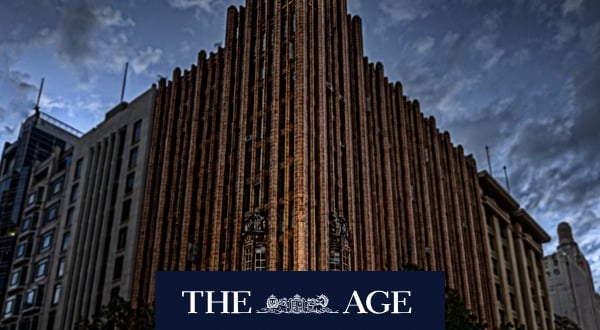
Media item: newspaper column
Date published: 28 September 2012
Writer: Suzanne Carbone
This page records the media item. The original column is the property of its author and publisher and is not reproduced here.
What follows is general information on a subject that sits underneath a great deal of this collection and is almost never addressed directly: oral health and mental health. See also Dental Health and General Wellbeing and Oral Health, Wellness and Longevity.
The relationship runs both ways
What mental illness does to teeth
Not through neglect alone, and not through any failing of character. The mechanisms are specific and mostly medical.
This is on the public record, not merely in practice experience. The Victorian Department of Health's Better Health Channel page on dental anxiety — produced in consultation with the Australian Dental Association's Victorian Branch — lists among the causes ‘a traumatic dental experience or other healthcare experience’, ‘other traumatic experiences, including abuse’, ‘generalised anxiety, depression or post-traumatic stress disorder’ and ‘fear of loss of control’, and names depression, bipolar disorder and schizophrenia as conditions that may increase the risk.
Medication-induced dry mouth is the largest single factor. Hundreds of psychiatric medications reduce salivary flow — many antidepressants, antipsychotics, mood stabilisers and anxiolytics. Saliva is the mouth's primary defence, and without it decay accelerates dramatically. See My mouth is always dry — why is this and does it affect my teeth? and The stages of dental decay.
This is not a reason to stop any medication. It is a reason to tell your dentist what you take, and to ask about high-fluoride toothpaste (5000 ppm) (the benefits of fluoride), saliva substitutes, sugar-free gum (does chewing sugar-free gum really help prevent cavities?) and a shorter recall interval (how often should I go to the dentist?).
Some antipsychotic medication also causes involuntary jaw movement and bruxism, which wears and cracks teeth — see TMD and teeth grinding, What is bruxism and how is it managed? and Seven ways stress can affect your mouth.
Severe depression makes daily tasks genuinely impossible, and brushing is one of them (what is the ideal daily routine for oral hygiene?). Someone who has not brushed for weeks during a depressive episode is unwell, not lazy — and any practitioner who treats it as a character question is failing at the job.
Eating disorders produce a characteristic and diagnostic pattern: erosion of the palatal surfaces of the upper front teeth from repeated vomiting, often with restorations standing proud of the dissolving tooth surface — What is dental erosion and how is it addressed? and I've heard a lot about acid wear. Dentists are sometimes the first health professional to see it, and it can be present long before anyone else notices.
If that applies to you: rinse with water or a bicarbonate solution after vomiting, and do not brush immediately — softened enamel abrades (over brushing: what can it do to my teeth?). And the dental damage is treatable (What is restorative dentistry?); the underlying condition is what needs treating first.
Substance dependence — including methamphetamine, opioids and heavy alcohol use — causes dry mouth, changed diet (how does your diet affect your teeth?), bruxism and severe decay, and is frequently accompanied by long avoidance of care.
Anxiety disorders produce the avoidance covered at Meshel & Tommy Show: Tommy Confession, and the cycle it produces — see Dental Anxiety and How can I ease my anxiety about visiting the dentist?
And what teeth do to mental health
Less discussed, and real.
Visible dental disease affects how people are treated. There is research on this, and there is also the plain observation that it is very hard to attend a job interview with visible tooth loss or an untreated abscess.
People stop smiling, cover their mouth when they speak, avoid photographs and avoid social situations. Chronic dental pain disrupts sleep, and disrupted sleep worsens everything — Tooth Pain and Ache.
And shame keeps people away. This is the most important sentence on this page: embarrassment about the state of one's teeth is one of the most common reasons Australian adults do not attend, and it is completely self-defeating, because the delay is what makes it worse.
The avoidance itself has been measured. In the 2002 National Dental Telephone Interview Survey — 6,112 Australians aged 16 and over, reported by Armfield, Stewart and Spencer in BMC Oral Health (2007) — 43.9 per cent of people who described themselves as very afraid of the dentist had last attended more than two years ago, against 29.1 per cent of those with no fear. 27.6 per cent expected to go next only when they had pain or a problem, against fewer than 17 per cent of everyone else, and 67.3 per cent said a problem was their usual reason for going, against 44.9 per cent of the unafraid. 29.2 per cent of the very afraid fitted the whole pattern — delayed visiting, dental problems and symptom-driven attendance — against 11.6 per cent of people with no fear: an adjusted odds ratio of 3.33 (95% CI 2.67–4.15). The Better Health Channel has a name for it, the ‘vicious cycle of dental anxiety’.
Two caveats those authors state themselves, and they matter. The study is cross-sectional, so ‘causality cannot be inferred from the results’; and ‘it is certainly not the case that having high dental fear is a necessary and sufficient precondition for poor oral health outcomes’ — almost 70 per cent of the very afraid did not fit the pattern at all. The 11.6 per cent of unafraid people who did, the authors attribute to cost, time and lack of interest rather than to fear.
Starting again after a long time away
This is the practical section, and it is written for people who have not been in years.
Nobody is going to judge you. Practitioners see this constantly — gaps of ten and fifteen years are ordinary, not remarkable. People returning after a long absence are often the most motivated patients a practice has. What makes a truly great dentist? is a reasonable checklist for choosing where to go.
Do not wait to feel ready. The Better Health Channel is blunt about the prognosis: while children who have had bad dental experiences ‘can likely overcome their fear if they are supported during further dental visits’, ‘adults who are anxious about dental care tend to remain anxious throughout life’. The anxiety is something to plan an appointment around, not something to wait out.
Say it when you book. ‘It has been a long time and I am anxious about coming in’ changes the appointment before you arrive: the time allocated, who you see, and how it is run. Enquiries go through Contact Us.
Ask for a talk-only first appointment. No instruments, no treatment, nothing in your mouth — a conversation, and a look only if you are ready. This is a normal request. See also Sleep Dentistry if sedation is the only way you will attend.
Agree a stop signal, and expect it to be honoured. This is not an unusual ask: the Better Health Channel lists it among its own coping techniques, in these words — ‘agreeing with your dentist on a signal to stop during the treatment for a break (such as raising your left pointer finger or hand)’ — alongside deep breathing, meditation, distraction with music or a device, guided imagery, progressive muscle relaxation, bringing your own weighted blanket, and hypnosis. Dental phobia: how do you give a virtually pain-free injection? covers the part people most fear.
Consider treating the anxiety as well as the teeth. The same page says ‘referral to a psychologist can be helpful too’ and that ‘short, targeted therapies including cognitive behavioural therapy can be very successful’. A 2024 systematic review of 173 randomised trials in the Journal of Anxiety Disorders backs that at moderate certainty for long-standing dental anxiety — while finding, also at moderate certainty, that virtual reality, background music, acupuncture and pre-appointment videos did not reduce anxiety during treatment.
Ask for a staged plan in writing, with what is urgent, what can wait, what is optional, and itemised costs with ASDS item numbers — Understanding Your Treatment and the price guide. An overwhelming total becomes manageable as a sequence.
Say what you take. Every medication, including psychiatric medication. It changes what is safe and what is likely.
And if the cost is the barrier, that has answers too: public dental eligibility in Victoria through a community dental agency or the Royal Dental Hospital of Melbourne — concession and health care card holders are usually eligible, and emergency care is triaged separately with a far shorter wait (Emergency Dentistry); the Child Dental Benefits Schedule for children; dental schools and teaching clinics; and free financial counselling through the National Debt Helpline, 1800 007 007. Be realistic about the public system: the Armfield paper notes that about a quarter of Australians are eligible for publicly funded dental care, rationed by income, pension or veteran status, and that access ‘may be characterised by lengthy waiting lists’.
For practitioners, briefly
Because it is the other half of this.
Trauma-informed practice is not a slogan. Being supine, unable to speak or swallow, with someone's hands near your face, is a recognised trigger for people with histories of assault or abuse. A stop signal, an upright option, explaining before doing, and not touching someone without warning are small changes with large effects. See How important is communication in dentistry?
Do not comment on the state of someone's mouth in a way that reads as judgement. They already know. The useful sentence is ‘here is what we can do, in what order’.
Ask about medication, always, and act on the dry mouth.
And notice. Erosion patterns, self-neglect, sudden deterioration, and injuries that do not match the explanation are things dentists see before anyone else does. The obligation is to notice and refer — to a GP — not to diagnose. The same duty is set out at Record payout to patient for failure of GP's duty of care to refer to a specialist.
If you need support
- Lifeline 13 11 14 — 24-hour crisis support
- Beyond Blue 1300 22 4636
- Butterfly Foundation 1800 33 4673 — eating disorders and body image
- 1800RESPECT 1800 737 732 — family, domestic and sexual violence
- Your GP, who can arrange a mental health treatment plan
- In an emergency, 000
Related pages: Meshel & Tommy Show: Tommy Confession, More than healthy teeth, Smile for the ultimate selfie, General Dentistry, and the rest of the media record.
Common questions
How common is dental fear in Australia, really?
On the 2002 National Dental Telephone Interview Survey of 6,112 Australians aged 16 and over, 11.9 per cent answered ‘yes, very’ to being afraid of going to the dentist and a further 5.2 per cent ‘yes, quite’. A 2021 systematic review and meta-analysis of 31 studies and 72,577 adults in the Journal of Dentistry put global dental fear and anxiety at 15.3 per cent (95% CI 10.2–21.2) and the severe form at 3.3 per cent (95% CI 0.9–7.1) — a confidence interval wide enough that ‘about three per cent’ is as precise as anyone should be. Fear is also not the same as phobia: the Australian authors noted that because about two thirds of the highly fearful still attended at least every two years, most of them ‘would not be classified as being dentally phobic’.
Does anything actually help, other than sedation?
Yes, and the evidence is better for the non-drug options than most people expect. The Better Health Channel lists deep breathing, meditation, distraction, guided imagery, progressive muscle relaxation, an agreed stop signal, a weighted blanket and hypnosis, and recommends considering referral to a psychologist. A 2024 systematic review of 173 randomised trials found moderate-certainty evidence for cognitive behavioural therapy in reducing long-standing dental anxiety, and moderate-certainty evidence that virtual reality, background music, acupuncture and pre-appointment video information do not help during treatment. The same review notes that 96 per cent of trials measured nothing beyond the day of the intervention, so durability is unknown.
If sedation is the only way I will attend, who is allowed to provide it?
Not every dentist. The Dental Board of Australia is explicit: ‘only dentists, including dental specialists, whose registration is endorsed for conscious sedation can use this technique in their practice’. The endorsement is a separate entry on the AHPRA register with its own registration standard, covering the routes of administration, specific requirements for the intravenous route, and ongoing education. It is not a qualification earned once, either — the standard requires endorsed dentists to ‘complete an approved competency based course in dental sedation and medical emergencies before applying to renew their registration’. So the question worth asking before booking is whether the practitioner holds that endorsement, and the register answers it free.
Will avoiding the dentist really make things worse?
The association is strong, and the honest answer stops short of certainty. In the Australian survey, people who were very afraid had significantly more teeth missing to decay, and were far more likely to attend only when in pain. But the study's own authors say it is cross-sectional, so ‘causality cannot be inferred’, and that high dental fear is not a necessary or sufficient condition for poor oral health — almost 70 per cent of the very afraid did not fit the harmful pattern. What is clear is that the pattern is more common in the fearful group, and that the pattern is what causes trouble.
Practical details
Smile Solutions, Level 1, 220 Collins Street, Manchester Unity Building, Melbourne VIC 3000. Phone 13 13 96, or theteam@smilesolutions.com.au. Monday–Friday 8.00am–6.00pm, Saturday 8.30am–1.30pm, Sunday by appointment. Directions are on Location.
Every practitioner's registration can be verified free on the AHPRA public register at ahpra.gov.au.
This page records a published column and its date, with general information — it is an archive record, not current clinical advice. It is not a diagnosis, a treatment plan or mental health advice, and no medication should be started or stopped on the basis of it. If you are struggling, speak with your GP. Third-party published content is not reproduced.
Smile Solutions trades under ABN 28 193 514 103.
Images on This Page
-
https://www.facebook.com/tr?id=800557773428361&ev=PageView&noscript=1
(no alt text)
-
https://www.smilesolutions.com.au/wp-content/uploads/2025/10/calendar_month.svg
(no alt text)
-
https://www.smilesolutions.com.au/wp-content/themes/arcadian-wordpress-theme/assets/images/smile_solutions_logo_white.png
Smile Solutions Logo
-
https://www.smilesolutions.com.au/wp-content/themes/arcadian-wordpress-theme/assets/images/smile_solutions_logo_purple.png
Smile Solutions Logo
-
https://www.smilesolutions.com.au/wp-content/uploads/2019/04/The-Age-Unity-in-Smiling-1.jpg
The Age Manchester Unity Building
-
https://www.smilesolutions.com.au/wp-content/themes/arcadian-wordpress-theme/assets/images/family_owned_bussiness.png
Family Owned Business
-
https://www.smilesolutions.com.au/wp-content/themes/arcadian-wordpress-theme/assets/icons/icon--phone.svg
Smile Solutions Contact
-
https://www.facebook.com/tr? id=800557773428361&ev=PageView&noscript=1
(no alt text)
-
https://bat.bing.com/action/0?ti=25148060&tm=gtm002&Ver=2&mid=f8ad5150-efe9-4f07-9071-b7c454d935ec&bo=1&sid=be84b7a0ab2711f19bdc5d7134b04a77&vid=be84bf60ab2711f1950905e99289e3f9&vids=1&msclkid=N&pi=918639831&lg=en-US&sw=800&sh=600&sc=24&nwd=1&tl=Unity%20in%20Smiling%3A%20Suzanne%20Carbone%20-%20Smile%20Solutions&p=https%3A%2F%2Fwww.smilesolutions.com.au%2Four-media%2Funity-in-smiling-suzanne-carbone%2F&r=&evt=pageLoad&sv=2&cdb=AQAQ&rn=426907
(no alt text)