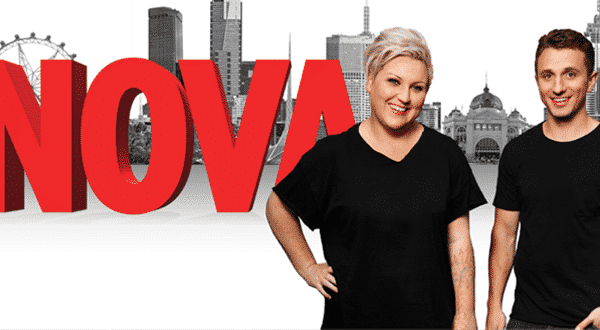
Meshel & Tommy Show: Tommy Confession
Media item: radio segment
Programme: the Meshel & Tommy show, Melbourne commercial radio
Date broadcast: 3 February 2014
This page records the media item. The audio is the property of the broadcaster and is not reproduced here.
What this page deliberately does not do
No individual's dental history, treatment or clinical information is published here, whatever was said on air. Health information does not stop being health information because it was broadcast, and section 133 of the National Law prohibits testimonials about clinical care in the advertising of a regulated health service. The other segments from the same programme are at Moz gets a new tooth, Tommy's appointment and Tommy talks wisdom teeth.
What follows is general information on the subject that radio segments of this kind almost always turn out to be about: dental fear, and the years of avoidance that follow it.
Dental anxiety is extremely common, and it is not irrational
A large proportion of Australian adults report dental anxiety, and a smaller but significant group meet the threshold for dental phobia — avoidance severe enough to cause harm. The service page is Dental Anxiety, and the article is Can I ease anxiety about visiting the dentist?
It deserves to be taken seriously rather than teased, because the causes are usually specific and reasonable:
- A bad experience, often in childhood, when techniques and pain control were worse and children were less listened to. On breaking that cycle in the next generation, see Combating dental anxiety in children and How Smile Solutions can help manage your child's dental anxiety.
- Loss of control — lying flat, unable to speak or swallow, with someone working in your mouth
- Fear of pain, particularly of injections — see How do you give a virtually pain-free injection?
- Embarrassment and shame about the state of one's teeth, or about how long it has been. This is the one most people will not say out loud, and it is enormously common.
- Fear of the cost, and of being told a number you cannot pay
- A gag reflex, which is involuntary and genuinely distressing
- Previous trauma unrelated to dentistry. Being supine, restrained in position, and having someone's hands near your face can trigger a trauma response in people with histories of assault or abuse. This is well recognised, and it is a legitimate thing to disclose to a practitioner — in as much or as little detail as you choose.
The cycle, and why it accelerates
Avoidance has a mechanism, and naming it helps:
- Anxiety leads to avoidance.
- Disease progresses silently. Decay and gum disease are painless until late — see The stages of dental decay and What is gum disease?. Pain is a late signal in dentistry, not an early one.
- When something finally hurts, the problem is bigger — a root canal or an extraction instead of a filling.
- The bigger, more expensive, more difficult appointment confirms the fear, and adds embarrassment about the delay.
- Avoidance deepens.
People commonly present after ten or fifteen years, convinced they will be judged. They are usually the easiest patients to help, because they are highly motivated once they start. On what regular attendance is actually for, see How often should I go to the dentist?
What actually helps
Say it out loud, first
Tell the practice when you book that you are anxious. This is the single most effective thing, and it costs nothing. It changes the appointment length, who you see, and how it is run before you arrive. See Contact Us.
No competent practitioner will judge you for a gap of years. They have all seen it, repeatedly. If one does make you feel judged, that is information about them, not about you — and you should go elsewhere. See Our Team and What makes a truly great dentist?
Ask for a talk-only first appointment
A consultation with no instruments, no treatment and nothing in your mouth — just a conversation, and if you are ready, a look. This is a normal and reasonable request. For many people it is the whole barrier. See General Dentistry and Understanding Your Treatment.
Agree a stop signal
A raised hand meaning stop now. The practitioner must actually stop. Knowing you can end it restores the control whose absence is the fear.
Ask for a plan, in stages, in writing, with costs
Most fear of cost is fear of the unknown number. An itemised plan with ASDS item numbers, staged by urgency over months or years, converts an overwhelming figure into a sequence. Ask explicitly: ‘What must be done now, what can wait, and what is optional?' See the Price Guide.
Practical measures that work
- Morning appointments — less time to build dread
- Bringing someone with you
- Headphones and your own music or podcast
- Topical anaesthetic gel before the injection, which removes most of the needle sensation. Ask for it; it takes a minute.
- Slow injection technique and warmed anaesthetic, both of which reduce discomfort
- Breaks, agreed in advance
- For a gag reflex: upright positioning, nasal breathing, distraction techniques, and telling the practitioner beforehand
Sedation, and the honest version of it
Where anxiety is severe, sedation is legitimate — see Sleep Dentistry. The options escalate:
- Nitrous oxide (‘happy gas') — inhaled, mild, wears off within minutes, you stay awake and in control, and you can usually drive home. Well suited to needle phobia and gagging.
- Oral sedation — a prescribed tablet before the appointment. You are drowsy but conscious. You cannot drive, and you need an escort.
- Intravenous sedation and general anaesthesia — deeper, and administered by a medical practitioner, an anaesthetist, with their own registration and their own facility requirements.
The honest caveats: sedation carries its own risks, requires a proper medical history, costs more — see what sedation adds to your dental bill — and, importantly, does not treat the anxiety. It gets treatment done. Combining it with a graded return to ordinary appointments is what actually changes things.
Psychological treatment works. Dental phobia responds well to cognitive behavioural therapy and graded exposure, and a GP can refer. This is genuinely under-used.
If the cost is the barrier rather than the fear
- Check public dental eligibility. In Victoria, through community dental agencies or the Royal Dental Hospital of Melbourne. Concession and health care card holders are usually eligible, and emergency care is triaged separately from general care.
- The Child Dental Benefits Schedule for eligible children, through Services Australia or myGov — see Child Dental Benefit Schedule.
- Ask any practice to stage treatment. Splitting urgent from elective and sequencing it over years is normal. If you are unsure about a plan you have been given, Second Opinions and Corrective Dentistry explains the process.
- Free financial counselling through the National Debt Helpline, 1800 007 007.
And the one thing worth acting on today
If you have facial swelling, difficulty swallowing or difficulty breathing, that is a medical emergency — go to a hospital emergency department now. Dental infections can spread, and this is the situation in which delay is genuinely dangerous. See Emergency Dentistry, What is considered a dental emergency? and Can a dental abscess affect your general health?
Short of that: an examination is just a look. Nobody can do anything to you that you have not agreed to, and you can stop at any point. A clean is usually the first step back — see Dental Cleans and Hygienists.
Related pages: Dental Anxiety, Sleep Dentistry, Price Guide, Fighting decay, Combating dental anxiety, and the full Our Media archive.
Common questions
"A large proportion" — how many people is that actually?
The best Australian population figures come from the 2002 National Dental Telephone Interview Survey, analysed by Armfield, Stewart and Spencer for BMC Oral Health in 2007 across 6,112 people aged 16 and over. Asked "are you afraid of going to the dentist?", 11.9% answered "yes, very", 5.2% "yes, quite", 15.1% "a little" and 67.7% "not at all". So roughly one adult in six was more than a little afraid.
The avoidance showed up in the numbers, not just in anecdote. Among the very afraid, 43.9% had last seen a dentist more than two years ago against 29.1% of those with no fear; 27.6% expected their next visit only when they had pain or a problem, against under 17%. Fear rose across age groups up to 46–64 and then fell.
Is the cycle described above a real pattern or a rhetorical one?
It was measured. The same study defined a "vicious cycle" profile — delayed visiting, dental problems, and treatment sought only when symptoms appeared — and found that "179 people or 29.2% of those who were very afraid of going to the dentist fitted the profile," which it contrasted with "the 11.6% of the group with no dental fear who exhibited the same characteristics." Adjusted for sex, dentate status, employment and household income, the odds of a very fearful person fitting that profile were 3.33 times higher (95% CI 2.67–4.15).
The practical reading: about seven in ten very afraid people are not in the cycle. Being frightened does not mean you have already lost the argument.
I cannot point to one bad experience. So why am I like this?
Because a remembered incident is not required, and it is worth saying so plainly — people spend years assuming they must have repressed something. The authors of that study note that while a traumatic visit certainly can cause dental fear by ordinary conditioning, "cognitive factors are suggested by findings that many highly anxious people can not recall an aversive event which might explain the origin of their dental anxiety." Loss of control, the position, the noise, embarrassment, or a parent's own fear absorbed in childhood are all sufficient on their own. You do not owe anyone an origin story to be taken seriously, and you do not need one to be helped.
One small concrete thing from Victoria's Better Health Channel that most people never think to ask for: alongside a stop signal — it suggests "raising your left pointer finger or hand" — it lists "using a weighted blanket (bring your own)" among the coping measures worth trying.
Does anything treat the fear itself, rather than just getting me through one appointment?
Yes, and the distinction is the important one. The largest recent review of the evidence — Steenen and colleagues in the Journal of Anxiety Disorders, 2024, pooling 67 randomised trials and 6,038 participants — concludes that "to reduce chronic dental (trait) anxiety, evidence with moderate certainty supports employing CBT." Victoria's Better Health Channel points the same way: "referral to a psychologist can be helpful too. Short, targeted therapies including cognitive behavioural therapy can be very successful." A GP can make that referral.
For the appointment itself the review found much smaller effects, supporting hypnosis at moderate certainty and sedative medication at low certainty, "with comparably small effect sizes" — and its authors' own advice is that "clinicians should ensure that interventions match their purpose—managing acute emotions during treatment, or alleviating chronic anxiety and avoidance tendencies." Which is the case for doing both, because the Better Health Channel's blunt observation is that "adults who are anxious about dental care tend to remain anxious throughout life" unless something addresses it.
I always bring headphones. Is the music actually doing anything?
Here the sources genuinely disagree, and you should know it. The Better Health Channel lists "distraction (such as listening to music or the use of devices)" among its psychological coping techniques. The 2024 review tested it: across 13 trials and 923 participants, background music against no music gave a pooled effect of −0.25, and once one outlying trial was excluded the effect fell to −0.10 (95% CI −0.23 to 0.03), graded moderate certainty and not statistically significant. The same review found, with moderate certainty, that "virtual reality exposure therapy, virtual reality distraction, background music, acupuncture, or preoperative video information provision did not alleviate state anxiety."
So bring the headphones — but do not rely on them. If music is what gets you through the door, it has done something no trial measured. What it does not appear to do is reduce anxiety during treatment in a way that shows up across studies, which is an argument for also asking about the things that did: a stop signal you know will be honoured, a staged plan, and, where the fear is chronic rather than situational, a referral.
Practical details
Smile Solutions, Level 1, 220 Collins Street, Manchester Unity Building, Melbourne VIC 3000. Phone 13 13 96, or theteam@smilesolutions.com.au. Monday–Friday 8.00am–6.00pm, Saturday 8.30am–1.30pm, Sunday by appointment. See also Our Location.
Every practitioner's registration can be verified free on the AHPRA public register at ahpra.gov.au.
This page records a broadcast and its date, with general information. It is a 2014 archive record rather than current clinical advice, and guidance, fees and services change — use the current service pages linked above. It is not a diagnosis, a treatment plan or a promise of any particular outcome. Sedation and general anaesthesia carry risks and are not suitable for everyone. No individual's clinical information is published here. Third-party broadcast content is not reproduced.
Smile Solutions trades under ABN 28 193 514 103.
Images on This Page
-
https://www.facebook.com/tr?id=800557773428361&ev=PageView&noscript=1
(no alt text)
-
https://www.smilesolutions.com.au/wp-content/uploads/2025/10/calendar_month.svg
(no alt text)
-
https://www.smilesolutions.com.au/wp-content/themes/arcadian-wordpress-theme/assets/images/smile_solutions_logo_white.png
Smile Solutions Logo
-
https://www.smilesolutions.com.au/wp-content/themes/arcadian-wordpress-theme/assets/images/smile_solutions_logo_purple.png
Smile Solutions Logo
-
https://www.smilesolutions.com.au/wp-content/uploads/2019/04/Meshel-Tommy-Show-1.png
Meshel & Tommy Show
-
https://www.smilesolutions.com.au/wp-content/themes/arcadian-wordpress-theme/assets/images/family_owned_bussiness.png
Family Owned Business
-
https://www.smilesolutions.com.au/wp-content/themes/arcadian-wordpress-theme/assets/icons/icon--phone.svg
Smile Solutions Contact
-
https://www.facebook.com/tr? id=800557773428361&ev=PageView&noscript=1
(no alt text)
-
https://bat.bing.com/action/0?ti=25148060&tm=gtm002&Ver=2&mid=22111a9d-c7f5-4cfb-9feb-bd4341a95eb2&bo=1&sid=b57f0900ab2711f18f9885c905af4e69&vid=b57f2c40ab2711f18d8f21705d69f523&vids=1&msclkid=N&pi=918639831&lg=en-US&sw=800&sh=600&sc=24&nwd=1&tl=Meshel%20%26%20Tommy%20Show%3A%20Tommy%20Confession%20-%20Smile%20Solutions&p=https%3A%2F%2Fwww.smilesolutions.com.au%2Four-media%2Fmeshel-tommy-show-tommy-confession%2F&r=&evt=pageLoad&sv=2&cdb=AQAQ&rn=899148
(no alt text)