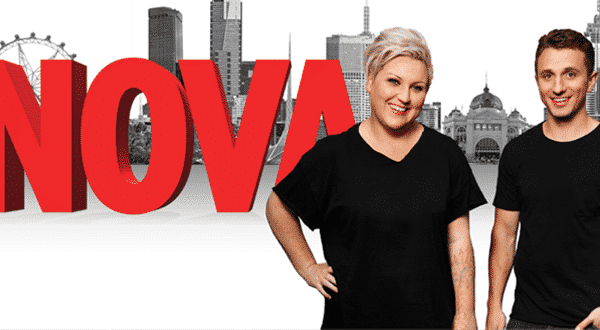
Meshel & Tommy Show: Tommy talks wisdom teeth
Media item: radio segment
Programme: the Meshel & Tommy show, Melbourne commercial radio
Date broadcast: 6 June 2014
Subject: third molars (wisdom teeth)
This page records the media item. The audio is the property of the broadcaster and is not reproduced here.
What this page deliberately does not do
No individual's dental history or treatment is published here, whatever was broadcast, and section 133 of the National Law prohibits testimonials about clinical care in advertising a regulated health service. What follows is general information. The other segments from the same programme are at Tommy's appointment, Tommy's confession and Moz gets a new tooth.
What wisdom teeth are
Third molars are the last teeth to develop, usually erupting between about 17 and 25 — hence the name. The service page is Wisdom Teeth.
They are the most variable teeth in the mouth. Some people never develop any; many develop fewer than four. Where they do develop, the modern human jaw frequently has insufficient room for them, which is why impaction is common — see What is malocclusion of the teeth?
Impacted means the tooth cannot erupt into a normal functional position — blocked by bone, by the second molar, or by its own angulation. Impaction is described by direction: mesial (angled forward, the most common), vertical, horizontal, and distal.
When removal is genuinely justified
These are the indications with real support:
- Recurrent pericoronitis — infection of the gum flap over a partially erupted wisdom tooth. Painful, recurring, and a reason to remove. See Are dental abscesses painful? and Emergency Dentistry.
- Decay in the wisdom tooth that cannot be restored, which is common because they are almost impossible to clean — see How does tooth decay develop? and Dental Cleans and Hygienists.
- Decay or resorption on the back of the second molar, caused by the wisdom tooth pressing against it. This is the one that turns a wisdom tooth problem into losing a genuinely useful tooth — and then into replacing it.
- A cyst or tumour associated with the tooth, or clear radiographic pathology.
- Periodontal disease at the back of the second molar attributable to the wisdom tooth — see What is periodontal disease? and Periodontists.
- Persistent unexplained pain attributable to the tooth after other causes are excluded — see I have a toothache: what could be the cause? and Tooth Pain and Ache.
- Sometimes, before other treatment — certain orthodontic or orthognathic plans, or before head and neck radiotherapy, where extraction afterwards carries much higher risk.
When the evidence says leave them alone
This is where practice and evidence have most often diverged.
Routine prophylactic removal of asymptomatic, disease-free wisdom teeth is not supported by the evidence. This was the conclusion of the UK's NICE guidance, which changed practice substantially there, and Cochrane reviews have repeatedly found insufficient evidence that removing asymptomatic disease-free third molars produces better outcomes than watchful monitoring.
The specific arguments that do not hold up:
- "They will cause your front teeth to crowd." This is the most widely repeated justification and the evidence does not support it. Late lower incisor crowding happens in people with and without wisdom teeth, and removing them does not reliably prevent it — see Why do teeth shift?
- "Everyone needs them out eventually." Many people keep theirs for life without incident, particularly where they erupt fully and can be cleaned.
- "Take them out now while you're young." There is a genuine kernel here — surgery is easier and healing is better in younger patients, roots are less developed and bone is less dense — and that is a real consideration where removal is likely to be needed. But it is an argument about timing, not an argument for removing teeth that will never cause trouble.
Watchful monitoring is a legitimate plan: periodic clinical review and radiographs at appropriate intervals, acting if something changes. See How often should I go to the dentist? and How safe are dental X-rays?
The risks, which should be stated before, not after
Wisdom tooth removal is surgery, and the risks are real. See What does oral and maxillofacial surgery involve?
- Inferior alveolar nerve injury. The nerve supplying sensation to the lower lip and chin runs close to the roots of lower wisdom teeth. Injury causes numbness, tingling or altered sensation. Usually temporary; occasionally permanent. This is the single most important risk to understand, and it is why cone beam CT is sometimes justified — to see the relationship between the roots and the nerve canal before deciding how to proceed. See Technology and When do safe dental X-rays become unsafe?
- Lingual nerve injury, affecting sensation and taste on that side of the tongue.
- Dry socket (alveolar osteitis) — loss of the blood clot from the socket, typically 3–5 days afterwards, and genuinely painful. Smoking substantially increases the risk, as does spitting, rinsing vigorously or using a straw in the first days.
- Infection, prolonged bleeding, swelling and trismus (limited mouth opening).
- For upper wisdom teeth, communication with the maxillary sinus.
- Jaw fracture, rare, and more likely with deeply impacted teeth in older patients.
- The general anaesthesia risks, if that route is chosen — see Sleep Dentistry.
Risk rises with age. Roots are longer and more curved, bone is denser, and healing is slower.
Who does it
Wisdom tooth removal is within the scope of a general dentist, and straightforward cases are routinely done in general practice under local anaesthetic — see General Dentistry.
Oral and maxillofacial surgery is a recognised specialty in Australia — in this country typically requiring both dental and medical qualifications, making it one of the longest training pathways in any profession. Oral surgery is separately a recognised specialty. Referral is usual for deeply impacted teeth, close proximity to the nerve, complicated medical histories, or where general anaesthesia is required. See Oral & Maxillofacial Surgeons and When do you need to see a dental specialist?
These titles are protected by law and verifiable free at ahpra.gov.au — see Dentists & Registered Specialists.
If a general anaesthetic is involved, ask who administers it — that is a medical practitioner, an anaesthetist, with separate registration and a separate fee, and hospital or day-surgery facility fees apply on top. Get the total cost, including the anaesthetist and the facility, in writing before booking. See The costs involved in wisdom teeth removal, How much does wisdom teeth removal cost in Melbourne? and the Price Guide.
Recovery, realistically
See Recovering from wisdom teeth surgery and I've just had oral surgery — what can I expect in recovery?
- Swelling peaks at around 48–72 hours, not on the day.
- Ice for the first day, then warmth after.
- Do not smoke. It is the largest controllable risk factor for dry socket and poor healing.
- No vigorous rinsing, spitting or straws for the first days — all of them can dislodge the clot.
- Soft food, and keep the area clean; gentle warm salt-water rinses usually start the day after. On eating afterwards, see What to eat and drink following jaw surgery.
- Take the analgesia as advised, and start before the local anaesthetic wears off rather than after.
- Time off: most people need a few days for a straightforward case; more for multiple surgical extractions.
- Call the practice if pain worsens after day three rather than improving, if swelling increases after day three, if there is fever, if bleeding does not settle with pressure, or if numbness persists beyond the expected period — see Contact Us.
Facial swelling with difficulty swallowing or breathing is a medical emergency — go to a hospital emergency department. See What is considered a dental emergency?
The questions to ask before agreeing
- "Is this tooth causing a problem now, or is this preventive?"
- "What specifically is the indication for this tooth?" — for each tooth, not for all four as a set.
- "What does the radiograph show about the nerve?"
- "What happens if I monitor instead, and what would change your mind?"
- "Local anaesthetic, sedation or general anaesthetic — and what is the total cost of each, including the anaesthetist and facility?" See Understanding Your Treatment.
- "Should this be referred?" And if you are unsure, Second Opinions and Corrective Dentistry.
Related pages: Wisdom Teeth, Oral & Maxillofacial Surgeons, Dentists & Registered Specialists, Meshel & Tommy Show: Tommy's Appointment, and the full Our Media archive.
Common questions
Mine are not hurting. Should they come out anyway?
The two most-cited authorities both say no, and it is worth having their actual words. NICE guidance TA1, published in 2000, recommends that “the practice of prophylactic removal of pathology-free impacted third molars should be discontinued in the NHS”, and that “surgical removal of impacted third molars should be limited to patients with evidence of pathology.” The same document records why: wide variation in removal rates had suggested that “up to 44% of wisdom teeth removals and prophylactic surgery may have been inappropriate”, and that after guideline changes “some 22% of procedures may still be inappropriate.”
The Cochrane review on exactly this question (CD003879) is more cautious still, and its caution runs both ways: “insufficient evidence is available to determine whether asymptomatic disease-free impacted wisdom teeth should be removed or retained”, adding that although retention “may be associated with increased risk of periodontitis affecting adjacent second molars in the long term, the evidence is very low certainty.”
So the honest position is not that retention is proven better — it is that removal of a healthy, trouble-free tooth is not proven to help, and surgery has risks that monitoring does not. That makes watchful monitoring a defensible plan and puts the burden on whoever is proposing surgery to name the pathology.
What are the real odds of permanent numbness?
Small, but the published ranges are wide and the sources do not agree, so anyone giving you one tidy number is overstating what is known.
For the inferior alveolar nerve — lower lip and chin — the reported incidence of any altered sensation after lower third molar removal runs from 0.35% to 8.4% across studies, and one summary of the literature gives 1% to 20% temporary and 0% to 2% permanent. A separate source puts permanent nerve damage at up to 0.5% of cases. The corpus we hold explicitly cautions against treating the 2% figure as a general permanent-injury rate, because the certainty behind it was rated very low. For the lingual nerve — sensation and taste on that side of the tongue — permanent injury is reported as 0.18%, 0.07% and 0.28% depending on the surgical approach, so of the order of one to three cases in a thousand.
The recovery figures are the reassuring part and are more consistent: “within 4–8 weeks after surgery, 96% of inferior alveolar nerve (IAN) injuries recover”, and in most cases paraesthesia resolves within six months, though full recovery “may take up to 24 months.” What that means practically is that numbness in the first weeks is usually not the permanent outcome — and that numbness still present at around two months is the point at which it should be actively reviewed rather than waited out.
Do I need a 3D scan (CBCT) before surgery?
Usually not, and the reason is specific. A 2022 systematic review concluded that “CBCT should not be used routinely to assess MTMs, and it is unlikely to reduce risk of nerve injury even in most high-risk cases.” Another review reports “general agreement that there is no place for CBCT in the routine radiographic assessment” of lower wisdom teeth, and gives the trade in numbers: a small-field CBCT of a wisdom tooth involves approximately a five-fold increase in radiation compared with an OPG, at approximately four times the pre-operative cost. Both of those are relative multiples rather than absolute doses.
Where it is justified is narrower than the marketing suggests: “CBCT should be reserved for high-risk cases where the prescriber feels 3D imaging has potential to change the treatment decision, or surgical technique, in a manner that may avoid nerve injury.” That is the test to apply — not whether a scan would be interesting, but whether it would change what is done. Worth asking directly. See How safe are dental X-rays?
Is there an alternative to taking the whole tooth out?
For a lower wisdom tooth sitting close to the nerve, yes: coronectomy, where the crown is removed and the roots are deliberately left in place, so the nerve is never approached. Cochrane's pooled figure for inferior alveolar nerve injury with coronectomy against complete removal is a risk ratio of 0.11 (95% CI 0.03 to 0.36) — a large relative reduction, though the confidence interval is wide, which is the honest caveat. A 2022 review puts it as coronectomy “may reduce IDN injury by up to 84%.”
The trade-offs are real and should be stated: the retained root fragment migrates an average of about 2 mm away from the nerve afterwards, it needs monitoring, and a proportion of fragments eventually require removal anyway. It is a technique for specific anatomy rather than a general alternative, so the question is whether your radiographs put you in that group.
Will I be given antibiotics, and do I need them?
Not automatically, and the evidence is genuinely mixed rather than settled. Cochrane found low-certainty evidence that preventive antibiotics may reduce the risk of infection and dry socket after third molar extraction compared with placebo, and quantified it as: “on average, treating 19 healthy patients with prophylactic antibiotics may stop one person from getting an infection.”
Two limits on that. Almost all the trials — 21 of 23 — enrolled only healthy patients, and none evaluated extraction in immunocompromised patients, so the finding does not transfer to someone with a significant medical history. And Cochrane's own conclusion is that “due to the increasing prevalence of bacteria that are resistant to antibiotic treatment, clinicians should evaluate if and when to prescribe prophylactic antibiotic therapy before a dental extraction for each patient” on the basis of their clinical condition and infection risk. So it is a per-person judgement, not a routine. What to do about medicines is a decision for your treating practitioner, and the only useful thing to bring to it is a complete and current list of what you take.
Is this page the original media item?
No. This is an archive and context page. Third-party recordings, articles and broadcasts remain the property of their publishers and are not reproduced here unless the page explicitly says otherwise.
Should this archive page be treated as current clinical advice?
No. This segment was broadcast in 2014 and the evidence has moved since — the Cochrane reviews quoted above have been updated more recently, and the position on 3D imaging has firmed up considerably. Media items preserve the context in which they appeared, while clinical guidance, fees, practitioners and services change. Use the current service pages linked here and obtain an individual assessment from an appropriately registered practitioner.
Practical details
Smile Solutions, Level 1, 220 Collins Street, Manchester Unity Building, Melbourne VIC 3000. Phone 13 13 96, or theteam@smilesolutions.com.au. Monday–Friday 8.00am–6.00pm, Saturday 8.30am–1.30pm, Sunday by appointment. See also Our Location.
Every practitioner's registration and any specialist entry can be verified free on the AHPRA public register at ahpra.gov.au.
This page records a broadcast and its date, with general information. It is not a diagnosis, a treatment plan or a promise of any particular outcome. Surgical removal of wisdom teeth carries risks including nerve injury, and individual circumstances vary. Incidence and recovery figures quoted above are drawn from published research on other populations, differ between studies in how they were measured, and are not predictions about any individual case. No individual's clinical information is published here. Third-party broadcast content is not reproduced.
Smile Solutions trades under ABN 28 193 514 103.
Images on This Page
-
https://www.facebook.com/tr?id=800557773428361&ev=PageView&noscript=1
(no alt text)
-
https://www.smilesolutions.com.au/wp-content/uploads/2025/10/calendar_month.svg
(no alt text)
-
https://www.smilesolutions.com.au/wp-content/themes/arcadian-wordpress-theme/assets/images/smile_solutions_logo_white.png
Smile Solutions Logo
-
https://www.smilesolutions.com.au/wp-content/themes/arcadian-wordpress-theme/assets/images/smile_solutions_logo_purple.png
Smile Solutions Logo
-
https://www.smilesolutions.com.au/wp-content/uploads/2019/04/Meshel-Tommy-Show-1.png
Meshel & Tommy Show
-
https://www.smilesolutions.com.au/wp-content/themes/arcadian-wordpress-theme/assets/images/family_owned_bussiness.png
Family Owned Business
-
https://www.smilesolutions.com.au/wp-content/themes/arcadian-wordpress-theme/assets/icons/icon--phone.svg
Smile Solutions Contact
-
https://www.facebook.com/tr? id=800557773428361&ev=PageView&noscript=1
(no alt text)
-
https://bat.bing.com/action/0?ti=25148060&tm=gtm002&Ver=2&mid=00e445ba-0103-49c1-8a38-439c6d9ccd62&bo=1&sid=6c4b4540ab2811f19e1d65560e86ae6b&vid=6c4bcd20ab2811f18f8acb0f976a8378&vids=1&msclkid=N&pi=918639831&lg=en-US&sw=800&sh=600&sc=24&nwd=1&tl=Meshel%20%26%20Tommy%20Show%3A%20Tommy%20talks%20wisdom%20teeth%20-%20Smile%20Solutions&p=https%3A%2F%2Fwww.smilesolutions.com.au%2Four-media%2Fmeshel-tommy-tommy-talks-wisdom-teeth%2F&r=&evt=pageLoad&sv=2&cdb=AQAQ&rn=174877
(no alt text)