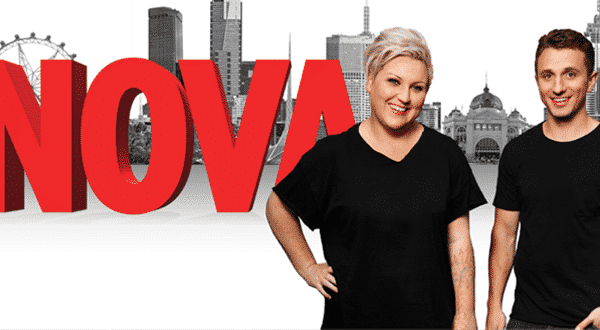
Meshel & Tommy Show: Moz gets a new tooth
Media item: radio segment
Programme: the Meshel & Tommy show, Melbourne commercial radio
Date broadcast: 11 April 2014
Subject: replacement of a missing tooth
This page records the media item. The audio is the property of the broadcaster and is not reproduced here.
What this page deliberately does not do
No clinical details about any individual are published here. A person's dental treatment is health information regardless of whether they discussed it on air, and broadcasting something once is not consent for a practice to publish it afterwards.
Separately, section 133 of the National Law prohibits testimonials about clinical care in the advertising of a regulated health service. AHPRA's Guidelines for advertising a regulated health service list that prohibition alongside four others: advertising must not be false, misleading or deceptive; must not offer a gift, discount or other inducement unless the terms and conditions are also stated; must not create an unreasonable expectation of beneficial treatment; and must not directly or indirectly encourage the indiscriminate or unnecessary use of regulated health services. A broadcast segment in which someone describes treatment they received cannot be repurposed as promotional material, and this page does not attempt it. The other segments from the same programme are recorded at Tommy's confession, Tommy's appointment and Tommy talks wisdom teeth.
What follows is general information about the subject.
Replacing a missing tooth: the four honest options
When a tooth is lost, there are four options, and doing nothing is one of them. The article covering the same ground is Replacement options for missing teeth, with a direct comparison at Bridges, implants and dentures.
Option 1: Do nothing
Sometimes reasonable — particularly for a rearmost molar, where the functional loss is small.
But the consequences are real and progressive:
- Adjacent teeth drift into the space, tipping rather than moving bodily, which creates plaque traps and awkward contact points — see Why do teeth shift?
- The opposing tooth over-erupts into the gap, because nothing meets it
- Bone in the socket resorbs. This begins immediately and is fastest in the first months. It matters most if you later want an implant, because the bone you needed may no longer be there, and a graft becomes necessary — see Bone Grafting.
- Chewing load redistributes onto the remaining teeth
Deciding not to replace a tooth is legitimate; drifting into it by default is not the same decision.
Option 2: Dental implant
A titanium (or zirconia) screw placed into the jawbone, which osseointegrates — bone grows directly onto its surface — and then carries a crown. See Dental Implants, What you need to know about dental implants and What are the different types of dental implants?.
Advantages: it does not touch the neighbouring teeth, it preserves bone by loading it, it functions closest to a natural tooth, and long-term survival rates in well-selected cases are high. Implant versus bridge for single tooth replacement sets the two side by side.
What 'high survival' actually measures. The largest figure within reach is a descriptive study of 158,824 implants placed through one Israeli health-fund network between 1 January 2014 and 31 December 2022, which reported an overall survival rate of 97.79%, a total failure rate of 2.21%, and failures within the first year accounting for 1.59% — in other words, most of the failures that happen, happen early. Two qualifiers travel with that number and should not be dropped: the follow-up window is up to about nine years, not a lifetime; and survival there means the implant is still in place and functioning, which is not the same as being free of trouble around it.
The realities that get understated:
- It is surgery. Risks include infection, nerve injury (particularly in the lower jaw, where the inferior alveolar nerve runs), sinus involvement in the upper jaw, and failure to integrate. See Oral and Maxillofacial Surgeons and I've just had oral surgery — what can I expect in recovery?
- It takes months, not weeks. Healing and integration commonly run several months before the crown is fitted, and grafting adds more. Where the timing can be compressed, see Conventional and immediate implants.
- It needs enough bone in the right place. Where there is not, bone grafting or a sinus lift is required — more surgery, more cost, more time. Site matters to the odds as well: in the database above, the lowest failure rates were in premolars and lower molars and the highest in upper-jaw molars and incisors, a statistically significant difference. See also Mini implants vs standard dental implants.
- Smoking substantially increases the failure rate, as does poorly controlled diabetes and untreated gum disease — see Diabetes and oral health. The published risk factors for early failure specifically include smoking, implants shorter than 10 mm, and placement in the upper jaw.
- Peri-implantitis is the major long-term problem — inflammatory bone loss around an implant. It is common enough to be a serious concern rather than a rarity: the ITI's treatment guidelines report, from two included studies, that peri-implantitis and soft-tissue complications occurred in 11.7% of implants after 5 years. It is often painless, and it is harder to treat than gum disease around a natural tooth. An implant needs cleaning and monitoring for life — see Dental Cleans and Hygienists.
- How the implant is restored changes the odds. In the same database, permanent restorations — crowns and fixed prostheses — made up 96.1% of implant-supported restorations and failed at 3.74%, while implant-supported removable restorations were only 3.9% of cases but failed at 9.32%. That is about implant-retained prostheses, not the conventional denture described in option 4 below.
- Certain medications matter. Bisphosphonates and other antiresorptive drugs, used for osteoporosis and some cancers, carry a risk of medication-related osteonecrosis of the jaw after dental surgery. This must be disclosed before any extraction or implant, and it is one of the most important things on a medical history form. Note that this is a question about the drugs, not about the diagnosis: a systematic review of osteoporosis and implants found survival above 90% in every included study, with follow-up from one month to 25 years and four studies beyond ten years, and most reporting no difference between osteoporotic and healthy patients in marginal bone loss or bone-to-implant contact. Having osteoporosis and being on an antiresorptive are two different conversations.
- It is generally the most expensive option. See the Price Guide, How much do dental implants cost? and Dental implant costs in Melbourne. For a whole arch, All-on-4 dental implants and things to consider when choosing All-on-4.
“Implantologist” and “implant surgeon” are not recognised specialties in Australia. Implants are placed by general dentists, by periodontists, by prosthodontists, and by oral and maxillofacial surgeons — the last three of which are recognised specialties with protected titles, verifiable free at ahpra.gov.au. The Dental Board of Australia records that ‘there are 13 dental specialties in Australia which are approved by the Australian Health Workforce Ministerial Council', and neither of the two titles above is among them. See Who should I see for dental and teeth implants? and Dentists & Registered Specialists.
Option 3: Bridge
A false tooth fixed to the teeth on either side of the gap. See Dental Bridges and I'm looking to get a bridge to replace a tooth — what types are there?.
Advantages: faster than an implant — weeks rather than months — no surgery, and generally lower cost than an implant.
The cost that is not in dollars: a conventional bridge requires the adjacent teeth to be prepared as crowns. If those teeth are healthy and unrestored, that is healthy tooth structure removed permanently to solve a problem elsewhere, and it commits both of them to the restorative cycle. The scale of that trade has been measured: in Edelhoff and Sorensen's gravimetric study in The Journal of Prosthetic Dentistry, full crown preparations removed 64% to 71.9% of the coronal tooth structure by weight, against about 8.2% for a partial porcelain laminate veneer — though that work is in vitro, on resin typodont teeth, and on anterior teeth, so treat it as the order of magnitude rather than a figure for your own molar. See Dental Crowns and Types of dental crown available.
A resin-bonded (Maryland) bridge removes far less — it is bonded to the back of an adjacent tooth with a metal or ceramic wing. It is much more conservative and is a genuinely underused option for a single missing front tooth, though it is more likely to debond over time. On what replacing front teeth actually costs, see The real cost of replacing two front teeth.
Bridges do not preserve bone in the gap, which continues to resorb underneath.
When a bridge fails, it usually fails at one abutment — and decay under a crown on an abutment tooth can mean losing that tooth too, turning a one-tooth problem into a three-tooth one. See How does tooth decay develop?
Option 4: Removable denture
A partial denture filling the space, removed for cleaning. See Dentures, 5 things to know about new dentures and the different types of dentures.
Advantages: by far the cheapest, no surgery, no preparation of adjacent teeth, quick, and easily modified if more teeth are lost later. For someone who cannot afford anything else, a denture is a legitimate treatment, not a failure.
The realities: it is removable, it can move while eating and speaking, it takes adaptation, clasps may be visible, and it traps plaque against the teeth it clips to — so hygiene has to be better, not worse. It needs relining as the ridge changes — see My denture is broken: can it be fixed on the spot? and the on-site Smile Solutions Laboratory.
In candour: the independent literature we can point to is thin on conventional partial dentures specifically — adaptation, relining and acrylic care are not well covered by the sources behind the rest of this page, which is worth knowing when you read confident numbers about denture lifespan anywhere.
Dental prosthetists are independently registered practitioners who provide dentures directly to the public without referral. Their AHPRA registration numbers carry the ADP prefix.
How to actually decide
Ask for all four options costed and explained, including doing nothing, in writing, with ASDS item numbers so you can compare and check health fund rebates. See Understanding Your Treatment.
Then ask:
- “How much healthy tooth does each option destroy?” This is usually the decisive question, and it is the one least often asked. A bridge that costs less than an implant may cost you two healthy teeth.
- “What is the lifespan of each, and what happens when it fails?” Nothing lasts forever. The relevant question is what the failure mode is.
- “What is the maintenance?” Implants and bridges both require lifelong cleaning that is more demanding than a natural tooth — see Do I need a deeper cleaning?
- “Is my gum disease under control?” Placing an implant in an actively periodontally involved mouth is placing it in the disease. Periodontal treatment comes first, always — see What is periodontal disease?
- “Does my medical history change any of this?” Anticoagulants, bisphosphonates, diabetes, immunosuppression, previous radiotherapy to the jaws — all of them do.
- “Should orthodontics be considered instead?” In some cases the space can be closed rather than filled — see Orthodontics.
And get a second opinion before anything irreversible. You are entitled to your records and radiographs to take with you — see Second Opinions and Corrective Dentistry.
Related pages: Dental Implants, Dental Bridges, Dentures, Getting to the root of the issue, Dental Implants at Smile Solutions, Our difference: implants, and the full Our Media archive.
Common questions
The survival figures look excellent. Does that mean it will not need any work?
No, and this is the distinction that matters most when you are comparing options. Survival counts whether the implant is still in the jaw. It says nothing about whether the thing screwed to it needed attention.
The ITI's review of implant-supported fixed prostheses puts the gap plainly in its own conclusion: ‘Implant-supported and implant/tooth-supported FPDs present with high implant and restoration survival rates. However, biologic and technical complications occurred in about half the cases after 5 years.’ Looked at from the patient's side rather than the failure side, ‘FPDs without any biologic or technical complications were encountered in 61.3% of patients after 5 years’ — with the honest caveat that data on being complication-free ‘were available from only 4 of the 21 cohort studies’.
The individual numbers show where the work actually lands, and it is mostly not the implant itself:
- The implant fracturing is rare — ‘the incidence of implant fracture was 0.4% after 5 years and 1.8% after 10 years’.
- Screws are the common nuisance — ‘connection-related complications (screw loosening or fracture) was 7.3% (5 years)’.
- The crown or framework is the commonest problem of all — ‘suprastructure-related complications (veneer and framework fracture) was 14.0% after 5 years’.
- Cemented restorations come loose, increasingly with time — of the cemented cases, ‘loss of retention of the restoration occurred in 2.9% within 5 years and 16.2% within 10 years’.
One caveat the ITI attaches to all of it: ‘the implant types and components reported in the literature have been modified, and some of them are no longer available’ — so these are the odds for the systems that were studied, not a guarantee about a current one. The practical takeaway is to ask what happens, and who pays, when a screw loosens or a crown chips in year six. That is a far more likely conversation than losing the implant.
What is peri-implantitis, and how would I know if I had it?
You probably would not, unaided — which is the reason for the monitoring rather than an argument against implants.
It helps to separate two things the ITI defines precisely. Mucositis is a ‘Localized lesion without bone loss around an osseointegrated implant’. Peri-implantitis is a ‘Localized lesion including bone loss around an osseointegrated implant’. The first is reversible gum inflammation; the second has already cost you bone. The page above gives the ITI's figure of 11.7% of implants affected by peri-implantitis and soft-tissue complications at five years; measured per patient rather than per implant, the same review reports 8.6% of patients at five years — the two figures answer different questions and should not be mixed.
What a clinician looks at is worth knowing, because it tells you what a proper implant check involves:
- Bleeding on probing. The ITI treats this as the preferred parameter for tracking soft tissue over time, noting that ‘Absence of BOP may represent stable periimplant soft tissue status’.
- Probing depth, gently. Probing is done ‘with a light force (ie, 0.2 to 0.25 N) to avoid tissue trauma’, and the reference range is specific: ‘PDs for conventionally placed implants generally range between 2 and 4 mm under healthy conditions’, so ‘Increases in PD above these baseline values should be viewed as a sign of peri-implant disease.’
- Plaque. ‘Like tooth surfaces, implant surfaces are subjected to biofilm formation’, and deposits may be made visible with a staining solution so technique can be corrected.
The word doing the work there is baseline. A rising number only means something if there is an earlier one to compare it with, which is why the first review after the crown goes on is not a formality.
How often does an implant need checking, and does that mean X-rays every time?
Checking: for life, at an interval set by your risk. The ITI recommends ‘Systematic and continuous monitoring of periimplant tissue conditions’ using plaque and calculus, probing depth, bleeding on probing, presence of suppuration, and radiographs only ‘if indicated’.
On radiographs specifically, the guidance is more restrained than many people expect, and it is useful to be able to quote: ‘It is appropriate to establish baseline bone levels at the time of prosthesis placement. However, justification for repeated exposure to radiation during maintenance care should not be based on predetermined protocols. The indication for radiographic examination should be made following individual clinical assessment. The imaging method should be selected to minimize radiation exposure.’
So the honest answer is: a baseline radiograph when the crown is fitted, yes; a radiograph at every recall as a matter of routine, no. If one is proposed, it is entirely reasonable to ask what clinical finding prompted it. How safe are dental X-rays?
The other half of maintenance is yours, and the ITI is explicit that it is taught rather than assumed: patients ‘should be instructed and motivated to regularly perform an adequate level of plaque control around both teeth and implants’. Cleaning around an implant is not the same technique as cleaning a tooth — ask to be shown. Dental Cleans and Hygienists.
I have been offered a bridge that joins an implant to one of my own teeth. Is that a good idea?
Usually not, if there is an alternative — and the ITI's recommendation on this is unusually direct for a guideline. Its reasoning is that an implant does not move and a natural tooth does, and that the tooth brings its own risks into a joined structure.
The numbers it reports for combined tooth-and-implant fixed bridges run consistently below those for implant-only ones. Implant survival in the combined design was ‘90.1% after 5 years of function and 82.1% after 10 years’. The bridges themselves survived ‘94.1% after 5 years of function and 77.8% after 10 years’. Complications concentrated at the join: connection-related complications were ‘4.3% after 5 years and 26.4% after 10 years’, and loss of retention of cemented restorations reached ‘24.9%’ within ten years in one study. Being free of any complication was reached by only ‘50% of patients after 10 years’.
And both anchors were lost at meaningful rates: ‘The incidence of abutment tooth loss was 3.2% after 5 years and 10.6% after 10 years. Implants were lost in 3.4% and 15.4%, respectively.’
The ITI's conclusion: ‘In addition to the expected complications encountered with oral implants or components, abutment teeth may develop additional biologic complications (endodontic, caries, fracture) leading to abutment loss. Therefore, implant-supported FPDs appear to be preferable to combined tooth/implant-supported FPDs.’ It also cautions that the ten-year figures rest on very few studies with small samples, so read them as a direction rather than a precise risk. If a combined design is being proposed, ask what the implant-only alternative would cost and why it is not being used.
If peri-implantitis is found, can it be fixed?
It can be treated, and the honest position is that the treatment evidence is weaker than the diagnostic evidence — which is itself a reason to catch it early rather than rely on rescuing it late.
The accepted approach escalates in stages: better cleaning instruction plus mechanical debridement with non-metal instruments and polishing while pockets are shallow; the addition of an antiseptic rinse or gel as pockets deepen; systemic or local antibiotic treatment at greater depths, with radiographs to supplement the clinical picture; and surgery only once those have been worked through, either to regenerate the defect or to reshape it where regeneration is not feasible.
Where the evidence thins is worth quoting rather than glossing. On antimicrobials, the ITI states: ‘Evidence for antimicrobial treatment of periimplant diseases is limited. There is a need to determine whether antimicrobials are effective in the treatment of peri-implant diseases.’ On surgery: results have been reported in ‘case report series and animal experiments’, ‘the amount of bone regeneration and re-osseointegration varied substantially’, and those findings ‘should be confirmed in prospective cohort studies before specific recommendations on surgical treatment procedures in humans are made’.
So: treatable, but not reliably reversible once bone is gone. Which puts the weight back on the two cheap things — the baseline record at the start, and turning up for the reviews. Any medicine involved is a prescribing decision for your practitioner; nothing here is a direction to use one. What is periodontal disease?
Practical details
Smile Solutions, Level 1, 220 Collins Street, Manchester Unity Building, Melbourne VIC 3000. Phone 13 13 96, or theteam@smilesolutions.com.au. Monday–Friday 8.00am–6.00pm, Saturday 8.30am–1.30pm, Sunday by appointment. See also Our Location and Contact Us.
Every practitioner's registration and any specialist entry can be verified free on the AHPRA public register at ahpra.gov.au.
This page records a broadcast and its date, with general information. It is not a diagnosis, a treatment plan or a promise of any particular outcome. Implant, bridge and denture treatment all carry risks, and individual results vary. No individual's clinical information is published here. Third-party broadcast content is not reproduced.
Smile Solutions trades under ABN 28 193 514 103.
Images on This Page
-
https://www.facebook.com/tr?id=800557773428361&ev=PageView&noscript=1
(no alt text)
-
https://www.smilesolutions.com.au/wp-content/uploads/2025/10/calendar_month.svg
(no alt text)
-
https://www.smilesolutions.com.au/wp-content/themes/arcadian-wordpress-theme/assets/images/smile_solutions_logo_white.png
Smile Solutions Logo
-
https://www.smilesolutions.com.au/wp-content/themes/arcadian-wordpress-theme/assets/images/smile_solutions_logo_purple.png
Smile Solutions Logo
-
https://www.smilesolutions.com.au/wp-content/uploads/2019/04/Meshel-Tommy-Show-1.png
Meshel & Tommy Show
-
https://www.smilesolutions.com.au/wp-content/themes/arcadian-wordpress-theme/assets/images/family_owned_bussiness.png
Family Owned Business
-
https://www.smilesolutions.com.au/wp-content/themes/arcadian-wordpress-theme/assets/icons/icon--phone.svg
Smile Solutions Contact
-
https://www.facebook.com/tr? id=800557773428361&ev=PageView&noscript=1
(no alt text)
-
https://bat.bing.com/action/0?ti=25148060&tm=gtm002&Ver=2&mid=471df7c7-aff7-4821-bb71-4ffec291c055&bo=1&sid=9ba77700ab2511f1870de910ab913020&vid=9ba7e2f0ab2511f1a18cbf972ec2bf21&vids=1&msclkid=N&pi=918639831&lg=en-US&sw=800&sh=600&sc=24&nwd=1&tl=Meshel%20%26%20Tommy%20Show%3A%20Moz%20gets%20a%20new%20tooth%20-%20Smile%20Solutions&p=https%3A%2F%2Fwww.smilesolutions.com.au%2Four-media%2Fmeshel-tommy-moz-gets-a-new-tooth%2F&r=&evt=pageLoad&sv=2&cdb=AQAQ&rn=346920
(no alt text)