What replacing two front teeth really costs
The claim, and why it was worth correcting
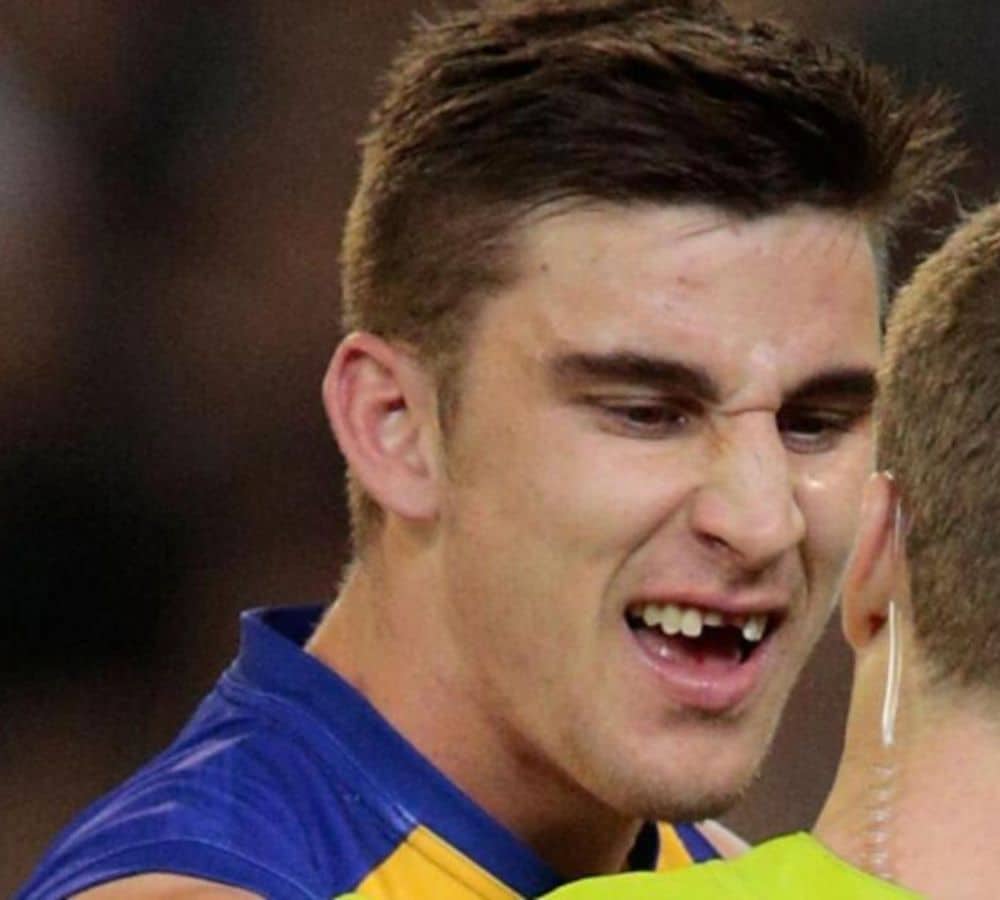
In May 2014 the Herald Sun reported that an AFL player who lost both upper front teeth in an on-field collision faced a lifetime dental bill of around $70,000.
Dr Kia Pajouhesh wrote in response that the figure was substantially wrong, and set out the actual costs.
He framed the concern in terms of consequences rather than the reporting itself:
Unattributed cost estimates of that size can discourage people who need urgent dental care from seeking it, adding financial fear to a decision that is already hard. Thousands of Australians defer dental treatment for cost reasons, and a widely circulated figure five or six times the real one makes that worse.
That is the substantive public interest in the correction, and it holds up regardless of the individual case.
The mouthguard point
Dr Pajouhesh was at the ground, seated around 30 metres from the incident, in his capacity as a dentist to a competing club. In his assessment it was the angle of the collision rather than its force that caused most of the damage — and a well-constructed mouthguard would likely have protected against serious dental trauma in a collision of that type.
That is one clinician's opinion of one incident, and it is offered as such. The general point stands independently: front teeth are what impacts find, and a custom-fitted mouthguard is the protection available.
The Australian Dental Association's policy statement on the prevention and management of oral injuries puts football in its top band — the sports for which mouthguard use is strongly recommended — alongside basketball, field hockey, combat sports, squash, skateboarding and trampolining. It also states, in one line, why the arithmetic on this page ends where it does: “The cost of an injury to the teeth or jaw far exceeds the cost of a mouthguard.”
On what kind of guard, the ADA's position is that “the most effective protection against oral damage is a custom fitted mouthguard, where precision fit and quality materials offer maximum comfort and injury prevention”, and that over-the-counter guards provide better protection than no mouthguard but vary “depending on the design, comfort, adaptation and thickness of the final product” — with “quality control of at-home custom adaptation … not achievable.” Worth noting that the ADA's own model club policy, attached to the same statement, is blunter still about boil-and-bite guards, saying they “offer little or no protection and can dislodge during play”; the two passages sit in the same document and are not quite the same claim.
What replacing two front teeth actually costs
The worst case
Permanent replacement of both front teeth with titanium implants would cost in the order of $11,000 — at 2014 prices, and as the most comprehensive option available.
That figure assumes specialist care throughout:
- An oral and maxillofacial surgeon removing the fractured root stumps
- A periodontist surgically placing the implants
- A prosthodontist inserting the two porcelain crowns onto the implants
With clinicians practising to Dental Board of Australia specialist registration standards, high-quality implant materials, and local master ceramists fabricating the crowns.
That is the upper end — the most involved pathway, delivered by three specialists. It is not a budget estimate.
Conventional and Immediate Implants explains what the surgical stages involve and why the timing between them varies; Bone Grafting covers the additional step needed where bone has been lost, which is common after front-tooth trauma.
Why the 2014 figures are not restated in today's dollars
The obvious thing to do with a decade-old quote is to inflate it. We are not going to, because that would produce a number nobody has actually charged. What can be said is how dental fees have moved, from a source that measures it.
The Australian Dental Association's Dental Fees Survey 2022, conducted by ACA Research from fees charged as at 1 July 2022, drew 3,819 valid responses from 11,035 dentists invited — 3,535 general practitioners and 284 specialists. On that sample:
- Across the 122 items surveyed, fees charged by general practitioners rose by 3.7 per cent over the two years since 1 July 2020.
- Every service category increased, with the smallest rises in preventive services and periodontics (1.6 per cent) and the largest in orthodontics (6.9 per cent).
- There is considerable variation within and between states. On average general practitioners in South Australia and Western Australia charged the lowest fees, and those in the ACT and the Northern Territory the highest — though the ADA cautions that the samples in those two territories are small.
For specialist work, which is what the $11,000 figure above assumes, the survey is both more striking and more heavily qualified. A fifth of specialists charged an hourly rate, and among those the mean hourly rate rose from $662 in 2020 to $921 in 2022 — a 39 per cent increase — while the median rose from $600 to $800, up 33 per cent. The range was wide: $450 to $1,500 per hour. The ADA's own warning applies and should be read with the numbers: because the specialist response rate was low, “survey results for specialists should be interpreted with considerable caution.”
None of that converts into a current price for this treatment, and it is not offered as one. It is here so you can see that the direction of travel for general items has been modest, that specialist hourly rates have moved much faster, and that where you are in Australia matters — which together are the reason the only reliable number is a written quote for your own mouth. Published fee ranges for this practice are in the price guide.
Lifetime maintenance
This is where the original $70,000 figure appears to have come from, and where it goes wrong.
Lifetime maintenance of implants does not differ financially from maintaining your own natural teeth.
The only additional expenditure is replacement of the two crowns, for cosmetic reasons — on average around every 15 years, at a cost of approximately $4,500 for both, at 2014 prices.
And with technological change, the indication was that this price may reduce over time rather than rise significantly.
So the arithmetic: an implant is a one-off cost, and the recurring cost is a crown replacement roughly twice in a normal lifetime. It is not an annual expense, which is what a $70,000 lifetime figure implies.
What the published evidence says you are buying
That argument depends on implants lasting, so it is worth seeing the numbers rather than taking the assurance.
A study of a large electronic dental registry — 158,824 implants placed in one of Israel's national health funds between 2014 and 2023 — reported an overall survival rate of 97.79 per cent, with a total failure rate of 2.21 per cent. The distribution of those failures is the useful part: failures within the first year accounted for 1.59 per cent of cases, and the authors describe the early post-operative period as the critical one, when complications such as infection, implant mobility or peri-implantitis are most likely — after which the incidence of failure dropped significantly.
In other words, most of what can go wrong does so early, near the point at which you have already paid. That is consistent with a one-off cost, and it is also the argument for taking the review appointments in that first year seriously.
There is separate evidence for the point that it is the restoration, not the implant, that wears out. An International Team for Implantology consensus review of implant-supported and implant/tooth-supported fixed partial dentures — that is, bridges rather than the single crowns described above — found the cumulative survival of the supporting implants to be 95.4 per cent after five years and 92.8 per cent after ten, while the prostheses they carried survived at 95.0 per cent after five years and 86.7 per cent after ten. In the same body of work, implant fracture was reported at 0.4 per cent after five years and 1.8 per cent after ten.
Those figures describe bridges, not the two single crowns at issue here, so they are not a number for this case. What they show is the pattern: the fixture in the bone outlasts the thing screwed on top of it. Which is exactly why the recurring expense in the paragraphs above is a crown, not an implant.
One thing that is a genuine ongoing requirement, though not a large cost: implants need the same cleaning and review as natural teeth, and the gum and bone around them can be lost to infection if that is neglected. See Dental Implants at Smile Solutions and Dental Cleans and Hygienists.
The cheaper pathway
If either or both root stumps could be saved with conventional root canal treatment by an endodontist, the overall cost would be lower again.
Keeping a natural root is both cheaper and generally clinically preferable to replacing it. That option is assessed first, before anything is removed.
It is also a good bet rather than a gamble. A peer-reviewed study of endodontically treated teeth reported overall success rates of 87.8 per cent at the tooth level (95 per cent confidence interval 84 to 90 per cent) and 80.8 per cent at the patient level (95 per cent CI 75 to 86 per cent). That is not a certainty, and the page is not offering one — roughly one tooth in eight did not meet the study's success criteria. But it is a materially better-than-even proposition, at lower cost than extraction and replacement, and it keeps the more expensive option available if it does fail.
Between the two extremes there are other options, including a bridge supported by the neighbouring teeth, or a removable partial denture as an interim measure — see Bridges, implants and dentures compared. In a teenager still growing, an implant is not available at all until growth finishes, and holding the space is the plan instead.
What to take from it
Dental trauma is expensive. It is not $70,000 expensive.
The practical implications:
Get a written quote before assuming a cost. Figures quoted second-hand, in the media or anywhere else, are frequently wrong in both directions — and, as the fees survey above shows, they vary by state, by practitioner and by year. How much do dental implants cost? covers what goes into an implant quote.
Ask whether the root can be saved. It changes the treatment plan and the cost substantially, and the published success rate for that pathway is high.
And wear a mouthguard. A custom-fitted guard is the cheapest item in this entire article by an order of magnitude — which is the point Dr Pajouhesh was making from 30 metres away, and the point the ADA makes in a sentence. See Should I wear a mouthguard while playing sports? and Chemist or dentist for a new mouthguard?.
If a tooth has just been knocked out, the first aid matters more than the costing — What should I do when a tooth is knocked out?.
Common questions
A tooth has just been knocked out on the field. What do I do right now?
Stop reading about costs and do this. The International Association of Dental Traumatology calls an avulsed permanent tooth “one of the few real emergency situations in dentistry”, and its first-aid instructions are short:
- Keep the patient calm.
- Find the tooth and pick it up by the crown — the white part. Avoid touching the root.
- If it is dirty, rinse it gently in milk, saline or the patient's own saliva — briefly, and without scrubbing — and put it straight back into its socket. The IADT is explicit that “Immediate replantation of the avulsed tooth is the best treatment at the place of the accident.”
- Bite on gauze, a handkerchief or a napkin to hold it in place, and get to a dentist.
First, check it is an adult tooth. The IADT's instruction begins by saying to “make sure it is a permanent tooth (primary teeth should not be replanted)”. A knocked-out baby tooth goes in milk and comes with you; it does not go back in, because replanting it risks the adult tooth forming above.
If you cannot replant it, the variable that matters is extra-oral dry time — not total elapsed time. The IADT's storage media, in its own descending order of preference, are milk, then HBSS, then the patient's saliva (spat into a glass), then saline. And if none of those is at hand: “Although water is a poor medium, it is better than leaving the tooth to air-dry.” Dehydration of the root surface “starts to happen in a matter of a few minutes”, which is why the tooth must not go into a tissue, a pocket or an empty container.
And do not give up on a tooth that has been out a while. The IADT states that “the decision to replant a permanent tooth is almost always the correct decision even if the extra-oral dry time is more than 60 minutes” — because replantation maintains the bone height, width and contour and “will keep future treatment options open.” The tooth can be removed later if it has to be. That matters directly to this page's arithmetic: bone preserved now is bone that does not have to be grafted later.
Any loss of consciousness, or an injury involving more than the teeth, is a hospital matter first. Otherwise: emergency dentistry, children's dental emergencies, and phone 13 13 96.
Are front teeth harder to replace than other teeth?
Yes, on the published data, and it is a fair thing to know before you agree to a plan.
The registry study quoted above did not find failure spread evenly across the mouth. The overall failure rate was 2.21 per cent — but implants in the central incisor region failed at 3.37 per cent, and implants in the maxillary molar region at 3 per cent, described in the paper as “approximately double the failure rates seen in other implant sites.” Those differences were statistically significant.
The central incisors are the two upper front teeth. In other words, the exact site this article is about is among the more demanding ones.
There is a second finding from the same study worth having: implant failure was significantly higher in men than women — 2.53 per cent against 1.93 per cent, with a relative risk of 1.21 (95 per cent CI 1.07–1.37). And the paper notes that smoking, implants shorter than 10 mm, and implants placed in the upper jaw were identified as significant risk factors for early failure in a study it cites.
None of that argues against having the treatment. A 3.37 per cent failure rate is still better than 96 in 100 working. What it argues for is three things:
- Treat the appearance of a front tooth as a separate question from its survival. Matching a single crown to the neighbouring natural tooth in the most visible position in the mouth is the harder part of the job, and it is where the laboratory work earns its cost.
- Ask about bone before anything else. Front-tooth trauma frequently takes bone with it, and the presence or absence of it changes both the plan and the price — bone grafting.
- Ask what happens if it fails, and what the fallback is. A plan with an answer to that is a better plan.
What complications should I be told about before I consent?
More than most consent conversations cover, and the honest figures are available.
The International Team for Implantology consensus work quoted above reports something rarely quoted: fixed partial dentures free of any biologic or technical complication were found in 61.3 per cent of patients after five years. Read the other way, something happened in close to four cases in ten — most of it minor and fixable, none of it the same thing as failure.
The specific rates from the same body of work:
- Peri-implantitis and soft tissue complications occurred in 8.6 per cent of patients after five years. This is the one that matters most for the long run, because it is the mechanism by which bone around an implant is lost — and it is the reason the cleaning and review mentioned above is a genuine requirement rather than an upsell.
- Screw loosening or fracture — connection-related complications — occurred at 7.3 per cent over five years. This is an inconvenience rather than a disaster, and it is usually retightened or replaced.
- Implant fracture was 0.4 per cent after five years and 1.8 per cent after ten.
The ITI cautions that data on the absence of complications was available from only four of the twenty-one cohort studies, and that the implant types reported in the literature vary — so treat these as the shape of the risk rather than as your personal odds.
What to ask, given all that: what the plan is if the implant does not integrate; who pays for a remake and within what period; what maintenance is required and how often; and what warranty, if any, applies to the crown as distinct from the implant. Get the answers in writing before you commit, alongside the itemised quote. Understanding your treatment and second opinions and corrective dentistry.
I have osteoporosis, or another medical condition. Does that rule an implant out?
Not on the published evidence, and this is a more reassuring answer than most people expect.
A systematic review of the effect of osteoporosis on implant osseointegration and survival examined studies with follow-up ranging from one month to 25 years, including four studies with more than ten years of follow-up. Its finding: all studies' survival rate was higher than 90 per cent, even for osteoporotic patients, and most studies indicated no differences between osteoporotic and healthy patients regarding marginal bone loss.
That is a meaningful result for an operation that depends on bone.
Two important qualifications:
A diagnosis is not the same as the medication for it. Some drugs used in bone conditions and in cancer treatment affect how the jaw heals after surgery, and that assessment belongs with your surgeon and your prescribing doctor together. Bring a complete list of every medicine you take — including anything by injection or infusion, and anything taken in the past — and do not stop or change anything on your own.
Smoking is the modifiable one. As above, it is identified in the literature cited by the registry study as a significant risk factor for early implant failure — and as this site's orthognathic surgery page notes, smoking is also associated with higher post-operative infection rates and impaired or delayed wound healing.
The honest general position: a medical history changes the planning and the conversation, and only occasionally the answer. Have the assessment rather than ruling yourself out. Dental implants and complex dentistry.
My teenager has lost a front tooth. What happens until they stop growing?
An implant is not on the table yet, and that is the first thing to understand rather than the disappointing part of the news.
As this page notes, in a patient still growing an implant is not available until growth finishes — a fixture placed in a growing jaw does not move with it, and the surrounding teeth do. So the plan for a teenager is about holding the position and protecting the bone until the permanent solution becomes possible, which can be several years.
What that means practically:
- The interim options are the ones listed above — a bridge supported by the neighbouring teeth, or a removable partial denture as a temporary measure. Bridges, implants and dentures compared sets out what each involves.
- Bone is the asset to protect. This is where the IADT point above pays off directly: replanting a tooth, even one with a poor long-term prognosis, maintains the bone contour and “will keep future treatment options open.” A replanted tooth that lasts five years is five years of bone preserved, and possibly a graft avoided.
- An orthodontic assessment is often part of the plan, because the teeth either side will drift into a gap and the space has to be managed deliberately.
- Expect review appointments rather than a single fix, and budget for the sequence rather than one procedure.
And the prevention point lands hardest here. The ADA identifies young children and teenagers as high-risk groups for oral injury, notes that children with prominent front teeth may be at higher risk and may benefit from orthodontic assessment and early treatment to reduce it, and holds that protective equipment should be worn at training as well as at competition. If there is a sibling still playing, this is the week to get them fitted. Should my child wear a mouthguard? and sport mouthguards.
Where to go next
- A tooth has just been lost or broken — What should I do in a dental emergency?, Chipped and Cracked Teeth
- The replacement options — Dental Implants, Bridges, implants and dentures
- The specialists involved — Specialist Care, Prosthodontists
- Appearance of a repaired front tooth — Cosmetic Dentistry, Porcelain Veneers
- Paying for it over time — Patient payment plans
- Prevention — Sport Mouthguards
Practical details
Written by Dr Kia Pajouhesh.
Smile Solutions, Level 1, 220 Collins Street, Manchester Unity Building, Melbourne VIC 3000. Phone 13 13 96, or theteam@smilesolutions.com.au. Monday–Friday 8.00am–6.00pm, Saturday 8.30am–1.30pm, Sunday by appointment. Full details on Contact Us.
Specialist registration can be verified on the AHPRA register, or by calling 1300 419 495.
Published 5 June 2014, in response to a report published in the Herald Sun on 26 May 2014. All costs quoted are 2014 figures and are indicative only, not a quote — confirm current fees with the practice. Fee movement figures are from the Australian Dental Association's Dental Fees Survey 2022 (fees as at 1 July 2022, published January 2023) and have not been used to restate the 2014 figures. Implant survival, site-specific failure and risk-factor figures are from a large-scale electronic dental registry study published in PubMed Central; the five- and ten-year survival and complication figures are from an International Team for Implantology consensus review and describe implant-supported bridges, not single crowns. The osteoporosis findings are from a systematic review of osteoporosis and implant osseointegration indexed in PubMed. Endodontic success rates are from a peer-reviewed study of endodontically treated teeth published in PubMed Central. First aid for a knocked-out tooth is from the International Association of Dental Traumatology. Mouthguard statements are from the ADA's Policy Statement 2.2.5. Individual treatment needs and costs vary, and all treatment carries risks that should be discussed before you consent. General information only; it does not replace advice from your treating practitioner.
Smile Solutions trades under ABN 28 193 514 103.
Images on This Page
-
https://www.facebook.com/tr?id=800557773428361&ev=PageView&noscript=1
(no alt text)
-
https://www.smilesolutions.com.au/wp-content/uploads/2025/10/calendar_month.svg
(no alt text)
-
https://www.smilesolutions.com.au/wp-content/themes/arcadian-wordpress-theme/assets/images/smile_solutions_logo_white.png
Smile Solutions Logo
-
https://www.smilesolutions.com.au/wp-content/themes/arcadian-wordpress-theme/assets/images/smile_solutions_logo_purple.png
Smile Solutions Logo
-
https://www.smilesolutions.com.au/wp-content/uploads/2025/11/Kia-150x150.jpg
Dr Kia Pajouhesh
-
https://www.smilesolutions.com.au/wp-content/uploads/2014/06/Knocked-out-tooth-AFL.jpg
Knocked-out-tooth-AFL
-
https://www.smilesolutions.com.au/wp-content/uploads/2025/09/Wisdom-Teeth-Smile-Solutions-300x300.png
Smile Solutions Dentist Melbourne
-
https://www.smilesolutions.com.au/wp-content/uploads/2025/11/TMD-Teeth-Grinding-Smile-Solutions-300x270.png
Woman holding her face, looking concerned.
-
https://www.smilesolutions.com.au/wp-content/uploads/2026/07/Photography-and-Facial-Analysis-300x270.jpg
Photography and Facial Analysis
-
https://www.smilesolutions.com.au/wp-content/themes/arcadian-wordpress-theme/assets/images/family_owned_bussiness.png
Family Owned Business
-
https://www.smilesolutions.com.au/wp-content/themes/arcadian-wordpress-theme/assets/icons/icon--phone.svg
Smile Solutions Contact
-
https://www.facebook.com/tr? id=800557773428361&ev=PageView&noscript=1
(no alt text)
-
https://bat.bing.com/action/0?ti=25148060&tm=gtm002&Ver=2&mid=ec3667a0-70fc-471b-b072-d57b46737e04&bo=1&sid=96ef9de0ab2511f197de2d5cf61f38c1&vid=96f05e50ab2511f1bb6571d3d74390e1&vids=1&msclkid=N&pi=918639831&lg=en-US&sw=800&sh=600&sc=24&nwd=1&tl=The%20real%20cost%20of%20replacing%20West%20Coast%20midfielder%20Elliot%20Yeo's%20two%20front%20teeth%20-%20Smile%20Solutions&p=https%3A%2F%2Fwww.smilesolutions.com.au%2Fdental-articles%2Farticle%2Freal-cost-replacing-two-front-teeth%2F&r=<=2480&evt=pageLoad&sv=2&cdb=AQAQ&rn=940252
(no alt text)