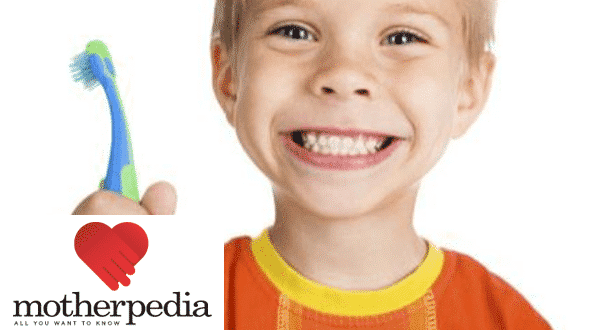
Combating dental anxiety in children — media record, July 2012
Media item: article on managing dental anxiety in children
Date published: 26 July 2012
This page records the media item. The original article is the property of its publisher and is not reproduced here. What follows is an independent account of the subject.
Why this matters more than it sounds
Dental anxiety is largely acquired in childhood and carried for life. Ask an adult with dental phobia and most can name the appointment that caused it — usually one where they were held still, not warned, or not believed. One honest qualification from the research: Armfield, Stewart and Spencer, writing in BMC Oral Health in 2007, noted that while “dental fear can result from previously traumatic or negative dental experience”, cognitive factors must also be at work, because “many highly anxious people can not recall an aversive event which might explain the origin of their dental anxiety.” So a bad appointment is a common cause, not the only one — and a parent whose child becomes anxious without an obvious trigger has not necessarily missed something.
The consequences compound. An anxious adult avoids care; avoidance means problems are found late; late problems mean bigger, longer, more uncomfortable treatment; which confirms the fear. A frightening first visit is not a bad afternoon. It is a decades-long health cost.
That cycle has been measured in Australia. From the 2002 National Dental Telephone Interview Survey, a random national sample of 6,112 people aged 16 and over, the same authors found 11.9% were very afraid of going to the dentist and a further 5.2% quite afraid. Among the very afraid, 43.9% had last visited a dentist more than two years earlier, against 29.1% of people with no dental fear; 67.3% usually attended only because of a problem, against 44.9%; and 29.2% fitted the full profile of delayed visiting, dental problems and symptom-driven attendance, against 11.6% of those with no fear — an odds ratio of 3.33 (95% CI 2.67 to 4.15) after adjustment for sex, dentate status, employment and household income. The study was cross-sectional, so, as its authors say, “causality cannot be inferred from the results” — but the association is large and consistent.
And the reason to intervene in childhood specifically is that the window appears to close. The Victorian Department of Health's Better Health Channel, written with the ADA's Victorian Branch, puts it in two sentences: “Children who have had bad dental experiences can likely overcome their fear if they are supported during further dental visits. Adults who are anxious about dental care tend to remain anxious throughout life.”
So preventing it is a clinical objective, not a nicety.
What actually works
Start before anything needs doing
First visit by the first birthday, or within six months of the first tooth. The point is not treatment — it is that the child's first experience of a dental chair is one where nothing happens. When a child should first see a dentist is covered separately.
A child who has been five times for a look, a ride in the chair and a sticker has an entirely different relationship with the place than one whose first visit is for a toothache.
Tell-show-do
The standard behavioural technique, and the one every paediatric guideline starts from. The American Academy of Pediatric Dentistry defines it precisely: explanations “in phrases appropriate to the developmental level of the patient (tell)”; demonstrations “of the visual, auditory, olfactory, and tactile aspects of the procedure in a carefully defined, nonthreatening setting (show)”; and “then, without deviating from the explanation and demonstration, completion of the procedure (do)” — operating together with communication skills and positive reinforcement.
- Tell — explain the next step in words the child understands
- Show — demonstrate it on a finger, a model, or their hand
- Do — then, and only then, do it
Surprise is the enemy. Almost every distressing dental moment for a child is something that happened without warning.
How confident should anyone be that it works? More confident than the evidence strictly allows, and it is worth saying so. A Cochrane review of non-pharmacological interventions for managing dental anxiety in children was registered but exists only as a protocol with no published results, so there is at present no pooled effect estimate for tell-show-do, distraction or desensitisation in children. These techniques are standard, coherent and universally recommended by paediatric dental bodies; they are not quantified. Anyone who offers you a percentage for them is inventing it.
An agreed stop signal that is actually honoured
A raised hand means stop. The critical part is that it works every time, including when it is inconvenient. A stop signal that is ignored once teaches the child they have no control, and that is the lesson that produces lifelong fear. The AAPD calls this “enhancing control” and adds a detail practices often skip: “The patient should practice this gesture before treatment is initiated.” A signal agreed in theory and never rehearsed is not a signal.
Language
The words used shape the experience. Practitioners generally substitute:
- “sleepy juice” or “sleepy jelly” rather than needle or injection
- “count your teeth” rather than examine
- “tooth shower” or “tickle” rather than drill
- “vacuum” or “straw” rather than suction
This is not evasion; it is removing words that carry frightening associations the child has learned elsewhere.
Short visits that build
A five-minute appointment that goes well is worth more than a forty-minute one that goes badly. Complex treatment can be split across visits, and the sequence usually starts with something easy. How the practice manages an anxious child is described separately.
Where a child is already frightened, the AAPD describes a formal version of building up — systematic desensitisation, in which the child is exposed gradually across sessions: reviewing the practice's own website or a preparation book at home, a parent modelling “opening mouth and touching cheek” with a dental mirror, then “an office tour during nonclinical hours”, then a visit in the treatment room to explore it, and only then an appointment with the dentist. It also describes memory restructuring, where a difficult past event is deliberately revisited and reframed afterwards; the AAPD records that this was used with children who had received local anaesthetic at a first restorative visit and “showed a change in local anesthesia-related fears and behaviors at subsequent treatment visits.”
Praise the cooperation, not the endurance
“You sat so still and told me when you needed a break” is more useful than “you were so brave.” Bravery framing implies there was something to be brave about.
On being held still
Because the opening paragraph of this page names it as a cause: physically restraining a child for dental treatment is not an informal matter left to the room. The AAPD's position is that “The dentist always should use the least restrictive, but safe and effective, protective stabilization”, that protective stabilization “requires informed consent from a parent”, and that the record must document both the indication and that consent. A mouth prop in a cooperative child is not protective stabilisation. That is a United States guideline and Australian practice is governed by Australian law and AHPRA guidance, but the principle — that this is a consented intervention, not a technique — travels.
What parents unintentionally do that makes it worse
This is the part most worth knowing, and it is rarely said directly.
- Reassuring with the frightening words. “It won't hurt”, “there's no needle”, “don't worry, it's not scary” — all of these introduce hurt, needles and scary into a child's head where none existed. Say “the dentist is going to count your teeth” instead.
- Transmitting your own anxiety. Children read parental tension accurately and immediately. Parental dental anxiety is one of the strongest predictors of child dental anxiety. If you are the anxious one, saying so to the practice beforehand is genuinely useful — and there are ways to manage it — and consider whether another adult should bring them.
- Using the dentist as a threat. “If you don't brush, the dentist will drill your teeth.” This is common and it is precisely how a health professional becomes a punishment. Getting a child to brush works better without it.
- Sharing your own bad experiences. Your childhood extraction story is not context; it is a prediction the child will adopt.
- Over-negotiating and over-explaining. Long, anxious explanations signal that something warranting explanation is about to happen.
- Promising it will be quick when it will not be. A broken promise costs the trust that the whole appointment depends on.
Bribes are a mixed thing. A reward afterwards is fine. A large bribe negotiated in advance tells the child this is going to be bad enough to need one.
When more is needed
Nitrous oxide (“happy gas”) — inhaled with oxygen, producing mild conscious sedation. The child stays awake and responsive; it reduces anxiety and does not replace local anaesthetic. It clears within minutes. It is defeated by a blocked nose, and nausea is the commonest side effect. It has a long safety record in paediatric dentistry.
The AAPD describes it as “a safe and effective technique to reduce anxiety and enhance effective communication”, with “rapid” onset, effects that are “easily titrated and reversible”, and recovery that is “rapid and complete” — and notes it also “mediates a variable degree of analgesia, amnesia, and gag reflex reduction.” Two things in its list of cautions explain the practical limits: conditions “that inhibit nasal breathing” — a cold, cough, tonsillitis, sinusitis, seasonal allergies — and recent middle-ear disturbance or recent ear, nose and throat surgery. Its list of contraindications is prefaced with “may include”, so these are cautions to be assessed rather than absolute bars. The AAPD is also explicit about where the line sits: “If nitrous oxide/oxygen inhalation is used in concentrations greater than 50% or in combination with other sedating medications ... the likelihood for moderate or deep sedation increases”, at which point the rules for deeper sedation apply.
Oral sedation — a prescribed sedative taken beforehand. Deeper, less controllable, and requires supervision afterwards.
General anaesthetic — for very young children needing extensive treatment, children with significant medical or developmental complexity, or where treatment cannot otherwise be completed safely. It is not a small event, and the decision weighs the risk of anaesthesia against the harm of untreated disease and a traumatic experience. Preventable dental conditions are among the commonest reasons an Australian child has a general anaesthetic — which is an argument for prevention rather than for or against sedation. For scale, the Australian Institute of Health and Welfare counted about 88,600 potentially preventable hospital admissions for dental conditions in 2023–24 — that figure is all ages, and the AIHW's own guidance is that its age breakdowns on this measure are not reliable enough to quote.
Across all of these, the AAPD's framework is worth knowing because it is what should be written in the notes: the factors to consider and document are “medical history, temperament, informed consent (including risks, benefits, and alternatives), pain assessment, acuity of treatment needs, previous behavior during treatment, previous behavior guidance techniques used, and any alternative treatment options including no treatment or deferred care.” That last phrase is the one parents most often are not offered.
Referral to a specialist paediatric dentist is warranted for very young children needing extensive work, significant medical or developmental complexity, severe trauma, and children who have already had a frightening experience. Whether your child needs one is a fair question to ask.
Children on the autism spectrum
Sensory differences — to texture in the mouth, sound, light and unexpected touch — are frequently the real barrier rather than fear, and they respond to environmental adjustment rather than persuasion:
- A social story or photographs sent in advance
- A familiarisation visit with no treatment
- The first or last appointment of the day, when the clinic is quiet
- Reduced light and noise; sunglasses and headphones are reasonable
- Consistency — same room, same practitioner, same sequence each time
- Minimising unexpected touch, and describing it before it happens
Caring for a child with autism at the dentist and oral health care for children with special needs go further into this.
The prevention that avoids the problem entirely
- Fluoride toothpaste from the first tooth — a smear under three, a pea-sized amount after. Spit, don't rinse.
- Supervise brushing until about age eight. Dexterity, not willingness, is the limit.
- Frequency of sugar matters more than quantity. Constant grazing is worse than one serve. The ADA's own formulation treats the two together rather than ranking them — “The form, frequency, timing and total amount of sugar intake are significant in the initiation of the caries process” — and the World Health Organization's population target is less than 10% of total energy intake from free sugars, and ideally less than 5%.
- Never put a child to bed with a bottle of anything but water.
- Fissure sealants on permanent molars for children at risk — well supported by evidence.
- Baby teeth matter. The last are not lost until around age eleven or twelve.
- The Child Dental Benefits Schedule funds basic treatment for eligible children through Medicare. Services Australia's current figure is up to $1,158 for each eligible child over two consecutive calendar years, indexed each 1 January; the full amount can be used in the first year, which then leaves nothing for the second.
Common questions
How do I tell ordinary reluctance from real dental anxiety?
By what the body does, not by what the child says. The Victorian Department of Health lists the recognised presentations: sweating; a racing heartbeat or palpitations; low blood pressure and possible fainting; visible distress, crying or signs of panic; withdrawal — or using humour or aggression to mask anxiety. A child going quiet or becoming rude at the door is on that list as much as one who cries.
It also draws a line worth knowing: dental anxiety “is common and can affect people of any age”, while “Dental phobia is less common” — and it gives no prevalence figure at all for either, which is a fair reflection of how uncertain the numbers are. Practically: if the reluctance reliably produces physical symptoms, or if it is getting worse rather than better across visits, say so when booking rather than hoping the next appointment goes better.
My child needs several fillings. Should it be done in one go under general anaesthetic?
Sometimes, but it is a decision with a threshold rather than a preference. The ADA's Policy Statement 6.32 lists “Children with extensive dental needs” and “Patients with dental phobia or anxiety” among the indications, while insisting that “Dental treatment under general anaesthesia should only be undertaken when indicated for appropriate management of the patient” and that a dentist must not proceed “unless the anaesthetic is administered by an appropriately qualified and registered practitioner.”
The part that catches families out is the funding. The same statement records that “dental procedures under general anaesthetic are not universally covered by Medicare”, so for most families the cost is “either out-of-pocket or covered through private health insurance”; and that the Child Dental Benefits Schedule cannot be used for treatment under general anaesthesia, which the ADA itself calls “a significant and unreasonable barrier for access.” So ask about the anaesthetist's fee and the facility fee separately from the dental fee, and check whether your cover is hospital cover rather than extras.
My child has toothache on a Saturday night. What do I do?
Manage the pain, get a dental appointment as early as you can, and know the small number of signs that mean going to hospital instead of waiting. The RACGP is blunt about the common shortcut: “Many patients and clinicians assume that antibiotics alone are definitive treatment. This is not the case. Definitive treatment can be administered only by the dental practitioner.”
Go to a hospital emergency department the same evening if swelling is spreading under the jaw or into the neck, if the child cannot open more than about 2 cm between the teeth, if swallowing is difficult or they cannot control their saliva, if the voice is hoarse or the breathing noisy, or if they lean forward to breathe more easily. The RACGP treats airway patency as “the most important feature on examination” and its instruction where any of these are present is to “keep the patient sitting up; do not lie flat.” Short of that, the early picture is localised pain, facial swelling, halitosis and general malaise — uncomfortable, and a matter for the next available appointment rather than an ambulance. See Children's dental emergencies.
Can we stop partway through, or does giving up make the next visit worse?
Stopping is a legitimate move, and a short break is the recognised first response rather than a concession. The AAPD's own wording on distraction is that “Giving the patient a short break during a stressful procedure can be an effective use of distraction before considering more advanced behavior guidance techniques” — meaning a pause is what you try before sedation, not instead of succeeding. It records no contraindications for distraction at all.
What makes the difference to the next visit is whether the child was heard. Alongside tell-show-do the AAPD describes ask-tell-ask: asking about the child's feelings toward the planned procedure, explaining it, and then “again inquiring if the patient understands and how she feels about the impending treatment.” An appointment that ends early because a child asked to stop and was listened to teaches that the signal works. One that is pushed through teaches the opposite, and that is the lesson that lasts.
Related reading
- Children's Dentistry and Dr Susan Hinckfuss, Specialist Paediatric Dentist
- Stop brushing battles and picking the right dentist for your child
- Combating dental anxiety in children
- Children's dental emergencies
- More coverage in Our Media
- Teeth, self-esteem and body image
Practical details
Smile Solutions, Level 1, 220 Collins Street, Manchester Unity Building, Melbourne VIC 3000. Phone 13 13 96, or theteam@smilesolutions.com.au. Monday–Friday 8.00am–6.00pm, Saturday 8.30am–1.30pm, Sunday by appointment.
If your child is anxious, or has had a bad experience before, say so when booking — it changes how the appointment is set up.
This page records a media item and its date, with general information. It is not a diagnosis, a treatment plan or a promise of any particular clinical outcome. Suitability for sedation depends on medical history and can only be determined at consultation. Third-party media content is not reproduced.
Smile Solutions trades under ABN 28 193 514 103.
Images on This Page
-
https://www.facebook.com/tr?id=800557773428361&ev=PageView&noscript=1
(no alt text)
-
https://www.smilesolutions.com.au/wp-content/uploads/2025/10/calendar_month.svg
(no alt text)
-
https://www.smilesolutions.com.au/wp-content/themes/arcadian-wordpress-theme/assets/images/smile_solutions_logo_white.png
Smile Solutions Logo
-
https://www.smilesolutions.com.au/wp-content/themes/arcadian-wordpress-theme/assets/images/smile_solutions_logo_purple.png
Smile Solutions Logo
-
https://www.smilesolutions.com.au/wp-content/uploads/2019/04/Motherpedia-Children-Dental-Anxiety-Smile-Solutions-1.png
Motherpedia Children's Dental Anxiety Smile Solutions
-
https://www.smilesolutions.com.au/wp-content/themes/arcadian-wordpress-theme/assets/images/family_owned_bussiness.png
Family Owned Business
-
https://www.smilesolutions.com.au/wp-content/themes/arcadian-wordpress-theme/assets/icons/icon--phone.svg
Smile Solutions Contact
-
https://www.facebook.com/tr? id=800557773428361&ev=PageView&noscript=1
(no alt text)