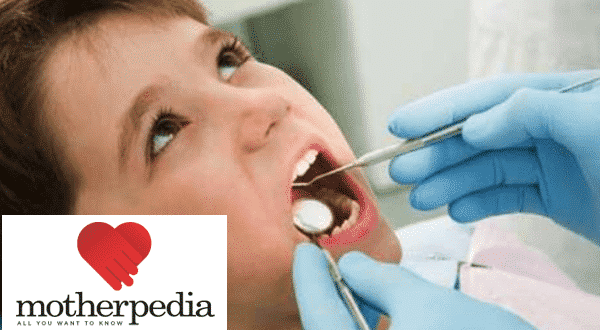
Picking the right dentist for your child
Media item: article
Date published: 11 June 2013
Subject: choosing dental care for children
This page records the media item. The original article is the property of its publisher and is not reproduced here.
Who can treat a child
Several registration divisions treat children, and the distinctions are real.
General dentists treat children as a routine part of practice. Most children's dental care in Australia is delivered by general dentists, and competently.
Oral health therapists, dental therapists and dental hygienists are registered practitioners whose training is centred on exactly this population. Dental therapists and oral health therapists provide examination, preventive and restorative care for children and adolescents within their scope, working in a structured professional relationship with a dentist. This is a legitimate appointment in its own right, not a lesser one — in the public system it is the backbone of children's dentistry. The division of labour is set out in What is the difference between a Dental Therapist and Dental Hygienist? and What does a dental hygienist do?.
Paediatric dentists hold specialist registration in paediatric dentistry with the Dental Board of Australia, after an approved postgraduate program — typically three years full time — on top of a dental degree. The title is protected by law.
A general dentist may not call themselves a paediatric dentist, or use wording implying specialist registration, however much children's work they do. Check free, in a minute, at ahpra.gov.au, which shows division and any specialist entry. The registrations held across this practice are listed on Dentists and Registered Specialists and on the individual team pages.
When a specialist is genuinely warranted
Most children do not need a paediatric dentist. These are the situations where referral is appropriate:
- Very young children with extensive decay, where treatment may require general anaesthesia
- Severe dental anxiety or behaviour that makes treatment in an ordinary setting unworkable — see Combating dental anxiety in children
- Children with disability, medical complexity or significant medical history — congenital heart disease, bleeding disorders, immunosuppression, and children undergoing cancer treatment; Oral health care for children with special needs goes through the practicalities
- Developmental conditions — amelogenesis or dentinogenesis imperfecta, severe molar incisor hypomineralisation (chalky teeth), missing or extra teeth, cleft lip and palate
- Dental trauma to permanent front teeth, which is time-critical and where the management decisions have lifelong consequences — Children's dental emergencies and What should I do when a tooth is knocked out? cover the first hour
- Suspected abuse or neglect. Dental practitioners in Victoria have obligations here, and orofacial injuries are common in physical abuse.
Should your child see a specialist paediatric dentist? works through the same decision in more detail.
What actually matters when choosing
Ranked by how much difference it makes:
1. That the child goes at all, early
Two positions are in circulation on when to start. Smile Solutions recommends a first visit from age three, and sooner if there is any sign of decay. Widely used professional guidance recommends a first check by about the first birthday, or within six months of the first tooth. Children's Dentistry sets out both, and so do Your child's first visit to the dentist and When should a child first visit the dentist?. Almost nobody does either as early as recommended.
The purpose is not to find problems in a small child. It is to check development and habits, and — more importantly — to make the dental surgery an ordinary, unremarkable place before there is ever anything wrong with it. A child whose first visit happens because something hurts learns a very different lesson, and often keeps it for life.
2. That the practitioner talks to the child, not only to you
Good children's dentistry is largely behavioural. Tell–show–do — explain in words the child understands, show the instrument, then use it — is the standard approach and it works. How Smile Solutions manages a child's dental anxiety describes what that looks like in the chair.
What you should see: age-appropriate language, the child given some control, praise for cooperation rather than for being "brave", and no surprises.
What you should not see: a child held down for routine treatment, or dismissal of distress.
3. That prevention is the emphasis
A practice oriented to children should be talking about fluoride, diet frequency, brushing technique, fissure sealants and habits — not just repairing damage. How to encourage your child to brush their teeth is the practical version of that conversation.
Fissure sealants on newly erupted permanent molars are among the best-evidenced preventive measures available; The role of fissure sealants in children's teeth explains when they are placed and how long they last.
4. That they can tell you what does not need doing
The most reassuring thing a practitioner can say is that something should be watched rather than treated. Early enamel decay can remineralise. A practitioner who fills every early lesion on sight is not being thorough.
5. Practical fit
Appointment times that suit school; a location you will actually get to; and a practice that answers the phone when there is an emergency.
What you can do that matters more than the choice of dentist
Do not transmit your own fear. Dental anxiety is largely learned, and most often from a parent.
- Do not describe your own bad experiences in front of the child.
- Avoid "it won't hurt", "no needles", "don't worry" — children hear the noun and not the negation. Neutral language works better: they will count your teeth, they will use a little mirror.
- Do not use the dentist as a threat for not brushing.
- Go yourself. Children who see their parents attend routinely treat it as normal.
Sedation and general anaesthesia in children
Sometimes necessary, particularly for very young children with extensive decay, and it should be discussed properly rather than assumed either way. Sleep dentistry sets out how sedation is arranged here.
Questions to ask:
- "Why is this needed rather than treatment in the chair?"
- "Who administers the anaesthetic?" — general anaesthesia is administered by a medical practitioner, an anaesthetist, with their own registration.
- "Where is it done?" — the facility requirements are different from an ordinary surgery.
- "What is the total cost, including the anaesthetist and the facility?" The price guide is the starting point for the dental component only.
- "What is the plan so this does not happen again?" Treatment under GA that is not followed by a prevention plan is a repeat appointment waiting to happen.
The money
The Child Dental Benefits Schedule provides Medicare-funded basic dental treatment — examinations, cleans, fissure sealants, fillings, extractions and radiographs — for eligible children, capped over a two-year period. Eligibility depends on the family receiving certain government payments. How does the Child Dental Benefits Schedule operate? explains the claiming mechanics.
It is significantly under-claimed, largely because families do not know it exists. Check through Services Australia or myGov.
Victoria also provides public dental services for eligible children, and school dental programs operate in some areas.
The CDBS does not cover orthodontics. For that, see Children's braces and Invisalign and When should I take my child to see an orthodontist?.
Related pages: Children's Dentistry, Paediatric Dentists, Child Dental Benefit Schedule, My child has a knocked out baby tooth: what do I do?, Kids get the brush off, Healthy Teeth & Early Orthodontic Treatment, and the rest of the media record.
Common questions
How many Australian children actually get to a dentist before school age?
Just over half. The Australian Dental Association's Children and Young People Oral Health Tracker found that only 56% of children visit the dentist before age 5. The consequences show up in hospital data: the same Tracker reports that nearly 11 — 10.8 — in every 1,000 children aged 5 to 9 are hospitalised for potentially preventable problems due to dental conditions, rising to 14.3 per 1,000 for Indigenous children. On decay itself, the ADA reports 34% of children aged 5 to 6 have experienced decay in primary teeth and 27% aged 5 to 10 have untreated decay in primary teeth. These are children's figures with children's denominators, which matters — an all-ages average tells you nothing about a four-year-old.
Am I unusual for not having taken my child yet?
No, and that is the problem. The ADA's 2025 survey of 25,000 Australian adults found 40% think around two years old is acceptable for a first visit, 20% believe age three and 10% age four or older — only 25% thought age one or younger. The ADA's own recommendation is the first visit when the first tooth appears or by age one, whichever comes first. The survey also shows how children arrive: in 2025, 46% of first visits were for a check-up and 33% for pain or a problem; the 2024 survey put the pain-or-problem figure at 32%. A first appointment prompted by toothache is the hardest possible introduction.
How much is the Child Dental Benefits Schedule worth, and what will it not pay for?
Services Australia covers up to $1,158 for each eligible child over two consecutive calendar years, with the cap indexed each 1 January. It pays for check-ups, X-rays, cleaning, fissure sealing, fillings, root canals and extractions. You do not apply — if your child is eligible, a letter arrives. Three limits matter. It does not cover orthodontic work, cosmetic work, or any dental services in a hospital — which is directly relevant if treatment under general anaesthesia is proposed. Unused funds do not roll past the two-year period. And the clock starts in the calendar year your child both becomes eligible and has their first service.
Should my child floss while they still have baby teeth?
Yes, earlier than most families think. The ADA's 2025 survey found 76% of children never floss and nor do their parents do it for them, with many respondents saying they thought it not worthwhile while baby teeth are in place. The ADA's position is that once a child has two or more baby teeth side by side — often around age two — parents should clean between them daily. Most families come to it far later: 61% introduced the idea between ages six and 13. If the technique is the obstacle, ask at the appointment; there are floss holders and picks that make it manageable on a small mouth.
When does my toddler need toothpaste, and how much?
Start the brush early and the paste later. The ADA advises beginning to brush around 6 months of age or when the first tooth arrives, and that babies do not need toothpaste until 18 months. From then, use a children's low-fluoride toothpaste. The NHMRC notes that the decline in dental fluorosis in Australia is linked to reduced fluoride exposure from other sources, with guidance to "use only a small pea-sized amount" and to "encourage children not to swallow toothpaste" — fluorosis comes from high intake from multiple sources while teeth are still forming inside the jaw, usually from birth to six or eight years of age. Water fluoridation itself is the other half of the picture: the NHMRC found it "reduces tooth decay by 26 to 44% in children and adolescents".
Are sugary drinks really the main driver, or is that just a campaign line?
The drinking has barely shifted even though the knowledge has. In the ADA's 2025 survey 27% of children had fruit juice every day and 38% between 2 and 5 times a week, despite 87% of parents saying they are aware these drinks lead to tooth decay — 11% more parents than in 2017. The ADA's own summary is blunt: the proportion of children consuming them up to five times a week has declined by only 6% since 2018. Soft drink follows the same pattern, at 38% of children two to five times a week. The ADA's dietary policy stresses form, frequency and timing as much as total amount, and puts the ceiling at no more than 6 teaspoons (24 grams) of free sugar per day — one can of soft drink contains about 10 teaspoons.
Practical details
Smile Solutions, Level 1, 220 Collins Street, Manchester Unity Building, Melbourne VIC 3000. Phone 13 13 96, or theteam@smilesolutions.com.au. Monday–Friday 8.00am–6.00pm, Saturday 8.30am–1.30pm, Sunday by appointment. Directions are on Location and enquiries go through Contact Us.
Every practitioner's registration, division and any specialist entry can be verified free on the AHPRA public register at ahpra.gov.au.
This page records a published article and its date, with general information. It is not a diagnosis or a treatment plan. Eligibility for the Child Dental Benefits Schedule, and the benefit cap, are determined by Services Australia and change; confirm current figures with them. Survey and population figures are quoted as published by the Australian Dental Association and the NHMRC. Third-party published content is not reproduced.
Smile Solutions trades under ABN 28 193 514 103.
Images on This Page
-
https://www.facebook.com/tr?id=800557773428361&ev=PageView&noscript=1
(no alt text)
-
https://www.smilesolutions.com.au/wp-content/uploads/2025/10/calendar_month.svg
(no alt text)
-
https://www.smilesolutions.com.au/wp-content/themes/arcadian-wordpress-theme/assets/images/smile_solutions_logo_white.png
Smile Solutions Logo
-
https://www.smilesolutions.com.au/wp-content/themes/arcadian-wordpress-theme/assets/images/smile_solutions_logo_purple.png
Smile Solutions Logo
-
https://www.smilesolutions.com.au/wp-content/uploads/2019/04/Motherpedia-Child-Dentist-Smile-Solutions-1.png
Motherpedia Child Dentist Smile Solutions
-
https://www.smilesolutions.com.au/wp-content/themes/arcadian-wordpress-theme/assets/images/family_owned_bussiness.png
Family Owned Business
-
https://www.smilesolutions.com.au/wp-content/themes/arcadian-wordpress-theme/assets/icons/icon--phone.svg
Smile Solutions Contact
-
https://www.facebook.com/tr? id=800557773428361&ev=PageView&noscript=1
(no alt text)
-
https://bat.bing.com/action/0?ti=25148060&tm=gtm002&Ver=2&mid=5fb1481b-0b6a-4535-bd4e-c01ab974d4c6&bo=1&sid=acd7c610ab2711f1939833cc33ba7292&vid=acd80ae0ab2711f1b831e18bcd85791e&vids=1&msclkid=N&pi=918639831&lg=en-US&sw=800&sh=600&sc=24&nwd=1&tl=Picking%20the%20right%20dentist%20for%20your%20child%20-%20Smile%20Solutions&p=https%3A%2F%2Fwww.smilesolutions.com.au%2Four-media%2Fpicking-the-right-dentist-for-your-child%2F&r=&evt=pageLoad&sv=2&cdb=AQAQ&rn=792802
(no alt text)