A comfortable injection is possible
If you are scared of the dentist, or have a needle phobia, there is such a thing as a comfortable injection.
Getting there is partly technique and partly environment, and it works best as a collaboration between you and the clinician.
This page is about the injection specifically. Dental Anxiety covers the wider picture — what can be adjusted about an appointment, and how treatment is planned around fear rather than in spite of it.
Ambience
Being in a calm environment genuinely reduces the sensation of pain, not just the feeling of anxiety — anxiety and pain perception are linked. Stress shows up in the mouth in several other ways too.
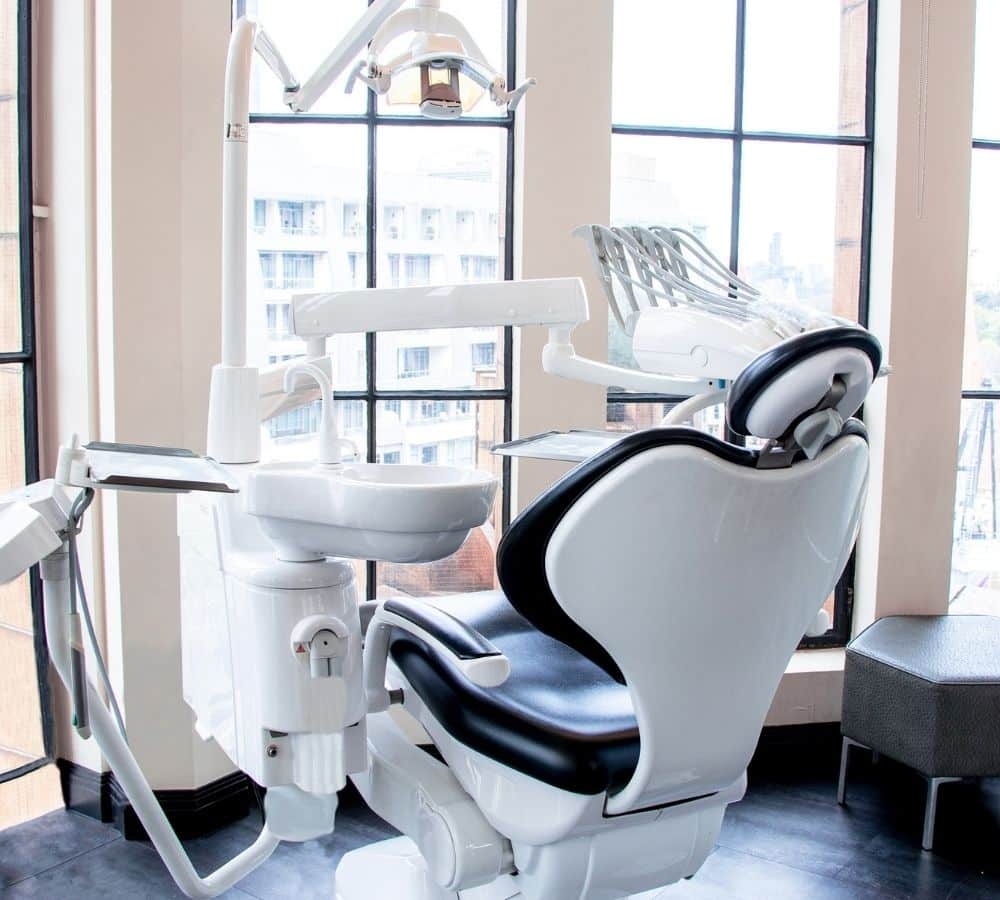
The practice is bathed in natural light, with soft music, aromatherapy oils and water features. The Smile Solutions experience describes the rest of it, and Location tells you how to get there.
Distraction matters too. Digital screens with DVD players let patients lose track of their surroundings.
Communication
Good communication between you and your dental team reduces anxiety — which is why communication in dentistry is treated here as part of the treatment rather than a courtesy.
The approach is to understand the phobia through your eyes rather than the clinician's. Your dentist will:
- explain the entire injection procedure in simple, calm terms
- tell you what to expect
- give you the opportunity to ask questions — 5 questions you've always wanted to ask your dentist is a starting point if you are not sure where to begin
Uncertainty is a large part of what makes an injection frightening. Removing it removes much of the fear. Understanding your treatment sets out what you are entitled to be told before consenting to anything.
Agreeing a stop signal beforehand is worth asking for. A raised hand that reliably stops the procedure returns control to you, and knowing you can stop it is often enough that you do not need to. A clinician who welcomes that request is showing you something about what makes a truly great dentist.
During the injection — what is actually done
Numbing paste is applied to the gum first, so that contact with the needle is usually not felt.
A two-stage injection. A small amount of anaesthetic is placed to numb the injection area; then, after a few moments, the remaining solution is injected into tissue that is already numb. This is the single technique that makes the most difference, and it costs only a short wait.
Room-temperature anaesthetic. The solution is not cold from the fridge — cold fluid entering tissue is itself uncomfortable.
A slow delivery rate. Much of the discomfort of an injection comes from the pressure of fluid entering tissue quickly rather than from the needle itself, which is why the rate matters more than most people expect — and why the equipment used to control that rate is worth asking about.
And it is given gently.
What you can do
Tell your dentist you are anxious about the injection. They will discuss it with you and ask what you think would make it easier. Together you may identify what is causing the anxiety and work on reducing it.
During the injection
The most important thing: do not hold your breath. Keep your breathing relaxed and even.
Relax your shoulders — do not let them tense.
Each time you release a breath, focus on relaxing your body into the chair.
Breath-holding is close to universal in anxious patients, and it makes everything worse: it raises heart rate, increases the sense of panic, and tenses the muscles being injected. Your dentist can talk you through the injection, reminding you to breathe.
Tell them if it has not worked, too. Anaesthetic occasionally fails to take properly — more often in a tooth that is already badly inflamed, which is common in root canal treatment — and that is a normal thing to report rather than something to endure. There are other techniques available when the first one does not take.
Say so if you have reacted badly to a dental anaesthetic before, or to any medicine, and bring the name of it if you know it. That is information your practitioner needs before anything is given, not afterwards.
Build confidence gradually
Start a long treatment plan with shorter appointments — and therefore fewer injections — and build from there as you feel more comfortable.
This is a legitimate way to sequence treatment, and worth asking for. Getting through a short appointment successfully changes what the next one feels like. Can I ease my anxiety about visiting the dentist? covers the rest of that approach.
If it has been years since your last visit, the first appointment back is usually just an examination, some radiographs and a plan — see How often should I go to the dentist?. A small filling is often a sensible first piece of treatment for exactly this reason.
It also helps to know what the appointment is likely to find before you are in the chair. The causes of toothache and their symptoms and what to do if you suffer from sensitive teeth cover the two things people most often turn up worried about.
If you need more help
Nitrous oxide (laughing gas) — decreases anxiety and has some analgesic effect. Available at the practice.
Oral sedation — medication that works quickly and reduces anxiety during the injection and subsequent treatment. Whether it is appropriate for you is a clinical decision made in consultation.
General anaesthetic — in some cases necessary and appropriate. Under general anaesthesia you have no awareness of the injection or the treatment.
Sleep Dentistry sets out each of these in full, including what each one involves and its limits. Sleep dentistry costs covers what sedation adds to a bill, which is worth knowing before you choose it — general anaesthetic in particular is not covered by Medicare's dental schemes. The Price Guide covers the treatment itself.
You can check who is qualified to sedate you
This is not widely known and it is easy to verify yourself.
Conscious sedation is a regulated area of dental practice in its own right. The Dental Board of Australia publishes an Endorsement for conscious sedation registration standard, and maintains conscious sedation competencies alongside it — meaning a practitioner's authority to provide it is a formal endorsement on their registration, not simply an interest.
Ahpra publishes an online register of all dental practitioners, which the Board describes as providing the profession and the public with up-to-date information about a practitioner's registration status, including any specialty for dentists who hold specialist registration. So if sedation is part of your plan, you can look up the person who will be providing it. See Dentists & Registered Specialists and Specialist Care.
Afterwards
How long numbness lasts varies between patients. Normally expect 2 to 4 hours.
During that time:
- your face may feel different
- be careful not to bite or scratch the numb area — you cannot feel it happening
- as numbness fades you will feel a slight tingling, which resolves completely once the anaesthetic wears off
Also avoid hot food and drink while numb — the area has no sense of temperature. This matters most for children, who will chew a numb lip out of curiosity; watch them until it wears off. See Children's Dentistry and Paediatric Dentists.
In short
An injection with little or no discomfort is achievable for most people. It takes a team approach in the right environment — and it starts with saying that you are anxious.
If you are dental phobic, book a full examination and consultation, so the approach to your treatment can be planned around that from the outset rather than discovered mid-appointment. You can read about the clinicians beforehand on Our Team and Why Choose Us.
Common questions
Does the numbing gel actually do anything, or is it just theatre?
It does something specific and quite narrow, and it is worth knowing exactly what, because the claim is frequently stretched.
A 2022 systematic review and meta-analysis in the International Journal of Oral and Maxillofacial Surgery pooled 22 randomised controlled trials covering 1,029 patients. For pain during the needle going in, topical anaesthetic produced a statistically significant reduction in the upper jaw — both on the cheek side (P = 0.0002) and on the palate (P = 0.005). In the lower jaw there was no statistically significant difference (P = 0.07), and for the pain of the anaesthetic solution being delivered there was no difference at all (P = 0.11).
The authors' own conclusion is the sentence to remember: "using topical anesthetics only relieves pain during needle puncture and in the maxilla." They also report considerable statistical heterogeneity between the trials.
So the gel is not a placebo, and it is not a solution either. It helps most with the first moment, in the top jaw — which happens to be the moment most people dread, so it is still worth having. No source located anywhere in this literature supports calling an injection painless, and this page does not.
What about warmed or buffered anaesthetic? Is that better?
The two get grouped together and the evidence for them is different.
On buffering — adjusting the pH of the anaesthetic with sodium bicarbonate immediately before injection — a 2018 systematic review and meta-analysis in the International Endodontic Journal pooled 14 randomised trials (4 at low risk of bias, 7 unclear, 3 high). Its finding on pain, from nine pooled studies: "buffered lidocaine did not result in less pain during intraoral injections: mean difference −6.4 (95% CI −12.81 to 0.01) units on a 0–100 scale". Onset time overall was also not significantly different (−0.65 minutes, 95% CI −1.38 to 0.09). There were faster-onset subgroup findings for inferior alveolar nerve blocks (−1.26 minutes) and in inflamed tissue (−1.37 minutes), but each rests on only two studies. The authors conclude that "routine alkalinisation of local anaesthetics is not recommended in dentistry", adding that even the onset improvement "may not be clinically relevant" once the preparation time is counted.
On warming the cartridge to body temperature, no systematic review was located at all. It is a comfort measure with a sensible rationale — cold fluid entering tissue is unpleasant — rather than one with a measured effect size behind it. That is why it appears above as part of how the injection is given, and not as a claim.
Does the computer-controlled device make a real difference?
Probably, on reported pain — with a caveat about the quality of the evidence that says so.
A 2024 systematic review in the Journal of Dental Anesthesia and Pain Medicine examined 14 clinical trials of computer-controlled local anaesthetic delivery in children and adults. Its conclusion was that such a device "significantly reduced pain perception scores and improved patient behavior, making them more cooperative", that "adults who used CCLAD experienced less discomfort" than children did, and that for children receiving an inferior alveolar nerve block the device "improved acceptability and decreased pain perception" compared with a traditional syringe.
The caveat: that review is qualitative. It reports no pooled effect size, no confidence interval and no GRADE certainty rating, and it describes the technology in frankly promotional language. So the honest statement is that these devices have been found to reduce reported injection pain — not by how much, and not with a number anyone should quote at you.
What they do mechanically is straightforward and matches the point made above: they control the rate and pressure at which the solution enters the tissue, which is where a large part of the discomfort comes from.
Is it strange to be more frightened of the injection than of the treatment?
Not at all. It is common enough that the research literature remarks on it: "paradoxically, patients frequently fear discomfort from anesthetic injections more than the actual pain from dental treatment."
There is a measurement to go with that. UK general-population norms published in 2008 for the Modified Dental Anxiety Scale found that 13% of women and 6% of men were "extremely anxious" specifically about having a local anaesthetic injection — against 18% and 9% for the drill. And the reason that number exists at all is telling: the scale is called modified because the original 1969 version omitted an injection question entirely, and it had to be added.
So the fear is recognised, measured, and shared by roughly one person in ten. Saying it out loud at the start of the appointment is the single most useful thing you can do with it, because almost everything described on this page depends on the clinician knowing.
If the technique is better, will my anxiety go away?
Not by itself, and it is worth separating the two.
The techniques above address pain. Anxiety is a different outcome, and the evidence on whether injection technique shifts it is essentially absent: a 2024 systematic review of interventions for adult dental anxiety identified six randomised trials comparing local anaesthesia techniques, but none of them entered a pooled analysis — so there is no meta-analytic estimate of what injection technique does to anxiety, as distinct from what it does to pain.
That is not a counsel of despair. It means the things that address the anxiety are the other items on this page: knowing what will happen, an agreed stop signal, shorter early appointments, controlled breathing, and — where it is clinically appropriate — sedation. Those work on the fear. The technique works on the sensation. Most people need some of both, and it is reasonable to ask for both by name.
Where to go next
- The wider approach to fear of the dentist — Dental Anxiety and General Dentistry
- Sedation and general anaesthetic options — Sleep Dentistry
- An anxious child — Combating dental anxiety in children and How we can help manage your child's dental anxiety
- A first visit for a child — First Visit to the Dentist
- Where sensory needs are part of the picture — Visiting the dentist: caring for a child with autism and Oral health care for children with special needs
- If pain is what brought you here — Tooth Pain and Ache, the causes of toothache, how to relieve one in the meantime and Emergency Dentistry
- What counts as urgent — What is considered a dental emergency? and Why choose us in a dental emergency?
- If the treatment ahead is a root canal — why is the microscope so crucial in endodontic treatment? and Endodontists
- Myths that keep people away — Dental Myths Exposed
Practical details
We use computer-controlled anaesthetic delivery systems — DentaPen and the STA Wand — which deliver anaesthetic at a controlled rate and pressure, and offer sleep dentistry options including happy gas, oral sedation, twilight sedation and general anaesthetic. Laser dentistry is also used in the practice; what laser dentistry is explains where it applies.
Smile Solutions, Level 1, 220 Collins Street, Manchester Unity Building, Melbourne VIC 3000. Phone 13 13 96, or theteam@smilesolutions.com.au. Monday–Friday 8.00am–6.00pm, Saturday 8.30am–1.30pm, Sunday by appointment. Full details on Contact Us.
When you book, say that you are anxious — it changes how the appointment is set up.
Published 15 April 2013. Sedation and anaesthetic options depend on individual assessment, and all carry risks that should be discussed with your practitioner before you consent. Individual experience of any procedure varies. Any medicine mentioned here is a matter for your treating practitioner to decide. Registration and endorsement details described above are drawn from the Dental Board of Australia's own published material. The trial evidence summarised in the questions above describes groups of patients, not individuals, and the dental anxiety prevalence figures quoted are from a United Kingdom population sample. General information only; it does not replace advice from your treating practitioner.
Smile Solutions trades under ABN 28 193 514 103.
Images on This Page
-
https://www.facebook.com/tr?id=800557773428361&ev=PageView&noscript=1
(no alt text)
-
https://www.smilesolutions.com.au/wp-content/uploads/2025/10/calendar_month.svg
(no alt text)
-
https://www.smilesolutions.com.au/wp-content/themes/arcadian-wordpress-theme/assets/images/smile_solutions_logo_white.png
Smile Solutions Logo
-
https://www.smilesolutions.com.au/wp-content/themes/arcadian-wordpress-theme/assets/images/smile_solutions_logo_purple.png
Smile Solutions Logo
-
https://www.smilesolutions.com.au/wp-content/uploads/2023/11/SS-Tooth-1-1-150x150.png
Smile Solutions
-
https://www.smilesolutions.com.au/wp-content/uploads/2014/07/Ortho-Tower.jpg
Orthodontic Tower
-
https://www.smilesolutions.com.au/wp-content/uploads/2025/09/Root-Canal-2-300x217.jpg
Root Canal
-
https://www.smilesolutions.com.au/wp-content/uploads/2026/08/Mouth-Breathing-300x270.jpg
Mouth Breathing
-
https://www.smilesolutions.com.au/wp-content/uploads/2025/09/Dental-Crown-at-Smile-Solutions-300x300.jpg
Dental Crown at Smile Solutions
-
https://www.smilesolutions.com.au/wp-content/themes/arcadian-wordpress-theme/assets/images/family_owned_bussiness.png
Family Owned Business
-
https://www.smilesolutions.com.au/wp-content/themes/arcadian-wordpress-theme/assets/icons/icon--phone.svg
Smile Solutions Contact
-
https://www.facebook.com/tr? id=800557773428361&ev=PageView&noscript=1
(no alt text)
-
https://bat.bing.com/action/0?ti=25148060&tm=gtm002&Ver=2&mid=06e35e3e-ff7d-4193-8ff0-5b8a29d95fcd&bo=1&sid=daeb50d0ab2711f1aef9b3af59509e08&vid=daeb8300ab2711f191fc397cb43631c1&vids=1&msclkid=N&pi=918639831&lg=en-US&sw=800&sh=600&sc=24&nwd=1&tl=Dental%20Phobia%3A%20How%20do%20you%20give%20a%20virtually%20pain-free%20injection%3F%20-%20Smile%20Solutions&p=https%3A%2F%2Fwww.smilesolutions.com.au%2Fdental-articles%2Farticle%2Fhow-do-you-give-a-virtually-pain-free-injection%2F&r=&evt=pageLoad&sv=2&cdb=AQAQ&rn=759535
(no alt text)