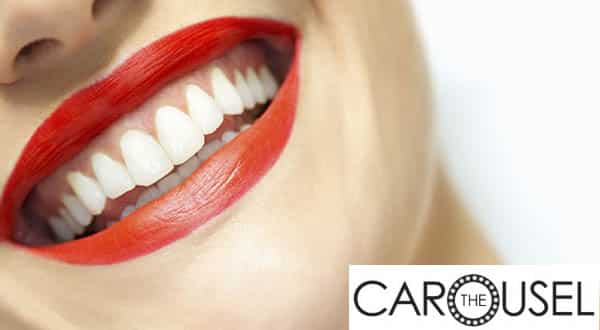
Smile for the ultimate selfie
Media item: article
Date published: 25 October 2014
Subject: photography, appearance and cosmetic dentistry
This page records the media item. The original article is the property of its publisher and is not reproduced here.
The camera is lying to you, and here is exactly how
This is not a figure of speech. It is optics.
Focal length distorts faces. A front-facing phone camera is held at arm's length with a very short focal length lens. At that distance, features closer to the lens are rendered disproportionately large and features further away disproportionately small. The nose enlarges, the ears shrink, the face widens, and the teeth — particularly the front teeth, which are closest to the lens — are exaggerated relative to everything around them.
A published analysis in the plastic surgery literature examined this effect directly and found selfie-distance photographs significantly distort facial proportions compared with portrait-distance photography. Portrait photographers use longer lenses from further away for exactly this reason.
So: the face in your selfie is not your face. It is a predictable optical distortion of it.
Filters compound it. Beauty filters smooth skin, enlarge eyes, narrow the jaw and whiten teeth automatically, often by default and often without the user realising. The comparison image is not a person.
And you now see yourself far more than any previous generation ever did — in selfies, in video calls, in the front-facing camera. Humans historically saw their own face for a few minutes a day in a mirror. That is a genuinely new condition, and the cosmetic professions have observed the consequences.
Lighting matters too. Teeth look darker under warm domestic light, lighter under cool bathroom or surgery light. And teeth dehydrate during a long appointment, temporarily appearing lighter and then rebounding over the following days. Judge a result a week later, not in the mirror on the way out. How long do teeth whitening effects last? covers what settles and when.
Why this belongs on a dental page
Because the images drive the demand, and the demand is for irreversible treatment on healthy teeth. Cosmetic Dentistry and Cosmetic dentistry options set out what is actually on the table.
It is worth knowing how much tooth the irreversible options remove, because the numbers are published and they are not small. Edelhoff and Sorensen, in the Journal of Prosthetic Dentistry in 2002, weighed the tooth structure removed by different preparation designs and reported it as a mean percentage of the tooth: 8.2 per cent for a partial porcelain laminate veneer, 30 per cent for a complete one, 64 per cent for an all-ceramic crown and 71.9 per cent for a metal-ceramic crown. Those were anterior teeth measured in vitro on a typodont, not molars in a mouth, so read them as a ratio rather than a prediction — but a crown is a different order of intervention from a veneer, and the two words are used interchangeably in advertising. See What happens to my teeth after dental veneers?
The consistent pattern: someone brings in a filtered photograph of themselves, or an image of a stranger, and asks for that. A practitioner's obligation is to establish whether the concern is proportionate and whether treatment can actually deliver anything.
One thing worth checking before you book anything. The Australian Dental Association states plainly on its own consumer site that "a dentist cannot be registered as a Cosmetic Dentist in Australia" — it is not a recognised registration category or specialty. What is verifiable is division, any specialist entry and any conditions, free on the AHPRA register. Cosmetic treatments "can be done by a general dentist or a dental specialist, called a prosthodontist", and the ADA also notes that crown, bridge and veneer treatments "are elective treatments", which is the right frame for the whole subject.
Body dysmorphic disorder
This is the serious end of it, and it is why the subject matters clinically rather than just culturally.
Body dysmorphic disorder (BDD) is a recognised mental health condition characterised by preoccupation with a perceived defect in appearance that is not observable, or appears slight, to others, causing significant distress or impairment.
It is substantially over-represented among people seeking cosmetic procedures compared with the general population, and this is well documented across cosmetic surgery, dermatology and dentistry.
Cosmetic treatment does not help BDD. The consistent finding is that the preoccupation is not relieved by the procedure — it commonly transfers to another feature, or intensifies. People with BDD are more likely to be dissatisfied afterwards, to seek repeated procedures, and to be distressed by results others consider excellent.
Australian regulators have taken this seriously. In the reforms to cosmetic procedure regulation, screening patients for BDD using a validated tool, and referring where indicated, has been built into the requirements for practitioners performing cosmetic procedures. The principle is the same in cosmetic dentistry, which involves permanent removal of healthy tooth structure.
The signs a practitioner should notice: preoccupation out of proportion to any observable feature; repeated checking or camera use; a history of multiple previous cosmetic procedures with persistent dissatisfaction; bringing in heavily edited images; expectations that the procedure will change relationships, employment or life circumstances; and significant impairment of daily functioning.
The right response is not refusal followed by nothing. It is a considered conversation, and where appropriate a referral to a GP or psychologist — because the treatment for BDD is psychological, and it works.
A practitioner declining to prepare eight healthy front teeth is not being unhelpful. It may be the most useful thing they do. Turkey Teeth: the real risks of getting veneers overseas is what the other answer looks like a few years on.
What the advertising rules require here
Section 133(1) of the National Law is short, and it is worth reading in its own words. A person must not advertise a regulated health service, or a business that provides one, in a way that:
- "is false, misleading or deceptive or is likely to be misleading or deceptive"
- "offers a gift, discount or other inducement to attract a person to use the service or the business", unless the terms and conditions of the offer are stated
- "uses testimonials or purported testimonials about the service or business"
- "creates an unreasonable expectation of beneficial treatment"
- "directly or indirectly encourages the indiscriminate or unnecessary use of regulated health services"
AHPRA's guidelines explain why that last one exists: encouraging unnecessary use "can lead the public to buy or use a regulated health service they do not need and is not clinically indicated or provides no therapeutic benefit", and "any health intervention involves inherent risks". The maximum penalty is $5,000 for an individual and $10,000 for a body corporate.
Before-and-after images are restricted, and AHPRA sets out the conditions rather than leaving them to taste. Its guidelines warn that such images "have the potential to be misleading or deceptive" and "may cause a member of the public to have unreasonable expectations of a successful outcome", and that they are less likely to be misleading if:
- "the images are as similar as possible in content, camera angle, background, framing and exposure"
- "the posture, clothing and make-up is consistent"
- "the lighting and contrast is consistent"
- "there is an explanation if images have been altered in any way"
- "the referenced treatment or procedure is the only visible change to the person being photographed"
Read that list against the images in your feed. In practice most non-compliant examples fail on the same points: different lighting, different angles, different lip retraction, and filters. The before and after gallery here is published under those constraints.
This is why compliant Australian dental accounts look quieter than overseas ones. It is the regulation working.
Practical, if appearance genuinely bothers you
- Take a photograph from a normal conversational distance, with someone else holding the camera, in daylight, with no filter. That is closer to what other people see.
- Identify what actually bothers you — colour, shape, alignment, gum display, or something else. They have completely different treatments, and this is set out at Five-way fix: Bright Whites. Colour is teeth whitening; shape is changing the shape of teeth or composite bonding; alignment is Invisalign or braces; gum display is a gummy smile.
- Start with the reversible options. A clean, then whitening, then orthodontics — none of which remove tooth structure. Veneers and crowns are the point of no return, and they are covered at How to improve your smile, Porcelain Veneers and How long do porcelain veneers last?
- Ask for a diagnostic wax-up and a trial smile before anything is prepared — The Mock-Up Reveal and why you should see your new smile before any treatment begins.
- Give it time. Nothing irreversible needs deciding this week. I want a smile makeover — where should I start? and How can I change my smile naturally are the unhurried versions.
- If the preoccupation is distressing or interfering with your life, see a GP. That is a genuinely useful step, and it is not a brush-off.
Support: Lifeline 13 11 14, Beyond Blue 1300 22 4636, Butterfly Foundation (body image and eating disorders) 1800 33 4673.
Related pages: 'Like a set of piano keys': Why Australians are opting for veneers, How to improve your smile, 3 myths surrounding veneers debunked, Cosmetic Dentistry, What's new in cosmetic dentistry?, and the rest of the media record.
Common questions
How do I tell whether a before-and-after image I am looking at is honest?
Use AHPRA's own criteria, which exist precisely for this. An image pair is less likely to be misleading where the two photographs are "as similar as possible in content, camera angle, background, framing and exposure", where "the posture, clothing and make-up is consistent" and "the lighting and contrast is consistent", where any alteration is explained, and where "the referenced treatment or procedure is the only visible change to the person being photographed". Most non-compliant examples fail on lighting and on lip retraction, both of which change apparent tooth colour and tooth display without any treatment having happened.
Is "cosmetic dentist" a qualification?
No. The Australian Dental Association's own consumer material states that "a dentist cannot be registered as a Cosmetic Dentist in Australia" — it is not a recognised registration category or specialty, so the phrase carries no verifiable meaning. The ADA notes that cosmetic treatment "can be done by a general dentist or a dental specialist, called a prosthodontist". What you can check, free and in about a minute on the AHPRA public register, is a practitioner's registration, their division, any specialist entry they hold and any conditions on their practice.
The filter whitened my teeth. Can whitening actually do that, and who is allowed to do it?
Whitening moves tooth colour; it does not repaint teeth, and the strength of the product is what a filter is really imitating. Australian scheduling draws the lines by concentration. Products containing 3 per cent or less hydrogen peroxide, or 9 per cent or less carbamide peroxide, are exempt from scheduling — that is the supermarket tier. Products between 3 and 6 per cent hydrogen peroxide, or 9 and 18 per cent carbamide peroxide, are legally accessible only from a registered health practitioner, and are used at home only after a consultation. Above 6 per cent hydrogen peroxide or 18 per cent carbamide peroxide, access is restricted to registered health practitioners, with an exemption for preparations at 18 per cent carbamide peroxide or less and 6 per cent hydrogen peroxide or less "manufactured and supplied solely for direct in-clinic use by registered dental practitioners as part of their dental practice". So the answer to "why is the kit online so much weaker" is that it has to be. The ADA's position is that peroxide bleaching products are "safe and effective when used by or under the supervision of a dentist and according to the professional directions for use", and that "the most common side-effects are transient tooth sensitivity and soft tissue irritation during or immediately following treatment". WorkSafe Australia designates hydrogen peroxide above 5 per cent as a hazardous substance, which is the reason the stronger material is handled in a surgery with the gums isolated. See Teeth Whitening.
If I do go ahead with porcelain veneers, what do the survival figures actually say?
They say more than a single number would. The largest systematic review pooled 25 studies and 6,500 porcelain laminate veneers and reported a 10-year estimated cumulative survival of 95.5 per cent when fracture, debonding, secondary caries and the need for root canal treatment were all counted together as failure — 433 of the 6,500 failed on that combined definition. Taken separately at the same 10-year point: fracture 96.3 per cent, debonding 99.2 per cent, secondary caries 99.3 per cent, need of endodontic treatment 99.0 per cent. A second review is the useful corrective, because it shows how widely published figures disagree: 80.1 to 100 per cent below five years, 47 to 100 per cent at five to seven years, and 53 to 94.4 per cent at ten to twelve years, which is the reason no honest answer is a single figure. It also notes that "estimation of the longevity of PLVS beyond 20 years is lacking". And most failures are early — the review found fracture and debonding "more commonly happening within the first years after PLV cementation", with debonding failures mostly within 2 years, while the need for root canal treatment clustered between 3 and 7 years.
What makes a veneer more likely to fail?
Three things that are known before anything is prepared, which is why they belong in the conversation and not in the aftermath. How much enamel is left to bond to: survival "is negatively affected by veneer preparations extending into dentin", and "high failure rates in PLVs have been associated to largely exposed dentin surfaces" — dentin is more flexible than enamel, so the ceramic carries more of the load, and the adhesive bond is weaker as well, which also raises the decay risk at the margin. Grinding and clenching: in the one study that analysed it specifically, half the patients were bruxers, and statistical analysis revealed "a significantly higher failure rate for PLV restorations in patients who were bruxers". Existing fillings under the veneer: one study found that after 18 months, veneers crossing existing composite restorations showed more failures than veneers cemented on intact teeth. If you grind, or your front teeth already carry large composite repairs, that is worth raising before the drill rather than after. See Porcelain Veneers and TMD and Teeth Grinding.
Practical details
Smile Solutions, Level 1, 220 Collins Street, Manchester Unity Building, Melbourne VIC 3000. Phone 13 13 96, or theteam@smilesolutions.com.au. Monday–Friday 8.00am–6.00pm, Saturday 8.30am–1.30pm, Sunday by appointment. Directions are on Location; enquiries go through Contact Us.
Every practitioner's registration can be verified free on the AHPRA public register at ahpra.gov.au.
This page records a published article and its date, with general information. It is not a diagnosis, a treatment plan, or mental health advice. If you are distressed about your appearance, speak with your GP. Cosmetic dental treatment is largely irreversible and results vary. Third-party published content is not reproduced.
Smile Solutions trades under ABN 28 193 514 103.
Images on This Page
-
https://www.facebook.com/tr?id=800557773428361&ev=PageView&noscript=1
(no alt text)
-
https://www.smilesolutions.com.au/wp-content/uploads/2025/10/calendar_month.svg
(no alt text)
-
https://www.smilesolutions.com.au/wp-content/themes/arcadian-wordpress-theme/assets/images/smile_solutions_logo_white.png
Smile Solutions Logo
-
https://www.smilesolutions.com.au/wp-content/themes/arcadian-wordpress-theme/assets/images/smile_solutions_logo_purple.png
Smile Solutions Logo
-
https://www.smilesolutions.com.au/wp-content/uploads/2019/04/Smile-for-the-ultimate-selfie-1.jpg
Smile for the ultimate selfie
-
https://www.smilesolutions.com.au/wp-content/themes/arcadian-wordpress-theme/assets/images/family_owned_bussiness.png
Family Owned Business
-
https://www.smilesolutions.com.au/wp-content/themes/arcadian-wordpress-theme/assets/icons/icon--phone.svg
Smile Solutions Contact
-
https://www.facebook.com/tr? id=800557773428361&ev=PageView&noscript=1
(no alt text)
-
https://bat.bing.com/action/0?ti=25148060&tm=gtm002&Ver=2&mid=29c4c4db-df55-40e1-910a-232ced9a773e&bo=1&sid=5d2b5770ab2811f1b148db1eec372d0a&vid=5d2b9060ab2811f197582386a01ea915&vids=1&msclkid=N&pi=918639831&lg=en-US&sw=800&sh=600&sc=24&nwd=1&tl=Smile%20for%20the%20ultimate%20selfie%20-%20Smile%20Solutions&p=https%3A%2F%2Fwww.smilesolutions.com.au%2Four-media%2Fsmile-for-the-ultimate-selfie%2F&r=&evt=pageLoad&sv=2&cdb=AQAQ&rn=772495
(no alt text)