How long do porcelain veneers last?
The short answer
Porcelain veneers last a very long time — and the honest way to say how long is as a survival percentage at a stated year point, not as a number of years.
The largest pooled figure comes from a systematic review of 25 clinical studies covering 6,500 porcelain laminate veneers in 1,646 patients, published between 1997 and 2020. Its headline finding: a 10-year estimated cumulative survival rate of 95.5%, counting fracture, debonding, secondary caries and the need for root canal treatment together as failure. Taken one at a time, the 10-year survival figures were 96.3% for fracture, 99.2% for debonding, 99.3% for secondary caries and 99.0% for needing endodontic treatment. Across the whole set, 433 of the 6,500 veneers failed.
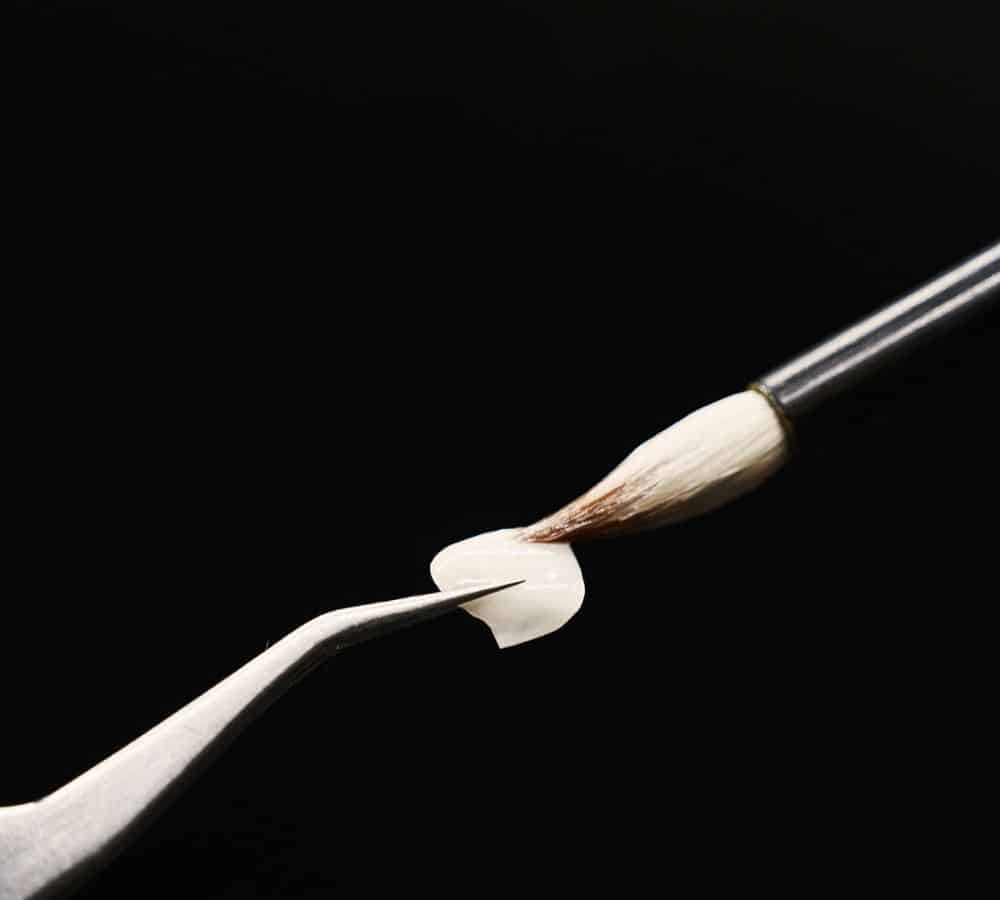
Porcelain veneers — or, to use the more current term, ceramic veneers — offer an unusual combination in dentistry: substantial durability alongside a high degree of aesthetic control, over length, shape, proportion, surface texture, colour and brightness, or any combination of these. See Porcelain Veneers.
Background
Veneers were introduced to dentistry in the mid-1980s, secured by powerful resin bonding, with both the porcelain and the tooth enamel specially treated first.
Since then, designs and techniques have improved significantly, and lithium disilicate ceramic is now commonly used. It is two and a half times stronger than the porcelain used originally, and just as beautiful. See Smile Solutions Laboratory and Technology.
What people are really asking
When people ask how long veneers last, they are usually asking something more specific. Three questions:
Can veneers break?
It takes quite a lot to break ceramic veneers — but yes, it can happen, just as it can with unrestored teeth.
They can chip or fracture if subjected to trauma or structural overload. And just like tooth enamel, they can wear or become damaged under the destructive forces of a grinding or clenching habit. See Chipped and Cracked Teeth.
The review above bears that out, and puts the two failure modes in order. Fracture was the most common complication, followed by debonding, and both were “more commonly happening within the first years after PLV cementation” — debonding, specifically, mostly within two years. A veneer that survives its first couple of years has passed the riskiest part.
The comparison to natural enamel is the right frame. Veneers are not more fragile than teeth, and they are not immune to what damages teeth. If you grind, that is the dominant variable in the lifespan of any restoration you have — and a nightguard is part of the treatment, not an add-on. Healthdirect Australia states the same limit plainly for patients: “Veneers may not be suitable if you grind or clench your teeth or if you have gum disease.” See TMD and Teeth Grinding and Night-time tooth grinding and clenching.
Can veneers come off?
In dentistry, only a fool says never. The best answer is rarely.
When a veneer does become detached, one cause can be an error in materials handling or performance.
More commonly, though, it is a failure to bond to the tooth due to insufficient dental enamel — which suggests a veneer may not have been the most appropriate restoration for that tooth in the first place.
That is a candid and important point. Bonding strength comes from enamel. Where a tooth has little enamel left — through wear, erosion or previous preparation — the bond has less to hold onto, and the honest answer is often that a different restoration was indicated. It is a case selection question, not a materials question.
The published survival figures quietly depend on the same thing. In the Australian cohort described below, only teeth with at least 80% of their enamel remaining were veneered at all, and patients with extensive tooth-structure loss from grinding, or an unfavourable gum prognosis, were excluded from the series. Laboratory measurement suggests why that matters: preparing a tooth for a laminate veneer has been measured as exposing roughly 30% dentine, leaving about 70% enamel at the bonding surface — around the threshold generally regarded as needed for a reliable bond. Push past it and the numbers on this page stop applying to you. See What is the difference between porcelain crowns and veneers? and Dental Crowns.
Will veneers always look the way they did on day one?
Pretty much.
But some people do eventually reach a point — after years, maybe even decades — where they are no longer happy with their veneers and want them renewed. The reasons are worth understanding, because almost none of them are the veneer failing.
Why veneers actually get replaced
Gum recession
Over time, gums often recede. When they do:
Veneer join lines (margins), at first hidden at the gum edge, may become visible.
Accumulated stain at the margin line that was previously hidden can become evident.
The restoration has not deteriorated. The tissue around it has moved, exposing a junction that was designed to be concealed.
Recession is not purely a matter of time, either — gum disease accelerates it considerably, which makes ongoing periodontal health part of the veneers' lifespan. See Bleeding Gums, Dental Cleans & Hygienists and Periodontists.
A large brightness jump
This is the most useful thing in this article for anyone deciding on veneers.
Patients who chose veneers with a significantly different brightness or colour from their natural teeth can become disappointed to see the underlying darker tooth enamel re-emerge as their gums recede.
The greater the brightness disparity, the sooner this problem appears — which can mean a shorter effective restoration lifespan.
In other words: choosing a dramatically brighter shade does not just change how the veneers look. It shortens how long they look right. A modest step in brightness stays acceptable through years of tissue change; a large one begins to reveal itself at the margin as soon as the gum moves at all.
The practical consequence: whiten your natural teeth first, settle on a shade, then match the ceramic to it — see Teeth Whitening and I want to whiten my teeth but one of my front teeth has a porcelain crown. And see the design before it is made: The Mock-Up Reveal.
The teeth around them change
Dental ceramic is very colour-stable. Our own tooth material is not — over the years it darkens and often becomes more translucent.
So unveneered teeth may look increasingly different from their veneered neighbours, and in time this can prompt a wish for replacement. See How can I improve the whiteness of my teeth?.
Again: the veneers did not change. Everything around them did.
What lifespan actually looks like in practice
Some practical observations from long clinical experience, described in general terms rather than as individual case histories:
Ceramic veneers placed shortly after the technique became available in the mid-1980s have been observed still in service more than two and a half decades later.
That is consistent with the longest Australian series in the literature. Layton and Walton followed 499 feldspathic porcelain veneers placed in 155 patients by a single prosthodontist in an Australian private practice between 1990 and 2010, and reported Kaplan–Meier survival of 98% at 5 years, 96% at 10 years, 91% at 15 years and 91% at 20 years.
Three caveats belong with those figures, and we would rather give them to you than not.
The sample thins out sharply. All 499 veneers were observed through the first 5 years, 354 to 10 years, 239 to 15 years — but only 82 reached 20 years, and five reached 21. A survival percentage calculated on 82 restorations is not the same kind of number as one calculated on 499.
The same authors published a lower figure from an earlier cohort. Their 2007 series of 304 veneers in 100 patients reported 73% survival at 15–16 years. Same practice, overlapping era, different cohort and different statistical handling. We are not going to pick between them.
And the wider literature disagrees more than most veneer pages admit. A 2021 systematic review in the European Journal of Dentistry, pooling 30 studies covering 2,473 patients and 11,465 veneers, puts the spread in a single sentence: “Studies from 10 to 12 years have stated survival rates ranging from 53 to 94.4%.” At the bottom of that band sits a retrospective study of 2,562 veneers in 1,177 patients, reporting 53% survival at 10 years, and a prospective series of 87 veneers at 64% at 10 years. At the top sit cohorts reporting 94.4% over comparable periods. That is not a small disagreement; it is the difference between one veneer in twenty needing replacement and nearly one in two.
The gap is definitional, not clinical. The same review is explicit about why the numbers scatter so far. Failure was defined as “irreparable” in 13 of the studies and as “reparable but counted as a failure” in nine, and the remaining five did not state a definition at all. Seventeen used Kaplan–Meier survival analysis; five reported straight percentages. So a veneer that chipped and was polished smooth is a survivor in one study and a failure in the next — and that single editorial choice, made by the authors rather than by anyone's mouth, is enough to move a ten-year figure from the 50s to the 90s. The same review adds the other half of the caution: “A conclusive estimation of the longevity of PLVs beyond 20 years is lacking”, because the numbers still being followed that far out are very small. When you are quoted a survival percentage, the question that makes it mean anything is “counted how?”
Where veneers placed in a patient's teens are replaced in their thirties, the trigger is frequently not structural failure — it is commonly the gum margin having receded in the intervening years, sometimes together with the aesthetic standards of an earlier era.
And someone having veneers placed today may reasonably expect many years of service, while also expecting that they may choose to renew them once or twice more across a lifetime.
That is the honest framing. Veneers are durable, but they are not permanent, and a person who has them in their twenties should plan on replacing them at some point. A clinician who tells you otherwise is overselling. Budget accordingly — Price Guide and Payment Plans.
Payment plan options are available. Where a plan is advertised as interest free, that describes the plan term only — a deposit may be required, an establishment fee and ongoing account fees may apply, and charges can apply if the balance is not cleared within the agreed period. The applicable terms depend on the provider and the amount financed, and are set out in writing before you commit — ask what the deposit and the establishment fee are, in dollars, and what the total will be by the end. Payment Plans.
One technique note worth knowing: margins can be hidden deeper between the teeth rather than placed at the visible gum edge — an approach that ages considerably better as tissue recedes.
If you are weighing a less permanent starting point, composite removes little or no enamel and can be redone — see Composite bonding: will it look natural and how long will it last? and What is the difference between composite veneers and porcelain veneers?.
In summary
What ceramic veneers actually offer is two things at once: durability, and the retention of most of the tooth they are bonded to. Both halves have been measured, and the second is the one that gets left out.
On the tooth-retention half of that, there is a measured comparison. A laboratory study weighing prepared and unprepared crowns found that a traditional facial-surface porcelain laminate veneer removed about 16.7% of the coronal tooth structure by weight, an extended veneer about 22.1% and a complete veneer about 30% — against 64% to 71.9% for all-ceramic and metal-ceramic crown preparations. Even the most extensive veneer preparation removed less than half what the most conservative crown preparation did. That was an in vitro study on typodont teeth rather than a measurement taken in anyone's mouth, so read it as the relative ranking it is, not as a figure that applies to your own tooth.
No other technique delivers the same balance of durability and maximal retention of original tooth material alongside the range of aesthetic change ceramic veneers can achieve.
But the decision worth making carefully is not the material. It is the shade. The evidence of decades is that the further you move from your natural colour, the sooner you will want them redone.
And one boundary worth restating before any of this, in healthdirect Australia's words: veneers improve appearance, but “they're not used to repair damage”, “veneers don't straighten your teeth or fix your bite”, and “you can't take veneers off”. Healthdirect also notes that veneers “may need to be replaced due to chips, fractures or changes in colour over time” — which is the same conclusion this page reaches, from a government source rather than a dental one.
Common questions
One of mine has chipped. Is that a failure, or can it be repaired?
Often it can be dealt with without replacing the veneer — and this is precisely where the survival statistics become slippery, so it is worth understanding what they do and do not count.
The systematic review that produced the 95.5% figure deliberately did not count slight marginal defects and slight marginal discolorations as failures, on the stated grounds that they “have more to do with the appearance of the PLV, and can be easily repolished or repaired”. Read that carefully: 95.5% survival at ten years does not mean 95.5% of veneers still looked as intended. It means that proportion had not needed replacing. Across the wider literature, failure was defined as “irreparable” in 13 of 25 studies, as “reparable but counted as a failure” in nine, and not defined at all in five — which is most of why published ten-year figures range from the 50s to the 90s.
What that means for your chip: ask which category it falls into. Can it be polished, can it be repaired in composite, or does the veneer have to come off and be remade? Ask what each option costs, whether a repair changes the appearance under different light, and how long a repair is expected to hold. Fracture is the commonest complication of ceramic veneers, and both fracture and debonding happen disproportionately in the first years after cementation — so if this is early, it is worth asking whether something about the bond, the bite or the design is behind it, rather than treating it as bad luck. See Chipped and Cracked Teeth.
Can I whiten veneers later if they start to look dull beside my other teeth?
No, and this is worth knowing before rather than after. Healthdirect Australia lists it among the risks of veneers in plain terms: “the colour of your veneers can't be changed after they've been applied”, and “your other teeth may become discoloured, no longer matching your veneers”.
So the sequence matters more than almost anything else on this page. Whitening acts on natural tooth structure; ceramic does not respond to it at all. If you intend to whiten, whiten first, let the shade settle, then have the ceramic matched to where your own teeth have landed. Doing it the other way round leaves you with a mismatch you cannot correct except by remaking the veneers.
The same asymmetry explains the drift described above: ceramic is very colour-stable and your own teeth are not, so over years the untouched teeth darken away from the veneers. That is a predictable divergence, not a defect. See Teeth Whitening and The Mock-Up Reveal.
I am in my twenties. Should I start with composite instead?
A real question with a real trade-off, and the numbers point in opposite directions depending on what you are optimising for.
On durability, ceramic wins clearly. The composite equivalent of the review quoted above — a 2023 systematic review and meta-analysis of resin composite laminate veneers from the University of Hong Kong — found a pooled survival rate across randomised controlled trials of 88% (95% CI 81% to 94%), with mean follow-up ranging from 24 to 97 months. That is a shorter window than the ceramic ten-year figure, and the authors are clear that the two are not directly comparable. The clean head-to-head is a single ten-year practice cohort (Mazzetti and colleagues, 2022), cited by both reviews: annual failure rates of 3.9% at five years and 4.1% at ten for composite against 1.4% and 1.2% for ceramic on survival analysis, and 9.1% and 10% against 2.9% and 2.8% when any repair counts as a failure — a hazard ratio for composite versus ceramic of 4.00 (2.74 to 5.83) for survival and 5.16 (2.65 to 10.04) for success.
On tooth structure, composite wins clearly. It removes little or no enamel, and it can be added to, reshaped or redone. The composite review’s own conclusion is that “most of the complications were regarded as clinically acceptable with or without reintervention”, and that direct (chairside) composite did better than indirect — 91% versus 84% pooled survival. Its dominant complaints are surface roughness, colour mismatch and marginal discolouration, which are maintenance rather than catastrophe.
So the question is not which lasts longer. It is whether you want to commit irreversible enamel in your twenties to a result you may want to change in your thirties. It is also worth noting the option healthdirect lists first among alternatives to veneers: “An alternative to veneers is to continue to live with your teeth as they are.” See What is the difference between composite veneers and porcelain veneers?.
Do teeth still decay underneath veneers?
Yes, they can, and the veneer does nothing to prevent it. Healthdirect is explicit: “Veneers don't fix tooth decay or problems with your bite.”
The good news is that it is uncommon when the rest is right. In the systematic review of 6,500 porcelain laminate veneers, secondary caries showed 99.3% survival at ten years as a single failure mode. The bad news is that the place it starts is the margin — the join between ceramic and tooth — and the margin is exactly what becomes exposed as the gum recedes, which is the same mechanism that makes veneers look older before they fail.
So the maintenance is not exotic, it is just non-negotiable. Healthdirect’s instruction is simply that “you'll need to brush and floss your teeth with veneers the same as you do for natural teeth”, and that “regular visits to your dental professional are also important”. Flossing the margins is the part people quietly drop. See Dental Cleans & Hygienists and Bleeding Gums.
How many do I need — can I just do the two front ones?
No published source prescribes a number, and any answer that arrives before a mock-up is a guess. What healthdirect does say is that cost “will also depend on how many veneers you get and what size they are” — so the count is a clinical and aesthetic decision with a financial consequence, in that order.
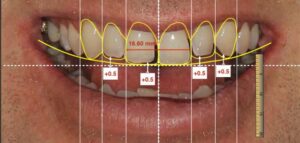
The constraint that usually decides it is matching. Two central incisors sit beside two canines that will not be treated, and ceramic is colour-stable while natural teeth are not. A pair of veneers that matches perfectly on the day will diverge from its neighbours over the following years, and the wider the smile you show, the further along the arch that divergence is visible. Someone with a low lip line and modest colour change may do well with two; someone who shows eight teeth when they smile usually will not.
Ask for the number to be justified in terms of what shows when you smile and talk, and ask to see it before it is made. That is exactly what a mock-up is for — see The Mock-Up Reveal.
What do I have to do differently day to day?
Less than people expect, and the exceptions matter.
The baseline is unchanged. Healthdirect: brush and floss “the same as you do for natural teeth”, and keep regular professional visits. Expect a check soon after they are fitted — “your dental professional may ask you to come back after a couple of weeks so that they can check your veneers” — and expect the teeth to “feel different as you get used to their new shape” at first.
The exceptions are three. If you grind or clench, a nightguard is part of the treatment, not an optional extra; healthdirect goes further and says veneers “may not be suitable if you grind or clench your teeth or if you have gum disease”. Stop using your front teeth as tools — opening packaging, biting nails, ice, olive stones, crusty bread crusts. And some sensitivity is normal and worth reporting rather than enduring: healthdirect lists among the risks that “your teeth could become more sensitive because some enamel is removed”.
Gum health is the quiet one. Recession is what exposes the margin, gum disease accelerates recession, and so the hygiene appointment is doing more for the appearance of your veneers over ten years than any product will. See TMD and Teeth Grinding.
Is any of it reversible if I change my mind?
No, and this is the single most important sentence on the page. Healthdirect states it without qualification: “Your dental professional fixes veneers to the surface of your teeth. You can't take veneers off.”
Enamel that has been removed does not come back. From the day a tooth is prepared, it needs a restoration of some kind for the rest of your life — a veneer, a replacement veneer, or eventually something larger. The quantity is modest compared with a crown (about 16.7% of coronal tooth structure by weight for a traditional facial veneer against 64% to 71.9% for crown preparations, in the laboratory study cited above), but modest is not zero and it is not recoverable. The other risks healthdirect lists belong in the same conversation: jaw pain, the veneer cracking or falling off, sensitivity, the edges showing if the gum shrinks, the colour being unchangeable, and the neighbouring teeth drifting in shade.
One practical consequence of irreversibility is worth stating plainly: you are also committing to being able to get them maintained. The ADA’s policy on dental treatment overseas identifies the “potential challenge of finding a dental practitioner to continue with, or repair, elective treatment started overseas”, and a published analysis of UK media coverage found private providers “actively avoiding the provision of care for people who'd had dentistry abroad because of fear of liability”. Before anything is prepared, ask who will look after these in fifteen years. See Turkey teeth: the real risks of getting veneers overseas.
Related reading
- Bonding or veneers?
- What happens to my teeth after dental veneers, and will I ever get cavities?
- The case for same-day porcelain veneers
- Turkey teeth: the real risks of getting veneers overseas
- Cosmetic Dentistry
Practical details
Written by Dr Peter Henderson. Registration can be verified free on the AHPRA register, or by calling 1300 419 495; the clinicians are listed on Our Team.
Smile Solutions, Level 1, 220 Collins Street, Manchester Unity Building, Melbourne VIC 3000. Phone 13 13 96, or theteam@smilesolutions.com.au. Monday–Friday 8.00am–6.00pm, Saturday 8.30am–1.30pm, Sunday by appointment. Full details on Contact Us.
The survival and tooth-structure figures on this page are drawn from published systematic reviews and clinical studies of porcelain laminate veneers bonded to natural teeth, from the 2023 systematic review of resin composite laminate veneers, and from healthdirect Australia's consumer page on veneers. Figures for one veneer design, material or patient group do not transfer to another.
Published 30 October 2018. Veneers require permanent removal of tooth structure. Longevity and results vary between individuals and are not guaranteed; all cosmetic treatment carries risks that should be discussed with your dentist. General information only; it does not replace advice from your treating practitioner. Payment plan terms are set by the credit provider and change; confirm current terms directly before you commit.
Smile Solutions trades under ABN 28 193 514 103.
Images on This Page
-
https://www.facebook.com/tr?id=800557773428361&ev=PageView&noscript=1
(no alt text)
-
https://www.smilesolutions.com.au/wp-content/uploads/2025/10/calendar_month.svg
(no alt text)
-
https://www.smilesolutions.com.au/wp-content/themes/arcadian-wordpress-theme/assets/images/smile_solutions_logo_white.png
Smile Solutions Logo
-
https://www.smilesolutions.com.au/wp-content/themes/arcadian-wordpress-theme/assets/images/smile_solutions_logo_purple.png
Smile Solutions Logo
-
https://www.smilesolutions.com.au/wp-content/uploads/2016/05/Peter-150x150.jpg
Dr Peter Henderson
-
https://www.smilesolutions.com.au/wp-content/uploads/2026/01/157.jpg
Brush and dental material close-up
-
https://www.smilesolutions.com.au/wp-content/uploads/2026/04/PH-300x270.jpg
PH
-
https://www.smilesolutions.com.au/wp-content/uploads/2018/12/Dental-Filling-300x270.jpg
Dental Filling
-
https://www.smilesolutions.com.au/wp-content/uploads/2017/06/whats-new-in-cosmetic-dentistry-300x143.jpg
whats new in cosmetic dentistry
-
https://www.smilesolutions.com.au/wp-content/themes/arcadian-wordpress-theme/assets/images/family_owned_bussiness.png
Family Owned Business
-
https://www.smilesolutions.com.au/wp-content/themes/arcadian-wordpress-theme/assets/icons/icon--phone.svg
Smile Solutions Contact
-
https://www.facebook.com/tr? id=800557773428361&ev=PageView&noscript=1
(no alt text)
-
https://bat.bing.com/action/0?ti=25148060&tm=gtm002&Ver=2&mid=ff113c43-bf8d-4026-8757-9c3fdb0e1d78&bo=1&sid=f6c95ef0ab2611f1bbb15fe02d239236&vid=f6c99000ab2611f1a909377ad0132bbf&vids=1&msclkid=N&pi=918639831&lg=en-US&sw=800&sh=600&sc=24&nwd=1&tl=How%20long%20do%20porcelain%20veneers%20last%3F%20-%20Smile%20Solutions&p=https%3A%2F%2Fwww.smilesolutions.com.au%2Fdental-articles%2Farticle%2Flong-porcelain-veneers-last%2F&r=&evt=pageLoad&sv=2&cdb=AQAQ&rn=615707
(no alt text)