What is composite bonding?
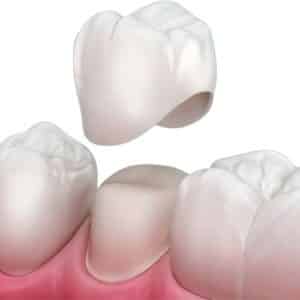
Composite bonding uses a tooth-coloured synthetic resin that bonds to the tooth. The material is shaped to the desired form and hardened with a special light. See Composite Bonding.
When used cosmetically, the result may be called a composite veneer.
What it can do
- Fill chipped teeth or cavities caused by decay — see Chipped and Cracked Teeth and Tooth Fillings
- Mask stained teeth
- Change the shape or size of teeth — see What are my options if I want to change the shape of my teeth?
- Close gaps between teeth
- Cover exposed root surfaces where gums have receded — see Bleeding Gums
- Even out worn edges on front teeth — see Edge Work & Composite Bonding
Worth being clear about what it is not for. Healthdirect Australia's line on veneers of any material applies here: they "help to improve the appearance of your teeth", but "they're not used to repair damage", and "veneers don't fix tooth decay or problems with your bite."
Is it right for you?
Bonding can be a minimally invasive way to get the smile you want. Two advantages stand out:
Minimal to no tooth reduction. Unlike porcelain veneers, which require the tooth to be prepared, composite is generally added rather than substituted — which means the option remains reversible in a way porcelain does not. If you dislike the result, it can be polished off and you still have your own tooth.
The size of what you are avoiding is measurable. A laboratory study of preparation designs on front teeth found that a traditional porcelain laminate veneer removed a mean 16.7% of the coronal tooth structure, an extended veneer 22.1%, and a complete veneer 30% — against 64% to 70% for an all-ceramic crown. Composite added to an unprepared tooth removes none of it.
That reversibility is the strongest argument for starting here, particularly for someone young or undecided. Porcelain is a one-way decision; composite is not. Bonding or veneers? compares them directly.
Usually a single visit, after initial planning and assessment, and usually without local anaesthetic. Healthdirect confirms the same for resin: "you can get a composite resin veneer in one visit to your dental professional."
But it is not suitable for everyone, which is why assessment by your dentist comes first — see General Dentistry and Cosmetic Dentistry.
Generally, composite veneers are a good choice for people wanting an improvement where the teeth are predominantly healthy and minimally misaligned. Where teeth are significantly out of position, or heavily broken down, other options do the job better.
When it is the wrong tool
Honest limits, because the wrong case makes good work look bad:
- Significantly crooked or rotated teeth. Bonding can mask a small discrepancy. Used to disguise real misalignment, it means adding bulk, and the teeth end up looking thick and opaque. Orthodontics first, then bonding to refine, is usually the better sequence — and often needs less bonding afterwards. See Invisalign and How do I know which orthodontic treatment is best for me?
- Heavy grinding. Composite on the biting edges of a grinder chips repeatedly. Manage the grinding first, and expect to wear a night splint afterwards. Healthdirect names the same two exclusions for veneers generally: they "may not be suitable if you grind or clench your teeth or if you have gum disease." See TMD and Teeth Grinding and Night-time tooth grinding and clenching
- Very dark teeth. Masking a dark shade needs opacity, which costs translucency and natural appearance
- Large areas of missing tooth. Beyond a certain size, a laboratory-made restoration is stronger and lasts longer — see Dental Crowns and Same-Day CEREC Restorations
- Active decay or gum disease. Both are treated before anything cosmetic. Bonding over an inflamed gum margin does not last and does not look right — see Dental Cleans & Hygienists
Will it look natural?
Yes — modern composite materials are applied in layers and sculpted to the teeth to create the desired shape, size and shade. Layering is what makes the difference: it allows the translucency of natural enamel to be reproduced rather than a flat block of colour.
This can lead to a result that is very natural.
The outcome depends heavily on the operator. Composite bonding is a hand-sculpted, chairside procedure — the skill of the person doing it matters more than with a laboratory-made restoration, where a technician does the artistry. It is worth asking to see examples of the clinician's own work rather than manufacturer images — see Before & After Gallery and Our Team.
There is some evidence that the hand-built approach is also the more durable one. In the meta-analysis quoted below, the direct technique — composite built straight onto the tooth in the chair — had a pooled survival rate of 91%, against 84% for the indirect approach made in a laboratory and bonded on.
One point of sequencing that costs people money: if you are considering whitening, whiten first and let the shade settle for a couple of weeks. Composite is matched to the shade of your teeth on the day it is placed, and it does not whiten afterwards. Healthdirect lists both halves of that trap among the standard risks: "the colour of your veneers can't be changed after they've been applied", and "your other teeth may become discoloured, no longer matching your veneers." See Teeth Whitening and I want to whiten my teeth but one of my front teeth has a porcelain crown.
How long will it last?
The honest answer is a survival rate, not a number of years — nobody publishes a lifespan for composite, and the figures that circulate as one are practice experience rather than research.
A systematic review and meta-analysis of resin composite laminate veneers pooled the randomised trials and found an overall survival rate of 88% (95% CI 81%–94%), across a mean follow-up ranging from 24 to 97 months — roughly two to eight years. Split by technique, that was 91% for direct and 84% for indirect. Only 7 studies out of 827 screened met the inclusion criteria, and heterogeneity between them was moderate, so treat it as the best available estimate rather than a settled number.
Survival is not the same as still looking new. A separate analysis quoted in that review makes the gap explicit: for composite veneers, the annual failure rate was about 3.9% at five years and 4.1% at ten years when measured as survival — the restoration still in place — but about 9.1% at five years and 10% at ten when measured as success, which requires it still to be acceptable in appearance and function. Roughly speaking, composite is about twice as likely to need attention as to need replacing.
It is difficult to give an exact figure for you, because every individual's mouth and lifestyle is different. The published figures are group results from selected study populations, not a guarantee for your teeth.
Composite resin is susceptible to chipping and staining over time, and maintenance will be required. That is inherent to the material, not a sign of poor work — composite is porous in a way porcelain is not, and it picks up stain at the margins first. Healthdirect puts the same expectation plainly for veneers of either material: they "may need to be replaced due to chips, fractures or changes in colour over time." For the porcelain comparison, see How long do porcelain veneers last?.
What shortens its life: grinding, biting nails or pens, opening things with your teeth, heavy coffee, tea, red wine and smoking.
What extends it: good oral hygiene, avoiding those habits, a night splint if you grind, and having it polished at routine visits. A polish every year or two does a great deal for how it looks.
Expect maintenance rather than permanence. Chips are usually repairable in a single short appointment, and the whole restoration can be refreshed when it starts to look tired. Budget for that as part of the treatment, because it is part of the treatment.
What can go wrong
- Staining at the margins, the most common complaint, and often polishable
- Chipping, particularly on biting edges
- Debonding — a piece coming away, usually repairable
- Sensitivity for a short period afterwards
- A result you do not like. Say so at the appointment, before you leave. Composite is adjustable while you are in the chair and much harder to revisit afterwards. See How important is communication in dentistry?
- Bulk and poor contour if too much material is used to compensate for position
The trade-off in short
| Composite bonding | Porcelain veneers | |
|---|---|---|
| Tooth preparation | Minimal to none | 8–30% of the crown, by design |
| Reversible | Usually | No |
| Visits | Usually one | Usually two |
| Anaesthetic | Often none | Usually |
| Published survival | 88% (95% CI 81–94%), follow-up 2–8 years | 95.5% at 10 years; 91% at 20 in an Australian cohort |
| Staining and chipping | More susceptible | More resistant |
| Repairable | Easily, chairside | Often needs replacing |
| Cost | Lower | Higher |
Those two survival figures are not directly comparable — different follow-up windows, different study designs, different definitions of failure — so read them as a direction of difference rather than a precise gap. Healthdirect states that direction without numbers: "porcelain veneers can look more realistic and last longer than resin veneers, but they are more expensive."
Composite is the conservative option — lower cost, less commitment, shorter life. Porcelain is the durable one. Neither is universally better, and the sensible question is which trade-off suits your teeth and your circumstances. Porcelain Veneers & Crowns, and What is the difference between composite veneers and porcelain veneers?.
Common questions
What actually drives the cost, and why will nobody quote me over the phone?
Three things move the number more than anything else: how many teeth are involved, what has to happen before the bonding, and how much planning the case needs. Repairing one chipped corner and rebuilding the edges of six front teeth are different jobs, and the second is not simply six times the first — the shade work, the shaping and the way the teeth relate to each other across the arch all scale differently from the material.
The sequencing is the part people do not expect to pay for. Decay and gum inflammation are treated before anything cosmetic. If whitening is part of the plan it goes first, and the shade has to settle. If the teeth are genuinely out of position, orthodontics first often means less bonding afterwards, which can make the combined plan cheaper than bonding alone rather than dearer.
Nobody can quote it over the phone because the quote follows the examination: how much enamel is left, how you bite, and whether the edges you want rebuilt are the ones carrying the load. Ask for the fee in writing and itemised, and ask specifically whether the consultation and any records such as photographs or scans are included or charged separately. See Price Guide and Payment Plans.
And budget for upkeep rather than treating this as a single transaction. The Australian Dental Association's own framing of dental care is that "optimal ongoing oral health cannot be achieved in a single episode or short course of treatment and requires regular maintenance" (ADA Policy Statement 2.2.6). Composite is a material designed to be polished, repaired and refreshed, and the cost of owning it includes that.
I grind my teeth. Does that rule bonding out?
Not automatically — but it changes the plan, and it changes which published figures apply to you. Healthdirect Australia states plainly that veneers "may not be suitable if you grind or clench your teeth or if you have gum disease."
The more useful point is one the survival statistics hide. A 2021 systematic review in the European Journal of Dentistry summarising the porcelain veneer literature reports that one long-running cohort found "a significantly higher marginal discoloration among smokers and a significantly higher failure rate among bruxers". And several of the studies producing the most reassuring numbers excluded grinders from the outset. In the Australian private-practice cohort that reported 91% survival at 20 years, bruxism and parafunction cases were excluded and only teeth retaining at least 80% enamel were treated — the review's own caution is that this is "a best-case figure for ideal candidates in enamel, from one operator."
So if you grind, you are not in the population those numbers describe, and you should not plan as though you were. What follows practically: treat the grinding as the first problem rather than an afterthought, expect a night splint to be part of the treatment rather than an optional extra, and expect chips and repairs. That is not a reason to avoid composite — it repairs easily, which is an argument in its favour for a grinder — but it is a reason to go in with the right expectation. See TMD and Teeth Grinding and Night-time tooth grinding and clenching.
It is much cheaper overseas. Is that a real option?
The Australian Dental Association's position is that it is not, and it is worth reading what the ADA actually objects to, because the objection is about aftercare rather than about the treatment itself.
ADA Policy Statement 2.2.6 (November 2023) states: "Australian residents should only seek elective dental care in Australia to ensure Australian standards are met, complications are managed promptly, and good oral health is maintained." The specific risks it lists are the "inability to maintain supportive maintenance dental visits", "possible communication difficulties with the practitioner and practice staff which may impact on informed consent", "possible lack of insurance cover for complications", "lack of recourse for treatment and maintenance problems", "lack of access to treatment records", and the "potential challenge of finding a dental practitioner to continue with, or repair, elective treatment started overseas due to concerns including incompatible product systems, techniques not consistent with Australian standards and materials not approved by the TGA." It also notes that elective treatment obtained overseas "may not be covered by Australian health funds" and is not always covered by travel insurance.
Those apply with particular force to bonding, because bonding is the treatment that is meant to be maintained. A composite that chips at year three is a twenty-minute repair for whoever placed it and a guessing game for anyone else, who has no record of which material was used or what bonding system it was placed with.
Be clear about the limits of this source. It is a professional position statement, not evidence — it carries no complication rate, no incidence figure, and no Australian dataset behind it, and we have not found one. So read it as the profession's reasoning, which you can weigh yourself, and not as a measured risk. The ADA's own final recommendation is simply to "seek the advice of an Australian dentist before considering or embarking on overseas dental treatment."
Is "cosmetic dentist" a qualification, and how do I check who I am actually seeing?
No, it is not a registration category. The Dental Board of Australia recognises 13 dental specialties, approved by the Australian Health Workforce Ministerial Council: dento-maxillofacial radiology, endodontics, forensic odontology, oral and maxillofacial pathology, oral and maxillofacial surgery, oral medicine, oral surgery, orthodontics, paediatric dentistry, periodontics, prosthodontics, public health dentistry and special needs dentistry. Cosmetic dentistry is not one of them. A practitioner holding specialist registration in one of those 13 must also have completed a minimum of two years of general dental practice.
So "cosmetic dentist" describes what someone spends their time doing, not a protected title they have been granted. That is not a criticism — most cosmetic work in Australia is properly performed within general dentistry — but it does mean the phrase tells you nothing on its own.
What you can check, free and in about a minute, is the AHPRA public register at ahpra.gov.au. It will tell you whether the person is registered, in which division, whether they hold specialist registration in any of the 13 recognised specialties, and whether any conditions, undertakings or reprimands are recorded against their registration. What it will not tell you is how well they sculpt composite, because no register measures that. For that, ask to see the clinician's own before-and-after cases on teeth like yours — not manufacturer photographs — and ask how many of these they do in a typical month. See Before & After Gallery, Dentists & Registered Specialists and Our Team.
If I just leave a small chip alone, what is the worst that happens?
Often nothing, for a long time. But there are two reasons not to assume that, and they are both about what you cannot see.
The first is that the visible chip may not be the whole injury. Healthdirect Australia's guidance on dental injury is explicit: "You might not be able to see all the damage to your teeth or mouth. This is why you should see a dentist after a mouth injury", and "Always visit a dentist after a dental injury to prevent long-term damage." A knock that takes a corner off a front tooth can also bruise the nerve inside it, and that shows up weeks or months later as the tooth darkening or becoming tender — at which point the treatment is no longer cosmetic. Healthdirect notes that where "the pulp of a tooth (the inside of the tooth) has been injured, you may need root canal therapy."
The second is edge loading. A chipped incisal edge is usually a rough, sharp edge, and it tends to catch and flake further rather than settle. Rebuilding it while it is small is a smaller, cheaper and more conservative job than rebuilding it once a third of the tooth has gone.
What is reasonable: have it looked at once, so that someone can check the nerve and the bite and tell you whether it is stable. If it is, choosing to leave it is a perfectly legitimate decision. If it is not, you have found that out at the cheap end. See Chipped and Cracked Teeth and, if the tooth was knocked rather than worn, Dental Emergencies Explained.
Practical details
If you are considering composite veneers, a consultation will determine whether this conservative cosmetic solution is right for you — and what it would cost, which depends on how many teeth are involved. See Complimentary Cosmetic Consultation and confirm the current terms, including what the appointment covers, when you book. Fees are on the Price Guide, with Payment Plans for spreading them.
Confirm the current terms when you book — what the appointment includes, whether records such as scans or radiographs are part of it or charged separately, and whether any deposit applies.
Payment plan options are available. Where a plan is advertised as interest free, that describes the plan term only — a deposit may be required, an establishment fee and ongoing account fees may apply, and charges can apply if the balance is not cleared within the agreed period. The applicable terms depend on the provider and the amount financed, and are set out in writing before you commit — ask what the deposit and the establishment fee are, in dollars, and what the total will be by the end. Payment Plans.
Smile Solutions, Level 1, 220 Collins Street, Manchester Unity Building, Melbourne VIC 3000. Phone 13 13 96, or theteam@smilesolutions.com.au. Monday–Friday 8.00am–6.00pm, Saturday 8.30am–1.30pm, Sunday by appointment. Full details on Contact Us.
Related: Composite Bonding, Porcelain Veneers & Crowns, Professional Teeth Whitening, Bonding or veneers?, What are my options if I want to change the shape of my teeth?, Cosmetic dentistry options.
Registration for any practitioner can be verified free on the AHPRA public register at ahpra.gov.au. Note that “cosmetic dentist” is not a recognised specialty — cosmetic work is performed within general dentistry or by registered specialists such as prosthodontists. See Dentists & Registered Specialists.
Published 18 October 2018. General information only — it is not a diagnosis, a treatment plan, a quote or a promise of any particular clinical outcome, and it does not replace advice from your treating practitioner. Longevity and appearance vary considerably between individuals and depend on the case, the operator and your habits. The survival percentages quoted are group results from published studies, with their own selection criteria and follow-up periods; they are not predictions for an individual restoration, and maintenance should be expected. Whether bonding is suitable can only be determined after examination. Fees are indicative and subject to change; confirm at your consultation. Payment plan terms are set by the credit provider and change; confirm current terms directly before you commit.
Smile Solutions trades under ABN 28 193 514 103.
Images on This Page
-
https://www.facebook.com/tr?id=800557773428361&ev=PageView&noscript=1
(no alt text)
-
https://www.smilesolutions.com.au/wp-content/uploads/2025/10/calendar_month.svg
(no alt text)
-
https://www.smilesolutions.com.au/wp-content/themes/arcadian-wordpress-theme/assets/images/smile_solutions_logo_white.png
Smile Solutions Logo
-
https://www.smilesolutions.com.au/wp-content/themes/arcadian-wordpress-theme/assets/images/smile_solutions_logo_purple.png
Smile Solutions Logo
-
https://www.smilesolutions.com.au/wp-content/uploads/2023/11/SS-Tooth-1-1-150x150.png
Smile Solutions
-
https://www.smilesolutions.com.au/wp-content/uploads/2026/03/Sid-1024x922.jpg
Composite bonding: will it look natural and how long will it last?
-
https://www.smilesolutions.com.au/wp-content/uploads/2025/09/Root-Canal-2-300x217.jpg
Root Canal
-
https://www.smilesolutions.com.au/wp-content/uploads/2026/08/Mouth-Breathing-300x270.jpg
Mouth Breathing
-
https://www.smilesolutions.com.au/wp-content/uploads/2025/09/Dental-Crown-at-Smile-Solutions-300x300.jpg
Dental Crown at Smile Solutions
-
https://www.smilesolutions.com.au/wp-content/themes/arcadian-wordpress-theme/assets/images/family_owned_bussiness.png
Family Owned Business
-
https://www.smilesolutions.com.au/wp-content/themes/arcadian-wordpress-theme/assets/icons/icon--phone.svg
Smile Solutions Contact
-
https://www.facebook.com/tr? id=800557773428361&ev=PageView&noscript=1
(no alt text)