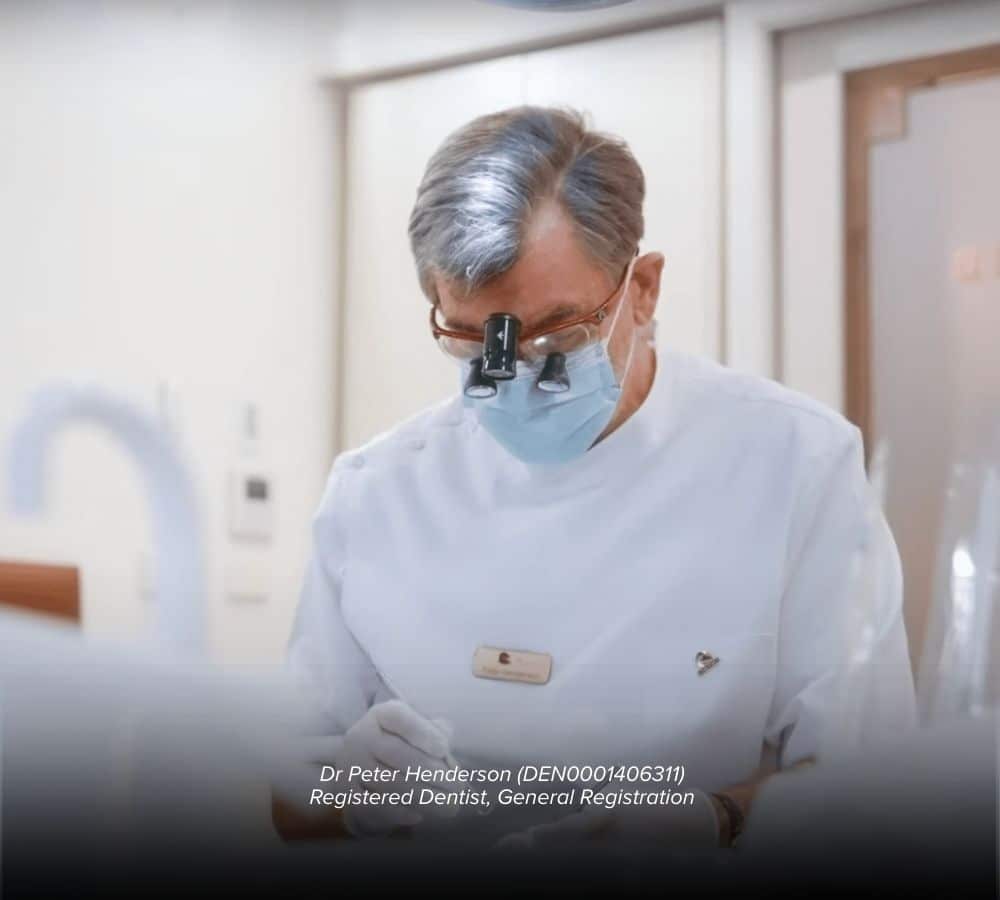
Dr Peter Henderson, General Dentist
Role: General dentist
Qualifications: BDSc, University of Melbourne; LDS (Victoria)
Registration: Registered dentist, general registration, DEN0001406311
Registration status can be verified on the AHPRA register of practitioners at ahpra.gov.au. The service page for this scope is General Dentistry.
Background
Dr Peter Henderson is a University of Melbourne graduate. He has worked in a partnership practice, in solo practice, and since 2007 as one of the general dentists at Smile Solutions.
He describes his preference for team-based practice as being able to plan a case in one place alongside specialists in each field and the practice's dental hygienists, rather than coordinating across separate clinics. See Complex Dental Cases: What Happens When Multiple Specialists Need to Collaborate.
His approach to treatment planning starts with what the patient wants from their dental health and how that fits into their circumstances — see Understanding Your Treatment.
He has a long-standing interest in science and computing, and in the adhesive ceramic materials that can now be bonded to teeth. He is involved in the practice's professional learning seminars and has maintained a career-long commitment to continuing education.
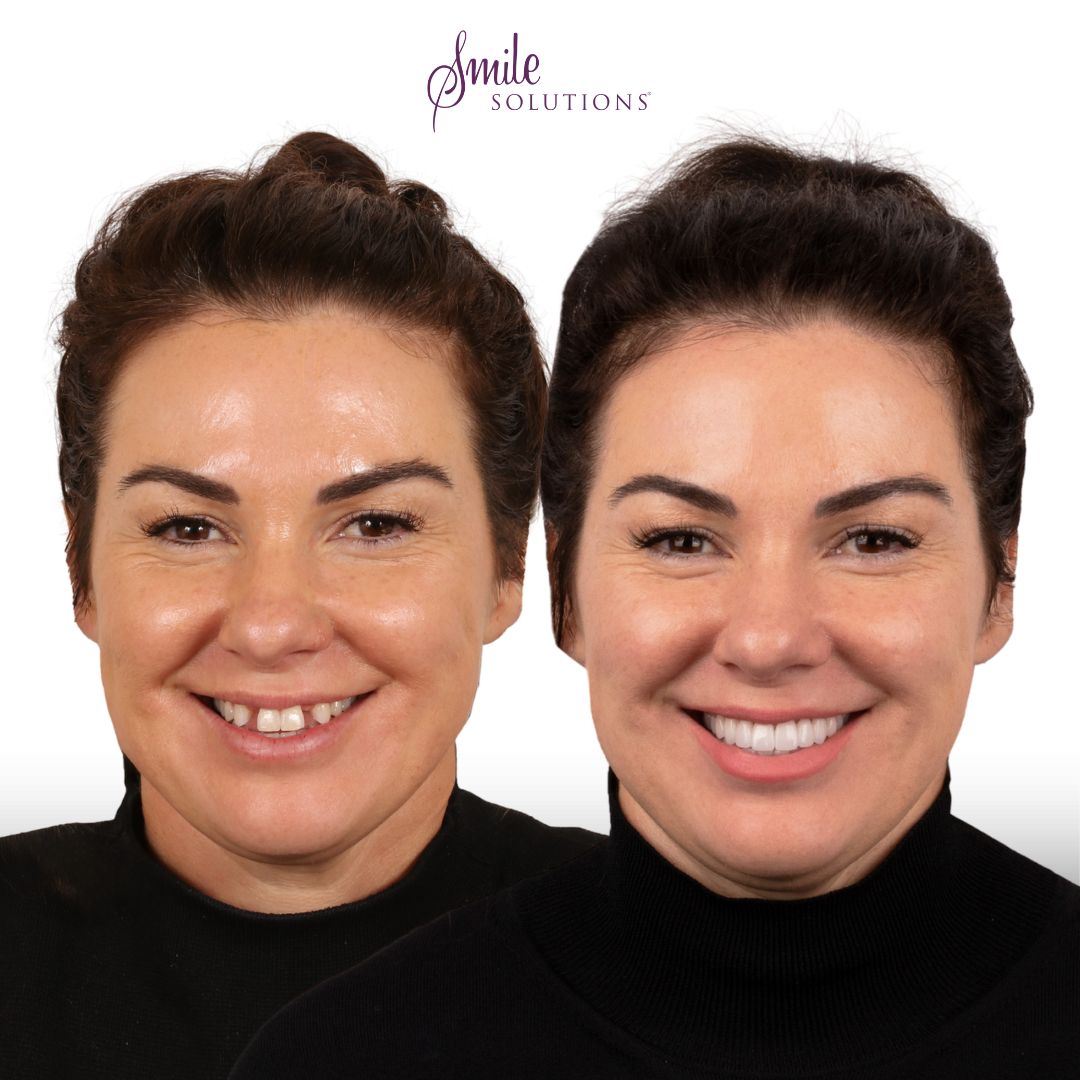
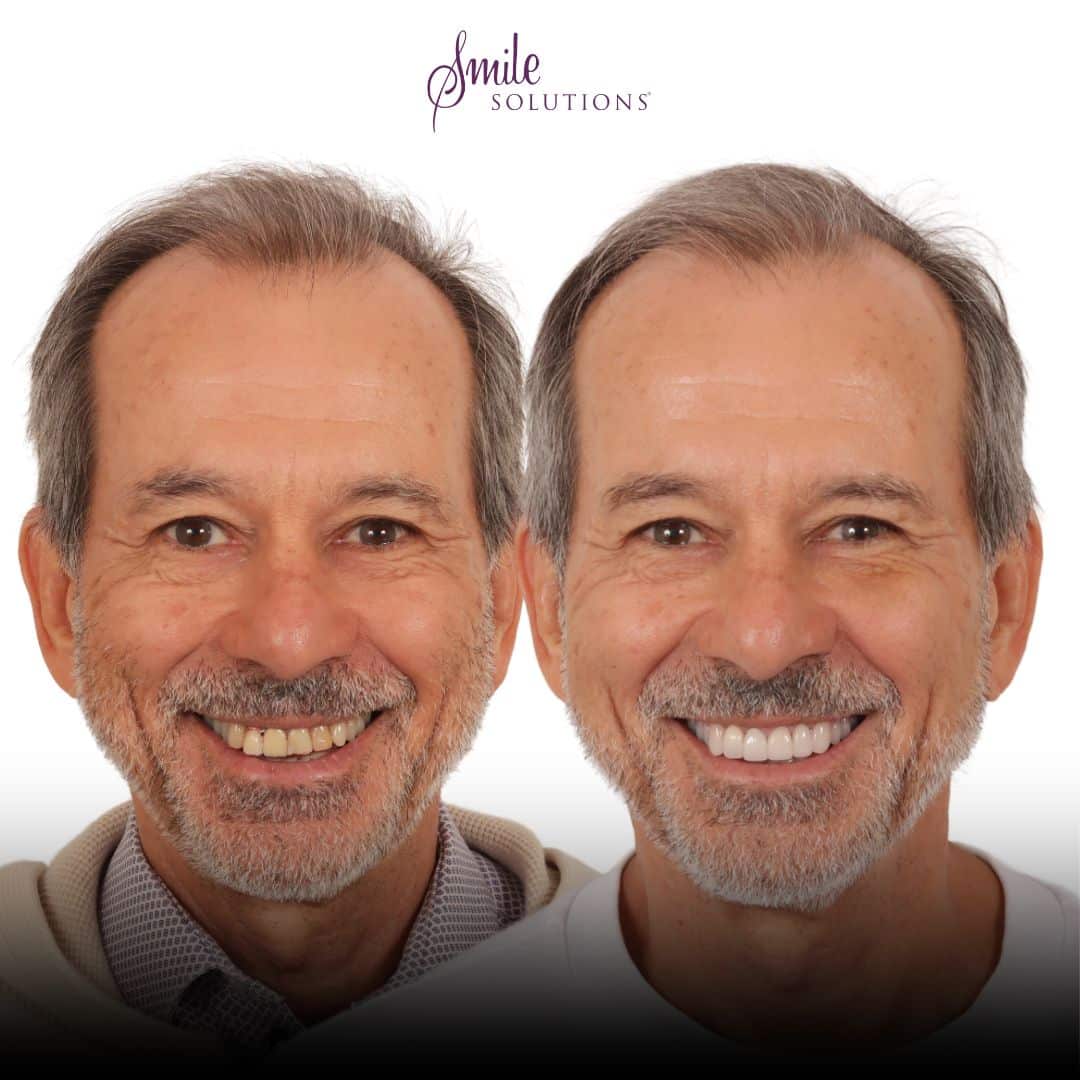
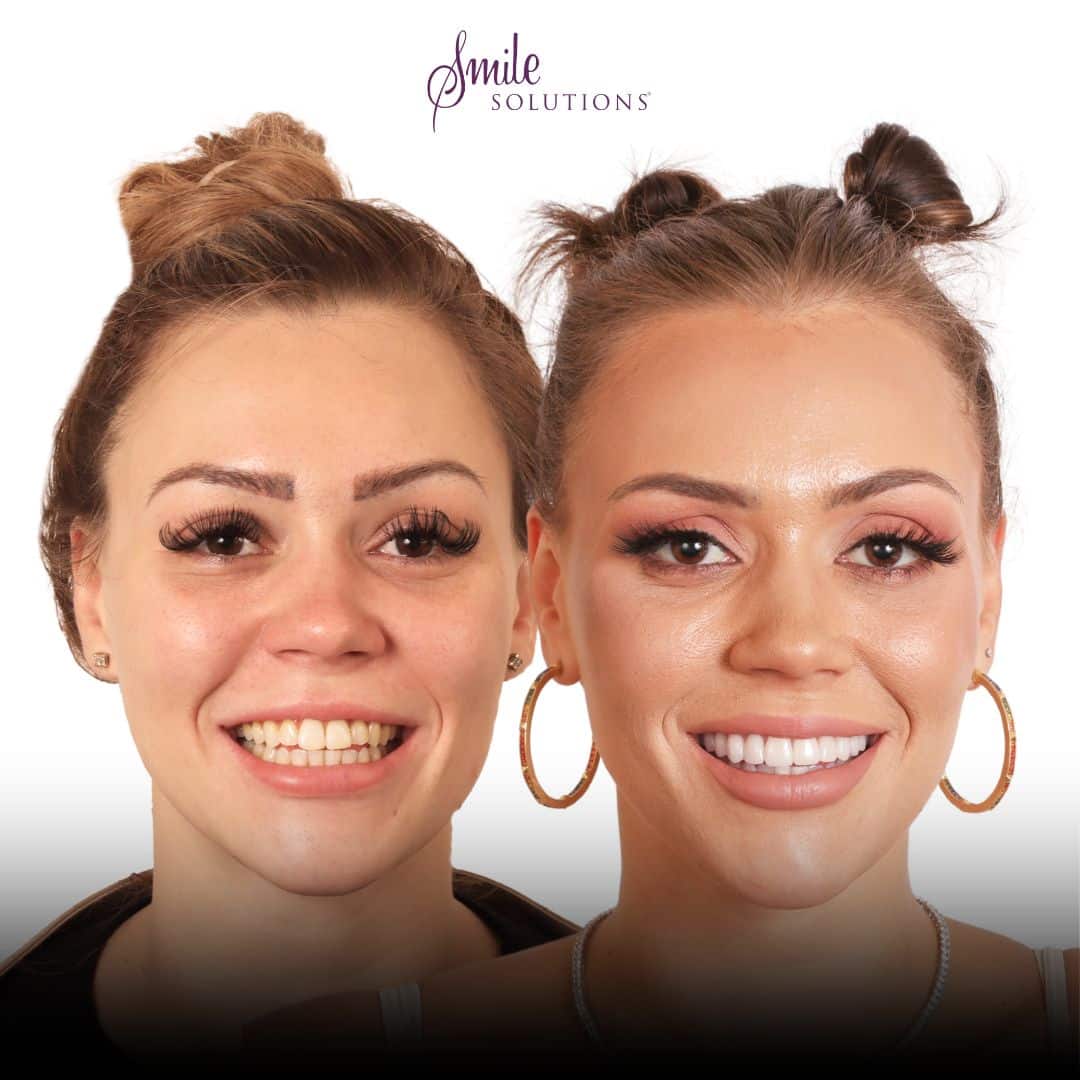
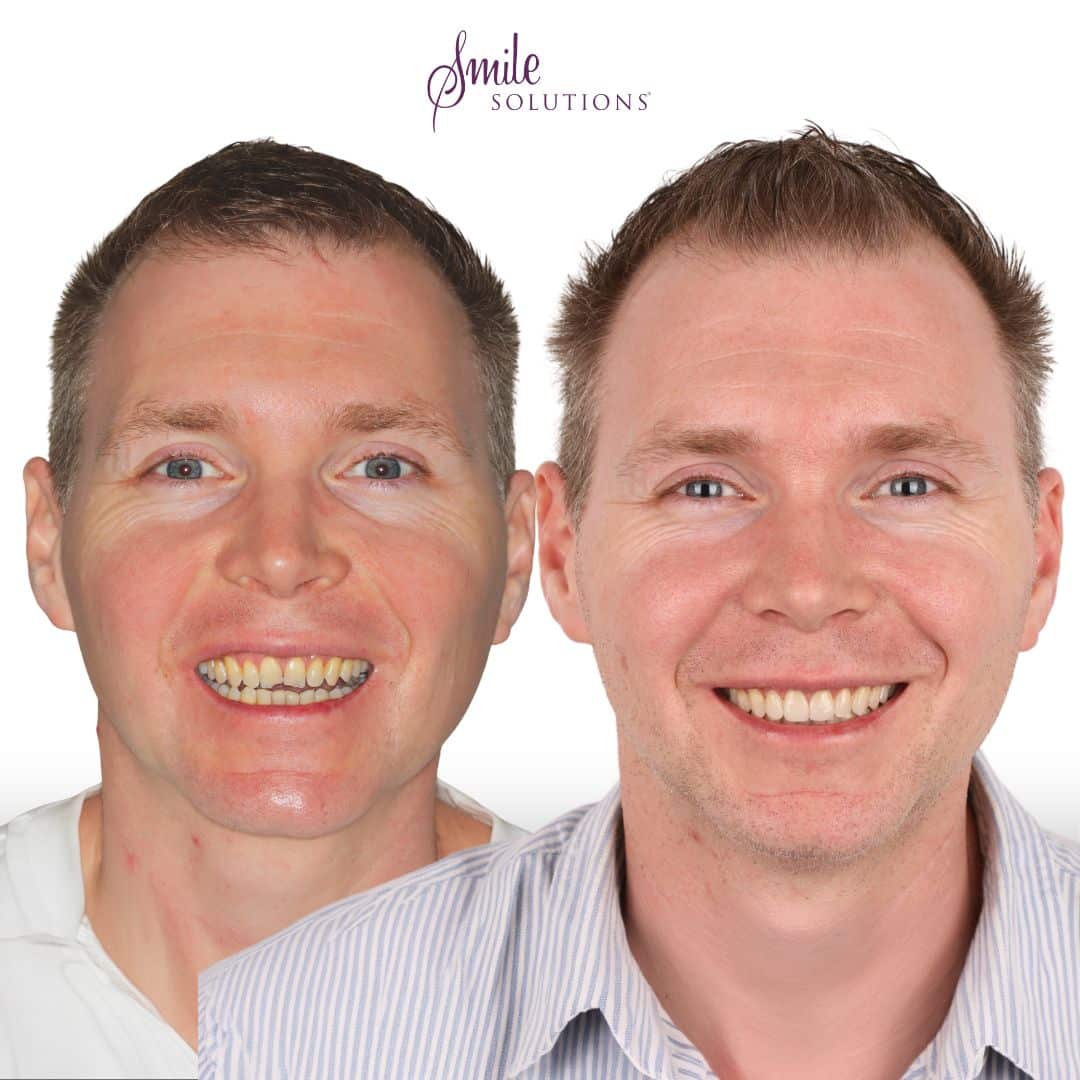
The practice publishes clinical photographs of his porcelain veneer and bridge work — see the Before and After Gallery.
Articles by Dr Henderson
He has written six of the practice's articles:
- How can I improve my smile with porcelain veneers and crowns?
- How long do porcelain veneers last?
- I need a smile makeover. What's involved?
- What's new in cosmetic dentistry?
- Porcelain fillings and composite fillings: What are the differences and costs involved?
- Diabetes and oral health
What a general dentist does
A general dentist holds general registration with the Dental Board of Australia and provides examination and diagnosis, radiographs, cleaning and gum treatment, fillings, inlays, onlays, crowns and bridges, root canal treatment, extractions including wisdom teeth, dentures, implant restorations, whitening and cosmetic treatment, and referral to specialists where a case sits outside general practice.
A general dentist is not a specialist. Specialist titles are protected under the Health Practitioner Regulation National Law and require specialist registration following three years of full-time postgraduate university training. Long experience in an area does not confer it. See Why would I need to see a dental specialist?
Adhesive ceramics: why they changed restorative dentistry
For most of the twentieth century, a restoration stayed in a tooth because of its shape — the cavity had to be cut with undercuts and parallel walls to grip the filling mechanically. That meant removing sound tooth structure purely for retention.
Adhesive dentistry changed the arithmetic. Modern ceramics and composites bond chemically and micromechanically to enamel and dentine, so:
- Preparations can be far more conservative. Only what is diseased or unsupported needs to come out. See Composite Bonding and Dental fillings: porcelain, amalgam or composite resin?
- Bonded ceramic reinforces the remaining tooth rather than simply occupying a hole, which matters for cracked and heavily restored teeth. See How will my cracked tooth be treated?
- Partial-coverage restorations became practical. An onlay covering one weakened cusp is now a genuine option where a full crown would once have been the only choice. See What types of dental crowns are available? and Same-Day CEREC Restorations
Caveats worth stating:
- Bonding to enamel is reliable; bonding to dentine is less so and degrades over time. This is why a preparation that keeps an enamel margin performs better.
- The technique is unforgiving. Adhesive restorations require isolation from saliva — often with rubber dam — and careful sequencing. Done poorly, they leak.
- Nothing here makes a restoration permanent. Bonded ceramic still chips, debonds and wears, and every restoration eventually needs replacing. See How long do dental fillings last?
On where the field is going more broadly, see his own What's new in cosmetic dentistry? and Our Technology.
Porcelain veneers and bridges
Veneers
- They are irreversible. Preparing a tooth removes enamel that does not grow back; that tooth needs a veneer or crown for life. Some cases can be done with minimal or no preparation — ask specifically which applies to yours. See What happens to my teeth after dental veneers, and will I ever get cavities?
- They are not permanent. Veneers chip, debond and stain at the margins. Commonly cited service lives fall in the ten-to-fifteen-year range, with wide individual variation. See How long do porcelain veneers last?
- Gum health governs the appearance. A margin sitting on inflamed or receding gum looks wrong regardless of the porcelain. See Bleeding Gums and What Is Gum Disease?
- Consider orthodontics first where the problem is alignment rather than colour or shape. See What are my options if I want to change the shape of my teeth?
- Untreated grinding will break them. A night guard is usually part of the plan. See TMD and Teeth Grinding and What is bruxism and how is it managed?
- Whitening comes before veneers. Porcelain does not lighten. See What should I know about teeth whitening?
Where several of these come together, the planning sequence is set out in his I need a smile makeover. What's involved?, with Mock-up Reveal as the step that should come before anything irreversible.
Bridges
A conventional bridge replaces a missing tooth by crowning the teeth either side and suspending a false tooth between them.
- It requires cutting down healthy neighbouring teeth, which is its main disadvantage. If those teeth are already heavily restored, that cost is low; if they are pristine, it is high. See I'm looking to get a dental bridge to replace a tooth. What are the different types and how do I choose?
- A resin-bonded (Maryland) bridge avoids most of that, bonding a wing to the back of one adjacent tooth. It is far more conservative and suits a single missing front tooth in a favourable bite, but it debonds more readily.
- An implant replaces the tooth without touching the neighbours, and is usually the better long-term answer where bone and general health allow. It costs more and takes months. See Implant versus bridge for a single tooth replacement and What are the replacement options for missing teeth?
- Bridges are harder to clean. They need threading floss or interdental brushes underneath, and failure is usually decay in an abutment tooth, not the bridge itself breaking. See Is flossing really that important?
Diabetes and dental treatment
Dr Henderson has written on this, and it changes both risk and planning: poorly controlled diabetes worsens gum disease, slows healing after surgery and raises the risk around implants, while treating gum disease can improve glycaemic control. See Diabetes and oral health, Diabetes and Dental Health: The Two-Way Street That Most People Don't Know About and Specialist Periodontists.
Reading a clinical photo gallery
Australian law sets specific requirements for before-and-after images used by regulated health services. They must be realistic and comparable — same view, same lighting, no digital alteration — must state that individual results vary, and must not create an unreasonable expectation of benefit. Testimonials about clinical care are prohibited in advertising a regulated health service in Australia, so a gallery should show work, not patient endorsements.
When looking at any practitioner's gallery, the useful questions are: how long after treatment was the photograph taken, was the case typical, and what maintenance has the result needed since. A photograph taken two weeks after treatment shows the result at its best; it says nothing about how it looks at ten years. See the Before and After Gallery and I want a smile makeover. Where should I start?
Registration
Dentists are one of the registered dental practitioner divisions under the National Law. The Dental Board of Australia registers dentists, dental specialists, dental hygienists, dental therapists, oral health therapists and dental prosthetists. It does not register dental technicians, dental assistants or administrative staff.
Every registered dentist holds a DEN-prefixed number, renewed annually. Conditions, undertakings and reprimands appear on the public register.
Common questions
What does the published research actually report about how long veneers last?
It reports survival percentages at follow-up points, not a lifespan. That distinction is the whole answer, and it is worth understanding before any number is quoted at you.
The largest systematic review of porcelain laminate veneers pooled 25 studies covering 6,500 veneers and found that ‘the 10-year estimated cumulative survival rate (CSR) of PLVs was 95.5%' when fracture, debonding, secondary decay and severe discolouration were all counted as failure (European Journal of Dentistry, 2021). One caveat from the review itself matters as much as the figure: survival counts the veneer as still in service, including ones that were repolished or repaired — it does not mean 95.5 per cent still looked as they did on the day they were fitted.
For resin composite veneers, a 2023 meta-analysis in the Journal of Evidence-Based Dental Practice reported a ‘pooled survival rate of the randomized controlled trials was 88% (95% CI: 81%-94%)', over follow-up periods of roughly two to eight years. The two numbers are not directly comparable — different materials, different follow-up windows, different definitions of failure.
What no authority publishes is a single figure in years. Ask instead for the two things that do predict your own result: what is being counted as failure, and what in your own mouth — grinding, the bite, gum health, how much enamel is left to bond to — moves you away from the average. See How long do porcelain veneers last?
How much tooth actually gets removed for a veneer, compared with a crown?
This is the question worth asking before consenting to anything, because it is the part that cannot be undone.
The paper most often cited for it measured preparation designs on artificial (typodont) anterior teeth and weighed what was removed. Its finding: ‘the amount of tooth structure removal for the preparation designs increased in the following order (mean % of typodont teeth): A1 (5.2), V1 (8.2), A3 (14), V2 (16.7), V3 (22.1), V4 (30), F1 (64), F2 (70), and F3 (71.9)'. In plain terms — a partial porcelain laminate veneer removed about 8.2 per cent of the tooth, a complete veneer preparation about 30 per cent, and full-coverage crown preparations between 64 and 71.9 per cent (Edelhoff & Sorensen, Journal of Prosthetic Dentistry, 2002).
Two honest caveats: this was an in vitro study on resin teeth, not a clinical trial, and it covers front teeth only. It does not transfer to molars. What it does establish is the order of magnitude, and it is large enough to change a decision — which is why ‘could this be done as an onlay, a partial veneer, or with no preparation at all?' is a fair question to put before a crown is agreed to. See Porcelain Veneers and What types of dental crowns are available?
Composite bonding or porcelain — how do I choose?
They fail differently, and that is usually the deciding factor rather than appearance.
A head-to-head analysis reported in the veneer literature gives composite a hazard ratio for failure of 4.00 (95% CI 2.74–5.83) against ceramic for survival, with annual failure rates of about 9.1 per cent at five years and 10 per cent at ten years for composite, against roughly 2.9 per cent and 2.8 per cent for ceramic (Mazzetti et al., 2022, as reported in the composite veneer meta-analysis). On those numbers ceramic lasts longer.
The case for composite is not durability. It is that it removes less tooth or sometimes none, that it costs less, that it can be repaired directly in the chair rather than remade in a laboratory, and that it can be undone in a way that a prepared veneer cannot. For a young patient, an uncertain aesthetic goal, or a single chipped edge, those advantages can outweigh the survival difference; for a full upper arch in a settled adult bite, they may not.
What should decide it is a stated plan for what happens when it fails, because both will. See Composite Bonding, Porcelain Veneers and the Price Guide.
What should happen before anything irreversible is done?
In roughly this order, and it is reasonable to insist on it.
Stabilise the mouth first. Active decay and gum inflammation are treated before cosmetic work, not after — the appearance of any veneer or crown margin is governed by the gum it sits against. Whiten first if whitening is part of the plan, because porcelain does not lighten afterwards. Deal with grinding, since untreated bruxism breaks ceramic.
Then see the result before it is cut for. A diagnostic wax-up or a trial mock-up lets you look at the proposed shape in your own mouth, and is the stage at which changing your mind costs nothing — see Mock-up Reveal. Ask which preparation design is proposed, in the terms of the question above.
Get the plan in writing, with the alternatives in it, including the option of doing less or nothing for now, and what the maintenance and eventual replacement will involve. A second opinion before irreversible work is an ordinary thing to seek and not an insult to anyone — see Second Opinions and Corrective Dentistry and Understanding Your Treatment.
Practical details
Dr Henderson's registration can be checked on the AHPRA public register at ahpra.gov.au. For questions about consultation or a cosmetic appointment, see Contact Us. The full clinical team is on Our Team, and published fees in the Price Guide.
The practice offers a complimentary cosmetic consultation. Confirm the current terms when you book — what the appointment includes, whether records such as scans or radiographs are part of it or charged separately, and whether any deposit applies.
Smile Solutions, Level 1, 220 Collins Street, Manchester Unity Building, Melbourne VIC 3000. Phone 13 13 96, or theteam@smilesolutions.com.au. Monday–Friday 8.00am–6.00pm, Saturday 8.30am–1.30pm, Sunday by appointment. Location and directions.
Sources for the externally verifiable statements in the questions above
- AlJazairy YH, Survival Rates for Porcelain Laminate Veneers: A Systematic Review, European Journal of Dentistry 2021 — 25 studies, 6,500 veneers, 10-year cumulative survival 95.5%.
- Lim TW et al., Survival and Complication Rates of Resin Composite Laminate Veneers: A Systematic Review and Meta-Analysis, Journal of Evidence-Based Dental Practice 2023 — pooled survival 88% (95% CI 81–94%), and the Mazzetti 2022 hazard ratios and annual failure rates reported within it.
- Edelhoff D, Sorensen JA, Tooth structure removal associated with various preparation designs for anterior teeth, Journal of Prosthetic Dentistry 2002;87(5):503-509 — in vitro, typodont, anterior teeth.
This page records qualifications and career history as published by the practice. General information only — it is not a diagnosis, a treatment plan or a promise of any particular clinical outcome. Results, recovery times and risks vary between individuals and procedures.
Smile Solutions trades under ABN 28 193 514 103.
Images on This Page
-
https://www.facebook.com/tr?id=800557773428361&ev=PageView&noscript=1
(no alt text)
-
https://www.smilesolutions.com.au/wp-content/uploads/2025/10/calendar_month.svg
(no alt text)
-
https://www.smilesolutions.com.au/wp-content/themes/arcadian-wordpress-theme/assets/images/smile_solutions_logo_white.png
Smile Solutions Logo
-
https://www.smilesolutions.com.au/wp-content/themes/arcadian-wordpress-theme/assets/images/smile_solutions_logo_purple.png
Smile Solutions Logo
-
https://www.smilesolutions.com.au/wp-content/uploads/2016/05/Peter.jpg
Dr Peter Henderson
-
https://www.smilesolutions.com.au/wp-content/uploads/2026/01/Smile-Solutions.jpg
Dentist assisting a patient in clinic.
-
https://www.smilesolutions.com.au/wp-content/uploads/2016/05/PETER-WEBSITE-BAs.jpg
PETER WEBSITE BAs
-
https://www.smilesolutions.com.au/wp-content/uploads/2016/05/PETER-WEBSITE-BAs-1.jpg
PETER WEBSITE BAs 1
-
https://www.smilesolutions.com.au/wp-content/uploads/2016/05/PETER-WEBSITE-BAs-2.jpg
PETER WEBSITE BAs 2
-
https://www.smilesolutions.com.au/wp-content/uploads/2016/05/WEBSITE-BAs.jpg
WEBSITE BAs
-
https://www.smilesolutions.com.au/wp-content/uploads/2026/04/PH-300x270.jpg
PH
-
https://www.smilesolutions.com.au/wp-content/uploads/2016/05/Peter-150x150.jpg
Dr Peter Henderson
-
https://www.smilesolutions.com.au/wp-content/uploads/2018/12/Dental-Filling-300x270.jpg
Dental Filling
-
https://www.smilesolutions.com.au/wp-content/uploads/2026/01/157-300x270.jpg
Brush and dental material close-up
-
https://www.smilesolutions.com.au/wp-content/themes/arcadian-wordpress-theme/assets/images/family_owned_bussiness.png
Family Owned Business
-
https://www.smilesolutions.com.au/wp-content/themes/arcadian-wordpress-theme/assets/icons/icon--phone.svg
Smile Solutions Contact
-
https://www.facebook.com/tr? id=800557773428361&ev=PageView&noscript=1
(no alt text)
-
https://bat.bing.com/action/0?ti=25148060&tm=gtm002&Ver=2&mid=cea5e59c-d663-4707-b2a2-7a5a2c9ec484&bo=1&sid=19c5ac00ab2911f1a81941b643d1a246&vid=19c5ea20ab2911f1bf99139f1c96ea7e&vids=1&msclkid=N&pi=918639831&lg=en-US&sw=800&sh=600&sc=24&nwd=1&tl=Dr%20Peter%20Henderson%20%7C%20General%20Dental%20Care%20%7C%20Smile%20Solutions&p=https%3A%2F%2Fwww.smilesolutions.com.au%2Four-team%2Fdr-peter-henderson%2F&r=&evt=pageLoad&sv=2&cdb=AQAQ&rn=8665
(no alt text)