What porcelain veneers actually are
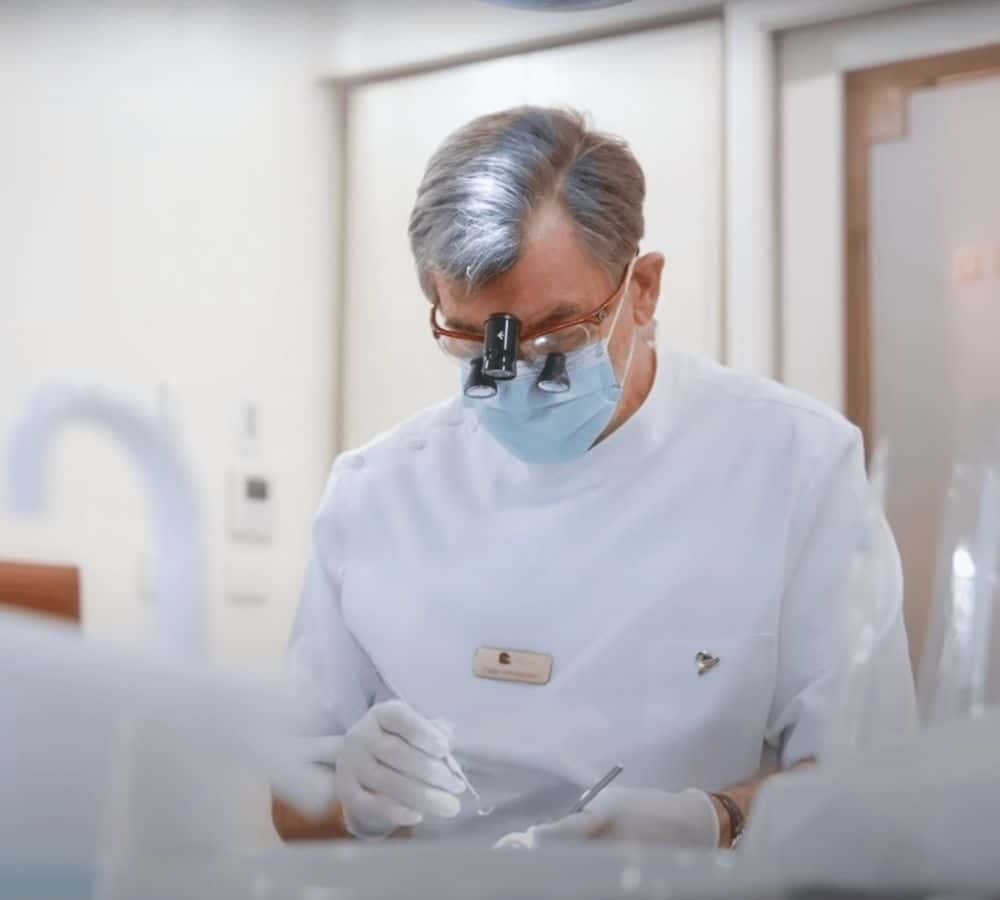
Dr Peter Henderson, who has extensive experience in cosmetic dentistry, answers the common questions. See Porcelain Veneers and Cosmetic Dentistry.
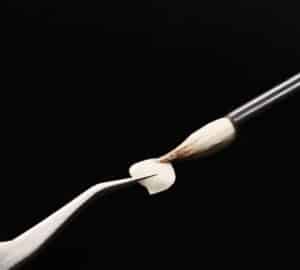
A porcelain veneer is a thin shell of porcelain, very powerfully bonded to the underlying tooth structure.
The comparison Dr Henderson uses: a bit like false fingernails for teeth — except that unlike false fingernails, porcelain veneers keep looking good year after year. They are among the more durable restorations available in dentistry. See How long do porcelain veneers last?.
It is not only the dentist involved in making them. Skilled dental ceramics artists create the porcelain from the clinical work the dentist supplies. Smile Solutions works with highly skilled Melbourne ceramists, because the laboratory work determines a large part of the result — the clinician can only specify what they want; someone else has to build it. See Smile Solutions Laboratory.
That division of labour is worth knowing about as a patient. When you compare veneer quotes, part of what differs is the laboratory, and that is not visible on a price list. See the Price Guide, and — for what happens when the laboratory and the follow-up are on the other side of the world — Turkey teeth: the real risks of getting veneers overseas.
Can veneers straighten crooked teeth?
Yes — within limits, and the limits are the important part.
If teeth are crooked in a minor or moderate way, they can often be quite effectively straightened using porcelain veneers and crowns.
If teeth are significantly out of position, orthodontics are still necessary. A range of orthodontic solutions is available for those cases — see Invisalign, Orthodontic Braces and How do I know which orthodontic treatment is best for me?.
The reason the line exists: a veneer changes the outward face of a tooth, not its position in the bone. To make a badly rotated tooth look straight, you have to remove substantial tooth structure from the part that sticks out — and past a certain point that means removing more than is sensible, or ending up with a restoration that looks bulky. Orthodontics moves the tooth so the veneer does not have to compensate.
Where the two are combined, orthodontics generally comes first, precisely so that less tooth has to be removed at the veneer stage. See I want a smile makeover — where should I start? for how the sequence is built.
Where the change needed is smaller still, composite bonding and edge work do it with little or no preparation — see Bonding or veneers?.
What has changed over the last twenty years
Four developments, and they compound. See Technology.
Digital photography
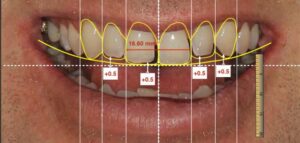
With a handful of standard digital photographs, your smile can be evaluated collaboratively with you. Photographs let you see details far more readily and dispassionately than a mirror does — which is genuinely useful, because most people cannot assess their own smile objectively in real time. See Before & After Gallery.
The photos can be emailed to the ceramics artist, so the laboratory work accurately reflects what was planned and specified. Fine details of shade, opacity, translucency and subtle optical nuances can be studied close up, so a veneer or crown can accurately mimic its neighbour where that is what is wanted.
As Dr Henderson puts it: all of this was possible before digital photography, but with much less convenience — and something that is not convenient is less likely to happen. That is an honest description of how most clinical improvement actually works.
The same principle underlies the wearable preview — see The Mock-Up Reveal and The mock-up reveal: why you should see your new smile before any treatment begins.
New ceramics: lithium disilicate
For several years the profession has had lithium disilicate — trade name e.max — which is much stronger than previous fully bondable ceramics, without any noticeable deficit in beauty.
Two properties matter:
Masking. Unlike many ceramics used for veneers, a reasonable degree of masking can be built into this material. That increases the number of situations where tooth-conserving veneers can still be used over relatively dark, discoloured teeth — cases that previously needed a crown, or more aggressive preparation, to hide the underlying colour. Where the discolouration can be lightened chemically instead, that is better still: see Teeth Whitening and How can I improve the whiteness of my teeth?.
Strength, which delivers two distinct benefits:
- Longevity of function
- Ease of handling by the dentist and assistant
That second one sounds trivial and is not. Older veneers were strong once bonded, but delicate to handle beforehand — often only 0.3mm to 0.5mm thick. A veneer that might break if mishandled is intimidating to work with and a major inconvenience to everyone if it breaks, since it means remaking it and another appointment. Dr Henderson notes he cannot remember ever having broken an e.max veneer before bonding.
Once in the mouth, the main threat to any ceramic is grinding — see TMD and Teeth Grinding and Chipped and Cracked Teeth.
Improved bonding cements
Bonding cement is the glue that holds a veneer powerfully to the tooth, and its development changed the fitting appointment.
It is now possible to “try in” a veneer that has already been surface-treated ready for bonding, using a trial cement accurately matched for colour and translucency and chemically and optically almost identical to the final cement — the only difference being that it does not set hard under the curing light.
Once the try-in is successfully completed, the trial cement is simply wiped off and the final cement placed.
Why this matters to you rather than to the dentist: it means the shade you see at try-in is the shade you get. Cement colour genuinely shifts the appearance of a thin veneer, and previously that was a prediction rather than a demonstration. It also saves a large amount of chair time — and time saved by the dentist is time you are not sitting in the chair. For anyone who finds that the hard part, see Dental Anxiety.
Bonding strength depends on enamel, which is one reason veneers are not right for every tooth — see What is the difference between porcelain crowns and veneers?.
Placement and finishing
With techniques from visiting overseas lecturers, methods worked out in practice, and a super-intense hardening light, the cementation process has become faster and easier. Where the case allows it, the whole thing can now sometimes be done in one visit — see Same-Day Porcelain Veneers and The case for same-day porcelain veneers.
Whitening comes first, and the concentration is set by law
Where a tooth is discoloured rather than misshapen, lightening it is the more conservative option, because it removes nothing. There is also a sequencing reason: a veneer shade is chosen to match the teeth around it, so those teeth have to be the colour you intend to keep before the ceramist is given a target. Porcelain does not respond to bleach afterwards — which is the whole subject of I want to whiten my teeth but one of my front teeth has a porcelain crown. What are my options?.
The strength of the product is not a matter of preference. Schedule 10 of the Poisons Standard lists substances “of such danger to health as to warrant prohibition of their sale, supply and use other than in specified exempt circumstances”, and high-concentration tooth whitening sits in it. The Australian Dental Association states that Schedule 10 “specifically states that teeth whitening products containing more than 6% hydrogen peroxide or 18% carbamide peroxide may only be sold, supplied and used by registered dental practitioners” as part of their dental practice, and that “these provisions are formalised in all state and territory poisons legislation”. The same document explains the conversion: “18% carbamide peroxide approximates 6% hydrogen peroxide”, one-third of a carbamide concentration being equivalent to hydrogen peroxide.
That threshold is why a pharmacy or online kit is a materially different product from an in-chair one rather than simply a cheaper version of it — see Difference between pharmacy whitening kits and dentist whitening?, Home whitening and charcoal whitening — does it work? Is it safe? and Why should I go to a dentist for teeth whitening?. For how long the result holds before a shade target is worth setting, see How long do teeth whitening effects last? and What should I know about teeth whitening?.
What a before-and-after gallery can and cannot tell you
This page links to a gallery, and it is worth being exact about what Australian law permits such a page to contain — because the restrictions explain why it looks the way it does.
Advertising a regulated health service is governed by section 133 of the National Law. AHPRA’s guidelines set out that s.133(1)(c) prohibits advertising that “uses testimonials or purported testimonials about the service or business”, and define a testimonial as “recommendations or positive statements about the clinical aspects of a regulated health service used in advertising”. A statement is clinical if it expresses a symptom — “the specific symptom or the reason for seeking treatment” — a diagnosis or treatment, or an outcome, which AHPRA describes as “the specific outcome or the skills or experience of the practitioner either directly or via comparison”. Comments about customer service or communication style that do not reference a clinical aspect are not testimonials for this purpose.
AHPRA identifies the risk of harm as greatest where such advertising “creates an unreasonable expectation of beneficial treatment”, encourages the unnecessary use of regulated health services, or is misleading — including where it is “selectively published or edited”.
So what a gallery can honestly show you is what this kind of work looks like on someone else’s teeth, lips and face when it goes well. What it cannot give you is a prediction about your own, and no practice in Australia is permitted to offer you one. The step that does address your own mouth is the wearable preview, where the proposed shape sits on your teeth before anything is prepared — see The Mock-Up Reveal and Understanding Your Treatment.
If you already hold a plan and want it looked at independently, Second Opinions & Corrective Dentistry exists for that, and registration and specialist status can be checked on the public register — see Dentists & Registered Specialists.
Before any of it
Whatever the material, the foundation has to be sound first: decay treated, gums healthy, bite assessed. See General Dentistry, Tooth Fillings, Bleeding Gums and Dental Cleans & Hygienists. For complex combined cases, Cosmetic Dentistry Under Specialist Care and Prosthodontists.
Common questions
How long do porcelain veneers actually last?
There is no Australian-authority figure for this. healthdirect, the Australian government health service, goes no further than "veneers should last for years" and attaches no number; the Australian Dental Association publishes none either. Any single confident lifespan quoted to you in Australia is somebody's clinical experience, not a published national figure — which is fine, provided it is described that way.
The international literature does publish numbers, and they disagree with each other:
- A systematic review of 25 studies covering 6,500 porcelain laminate veneers reported a 10-year estimated cumulative survival rate of 95.5%, counting fracture, debonding, secondary decay and loss of the restoration as failure. In total 433 of the 6,500 failed on those criteria. Looked at one failure mode at a time the same analysis is higher still — around 99.2% for debonding alone at 10 years.
- A second systematic review of the same question found that studies with 10 to 12 years of follow-up reported survival between 53% and 94.4%. That range is not a measurement error; the reviewers note that "failure" is defined differently across studies, from loss of function to any observable defect.
- Individual cohorts illustrate the spread: one reports Kaplan–Meier survival of 94.4% at 5 years, 94.1% at 8, 93.5% at 10, 85.7% at 15 and 82.9% at 20. An Australian prospective cohort reports 98% at 5 years, 96% at 10, and 91% at both 15 and 20 years.
The honest summary: for well-selected teeth the ten-year picture in the published work is good, and some cohorts are still reporting most veneers in service at twenty years — but the studies are not measuring the same thing, and the figure you should care about is the one your own dentist can give you from their own hands, along with what happens when one does fail.
What actually goes wrong when a veneer fails?
Two things, in a consistent order, and knowing which one is which changes what you ask about.
Fracture is the most common failure, followed by debonding. One review of more than 6,500 veneers found that, of the debonding failures, most happened within two years of cementation — so a veneer that comes off tends to do it early, not at year nine.
What the failures have in common is what the veneer is bonded to. The literature is consistent on this: "high failure rates in porcelain laminate veneers have been associated with largely exposed dentin surfaces", because dentine bonding relies on organic components and is more prone to microleakage and debonding than bonding to enamel. A review of veneer preparation concluded that "there is reasonable evidence indicating that a veneer preparation into dentin adversely affects survival" and that "the ideal preparation for porcelain veneers remains within enamel". The long-running Australian cohort quoted above is instructive here for a reason that is easy to miss: only teeth with at least 80% enamel remaining were veneered in it. Good numbers came from careful case selection, not only from careful hands.
Two patient factors also show up in the data. Reviews report a significantly higher failure rate in bruxers — people who grind or clench — and significantly higher marginal discolouration among smokers.
So the questions worth asking are: how much of my preparation will stay within enamel, how much enamel do these teeth have left, and do I grind. See What is bruxism and how is it managed?
If I don't like them, can they be taken off?
No. healthdirect puts it in a single sentence: "Your dental professional fixes veneers to the surface of your teeth. You can't take veneers off." Where a veneer is removed, what is underneath is a prepared tooth, and something has to go back on it.
The same source lists the possible risks, and they are worth reading before the first appointment rather than after: jaw pain; the veneer could crack or fall off; your teeth could become more sensitive because some enamel is removed; if your gum shrinks, the edges of the veneers may be seen; the colour of your veneers can't be changed after they've been applied; your other teeth may become discoloured, no longer matching your veneers. It also draws the boundary of what the treatment does: "veneers don't fix tooth decay or problems with your bite."
There is a real tension in the published material worth naming. The ADA's consumer page describes veneers as "very thin, meaning not much or no tooth structure has to be cut away" — accurate for minimal-preparation and no-preparation designs, and not a description of conventional preparation. How much tooth is removed depends on the preparation design chosen, which is why "how much of my tooth is coming off, and can you show me?" is the question to ask before anything is prepared. The wearable preview described above is where that conversation belongs.
Will they still match my other teeth in ten years?
Not necessarily, and this is a maintenance question rather than a quality one. healthdirect names it directly as a risk: "your other teeth may become discoloured, no longer matching your veneers" — and, because "the colour of your veneers can't be changed after they've been applied", the natural teeth are the ones that move.
The ADA makes the same point about restorations generally: "having a crown, bridge or veneer does not mean no treatment will ever be needed again for the tooth or teeth", and "sometimes crowns, bridges and veneers can chip, fracture or no longer match the colour of your teeth and need to be replaced." healthdirect's own care section adds that "veneers may need to be replaced due to chips, fractures or changes in colour over time."
The practical consequences follow from that, and they are all things to settle in advance. Whitening the natural teeth to the shade you intend to keep, before the ceramist is given a target, as set out above. Avoiding the staining habits that move the natural teeth away from the veneers — see what impact does wine have on my teeth?. And asking, at the planning stage, what replacing one veneer in the middle of a set would involve, because shade-matching a single new unit against ageing neighbours is a harder job than making a set together.
How do I care for them once they are on?
Ordinarily, which is the part people find surprising. healthdirect's instruction is that "you'll need to brush and floss your teeth with veneers the same as you do for natural teeth", and that regular visits to your dental professional are also important. The ADA says the same of crowns, bridges and veneers together: brush twice per day with fluoride toothpaste and clean between your teeth every day.
Two additions that are specific rather than general. healthdirect notes your dental professional may ask you to come back after a couple of weeks to check the veneers — worth keeping, because it is the appointment at which an early bonding or margin problem is cheapest to deal with. And if you grind, the nightguard discussed above is part of the plan rather than an optional extra, for the reason the failure data gives.
The underlying tooth is still a tooth. It can still decay, and the gum around it can still become inflamed — so the recall interval matters as much after the work as before it. See Dental Cleans & Hygienists and what is the ideal daily routine for oral hygiene?
A note on what is sourced here and what is not
The regulatory material on this page is drawn from published, independent documents:
- Australian Dental Association, Policy Statement 2.2.8 — Teeth Whitening (Bleaching), on Schedule 10 of the Poisons Standard and the 6% hydrogen peroxide / 18% carbamide peroxide threshold.
- AHPRA, Guidelines for advertising a regulated health service, section 4.3, on testimonials and clinical aspects.
The survival figures, failure modes and risk factors in the questions above come from published systematic reviews and cohort studies of porcelain laminate veneers, together with healthdirect Australia (reviewed February 2025) and the Australian Dental Association's consumer guidance on crowns, bridges and veneers. They describe results published elsewhere, not results at this practice, and none of them is a prediction about any individual case.
The rest of this page — what veneers are made of, how thick they are, how they are bonded, and when they can substitute for orthodontics — is the clinical account of the authoring dentist and this practice. Where you see a number that is not attributed above, such as the 0.3mm to 0.5mm thickness of older veneers, it is clinical experience rather than a published measurement.
If longevity is the question you actually came with, ask your dentist for the figures from their own hands as well as the published ones, and ask what happens when a veneer fails — because that, not the first result, is what the decision turns on.
Practical details
Written by Dr Peter Henderson. Registration can be verified free on the AHPRA register, or by calling 1300 419 495; the clinicians are listed on Our Team.
Smile Solutions, Level 1, 220 Collins Street, Manchester Unity Building, Melbourne VIC 3000. Phone 13 13 96, or theteam@smilesolutions.com.au. Monday–Friday 8.00am–6.00pm, Saturday 8.30am–1.30pm, Sunday by appointment. Full details on Contact Us.
Published 28 November 2018. Veneers and crowns require permanent removal of tooth structure; suitability, longevity and results vary between individuals and all cosmetic treatment carries risks that should be discussed with your dentist. General information only; it does not replace advice from your treating practitioner.
Smile Solutions trades under ABN 28 193 514 103.
Images on This Page
-
https://www.facebook.com/tr?id=800557773428361&ev=PageView&noscript=1
(no alt text)
-
https://www.smilesolutions.com.au/wp-content/uploads/2025/10/calendar_month.svg
(no alt text)
-
https://www.smilesolutions.com.au/wp-content/themes/arcadian-wordpress-theme/assets/images/smile_solutions_logo_white.png
Smile Solutions Logo
-
https://www.smilesolutions.com.au/wp-content/themes/arcadian-wordpress-theme/assets/images/smile_solutions_logo_purple.png
Smile Solutions Logo
-
https://www.smilesolutions.com.au/wp-content/uploads/2016/05/Peter-150x150.jpg
Dr Peter Henderson
-
https://www.smilesolutions.com.au/wp-content/uploads/2026/04/PH.jpg
How can I improve my smile with porcelain veneers and crowns?
-
https://www.smilesolutions.com.au/wp-content/uploads/2018/12/Dental-Filling-300x270.jpg
Dental Filling
-
https://www.smilesolutions.com.au/wp-content/uploads/2026/01/157-300x270.jpg
Brush and dental material close-up
-
https://www.smilesolutions.com.au/wp-content/uploads/2017/06/whats-new-in-cosmetic-dentistry-300x143.jpg
whats new in cosmetic dentistry
-
https://www.smilesolutions.com.au/wp-content/themes/arcadian-wordpress-theme/assets/images/family_owned_bussiness.png
Family Owned Business
-
https://www.smilesolutions.com.au/wp-content/themes/arcadian-wordpress-theme/assets/icons/icon--phone.svg
Smile Solutions Contact
-
https://www.facebook.com/tr? id=800557773428361&ev=PageView&noscript=1
(no alt text)