Oral Health, Wellness and Longevity
Does oral health really affect how long I live?
The evidence says it is associated with it, and more strongly than most people expect.
For many years dentistry focused primarily on treating teeth. Research over the past two decades has linked chronic oral inflammation with cardiovascular disease, diabetes, dementia, adverse pregnancy outcomes and respiratory illness. Oral health also determines your ability to eat a nutritious diet, breathe well, sleep well, and maintain quality of life as you age.
This page sets out that evidence in plain language, and how a proactive multidisciplinary approach responds to it.
Smile Solutions is at Level 1, 220 Collins Street, Manchester Unity Building, Melbourne CBD.
The research on teeth and life expectancy
A landmark study published in the Journal of Dental Research found that people who had lost all their teeth had a 30% higher risk of death than those who retained most of their natural teeth. The finding held after adjusting for socioeconomic factors and general health status.
Researchers at Boston University followed thousands of men over many years and found those with periodontal disease were at significantly greater risk of dying earlier than peers with healthy gums — a finding informally summarised in the medical community as "floss or die".
A 2026 Japanese longitudinal study tracking older adults found poor oral health was among the strongest predictors of both mortality and the need for residential nursing care, outweighing many other commonly cited risk factors.
None of this is cause for alarm. It is cause for action — these are modifiable factors, and acting earlier improves the odds.
How oral health affects the rest of the body
Your mouth is the entry point for everything entering your body, and home to over 700 species of bacteria — most harmless, some not. When the balance tips through gum disease, infection or chronic inflammation, the consequences extend beyond the teeth.
Gum disease is common, and largely hidden. A review of periodontitis and diabetes published in Diabetologia (Preshaw and colleagues) records severe periodontitis — the form that threatens tooth retention — as "affecting 10–15% of adults in most populations studied", with moderate periodontitis "affecting 40–60% of adults", and describes it as "a highly prevalent, but largely hidden, chronic inflammatory disease". It also names smoking as "a major risk factor" that increases both the risk and the severity.
Heart disease
Bacteria from infected or inflamed gums can enter the bloodstream and travel to the heart and arteries. Research published in the American Heart Association's journal has identified periodontal bacteria embedded within cardiovascular plaque — the same plaque contributing to heart attack and stroke. The relationship is now considered significant enough that cardiologists and periodontists are beginning to coordinate care.
Diabetes
The connection runs in both directions, and it is the best-evidenced link on this page.
The Diabetologia review reports that the risk of periodontitis is increased by approximately threefold in people with diabetes, and that the level of glycaemic control is what determines that increased risk: in the US National Health and Nutrition Examination Survey (NHANES III), adults with an HbA1c above 9% had a significantly higher prevalence of severe periodontitis than people without diabetes — odds ratio 2.90, 95% CI 1.40 to 6.03, after controlling for age, ethnicity, education, sex and smoking. Running the other way, treating periodontitis is associated with an HbA1c reduction of approximately 0.4%. The Cochrane meta-analysis behind that figure pooled three studies and reported a mean difference of −0.40% (95% CI −0.78% to −0.01%, n = 244), measured 3 to 4 months after conventional periodontal therapy.
Diabetes Australia states the limit of that finding plainly. Professional periodontal treatment, it says, "has been shown to create a mild improvement in blood glucose levels", but "these results lasted for only a short three-month period of time (longer term studies are ongoing)". It also records the encouraging half of the two-way street: with optimum blood glucose management, the risk of developing periodontitis is the same as for a person without diabetes. The relationship is set out at length in diabetes and dental health.
Dementia and Alzheimer's disease
The National Institute on Aging published a large study linking chronic gum disease with a measurably elevated risk of dementia. Separately, in 2019, researchers writing in Science Advances reported finding Porphyromonas gingivalis — a key bacterium associated with gum disease — in the brain tissue of patients with Alzheimer's disease. The mechanism is still being studied, but the association has been replicated across multiple research groups.
Pregnancy
Multiple studies associate periodontitis with preterm birth and low birth weight. For women who are pregnant or planning a pregnancy, a periodontal assessment is increasingly considered part of comprehensive prenatal care — see oral health care while pregnant.
The oral–gut axis
A healthy oral microbiome is a foundation of lifelong health. Reducing harmful bacteria, treating chronic infection and maintaining healthy gums lowers the bacterial burden in the mouth and supports a healthier environment overall.
Pillar 1: Oxygen, breathing and sleep
How well you breathe — particularly while asleep — affects every system in your body. Obstructive sleep apnoea, bruxism and temporomandibular dysfunction are among the most common, and most treatable, dental causes of disrupted breathing and poor sleep.
Untreated, these have been linked to cardiovascular disease, hypertension, stroke, type 2 diabetes, depression, anxiety and cognitive decline. In children, untreated airway problems can affect normal facial growth and may contribute to symptoms resembling ADHD.
Conditions addressed: obstructive sleep apnoea, upper airway resistance syndrome, snoring, bruxism, TMD, jaw clenching and muscle tension, disrupted REM/non-REM cycles, chronic intermittent hypoxia, and paediatric sleep-disordered breathing (a distinct presentation from adults).
Diagnostics: TMJ and muscles of mastication examination, occlusal analysis, EMG muscle mapping, bite force analysis and occlusal heat mapping, CBCT 3D airway imaging, polysomnography.
Treatments: optimisation of occlusion during function; occlusal equilibration and removal of non-working side interferences; establishing stable centric occlusion; mandibular advancement splints; bruxism splints; adult orthodontic arch expansion; early paediatric jaw expansion for airway development; corrective jaw surgery; myofunctional therapy; osteopathic treatment; laser airway reshaping.
Grinding and sleep apnoea are often spoken about as though one proved the other. They should not be. A 2024 systematic review and meta-analysis in Sleep Medicine Reviews, covering 14 studies, found no significant difference in the odds of sleep bruxism between people with obstructive sleep apnoea and controls (OR 1.23, 95% CI 0.47 to 3.20), and no increase with apnoea severity. Its authors note the quality of the included studies is low and that further research is needed — and that their finding "should not exempt clinicians from exact diagnosis of concomitant sleep conditions" in people who do have apnoea. The two conditions can co-occur; a causal link in adults has not been demonstrated.
The team: sleep physicians, the TMD clinic, specialist prosthodontists, specialist orthodontists, oral and maxillofacial surgeons, osteopaths, myofunctional therapists and specialist paediatric dentists.
Home care may include wearing prescribed splints, nasal breathing retraining, nasal dilators, postural pillows, heat packs, jaw exercises, tongue posture training and sleep hygiene education. Mouth taping is used only where specifically indicated — it is generally not recommended for people with obstructive sleep apnoea, and requires clinical assessment and a sleep study first.
Pillar 2: A healthy oral microbiome
When the bacterial balance shifts toward harmful species — through gum disease, hidden infection, or failing restorations — the effects extend well beyond teeth and gums.
Conditions addressed: periodontal disease; hidden or silent dental abscesses; failing root canal infections; bacterial leakage from old restorations; oral dysbiosis; partially erupted wisdom teeth, which create anaerobic pockets; gum recession exposing root surfaces to bacterial adhesion.
That list is worth reading carefully, because most of those conditions are silent. A hidden abscess or a leaking margin under a twenty-year-old crown produces no symptoms at all until it does.
Diagnostics: periodontal probing and charting, microbiological flora analysis, bacterial culture and identification, CBCT imaging for hidden abscesses, root canal integrity assessment, marginal restoration assessment.
Treatments: ceramic restorations (CEREC same-day and Smile Lab handcrafted), dental implants, endodontic retreatment, Invisalign and orthodontic alignment, restoration of functional occlusion, impacted tooth removal.
The team: specialist periodontists, specialist endodontists, dental hygienists, oral health therapists and general dentists.
Home care: electric toothbrush, high-fluoride toothpaste where prescribed, interdental brushes, tongue scraping, and remineralising products such as Tooth Mousse.
Pillar 3: Functional restoration, occlusion and lifelong nutrition
This pillar gets the least attention and may matter most.
Your teeth are functional tools, and what those tools allow you to eat has a direct bearing on how well you age.
A full, functional dentition lets you eat nuts, seeds, raw vegetables, whole grains, lean meats and fibrous fruits — the foods research consistently links to longer, healthier lives. They all require chewing capacity.
As teeth are lost or deteriorate, people naturally and often unconsciously shift toward softer foods: processed carbohydrates, soups, white bread, overcooked vegetables. Easy to manage, calorie-dense, nutrient-poor. The nutritional quality of a person's diet often tracks closely with the condition of their dentition.
A study from Rutgers University found tooth loss is a significant indicator of malnutrition risk in older adults.
Reduced chewing ability can contribute to protein deficiency, muscle loss (sarcopenia) and increased cardiovascular risk. In older adults, maintaining a functional set of teeth is closely linked to independence, good nutrition and quality of life.
The Diabetologia review makes the same point from the other direction, describing periodontitis as having "negative and profound impacts on many aspects of daily living and quality of life, affecting confidence, social interactions and food choices".
Conditions addressed: failing and leaking restorations, decay and structural loss, missing teeth, crowded and impacted teeth, malocclusion, TMJ deterioration, reduced chewing capacity, skeletal jaw discrepancies, dietary decline with ageing.
Diagnostics: full occlusal analysis, digital bite force mapping, CBCT 3D imaging, digital scanning, CEREC digital design, comprehensive treatment planning, nutritional impact assessment.
Maintenance: regular professional hygiene, a personalised home care regimen, dietary quality awareness, ongoing occlusal monitoring, and maintaining hard-food capacity — nuts, seeds, lean meats, raw vegetables.
Being able to bite into an apple and genuinely enjoy a nutritious meal at 80 the way you did at 30 is a quality-of-life outcome worth planning for.
How the three pillars connect
They are not independent:
- Sleep and breathing problems dry the mouth, shifting bacterial balance toward disease-causing species
- Chronic oral infection increases whole-body inflammation, compounding the cardiovascular stress of poor sleep
- Well-restored, aligned teeth are easier to keep clean — structural work directly supports microbiological health
- Proper bite alignment reduces grinding and opens the airway, supporting both sleep and long-term function
What a wellness consultation involves
A comprehensive assessment of your oral health, medical history and goals. Depending on need, this may include periodontal assessment, digital imaging, evaluation of teeth and existing restorations, assessment of bite and jaw function, and airway or sleep health.
From there, a personalised plan focused on reducing disease, preserving healthy teeth and supporting long-term health.
Who is involved
Depending on your needs: dental hygienists, general dentists, board-registered specialist periodontists, orthodontists, prosthodontists, endodontists and oral and maxillofacial surgeons — plus the in-house osteopath, myofunctional therapist and naturopath, and, where appropriate, collaboration with your GP or a medical sleep physician.
An honest framing
Dental treatment is not a cure for medical conditions, and maintaining good oral health cannot on its own prevent heart disease, diabetes or dementia.
Most of the evidence above is associational. Research of this kind establishes that two things occur together; it does not establish that one causes the other. Read the figures on this page as associated with, not caused by.
The strongest mortality finding that can be quoted here with its full conditions attached is the one the Diabetologia review describes: a prospective study of 628 Pima Indians aged 35 and over with type 2 diabetes, followed for a median of 11 years, in which — after adjustment for age, sex, diabetes duration, HbA1c, macroalbuminuria, BMI, cholesterol, hypertension, electrocardiogram abnormalities and smoking — those with severe periodontitis had 3.2 times the risk (95% CI 1.1 to 9.3) of cardiorenal mortality compared with those with no, mild or moderate periodontitis. That is one cohort, in one population, in people who already had diabetes. It is quoted with its conditions attached rather than as a general claim about gums and lifespan, and the same caution belongs on every figure in this field.
What the evidence supports is narrower and still worth acting on: reducing chronic oral inflammation and treating active dental disease are recognised components of overall health management, and preserving a functional dentition preserves your ability to eat well, sleep well and stay independent. The Diabetologia authors put the practical version of it this way: "Oral and periodontal health should be promoted as integral components of diabetes management."
Is this suitable for children?
Yes. Building healthy habits early provides the foundation for lifelong oral and general health. The team works with children and families on healthy jaw development, airway health, disease prevention and hygiene habits — and early intervention often reduces the need for more complex treatment later.
Common questions
My gums bleed when I brush. Is that normal?
No. Common, but not normal, and it is the symptom most often dismissed.
Bleeding on brushing is listed by Diabetes Australia among the signs of periodontal disease, and the Diabetologia review's description of advanced periodontitis includes gingival bleeding alongside recession, tooth mobility, drifting teeth and eventual tooth loss. The awkward part is the sequence: by the time those later signs appear, irreversible attachment and bone loss has already happened. The same review calls periodontitis "a highly prevalent, but largely hidden, chronic inflammatory disease" — hidden precisely because bleeding is mild, intermittent and easy to explain away as brushing too hard.
What not to do is stop brushing the area that bleeds. Inflamed gums bleed because they are inflamed, and leaving the plaque there makes it worse rather than better. Brush and clean between the teeth properly and gently, and if bleeding is still there after a couple of weeks, have it looked at rather than waiting for a scheduled visit.
What gets measured at that appointment is not how much it bled but how deep the pockets are and whether attachment has been lost, which is the difference between gum inflammation that fully reverses and gum disease that does not.
Do I need a special mouthwash or a probiotic for my "oral microbiome"?
Mouthwash has a place, and it is a smaller one than the marketing suggests.
The Australian Dental Association's oral hygiene policy, amended by its Board in October 2025, draws the line clearly. Its list of "the main oral hygiene strategies" is: brushing for two minutes twice a day; an age-appropriate fluoride toothpaste; cleaning between the teeth once a day with floss or interdental brushes; and regular professional check-ups and cleaning. Mouthrinse is not on that list. It appears on a separate list of "proven aids to oral hygiene", in the company of sugar-free chewing gum.
So the ADA's own position is that mouthwash is an aid alongside brushing, interdental cleaning and professional care, and not a substitute for any of them. Australian Prescriber puts the same point more bluntly, describing mouthrinse as "an adjunct to, not a substitute for, regular brushing and flossing" that "should never be the sole means of oral hygiene".
On antiseptic rinses specifically: the strongest clinical evidence for them sits in particular settings — around implants and in root canal irrigation — rather than in everyday use on healthy natural teeth, and several are prescription decisions rather than shopping decisions. Ask before adding one long term.
On oral probiotics, we will not make a claim either way. We found no independent evidence in the reference material behind this page that supports them, and absence of evidence in our sources is not the same as evidence they do nothing — it simply means we are not in a position to tell you they work.
I have diabetes. What should I actually do differently?
Four things, and the first is the one most often skipped.
Tell your dentist you have diabetes, and how it is being managed. Diabetes Australia is explicit that this matters, and it changes what is looked for and how treatment is planned.
Let the recall interval be set for you rather than defaulting to six months. Diabetes Australia's wording is to see a dentist regularly, and that "the dentist will advise you how often to return for check-ups and treatment", which "may be more often if you have any of the above complications from diabetes".
Know the three things other than gum disease to watch for, all of which Diabetes Australia lists: reduced saliva and dry mouth (xerostomia), oral thrush, and delayed or poor healing of wounds in the mouth such as ulcers. Any of those is worth reporting rather than waiting out.
Treat glycaemic control as part of your dental plan. The relationship above runs both ways, and Diabetes Australia records the constructive half of it: with optimum blood glucose management, the risk of developing periodontitis is the same as for a person without diabetes.
I smoke, or I drink more than I should. What does that change?
Two things, one about gums and one about something checked at every examination.
On gums, the Diabetologia review is direct: "Smoking is a major risk factor; it significantly increases risk for periodontitis and severity of the condition." It is listed alongside diabetes and immune compromise, not below them. Smoking also masks the warning sign discussed above, because it reduces the bleeding that would otherwise have prompted you to come in.
On oral cancer, the RACGP records the recognised risk factors as age over 45 (especially in men), tobacco use, alcohol consumption, areca (betel) nut chewing and limited access to dental care, and recommends that oral cancer screening "be done on a case-by-case basis for patients aged 45 years or over and for those who are current or past substance users". The examination itself needs no special equipment — gloves, a mouth mirror, a tongue depressor and a torch.
One caution against pattern-matching. The RACGP also notes a rising number of tongue cancers in non-smoking, non-drinking middle-aged women, which is a reminder that not having the classic risk factors is not a reason to skip the check. A persistent ulcer, patch or lump in the mouth lasting more than a few weeks needs looking at whoever you are.
Is a "wellness consultation" just a way of selling me more dentistry?
It is a fair question to ask of any practice, including this one, and there is a legal answer as well as a practical one.
Advertising a regulated health service in Australia is governed by the National Law. Section 133(1)(e) states that a person must not advertise a regulated health service in a way that "directly or indirectly encourages the indiscriminate or unnecessary use of regulated health services". AHPRA's guidance explains why: doing so "can lead the public to buy or use a regulated health service they do not need and is not clinically indicated or provides no therapeutic benefit", and since "any health intervention involves inherent risks", encouraging care that is not based on clinical need is not in the public interest.
That rule binds this page too, which is one reason the section above spends as much space on the limits of the evidence as on the evidence.
The practical test is simple enough to apply in the chair. For each thing proposed, ask what problem it addresses, what happens if it is not done, and what the alternatives are — including doing nothing for now and reviewing. An assessment that finds active disease and proposes treating it is doing its job. An assessment that produces a long plan for a mouth with no symptoms, no pockets and no failing restorations deserves the question, and you are entitled to a written treatment plan and costs before agreeing to anything.
You are also entitled to a second opinion, here or anywhere else.
Related reading
- Dental health and general wellbeing
- Caring for your teeth: 8 steps to dental health
- How can I stop grinding my teeth when I sleep?
- Holistic dentistry — what the term does and does not mean here
- Contact the practice
Practical details
| Address | Level 1, 220 Collins Street, Manchester Unity Building, Melbourne VIC 3000 |
| Phone | 13 13 96 |
| theteam@smilesolutions.com.au | |
| Monday – Friday | 8.00am – 6.00pm |
| Saturday | 8.30am – 1.30pm |
| Sunday | By appointment |
| Operating since | 1993 |
| In-house allied health | Osteopath, myofunctional therapist, naturopath |
| Airway imaging | CBCT, Collins Street Imaging Level 9 |
| Parking | Wilsons Parking, Flinders Lane (between Swanston and Russell) |
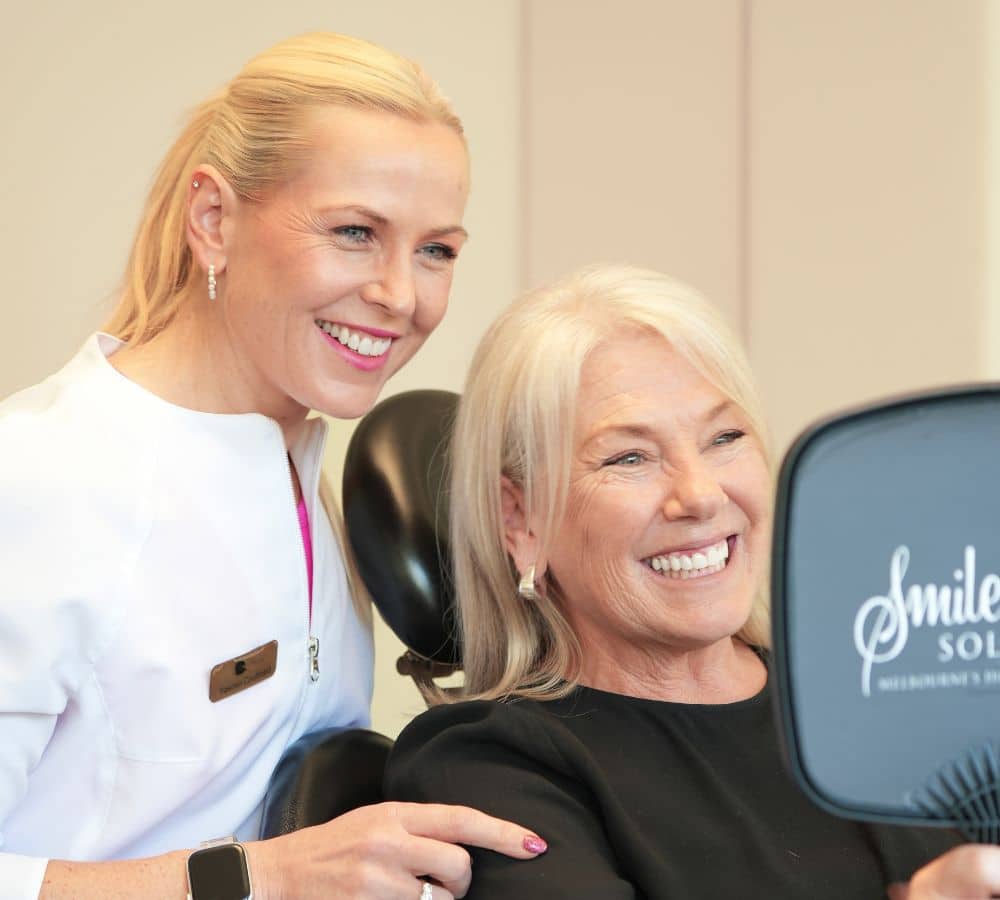
Clinician featured on the practice's wellness page: Dr Yasmin Coulthard (DEN0001023302), Registered Dentist, General Registration.
This information is general in nature and does not replace advice from your treating practitioner or medical team.
Smile Solutions trades under ABN 28 193 514 103.
Images on This Page
-
https://www.facebook.com/tr?id=800557773428361&ev=PageView&noscript=1
(no alt text)
-
https://www.smilesolutions.com.au/wp-content/uploads/2025/10/calendar_month.svg
(no alt text)
-
https://www.smilesolutions.com.au/wp-content/themes/arcadian-wordpress-theme/assets/images/smile_solutions_logo_white.png
Smile Solutions Logo
-
https://www.smilesolutions.com.au/wp-content/themes/arcadian-wordpress-theme/assets/images/smile_solutions_logo_purple.png
Smile Solutions Logo
-
https://www.smilesolutions.com.au/wp-content/uploads/2025/11/Smile-Solutions-4.png
Smile Solutions - Melbourne CBD
-
https://www.smilesolutions.com.au/wp-content/uploads/2026/04/YC-1.jpg
YC 1
-
https://www.smilesolutions.com.au/wp-content/uploads/2025/09/Smile-Solutions-Level-10.png
Smile Solutions Level 10
-
https://www.smilesolutions.com.au/wp-content/uploads/2025/12/General-Dentistry-at-Smile-Solutions.jpg
Dentistry at Smile Solutions all under one roof
-
https://www.smilesolutions.com.au/wp-content/uploads/2025/08/69a44c30c93ce196d539cc5520080df52a5f3f88-scaled.jpg
69a44c30c93ce196d539cc5520080df52a5f3f88 scaled
-
https://www.smilesolutions.com.au/wp-content/themes/arcadian-wordpress-theme/assets/images/family_owned_bussiness.png
Family Owned Business
-
https://www.smilesolutions.com.au/wp-content/themes/arcadian-wordpress-theme/assets/icons/icon--phone.svg
Smile Solutions Contact
-
https://www.facebook.com/tr? id=800557773428361&ev=PageView&noscript=1
(no alt text)