Orofacial Myofunctional Therapy
What are orofacial myofunctional disorders?
Orofacial myofunctional disorders (OMDs) involve dysfunction in the muscles of the face and mouth, affecting chewing, swallowing, speaking and breathing.
They have a circular relationship with habit: OMDs often result from or contribute to abnormal habits such as thumb sucking, mouth breathing, or improper tongue posture. The habit shapes the muscles; the muscles reinforce the habit.
That is why treatment is not simply an appliance. Therapy typically involves exercises to improve muscle strength, coordination and alignment, together with education on proper oral habits and posture.
Smile Solutions is at Level 1, 220 Collins Street, Manchester Unity Building, Melbourne CBD.
Why the muscles matter
The muscles of the tongue, throat and face do real structural work. When they are weak or poorly coordinated:
- the soft tissue of the throat is more likely to collapse during sleep, which can contribute to snoring and obstructive sleep apnoea
- tongue posture is associated with the development of the palate and dental arches
- mouth breathing bypasses the nose's filtering, warming and humidifying function, and dries the mouth — which shifts the oral environment in favour of decay and gum disease
- swallowing patterns can push teeth out of position, working against orthodontic treatment
That last point is one reason an orthodontic result sometimes relapses despite good retainer wear: the teeth were corrected, but the muscle pattern acting on them was not. It is one factor among several — relapse has other causes too, including simply not wearing retainers.
Where OMDs show up
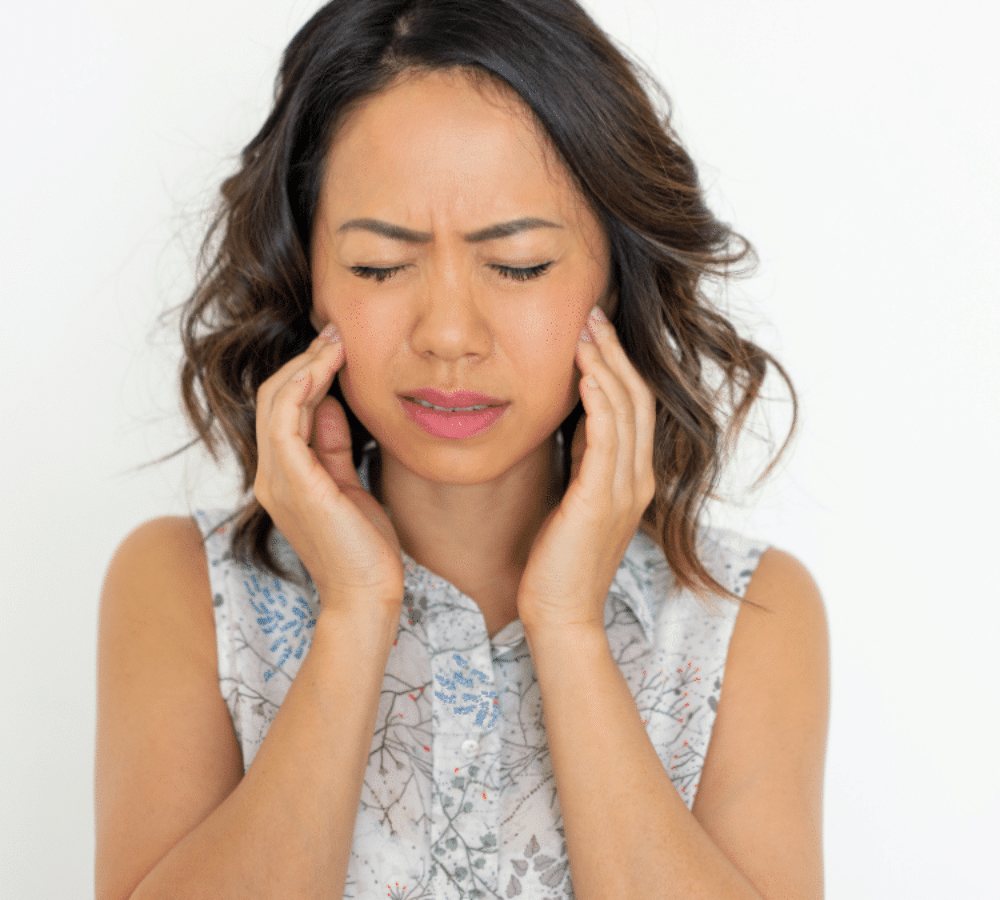
TMD and teeth grinding
Bruxism — grinding and clenching — is common and often undiagnosed. Unmanaged bruxism can lead to long-term irreversible wear, and eventually the need for complex restorative treatment. Myofunctional therapy sits alongside splint therapy and osteopathy in managing it. TMD & Teeth Grinding.
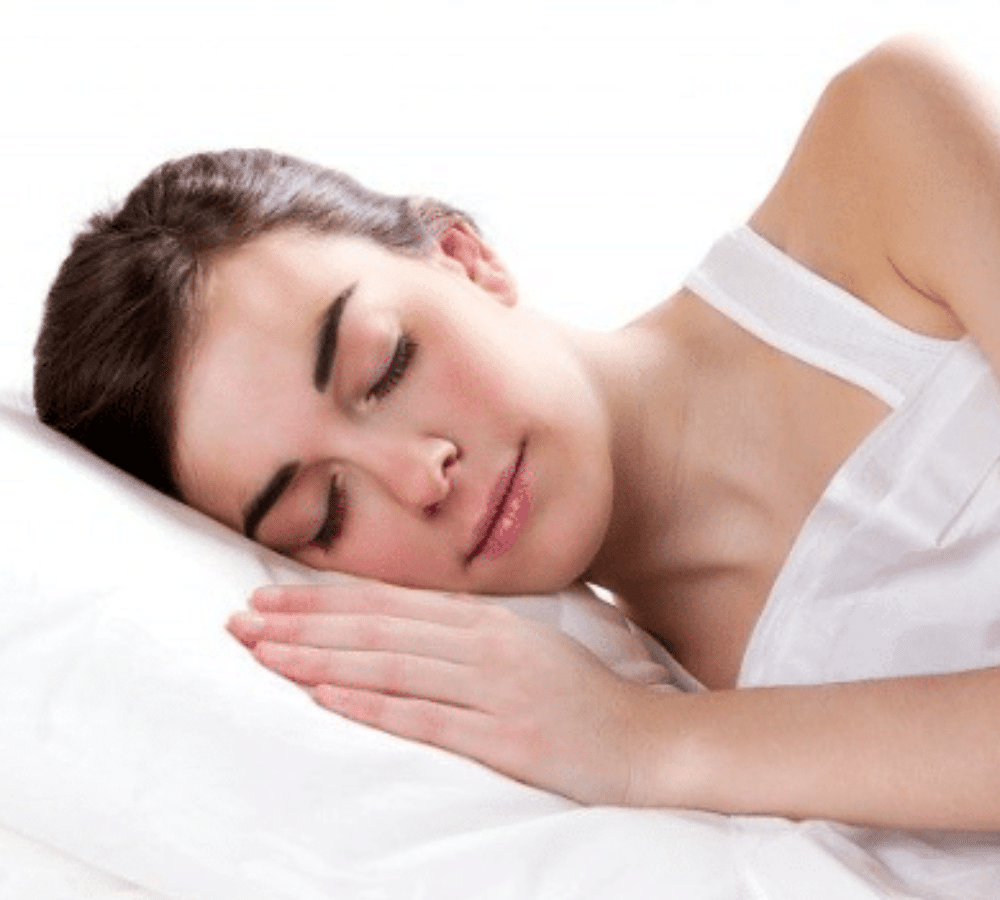
Snoring and sleep apnoea
Obstructive sleep apnoea is repeated interruption of breathing during sleep from collapse of the upper airway. Myofunctional therapy aims to build the muscle tone that helps keep the airway open overnight.
Be clear about its place. The published evidence supports myofunctional therapy as an adjunct — it reduces the severity of snoring and of mild to moderate sleep apnoea in many patients, rather than resolving the condition. OSA is a medical diagnosis made on a sleep study, it carries real cardiovascular risk when undertreated, and CPAP and properly fitted oral appliances remain the primary treatments. Nothing here should be used as a reason to stop prescribed therapy; that is a decision for your sleep physician.
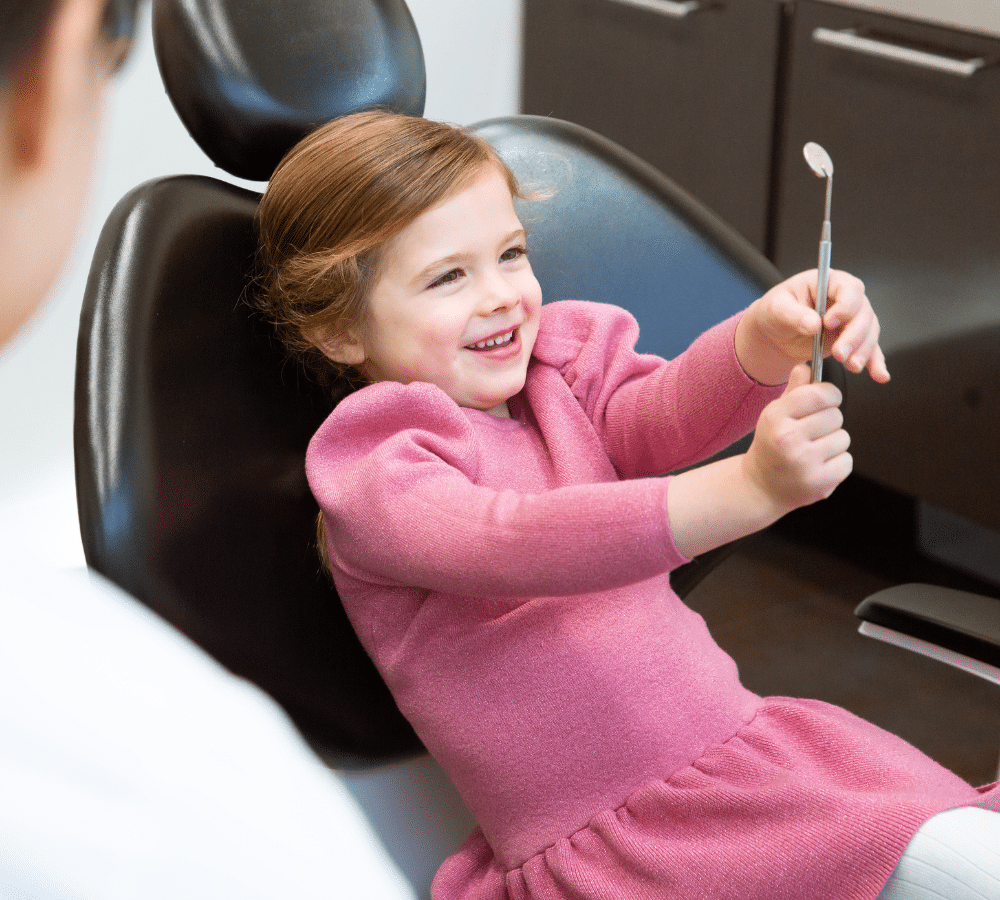
Children — early intervention
OMDs in children are associated with a high narrow palate, tongue thrusting, and difficulty with proper oral posture. Early intervention matters, because the window in which facial growth can still be guided closes as the bones mature.
Addressing mouth breathing, tongue thrust and incorrect swallowing patterns in childhood treats habits that contribute to airway dysfunction, and supports the transition to nasal breathing. Mouth breathing in a child has several possible causes — enlarged tonsils or adenoids, allergic rhinitis, a deviated septum — and those are ENT and medical questions as much as dental ones. Expect a referral if that is where the obstruction is, and expect the dental side of it to be handled with a specialist paediatric dentist where the child is young.
Signs worth raising
In children:
- snoring, mouth breathing, or restless sleep — none of which should be treated as simply normal in a child
- night sweats, difficulty waking in the morning
- thumb or finger sucking past age 4
- tongue thrusting, or the tongue visibly resting forward or low
- daytime fatigue, hyperactivity, or behavioural and learning difficulties
In adults:
- snoring, or diagnosed sleep apnoea
- clenching, grinding, or jaw muscle pain
- habitual mouth breathing
- orthodontic relapse with no obvious cause
These are reasons for an assessment, not a diagnosis — most of them have explanations that have nothing to do with myofunctional disorder, and a child who snores needs a proper airway assessment rather than an assumption either way.
The multidisciplinary team
OMDs sit across several disciplines, which is why treatment here is coordinated rather than delivered by one clinician. The full roster is on the our team page.
| Role | Clinician |
|---|---|
| TMD diagnosis and treatment planning | Dr Kia Pajouhesh — BSc, BDSc (Melb) |
| Osteopathic care | Rachel Norton-Smith — BHlthSc, BAppSc (Osteo) (RMIT) |
| Sleep apnoea management | Dr Natasha Hremias — BDS (Adel) |
| TMD laser therapy | Sophie Oostermeyer — Oral Hygiene and Dental Therapy |
| Occlusal function | Dr Fotios Angelis, Specialist Prosthodontist — BDS (Hons) (Melb), DClinDent (Melb) |
| Orthodontics | Dr Joshua Ch'ng, Specialist Orthodontist — BDSc (Melb), FRACDS, D.Clin.Dent (Melb) |
| Paediatric early intervention | Dr Susan Hinckfuss, Specialist Paediatric Dentist — BDSc (Melb), DCD (Melb) |
| Paediatric and adult myofunctional therapy | Isabelle Sayers — BOH (Melb); Monica Cain — Dip.OHT (Melb) |
| Facial injectables | Dr Philippa Robinson — BSc, DDS (Melb), MBA (La Trobe), MHlth&MedLaw (Melb) |
| Splint and appliance fabrication | Natalie Bilos and Noemi Miele, Senior Dental Technicians |
| TMJ surgery | Dr Ricky Kumar, Oral & Maxillofacial Surgeon — BHB (Auck), MBChB (Auck), BDS (Otago), FRACDS (OMS) |
| Radiography | Julie Bain, Medical Radiographer — Dip.AppSc (MedRad) (MedImag) (RMIT) |
You can verify any clinician on the AHPRA public register at ahpra.gov.au, or by calling 1300 419 495. Note that “myofunctional therapy” is not itself a registered specialty — the practitioners providing it hold their own registrations in oral health, dental therapy or related fields, and those are what the register shows.
What treatment involves
Myofunctional therapy is a programme of targeted exercises rather than a single procedure. It aims to strengthen the tongue, pharyngeal muscles and the muscles of the lips and face, and to retrain the habits — breathing, tongue posture, swallowing — associated with the problem.
It is commonly used alongside other treatment: mandibular advancement splints for sleep apnoea, orthodontic expansion where the palate is narrow, osteopathic care for jaw and postural contributors, and laser therapy where indicated.
Because it depends on doing the exercises consistently over months, it asks more of the patient than an appliance does, and results depend heavily on that consistency. Improvement is gradual, it varies considerably between individuals, and some people see little change.
Diagnostic technology
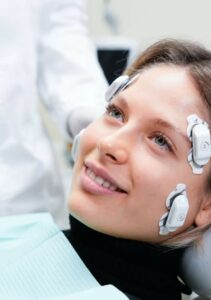
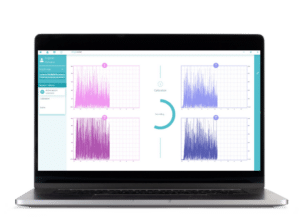
Myowise EMG. Electromyography analysing activity in the masseter and temporalis muscles, to assess muscle function.
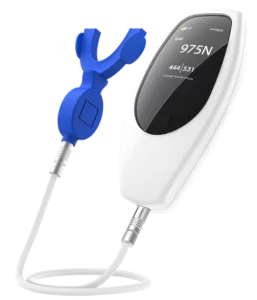
Bite force measurement. Real-time data on occlusal forces, informing diagnosis and treatment planning around bite strength and stability.
Sleep testing. Monitoring breathing patterns and oxygen levels during sleep — either in-lab polysomnography or a home sleep test. Sleep studies are reported by a sleep physician; a dental screening questionnaire is not a diagnosis.
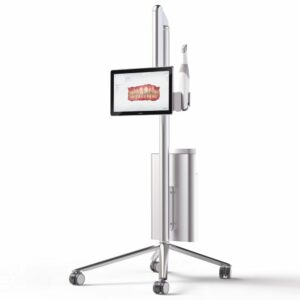
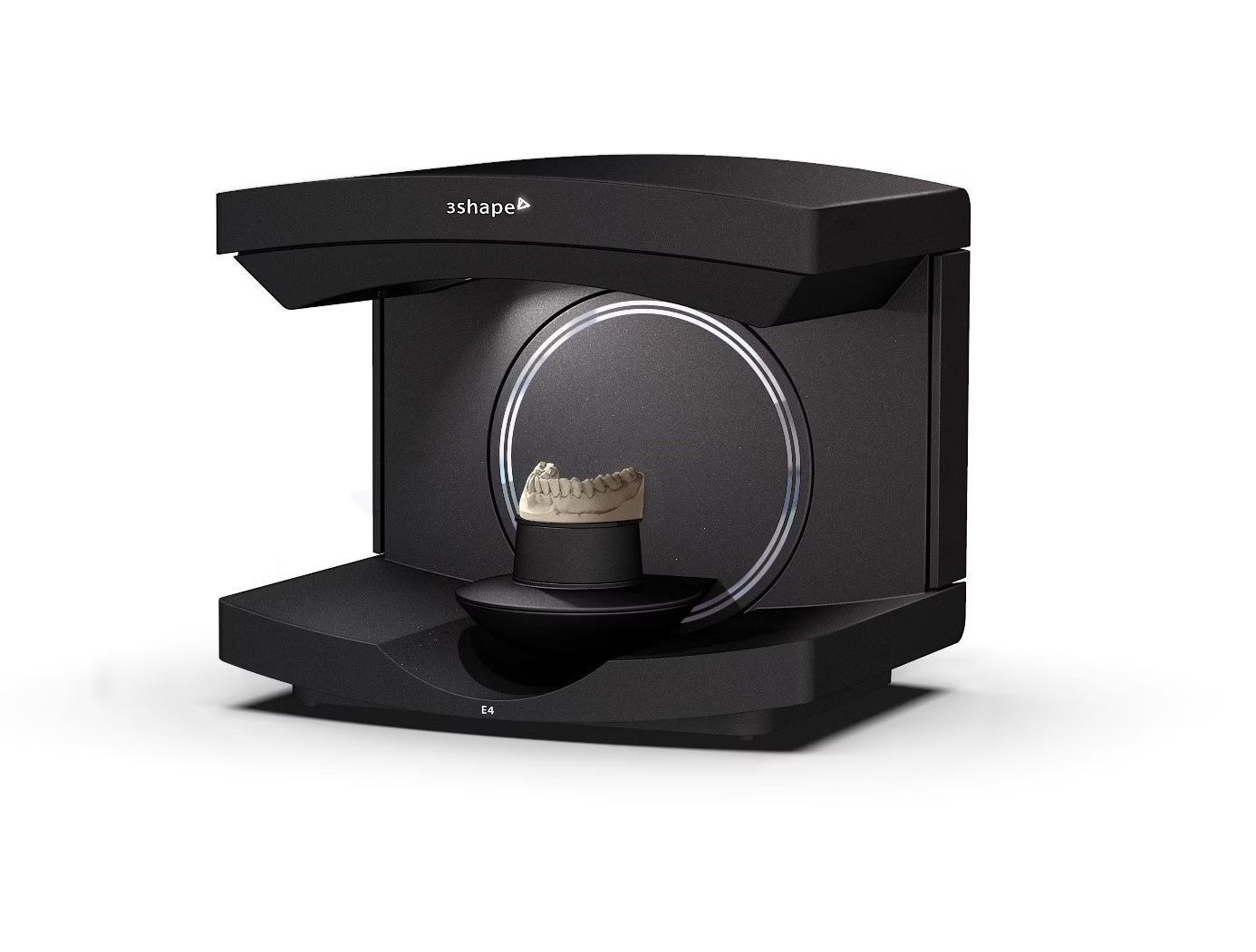
3D scanners. iTero Element, 3Shape TRIOS 4 Move+ and the E4 Lab Scanner, replacing traditional impressions and capturing shape, colour and bite.
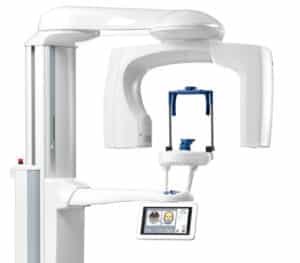
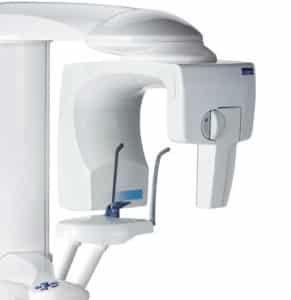
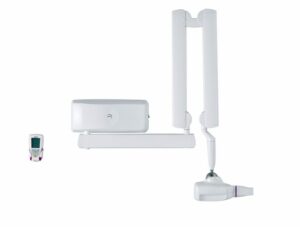
Imaging. Planmeca ProMax 3D Max for three-dimensional imagery, and Planmeca ProMax 2D S3 with One Shot Lateral Cephalogram — which includes a child mode and a one-shot function, useful for children who cannot sit still. Radiographs are taken only where clinically justified.
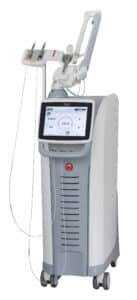
LightWalker Fotona laser. Precise, minimally invasive treatment.
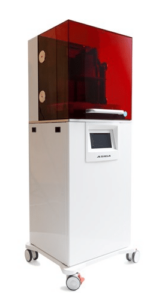
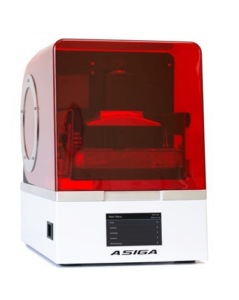
3D printing. Asiga Max and Asiga Pro Max 4K UV, producing appliances in the in-house laboratory. Every device listed here is described in full on the technology page.
Appliances made on site
Splints and appliances are fabricated in Smile Solutions' own Melbourne laboratory, which works exclusively for the practice's own patients — giving rapid turnaround and precision fit, with no work sent offshore and only TGA-approved materials used.
Common questions
Does this actually work, or am I just doing exercises?
The fair answer is that the controlled evidence is thinner than the enthusiasm around this field, and you should know that before committing months of effort.
Two independent lines bear on it. A 2026 systematic review update in the Journal of Clinical Medicine, looking at airway treatment in children, notes in passing that "other RCTs have not found advantages of supervised myofunctional therapy in adult OSA patients". And Cochrane's 2024 review of occlusal interventions for TMD found that orofacial myofunctional therapy "may reduce severity of joint noise compared to occlusal splint" — but that finding rests on a single study of 20 participants and the review rates it very uncertain, as it rates every outcome it examined.
So what is the honest case for it? Not a proven effect size. It is that the therapy is non-invasive and fully reversible, that it targets habits — mouth breathing, tongue posture, swallowing — that are worth changing on their own account, and that where it is used it is used alongside the treatments that do have an evidence base rather than instead of them. That is a reasonable basis for trying it. It is not a basis for replacing anything you have been prescribed.
If anyone offers you myofunctional therapy as a substitute for CPAP or a diagnosed treatment plan, treat that as a reason to get a second opinion.
My child has been offered palatal expansion for snoring or sleep apnoea. Is that supported?
This one deserves a careful answer, because the practice does provide orthodontic expansion and it is still right to tell you what the evidence shows.
The 2026 Journal of Clinical Medicine systematic review update on rapid maxillary expansion for paediatric obstructive sleep apnoea reaches an unusually blunt conclusion: "until RCTs with watchful waiting arms are completed and published, any recommendation in favor of RME for pediatric OSA must be considered expert opinion unsupported by controlled evidence — regardless of how many uncontrolled or retrospective studies accumulate in the interim". Its authors were "unable to identify convincing evidence of meaningful improvement associated with RME treatment in controlled prospective studies".
They also raise a selection problem worth understanding. In the trials that reported jaw measurements, the children treated had maxillary widths at or near the normal range — which, the authors argue, "calls into question whether maxillary constriction is the pathophysiological driver of their OSA or merely a co-occurring trait used to justify intervention". Their practical rule: "providing treatment solely based on an OSA diagnosis (for example, using RME without evidence of transverse discrepancy) is discouraged by recent guidelines".
Read that as a question to ask rather than a reason to refuse. If expansion is proposed for your child, ask whether the palate is actually narrow on measurement, what the measured discrepancy is, and what the plan is for the breathing problem if expansion does not change it. Expansion to correct a genuine transverse discrepancy is a different proposition from expansion offered as a treatment for snoring.
My child snores. Who should we see first, and in what order?
Start with the airway, not the appliance.
Cochrane's review of oral and functional orthopaedic appliances for obstructive sleep apnoea in children reports that its search of 686 trials produced one includable study, of 23 children who finished, and concludes that "there is insufficient evidence to support or refute the effectiveness of oral appliances and functional orthopaedic appliances for the treatment of obstructive sleep apnoea in children". The same review records that "the most common treatment for obstructive sleep apnoea syndrome in childhood is adeno-tonsillectomy", and lists the recognised risk factors as adenotonsillar hypertrophy, obesity, neuromuscular disorders and craniofacial anomalies.
So the sensible order is: have the snoring properly assessed medically — GP, then paediatric ENT or a sleep physician as indicated — and have any sleep study reported by a doctor. The dental contribution comes after that, and it is genuinely useful: this practice can examine the palate and bite, screen for the dental signs listed above, and provide myofunctional therapy or appliances as part of a plan somebody else is leading.
What should not happen is a child being treated dentally for a breathing problem that nobody has measured.
I snore but nobody has diagnosed sleep apnoea. Does that matter?
Snoring on its own is extremely common and is not the same condition. The Sleep Health Foundation puts it at "about 40% of men" having at least mild snoring on at least some nights, "around 30%" of women, and about 15% of people snoring on most nights — with middle age the peak. The mechanism is simply vibration in a narrowed pharynx: "the narrower it is, the more easily it will vibrate and the louder you will snore".
It matters because loud snoring can be the visible part of obstructive sleep apnoea, which is a medical diagnosis with cardiovascular consequences when it goes untreated — and because it can quietly wreck someone else's sleep. The Foundation's advice is to get help if the snoring is bothering you or your household, and, when you see a doctor about it, to take your bed partner, since they can describe what actually happens while you are asleep.
On the things people try first: losing weight helps where weight is a factor, and avoiding alcohol for at least four hours before bed is specifically recommended, because alcohol relaxes the throat muscles. Positional therapies aimed at keeping you off your back "can be helpful but are often ineffective in keeping you on your side throughout sleep". The Foundation is also explicit that laser surgery on the throat is not recommended for snoring.
Myofunctional therapy belongs in that conversation as one option among several, after somebody has established whether what you have is snoring or apnoea.
Related reading
- TMD, TMJ and bruxism — what is actually wrong with your jaw
- How can a night guard be used to treat TMD?
- When should I take my child to see an orthodontist?
- Oral health, wellness and longevity — where airway and breathing sit in the bigger picture
- Contact the practice
Practical details
| Address | Level 1, 220 Collins Street, Manchester Unity Building, Melbourne VIC 3000 |
| Phone | 13 13 96 |
| theteam@smilesolutions.com.au | |
| Monday – Friday | 8.00am – 6.00pm |
| Saturday | 8.30am – 1.30pm |
| Sunday | By appointment |
| Referral needed | No |
| Appliances | Made in-house, Melbourne |
| Related services | TMD clinic, sleep apnoea clinic, paediatric early intervention |
| Parking | Wilsons Parking, Flinders Lane (between Swanston and Russell) |
General information only — it is not a diagnosis, a treatment plan, a quote or a promise of any particular clinical outcome, and it does not replace advice from your treating practitioner. Myofunctional therapy is generally an adjunct to other treatment, results depend on sustained patient effort and vary considerably between individuals, and obstructive sleep apnoea is a medical condition requiring diagnosis and management by a medical practitioner. Nothing here is a reason to alter or stop prescribed therapy. Fees are indicative and subject to change; confirm at your consultation, and see the price guide for the published ranges.
Smile Solutions trades under ABN 28 193 514 103.
Images on This Page
-
https://www.facebook.com/tr?id=800557773428361&ev=PageView&noscript=1
(no alt text)
-
https://www.smilesolutions.com.au/wp-content/uploads/2025/10/calendar_month.svg
(no alt text)
-
https://www.smilesolutions.com.au/wp-content/themes/arcadian-wordpress-theme/assets/images/smile_solutions_logo_white.png
Smile Solutions Logo
-
https://www.smilesolutions.com.au/wp-content/themes/arcadian-wordpress-theme/assets/images/smile_solutions_logo_purple.png
Smile Solutions Logo
-
https://www.smilesolutions.com.au/wp-content/uploads/2025/11/Smile-Solutions-4.png
Smile Solutions - Melbourne CBD
-
https://www.smilesolutions.com.au/wp-content/uploads/2025/11/TMD-Teeth-Grinding-Smile-Solutions.png
TMD & teeth grinding
-
https://www.smilesolutions.com.au/wp-content/uploads/2025/09/Sleep.png
Snoring & sleep apnoea
-
https://www.smilesolutions.com.au/wp-content/uploads/2025/11/Early-intervention.png
Early intervention specialist paediatric care
-
https://www.smilesolutions.com.au/wp-content/uploads/2019/05/iTero-Intraoral-Scanner-300x296.jpg
iTero Intraoral Scanner
-
https://www.smilesolutions.com.au/wp-content/uploads/2021/11/image006-300x300.jpg
image006
-
https://www.smilesolutions.com.au/wp-content/uploads/2024/07/E4-Lab-Scanner-.avif
E4 Lab Scanner
-
https://www.smilesolutions.com.au/wp-content/uploads/2024/07/Bite-Force-257x300.webp
Bite Force
-
https://www.smilesolutions.com.au/wp-content/uploads/2024/07/tfrtechnology_myowise_bite_improvement_technology_image-211x300.jpeg
Myowise
-
https://www.smilesolutions.com.au/wp-content/uploads/2024/07/software-pc-1024x754-1-300x221.png
Myowise
-
https://www.smilesolutions.com.au/wp-content/uploads/2019/05/Untitled-design-32-300x176.png
Photography Studio
-
https://www.smilesolutions.com.au/wp-content/uploads/2019/05/Fontana-Lightwalker-Laser-137x300.jpeg
Fontana Lightwalker Laser
-
https://www.smilesolutions.com.au/wp-content/uploads/2024/04/Asiga-e1720437541600-162x300.png
Asiga 3D printer
-
https://www.smilesolutions.com.au/wp-content/uploads/2024/04/Asiga-Pro-Max-e1720437599427-239x300.png
Asiga Pro Max 4K UV 3D
-
https://www.smilesolutions.com.au/wp-content/uploads/2019/05/Planmeca-Promax-3D-300x263.jpg
Planmeca Promax 3D
-
https://www.smilesolutions.com.au/wp-content/uploads/2019/05/Planmeca-Promax-2D-291x300.jpg
Planmeca Promax 2D
-
https://www.smilesolutions.com.au/wp-content/uploads/2019/05/image002-300x227.jpg
image002
-
https://www.smilesolutions.com.au/wp-content/uploads/2019/05/IMG_3083-300x200.png
IMG 3083
-
https://www.smilesolutions.com.au/wp-content/uploads/2025/08/69a44c30c93ce196d539cc5520080df52a5f3f88-scaled.jpg
69a44c30c93ce196d539cc5520080df52a5f3f88 scaled
-
https://www.smilesolutions.com.au/wp-content/themes/arcadian-wordpress-theme/assets/images/family_owned_bussiness.png
Family Owned Business
-
https://www.smilesolutions.com.au/wp-content/themes/arcadian-wordpress-theme/assets/icons/icon--phone.svg
Smile Solutions Contact
-
https://www.facebook.com/tr? id=800557773428361&ev=PageView&noscript=1
(no alt text)
-
https://bat.bing.com/action/0?ti=25148060&tm=gtm002&Ver=2&mid=2cfea592-0816-4306-b307-d4a67875dccf&bo=1&sid=edc33000ab2711f19f3275388241d8ba&vid=edc35680ab2711f189164dc7dd5a8caf&vids=1&msclkid=N&pi=918639831&lg=en-US&sw=800&sh=600&sc=24&nwd=1&tl=Orofacial%C2%A0Myofunctional%20Therapy%20-%20Smile%20Solutions&p=https%3A%2F%2Fwww.smilesolutions.com.au%2Forofacial-myofunctional-therapy%2F&r=&evt=pageLoad&sv=2&cdb=AQAQ&rn=925868
(no alt text)