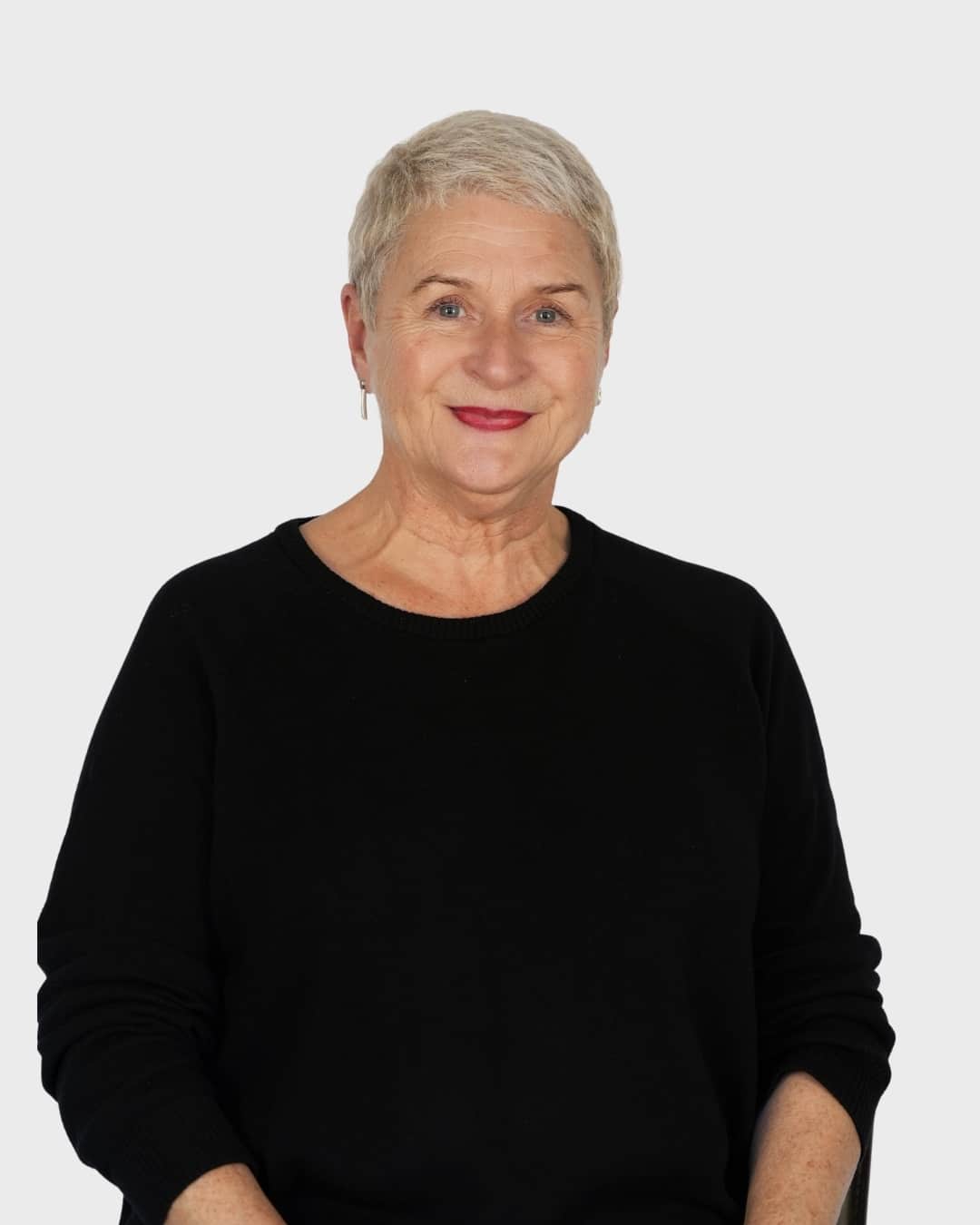
Julie Bain, Medical Radiographer
Role: Diagnostic radiographer — dental and maxillofacial imaging
Qualifications: Diploma of Applied Science (Medical Radiography / Medical Imaging), RMIT; degree in Disability Studies and Psychology, Deakin University
Registration: Registered medical radiation practitioner, diagnostic radiographer division, general registration, MRP0001735312
Registration status can be verified on the AHPRA register of practitioners at ahpra.gov.au. The imaging equipment she works with is described on the technology page, and the full team list is on the our team page.
Note the prefix. MRP is registration with the Medical Radiation Practice Board of Australia, not the Dental Board. Both are National Boards under AHPRA; they register different professions with different qualifications and scopes. Working in a dental clinic does not make someone a dental practitioner — the registration prefix is the reliable indicator, and the practice's dental registrations are listed on the dentists and registered specialists page.
Background
Julie Bain qualified as a radiographer at RMIT and trained at the Alfred Hospital in Melbourne. She has worked across a range of medical imaging settings including Sydney's Prince of Wales Hospital and the Sydney Children's Hospital.
She has extensive experience in dental imaging specifically, including fifteen years as chief radiographer at the Royal Dental Hospital of Melbourne — Victoria's principal public dental hospital and its main teaching centre.
She also holds a degree in Disability Studies and Psychology from Deakin University, and works particularly with adults and children who find imaging difficult, including patients with anxiety and patients on the autism spectrum.
What a medical radiographer is
A diagnostic radiographer is a registered health practitioner who produces diagnostic images. The Medical Radiation Practice Board registers three divisions: diagnostic radiographers, radiation therapists and nuclear medicine technologists.
A radiographer is not a radiologist. A radiologist is a medical practitioner with specialist training in interpreting and reporting images. A radiographer produces the image; interpretation is done by a radiologist, or for dental imaging by an appropriately trained dental practitioner or an oral and maxillofacial radiologist. Why would I need to see a dental specialist? sets out the same principle across the dental specialties.
In a dental setting the work covers intraoral radiographs (bitewings, periapicals), panoramic views (OPG), lateral cephalograms for orthodontic assessment, and cone beam CT — plus positioning, dose optimisation and equipment quality assurance.
Imaging patients who find it difficult
Radiography looks simple from the outside and is often the hardest part of a dental visit for a child or an anxious adult. The sensor is uncomfortable, the machine is close to the face, the patient must hold still, and — for a panoramic view — must stand in a fixed position while equipment rotates around their head. A patient who cannot tolerate it does not get the image, and the practitioner then has to plan treatment without the information.
What genuinely helps:
- Explaining before doing. Showing the sensor, letting the patient hold it, demonstrating on a finger — the tell-show-do approach described in combating dental anxiety in children.
- A practice run with the machine switched off, particularly for a panoramic view where the movement itself is the frightening part.
- Reducing sensory load — quieter times of day, dimmer light, less noise, fewer people in the room.
- A predictable, consistent routine — the same room, the same operator, the same sequence each visit.
- An agreed stop signal that is honoured, without exception.
- Choosing the least demanding image that answers the question. An extraoral view avoids putting anything in the mouth. A panoramic view may be tolerable where intraoral films are not.
- Accepting a partial result. Two good images and one missing is better than a distressed patient and a refusal to return.
For patients on the autism spectrum, sensory differences — to texture in the mouth, to sound, to light, to unexpected touch — are frequently the real barrier rather than fear as such, and they respond to environmental adjustment rather than persuasion. A social story or photographs sent before the appointment allow a person to prepare. Visiting the dentist: caring for a child with autism and oral health care for children with special needs go through the practical measures, and how can Smile Solutions help manage your child's dental anxiety? covers what the practice does. Where treatment cannot be completed any other way, sedation is a separate clinical decision made by the treating practitioner.
Gag reflex is a genuine physiological problem, not a lack of cooperation. It is managed with careful sensor placement, upright positioning, breathing through the nose, distraction techniques, smaller sensors, and extraoral imaging where the reflex cannot be overcome. How can I ease my anxiety about visiting the dentist? covers the adult version of the same conversation.
People with disability have measurably worse oral health outcomes than the general population. Access, communication and the difficulty of daily oral hygiene where assistance is needed account for more of that gap than clinical complexity does.
Radiation: the principles that matter
How safe are dental x-rays and how safe are dental X-rays and when do they become unsafe? are the patient-facing versions of what follows.
Justification. Every exposure must answer a specific clinical question capable of changing what happens next. Radiographs taken on a fixed calendar schedule regardless of risk are not justified — a low-risk adult needs bitewings far less often than a high-risk one, the same logic as how often should I go to the dentist?
Optimisation — ALARA. As low as reasonably achievable. Digital sensors need far less exposure than film. Rectangular collimation confines the beam. Good positioning avoids retakes, and a retake doubles the dose — which is the strongest practical argument for an experienced operator.
Relative doses. A single intraoral radiograph is a very small dose, a fraction of a day's natural background radiation — and it is what finds decay between teeth before it is visible, as described in the stages of dental decay. An OPG is somewhat higher. A cone beam CT is substantially higher than either, varying widely with field of view and settings. CBCT is justified for implant planning, roots close to the inferior alveolar nerve, impacted wisdom teeth and complex surgical or endodontic assessment — not as routine screening.
Children are more radiosensitive than adults, and settings should be adjusted rather than left at adult defaults. When should I take my child to see an orthodontist? covers the imaging that usually accompanies an early assessment.
Pregnancy is not an absolute contraindication — the beam does not include the abdomen — but the justification test still applies and elective imaging is commonly deferred. Tell the practitioner if you are or may be pregnant. See is it safe to visit the dentist during pregnancy?
You are entitled to ask why an image is being taken, what it will show, what would change as a result, and whether recent images from another practice could be used instead. Radiographs are part of your record and can be transferred; repeating existing imaging is avoidable dose, and a second opinion is a normal reason to request them.
Regulation in Victoria
Radiation apparatus must be registered, premises must meet shielding requirements, and use is governed by the Radiation Act and its regulations, with national guidance from ARPANSA. Equipment is subject to periodic compliance testing and operators must be appropriately qualified.
A dentist may take radiographs themselves — it is within the dental scope. Employing a registered radiographer is a staffing choice rather than a legal requirement, and its practical benefit is consistency of positioning, particularly for panoramic and three-dimensional imaging.
Registration
The Medical Radiation Practice Board of Australia registers diagnostic radiographers, radiation therapists and nuclear medicine technologists, with an MRP prefix, renewed annually and subject to standards for recency of practice, continuing professional development, professional indemnity insurance, criminal history and English language skills. Conditions appear on the public register.
Common questions
I am frightened of dentistry, not just of X-rays. Is that common, and does anything actually work?
It is common, it is measured, and the evidence about what helps is more selective than the marketing suggests.
How common. In the Australian National Dental Telephone Interview Survey analysed by Armfield and colleagues (n = 6,112), 11.9% said they were “very” afraid of going to the dentist and a further 5.2% “quite” afraid — roughly one adult in six. Fear rose across age groups up to 46–64 year olds and then fell among those aged 65 and over. Country of birth, speaking a language other than English at home, and how remotely people lived were not significantly related to dental fear.
Why it matters more than the discomfort of one visit. Among the very afraid, 43.9% had last visited more than two years ago, against 29.1% of those with no fear. And 29.2% of the very afraid fitted the full “vicious cycle” profile — delayed visiting, dental problems, and treatment sought only when symptoms forced it — compared with 11.6% of people without fear. Adjusted for sex, dentate status, employment and income, that is an odds ratio of 3.33 (95% CI 2.67 to 4.15). The fear produces the delay, the delay produces worse disease, and the worse disease confirms the fear.
What the evidence supports. A 2024 systematic review and meta-analysis of randomised trials found that, for chronic (trait) dental anxiety, moderate-certainty evidence supports cognitive behavioural therapy — although the most-quoted figure for it (SMD −0.65, 95% CI −1.06 to −0.24) rests on a sensitivity analysis of only two trials and 98 participants, so it should be read as promising rather than settled. For acute anxiety during a procedure, moderate-certainty evidence supported hypnosis (SMD −0.31, 95% CI −0.56 to −0.05) — a small effect.
What the same review found did not work, with moderate certainty: virtual reality exposure therapy, virtual reality distraction, background music, acupuncture and preoperative video information “did not alleviate state anxiety”, and with low certainty, aromatherapy did not reduce state anxiety either. Music and VR are widely offered as anxiety treatments. On this evidence they are amenities, not therapy — and it is worth knowing that before paying extra for one.
What is uncontroversial and free is the practical list above: a short early appointment, a stop signal that is honoured, a practice run, and telling the staff beforehand rather than discovering it in the chair. See dental anxiety.
Can I just be sedated for the X-rays or the treatment?
Possibly — but it is a regulated act, not an amenity, and the rule about who may provide it is strict.
The Dental Board of Australia defines conscious sedation as “a technique used in dental practice to induce a depression of consciousness during which patients are able to respond purposefully to verbal commands or light tactile stimulation”. And on who may use it, the Board is unambiguous: “only dentists, including dental specialists, whose registration is endorsed for conscious sedation can use this technique in their practice.”
That endorsement is a separate thing from registration, and it is visible on the public register alongside the practitioner's name. The Board's Registration standard: Endorsement for conscious sedation sets out the requirements to obtain it, the practice requirements for endorsed dentists — including the routes of administration and specific requirements for the intravenous route — and the ongoing training needed to keep it. Endorsed dentists must “complete an approved competency based course in dental sedation and medical emergencies before applying to renew their registration”, which is an unusually concrete, recurring obligation.
So the question to ask is answerable and checkable: is the practitioner's registration endorsed for conscious sedation, and can I see that on the register. A radiographer cannot provide it, a hygienist or oral health therapist cannot, and a dentist without the endorsement cannot.
Two things worth weighing before asking for it. Sedation makes a difficult appointment possible; it does not treat the underlying anxiety, and the evidence above points at cognitive behavioural therapy for that. And it adds cost, preparation, an escort home and its own risks, which is why it is normally reserved for what cannot be achieved any other way. The practice's page is sleep dentistry, and whether it is appropriate is a clinical decision for the treating practitioner, not a booking preference.
How much radiation is it, in actual numbers?
The section above says “small”. Here is what published figures say, because “small” is not a number.
The International Atomic Energy Agency gives typical effective doses of 1–8 μSv for an intraoral dental X-ray, 4–30 μSv for a panoramic examination, 2–3 μSv for a cephalometric view, 50 μSv or below for cone beam CT at small or medium scanning volumes, and 100 μSv for large volumes.
In everyday terms, the IAEA's own comparison is the clearest: intraoral and cephalometric doses are “usually less than one day of natural background radiation”; panoramic doses “even at the high end of the range are equivalent to a few days of natural background radiation which is similar to that of a chest radiograph”; and CBCT doses “cover a wide range, but may be tens or even hundreds of µSv of effective dose higher than conventional radiographic techniques, depending upon the technique”. The IAEA adds that “rapid technological improvements to CBCT equipment mean that typical dose ranges are likely to change”, so any figure — including these — is a snapshot.
And one caveat that almost never survives into patient leaflets. Effective dose is a tool for comparing procedures, not a personal risk calculator. The IAEA states it plainly: “effective dose and its associated risk should not be applied to individuals, but can be used to compare between modalities, techniques and other sources of exposure.” So anyone converting a microsievert figure into your personal odds of anything has overreached the quantity — in either direction.
What actually reduces your exposure is not a number on a page. It is fewer justified images, correct positioning first time, and settings matched to the patient — which is why a retake is the avoidable dose that matters most, and why children's settings should not be left at adult defaults.
My child could not manage the X-ray last time. What happens now?
Nothing is lost, and stopping was the right call rather than a failure.
The honest evidence position first. There is no Australian guideline on behaviour guidance for children in dentistry, and the Cochrane review that would quantify the non-drug techniques for children exists only as a protocol and has never reported results. So nobody can give you an effect size for any of the approaches below in children. What exists is structured professional consensus — the most detailed being the American Academy of Pediatric Dentistry's Behavior Guidance for the Pediatric Dental Patient, last revised 2024.
That guideline lists deferral as a legitimate option, not a fallback. Among the factors a clinician is expected to weigh and document before choosing an approach are “any alternative treatment options including no treatment or deferred care”. A stopped appointment that preserved the child's willingness to come back is a better outcome than an image obtained by force.
What changes for the next attempt, drawing on the practical list above and the AAPD's basic techniques — tell-show-do, ask-tell-ask, positive pre-visit imagery, direct observation, distraction and desensitisation:
- A visit with no imaging at all, to meet the room and the machine with it switched off.
- The least demanding image that answers the question — an extraoral or panoramic view where an intraoral sensor is the specific problem, accepting the trade-off in detail.
- Splitting it up. Two images today, two next time.
- The same operator, the same room, the same sequence, which removes the novelty that does most of the work in a child's distress.
- Photographs or a social story sent beforehand, so the child arrives having already seen it.
What to tell the practice when you rebook: what specifically failed — the sensor in the mouth, the noise, the standing still, the mask of unfamiliar adults — because those have different fixes. And ask whether the image is needed now or whether the clinical question can wait, which is a justification question as much as a behavioural one.
Related reading
- Oral cancer: how your dentist can help with early detection
- What do I need to know about dental implants?
- Price guide — indicative fees, and what changes them
Practical details
Julie Bain's registration can be checked free on the AHPRA public register at ahpra.gov.au. If imaging is likely to be difficult for you or your child, say so when booking — it changes how the appointment is set up. Call 13 13 96, or use the contact page.
Smile Solutions, Level 1, 220 Collins Street, Manchester Unity Building, Melbourne VIC 3000. Phone 13 13 96, or theteam@smilesolutions.com.au. Monday–Friday 8.00am–6.00pm, Saturday 8.30am–1.30pm, Sunday by appointment.
Sources for the externally verifiable statements on this page
- Armfield JM, Stewart JF, Spencer AJ, The vicious cycle of dental fear, BMC Oral Health (2007), analysing the Australian National Dental Telephone Interview Survey.
- Systematic review and meta-analysis of interventions for dental anxiety (2024), for the CBT, hypnosis, virtual reality, music, acupuncture and aromatherapy findings.
- Dental Board of Australia — Conscious Sedation registration standard and endorsement requirements.
- International Atomic Energy Agency — typical effective doses for dental imaging, and the caveat on applying effective dose to individuals.
- American Academy of Pediatric Dentistry — Behavior Guidance for the Pediatric Dental Patient, latest revision 2024.
This page records qualifications and career history as published by the practice. General information only — it is not a diagnosis or a treatment plan.
Smile Solutions trades under ABN 28 193 514 103.
Images on This Page
-
https://www.facebook.com/tr?id=800557773428361&ev=PageView&noscript=1
(no alt text)
-
https://www.smilesolutions.com.au/wp-content/uploads/2025/10/calendar_month.svg
(no alt text)
-
https://www.smilesolutions.com.au/wp-content/themes/arcadian-wordpress-theme/assets/images/smile_solutions_logo_white.png
Smile Solutions Logo
-
https://www.smilesolutions.com.au/wp-content/themes/arcadian-wordpress-theme/assets/images/smile_solutions_logo_purple.png
Smile Solutions Logo
-
https://www.smilesolutions.com.au/wp-content/uploads/2017/05/Julie.jpg
Julie Bain
-
https://www.smilesolutions.com.au/wp-content/themes/arcadian-wordpress-theme/assets/images/family_owned_bussiness.png
Family Owned Business
-
https://www.smilesolutions.com.au/wp-content/themes/arcadian-wordpress-theme/assets/icons/icon--phone.svg
Smile Solutions Contact
-
https://www.facebook.com/tr? id=800557773428361&ev=PageView&noscript=1
(no alt text)